Moving Cable Trainers Down Basement Steps in Dumfries
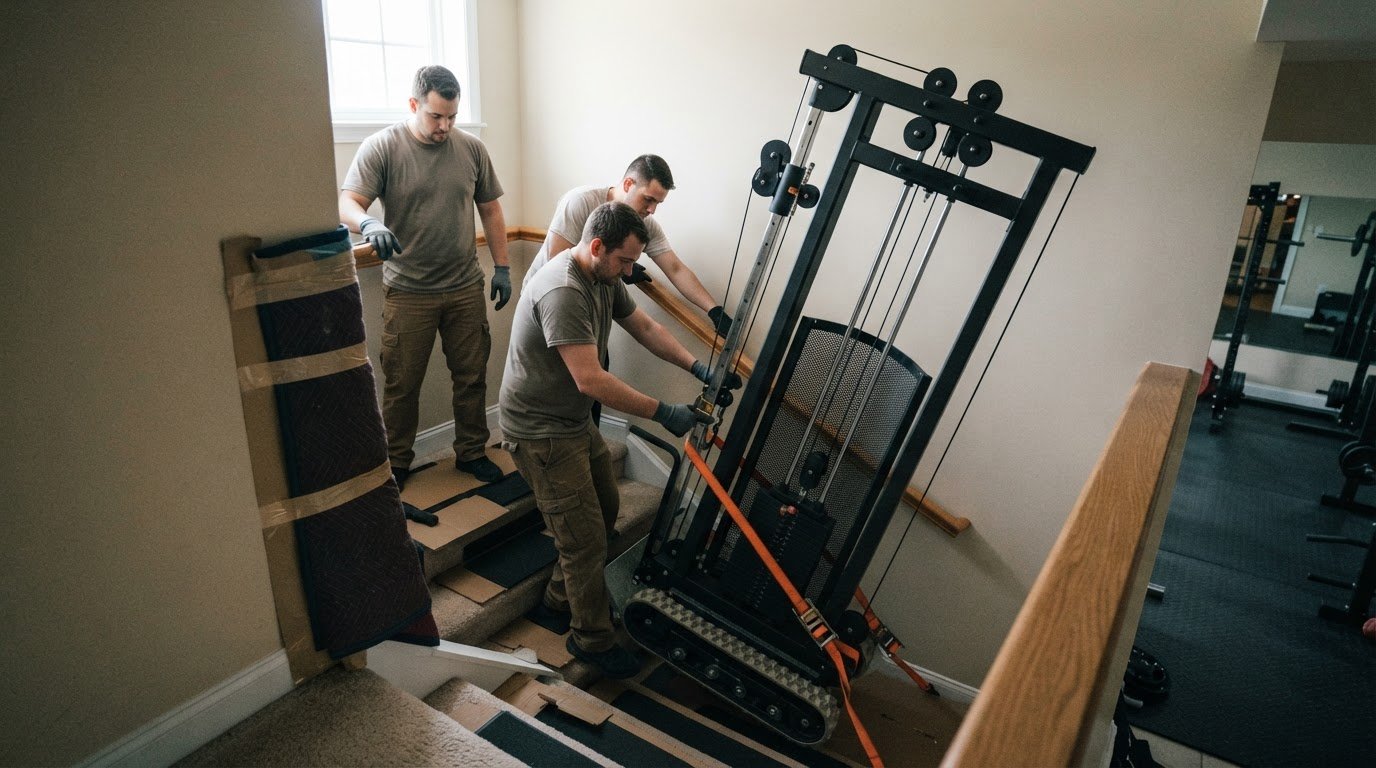
A full cable crossover can take 8-10 feet of width and typically needs a ceiling at least 8 feet high, so moving a heavy cable crossover functional trainer down basement steps in Dumfries takes more than muscle. The job starts with assessing the machine, stair route, and clearance at each turn. Depending on the design, the equipment may need to be separated into manageable sections.
It’s understandable to worry about tight landings, heavy weight stacks, and damage to your equipment or home. This guide explains how to prepare a multi-user cable system or functional trainer for a basement move, which access details matter, and how movers can handle it on the stairs. You’ll also learn what shapes a plan for moving a heavy cable crossover functional trainer down basement steps in Dumfries.
Key Takeaways
- Learn which parts of a cable trainer may need to come apart before the move and how its design affects the plan.
- See how stair access, turns and landings shape the safe route for heavy gym equipment.
- Understand the types of moving equipment that can help control bulky sections on basement stairs.
- Find out what affects the crew size for carrying a cable crossover machine.
- Recognize how a careful moving plan helps reduce the risk of damage to the machine and your home.
What are the dimensions of a cable crossover functional trainer, and can it be disassembled?
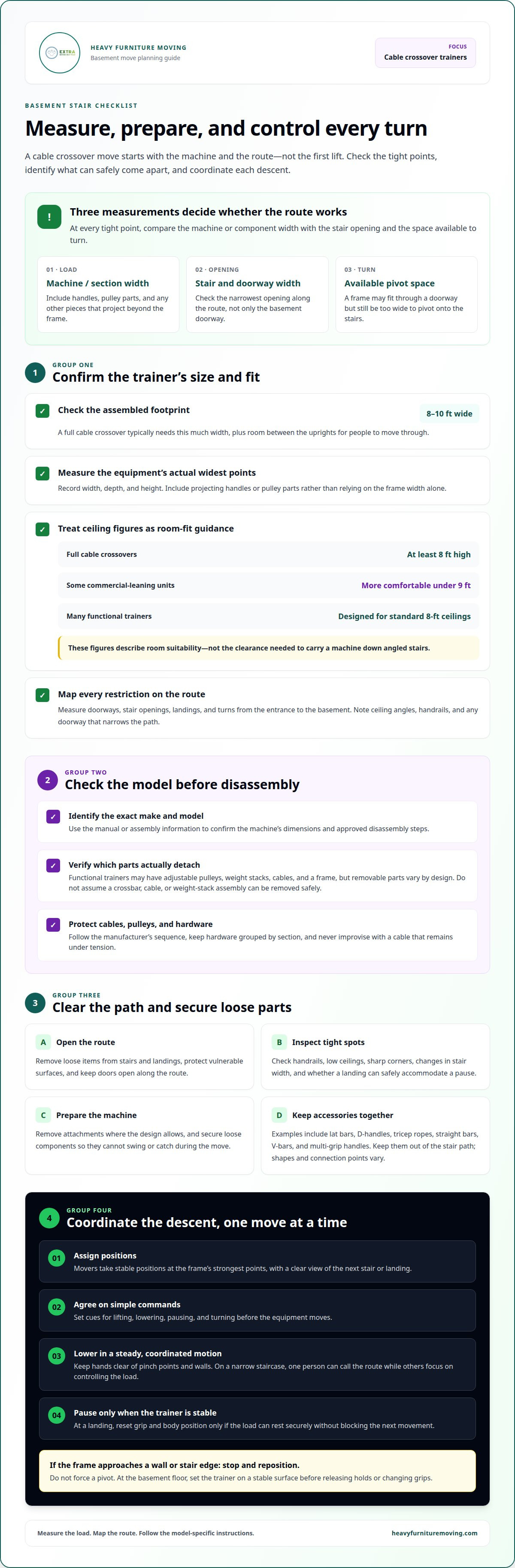
A full cable crossover typically needs 8-10 feet of width, plus room between its uprights for people to move through. That broad footprint can make basement turns and narrow stair openings challenging. Measure the equipment’s widest points, including projecting handles or pulley parts, rather than relying on the frame width alone.
Ceiling clearance matters, too. Full cable crossovers are usually best with ceilings at least 8 feet high; some commercial-leaning units feel more comfortable under 9 feet. Many functional trainers are designed to fit beneath standard 8-foot home ceilings. Those figures describe room suitability, not the clearance required to carry a machine down angled stairs.
Before planning the move, identify the exact make and model. Check the manual or assembly information for the machine’s height, width, depth, and approved disassembly steps. Functional trainers can include adjustable pulleys, weight stacks, cables, and a frame, but the parts that detach vary by design. Don’t assume a crossbar, cable, or weight-stack assembly can be removed safely.
Disassembly may make a trainer easier to handle, but it changes the work. Removable frame sections can make individual pieces smaller, while cables and pulleys need careful handling to prevent tangling or strain. Weight stacks also require controlled preparation. Follow the manufacturer’s sequence and keep hardware grouped by section. Never improvise with a cable that remains under tension.
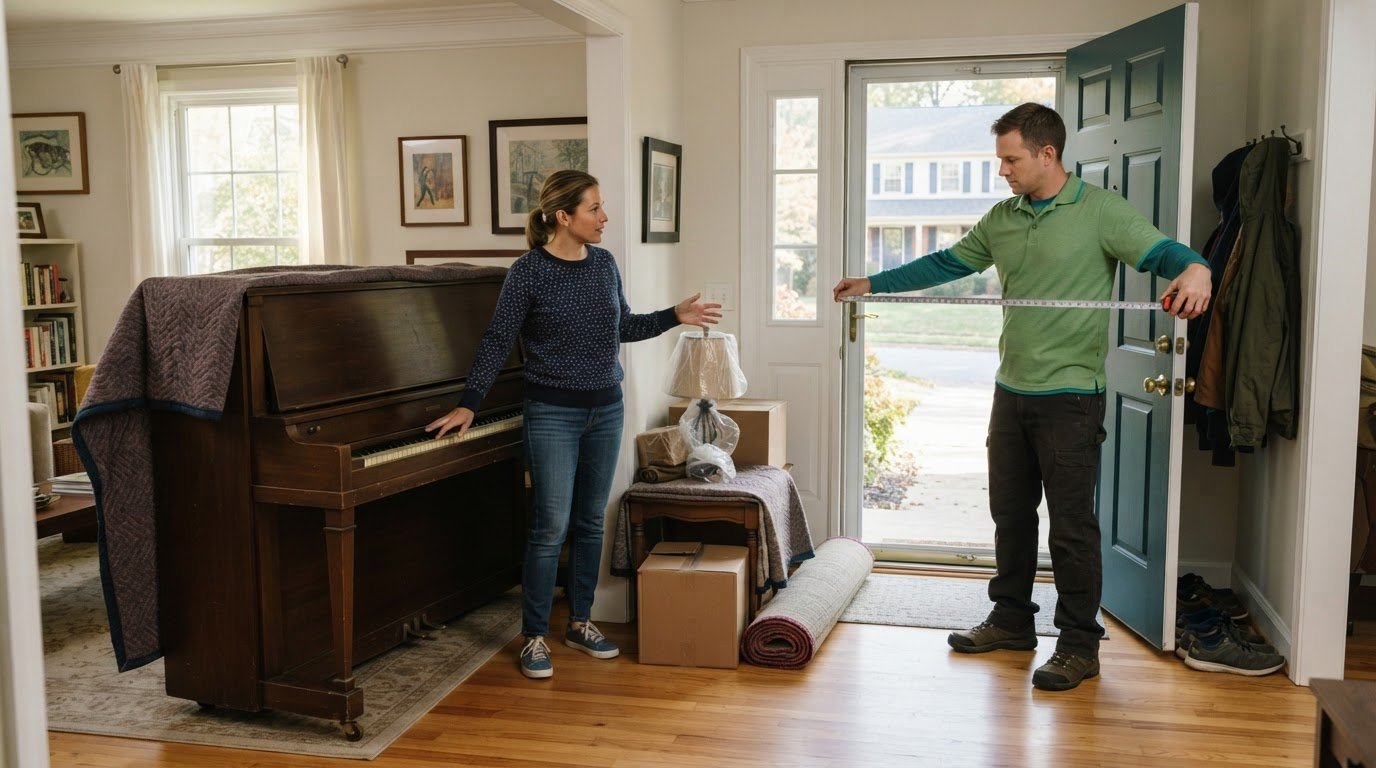
For a clear moving plan, compare three measurements at every tight point: the machine or component width, the stair opening, and the available turning space. Account for the ceiling angle, handrails, and doorways that narrow the route. A frame might fit through a basement doorway but still be too wide to pivot onto the stairs.
- Record the assembled dimensions: Capture width, depth, and height, then note any parts that extend beyond the frame.
- Map the route: Measure doorways, landings, stair openings, and turns from the entrance to the basement.
- Check the disassembly method: Use model-specific instructions to identify removable sections and protect cables, pulleys, and hardware.
These measurements help distinguish a moveable assembly from one that needs partial disassembly. They also reveal whether each section can be turned and controlled on the basement stairs. For multi-user systems, assess the full frame and its removable components separately; the assembled width alone won’t show how each piece fits through the route.
How do professionals move heavy gym equipment down basement stairs safely?
Before moving a cable trainer, movers inspect the stair route, identify tight turns, and plan where each person can stand. A clear path matters because a bulky frame can block visibility or make a secure grip difficult. The plan should also account for the equipment’s balance, exposed cables, and shifting weight during turns.
Start by clearing loose items from stairs and landings. Protect vulnerable surfaces and keep doors open along the route. Check for handrails, low ceilings, sharp corners, and changes in stair width. A landing can provide room to pause, but only if the load can rest securely without blocking the next movement.
Prepare the machine according to its design. Set aside removable attachments and secure loose components so they can’t swing or catch. Weight-stack parts and cables need particular care: a snagged cable can affect control, and a shifting component can throw off the frame’s balance.
- Assign positions: Movers take stable positions at the frame’s strongest points, with a clear view of the next stair or landing.
- Agree on commands: The team chooses simple cues for lifting, lowering, pausing, and turning before the equipment moves.
- Control each descent: Movers lower the load in a steady, coordinated motion, keeping hands clear of pinch points and walls.
- Reset at landings: The team pauses only when the trainer is stable, then adjusts grip and body position for the next section.
Communication is essential on a narrow staircase. One person can call out the route and next movement while the others focus on controlling the load. If the frame approaches a wall or stair edge, stop and reposition rather than forcing it through. A rushed pivot can damage the equipment or throw a mover off balance.
At the basement floor, set the trainer on a stable surface before releasing your holds. Check that the frame and attached parts remain secure, then move it to its intended position. This pause helps prevent the unit from tipping while the crew changes grips or clears the stairwell.
For a move involving a cable trainer and basement stairs, professional heavy lifting support can help coordinate the route, handling, and controlled descent.
Before moving the frame, identify the cable system’s accessories and remove them where the design allows. Attachments may include lat bars, D-handles, tricep ropes, straight bars, V-bars, and multi-grip handles. Keep them together and out of the stair path so they don’t become obstacles or snag during the descent. Their shapes and connection points vary, so don’t assume they can all be handled or stored the same way. Once the frame is in place, return the attachments to the machine and make sure each piece is accounted for before use.
What equipment is needed to move a functional trainer down stairs?
The right moving gear depends on the trainer’s frame, weight-stack assembly, and stair layout. For a functional trainer with adjustable pulleys, use equipment that protects the cables and controls the frame without loading delicate parts. No single dolly or strap suits every machine. Stair width, landing shape, and the disassembly plan determine which tools are appropriate.
Moving straps can help movers grip a frame section securely. Place them around sturdy structural points, never around cables, pulley housings, or adjustable handles. Straps can shift as equipment tilts, so position and tension them before lifting. They assist with grip but don’t replace balanced handling or clear communication.
Protective blankets and padding help shield painted uprights, stair walls, and door trim from incidental contact. Wrap frame sections while keeping cables, moving pulleys, and connection points accessible. Padding around an exposed upright, for example, can soften a bump at a landing. Keep loose blanket material clear of the stairs and the crew’s footing.
A furniture dolly or stair-climbing dolly may help with compatible components on a suitable route. A standard flat dolly is made for level movement, not stairs. A stair-capable model still needs a secure load, adequate clearance, and control on every step. A bulky frame that must pivot sharply may require another handling method.
- Hand tools: The correct tools help remove manufacturer-approved attachments or frame sections.
- Fastener containers: Small parts stay together and can be matched to the correct assembly point later.
- Protective gloves: A secure grip helps when handling metal uprights and padded components.
- Floor and corner protection: Suitable coverings help limit scuffs where equipment passes close to finished surfaces.
Use tools that match the equipment. A wrench or driver should fit the fasteners specified for the trainer; an improvised tool can damage a bolt or frame. Keep removed hardware with its corresponding part. Secure attachments such as a lat bar or tricep rope so they can’t swing into someone or catch on a stair edge.
Weight-stack components need particular attention because their movement can change the load’s balance. Follow the machine’s approved preparation method and keep stack parts controlled. Keep cables untangled and away from sharp edges. Never use a pulley or cable as a lifting point: these parts guide resistance, not support the trainer during a move.
For a cable trainer on basement stairs, choose gear that suits both the machine and route. Straps, padding, tools, and a suitable dolly each have a specific purpose. Select and position them before lifting, then keep the frame stable through every turn and landing.
How many movers are needed to carry a cable crossover machine
There’s no fixed crew size for every cable crossover. The number of movers depends on what stays assembled, how the load balances, and how the basement stairs turn. A compact section with clear handholds calls for a different arrangement than a tall frame that must pivot on a tight landing. Plan for control, not just lifting strength.
First, assess the machine’s shape and components. An assembled crossover may have wide uprights and projecting arms that make it difficult to grip. If approved disassembly separates the frame, carry manageable sections instead. The weight-stack section needs its own handling plan because its mass and position affect balance.
The staircase also limits how the load can be handled. A straight, open run gives movers room to position themselves. A narrow turn or low ceiling can restrict where someone can stand and hold the frame. At a landing, the crew needs enough space to pause, change grips, and rotate the equipment without trapping anyone against a wall.
Assign positions before lifting. Everyone carrying the load needs secure handholds and a clear view of their portion. A designated caller coordinates each movement, including the pause before a turn. If someone can’t maintain a stable grip or communicate clearly from their position, change the plan rather than forcing the carry.
- Frame sections: The crew considers each section’s shape, balance, and available grip points.
- Stair route: Narrow steps, landings, doorways, and overhead clearance affect how movers can position themselves.
- Load control: The crew arranges positions so the frame remains steady during lowering and turning.
- Communication: One caller gives clear cues for movement, pauses, and resets.
A tall upright, for example, may need one mover guiding its upper end while others control the lower frame. A broad crossbar may require a different setup, particularly where a stair turn limits the carrying angle. The number of movers should suit the working positions and the section’s balance. Adding people without enough room can crowd the stairs and reduce control.
Partial disassembly can change the crew arrangement, but coordinated handling is still essential. Each separated part needs a controlled path, and loose cables or attachments must stay clear of hands and steps. Reassess the carry after each major section, especially before moving from a landing onto the next stair run.
For a basement move in Dumfries, match the crew to the trainer and the route. The frame, approved disassembly, stair geometry, landing space, and safe carrying positions all shape the plan. Every mover should have a defined role before the equipment leaves the floor.
What risks can moving gym equipment cause to stairs, floors, walls, or the machine
A cable trainer can damage a home if its frame swings, scrapes, or lands hard. On basement stairs, a bumped upright can gouge drywall, while a dropped component can chip a stair edge. Impact can also bend a frame part or disturb a pulley connection. The risks increase when the load blocks the movers’ view or catches on a tight turn.
Stairs and floors can be marked by metal feet, exposed bolts, or equipment dragged across a surface. A stair tread may also take a sudden impact if a section slips during lowering. Movers protect the route with suitable coverings and keep the machine lifted rather than sliding it. They check that coverings remain flat, since a folded edge can create a trip or snag point.
Walls, door trim, and railings are vulnerable wherever the trainer needs to pivot. A tall upright can strike a ceiling or wall at an angle, even if it cleared the doorway upright. Control the frame’s direction before each turn and watch both ends. Padding helps prevent scuffs, but it doesn’t replace careful handling or adequate clearance.
The machine itself can be damaged if cables snag, pulleys take a hit, or the frame twists under an uneven load. A loose attachment may swing into an upright, and a cable caught on a stair edge may become strained. Secure removable parts and keep cables away from contact points. Don’t lift from cables, handles, or pulley housings; they aren’t structural supports.
- Before moving: Clear the route and protect exposed corners, finished floors, and stair edges.
- During the carry: Keep the load controlled and stop if a part catches or shifts.
- At turns: Guide both ends of the equipment, leaving room between the frame and surrounding surfaces.
- After placement: Inspect the frame, cables, pulleys, and attachments for visible movement or damage.
Rushed adjustments create avoidable risks. If a section won’t clear a landing, pause, set it down securely, and change the angle or handling plan. Forcing a crossbar past a door jamb, for example, can damage both the trim and the equipment. A controlled reset is safer than pushing through resistance.
For a careful basement equipment move, arrange professional gym equipment moving and reduce the chance of damage to your home or trainer.
Heavy Furniture Moving
Heavy Furniture Moving helps plan and handle basement moves involving cable trainers. Turn to the team when the equipment is bulky, the stairs have tight landings, or you need help coordinating the move from the entrance to its final position.
Heavy Furniture Moving’s Exercise Equipment Moving service handles heavy fitness machines, and its broader moving help can support other bulky household items in the same move. Share the trainer’s model, whether it will be disassembled, and details about the stair route to help plan the job.
Contact Heavy Furniture Moving to discuss moving your cable trainer down basement steps in Dumfries.
Set Up Your Basement Move With Confidence
Before the move, gather the equipment details and information about basement access. The trainer’s model, assembly state, stair layout, and final placement help shape a practical plan. For moving a heavy cable crossover functional trainer down basement steps in Dumfries, this preparation gives the crew a clearer picture of the job and helps avoid last-minute surprises.
Heavy Furniture Moving handles residential moves involving bulky items, including exercise equipment. Share what you know about the trainer and the route, then discuss the move with the team. A clear plan can make a demanding home project easier to manage.
Start planning your cable trainer move with Heavy Furniture Moving. Take the next step when you’re ready, and get your basement setup moving forward.
Frequently Asked Questions
How much does it cost to hire movers to move gym equipment in Dumfries, Virginia?
The price depends on the equipment and the details of the move, including the trainer’s size and configuration, whether disassembly is needed, and basement stair access. Heavy Furniture Moving offers a price after a quote request. Share details about the machine and home access so the quote reflects the job rather than assumptions from a general estimate.
Which Dumfries-area movers specialize in heavy exercise equipment?
Heavy Furniture Moving offers Exercise Equipment Moving for Dumfries residents with bulky fitness machines. A cable trainer can be handled as a residential heavy-item move, with the plan based on the equipment and home access. The company also offers Movers Near Me for local moving needs. Wrap, blankets, and straps are included on every job to help protect the item and route during handling.
Frequently Asked Questions
The price depends on the equipment and the details of the move, including the trainer’s size and configuration, whether disassembly is needed, and basement stair access. Heavy Furniture Moving offers a price after a quote request. Share details about the machine and home access so the quote reflects the job rather than assumptions from a general estimate.
Heavy Furniture Moving offers Exercise Equipment Moving for Dumfries residents with bulky fitness machines. A cable trainer can be handled as a residential heavy-item move, with the plan based on the equipment and home access. The company also offers Movers Near Me for local moving needs. Wrap, blankets, and straps are included on every job to help protect the item and route during handling.