Moving a Squat Rack and Olympic Weight Tree Upstairs in Chantilly
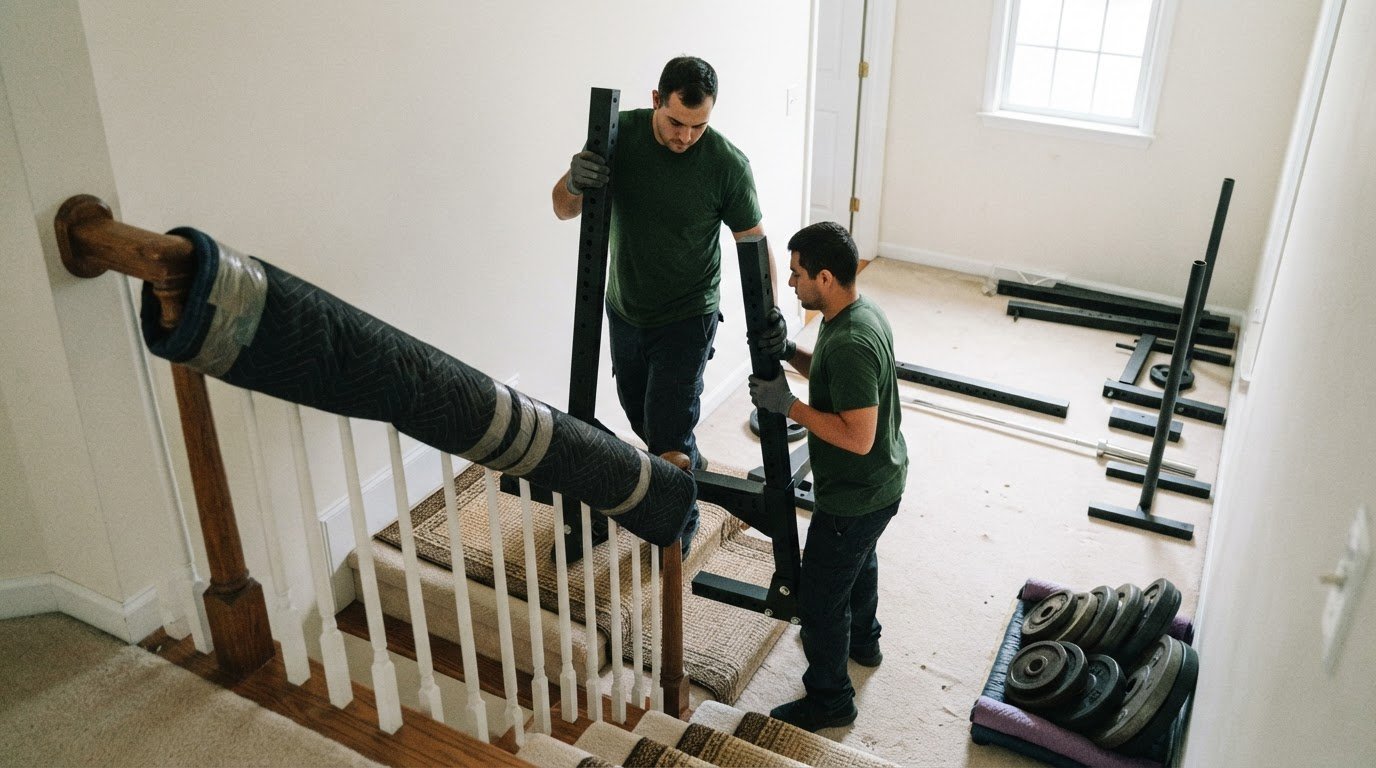
The combined load, not just the rack’s frame, shapes an upstairs move. Moving a heavy squat rack and Olympic weight plate tree upstairs in Chantilly means accounting for the plates and bar, too: a 45-pound barbell with three 45-pound plates on each side weighs 315 pounds. How that weight is balanced during loading matters as much as the total.
It’s easy to focus on the bulky frame and overlook how quickly the plates add weight. Unevenly loaded equipment can shift during handling, so plan carefully for stairs, turns, and tight spaces.
This guide explains why total weight matters, how to balance plates while loading, and what to consider when unloading and storing the equipment upstairs. You’ll also learn how disassembly and reassembly fit into the move, so the rack and plate tree can be handled in manageable parts rather than treated as one oversized load.
Key Takeaways
- Separate the rack, plate tree, bar, and plates into manageable loads before moving them upstairs.
- Load plates evenly and in a controlled sequence to help keep the bar balanced during handling.
- Choose moving equipment that supports the load and gives the movers a secure grip on the stairs.
- Protect stair surfaces, walls, floors, and handrails before carrying bulky parts through tight spaces.
- Consider professional exercise equipment moving when the combined weight, awkward shape, or stair layout makes the move difficult to manage.
How can a squat rack and plate tree be disassembled and reassembled for moving?
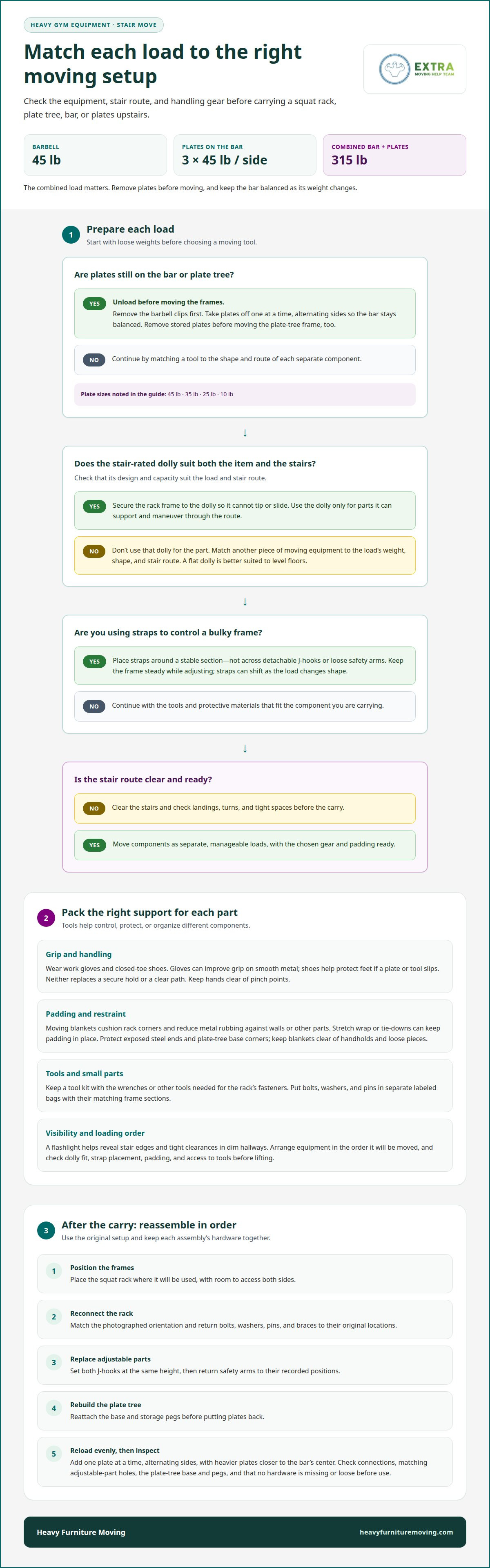
Start by separating loose weights from the frames. Remove the barbell clips before taking plates off the bar, then unload one plate at a time. Alternate sides so the bar stays balanced as its weight changes. A 45-pound barbell with three 45-pound plates on each side totals 315 pounds, so removing plates first changes the load substantially.
Break the squat rack and plate tree into parts that can fit along the route through your home. Remove stored plates, then detach rack pieces such as J-hooks and safety arms. For a bolted frame, loosen connections in a controlled order and support each section as the fasteners come free. Keep each component’s hardware together instead of mixing rack and plate-tree parts.
- Photograph the setup. Capture the rack from the front and side, including the J-hook holes and safety-arm positions.
- Group the hardware. Place each assembly’s bolts, washers, and pins in a separate labeled bag.
- Keep parts organized. Set rack pieces and plate-tree pieces in separate groups for the upstairs carry.
Record the original settings before removing adjustable parts. For back squats, J-hooks are usually set around shoulder height, with both sides at the same level. One lifter might use a setting four holes from the bottom, but hole positions vary by rack and user. A photo of your actual setup is more useful than relying on that example.
The plate tree also needs a stable, organized reassembly. Remove plates before moving its frame, and keep each plate size grouped. Common U.S. plates include 45-pound, 35-pound, 25-pound, and 10-pound sizes. If the tree has detachable pegs or feet, keep their hardware with the matching section and preserve the original arrangement.
Reassemble the equipment upstairs in a clear sequence after carrying the separate parts:
- Position the frames. Place the squat rack where it will be used, with enough room to access both sides.
- Reconnect the frame. Match the photographed orientation and return each bolt, washer, pin, and brace to its original location.
- Replace adjustable parts. Set both J-hooks at the same height, then return safety arms to their recorded positions.
- Rebuild the plate tree. Reattach its base and storage pegs before putting plates back.
- Reload the bar evenly. Add one plate at a time, alternating sides, with heavier plates closer to the bar’s center.
Before using the rack, inspect every connection and confirm adjustable parts sit in matching holes. Check the plate tree’s base and pegs, too. If a bolt, pin, or frame piece is loose, resolve the assembly issue before loading equipment. Compare each labeled part with its original position, and check that no hardware is missing.
What equipment is needed to move heavy gym equipment up stairs safely?
Choose moving equipment based on the load’s weight, shape, and stair route. A squat rack upright needs different support from a loose plate or long crossbar. For moving heavy gym equipment upstairs, match each tool to the part it will control, protect, or carry. No single dolly or strap makes every component easy to handle.
A stair-rated dolly can help move a suitable upright load, but its design and capacity must suit the item and stairs. Secure the rack frame to the dolly so it cannot tip or slide. A flat dolly is better suited to level floors. Use each dolly only for parts it can support and maneuver through the route.
Moving straps help movers control bulky frames. Position them securely around a stable section, not across detachable J-hooks or loose safety arms. Straps can shift as the load changes shape, so keep the frame steady while adjusting them. For a long crossbar, protect both ends and plan its direction before reaching a narrow stair turn.
Wear work gloves and closed-toe shoes when handling steel uprights, bolts, and plates. Gloves can improve your grip on smooth metal, while shoes help protect your feet if a plate or tool slips. Neither replaces a secure hold or a clear path. Keep hands clear of pinch points where rack parts meet or a plate rests against another surface.
- Moving blankets cushion rack corners and prevent metal from rubbing against walls or other parts.
- Stretch wrap or tie-downs can keep padding in place during the carry.
- A tool kit holds the wrenches or other tools needed for the rack’s fasteners.
- Small hardware bags keep bolts, washers, and pins grouped with their matching frame sections.
- A flashlight helps reveal stair edges and tight clearances in dim hallways.
Choose padding for the points most likely to make contact. Wrap exposed steel ends before carrying an upright past a painted wall, and cushion the plate tree’s base corners. Keep blankets clear of handholds and don’t let them hide loose pieces. Keep each fastener bag with its matching rack section, not loose beside the plates where it could be misplaced.
Before lifting, arrange the equipment in the order it will be moved. Check the dolly’s fit, strap placement, access to tools, and padding. Clear the stairs so the carrying team can see every landing and turn. If the rack needs disassembly, keep the required wrench within reach instead of burying it among unrelated supplies.
For a rack, plate tree, and weight set moving upstairs, exercise equipment moving can help with the heavy carry and equipment handling. It’s a useful option when the frames are awkward, the stair route is tight, or the right moving gear isn’t on hand.
How should stairways, walls, floors, and handrails be protected during an upstairs move?
Protect the entire route before carrying a squat rack upright or plate-tree base. Start where the equipment is now, then follow its path through each doorway, stair landing, and upstairs room. Even a padded frame can scrape a wall if its corners swing outward. Cover likely contact points without blocking the movers’ grip or view.
Cover floors and stair treads. Secure floor runners or moving blankets along the route. Keep them flat, especially at stair edges and landings, so they don’t bunch underfoot. Don’t place loose fabric across a step. On hardwood, protect the approach and landing where a steel upright might be set down. On carpet, clear loose debris that could catch beneath a carried frame.
Guard walls and corners. Pad exposed corners beside narrow turns, door frames, and tight hallway sections. A long rack crossbar can hit a corner as its carriers pivot, even if the upright clears easily. Wrap the crossbar ends and secure the wall padding. Don’t rely on a blanket draped over a shoulder or held loosely against the wall.
Protect handrails and banisters. Pad the rail where a plate-tree frame or rack section might brush against it. Keep the handrail visible and usable. Don’t wrap it so thickly that it’s difficult to grasp. At a landing, pause before turning a long part and check that its end won’t catch the rail post or balusters.
- At the stairs: keep the tread surface clear of tools, loose bolts, and plate collars.
- At a doorway: protect the frame edges where steel uprights pass close.
- At a landing: place padding where a component may rest briefly during a controlled turn.
- In the destination room: cover the floor where the squat rack will be assembled.
Match protection to each component. A narrow upright needs corner padding where it might touch drywall; a broad base needs floor coverage beneath its feet. Plate-tree pegs can snag fabric or strike trim, so orient the frame before entering a tight hallway. Keep loose plates separate from the frame to reduce the chance of one rolling into a wall or stair edge.
Before carrying, inspect the coverings and clear trip hazards along the route. Have one person watch clearances at turns while the carriers control the component. If a blanket shifts, stop and reset it rather than dragging steel across an exposed surface. Once the equipment is upstairs, lift the coverings away carefully and check for scuffs, displaced padding, or loose hardware on the stairs.
In a Chantilly home with a tight stair turn, protect the landing and rail before moving the rack’s longest parts. Clear the approach, carry each component deliberately, and set it down only on a prepared surface. These route-specific steps help protect painted walls, hardwood floors, carpet, stair edges, and handrails.
Load barbell plates from heaviest to lightest, working outward from the bar’s center. For a bench press, center the bench beneath the bar, with the lifter’s chest and shoulders directly below it.
What are the risks of moving a squat rack and weight plates upstairs without professional help
A squat rack combines long steel parts, projecting hooks, and heavy bases. A stair turn can make an upright difficult to control, even with detachable parts removed. If the load tilts, a carrier could lose grip or hit a wall, rail, or stair edge. The risk increases when carriers haven’t agreed on the route and timing.
Loose plates create a separate handling challenge. A plate can slip from someone’s hand, roll across a landing, or pinch fingers against another surface. Carrying plates while steadying a rack part divides attention. Keep plates and frame sections as separate loads, and never walk beneath a component being repositioned on the stairs.
Balance can change during a move. A long crossbar may feel manageable in a hallway but become awkward at a tight landing, where carriers need to pivot together. If one person turns before the other, the frame can swing suddenly. Agree on simple commands before lifting, and pause at landings whenever carriers need to reset their grips.
Unplanned lifting can also strain the people doing the work. A rack upright held away from the body is harder to control than a compact part. Repeated trips with plates can affect grip and coordination as fatigue builds. If a carrier can’t maintain a steady hold, set the component down in a clear area rather than pushing through the next section of stairs.
- Damage to the home: An exposed rack corner can scrape drywall or chip a doorway during a turn.
- Damage to equipment: A dropped safety arm or bent connection can make reassembly difficult.
- Trips and blocked access: A loose collar or tool left on a stair tread can interrupt the carry.
- Assembly mistakes: Mixed bolts or misplaced pins can leave the rack incomplete or unstable.
Moving alone creates another challenge: no one may be available to guide a long part through a doorway while its carrier supports the weight. Even with a helper, unclear roles can cause problems. One person should lead and call each pause while the other follows the agreed direction. Clear the landing before carrying a frame section upstairs.
Pause if a rack part blocks the carrier’s view, a handhold shifts, or there’s no room to reposition at a stair turn. These are practical signs that the current approach isn’t controlling the load. A smaller component, a revised route, or experienced lifting help may be safer for your layout.
If the rack, plate tree, and stairs feel difficult to manage as one job, arrange help with the heavy equipment move. A moving team can handle the bulky carry and reduce the need to improvise around tight turns, loose weights, and awkward frame sections.
Treat difficulty controlling a component as a reason to stop and reconsider, not to force the remaining parts upstairs. Set each piece down securely before changing the plan, and keep the route and landing clear. If the carriers can’t communicate clearly or hold a component steadily, don’t continue. A different route, smaller loads, or experienced help may make the next step more manageable. Keep rack parts and loose accessories together, and don’t leave anything on the stairs where it could interfere with another carry or access through the home.
Once the rack is in place, assemble and inspect it before use. For a back squat, set the barbell J-hooks around shoulder height so the lifter can unrack without reaching onto their toes or crouching excessively. Set the hooks deliberately, and confirm the rack is ready for its intended setup before adding weight. If a part appears bent, a connection doesn’t fit, or a pin is missing, stop and resolve the issue before using the rack. Careful handling during the move and a deliberate check afterward prioritize control over speed.
Heavy Furniture Moving
Heavy Furniture Moving helps with exercise equipment moves when a squat rack, plate tree, and weights are difficult to carry upstairs. Its Exercise Equipment Moving service handles bulky gym equipment that needs careful handling through a home. Turn to the team when the stair layout, combined load, or awkward frame parts make the move difficult to manage yourself. You can focus on the equipment’s destination while the team handles the move. For a Chantilly move involving gym equipment and other household items, Movers Near Me can help with the broader moving task. Contact Heavy Furniture Moving to discuss moving your squat rack and weight equipment upstairs.
Plan the Upstairs Setup Before Moving Day
Choose a clear destination before the move begins. Decide where the rack and plate tree will go, and consider how their placement affects access to the room and nearby furniture. Planning the destination keeps the upstairs carry focused and avoids shifting bulky parts after they arrive.
For moving a heavy squat rack and Olympic weight plate tree upstairs in Chantilly, choose the equipment’s final position before carrying it. Heavy Furniture Moving offers Exercise Equipment Moving for gym equipment, Movers Near Me for broader household moves, and Sofa Hoisting for bulky furniture access. Matching the service to your home’s layout helps keep the move focused on the actual route and equipment. Contact Heavy Furniture Moving to discuss your upstairs equipment move.
Frequently Asked Questions
Why Is It Important to Know the Total Weight?
Knowing the total weight helps you divide the equipment into manageable loads. A rack, bar, and loaded plate tree each present different handling demands. Treating a loaded tree as empty, for example, can lead to an unsuitable lifting plan or awkward carry. Account for the frame and every stored plate, then decide which components should travel separately.
Which local movers in Chantilly specialize in heavy gym equipment or safe moves?
Heavy Furniture Moving serves Chantilly and handles exercise equipment and safes as heavy-item moves. Its Exercise Equipment Moving service suits a squat rack, plate tree, and related gym gear. For a move involving other household items, Movers Near Me may also fit the job. Describe whether the move includes gym equipment, a safe, or both so the plan reflects the items being moved.
What information do movers need to quote an upstairs squat rack move?
Share a clear photo of the rack and stairway, along with the equipment’s dimensions and destination floor. Describe any tight turns, narrow doorways, or landings that affect access. Note whether plates are on the tree or bar and whether the rack will be disassembled. These details help Heavy Furniture Moving assess the route and equipment before lifting, rather than relying on the rack name alone.
How much do squat racks and Olympic plate trees typically weigh?
There’s no standard weight for a squat rack or plate tree. Their weight depends on the frame design, materials, base, and attached accessories. Plates add a separate, variable load. For a useful estimate, distinguish the empty frames from the bar and plates, then account for the marked weight of each plate. A loaded tree and an empty one are different moving loads.
How do professional movers and DIY rental options compare for moving gym equipment upstairs?
Professional movers handle the lifting and route coordination, while a DIY rental leaves equipment selection, carrying roles, and stair planning to you. Renting can suit someone prepared to manage each part of the job. Professional help may be more practical when the frames are awkward, the stairs have tight turns, or no one in the household can safely control the load.