Moving a Heavy Stone Fire Pit Table Downhill
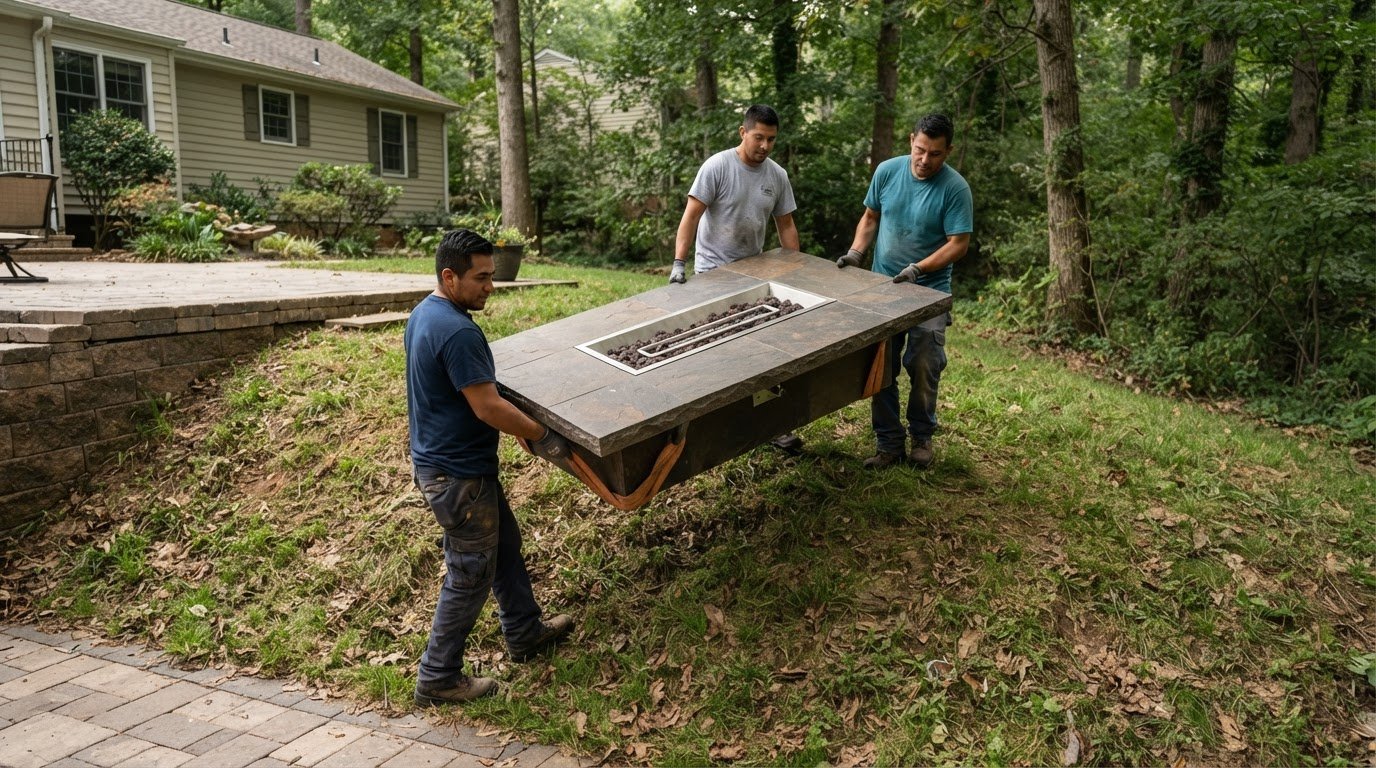
Move a heavy stone fire pit table downhill with a controlled carry, never by letting it slide or roll. For labor to carry a heavy stone fire pit table down an exterior hill in Fairfax Station, plan around its weight, dimensions, route, and access before lifting. A clear path and stable landing area help protect people, the table, and the yard.
A hill can make a table that feels manageable on level ground difficult to control. If the table still needs to be delivered, delivery may suit the job. If it is already on your property, labor for an on-site move may be the practical next step.
This guide explains how to choose between those options, what details help shape the moving plan, and how to prepare level ground at the destination. You’ll also learn what to clear, cool, or disconnect before the move and how a careful team carry can reduce the risk of a costly stumble or damaged stone.
Key Takeaways
- Choose delivery for a table that still needs to reach your property, or hauling labor when it’s already there and needs to move downhill.
- Share the table’s weight and dimensions, the carry distance, and details about stairs, slopes, turns, and access to help plan the job.
- Plan a controlled route and clear obstacles before moving the table to reduce the chance of a slip or damage to the stone.
- Prepare the fire pit by letting it cool and removing loose contents; account for fuel connections before handling it.
- Prepare a stable, level landing area so the table can sit securely once it reaches its destination.
Information Required for a Moving Quote
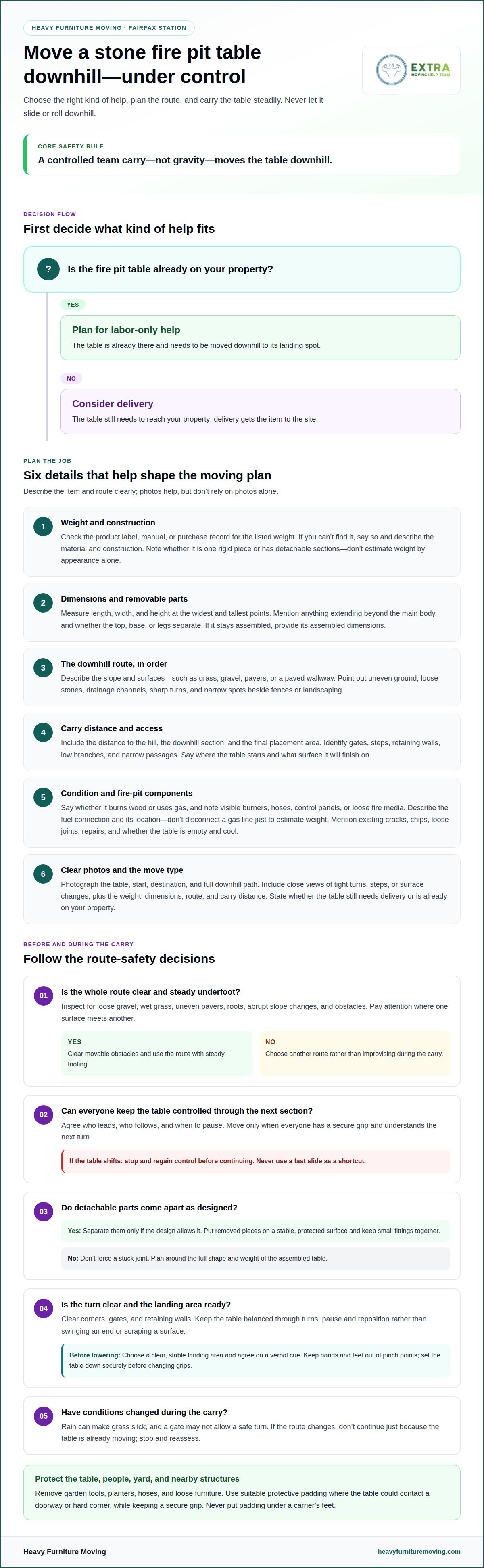
- Find the fire table’s weight before describing the lift. Check its product label, manual, or purchase record and share the listed figure. If you can’t find it, explain that and describe the material and construction, such as a solid stone top with a separate base. Don’t estimate by appearance alone. A table with detachable sections handles differently from a single rigid piece. For labor to carry a heavy stone fire pit table down an exterior hill in Fairfax Station, accurate weight details help determine the handling plan and equipment needed.
- Measure the table at its widest and tallest points. Provide its length, width, and height, and note any parts that extend beyond the main body. A rectangular fire table with a broad top needs different clearance from a compact round model. Say whether the top, base, or legs separate and how each part comes apart. If it stays assembled, provide its assembled dimensions. These measurements help identify tight gates, doorways, and turns before planning the carrying route.
- Describe the downhill route in order, from the table’s current position to its intended landing spot. Note the slope and surface, such as grass, gravel, pavers, or a paved walkway. Point out uneven ground, loose stones, drainage channels, and sharp turns. Explain whether the route narrows beside a fence or passes around landscaping. Describing each change in surface gives movers a clearer picture than simply calling the yard steep.
- Measure the carry distance and identify each access point. Include the distance from the table to the hill, the downhill section, and the final placement area. Describe gates, steps, retaining walls, low branches, and narrow passages between the house and yard. Say whether the table starts on a patio or another hard surface, then name the destination surface. A route that starts beside a driveway and ends beyond a garden gate presents different access considerations from a direct patio-to-patio carry.
- Describe the fire table’s condition and anything that remains attached. Identify whether it burns wood or uses gas, and mention visible burners, hoses, control panels, or loose fire media. Don’t disconnect a gas line just to estimate the weight; describe the connection and its location instead. Note any existing cracks, chips, loose joints, or repairs so they aren’t mistaken for moving damage. Also say whether the table is empty and cool. These details help distinguish the heavy item from components that need separate handling.
- Send clear photos of the table, its access points, and the full downhill path. Take one from the starting position and another from the destination, with close views of narrow turns, steps, or surface changes. Include the weight, dimensions, route, and carry distance rather than relying on photos alone. State whether the table still needs delivery or is already on your property. Delivery gets the item to the site; labor-only help moves an item that is already there. This distinction makes your request specific and useful.
What risks come with moving a stone fire pit table down a hill, and how can damage or injury be prevented?
- Inspect the entire downhill route before lifting. Look for loose gravel, wet grass, uneven pavers, roots, and abrupt changes in slope. These can affect footing or make the table tilt unexpectedly. For example, a paved path that meets a muddy lawn needs attention at the transition. Clear movable obstacles and choose a route with steady footing. If you can’t clear the path, plan another route instead of improvising during the carry.
- Keep the table under control instead of letting gravity pull it downhill. A stone or cast-concrete fire table is heavy, and a sudden slide can injure hands or feet. Agree on who leads, who follows, and when the group will pause. Move only when everyone has a secure grip and understands the next turn. If the table shifts, stop and regain control before continuing. Never use a fast slide as a shortcut.
- Protect the table from twisting and impact at each turn. Stone can chip or crack if an edge strikes a wall, step, or hard paving. Clear the path around corners, gates, and retaining walls before carrying. Keep the table balanced as it changes direction instead of swinging one end around. At a tight bend beside a fence, pause, reposition the carriers, and proceed only when the table can pass without scraping.
- Separate detachable parts only if their design allows it. Removing a top or base can make the table less awkward to carry, but forcing a stuck joint may damage the stone or hardware. Set removed pieces on a stable, protected surface, not on loose ground beside the hill. Keep small fittings together so they don’t disappear in grass or gravel. If the table is one solid unit, plan the carry around its full shape and weight.
- Keep hands and feet clear of pinch points. The base can trap fingers against a step, wall, or landing surface as carriers lower the table. Choose a clear set-down area before the move and agree on a verbal cue before lowering. Don’t reach under a suspended edge to adjust padding or move an obstacle. If the group needs to change grips, set the table down securely first and reset together.
- Protect the yard and nearby structures as well as the fire table. A heavy base may mark soft ground or scrape a deck edge while turning. Remove garden tools, planters, hoses, and loose furniture from the route. Use suitable protective padding where the table could contact a doorway or hard corner, while keeping a secure grip. Don’t put padding under a carrier’s feet, where it could slide.
- Stop if the route changes during the carry. Rain can make grass slick, and a gate that seemed wide enough may not allow a safe turn with the table. Don’t continue just because the table is already moving. Set it down on stable ground, clear the obstacle, and reassess the path. If the slope, footing, or table position makes it difficult to stay in control, bring in trained help rather than asking unprepared people to take the load.
- Use a moving crew suited to a heavy, awkward item when the hill makes a solo or casual carry unsafe. A heavy lifting moving service can help manage the carry as a coordinated task. Share the slope, surface, turns, and landing conditions so the crew can plan a controlled route. Keep children and pets away from the work area, and leave the path clear until the table is set down securely.
If the table starts to slip, a carrier loses footing, or anyone can’t keep a secure hold, set it down safely and reassess before moving again. Once it is in place, keep the surrounding area clear and stable.
A fire pit enclosure helps prevent accidental contact with flames. Stone fire pits require careful sealing to help prevent weather damage. The Fire Prevention Code requires portable outdoor fireplaces in Fairfax County to have at least one portable fire extinguisher rated at least 4-A, or other approved fire-extinguishing equipment, immediately available. The Fire Prevention Code requires portable outdoor fireplace fires in Fairfax County to be constantly attended until extinguished (307.5). Arlington County portable outdoor fireplaces follow a 15-foot distance rule, with an exception for one- and two-family dwellings. For soil with poor drainage, the author recommends digging an optional drainage hole about 8-10 inches deep and 10 inches wide.
Preparing Your Fire Pit for the Move
- Stop using the fire pit well before moving day. Let the burner, tabletop, and any fire media cool completely. A surface that feels cool may still conceal heat around the burner or beneath stones. Don’t judge by appearance or a quick touch. Move the table only when every part is cold to the touch, and keep people away while it cools. This helps prevent hot components from contacting hands, padding, or nearby combustible materials during the carry.
- Remove ash and embers only after the fire pit has cooled. Ashes that are two or three days old may still hold enough heat to start a fire. Carefully transfer them to a covered, noncombustible receptacle and keep it on a noncombustible surface. Don’t tip ash onto grass, mulch, a deck, or into ordinary trash. Check the firebox and corners for smoldering material before closing the receptacle or preparing the table for lifting.
- Empty the firebox of loose material before anyone handles the table. Remove firewood, decorative stones, glass media, tools, and removable covers. Keep each item in a separate container so loose pieces can’t spill during the downhill carry. Rocks inside a fire pit can reach a failure point at 300 to 400 degrees Fahrenheit, so don’t handle hot media or assume it’s safe because the flame has gone out. Leave the firebox clear and easy to inspect.
- Identify the fuel system before disconnecting anything. For a gas fire table, locate the shutoff and visible hose or connection, then follow the manufacturer’s instructions to shut off and disconnect the fuel. Don’t pull or twist the hose, or use it as a handhold. If the connection is fixed or unfamiliar, leave it untouched until someone qualified can handle it. Secure a disconnected hose so it won’t drag, snag, or catch on the table during the move.
- Remove a propane cylinder from the table only after shutting off its supply and safely detaching the connection. Keep the cylinder upright and away from the carrying route. Don’t carry it attached to the heavy table, where movement could strain the connection or shift the load. If the fire pit uses a different fuel system, isolate its supply according to its instructions. Handle the table and fuel separately, not as one combined load.
- Remove detachable accessories that could swing, rattle, or fall. These may include a lid, glass wind guard, burner cover, or removable control component. Place each part on a stable surface away from the slope, and protect fragile pieces from contact with the stone. Don’t force stuck fittings or pry against the tabletop. Leave built-in components in place and tell the moving crew what remains attached.
- Inspect the prepared fire pit before lifting. Look inside the firebox for ash, embers, fuel, loose stones, and tools, then check around the base for anything caught underneath. Confirm that the table is cold, empty, and free of unsecured accessories. Keep the fuel connection separate from the table, and don’t begin the carry if a hot area or loose part remains. This final check can catch hazards that aren’t visible from the carrying position.
- For a table with a heavy stone body and fuel components, arrange the carry after the fire pit is cold, empty, and ready. Plan fire pit moving labor for a controlled handoff and downhill move. Share whether the table is wood-burning or gas, what has been removed, and whether a fuel connection remains attached. Clear the route only after the fire pit preparation is complete, keeping children and pets away from the work area.
Heavy Furniture Moving: labor only movers near me
Heavy Furniture Moving provides labor-only help for moving heavy items on your property. Turn to the team when your stone fire pit table is already there and needs a controlled move downhill, rather than delivery to your home. Share the table’s size and weight, the route’s slope and surface, and any attached components so the moving plan reflects the actual carry.
This service suits homeowners who have prepared the fire pit and cleared its route but don’t want to manage a difficult lift alone. Heavy Furniture Moving also offers Movers Near Me for broader moving needs. When describing a bulky table, include the destination and access conditions. Contact Heavy Furniture Moving to discuss labor for your fire pit table move.
Make the Next Move a Steady One
A downhill move is easier to manage when the next step is clear: decide where the table will go and who will handle the carry. If you need labor to carry a heavy stone fire pit table down an exterior hill in Fairfax Station, share the table and route details with Heavy Furniture Moving so the team can plan around your property. The company also handles Movers Near Me requests, Exercise Equipment Moving, and Sofa Hoisting for other challenging household items.
You don’t need to tackle a heavy, awkward lift on your own. Reach out with a brief description of the table and its path, then choose the support that fits your move. Contact Heavy Furniture Moving to discuss help with the carry. Take the next step with a clear plan and a steady team behind the move.
Frequently Asked Questions
Which local movers or specialty heavy-item movers serve Fairfax Station, Virginia?
Heavy Furniture Moving serves Fairfax Station and nearby communities, including Fairfax, Woodbridge, Manassas, Manassas Park, Aldie, Ashburn, McLean, Vienna, Reston, Centreville, Chantilly, Clifton, Dumfries, South Riding, Haymarket, and Gainesville. Its services include moving heavy and bulky household items. For labor to carry a heavy stone fire pit table downhill in Fairfax Station, share the item and route details with the team to discuss the move.
What equipment and crew size are needed to move a heavy stone fire pit table safely?
The right crew and equipment depend on the table’s weight, shape, and route, so a standard crew count won’t suit every carry. A broad stone top may need different handling from a compact, separable table. Heavy Furniture Moving includes wrap, moving blankets, and straps on every job. A clear photo of the table and access route can help the team assess the carry before moving day.
How does hiring movers compare with renting equipment or asking a handyman to move the table?
Hiring movers brings a crew to coordinate the handling, while renting equipment means selecting and operating it and organizing enough capable help. A handyman may suit general tasks, but a steep carry with a heavy stone object calls for careful control of the load. Compare options by considering who will manage the lift, route, and set-down. Choose an approach that gives the table a controlled path from start to finish.