Moving a Heavy Marble Console Through a Narrow Entryway
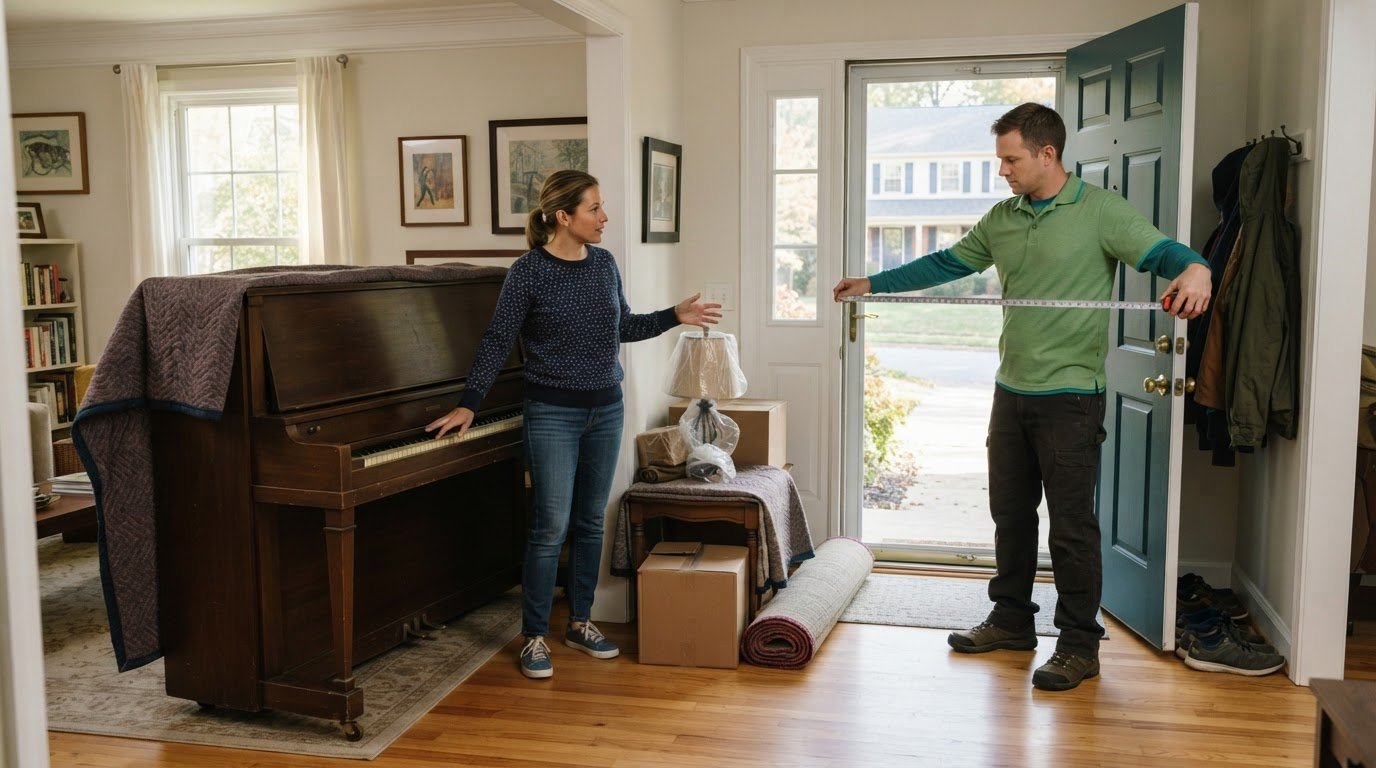
Measure the route before lifting. Moving a heavy marble console table through a narrow entryway in Fairfax starts with comparing the table’s depth to the hallway’s usable space: a slim console for a tight hallway is generally 10 to 14 inches deep. Measure the doorway with its hinged door open 90°; the U.S. Access Board describes measuring clear width from the stop to the face of the door. Account for the door swing and handles, too.
A narrow turn can make moving a heavy marble console table through a narrow entryway in Fairfax more difficult than its weight alone suggests. Marble can crack if mishandled. This guide explains how the console’s depth, hallway clearance, door swings, and handles affect the route, and what to consider before moving it. Assess the tight spots in advance so the stone stays protected and each turn is controlled.
Key Takeaways
- For a tight hallway, a console that is 10 to 14 inches deep can help preserve usable space.
- Measure the full route, not just the entry. Hallway width and turns affect how the table can pass through.
- For a hinged doorway, measure clear width with the door open 90° from the stop to the face of the door, as the U.S. Access Board advises.
- Include door swings and handles in your clearance plan so they don’t catch or block the table during a turn.
- Marble can crack if mishandled, so careful support and controlled movement matter throughout the doorway.
1. Console tables in narrow hallways
Start with the hallway’s usable width, then compare it with the console’s depth. A tight hallway generally suits a console table 10 to 14 inches deep. That depth can leave more room for people and moving equipment. Measure at the narrowest point, including trim, radiators, and other fixed obstacles. A clear section near the entrance doesn’t help if the table must pass a tighter stretch farther along.
For a primary path, aim to preserve 30 to 36 inches of walking space behind the table. A secondary path may work with 30 inches. These figures describe space around a placed console, not the opening needed to carry it. A 14-inch-deep console in a 36-inch-wide hallway leaves 22 inches of walking space. That may feel cramped on a main route, even if the table fits physically.
A console is usually a poor fit in a 36-inch-wide hallway because its depth takes up too much of the passage. In a 42-inch hallway, a slim table can feel more intentional. Picture a 12-inch-deep console: it leaves more room than a deeper piece, but doorways and turns still matter. Check the whole route, not just the wall where the table will sit.
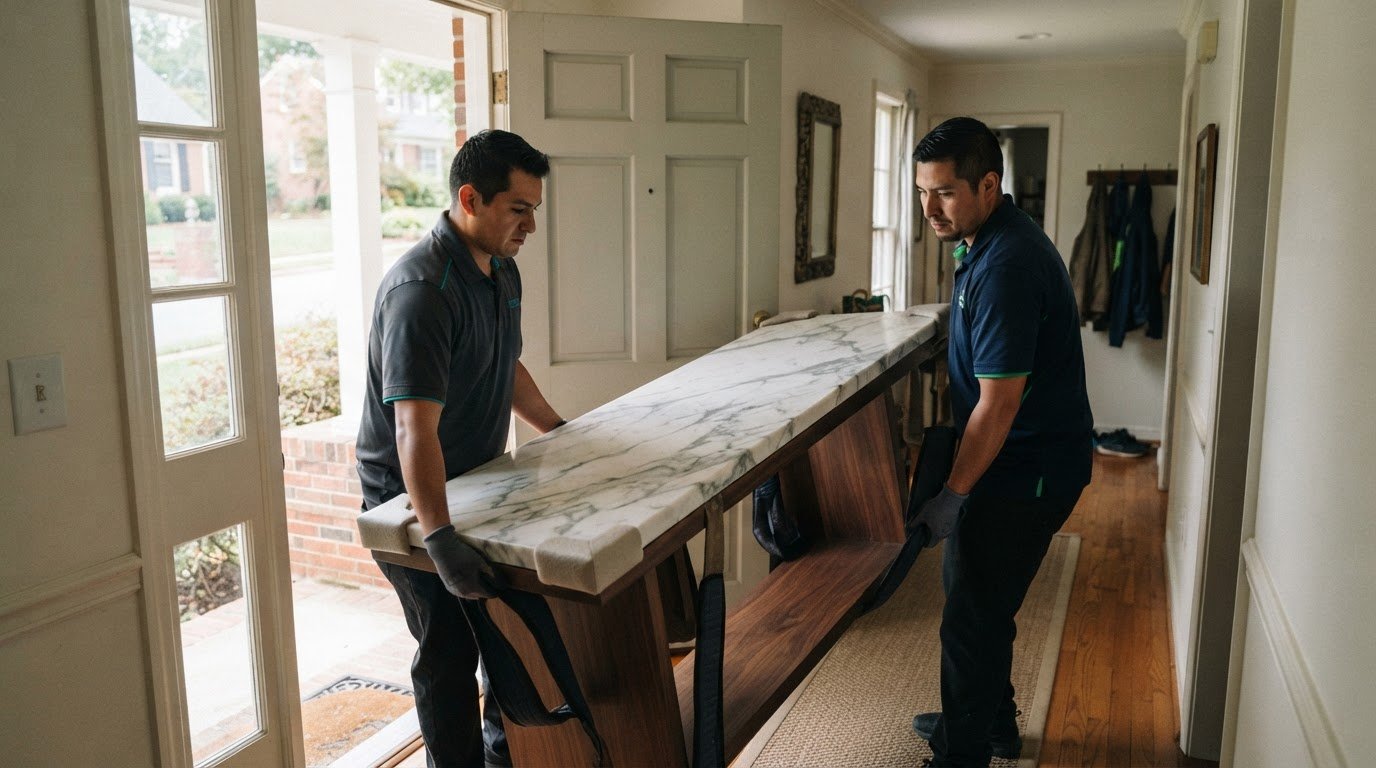
When moving a heavy marble top, use industrial straps or ropes to support it and provide secure handholds. A protective frame padded with blankets can help shield the stone during transport. The frame must fit the top, and the route must leave enough room for the people carrying it. Don’t judge whether the move is possible by hallway width alone.
In Fairfax, elevator reservations, loading access, and parking instructions depend on the property’s rules. Treat them as part of the route plan and coordinate access with building management before moving day. If a loading area is unavailable, the crew may need to carry the table from a different location, increasing the distance.
Some console bases separate from their marble tops, making the base easier to move than the stone surface. Whether yours comes apart depends on its construction and fasteners. Keep the top supported, and don’t force a resistant joint. A loose or poorly supported slab can shift during a turn.
Marble can crack if mishandled. Tipping can shift the top’s weight, while contact with a doorframe or wall can scratch or chip the surface. Clear hallway obstacles first, keep the stone supported with straps, and move deliberately through each turn. Pause at a tight corner to plan the change in position instead of rushing the lift.
2. Door swing and handle clearance
Measure the doorway with the door open before moving the console. According to the U.S. Access Board, measure clear width with a hinged door open 90° from the stop to the face of the door. This gives the usable opening, not the width from frame to frame. A door left partly open can make the opening look wider than it is. Record the narrowest point the table must pass.
Next, map the door’s full swing across the entry floor. Keep 4 to 6 inches between the console’s front edge and the door-swing arc. This space helps prevent the door from striking the table after placement. During the move, the swing arc also affects where the crew can pause or reposition the load. Mark the arc temporarily, then keep the route clear.
Door handles create another obstacle. Measure how far a knob or lever projects into the opening, and check whether it lines up with the console’s top. A protruding handle can catch a protective covering or restrict a turn. A console may clear the doorframe straight on but snag when its corner passes beside a lever. Plan the angle, not just the approach.
Protect the frame, floor, and walls before carrying the marble through. Cover the floor with suitable protection, and pad exposed frame edges and nearby wall corners. Keep coverings flat so they don’t bunch underfoot. A fold at the threshold can trip a carrier or destabilize the load during a turn.
Approach the threshold slowly and with control. One person can watch the door and handle while the carriers focus on supporting and steering the table. Pause before the first turn, check the clearance, and move only when the path is clear. Don’t brace the table against the door or let the marble rest on its edge.
Before lifting, remove any doorstops that can be safely moved, along with rugs and loose items. Secure the door fully open so it can’t swing into the load. If the entry has two doors, account for both swing paths. These steps help prevent surprises at a tight Fairfax entryway.
A tight doorway calls for steady hands and a planned route. For support with a challenging furniture move, careful in-home furniture moving can help manage the carry and protect the surrounding space.
Once the table is in place, consider the visual space above it as well. Leave 12 to 18 inches of visual clearance above the console table arrangement. This breathing room helps wall decor feel balanced without crowding the entry or interfering with the surrounding space.
3. Narrow entryway console depth
Depth affects two separate questions: whether the console fits its final spot and whether it can get there. A slim profile may preserve passage space, but the table still has to clear doorframes and turns. Measure its deepest point, including the edge, apron, and hardware. Compare that with the narrowest usable part of the route.
A console for a tight hallway is generally 10 to 14 inches deep. That range describes the furniture’s depth, not the doorway clearance needed to move it. A table’s marble top may also extend beyond its base. Measure the top separately, since its corners can catch even when the legs appear to clear. Note any decorative edges that add width or depth.
Use a simple route sketch before moving. Mark the entry opening, hallway, turns, and the table’s destination. Add the console’s length, depth, and height to the sketch. A typical console table stands 28 to 32 inches high, but measure the actual piece. A low ceiling, stair rail, or projecting light fixture can restrict how the table is tilted.
Check the table at every turn. A console that fits through a straight opening may need more room to rotate around a hallway corner. Picture its longest edge sweeping through the turn, not just its narrow side passing the doorway. Include the base legs and the marble top’s overhang. If there’s no room to adjust the angle, the carry may stall.
If the table won’t fit, stop rather than forcing it through. Recheck the measurements, identify the obstruction, and assess whether the base can be detached without stressing the marble. A removable base may reduce the table’s moving dimensions, but never pry apart a joint or lift the stone without support. If the top still won’t clear, choose another safe route rather than risk a crack.
Depth also matters when placing the console. Leave room to walk past it or open an adjacent door. Even a slim table can obstruct a passage if its handles, legs, or position project into the route. Consider the whole shape, not just the top’s stated depth.
Before lifting, compare the route measurements with the dimensions of the protected table. Padding and a carrying frame add bulk, so include them in the clearance plan. The question isn’t simply whether the bare top fits. The fully supported load must clear each doorway and turn without scraping walls or twisting the stone.
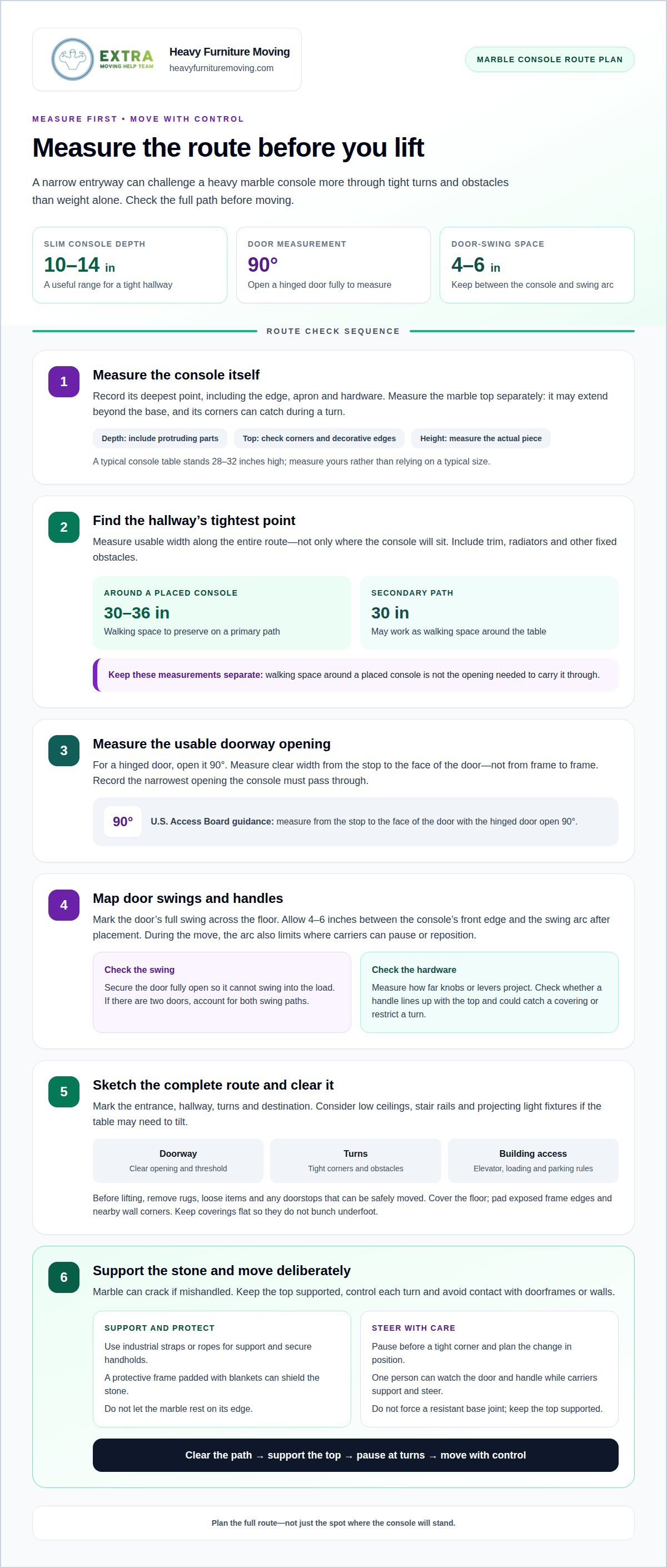
4. How to measure a narrow entryway and console table before moving
Sketch the route instead of guessing. Trace the console’s path from its current room to the exit, marking each doorway, hallway, corner, and change in floor level. Measure the narrowest clear opening along the way. Include trim, door hardware, and fixed obstacles that reduce usable space. A wide front entrance won’t help if a hallway turn blocks the table.
Measure the console at its widest points. Record the marble top’s length, depth, and thickness, then measure the base separately. Include any overhang, carved edge, or projecting hardware. The base may fit through an opening even when the stone top does not. If you plan to use a frame or padding, allow for that added bulk. Moving a heavy marble console table through a narrow entryway in Fairfax starts with measuring both the furniture and the full route.
For a hinged doorway, use the clear opening rather than the frame’s overall width. Measure with the door open 90° from the stop to the face of the door, as the U.S. Access Board specifies. Note any knob or lever that intrudes into the passage. A doorway measurement that ignores the door itself can overstate the space available.
Then measure the hallway at its tightest point. A console for a tight hallway is generally 10 to 14 inches deep. That figure helps assess placement, but it doesn’t prove the table can pass through. A 14-inch-deep console in a 36-inch-wide hallway leaves 22 inches of walking space. Use that example to distinguish furniture fit from comfortable passage.
Check every turn, not just the straight sections. Measure the floor area where the table must rotate, and note nearby walls, rails, or furniture. A long top may need more turning room than its depth suggests. When moving a heavy marble console table through a narrow entryway in Fairfax, include the space needed to change its angle. Account for ceiling fixtures if the route requires tilting.
Write the measurements beside each marked point on the sketch. Label the entry opening, narrow hallway, and each corner clearly. This makes the tightest constraint easy to spot before the lift begins. If the hallway is 42 inches wide, a slim console may sit more comfortably there, but the doorway and turns still determine whether it can reach that spot.
Compare the narrowest opening with the table’s largest dimension in the planned orientation. Recheck the measurements after deciding whether the base can be safely separated. Don’t force a marble top through a gap that leaves no room to control it. Accurate measurements can reveal when you need a different route before lifting begins.
5. How to safely move a heavy marble table through a narrow doorway
Plan the lift before anyone touches the table. Clear the route, secure doors, and remove loose rugs and objects. Decide where the carriers will pause and how the table will turn. Marble can crack if mishandled, so avoid rushing, sudden shifts, and using the stone’s edge as a handhold. A narrow Fairfax doorway calls for clear communication at every change of direction.
Protect the marble before moving it. A fitted wooden frame can support the top, with blankets padding the contact points. Plywood can cover the frame to shield the stone. Secure all protective materials, and keep screws away from the marble. Match the frame to the top’s dimensions so the slab stays supported without shifting inside it.
Use industrial straps or ropes to support the tabletop and give carriers steady handholds. Set the grip before lifting, then keep the load controlled as it moves. Don’t let a strap slide across an exposed marble edge. Pause at the doorway to check clearance before moving forward. One person can guide the turn while the carriers maintain support.
Some heavy marble tops can be turned on their sides to pass through a doorway. This may help with a tight opening, but it changes how the weight is carried. Use this position only if the top remains fully supported and the route allows controlled movement. Prevent the slab from striking the frame, floor, or wall at the threshold.
If the base separates, move it apart from the marble top. The base may be easier to carry, while the slab needs separate support and protection. Don’t force fasteners or twist the top to free a stuck joint. Keep the pieces organized so they can be aligned again at the destination. A clear sequence helps avoid fumbling in a confined entry.
For a difficult turn, stop before the load reaches the tightest point. Reposition carriers, check the next handhold, and confirm the path is clear. If the table won’t pass without scraping or losing support, change the approach instead of forcing it. A heavy lifting moving service can handle the demanding carry with a planned route and careful control.
The marble tabletop was turned on its side and carried out of the Tenant House. That example isn’t a rule for every slab or doorway: the safe approach depends on whether the stone stays supported throughout the maneuver. Before carrying it sideways, agree on the direction of travel and a simple stop signal. Move only as far as the carriers can control, then reassess the route rather than relying on momentum. If the table starts to tilt unexpectedly or someone loses a secure hold, pause and restore stable support before continuing. Once through the opening, set the tabletop on a prepared, padded surface. Don’t leave it balanced upright while clearing the way. Treat the slab as fragile until it is safely positioned at its destination.
Heavy Furniture Moving
Heavy Furniture Moving helps plan and carry out moves involving bulky marble consoles and tight entryways. This support can be useful when the table’s weight, a narrow turn, or limited handholds make the move difficult to manage alone. The team can plan around the route, the table’s separate parts, and the clearance at each doorway.
Share the console’s dimensions and describe the tightest point along the route. These details help shape a practical plan for lifting and carrying it. Heavy Furniture Moving offers in-home furniture moving and heavy lifting moving service for heavy pieces that need careful handling inside your home.
Contact Heavy Furniture Moving to plan your marble console move.
Make the Next Move with Confidence
Before moving a heavy marble console table through a narrow entryway in Fairfax, decide who will manage the lift and guide the turns. A clear plan makes an uncertain task more manageable. Give the team a useful starting point by describing the table, the entryway, and any tight corners along the route.
Heavy Furniture Moving provides physical support for demanding furniture moves that require careful handling. Describe what makes your console move challenging and take the next step at a pace that works for your home.
Contact Heavy Furniture Moving to discuss your move. A thoughtful plan can help you move forward with greater confidence.
Frequently Asked Questions
How much does it cost to move a heavy marble console table in Fairfax, VA?
The price depends on the move and is provided after a quote request. Important factors include the console’s dimensions, how it’s handled, the distance, and access conditions such as stairs or a restricted entry. Include details about the table and both locations when requesting a quote. That helps account for the actual work involved, rather than relying on a broad estimate that may not fit your move.
Which Fairfax, VA furniture movers handle marble and stone tables?
Heavy Furniture Moving provides residential moving help for heavy, bulky furniture in Fairfax. For a marble console move, share the table’s dimensions, whether its top separates, and the access details at both locations. Pre-move measurements, wrap, blankets, and straps are included on every job. This information helps the team plan for the specific piece and entry route rather than treating a marble console like an ordinary lightweight furnishing.
Should I move a heavy marble console table myself or hire professional movers?
Choose professional help if the console is difficult to grip, the stone top can’t be safely supported, or the route requires a tight turn. DIY is better suited to a manageable piece and a clear path, with enough capable helpers to control it. Marble can be damaged by an uncontrolled shift, so consider the route and handling demands, not just whether the table appears movable.