Junk Hauling for Heavy Entertainment Centers in Clifton
Donation or recycling may be possible, depending on the entertainment center’s condition, materials, and local acceptance rules. Junk hauling for an old, heavy entertainment center in Clifton is another option when the piece is too bulky for curbside pickup. Setting it at the curb is not always the simplest solution.
It makes sense to look for a new home for usable furniture and avoid wasting recyclable materials. But older entertainment centers can be awkward to move and may combine materials that aren’t accepted together. Curbside collection may also exclude oversized items, so leaving the cabinet outside may not solve the problem.
This guide explains the factors that affect removal costs, why curbside pickup may not work, and how a cabinet’s condition and construction influence donation and recycling options. You’ll also learn what to expect from heavy-item removal, so you can plan the next step without trying to maneuver the cabinet through a doorway yourself.
Key Takeaways
- Learn which details about an entertainment center help explain a removal estimate, from its size to the effort involved in moving it.
- See why curbside collection may not suit a large cabinet and what access or handling factors can affect pickup.
- Understand how furniture condition and materials can shape whether donation or recycling is a practical option.
- Compare single-item and truck-volume pricing approaches by looking at what each one measures.
- Find out when heavy-item moving help can make removal easier, especially when the furniture is difficult to maneuver indoors.
Bulky furniture and entertainment-center removal
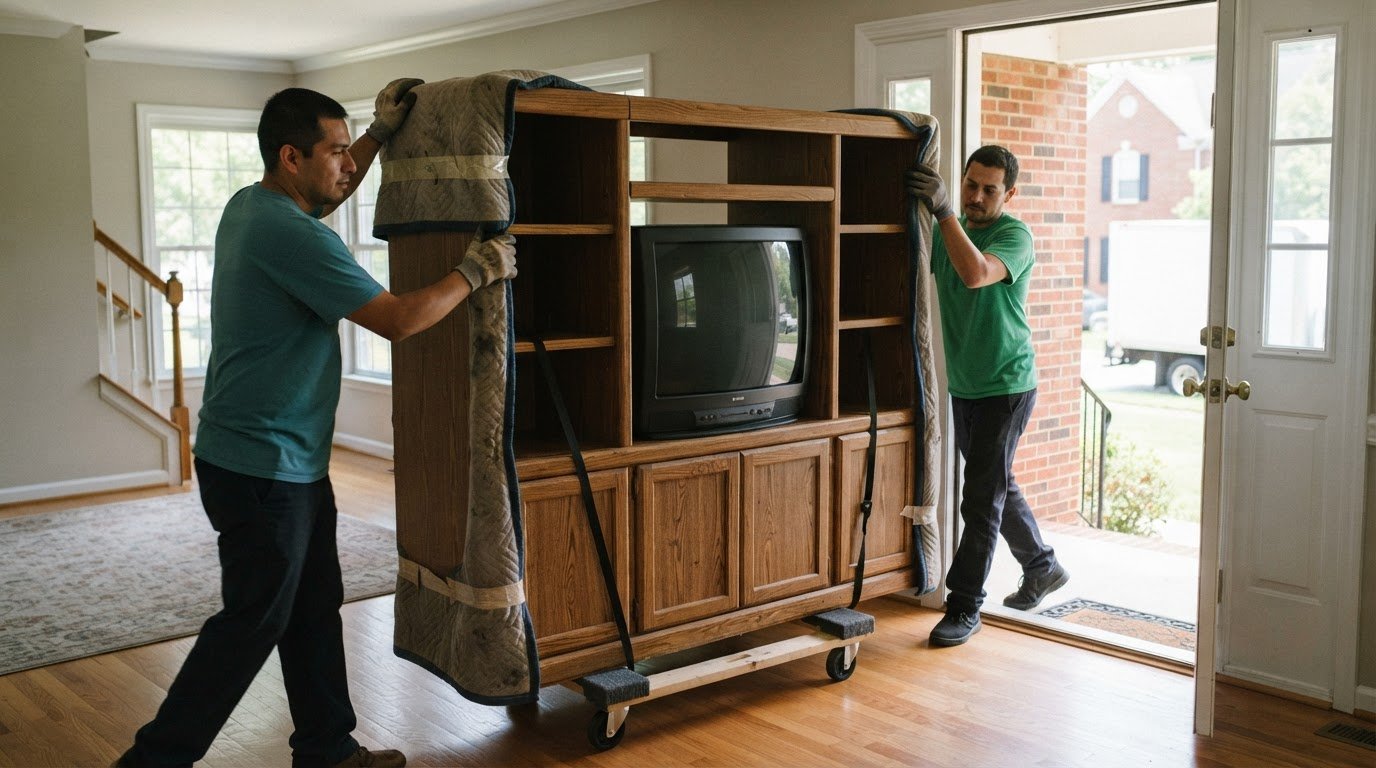
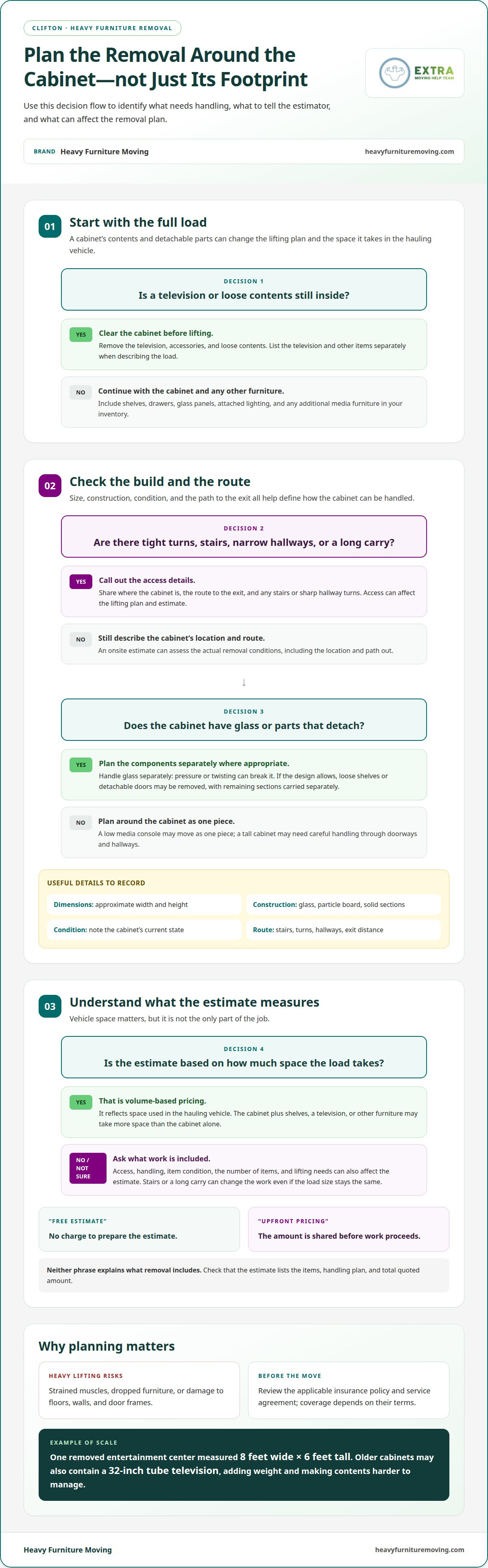
An entertainment center can be far larger than a standard TV stand or console. One removed from a Columbia, Missouri, home measured eight feet wide and six feet tall. Older cabinets may also hold a 32-inch tube television, adding weight and making the contents harder to manage. These examples show why junk hauling for an old, heavy entertainment center in Clifton takes more planning than moving a small side table.
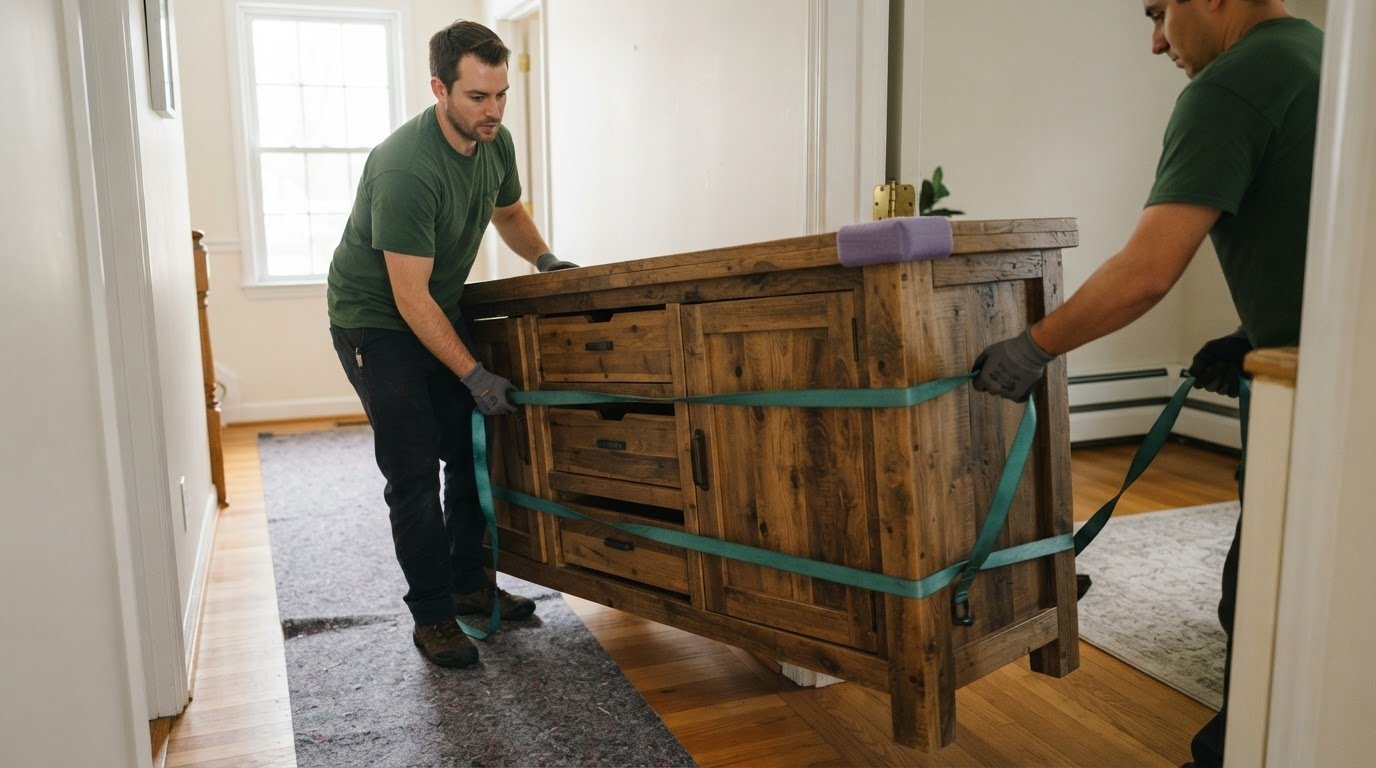
Start by listing everything to be moved or removed, not just the cabinet. Include shelves, drawers, glass panels, attached lighting, and any television inside. A low media console may move as one piece, while a tall cabinet can require careful handling through doorways and hallways. The item’s size, construction, condition, and route to the exit all shape the lifting plan.
Heavy lifting can lead to strained muscles, dropped furniture, or damage to floors, walls, and door frames. Insurance coverage depends on the applicable policy and service agreement. Review the terms before the move and make sure they address both the furniture and the property involved.
Disassembly can make a bulky piece easier to handle, but plan it according to the cabinet’s construction. A crew may remove loose shelves or detachable doors, then carry the remaining sections separately if the design allows. Removing the contents before lifting can reduce shifting. Handle glass components separately, since pressure or twisting can break them.
- Measure the route: Note tight turns, stairs, doorways, and the distance to the exit.
- Clear the cabinet: Remove the television, accessories, and loose contents before lifting.
- Assess the build: Identify glass, particle board, solid sections, and detachable parts.
- Plan the carry: Choose whether the item moves intact or in manageable sections.
Residential junk and furniture removal can involve more than entertainment centers. TV stands, consoles, bookcases, and other media furniture may need different handling depending on their shape and materials. List each item separately, including appliances: a refrigerator, for example, has different handling needs from a wooden cabinet. A clear inventory helps plan the space and lifting for each piece.
For a large cabinet in Clifton, share its approximate dimensions, condition, and location in the home when arranging removal. Mention any stairs, narrow hallways, or television still inside. These details help define the job before lifting begins.
For furniture pickup in Clifton, list the entertainment center, TV stands, consoles, bookcases, and any other media furniture. Share each item’s approximate dimensions and condition, where it is in the home, and whether stairs or narrow hallways are along the route.
Onsite estimates and volume-based pricing
An onsite estimate can account for the actual removal conditions, not just the cabinet’s appearance. The estimator can assess its location, the route out, and any additional items. A cabinet beside a narrow stairway may call for a different lifting plan than one near a clear exit. This assessment gives the estimate a clearer basis.
Volume-based pricing reflects how much space the load takes in a hauling vehicle. A single cabinet may take less space than the cabinet plus its shelves, television, and other furniture. Truck space is one factor, but it doesn’t capture every part of the job. Access, handling, and the number of items also affect an estimate.
The price depends on the job and is provided after a quote request. Load volume, access, item condition, and lifting needs can all affect the cost. A disassembled media unit, for example, may take less vehicle space than the same unit transported intact. Stairs or a long carry can affect the work even if the load itself stays the same.
Clarify both free estimates and upfront pricing in the estimate itself. “Free” means there’s no charge to prepare the estimate; “upfront” means the amount is shared before work proceeds. Neither phrase explains what the removal includes. A useful estimate identifies the entertainment center, any additional furniture, the handling plan, and the total quoted amount.
An onsite estimate should account for the actual route out. The estimator can note whether the cabinet is upstairs, whether the hallway turns sharply, and whether doors or shelves need to be removed. These details help distinguish the lifting involved from the truck space the items will occupy. They also make any changes to the job easier to identify before removal starts.
- List the load: Include the cabinet and every item intended for removal.
- Describe access: Note stairs, tight turns, and distance to the exit.
- Separate services: Distinguish lifting and carrying from disposal or hauling.
- Review the estimate: Match its listed items and work to the planned job.
A clear estimate can also help you decide whether removing extra items makes sense. If an unused TV stand is already headed out, including it in the same load may change the volume calculation. If you only need help moving a heavy piece, a heavy lifting moving service may better fit the task. Either way, define the work before scheduling so the estimate reflects the actual load and handling.
Responsible recycling and disposal
An entertainment center may combine wood, glass, plastic, and metal hardware in one bulky piece. These materials don’t necessarily share a recycling route. A particleboard cabinet with glued laminate differs from a solid-wood shelf, while removable metal handles may be easier to separate. Responsible disposal starts by identifying the materials and whether the parts can be separated safely.
Donation is most practical when the cabinet is clean, stable, and usable. Working doors, intact shelves, and unbroken glass can make it more useful to another household. Deep water damage, missing structural parts, or broken glass can make reuse difficult. Acceptance criteria vary, so good condition alone doesn’t guarantee that an organization will take the item.
Before removal, separate the contents from the furniture. Take out loose cords, remotes, game accessories, and personal items. Keep a television separate from the cabinet, since electronics may follow a different collection path from household furniture. This helps prevent small items from getting buried in the load and makes disposal decisions clearer.
Next, check the cabinet’s construction. Removable shelves, knobs, and metal brackets may be separated from the main structure. Pressed wood or particleboard can have bonded surfaces that complicate material recovery. Don’t assume that something marked as wood will be accepted as clean lumber. The actual materials and the receiving facility’s rules determine whether a component can be recycled.
- Reuse: Consider donation for a sturdy cabinet with usable shelves and doors.
- Separate: Keep electronics, cords, loose glass, and hardware apart from furniture.
- Recycle: Sort materials only when a local receiving option accepts them.
- Dispose: Direct damaged or mixed-material pieces toward an appropriate disposal route.
For a Clifton household, placing an item at the curb doesn’t guarantee it will be recycled. Collection rules vary by material and item type. An intact TV stand may be easier to reuse than a tall entertainment center with broken panels. A recycling label or wood-like appearance alone doesn’t establish that the item will be accepted.
When donation or recycling isn’t practical, junk removal can clear the space without leaving a heavy cabinet at the curb. Keep the destination decision separate from the lifting plan: careful handling may be needed whether the piece is headed for reuse, material recovery, or disposal. A clear inventory of the cabinet, electronics, and detachable parts helps keep items with different end-of-life options separate.
Single-item and truck-volume pricing
A single-item quote identifies the entertainment center as the item being removed. Truck-volume pricing focuses on the space taken up by the full load. These approaches measure different things, so compare what each estimate covers. A quote for the cabinet alone may not include a television, loose shelves, or other furniture.
For one bulky cabinet, an item-based estimate can make the scope of the job clear. For an estate cleanout with a cabinet, side tables, and boxes, load volume may matter more. Consider what will be removed, how it will be handled, and whether other items will be included. Ask for the full scope in writing, with each item described clearly.
The price depends on the job and is provided after a quote request, based on the load, access, and lifting involved. “No hidden fees” should mean the quoted scope and total are clear before work starts, not just that the price sounds fixed. A written estimate should explain what the charge covers and how added items or changed conditions affect it.
In Clifton, Virginia, compare junk removal with labor-only help by asking who provides transportation and handles the items after lifting. Junk removal takes unwanted items away; labor-only help focuses on the physical work, while you arrange the vehicle and disposal. Choose based on whether you need hauling, lifting, or both.
Truck-volume estimates can change when the load changes. Adding a console or several shelves may increase the space needed; removing an item may reduce it. The shape of the furniture matters, too: a tall cabinet can leave unused gaps around it. Whenever possible, the estimate should describe the planned load rather than rely on a vague label such as “one room.”
- For one item: Confirm the estimate names the entertainment center and included parts.
- For a mixed load: List each furniture piece and household item in the scope.
- For labor only: Clarify who provides the vehicle and handles disposal.
- For a changing load: Ask how additions or removals affect the quoted work.
Before booking, match the estimate to your goal. If you’re clearing an estate, a load-based approach may cover several items together. If you only need a cabinet lifted into a vehicle you’ve arranged, labor-only help may fit better. A clear comparison aligns expectations about the work, transportation, and final destination.
Clifton, Virginia junk hauling companies furniture pickup
Pickup of a heavy entertainment center depends on the item, its location, and the service you need. In Clifton, Virginia, the plan should account for the home’s address and access. Describe whether the cabinet is upstairs, near an exit, or behind other furniture. Those details help distinguish a straightforward carry from a more involved removal.
“Furniture pickup” can mean different things. A hauling service removes unwanted items and transports them away. In-home furniture moving focuses on relocating a piece within the home or to a nearby loading point. Someone clearing a media room may need removal, while someone rearranging it may only need the cabinet moved to another room.
Share a clear inventory before pickup. List the entertainment center, any separate TV stand, and other furniture. Say whether a television or loose contents remain inside. A tall cabinet with removable shelves calls for a different handling plan from a low console. An accurate list helps ensure the requested work matches the items in the home.
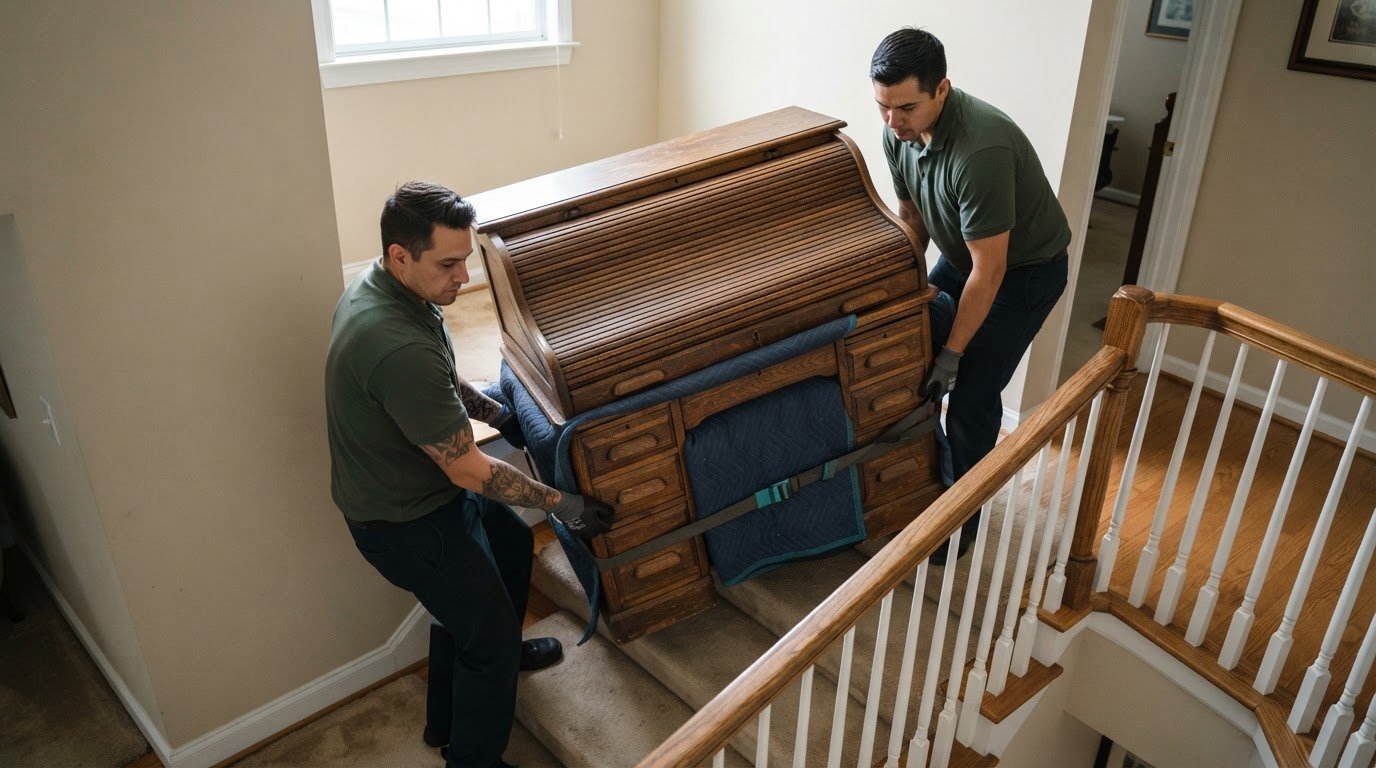
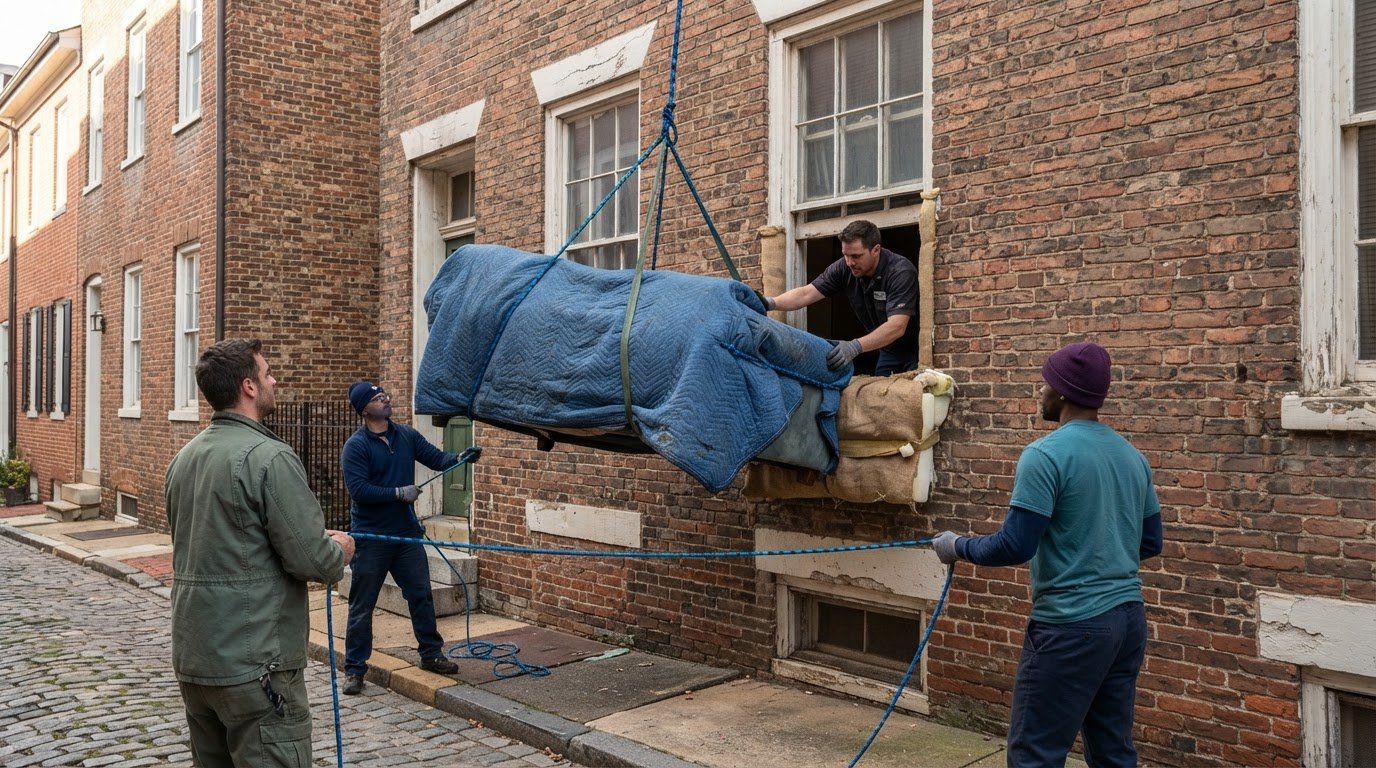
Access details matter as much as the furniture list. Mention stairs, narrow hallways, sharp turns, and the route from the room to the exit. A cabinet may fit through a doorway but still be difficult to turn in a tight hallway. Identify the destination for each piece, whether it’s leaving the home or moving to another room.
- For unwanted furniture: Identify every item intended for removal and hauling.
- For a room change: Specify where the cabinet needs to move inside the home.
- For a mixed request: Separate pieces being hauled from pieces being repositioned.
- For difficult access: Describe stairs, turns, and the route to the exit.
These distinctions help keep the pickup task clear. A request to haul away a cabinet is different from a request to move it upstairs or reposition it beside another wall. If the job involves furniture movement within the home, arrange in-home furniture moving help for the lifting and placement work. State the destination and access route so the requested work matches the room and furniture.
For an entertainment-center pickup in Clifton, Virginia, share the item list and handling needs together. Note the cabinet’s approximate dimensions, whether it’s empty, and which pieces should leave the property. Then describe the route and destination. A specific request clarifies whether you need furniture hauling, in-home moving, or both, rather than simple curbside placement.
Heavy Furniture Moving
Heavy Furniture Moving helps with careful lifting or repositioning of an entertainment center inside your home. If you’ve arranged disposal but need help getting the cabinet out of a room, in-home furniture movers can handle the heavy lifting. This service can also help move a cabinet you’re keeping to another room.
Choose moving help when the main challenge is the cabinet’s weight, awkward shape, or route through the house. Heavy-item support also covers furniture moves, exercise equipment, and sofa hoisting. When describing the task, share the item’s location and destination so the work can be planned around the move you need.
Contact Heavy Furniture Moving to discuss the lifting or furniture move you need.
Make the next move manageable
Once you’ve decided what to do with the cabinet, focus on the hands-on help you need. If arranging junk hauling for an old, heavy entertainment center in Clifton has left you with a difficult lift or indoor move, describe the item and where it needs to go. A clear destination helps keep the next step focused on your needs.
Heavy Furniture Moving offers Movers Near Me for moving support, plus Exercise Equipment Moving and Sofa Hoisting for other challenging items. Choose help based on the task, whether you’re repositioning furniture or moving a bulky piece that’s hard to maneuver. You don’t have to tackle a heavy lift alone.
Contact Heavy Furniture Moving to discuss the furniture move you need. Take the next step with a straightforward plan and a capable team ready to help.
Frequently Asked Questions
Do you recycle or donate furniture?
Furniture may be donated or recycled when its condition, materials, and acceptance requirements make those options practical. A cabinet with working doors and intact shelves may suit reuse; damaged pieces or those made with bonded materials may not. Separate electronics and personal belongings, then decide whether to arrange donation or removal. A furniture pickup doesn’t necessarily mean the item will be donated or recycled.
What happens to items after you haul them away?
The right destination depends on the item’s condition and materials. Usable furniture may be suitable for reuse, while some separated materials may be recyclable. Mixed or damaged pieces may need another disposal route. A cabinet with a broken frame and intact metal hardware, for example, may offer different options for its separate parts. When arranging removal, share your preferred outcome for each item.
Can I arrange junk removal for a heavy entertainment center in Clifton, Virginia?
Yes. Heavy Furniture Moving provides residential junk removal and helps with heavy, bulky household items in Clifton, Virginia. Say whether you need the entertainment center removed from the home or moved to another room. That distinction defines the job: junk removal is for unwanted items, while in-home furniture moving suits a cabinet you’re keeping.
Is junk removal pricing for bulky furniture based on volume or weight?
Pricing depends on the requested work and the items involved. Heavy Furniture Moving offers flat rates for most single heavy items or hourly labor with a two-hour minimum. These options don’t establish a weight-based price for junk removal. Removing one entertainment center is a different job from clearing a room with several pieces, even if one item feels especially heavy.
How should I prepare a heavy entertainment center for junk removal?
Remove personal valuables, loose electronics, and anything you want to keep. Most items don’t need to be emptied, though dressers and safes must be emptied. Wrap, blankets, and straps are included on every job. Share the cabinet’s location and intended destination so the removal can be planned around the home’s layout and the route out.
Compare junk removal companies and labor-only hauling in Clifton, Virginia
Junk removal can include hauling an entertainment center away for reuse, recycling, or disposal. Labor-only help suits jobs where you need the heavy piece moved and provide the vehicle. Clarify whether the work should include lifting, carrying, and hauling when arranging the job in Clifton, Virginia.
Frequently Asked Questions
Furniture may be donated or recycled when its condition, materials, and acceptance requirements make those options practical. A cabinet with working doors and intact shelves may suit reuse; damaged pieces or those made with bonded materials may not. Separate electronics and personal belongings, then decide whether to arrange donation or removal. A furniture pickup doesn’t necessarily mean the item will be donated or recycled.
The right destination depends on the item’s condition and materials. Usable furniture may be suitable for reuse, while some separated materials may be recyclable. Mixed or damaged pieces may need another disposal route. A cabinet with a broken frame and intact metal hardware, for example, may offer different options for its separate parts. When arranging removal, share your preferred outcome for each item.
Yes. Heavy Furniture Moving provides residential junk removal and helps with heavy, bulky household items in Clifton, Virginia. Say whether you need the entertainment center removed from the home or moved to another room. That distinction defines the job: junk removal is for unwanted items, while in-home furniture moving suits a cabinet you’re keeping.
Pricing depends on the requested work and the items involved. Heavy Furniture Moving offers flat rates for most single heavy items or hourly labor with a two-hour minimum. These options don’t establish a weight-based price for junk removal. Removing one entertainment center is a different job from clearing a room with several pieces, even if one item feels especially heavy.
Remove personal valuables, loose electronics, and anything you want to keep. Most items don’t need to be emptied, though dressers and safes must be emptied. Wrap, blankets, and straps are included on every job. Share the cabinet’s location and intended destination so the removal can be planned around the home’s layout and the route out.