How to Unload Freight and Move Heavy Gym Plates in Aldie
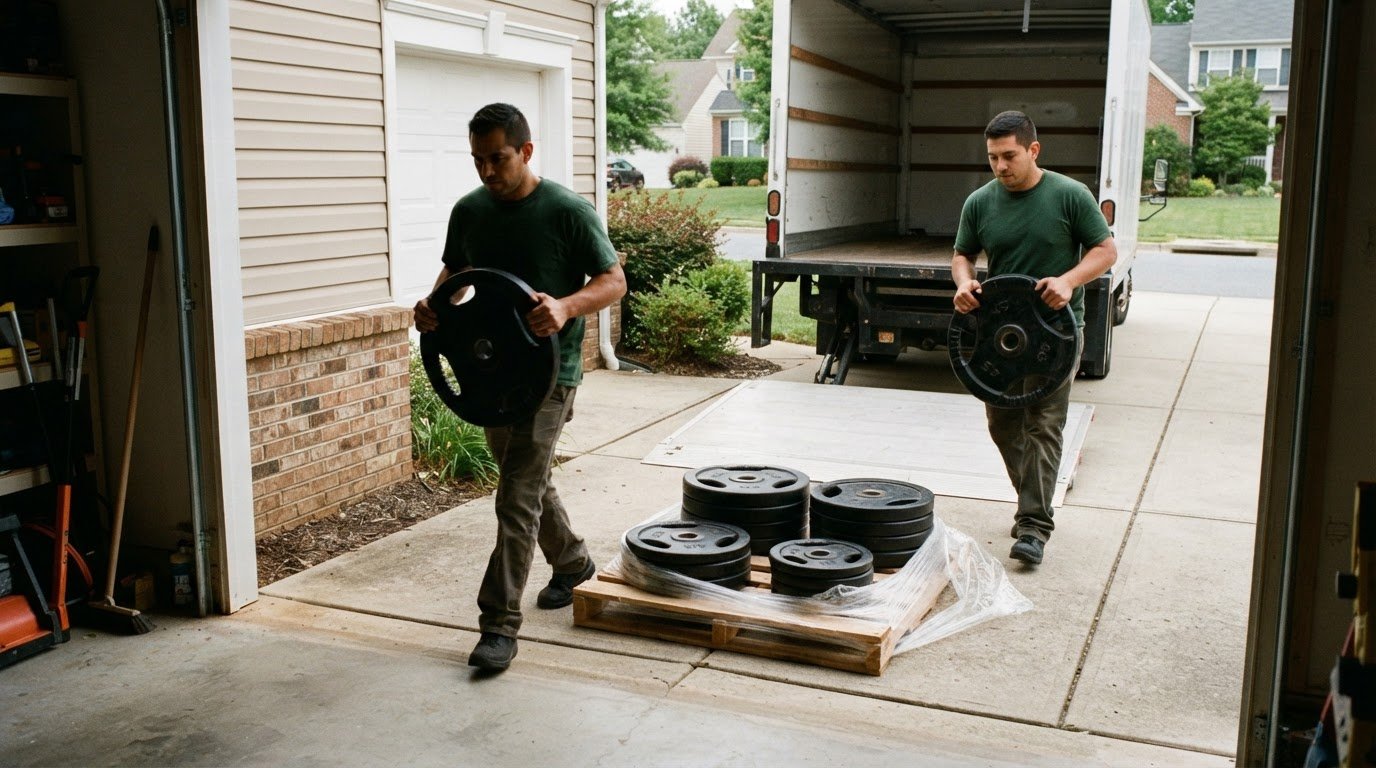
A pallet of gym plates can turn a garage delivery into a demanding lifting job. Don’t try to move the whole shipment at once.
It’s easy to focus on getting freight off the truck and overlook the route from the driveway to its final spot. A narrow garage entrance, steps, or a basement turn can make moving plates harder than the delivery itself. Clear access and smaller loads help keep the process manageable.
This guide explains how to unload gym plates when there’s no loading dock, move them through garages, basements, and stairways, and decide whether labor-only, full-service, or specialty moving help suits the job. You’ll also find guidance on planning for bulky gym equipment, including racks and treadmills, before the heavy lifting begins.
Key Takeaways
- Break down heavy plate shipments into manageable loads instead of trying to move the pallet’s full weight at once.
- Plan a clear path from the truck to the garage, basement, or workout area before unloading begins.
- Choose labor-only, full-service, or specialty moving help based on whether you need unloading, in-home delivery, or heavy equipment handling.
- Match moving equipment and handling methods to the load, the route, and any stairs or tight turns.
- For heavy gym equipment or difficult access, Exercise Equipment Moving and in-home moving help can take the strain out of the job.
Removal of weight plates and barbell sets
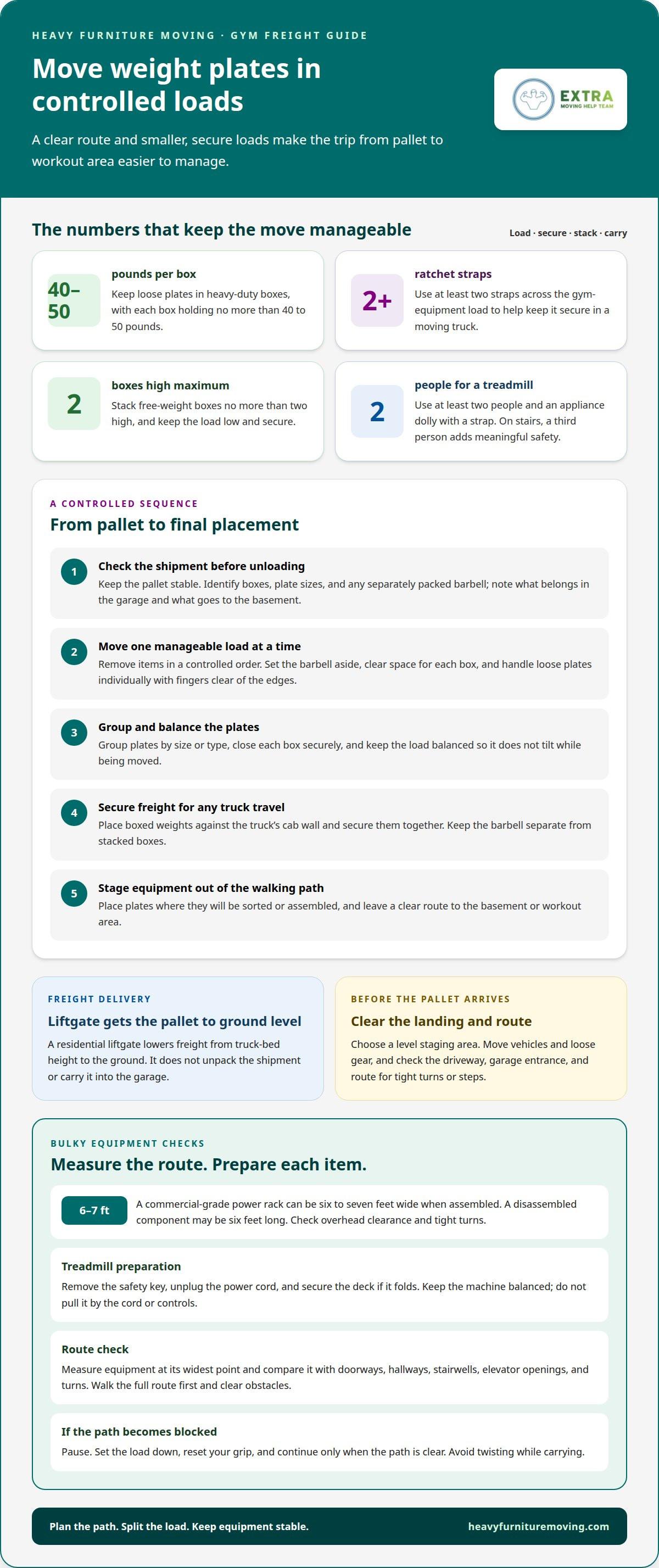
- Start by checking how the freight is packed. Keep the pallet stable as you identify the boxes, plate sizes, and any separately packaged barbell. Note what belongs in the garage and what needs to go to a basement. This initial check gives everyone a clear sequence before unloading begins.
- Remove items in a controlled order instead of pulling several boxes off the pallet at once. Set the barbell aside and clear space for each box before moving the next one. If plates are loose, handle them individually and keep your fingers clear of their edges. Don’t let a shifting stack set the pace.
- Use heavy-duty boxes for loose plates, with each box holding no more than 40 to 50 pounds. That limit helps make each package easier to grip and reposition than one oversized carton. Group plates by size or type, and close each box securely before carrying it across the garage. For example, separate smaller plates from larger plates rather than mixing them into a box that becomes awkward to lift. Keep the load balanced so it doesn’t tilt during movement.
- Keep boxed weights low and secure them tightly if loading them into a moving truck. Place them against the truck’s cab wall so they can be secured together rather than shifting among lighter items. Use at least two ratchet straps across the gym-equipment load, and stack free-weight boxes no more than two high. These steps matter if plates need another trip after unloading, especially when the garage is only a staging area.
- Finish by placing the plates where they’ll be sorted or assembled, rather than leaving them in the walking path. Keep the barbell separate from stacked boxes, and leave a clear route to the basement or workout area. The same approach works for mixed dumbbells: remove, carry, and set down each manageable package before starting the next.
Unloading and moving freight without a loading dock
For a residential liftgate delivery in Aldie, Virginia, the liftgate lowers freight from truck-bed height to the ground. It gets the pallet down, but it doesn’t unpack the shipment or carry it into the garage.
- Clear a level landing area before unloading begins. Keep vehicles, loose gear, and other obstacles away from the truck’s drop-off point and the route to the garage. The pallet needs room to be lowered and approached safely. If the driveway slopes or the garage entrance is tight, choose another staging spot along the clearest accessible route.
- Prevent crush injuries by keeping hands and feet clear of the pallet, liftgate, and shifting equipment. A 50-pound dumbbell can pose a serious risk if it slips on stairs, so split weights into smaller loads and move steadily. Pause a minute if the route becomes blocked. Don’t twist while carrying; set the load down, reset your grip, and continue with a clear path.
- Move dumbbells and rack components as separate loads rather than treating the equipment as one piece. A commercial-grade power rack can be six to seven feet wide when assembled, while a disassembled component may be six feet long. Check overhead clearance and tight turns before carrying either piece. Keep straps secured around equipment during transport so loose parts don’t swing or slide.
- Prepare treadmills before moving them: remove the safety key, unplug the power cord, and secure the deck if it folds. A folding treadmill may be manageable for two movers. Don’t pull it by the cord or controls. Keep the machine balanced, and use an appliance dolly with a strap when appropriate.
- Treat rubber gym flooring as heavy individual pieces. Carry mats one at a time, keep the route clear, and avoid stacking them where they block the garage entrance. Their broad shape can catch on doorframes, so turn each mat deliberately.
- Finish by staging each category of equipment in a stable area. Keep dumbbells together, rack parts beside their matching hardware, and treadmill components away from the path. For help with freight and bulky gym equipment, moving help for heavy equipment can fit the job when careful loading and placement matter.
For a treadmill move, use at least two people and an appliance dolly with a strap; arrange this help and equipment before starting. Keep the move coordinated, with the people handling the machine and dolly agreeing on when to lift, roll, and pause. The strap should remain part of the handling setup so the machine stays controlled as it is moved. On stairs, a third person adds meaningful safety when moving a treadmill. Plan for that added help before the stair portion, rather than trying to manage the machine with fewer people.
Delivery access for homes, basements, and stairs
- Prepare the garage before the freight pallet arrives: clear the driveway route, move vehicles, and choose a level staging spot. Decide whether the plates will stay in the garage or go to a basement. Keep doorways and walking paths clear of fitness accessories, tools, and loose gear. A clear destination lets unloading proceed without moving boxes around obstacles.
- Measure each piece of exercise equipment at its widest point, then compare that measurement with doorways, hallways, stairwells, and turns. Check elevator openings too, if the route includes one. Measure the tightest point along the full path, not just the front entrance. A plate box might clear a doorway but catch at a hallway corner or basement turn.
- Map the route from the delivery point to the final placement area. Walk it without carrying anything, noting steps, narrow corners, floor transitions, and doors that swing into the path. For a basement delivery, identify safe places to pause without blocking the stairs. Move rugs and small accessories out of the way before bringing in the first load.
- Treat stairs as a separate part of the plan. A second-floor apartment or condo is a challenging home-delivery situation for gym equipment because each item must be carried vertically through shared access. Keep stair landings clear, check that doors can open fully, and plan where a load can be set down without blocking the next trip. Never leave weights unattended on a stair tread.
- Plan the delivery order for equipment and accessories. Bring smaller boxes through first if they need to reach a basement workout area, then carry longer or wider pieces along the route with room to turn. Keep the garage staging area separate from the path into the house. This prevents incoming loads from crowding the doorway while equipment is still being carried inside.
- Before unloading, make sure the route works for the equipment’s final location. If a rack or machine must pass through a doorway, check its widest point and turning space first. For a basement, include the top and bottom stair landings in the route check. Measure again if the equipment has been reconfigured or partially assembled, since its dimensions may have changed.
- Keep the path clear throughout delivery. Place each load in its planned staging area, not in front of a doorway, at the foot of stairs, or across a hallway. If a tight turn blocks progress, stop and reposition the load instead of forcing it through. A simple route sketch can show the garage, entry, stairs, and final workout area at a glance.
Can movers unload a freight pallet without unpacking or delivering it inside the home?
- Yes. Movers can handle a defined unloading task without unpacking every box or carrying items into the house. Set the endpoint as the garage, a driveway staging area, or another accessible spot. For example, the crew can unload gym boxes from the pallet and place them in the garage while you keep the cartons sealed for later.
- Set the exact scope before work begins. Distinguish unloading from unpacking, room placement, and equipment assembly. One job might end with the pallet unloaded and cartons grouped beside a garage wall. Another might include carrying selected boxes farther inside. Clear boundaries prevent items from being moved beyond the task you intended.
- Define what “unload” means for your shipment. It could mean moving freight from the delivery point to a nearby staging area, removing cartons from the pallet, or carrying boxed items into the garage. These are different tasks. If you want the pallet left intact, say so; if you want cartons separated, specify that instead.
- Keep freight organized during a partial service. Leave unopened cartons sealed and grouped by label or contents. For example, keep plate boxes together and separate the barbell packaging from accessory cartons. This makes items easier to find later without turning a simple unloading task into full unpacking or setup.
- Mark the stopping point clearly. Clear a section of the garage for the unloaded freight and keep the driveway-to-garage route open. If some cartons should remain outside, designate a stable, accessible spot away from doors and vehicle paths. A visible boundary reduces confusion when several items arrive together.
- Plan packaging and pallet handling separately. Unloading cartons doesn’t automatically mean removing wrapping, breaking down the pallet, or disposing of packing materials. Decide what should stay with the shipment and where materials should go. Simple instructions help preserve packaging you may need and avoid unnecessary handling.
- Match the task to the route and stopping point. A garage-only unload avoids carrying freight through the house, while delivery to a basement adds doorways, turns, and stairs. If the job ends at the garage, keep the route clear and avoid placing cartons across a path you’ll need later.
What equipment is needed to move heavy weight plates from a pallet into a garage?
- Choose tools that suit the load and route. An intact pallet may need a pallet jack on firm, level ground. After unloading, a hand truck can move stable, suitable boxes. Check each tool’s capacity label and condition before use. Don’t use a dolly with damaged wheels or one that cannot support the load.
- Secure boxed loads to a hand truck before moving them. Keep the heavier side against its frame, then strap the stack so it can’t slide. Move slowly over driveway seams and garage thresholds. If the load shifts, stop, set it down, and adjust the strap. A hand truck isn’t suitable for loose plates or unstable stacks.
- Use moving straps only when they support bulky equipment without creating pinch points. They can help control an awkward rack component during a short carry, but they don’t replace a firm grip or a clear route. Don’t wrap straps around loose plates, which can shift independently as the load moves.
- Protect the route with flat, nonslip floor coverings and corner guards. Keep the garage floor dry and remove cords, tools, and other obstacles. A loose mat edge can catch a dolly wheel, while an unprotected doorway can be scraped by a box or equipment frame.
- Wear sturdy gloves and footwear with firm soles. Gloves can improve your grip on rough pallet edges and plate surfaces, but they don’t make an oversized load manageable. Divide the shipment into smaller carries and keep hands clear of pinch points beneath the pallet or between stacked boxes.
- Set aside a clear staging area before moving anything. Leave room to turn the dolly and place boxes without blocking the garage door. If you’re arranging labor to unload a freight pallet of heavy home gym plates into a garage in Aldie, plan the route and staging spot first.
- Match each tool to its handling stage instead of forcing one device to do everything. For labor to unload a freight pallet of heavy home gym plates into a garage in Aldie, the right setup depends on the pallet, boxed loads, and available path. Get help moving heavy gym equipment.
Also account for other gym equipment in the same move. Most treadmills weigh between 150 and 300 pounds, while most modern treadmills weigh 200 to 300 pounds when folded. Assess each item separately and match handling choices to the actual load rather than treating all gym equipment alike. These weights provide context for planning the equipment and help needed for the route from the pallet to the garage.
When loading a moving truck, place weight plates and other heavy gym equipment low, against the cab wall, and secure them tightly. Plan both where the load will sit in the truck and how it will be restrained, along with the equipment needed to move it into the garage. Labor-only loading help can make handling a large amount of gym equipment easier, especially when the items vary considerably in weight.
Heavy Furniture Moving: in home furniture movers near me
Heavy Furniture Moving can handle difficult carries when gym equipment needs careful handling beyond the garage. Its Exercise Equipment Moving service covers bulky machines and heavy fitness gear, while in-home furniture movers can carry items through the house to their intended rooms. If the freight needs hands-on unloading and moving, labor-only help may be a good fit.
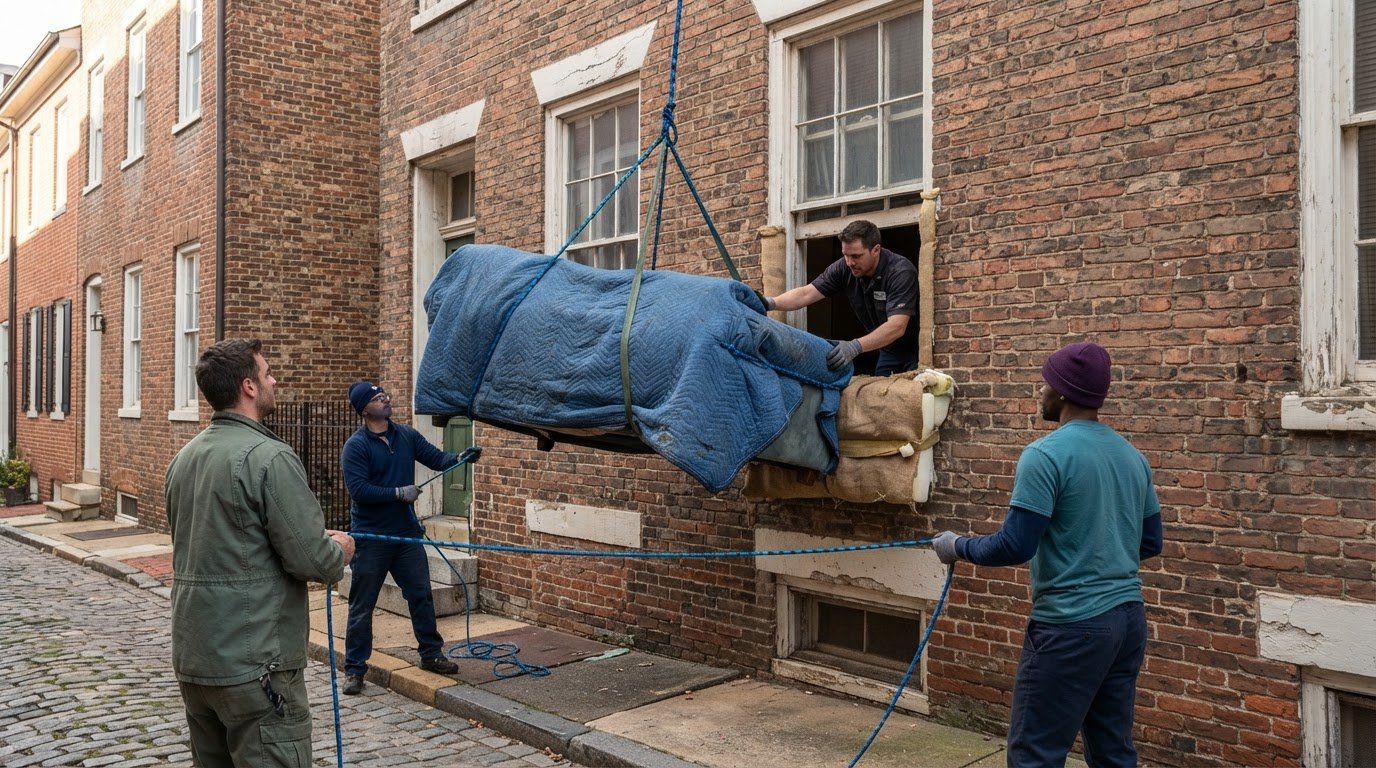
Turn to the team when a tight doorway, basement route, or heavy equipment makes the move difficult to manage alone. For a sofa that won’t fit through a standard entrance, Sofa Hoisting offers another way to address the access challenge. Share what needs moving and where it needs to go, then contact Heavy Furniture Moving to discuss the job.
Make the Next Move Easier
Once your equipment is in place, decide whether you need help with other heavy lifting or a future home move. Unloading a freight pallet of heavy home gym plates into a garage in Aldie is just one part of getting a home gym ready; carrying equipment to its final position can be a separate task.
Heavy Furniture Moving offers Movers Near Me and Exercise Equipment Moving for heavy items and in-home placement. For a sofa that cannot pass through a doorway, Sofa Hoisting is another option. Choose the help that matches the item and access challenge, then share the details of your move.
Ready to plan your next lift? Contact Heavy Furniture Moving to discuss the work. A clear plan can make the next step feel manageable, so you can focus on setting up your space.
Frequently Asked Questions
Who Moves Exercise Equipment Safely?
Heavy Furniture Moving handles exercise equipment moves in Aldie, including treadmills, exercise bikes, ellipticals, massage chairs, and weight racks. Before lifting, the team measures the item and checks doorways and stairs to plan the route. Wrap, moving blankets, and straps are included on every job, along with floor and corner protection. Share the equipment type and any tight turns or narrow entrances so the move can be planned around your home’s layout.
Frequently Asked Questions
Heavy Furniture Moving handles exercise equipment moves in Aldie, including treadmills, exercise bikes, ellipticals, massage chairs, and weight racks. Before lifting, the team measures the item and checks doorways and stairs to plan the route. Wrap, moving blankets, and straps are included on every job, along with floor and corner protection. Share the equipment type and any tight turns or narrow entrances so the move can be planned around your home’s layout.