How to Transport a Heavy Antique Spinning Wheel and Loom in Reston
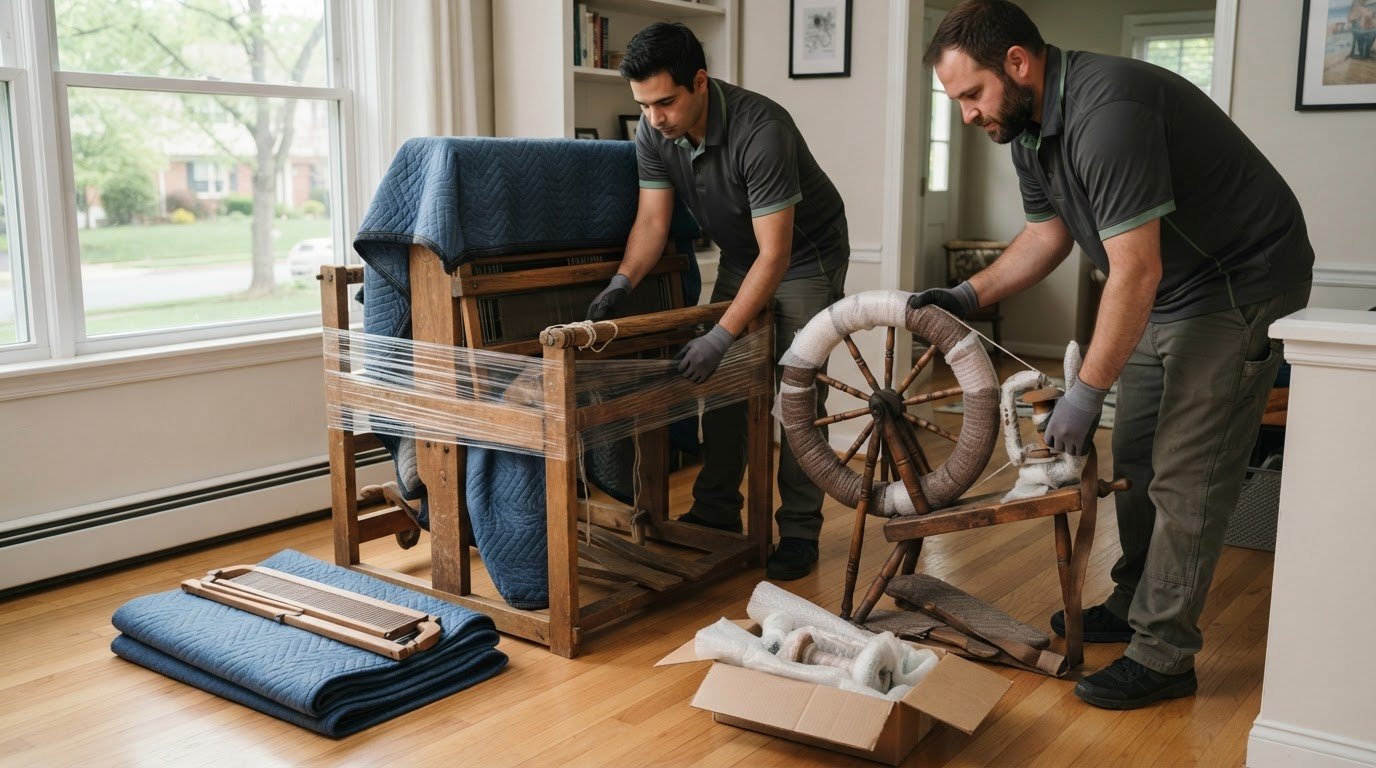
Plastic alone won’t protect an antique loom or spinning wheel from splintering. Stretch wrap or straps can hold moving blankets in place, but the padding does the protective work. A careful plan for how to transport a heavy antique spinning wheel and loom without splintering in Reston also accounts for loose parts, safe handling, and a secure fit during transit.
These pieces can be heavy, delicate, and full of parts that shift or catch, so take extra care before moving them. Document their condition, prepare and wrap each piece, secure the hardware, and choose a transport method suited to the item. Following a clear sequence, from the first photos to the final inspection, helps keep the move organized.
Key Takeaways
- Use moving blankets as the protective layer, with wrap or straps to keep them in place.
- Disassemble only parts that can be removed safely, and cushion delicate components separately.
- Photograph the wheel and loom before packing, then make an inventory of pieces and existing wear.
- Keep hardware and loose parts organized in labeled bags or boxes so they stay together in transit.
- Choose a transport method based on the equipment’s size, weight, handling needs, and risk of extra transfers.
Can you wrap antique furniture in plastic?
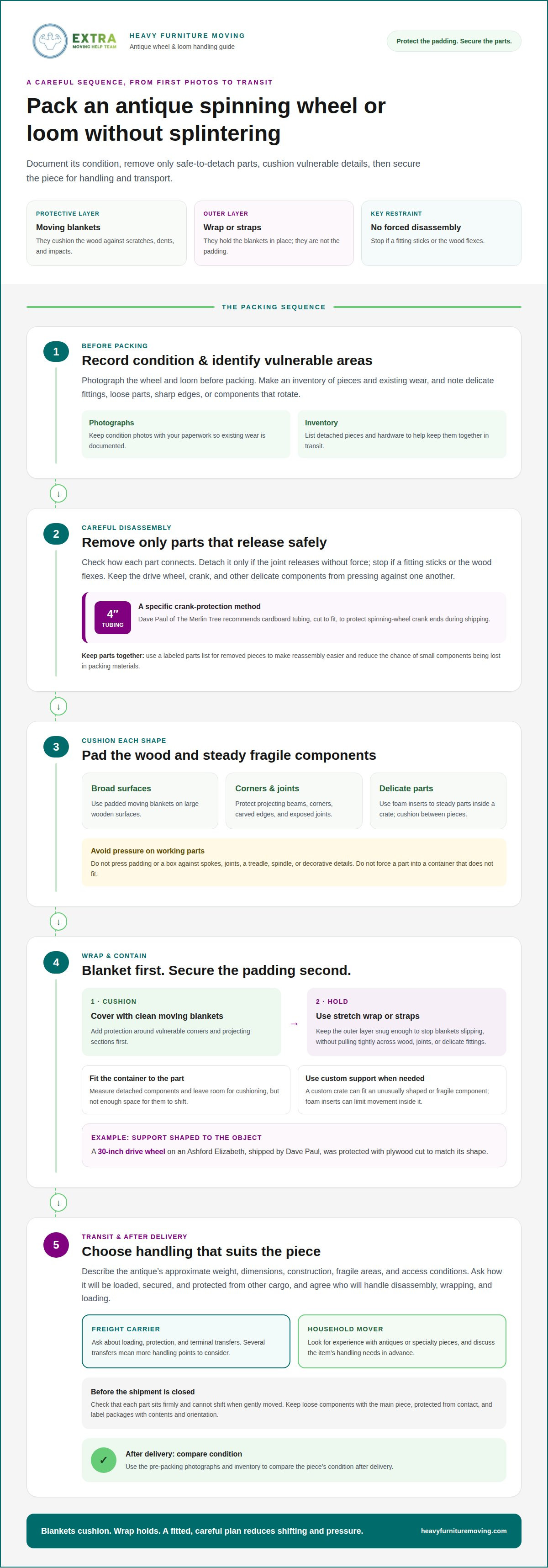
- Use plastic wrap to hold padding in place, not as padding itself. First cover the loom or spinning wheel with clean moving blankets, then secure them with stretch wrap or straps. Keep the outer layer snug enough to prevent slipping, but avoid pulling it tightly across carved wood, joints, or delicate fittings.
Before wrapping, check for sharp edges, loose parts, and components that rotate. Protect a spinning wheel’s drive wheel and crank from knocks and pressure. Plastic directly against the wood won’t cushion impacts. On a loom, add padding around projecting beams and corners before securing the outer layer.
- Choose a mover experienced in handling antiques and specialty pieces. Ask about comparable moves, such as transporting a loom with removable parts or a wheel with exposed spokes. Reviews that describe careful handling of delicate or valuable belongings can help you assess a mover’s experience.
Describe the item’s approximate weight, dimensions, construction, and fragile areas. Include access details, such as narrow doorways, stairs, or tight turns near pickup. This information helps the moving team plan appropriate handling and materials before the move.
- Discuss insurance and liability before the move. Ask what coverage applies during packing, loading, and transit, and how existing damage is documented. A homeowners policy may cover transit or mover handling differently from damage at home, so ask your insurance agent about the specific move.
Share the antique’s value and condition records with the mover, and keep photographs and an inventory with your paperwork. Clear records help distinguish existing wear from damage noticed after delivery. Understanding the applicable coverage also helps you make an informed transport decision.
- Choose a box or crate that fits each part. Measure detached components and leave room for cushioning, but not enough empty space for them to shift. A large loom frame may need a crate shaped to fit it; pack small fittings separately in a labeled box.
Use moving blankets on broad wooden surfaces and foam inserts to steady delicate parts inside a crate. Add corner protectors around carved edges and projecting joints. Don’t force a wheel, treadle, or spindle into a box that presses against its working parts.
- Choose a carrier that can handle the antique carefully throughout the trip. Ask how it will be loaded, secured, and protected from contact with other cargo. A shipment with several terminal transfers involves more handling points, so weigh that risk when choosing between freight and a household mover.
Before packing starts, agree on who will handle disassembly, wrapping, and loading. Make sure loose components travel with the main piece and are protected. For a heavy antique in Reston, a clear plan based on weight, fragile details, and access helps prevent rushed handling and splintering.
Disassembling and packing spinning wheels
Prepare the wheel and loom in stages: remove only parts that come apart safely, cushion each component, then secure everything for handling.
-
Disassemble the Spinning Wheel
Remove detachable parts only if their joints release without force. Check how each piece connects, and stop if a fitting sticks or the wood flexes. Keep the drive wheel, crank, and other delicate components from pressing against one another. Dave Paul of The Merlin Tree recommends four-inch cardboard tubing, cut to fit, to protect spinning-wheel crank ends during shipping.
Use a labeled parts list to keep removed pieces with the wheel. This makes reassembly easier and helps prevent small components from getting lost in packing materials.
-
Select Antique Packing Materials
Match the padding to each surface and shape. Padded moving blankets help protect large wooden antiques from scratches and dents, while foam inserts can steady delicate parts inside a crate. Use corner protectors around projecting edges or ornate carvings that could chip if they strike another surface.
Use clean materials and place cushioning between parts, not just around the outside. Don’t pack a wheel so tightly that the padding presses against spokes, joints, or decorative details.
-
Wrap and Pack Wooden Furniture
Cover the frame with a moving blanket before securing it with stretch wrap or straps. The blanket cushions the wood; the outer layer holds the padding in place. Protect corners and exposed joints first, then wrap broad surfaces without crushing carved details or putting pressure on fragile connections.
Pack detached wooden pieces separately when their shapes could knock together. A 30-inch drive wheel on an Ashford Elizabeth shipped by Dave Paul was protected with plywood cut to match. That example shows why a broad, delicate wheel needs support shaped for its form.
-
Arrange Professional Packing and Custom Crating
Use a custom crate when a fragile antique needs more protection than blankets and basic cushioning can provide. Custom crates are used for delicate items such as artwork or chandeliers; the same approach can help protect an unusually shaped loom component in transit. Fit the crate around the object rather than forcing the object into a standard box.
Ask the packing team to account for the item’s shape, weight, and vulnerable details. Foam inserts can limit movement inside a crate, while corner protection shields carved or projecting sections. A careful plan can provide peace of mind without requiring you to manage every handling step yourself.
- Before closing the box or crate, check that each part sits firmly and cannot shift when gently moved. Keep the wheel’s crank, drive wheel, and detached fittings protected from contact with the frame. Label each package with its contents and orientation, so handlers can keep it positioned correctly. For help moving heavy furniture inside a home, arrange in-home furniture moving support as part of your transport plan.
Documenting condition with photos and an inventory
Document the item before packing, then compare its condition after delivery. Clear photos and a component inventory can show what was present and its condition before the move.
-
Photograph the Item’s Condition
Photograph the entire spinning wheel or loom before wrapping. Capture the front, back, sides, base, and distinctive details such as carved wood, spokes, joints, or a treadle. Take close-ups of existing cracks, scratches, worn finishes, and repairs so each mark is easy to identify later.
Use consistent lighting and include enough surrounding detail to show where each close-up belongs. Photograph loose components beside the main piece before packing them separately. Save the original image files together, labeled with the item and the area shown.
-
Create an Inventory and Condition Record
List the main item and each removable component, such as a crank, spindle, treadle, or detached loom part. Note visible wear beside the relevant component. For example, record a scratch on the wheel rim separately from a loose fitting on the frame. This makes the inventory useful during packing and after delivery.
Keep the written record with the photos, and update it whenever a component is removed or packed separately. Describe each part plainly rather than relying on memory. A useful entry identifies the component, its location, and its condition before transport.
- Review the photographs and inventory before packing begins. Confirm that every listed component appears in the record, and take another photo if a detail is hidden or unclear. This final check creates a useful reference before blankets, wrap, or a crate cover the wood.
Keep a copy of the record accessible at delivery. Don’t put the only inventory inside a box that will be difficult to reach. If components are packed separately, note which parts are in each package so you can check the shipment against the same list.
- Inspect the loom or wheel as soon as it arrives, before putting it back into use. Compare visible surfaces and components with the pre-move photos and inventory. If you find damage, photograph it promptly from several angles, including a wider view showing its location on the item.
Record any damage on the delivery receipt before completing the handoff. Keep the receipt with the new photos and original condition record. Together, these documents show the item’s condition before and after transport, which can support an insurance claim and help describe any damage.
Securing loose furniture parts and hardware
Secure removable parts before lifting or loading so they can’t strike the frame or fall in transit. For a Reston move, account for parking and building access at the pickup location. Before moving day, establish whether the property requires a loading reservation, entry arrangement, or curbside permit.
-
Remove Loose Parts Before Transport
Detach pieces that could swing, catch, or come loose while the loom or wheel is being carried. Check the treadle, crank, shuttle, and projecting fittings. A loose rotating part can snag clothing or strike the frame, while an unsecured piece can fall and damage the antique or vehicle.
Keep removed components near the main item until each has a safe place. Don’t leave a crank or wooden fitting on a walkway where someone could step on it or mistake it for packing waste.
-
Disassemble Items and Label Parts
Remove only parts that release without force, and note where each fits before separating it. Put screws and small fittings in labeled bags, then group each bag with its matching loom or spinning-wheel component. Labels such as “wheel crank” or “loom frame joint” are more useful than a general label like “parts.”
Keep labels readable after wrapping. If several pieces look alike, note the connection point or side. A detailed parts record keeps components together and makes reassembly more straightforward.
-
Secure Loose Hardware
Remove delicate handles and place them inside a drawer, then secure the drawer with a rubber strap. Put the remaining hardware in a labeled parts box. Avoid taping directly over antique wood or finishes, since adhesive can leave residue or pull at a fragile surface when removed.
Check doors, drawers, and access panels before carrying the item. Use rubber straps to keep them shut, and make sure no loose fitting can slide out during tilting or loading. Keep the parts box with the main shipment, not among unrelated household boxes.
- Plan the loading area before moving a heavy item. Confirm building entry instructions, loading access, and parking arrangements with the property manager. For curbside loading, find out whether local rules require a permit or restrict where a vehicle can stop. Clear the path of loose hardware, packing debris, and other obstacles.
Make a final check around the frame and packages before lifting. Confirm that removed pieces are labeled, bags are closed, doors are strapped, and nothing can shift freely. This helps prevent lost fittings and keeps the antique’s parts together from pickup to delivery.
Shipping by bus, freight carrier, or household mover
Choose a transport method based on the loom or wheel’s size, weight, fragility, and route. A delicate antique may need fewer transfers and more controlled handling than standard freight provides.
- Compare bus, freight, and household-mover options against the item’s dimensions and pickup access. For Reston residents deciding how to transport a heavy antique spinning wheel and loom without splintering, consider package limits, transfer points, and how the carrier handles large, fragile items. Include pickup and delivery locations, route, budget, equipment, and packing materials in the transport plan.
For freight, consider how often the crate may be handled at terminals. Less-than-truckload shipments can involve multiple transfers, giving an antique more chances to be bumped or shifted. Bubble wrap may cushion small pieces, but it shouldn’t replace firm support and padding around a heavy wooden frame.
- Hire experienced heavy-item movers when the loom’s weight, size, or awkward shape makes ordinary handling difficult. The mover should plan the loading method and equipment around the item rather than improvise. Share the frame’s dimensions, approximate weight, removable parts, and any narrow doorways or stairs at either address.
For trailer transport, account for route conditions and equipment limits. Position the load centrally to balance its weight, then secure it in every direction so it cannot shift. Before loading, inspect the brakes, anchor points, and tire pressure. Loose textile equipment can fall or shed parts, putting the item and vehicle at risk.
- Choose antique-moving experience when the value or delicate construction calls for careful packing and handling. Consider professional movers for an antique worth over $1,000 per item or over $100 per pound. These thresholds are decision points, not a substitute for assessing fragile joints, carved details, or components that need separate protection.
Discuss how the mover will pack, load, and document the piece. Share its full value when booking, and clarify the coverage that applies during handling and transit. For temperature-sensitive antiques, a climate-controlled vehicle may be needed; the item’s materials and conditions determine whether that protection matters.
- Use bus or freight service only if its handling process suits the packed item. A reinforced crate can help protect an irregular loom part, while a household mover may better suit a large piece that needs coordinated loading and delivery. Size the crate to the antique and support it so it cannot move without pressing on delicate surfaces.
A plan for how to transport a heavy antique spinning wheel and loom without splintering in Reston should include vehicle access, narrow bridges, and relevant regional hauling limits. Before departure, confirm all loose components are accounted for and the load is secured tightly. Arrange heavy-lifting moving help for a loom or wheel that needs careful loading and secure transport.
Heavy Furniture Moving
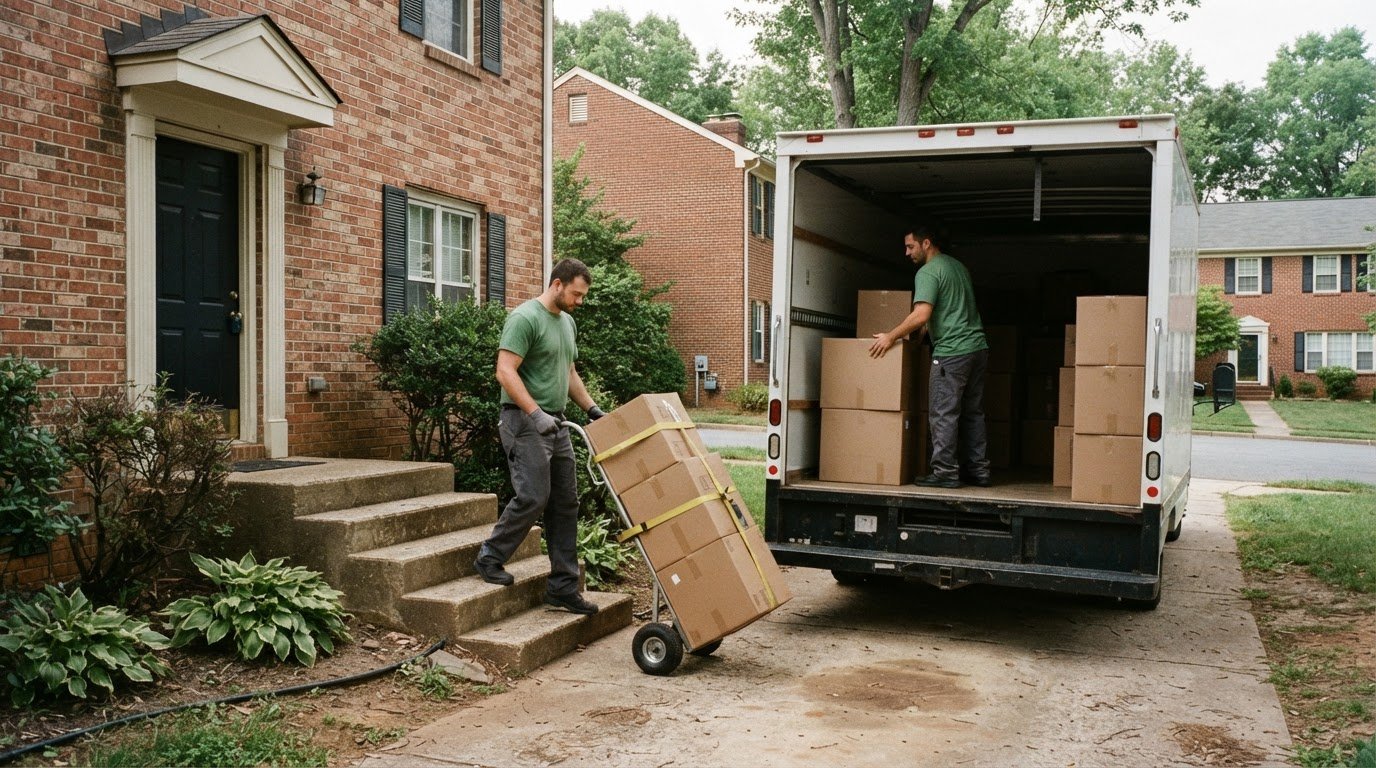
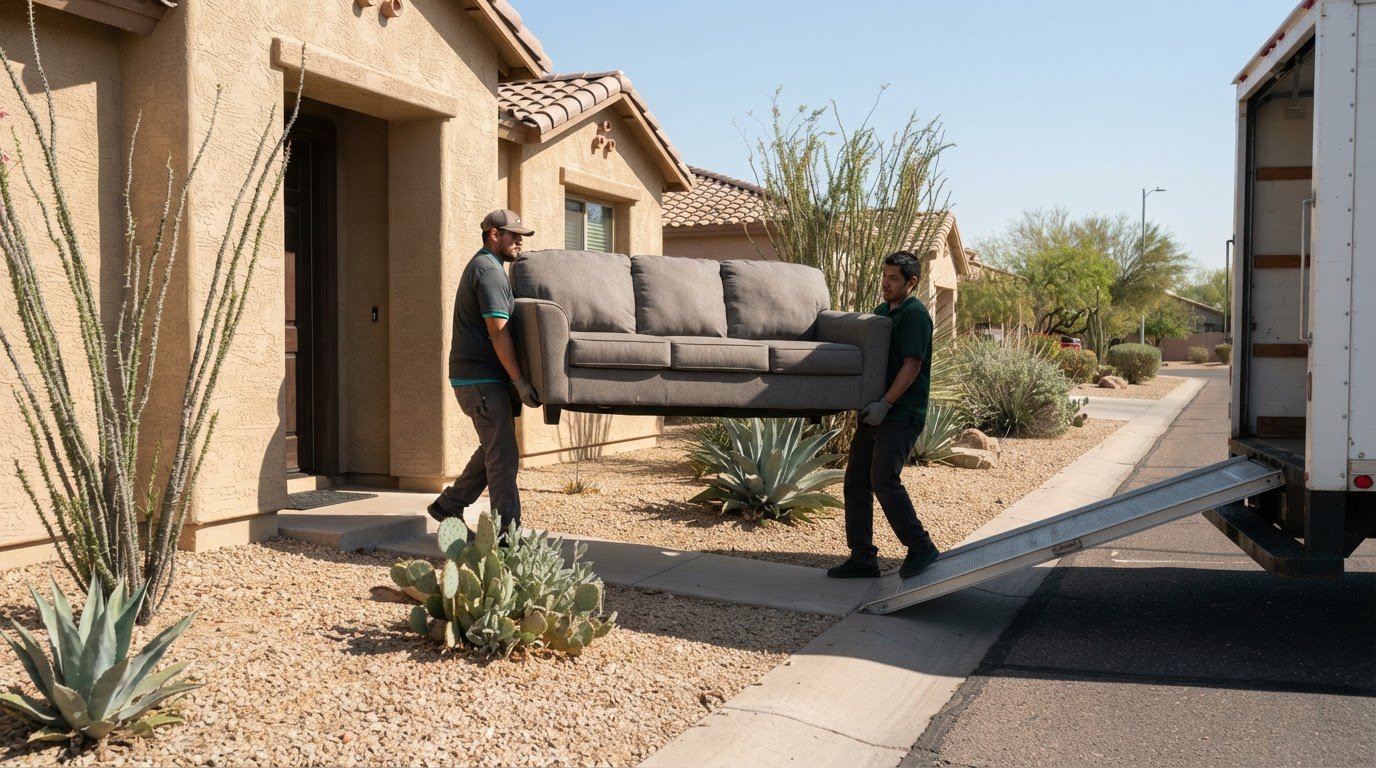
Heavy Furniture Moving helps with the physical challenge of moving bulky furniture, including careful in-home handling and heavy lifting. Turn to the team when the loom or spinning wheel is too awkward to move safely through doorways, stairs, or tight turns, or when you need help loading it for transport.
Share the item’s size, weight, removable parts, and access details so the moving plan accounts for the piece and its route. Heavy Furniture Moving can help with the lifting and handling, while careful packing and suitable transport protect the antique in transit.
Contact Heavy Furniture Moving to arrange help moving your loom or spinning wheel.
Make a Confident Plan for Moving Day
Plan the handoff before the antique leaves its familiar space. Decide who will manage the lifting, how the piece will pass through the home, and where it will go at its destination. Planning these transitions helps keep the move deliberate rather than rushed.
If you’re planning how to transport a heavy antique spinning wheel and loom without splintering in Reston, consider which parts of the job need extra hands. Heavy Furniture Moving offers moving help for bulky items and can support the lifting involved in moving a loom or spinning wheel. Share the item’s dimensions, weight, and access details so the handling plan starts with practical information.
Contact Heavy Furniture Moving for help with the next steps. With a thoughtful plan and the right support, you can move forward with confidence and focus on enjoying your antique in its new place.
Frequently Asked Questions
How do you move heavy antique furniture safely?
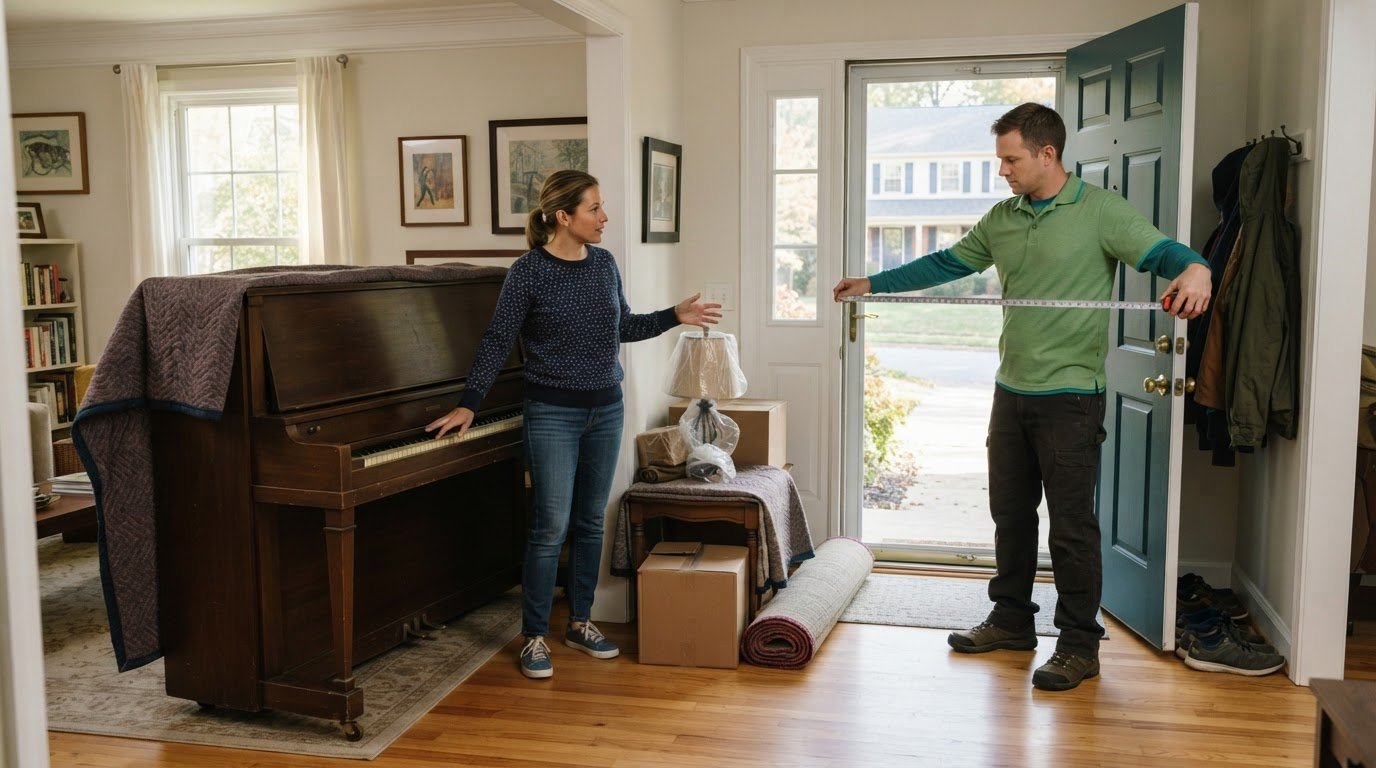
Plan the route and handling before lifting. Measure doorways, stair turns, and landing space, then compare them with the item’s widest points. Clear rugs, cords, and other obstacles from the path. Identify fragile projections, such as a loom shuttle or wheel crank, and keep hands clear of moving parts. If the route requires a difficult tilt or lift, use experienced help rather than forcing the item through.
Should You Hire Professional Movers for Antiques?
Hire professional movers when the antique is heavy, awkward to grip, or difficult to maneuver through your home. Experience with bulky household items helps with planning the lift and navigating tight access points. Discuss the object’s construction and fragile areas before the move. Ask how the crew will handle loading and what liability coverage applies, especially if the item has high sentimental or financial value.
What is the best way to protect antique wood during a move?
Protect antique wood by preventing contact with hard surfaces and other cargo. Keep the frame upright when its construction allows, and don’t place heavy items against carved details or projecting joints. Avoid dragging it across floors, which can strain its legs and connections. At the destination, set it on a clear, stable surface before removing its supports, then check that the frame rests evenly.
How to assess the weight, dimensions, and fragile parts of an antique spinning wheel and loom before moving?
Record the item’s overall height, width, depth, and approximate weight, including attached parts. Measure protrusions such as a wheel crank or loom beam separately, since they affect clearance and handling. Note delicate joints, rotating parts, and areas that flex under gentle pressure. Compare the widest measurements with the planned route, including doorways and turns, so the handling plan reflects the item’s actual shape.
How to disassemble an antique spinning wheel and loom safely for transport?
Disassemble only components designed to come apart, and stop if a joint resists or the wood begins to flex. Before removing a piece, note its position and connection to make reassembly easier. Keep similar-looking parts grouped by assembly rather than mixing them together. If the item has old, fragile fittings or unclear joints, leave it intact and plan around its assembled dimensions instead of risking damage.
What padding and packing materials prevent splintering antique wood furniture during a move?
Use clean moving blankets to cushion broad wooden surfaces, then secure them so they can’t slip. Foam can steady small, delicate components inside a box, while corner guards protect exposed edges. Bubble wrap may suit small fittings, but it shouldn’t be the only cushioning around a heavy frame. Avoid materials that press tightly on spokes, joints, or carved details, since concentrated pressure can cause chips or cracks.
How should a heavy antique spinning wheel and loom be lifted and secured in a moving truck?
Lift from sturdy parts of the frame, not spokes, decorative rails, or removable fittings. Keep the load balanced as it enters the truck, and place straps on strong structural sections rather than fragile details. Give the antique a stable position away from other cargo. Before driving, check that the piece and its crate cannot slide, tip, or shift as the vehicle changes direction.
Should antique spinning wheels and looms be moved by professional antique movers or general movers?
Choose movers based on the item’s fragility, weight, and the handling plan they can provide. Specialty experience with antiques is useful for delicate construction; general household movers may suit a sturdy item when its size and route are manageable. Heavy Furniture Moving provides residential moving help for bulky items in Reston and nearby communities, including Fairfax, Vienna, Ashburn, Centreville, Woodbridge, Manassas, and surrounding areas.