How to Slide a Heavy Dresser Down Carpeted Stairs in Aldie
A heavy dresser shouldn't be allowed to slide freely down carpeted stairs. To learn how to safely slide a heavy dresser down carpeted stairs using proper ramps in Aldie, first empty it, remove drawers if possible, protect the stairwell, and use a stable ramp setup that keeps the load controlled. If the ramp can’t be secured or the dresser won’t stay balanced, stop and use a safer moving method.
A narrow staircase makes turns and steps harder to manage, while carpet can hide uneven footing and change how equipment moves. Prepare the dresser, clear and protect the route, and agree on how the team will control the load. A ramp is appropriate only when it is designed for the staircase and can be secured as directed. If the dresser is difficult to control, leave the stair move to experienced furniture movers.
Key Takeaways
- Use a coordinated team and move the dresser one stair at a time, pausing at landings to reset and agree on the next move.
- Measure the staircase and the dresser at its widest angle, then clear obstacles and pad vulnerable walls before moving.
- Reduce shifting weight by emptying the dresser and removing parts that can be carried separately.
- Carpet changes how a dresser moves, so choose equipment for the stairs rather than relying on floor sliders.
- If a ramp cannot stay stable or the dresser is difficult to control, stop and choose a safer way to handle the stair move.
Moving heavy furniture slowly and keeping it balanced
Keep the dresser controlled from the first turn to the final step. A clear route, steady communication, and equipment suited to the staircase matter more than speed.
- For a move inside an Aldie or Loudoun County home, follow any building or property instructions for access and protecting shared areas. Clear the route before moving furniture, and keep the stairwell usable throughout the move.
- Check the stated load capacity for the specific stair-climbing dolly, straps, or portable ramp you plan to use. Capacity varies by model, so keep both the dresser and equipment within their specified limits.
- Reduce injury and damage risks by controlling the dresser instead of letting it slide freely. An uncontrolled load can shift, catch on a stair edge, or hit a wall. Don’t move a dresser downstairs alone. Work as a coordinated team, and stop if anyone loses grip or balance.
-
Plan the Route and Measure the Furniture
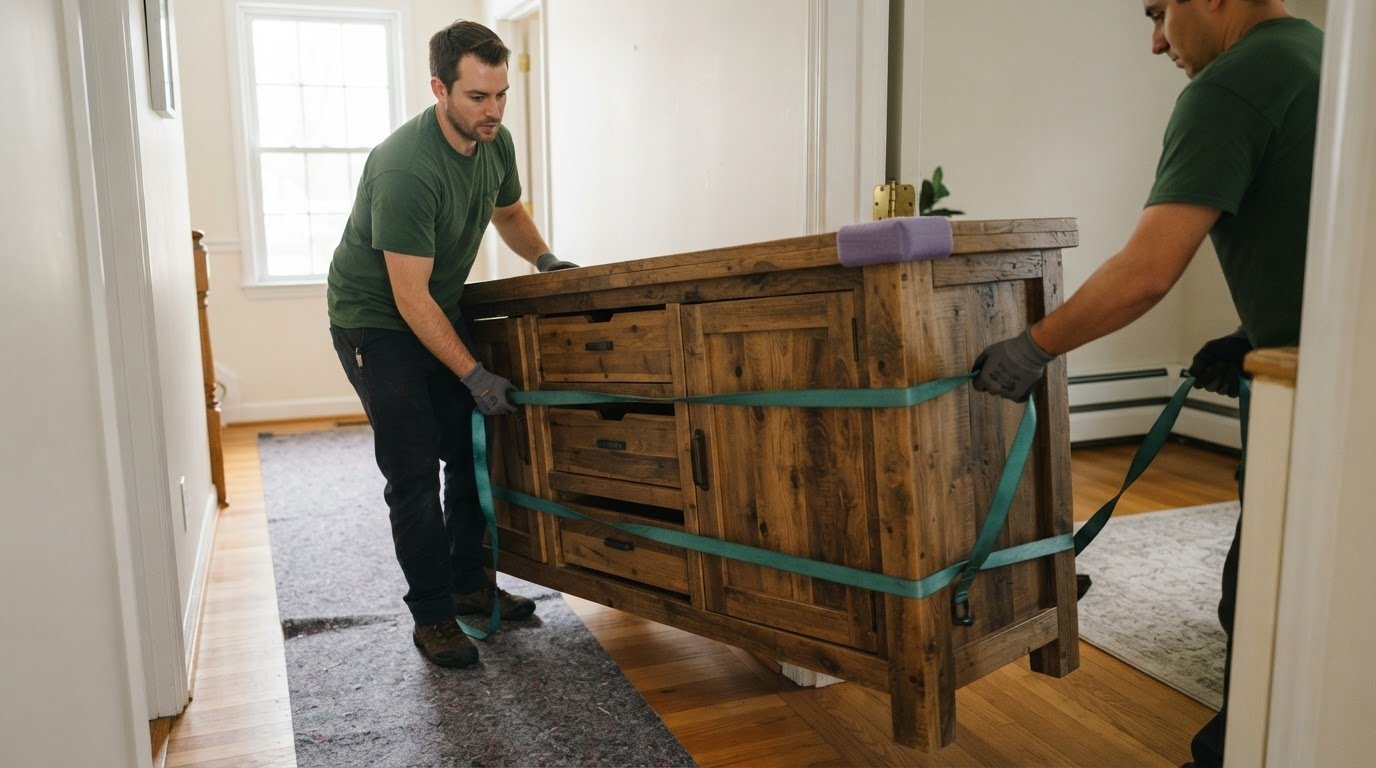
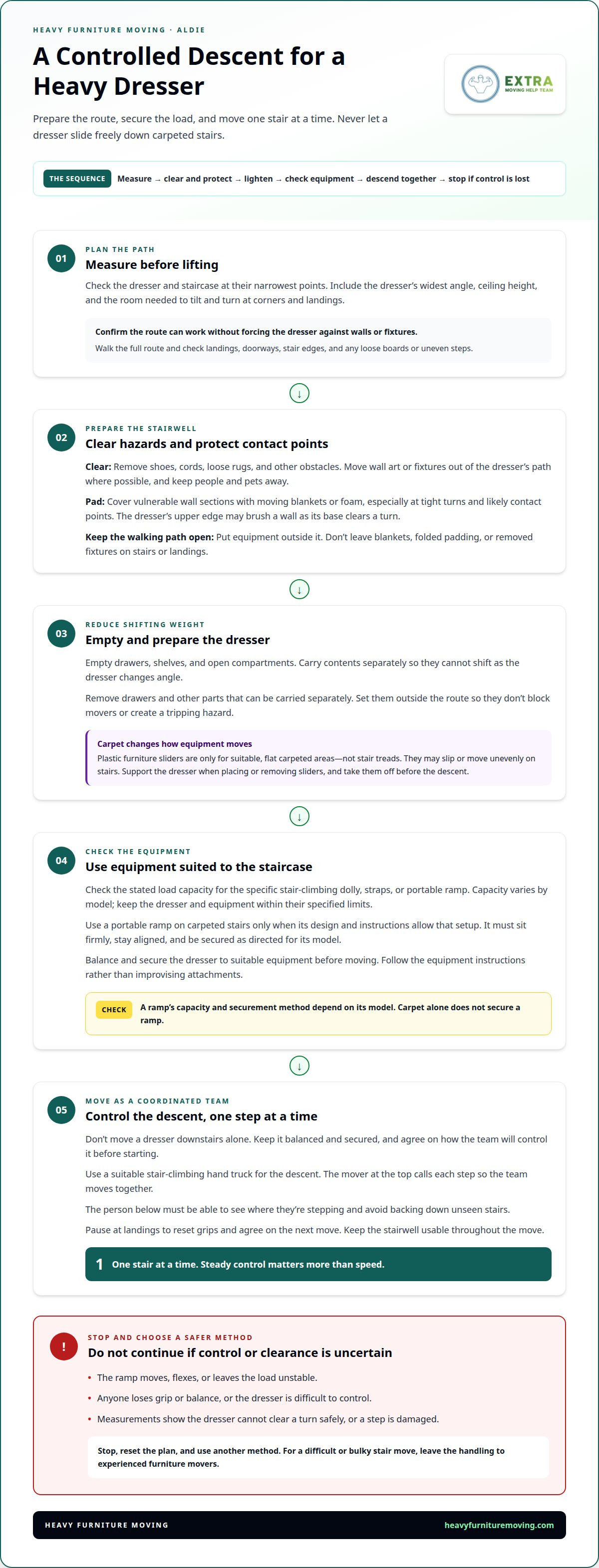
Measure the dresser and staircase at their narrowest points, including the room needed to turn at corners and landings. Clear shoes, cords, loose rugs, and other obstacles, then move wall art or fixtures out of the way. Confirm that the dresser can pass without being forced against the walls.
Before lifting, decide where the team will pause and how the dresser will turn. A landing gives movers space to reset their grip and agree on the next move.
- Use plastic furniture sliders only on suitable, flat carpeted areas, never on stair treads. Sliders can help reposition a dresser across a level landing, but they may slip or move unevenly on stairs. Support the dresser while placing or removing sliders, and take them off before beginning the descent.
-
Secure a Ramp for Carpeted Stairs
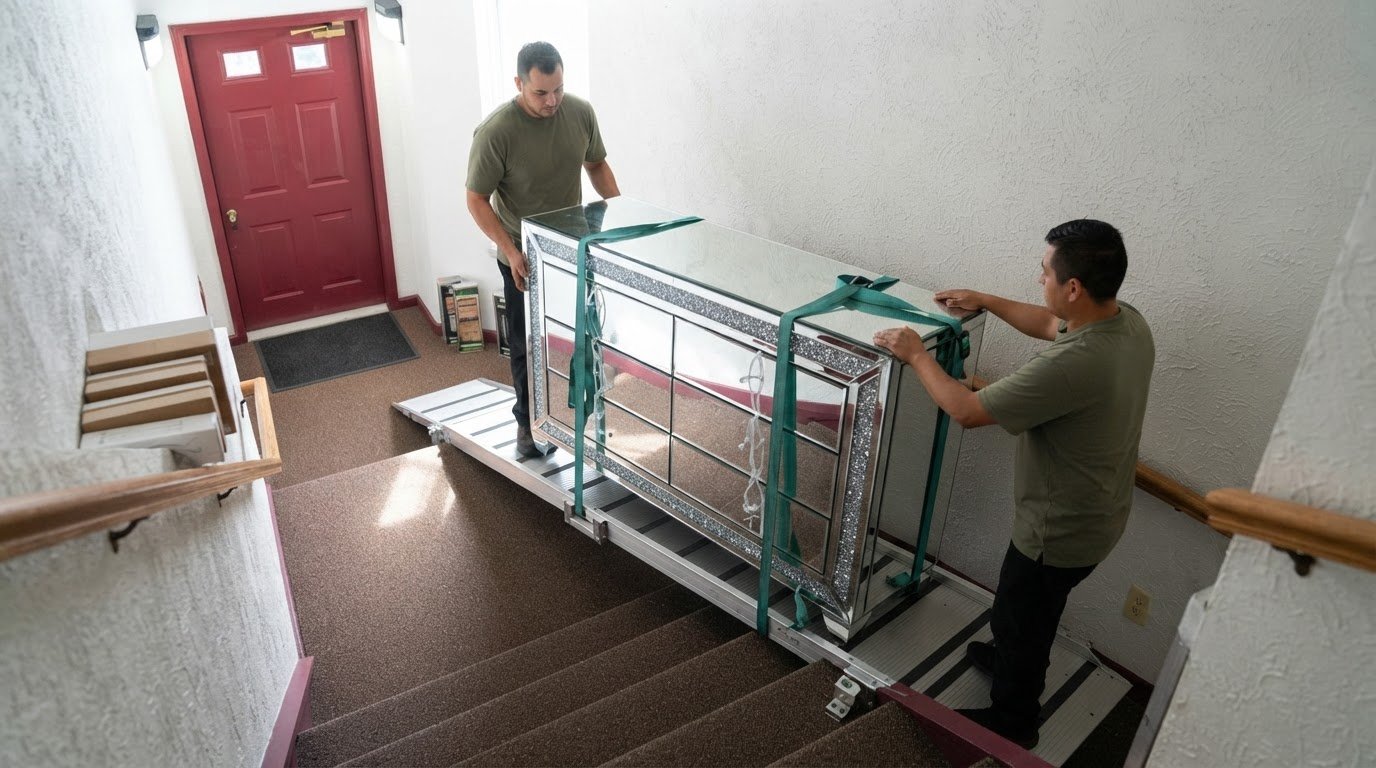
Use a portable ramp on carpeted stairs only if its design and instructions allow that setup. Make sure it sits firmly, stays aligned, and cannot shift under the dresser. Don’t assume carpet will hold it in place. If the ramp moves, flexes, or leaves the load unstable, stop and use another method.
Balance and secure the dresser to suitable equipment before moving. A ramp’s capacity and securement method depend on its model, so follow its instructions rather than improvising attachments.
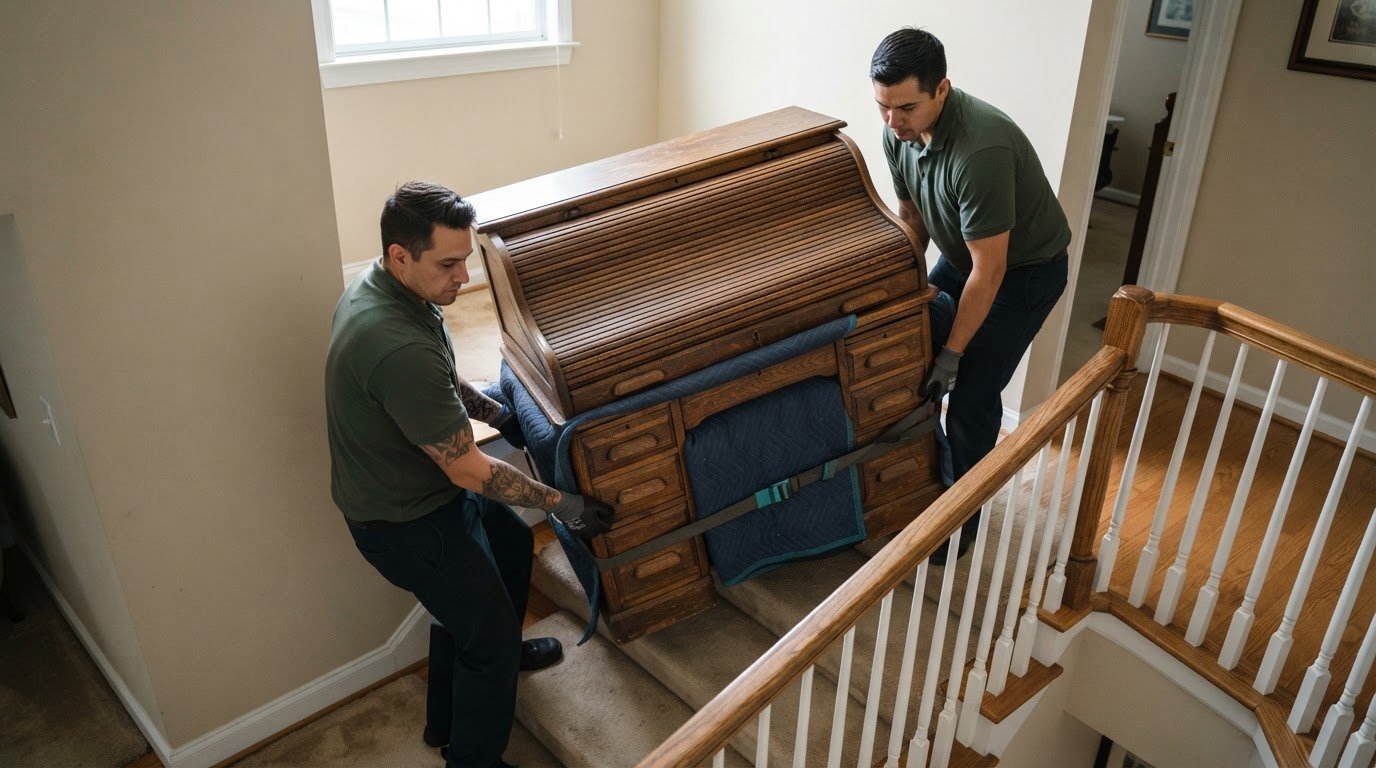
- For a stair descent, use a suitable stair-climbing hand truck and move the load one step at a time. Keep the dresser balanced and secured. The mover at the top should call each step so the team moves together. The person below must be able to see where they’re stepping and avoid backing down unseen stairs. Pause at landings to reset grips and agree on the next move.
What is the best way to protect stairwell walls when moving furniture?
Prepare the whole staircase before lifting. Clear hazards, measure the dresser and stairwell, and pad exposed walls where furniture could scrape or bump them.
- Walk the full route, from the starting room to the exit, before moving the dresser. Check every landing, turn, doorway, and stair edge. Look for loose boards or uneven steps that could shift underfoot or disrupt the load. Adjust the plan around obstacles instead of trying to squeeze heavy furniture past them.
-
Clear Hazards from the Route
Remove loose rugs, shoes, and cords from the stairs and landings. Where possible, move wall art, sconces, and thermostats out of the dresser’s path, since a careful turn can still catch an exposed fixture. Keep people and pets away so the movers can focus on carrying and communicating.
Keep the path clear until the dresser is downstairs. Don’t leave equipment, blankets, or removed fixtures on a landing where they could block a step or force the team to change direction.
- Before lifting, protect vulnerable wall sections with moving blankets or foam padding. Secure padding along stairwell walls where corners and tight turns bring furniture close. Cover likely contact points, not just the longest wall: the dresser’s upper edge may brush a wall as its base clears a turn.
-
Measure Stairwell Clearance
Measure the dresser and staircase before moving the furniture. Check the stair width and ceiling height against the dresser’s dimensions at its widest angle. Include room to tilt and turn at each landing. A dresser that fits straight on may still hit a wall when rotated through a tight corner.
Use the measurements to confirm that the route works without forcing the furniture against walls or fixtures.
- Prepare the needed equipment and place it outside the walking path. Keep moving blankets within reach for fresh contact points, but don’t leave folded padding underfoot on the stairs. Before lifting, confirm that the route is still clear and that every landing gives the team room to pause without blocking the next step.
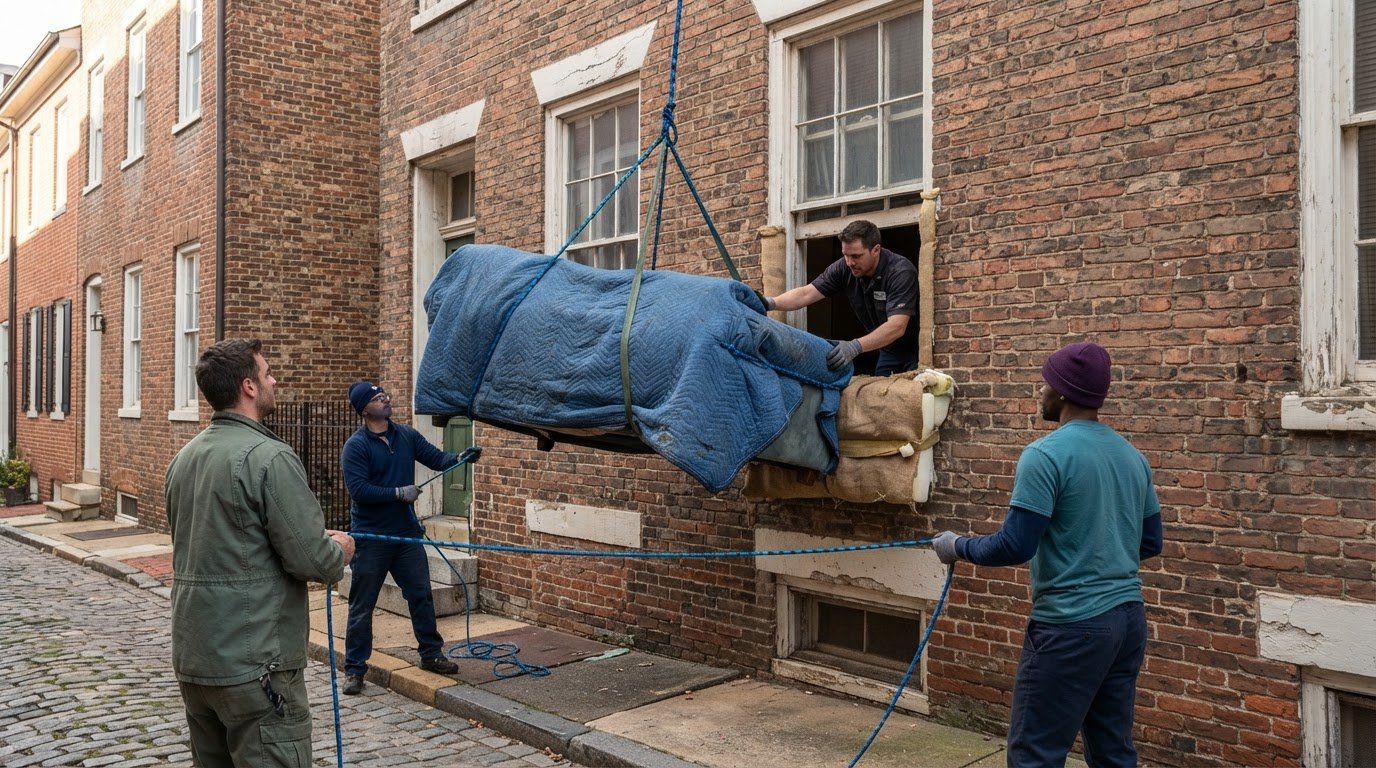
- Choose a different plan if measurements show the dresser cannot clear a turn safely, or the route includes a damaged step. For a bulky piece that needs careful handling through a tight stairwell, consider in-home furniture moving help rather than risking wall, fixture, or furniture damage during a forced pass.
Removing drawers and loose contents from dressers
Empty the dresser before moving it. Loose contents and removable parts can shift during the carry, changing the load just when the movers need steady control.
- Remove every drawer before moving the dresser frame. Even a nearly empty drawer can slide out as the dresser tilts, catch on a stair edge, or throw the load off balance. Set drawers aside outside the route, where they won’t block movers or create a tripping hazard.
- Empty drawers, shelves, and open compartments completely. Carry books, clothing, and small belongings separately. Contents can shift as the dresser changes angle, making its weight harder to control. Separate boxes also prevent belongings from spilling if the frame must pause or turn.
- Remove detachable legs, shelves, or other parts that can come off without damaging the dresser. Keep the frame and removed pieces together in a clear staging area. Smaller parts are easier to carry through a doorway, and removing them may make the main piece lighter and easier to handle.
- Check the front, sides, and back for hardware or loose trim before lifting. A knob or projecting part can catch a blanket, wall, or hand during a turn. Protect delicate surfaces and sharp edges with a moving blanket, keeping the padding smooth so it won’t bunch under a mover’s grip.
- Plan to carry drawers and removed parts separately. Move them only after the staircase is clear, and don’t stack them on a landing needed for turning or resetting. Sliders may help reposition the frame on a flat stretch, but they don’t replace carrying the drawers or controlling the dresser on stairs.
- Set a steady pace when carrying the lighter frame. Before lifting, agree where each person will hold and how the team will communicate. For tall furniture, the high-low method places one person at the top and another at the bottom. A shoulder dolly also requires two people, and should be used only if both can keep the load controlled.
- Keep all dresser parts together after the move. Place drawers and shelves near the frame, not across the stair route. This helps prevent loose components from being overlooked and keeps the path clear as the frame is carried carefully to its new position.
Handling a dresser on carpet
Carpet changes how a dresser moves. Treat a level carpeted floor and carpeted stairs as different surfaces: an aid suitable for a landing may be unsafe on a slope.
- Inspect the carpet before moving the dresser. Look for loose edges, wrinkles, thick pile, and worn patches that could catch a leg or shift underfoot. If you’re learning how to safely slide heavy dressers down carpeted stairs in Aldie, first check whether the carpet and stairs allow equipment to sit firmly and keep the load controlled.
- Use plastic furniture sliders only on a level carpeted stretch, placing them beneath stable contact points. Support the dresser while positioning each slider. Push or pivot gradually and check that the sliders move evenly. If one catches, tilts, or shifts sideways, stop and reset rather than forcing the dresser across the carpet.
- Keep furniture sliders off stair treads. Their low friction can make a dresser move unpredictably on a slope, particularly when carpet thickness varies between steps. On stairs, use suitable equipment designed for stair movement and secure the load. If it won’t stay controlled, stop and change the plan.
- For a short move across carpet, cardboard between the carpet and furniture legs may help a lighter piece slide. It isn’t suitable for stairs. Cardboard can fold or shift beneath heavy furniture, so don’t rely on it for a bulky, awkward, or fragile dresser. Choose an aid that supports the item without compromising balance.
- Before lifting, remove detachable legs if they come off easily, and tilt the frame toward its narrowest stable side. Wrap sharp edges and delicate surfaces with a moving blanket. Bend your knees, keep your back straight, and lift with your legs. Turn with your feet instead of twisting while carrying the dresser.
- Choose carpet-moving equipment to suit the surface and dresser shape. A dolly that rolls smoothly on a flat landing may not be appropriate for stairs. Straps can help a team control bulky furniture, but they don’t replace clear communication. Agree on who will guide each side, and pause if the dresser shifts or anyone loses grip.
- When figuring out how to safely slide heavy dressers down carpeted stairs in Aldie, focus on controlling the load rather than letting it slide freely. Don’t drag bare legs across carpet, where they can snag fibers or leave marks. When carrying, lift enough to clear the pile and set the dresser down gently at each pause.
Are furniture-moving ramps safe to use on carpeted stairs, and how should they be secured?
A ramp is suitable only if it matches the stairs, carpet, and dresser and remains stable. Carpet alone won’t secure a ramp. If the setup shifts, bends, or makes the dresser hard to control, don’t use it.
- Read the ramp instructions before placing it on the stairs. Confirm that it is designed for stair use and its stated capacity covers the dresser and moving equipment. A ramp made for a flat floor may not be suitable for stairs or carpet.
- Inspect the carpet and stairs where the ramp will sit. Look for loose carpet edges, uneven treads, or anything that could prevent firm, even contact. A soft or shifting surface can affect the ramp’s stability. If it won’t sit evenly, choose another way to move the dresser.
- Position the ramp as instructed and align it with the stairs. Use only the securement method specified for that ramp and surface. Don’t improvise with tape, loose boards, or furniture straps as anchors. A makeshift attachment can fail under load or damage the carpet and stair finish.
- Check the setup before loading the dresser. Look for movement, rocking, gaps, or a raised edge that could catch the load. Keep people off the ramp while checking it. If it shifts under gentle pressure or doesn’t sit firmly, remove it instead of trying to compensate during the descent.
- Prepare the dresser and team before moving it onto the ramp. Empty the drawers, secure the frame to suitable moving equipment, and agree on who will control the load. Keep hands clear of pinch points between the dresser, ramp, and stair edges. Never let the furniture slide freely.
- Move at a controlled pace and follow the ramp’s instructions. Keep the dresser balanced, and stop if it tilts, catches, or starts moving faster than the team can control. Don’t try to correct a shifting load from a position where you could become trapped beneath it.
- Choose a different method if the ramp isn’t made for carpeted stairs, its securement instructions don’t fit the setup, or the dresser won’t stay controlled. For a difficult stair move, get help moving a heavy dresser with a team equipped to handle bulky furniture.
If the ramp isn’t suitable, choose another controlled method rather than forcing the setup. A hand truck can help secure furniture during a move, but it isn’t suitable for a piece that isn’t balanced and secured properly. For exceptionally heavy furniture on carpet, the article recommends equipment such as lifting straps, carpet sliders, a moving dolly, or shoulder dollies.
Fabric or slippery plastic furniture sliders can reduce friction when moving heavy items across a floor. Protect delicate furniture and sharp edges with bubble wrap or moving blankets. A mover at the bottom of the stairs must be able to see each step, not walk backward down stairs they can’t see.
Heavy Furniture Moving
Heavy Furniture Moving handles bulky in-home furniture moves, including situations where a dresser is difficult to control on carpeted stairs. Its in-home furniture moving service can help when the stairway is narrow, the dresser won’t stay balanced, or a ramp won’t sit securely. Wrap, blankets, and straps are included on every job.
Describe the dresser, stair layout, carpet, and any tight turns so the team understands the handling challenges. If you’d rather not manage the descent yourself, contact Heavy Furniture Moving to discuss your dresser move in Aldie.
Make the Next Move a Controlled One
Before attempting a do-it-yourself descent, consider what you would do if the dresser shifts halfway down. A safe plan requires more than a ramp: the team must be able to control the load, communicate clearly, and pause without losing balance. If any part of the setup feels uncertain, stop rather than forcing the move.
Knowing how to safely slide a heavy dresser down carpeted stairs using a proper ramp in Aldie starts with recognizing when sliding isn’t appropriate. Choose a method suited to the dresser and staircase instead of letting the equipment dictate the plan.
Heavy Furniture Moving can help take the strain out of a difficult furniture move. Talk with Heavy Furniture Moving about your stair move, and move ahead with a plan that feels manageable.
Frequently Asked Questions
How do you get a heavy dresser down a narrow staircase?
First, confirm the dresser can clear the tightest turn without hitting a wall or getting stuck. Remove detachable parts that add width, and plan the pivot before lifting. Keep people and loose items off the stair route. If the dresser can’t turn while the team maintains a secure hold, stop and choose another approach instead of forcing it through.
Which Tool Works Best?
A stair-climbing hand truck with a tri-wheel or track design can support a controlled descent when the dresser is secured and balanced. A four-wheeled furniture dolly is for level landings, not stair treads. Choose equipment to suit the surface and item shape, and follow its instructions and load rating.
How can you safely move a heavy dresser down carpeted stairs?
Don’t let the dresser slide freely over carpeted steps. Friction can change from tread to tread, causing the load to catch or move unevenly. Use equipment designed for stairs, secure the dresser as instructed, and keep the team’s movements slow and coordinated. Stop if the equipment shifts or the dresser tilts beyond your control.
What equipment is needed to move a dresser down stairs, including stair-climbing dollies and straps?
Useful equipment may include a stair-climbing hand truck, suitable moving straps, and blankets to protect the dresser’s finish. Match every tool to the dresser and route. Use straps as instructed and with a suitable team setup; they don’t make an unstable load safe. Check the stated capacity of each piece of equipment before loading.
What is the safest step-by-step method for two or more people to lower a dresser downstairs?
Agree on roles and commands before lifting. Have one person call the movement so the team shifts together, and pause whenever someone needs to reset their grip. Move the dresser in a controlled sequence, with the person guiding from below able to see each step. At a landing, stop completely, check the balance, and communicate before turning or continuing.
Frequently Asked Questions
First, confirm the dresser can clear the tightest turn without hitting a wall or getting stuck. Remove detachable parts that add width, and plan the pivot before lifting. Keep people and loose items off the stair route. If the dresser can’t turn while the team maintains a secure hold, stop and choose another approach instead of forcing it through.
A stair-climbing hand truck with a tri-wheel or track design can support a controlled descent when the dresser is secured and balanced. A four-wheeled furniture dolly is for level landings, not stair treads. Choose equipment to suit the surface and item shape, and follow its instructions and load rating.
Don’t let the dresser slide freely over carpeted steps. Friction can change from tread to tread, causing the load to catch or move unevenly. Use equipment designed for stairs, secure the dresser as instructed, and keep the team’s movements slow and coordinated. Stop if the equipment shifts or the dresser tilts beyond your control.
Useful equipment may include a stair-climbing hand truck, suitable moving straps, and blankets to protect the dresser’s finish. Match every tool to the dresser and route. Use straps as instructed and with a suitable team setup; they don’t make an unstable load safe. Check the stated capacity of each piece of equipment before loading.
Agree on roles and commands before lifting. Have one person call the movement so the team shifts together, and pause whenever someone needs to reset their grip. Move the dresser in a controlled sequence, with the person guiding from below able to see each step. At a landing, stop completely, check the balance, and communicate before turning or continuing.