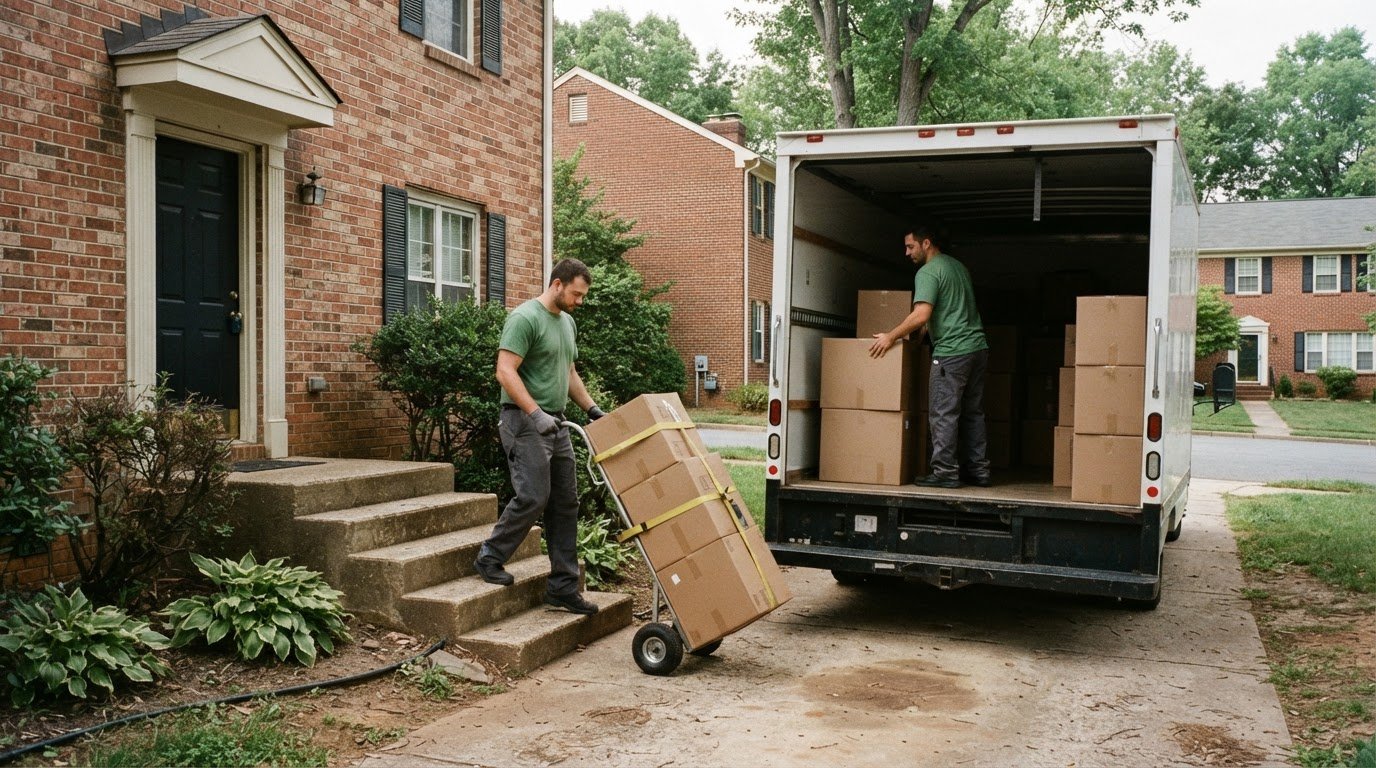
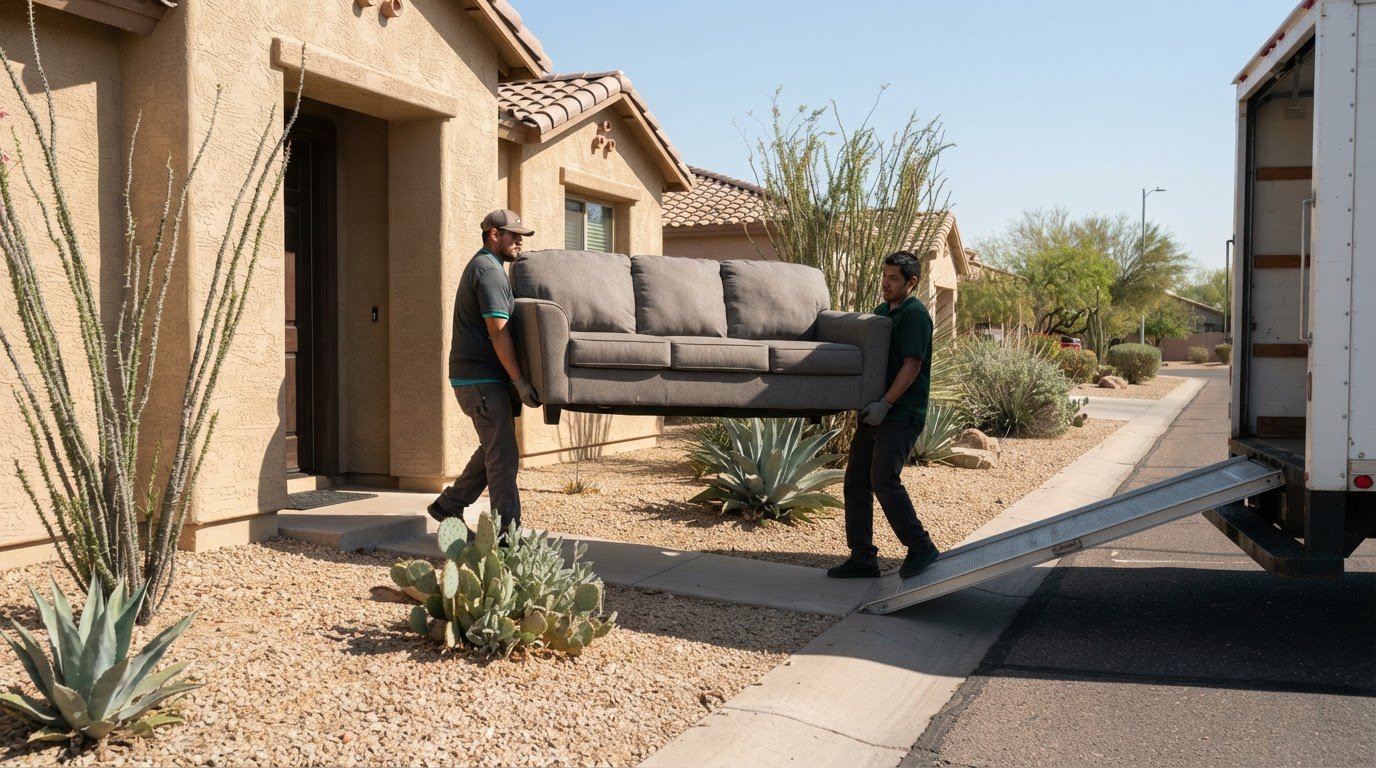
How to Safely Lift a Heavy Armoire Over Split Stairs in Chantilly
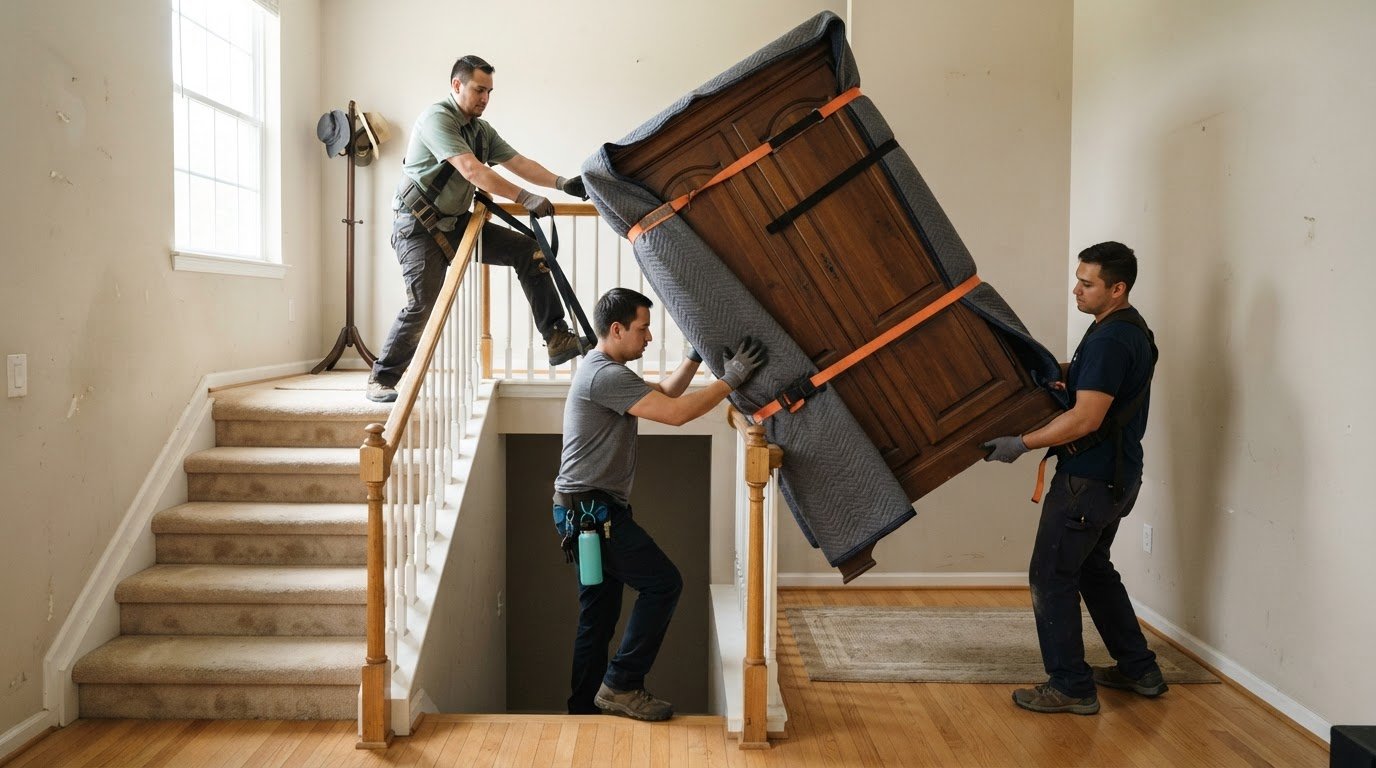
The strongest-looking dolly may be the wrong tool for a split-level staircase. To safely lift a heavy armoire over split-level stairs in Chantilly, measure the armoire and the tightest points on the route, clear and protect the path, then choose a method suited to the stairs. Don’t carry a load you can’t control. Move one step at a time, and stop if anyone loses grip or can’t see the next step.
It’s understandable to wonder whether you can move an armoire upstairs by yourself. A solo carry leaves no partner to help control a heavy piece or guide it around turns, so don’t attempt it alone. A standard furniture dolly is designed for level surfaces, not stair navigation, and sliders aren’t a substitute for controlled stair lifting.
This guide covers how to assess the armoire’s size, weight, and route; choose suitable equipment; and protect walls, floors, and railings. It also explains when professional help is the safer choice, so you can decide before lifting starts.
Key Takeaways
- Measure the armoire at its widest, tallest, and deepest points, then compare those dimensions with the tightest turns and ceiling clearance on the route.
- Reduce bulk by removing detachable parts, and secure drawers and doors before the lift.
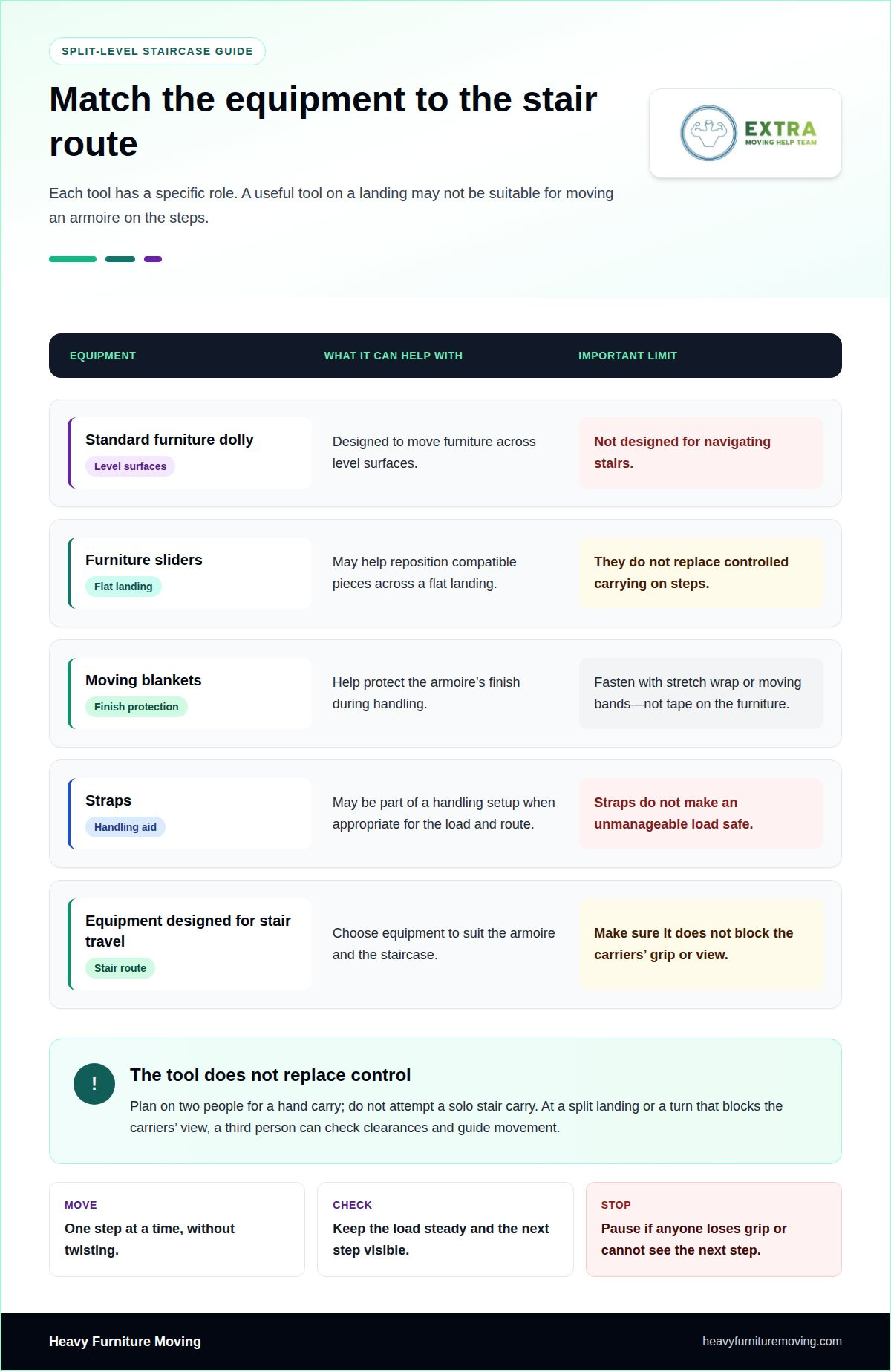
- Use moving blankets to protect the finish, fastening them with stretch wrap or moving bands rather than tape on the furniture.
- Choose equipment designed for stair travel; a standard furniture dolly is intended for level surfaces.
- Bring in professional movers if the load can’t be controlled safely or the armoire won’t fit without forcing it through the staircase.
How do professional movers handle heavy furniture on staircases?
Start by measuring, then assess whether the armoire can be controlled through every turn. Professional movers consider the furniture, stair route, and equipment before lifting.
-
Measure the Armoire and Staircase Route
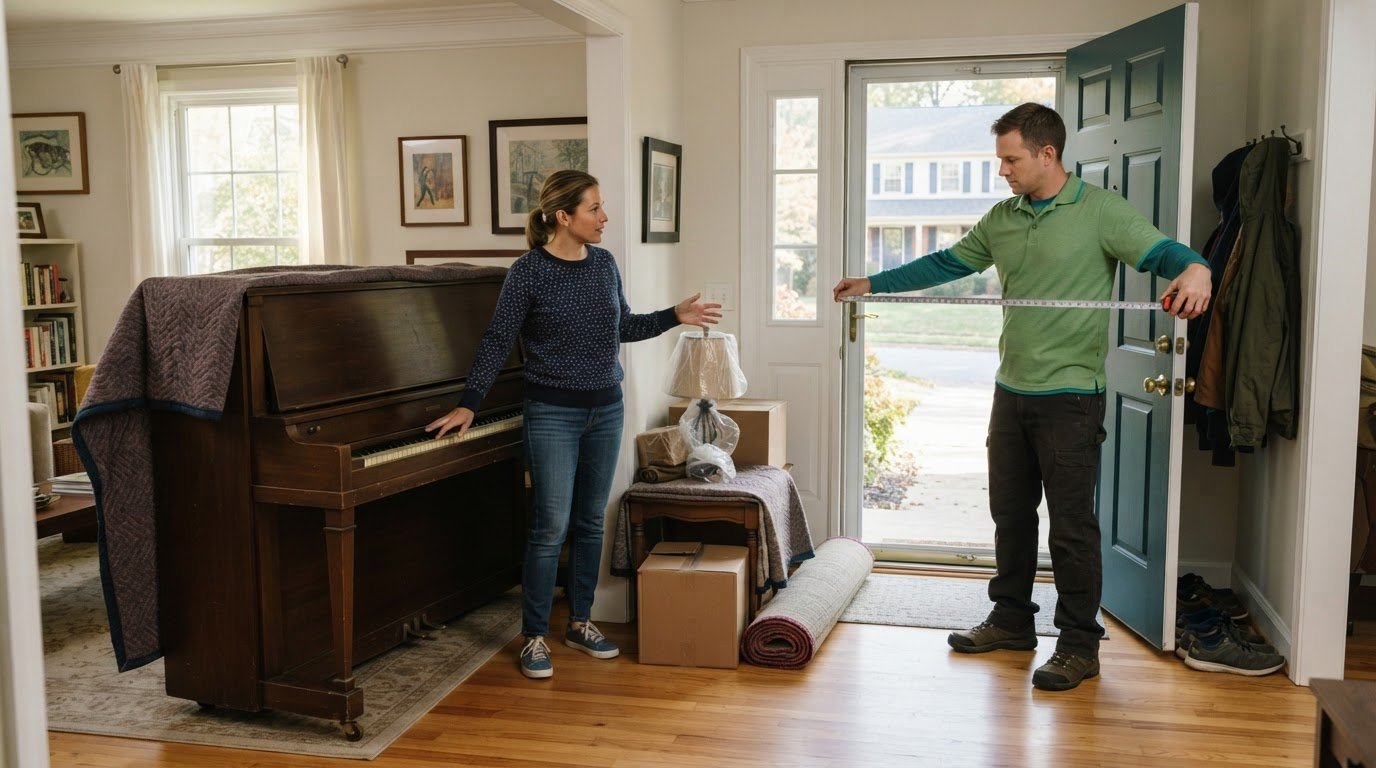
Measure the armoire at its tallest, widest, and deepest points, including protruding handles. Then measure the stairs, landing, ceiling clearance, doorway, and each turn. Compare every measurement before delivery, not just the doorway width. For example, a 72-inch-high, 40-inch-wide, 22-inch-deep armoire leaves only 3 inches below a 75-inch landing ceiling. That tight clearance makes the turn and tilt especially important to assess.
Check the assembled dimensions before arranging delivery or a move. If the piece was assembled in the room, it may not fit back through the route in its assembled form. Note tight spots and obstacles so the plan accounts for the entire staircase, not just the first flight.
-
Determine the Number of Stairway Movers
Plan on two people carrying the armoire by hand, and don’t attempt a solo stair carry. Whether two movers can manage it depends on the armoire’s weight, shape, grip points, and the staircase’s turns. If either carrier can’t maintain control or see the next step, stop and arrange professional help.
At a split landing or a turn that blocks the carriers’ view, a third person can check clearances and guide the movement. Agree on simple commands such as “stop,” “lower,” and “step” before lifting. Move one step at a time without twisting. The safest setup depends on the load and the movers’ strength and experience.
-
Disassemble the Armoire for Narrow Stairs
Empty the armoire first, then remove only parts designed to detach, such as drawers, shelves, doors, or legs. Photograph the assembled piece, keep the hardware together in a labeled bag, and protect removed parts separately. Don’t force joints, pry fixed panels, or remove structural pieces to make the cabinet narrower.
Recheck the armoire’s dimensions after removing each detachable part. If it still won’t clear a landing or turn, don’t force it through or scrape it along the wall. A professional can assess whether a different orientation or handling plan will work.
-
Choose Equipment for the Stairway
Choose equipment to suit the item and route. A standard furniture dolly is designed for level surfaces, not stairs. Sliders may help reposition compatible pieces across a flat landing, but they don’t replace controlled carrying on steps. Moving blankets can protect the finish during handling.
Before lifting, make sure the equipment doesn’t block the carriers’ grip or view. Agree on commands, keep the load steady, and pause if anyone loses grip or can’t see the next step.
-
Discuss the Estimate and Furniture Coverage
For a moving estimate in Chantilly, provide the armoire’s dimensions, its weight if known, and details about the stairs, landings, and tight turns. These details help define the work involved. Review the move paperwork to understand how furniture coverage and liability are described. Coverage and responsibility depend on the agreed service and paperwork, so don’t assume one rule applies to every move.
When should you hire a professional logistics service for furniture without a lift?
Hire professional movers if two people can’t control the armoire safely, even with straps. Carrying heavy furniture on stairs can lead to a dropped load, falls, or damage to people and the home.
- Stop if the load exceeds safe control. Don’t judge the move by strength alone. Check whether both carriers can keep a secure grip, see the next step, and move without twisting. If either person struggles to hold the armoire steady, set it down safely and arrange professional help. A split landing can make control harder because carriers may need to change position while supporting the load.
- Hire movers when two people can’t manage it. If the armoire remains too difficult for two people to handle safely, even with straps, leave the move to professional movers. Straps don’t make an unmanageable load safe. The armoire’s weight, balance, grip points, and the stairway’s shape all affect control. Don’t add helpers to a tight staircase if they’ll block movement or the carriers’ view.
- Don’t force a poor fit. If the armoire won’t clear a turn, don’t scrape it along walls, bend a railing, or lift beyond your ability. Pause if measurements show too little room for a controlled turn. In an apartment, consider the full route, including shared hallways and entry doors. An awkward fit needs a different handling plan, not more force.
- Choose professional help for complex access. A split-level stairway, tight landing, low ceiling, or obstructed approach can make bulky furniture difficult to guide. Professional movers can assess the route and load together before carrying begins. A second-story exterior move isn’t a casual do-it-yourself project. Don’t improvise a lift through a window or over a railing.
- Set a clear stop rule before lifting. Agree that anyone can call “stop” if grip slips, pain starts, or the next step disappears from view. Lower the piece only when the team can do so under control. Don’t continue just because the armoire is already partway up the staircase. If the route or load makes a safe pause impossible, arrange professional handling before the carry starts.
- Use the injury risk as a reason to plan, not rush. More than 100,000 stair-related injuries each year are linked to carrying items such as furniture up or down stairs. That figure reinforces a practical choice: when the armoire exceeds the carriers’ control or the route can’t be cleared safely, stop the DIY attempt. For help with a difficult carry, consider professional heavy lifting assistance.
Choosing moving blankets, straps, and stair-climbing dollies
- Cover the armoire before adding straps. Wrap the finish in moving blankets, paying special attention to exposed corners and edges that could strike a wall. Secure the blankets with stretch wrap or moving bands. Keep tape off the wood, since adhesive can mark or damage the surface. Check that the wrap holds the blankets in place without covering handholds or making the armoire harder to grip.
Keep handles and other useful grip points accessible. A loose blanket can shift during a turn, so smooth and secure it before lifting.
- Choose straps for control, not as a shortcut. Carrying straps can help distribute the load between movers, but they don’t make an armoire safe to lift if its weight or shape is beyond their control. Position straps according to the equipment instructions, then test the grip and balance before approaching the first step. Stop if straps slip, catch on the furniture, or prevent either mover from keeping a steady hold.
Keep the armoire stable while adjusting straps. Don’t twist under the load to correct a poor position.
- Match the dolly to the surface. A standard furniture dolly is designed for level floors, not stair navigation. Use it only to reposition compatible furniture on a flat area, such as a landing, and keep the armoire controlled while transferring it. Sliders can also help on suitable flat surfaces, but they aren’t a safe replacement for stair lifting.
Don’t roll a loaded standard dolly toward a step. Its wheels can’t provide the controlled movement needed on stairs.
- Assess whether a stair-climbing dolly suits the item. A stair-climbing dolly has three wheels on each side that rotate over step edges. It’s recommended for heavy, compact items, such as solid wood dressers or kitchen appliances. An armoire’s height and bulk can make a split landing or narrow turn difficult, even with stair-rated equipment. Check that the dolly and furniture can clear each turn without forcing or tilting beyond control.
Don’t assume stair-climbing wheels make every tall piece suitable for dolly transport.
- Test the balance and route before committing. Once the armoire is secured, check its balance and confirm that carriers can maintain their grip and view. Make sure the equipment won’t catch on a rail, wall, or landing edge. If the dolly blocks the turn or makes the load unstable, stop and choose a controlled carry or professional handling. Move deliberately, and never rush because the equipment is already in use.
Clearing the route and protecting walls and railings
Prepare the entire route before lifting, from the room to the destination. Clear obstacles and protect surfaces the armoire could touch at each turn.
-
Clear the Moving Path
Walk the route from the armoire’s starting room to its destination, and remove boxes, rugs, and loose items. Open doors fully and keep the landing clear so carriers have room to pause or turn. Check the ceiling and overhead fixtures along the stairs. A clear floor and unobstructed view help prevent trips while furniture is moving.
- Move other pieces out first. Carry large furniture upstairs before boxes fill rooms and hallways. If the armoire is going downstairs, clear the lower hallway and exit area before bringing it onto the stairs. Keep pets and bystanders away from the route, and move tools or straps out of the carriers’ path.
On a split-level staircase, clear both sides of the landing. This gives the team room to reposition without pushing the armoire against a wall.
-
Protect Walls and Railings
Before lifting, pad exposed corners and vulnerable wall areas. Secure moving blankets so they stay in place, and protect railings where the armoire may pass close. Keep straps snug and away from surfaces where they could rub or snag. A third person can check clearances, protect walls, and guide turns while carriers focus on the load.
- Protect floors where the armoire pauses. Use compatible furniture sliders to reposition furniture across a flat floor or landing and help prevent scratches. Don’t rely on sliders for stair lifting. Keep loose protective material off the walking area, where it could shift underfoot, and remove sliders before the piece reaches the next step.
Check the floor at each transition. A mat or blanket that bunches beneath a carrier can create an obstacle instead of protecting the surface.
- Keep equipment clear of contact points. Before moving, check that straps, blankets, and any dolly won’t catch on a railing, doorway, or wall corner. A standard furniture dolly belongs on level surfaces, not stairs. If it helps move the armoire across a flat area, stop before the stair edge and switch to a controlled stair method.
- Do one final route check. Have the spotter inspect the landing, turns, ceiling clearance, and walking surface before lifting. Agree on a stop command and use it if the armoire approaches a wall or blocks someone’s view. Keep the route clear until the furniture is through, then remove padding and floor protection without dragging it across finished surfaces.
Choosing stair-moving equipment
- Match the equipment to the furniture and route. Start with the armoire’s shape, weight, grip points, and clearance at each turn. A tool suited to a compact dresser may not control a tall, bulky piece. On split stairs, the landing changes the direction of travel, so check whether equipment can turn there without tipping, striking corners, or blocking the carriers’ view.
Choose control over convenience. If a device makes the armoire harder to steady, it isn’t right for that route.
- Use a stair-climbing dolly only when the load suits it. This dolly has three wheels on each side that rotate over step edges. It’s recommended for heavy, compact items, such as a solid wood dresser or kitchen appliance. An armoire’s height and width may make a landing turn difficult, even if the dolly can climb individual steps. Check the full path, including the turn, before committing.
Don’t assume stair-climbing wheels make every heavy item safe to move. The load still needs to remain stable and under control.
- Consider a hand truck with stair sliders for tall, sturdy furniture. These hand trucks use built-in back tracks to glide over steps. Suitability depends on whether the piece is sturdy enough for the support and can clear the stairway’s turns. Keep the armoire secured and balanced, and make sure the tracks or load won’t catch on railings, walls, or landing edges.
On a narrow split-level turn, a hand truck may still be too bulky. Check clearance at the turn, not just along a straight flight.
- Keep standard dollies and furniture sliders on suitable surfaces. A standard furniture dolly is designed for level floors, not stairs. Furniture sliders can help reposition compatible furniture across a flat surface, but don’t treat them as stair-lifting equipment. Stop before the first step and switch to a method and equipment suited to stairs.
Don’t improvise by pushing a loaded standard dolly toward a stair edge. That can leave carriers without reliable control.
- Skip equipment that makes control harder. Stair rollers require a helper to reposition the rollers and can make the load difficult to control. Avoid this approach for an armoire on split stairs. If no suitable device lets the team maintain a secure grip, clear view, and controlled position, stop rather than forcing the move.
For a heavy piece that needs careful stair handling, arrange professional heavy lifting help instead of improvising with unsuitable equipment.
Heavy Furniture Moving: heavy lifting moving service
Heavy Furniture Moving provides heavy lifting help for challenging furniture moves, including armoire handling on split stairs. Turn to the team when the landing is tight, the load is difficult to control, or the move calls for suitable equipment and experienced movers. Share the armoire’s dimensions and describe the staircase, turns, and access points so the team can plan around the actual route. Heavy Furniture Moving also offers Exercise Equipment Moving and Sofa Hoisting for other bulky items. If carrying the armoire yourself feels unsafe, leave the lifting to experienced movers. Contact Heavy Furniture Moving to discuss your armoire move.
Make the Next Move With Confidence
Planning how to safely lift a heavy armoire over a split-level staircase in Chantilly starts with an honest assessment of control. If the move feels uncertain, don’t turn a difficult carry into a test of strength. Pause until you have a clear plan for handling the armoire and protecting the home around it.
A useful next step is to describe the move: where the armoire is now, where it needs to go, and what makes the route challenging. That gives the conversation a practical starting point focused on your specific furniture move, not a one-size-fits-all plan.
For help with a demanding furniture move, contact Heavy Furniture Moving. You can talk through the armoire and the stairway, then decide how to move forward. A careful plan is a solid start, and you can take the next step at your own pace.
Frequently Asked Questions
Can You Move Furniture Upstairs by Yourself?
You may be able to move a light, compact piece alone on a clear, straight route, but don’t attempt to carry a heavy armoire on stairs by yourself. A solo carrier can’t call for help while controlling a shifting load. If you’re deciding how to safely lift a heavy armoire over split-level stairs in Chantilly, first consider its weight, handholds, and landing turns. If you can’t keep it steady and see the next step, stop and get help.
What solutions exist for moving heavy furniture without a lift?
Use a clear stair route and a method suited to the furniture, rather than improvising a lift. A stair-climbing dolly may suit a compact, sturdy item, while a tall armoire may be harder to control through a landing turn. Don’t attempt a second-story exterior lift casually. Heavy Furniture Moving provides heavy lifting help for difficult household furniture.
How do professional movers move a heavy armoire over a split-level staircase safely?
Safely lifting a heavy armoire over a split-level staircase in Chantilly starts with planning the turn, not just the stair flight. Movers consider where carriers can pause, how the armoire changes direction, and whether everyone can keep a clear view. Home layouts vary across Chantilly and nearby Fairfax, Woodbridge, Manassas, Manassas Park, Aldie, Ashburn, McLean, Vienna, Reston, Centreville, Clifton, Dumfries, South Riding, Fairfax Station, Haymarket, and Gainesville.
How to measure an armoire and split-level stairs before moving furniture
Measure the armoire’s full outside dimensions, including handles or trim, then note the narrowest doorway and stair opening. Measure the landing depth and ceiling clearance too. To plan how to safely lift a heavy armoire over split-level stairs in Chantilly, sketch each change of direction and record where the armoire must pivot. Compare the measurements with the armoire held in different orientations, since its narrowest profile can change as it turns.
What equipment is needed to move a heavy armoire upstairs or downstairs?
Equipment depends on the armoire’s size, shape, and route. Moving blankets and secure straps can protect and stabilize it, while a stair-climbing dolly may suit a compact, sturdy load. A regular furniture dolly belongs on level ground, not stair treads. Keep a spotter available for turns, and don’t use equipment that blocks handholds or makes the piece harder to control.
How to protect stair treads, walls, railings, and floors when moving an armoire
Protect surfaces before carrying, especially at the landing where the armoire changes direction. Cover exposed corners and railings with secured padding, and protect floors where the piece may pause. Keep loose runners flat so they don’t shift beneath carriers. A spotter can watch the clearance between the armoire and nearby walls, then call for a pause before contact causes a scratch or dent.
Frequently Asked Questions
You may be able to move a light, compact piece alone on a clear, straight route, but don’t attempt to carry a heavy armoire on stairs by yourself. A solo carrier can’t call for help while controlling a shifting load. If you’re deciding how to safely lift a heavy armoire over split-level stairs in Chantilly, first consider its weight, handholds, and landing turns. If you can’t keep it steady and see the next step, stop and get help.
Use a clear stair route and a method suited to the furniture, rather than improvising a lift. A stair-climbing dolly may suit a compact, sturdy item, while a tall armoire may be harder to control through a landing turn. Don’t attempt a second-story exterior lift casually. Heavy Furniture Moving provides heavy lifting help for difficult household furniture.
Safely lifting a heavy armoire over a split-level staircase in Chantilly starts with planning the turn, not just the stair flight. Movers consider where carriers can pause, how the armoire changes direction, and whether everyone can keep a clear view. Home layouts vary across Chantilly and nearby Fairfax, Woodbridge, Manassas, Manassas Park, Aldie, Ashburn, McLean, Vienna, Reston, Centreville, Clifton, Dumfries, South Riding, Fairfax Station, Haymarket, and Gainesville. How to measure an armoire and split-level stairs before moving furniture Measure the armoire’s full outside dimensions, including handles or trim, then note the narrowest doorway and stair opening. Measure the landing depth and ceiling clearance too. To plan how to safely lift a heavy armoire over split-level stairs in Chantilly, sketch each change of direction and record where the armoire must pivot. Compare the measurements with the armoire held in different orientations, since its narrowest profile can change as it turns.
Equipment depends on the armoire’s size, shape, and route. Moving blankets and secure straps can protect and stabilize it, while a stair-climbing dolly may suit a compact, sturdy load. A regular furniture dolly belongs on level ground, not stair treads. Keep a spotter available for turns, and don’t use equipment that blocks handholds or makes the piece harder to control. How to protect stair treads, walls, railings, and floors when moving an armoire Protect surfaces before carrying, especially at the landing where the armoire changes direction. Cover exposed corners and railings with secured padding, and protect floors where the piece may pause. Keep loose runners flat so they don’t shift beneath carriers. A spotter can watch the clearance between the armoire and nearby walls, then call for a pause before contact causes a scratch or dent.