How to Protect Wood Banisters From Strap Rub in Gainesville
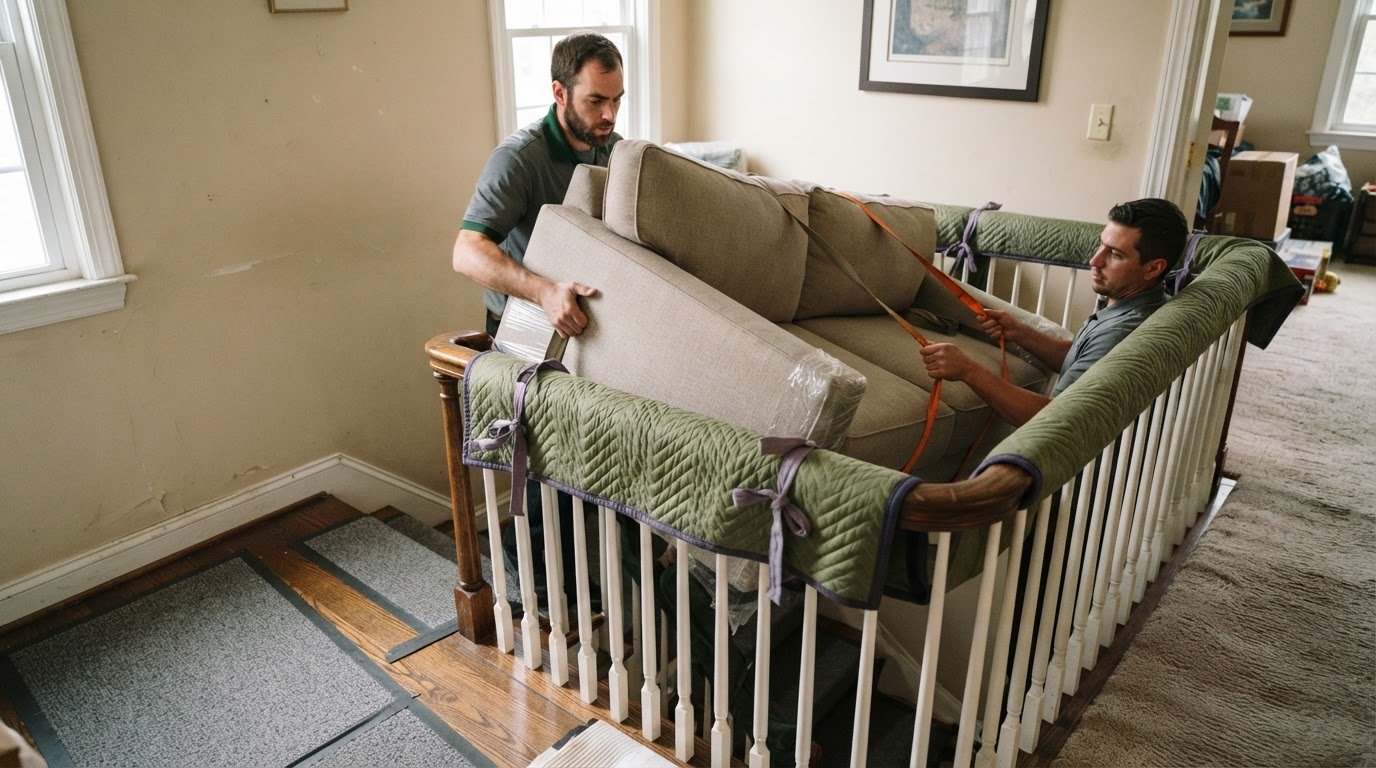
A moving strap should never be the only thing between heavy furniture and a wood banister. To learn how to protect wood banisters from strap rub during heavy furniture moving in Gainesville, pad the banister with a moving blanket, keep straps from rubbing against the wood, and cover stair treads with a secure protective runner. Move the item slowly, one step at a time, and steady it before continuing.
It’s easy to focus on protecting the furniture and overlook the surfaces along its route. A strap can scrape the finish, and an awkward turn on the stairs can bring a heavy item close to the banister. Preparation reduces the risk and makes the route easier to manage.
This guide covers how to protect wooden stairs and banisters, measure and clear an upstairs route, and choose protective materials and moving equipment. It also explains when bulky furniture may call for experienced lifting help, so you can plan the move and avoid unnecessary strain or damage.
Key Takeaways
- Wrap exposed banister sections with padding and keep moving straps from rubbing directly against the wood.
- Choose stair coverings that stay secure, and protect the treads as well as the railing.
- Measure the furniture and the full route upstairs, then clear landings and tight turns before moving.
- Move heavy items slowly, stabilize them at each step, and use suitable equipment to control the load.
- For bulky furniture or a difficult stairway, moving help can make the lift and route easier to manage.
Protecting wooden stairs with runners, blankets, rugs, paper, drop cloths, and plastic film
For light strap scuffs on a finished wood banister, wipe first with a clean, soft, dry cloth. If the mark remains, avoid abrasive pads, strong cleaners, and sanding, which can damage the finish. Instead, use a wood-safe cleaning method suited to the banister’s surface.
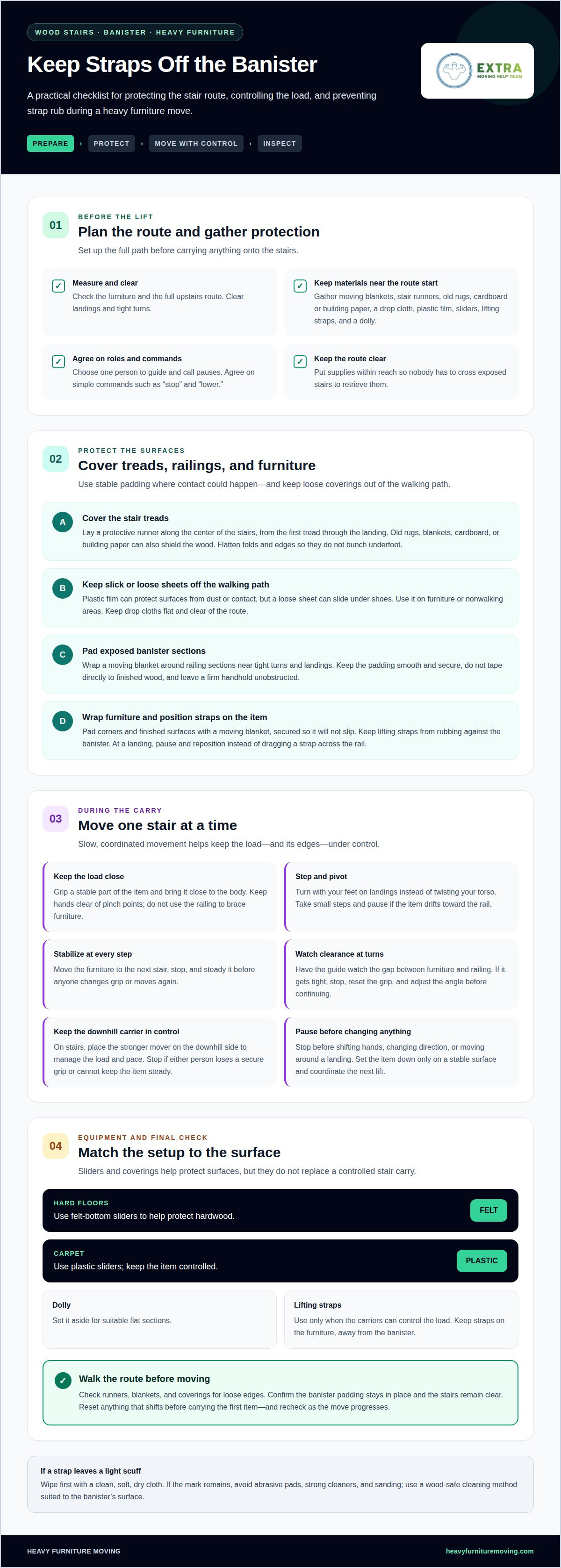
- Gather protection and moving equipment. Set out moving blankets, stair runners, old rugs, cardboard or building paper, a drop cloth, plastic film, furniture sliders, lifting straps, and a dolly. Keep each item near the start of the route so nobody has to cross exposed stairs to retrieve it.
- Cover the stair treads with a stable layer. Lay a protective runner along the center of the wooden stairs, covering the walking path from the first tread through the landing. Old rugs, blankets, cardboard, and building paper can also shield the wood. Flatten folds and edges so they don't bunch underfoot.
- Keep slick coverings off the walking path. Plastic film can protect surfaces from dust or contact, but a loose sheet can slide under shoes. Use it on furniture or nonwalking areas instead of leaving it loose across stair treads. A drop cloth also needs to lie flat and stay clear of the route.
- Pad the banister where contact could happen. Wrap a moving blanket around exposed rail sections, especially at tight turns and landings where a carried item may brush the railing. Keep the padding smooth and secure without fastening tape directly to the finished wood. Check that the blanket doesn't block a firm handhold.
- Protect the furniture before lifting. Wrap a moving blanket around corners and finished surfaces, then secure it so it won't slip during the carry. Keep lifting straps positioned on the item, not rubbing against the banister. At a landing, pause and reposition the furniture instead of dragging a strap across the rail.
- Match sliders and equipment to the route. Use felt-bottom sliders on hard floors and plastic sliders on carpet. Set a dolly aside for suitable flat sections, and use lifting straps only when the carriers can control the load. Sliders help move furniture across floors; they are not a substitute for a controlled stair carry.
- Inspect the setup before moving. Walk the route without furniture and check each runner, blanket, and covering for loose edges. Confirm the banister padding stays in place and the stairs remain clear. If a covering shifts during the test, reset it before carrying the first item.
Select a covering based on the part of the route that needs protection, then prepare it before the move begins. Plastic film is listed as an option for protecting wood stairs during a move, while cardboard and building paper are listed as options for protecting wood stairs during a move. Arrange these materials to cover the intended surface without creating folds or loose edges. Recheck them as the move progresses, and reset any section that has shifted before continuing. Keep the route clear and ensure the covering does not interfere with a steady, controlled carry.
Using protective materials and safe moving techniques
Padding helps, but control matters just as much. Follow these steps to steady the load and reduce contact with the banister.
- Assign clear roles before lifting. Choose one person to guide the route and call pauses. The other mover should keep the item steady and watch its clearance from the railing. Agree on simple commands, such as “stop” and “lower,” before lifting begins. Clear instructions prevent sudden shifts near finished wood.
- Keep furniture close to the body. Before lifting, grip a stable part of the item and bring it close. A load held far away can swing toward the banister during a turn. Keep hands clear of pinch points, and don't use the railing to brace the furniture.
- Step and pivot instead of twisting. Turn with your feet when changing direction on a landing. Twisting your torso while holding furniture can make the load harder to control. Move your feet in small steps, keep the item balanced, and pause if its edge starts drifting toward the rail.
- Move one stair at a time. Lift or lower the furniture to the next step, then stop. Stabilize it before anyone changes grip or moves again. This controlled pace helps prevent a sudden slide or swing that could scrape the banister or catch its protective padding.
- Keep the downhill carrier in control. On stairs, place the stronger mover on the downhill side to manage the load and pace. The other mover should follow the agreed commands and avoid pulling against them. Stop if either person loses a secure grip or cannot keep the furniture steady.
- Watch the banister at turns. A furniture corner can push padding aside or catch its edge. Move slowly through each turn, and have the guide watch the gap between the item and railing. If clearance gets tight, stop, reset the grip, and adjust the item's angle before continuing.
- Protect hard floors during pauses. Felt-bottom sliders can help protect hardwood, while a moving blanket under furniture legs can cushion contact. Don't drag bare furniture across hardwood. On carpet, dragging can catch fibers; use suitable sliders and keep the item controlled instead.
- Pause whenever control changes. Stop before shifting hands, changing direction, or moving around a landing. Set the item down only on a stable surface, then coordinate the next lift. A deliberate pause lets the team reset without scraping a strap, furniture edge, or loose covering against the banister.
Protect stairs with suitable materials and moving equipment, along with careful packing and handling. Keep furniture stable as it moves between steps, and pivot with your feet while maintaining control of the load.
Planning a safe furniture move upstairs
Before moving heavy furniture past a staircase banister, measure the full route, clear each landing, and plan how the item will turn. Keep the load controlled, protect likely contact points, and stop if the piece cannot pass without pressing against the railing.
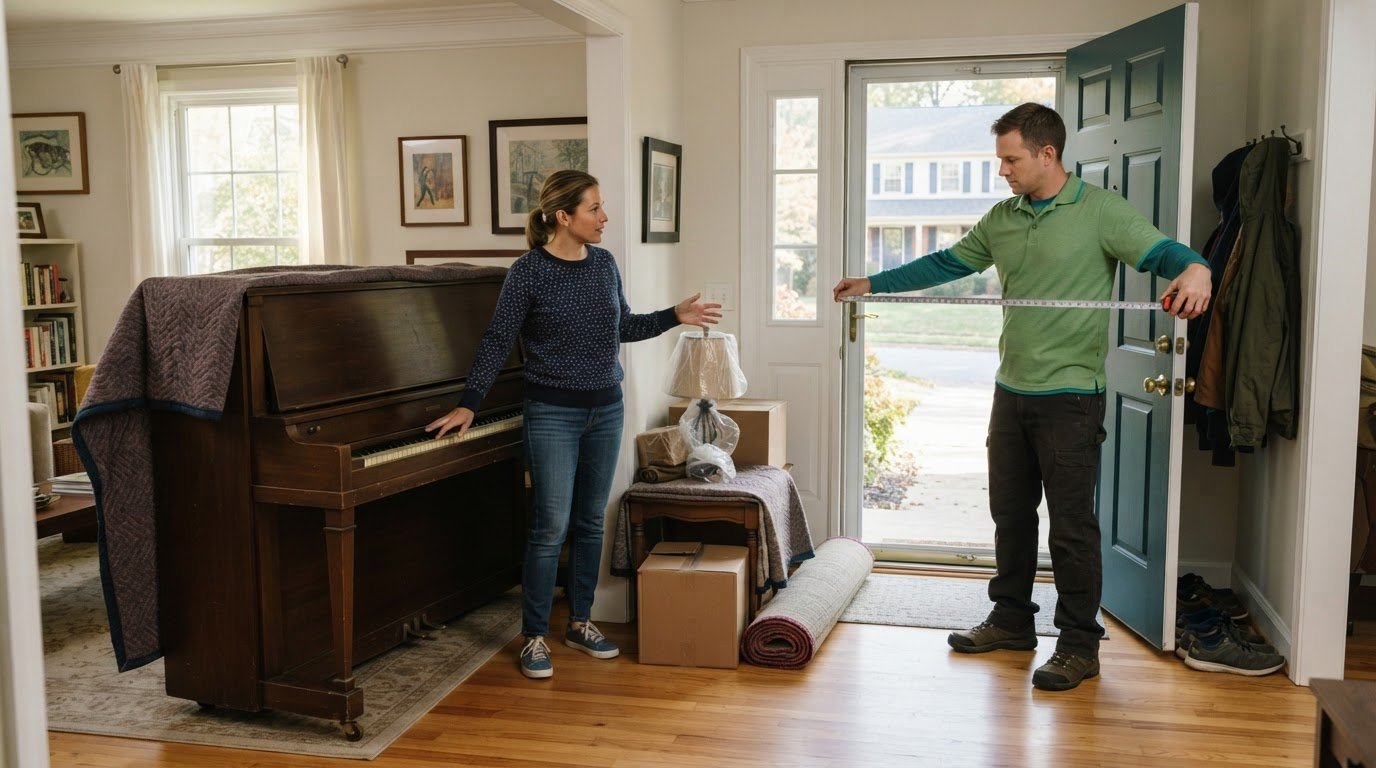
- Measure the furniture and route. Record the item's height, width, and depth, then measure doorways, hallways, stair width, landings, and ceiling clearance. A listed stairway example is 34 inches wide. Compare the item’s dimensions with each tight point, including the space needed to angle it safely.
- Plan turns before lifting. Trace the route from the room to the upstairs destination. Identify where a sofa or dresser must rotate, and note whether the banister narrows the turning space. A sofa example measures 35 inches high, 84 inches wide, and 38 inches deep, with only 1 inch of clearance at a 36-inch front door.
- Check overhead space at landings. Measure ceiling height where the furniture must tilt or pivot. An armoire example is 72 inches high, 40 inches wide, and 22 inches deep; a 75-inch landing ceiling leaves 3 inches of clearance. Keep the piece upright only when that route allows safe control.
- Clear the stairs and landing. Remove shoes, boxes, loose rugs, and small furniture from the entire path. Clear the upstairs landing too, so movers can pause without backing into an obstacle. Keep doors open or secured where they would otherwise swing into the carried item.
- Lighten removable parts. Take drawers out of a dresser and remove loose shelves or detachable legs when practical. Removing dresser drawers can reduce its weight by 25% or more. Carry the parts separately, and keep the main frame stable rather than relying on a lighter but awkward grip.
- Choose the carrying team and positions. Use a second person rather than attempting a heavy stair carry alone. Put the stronger person on the downhill side to control the load and pace. A 200-pound sofa can feel like a 240-to-260-pound load to the person below it on stairs.
- Set a stop signal before lifting. Agree on a clear word, such as “stop,” and use it if the furniture shifts or approaches the banister. Move only when both people are ready. If the item cannot clear a turn without force, lower it safely and change the plan.
- Recheck the path after each adjustment. Before carrying, confirm the furniture still fits after padding is applied and the route remains clear. Test the planned angle without lifting the full load. That check helps reveal a tight turn or low ceiling before the banister is exposed to pressure.
Protecting railings during a move
Pad likely contact points and keep straps clear of the wood. To protect wood banisters from strap rub during heavy furniture moving in Gainesville, treat the railing as a no-contact zone from the start.
Check whether movers provide banister protection
Ask what railing protection is included in the move plan and identify exposed sections before furniture is carried. Protection practices and materials can vary, so clarify who will cover the rail and which areas are included. Make sure the plan addresses the banister at turns and landings, where furniture may swing close. Don’t assume that covering stair treads also protects railings or posts.
Secure straps away from the banister
Position straps around the furniture, or secure the item on a dolly used as intended. Never loop straps around the banister, anchor them to it, or drag them across the wood. Check the strap path at corners and turns before lifting. If a strap could rub the railing, stop and reposition the load or strap.
- Identify vulnerable rail sections. Walk the planned route and note the inside of stair turns, narrow landings, and posts beside doorways. These contact points need protection before moving begins. Check both the top rail and upright spindles, since furniture can brush either surface while changing direction.
- Fit padding without harming the finish. Wrap a clean moving blanket around exposed wood, then secure the blanket to itself where possible. Avoid fastening tape directly to finished surfaces. Keep the padding snug, but leave a usable handhold and avoid pressing on loose or damaged railing parts.
- Keep straps on the load. Set each strap so it supports or steadies the furniture without touching the banister. Moving straps can secure furniture on a dolly, but the railing should not serve as an anchor. If a strap shifts during a test lift, lower the item and reset it before carrying.
- Plan protection supply costs. The cost depends on what materials are already available, how much railing and stair surface needs covering, and whether supplies can be reused. Blankets, runners, paper, and film suit different surfaces and contact risks. Choose materials that protect the route without creating loose edges or blocking safe movement.
- Inspect after each difficult turn. Pause at a landing and look for displaced padding, strap contact, or fresh marks. Reset shifted protection before continuing. If the furniture cannot pass without pressing against the rail, stop and change its angle rather than forcing it through. This is a practical part of how to protect wood banisters from strap rub during heavy furniture moving in Gainesville.
Using appropriate moving equipment
Choose equipment based on the floor and route. A dolly can help on suitable flat areas, while stairs call for controlled lifting and careful positioning.
- Match sliders to the floor. Use felt sliders on hard floors and plastic sliders on carpet. The right surface helps the furniture move without dragging directly across flooring. Fit each slider under a stable furniture leg or base, and pause if one slips or tilts during movement.
- Use a dolly only where it fits. A dolly can support furniture across a clear, level stretch. Secure the item with moving straps so it stays in place while rolling. Keep the dolly away from stairs, and don’t use it where the load or path prevents steady control.
- Keep straps on the furniture. Position straps around the item or use them to secure it on the dolly. Check their path before moving, especially near stair rails and doorframes. A strap that hangs loose can catch on an edge or rub the banister during a turn.
- Use blankets to cushion contact. Wrap moving blankets around exposed furniture corners and finished surfaces. The padding helps limit scrapes if the item brushes a wall or railing. Secure the blanket around the furniture, not the banister, and smooth out folds that could shift into a grip.
- Protect furniture legs during pauses. Place a moving blanket beneath furniture legs when setting an item down on a hard floor. This creates a buffer between the legs and floor while the team resets. Remove the blanket before lifting again if it bunches or makes the furniture unstable.
- Keep stair carries under direct control. Sliders and dollies are for suitable floor sections, not a substitute for controlled lifting on stairs. Carry the item step by step, stabilizing it before continuing. Keep straps clear of the railing and stop if the furniture swings toward the banister.
- Inspect equipment before each move. Check that sliders sit flat, blankets cover the corners, and straps remain secure on the item. Look over the dolly and its load before rolling. If any equipment shifts, stop on stable ground, reset it, and check the route again.
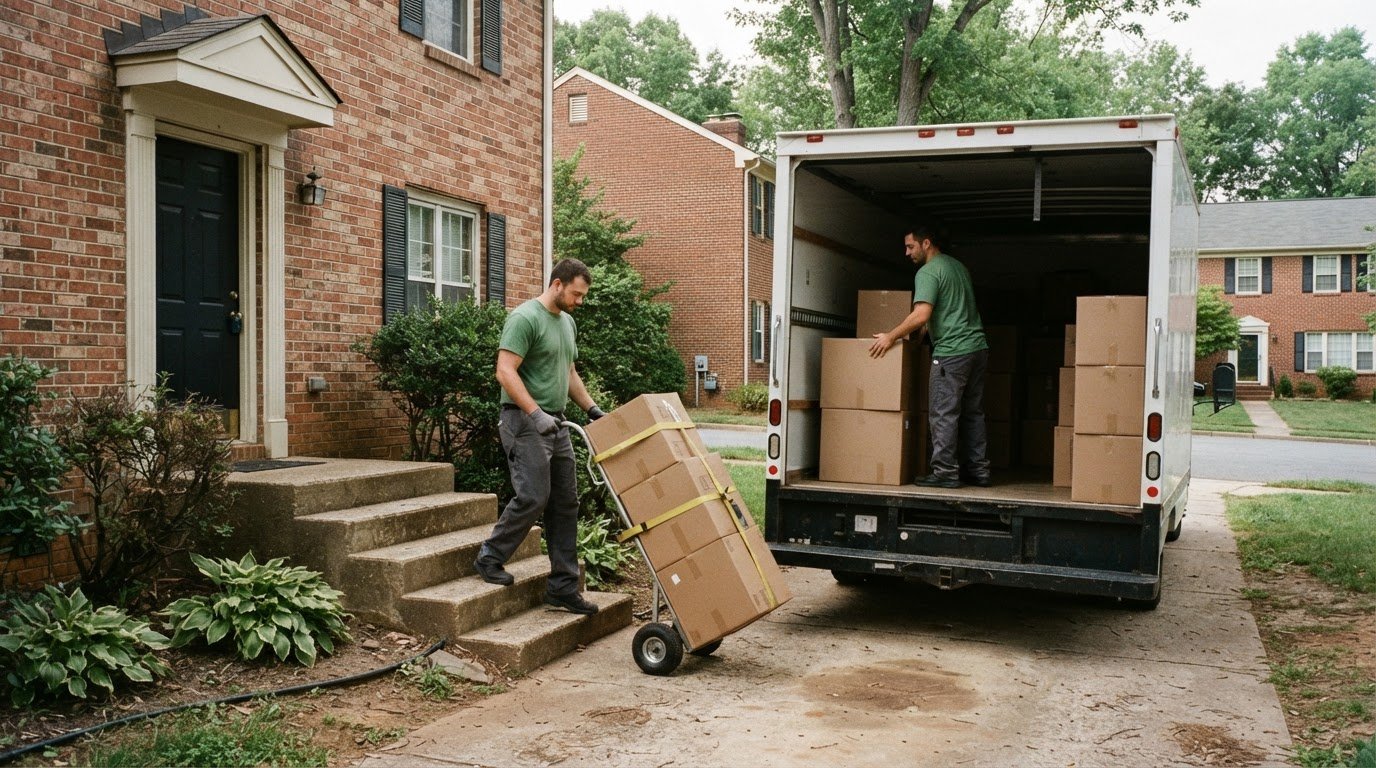
- Choose help for difficult loads. Large exercise equipment or bulky furniture can be hard to control through a narrow stair turn. Use heavy lifting moving help when the load calls for coordinated handling. Share the upstairs route and tight turns so the move can be planned around the equipment and access.
Heavy Furniture Moving
Heavy Furniture Moving provides careful handling and help with difficult lifts for bulky furniture on stairs. Turn to the team when a large piece faces a tight landing or narrow turn, or when keeping straps clear of the banister requires careful coordination.
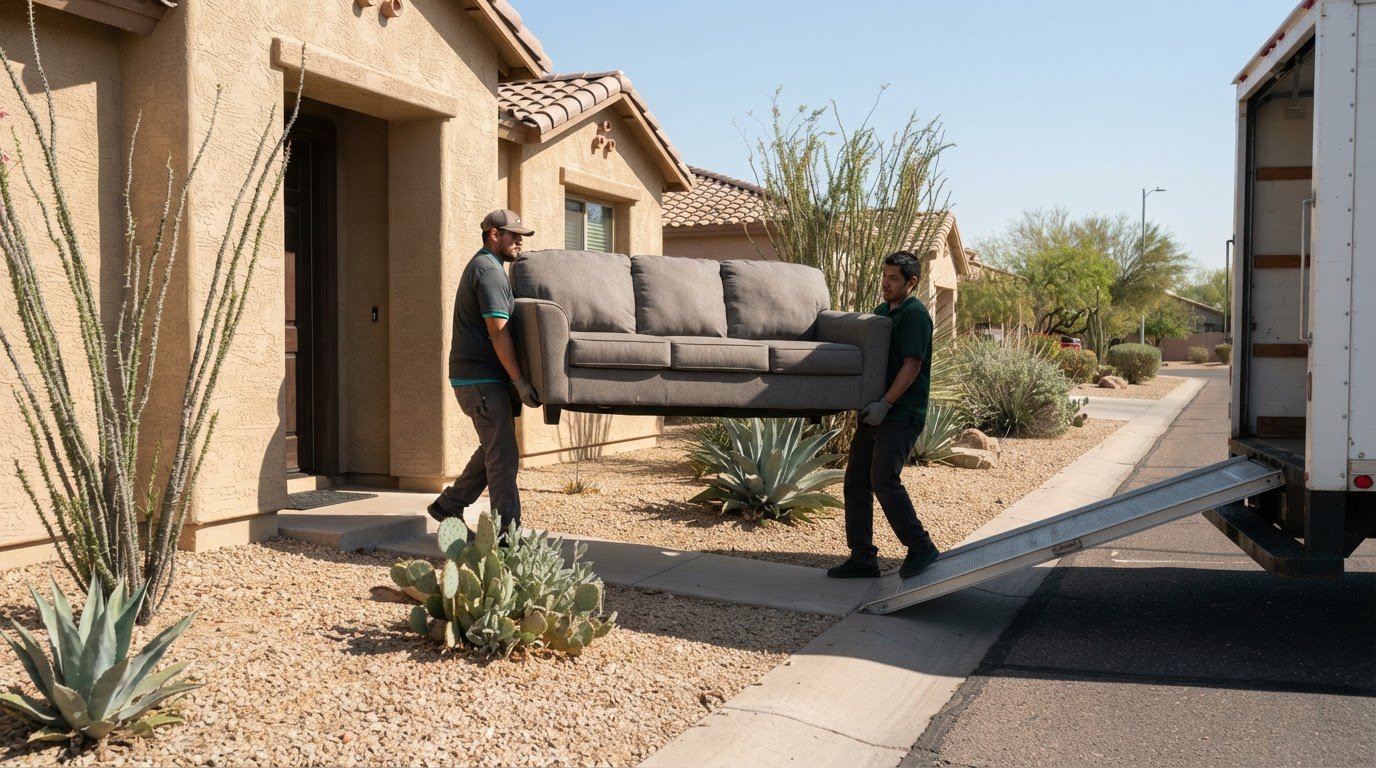
Heavy Furniture Moving’s in-home furniture movers can help carry heavy items through your home. For a bulky sofa or exercise equipment, experienced lifting help can make the move easier to manage while protecting nearby woodwork. Share what needs moving and its destination so the team can plan for the route and its challenges.
Contact Heavy Furniture Moving to plan help with your heavy furniture move.
Make a clear plan for moving day
Before moving day, assign who will guide each tight turn and who will control the furniture. Clear roles help everyone stay focused as a bulky item approaches a railing. In Gainesville, protecting wood banisters from strap rub starts with planning the route and controlling the load without using the banister for support.
Some items need more than careful padding. Heavy Furniture Moving offers Movers Near Me, Exercise Equipment Moving, and Sofa Hoisting for different moving needs. Get help when a heavy or awkward item makes the stairs difficult to manage, or when a sofa needs another route through the home.
Set the next step in motion with Heavy Furniture Moving. A thoughtful plan can help you move forward with confidence and keep attention where it belongs: on a controlled move and your home’s woodwork.
Frequently Asked Questions
How do I protect wood banisters from furniture moving straps?
Secure each strap around the furniture, never around the banister, and keep loose ends from swinging into the railing. Before moving, check the strap path while the item is stationary, including at turns. If a strap might touch the wood, adjust the item or strap first. After moving a bulky piece, inspect the railing for marks before carrying another item past it.
What padding or guards help prevent moving straps from scratching wood banisters?
Moving blankets can cushion railing sections that might contact furniture or straps. Wrap them around the rail and secure the material to itself, not to the finished wood. For narrow posts or spindles, fold a blanket to fit and keep it from slipping. Avoid loose plastic film on stair treads, where it can shift underfoot.
How do I protect banister posts and spindles during a move?
Pad posts and spindles individually where furniture could bump them, especially beside doorways and at stair turns. Fit padding around narrow sections without pulling on joints or blocking a secure handhold. Before carrying a tall item past the railing, check that its corners can clear the protected posts. If padding shifts, pause and reset it.
Are there heavy furniture movers in Gainesville, Virginia, with stair and banister protection?
Heavy Furniture Moving serves Gainesville, Virginia, and includes moving blankets, straps, runners, door-jamb covers, and floor and corner protection on every job. These materials help protect surfaces along the route, including near stairs and railings. The crew measures doorways, stairs, and item dimensions before lifting to plan how bulky furniture can pass through your home.