How to Protect Luxury Vinyl Tile While Moving Appliances
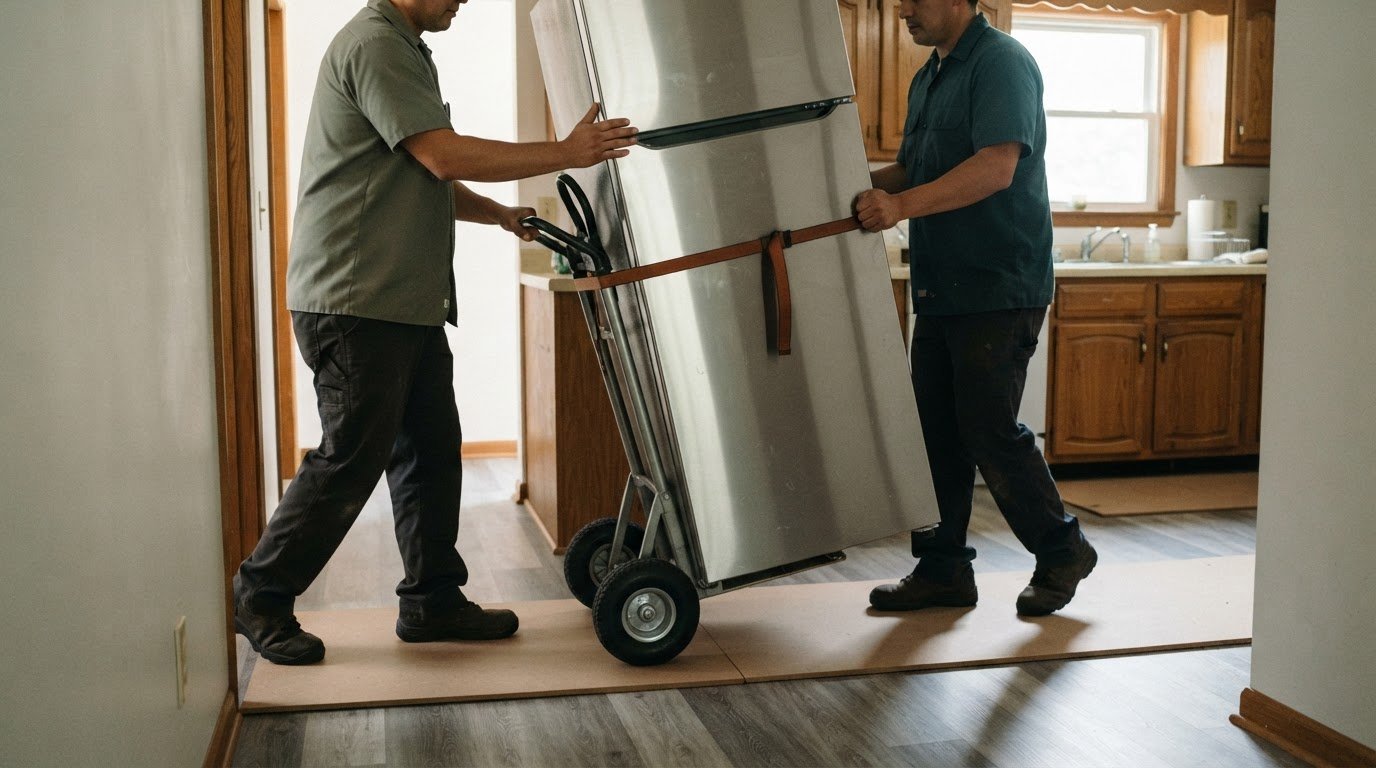
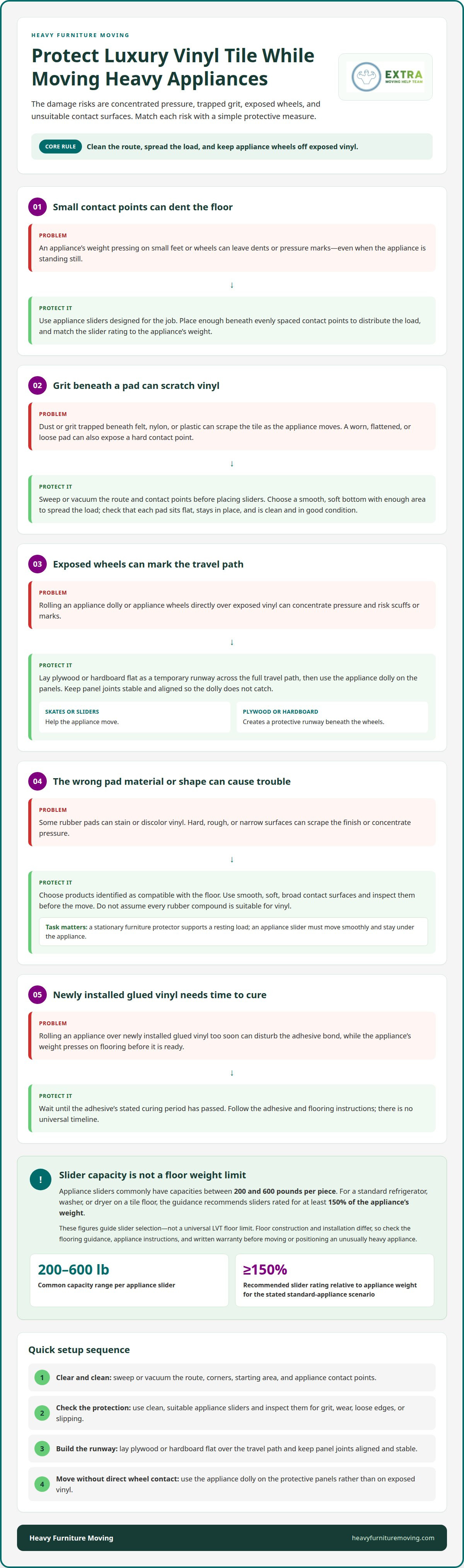
A heavy appliance can dent or scratch luxury vinyl tile when its weight presses on small contact points or grit gets trapped beneath a slider. Knowing how to protect luxury vinyl tile when wheeling heavy appliances inside Fairfax starts with cleaning the floor and using soft, suitable sliders. For extra protection, lay plywood or hardboard as a temporary path, and don’t drag the appliance directly across the tile.
It’s natural to worry about marks when a refrigerator, washer, or dryer has to cross a finished floor. A careful setup can help reduce that risk and make the move feel more manageable. This guide explains how pads and appliance sliders help, why concentrated pressure and dirt can cause damage, and how a plywood or hardboard path can spread the load. You’ll also learn what to watch for when moving the appliance into place, so you can protect the tile without relying on a rug or an unsuitable pad.
Key Takeaways
- Choose sliders that suit both the appliance and the vinyl finish, and replace worn or grit-filled pads before moving.
- Spread the appliance’s weight across suitable contact points to help reduce dents and pressure marks.
- Keep appliance wheels off exposed vinyl during the move; a stable protective path can help limit scuffs and concentrated pressure.
- Pay attention to small or hard contact points, which can leave marks even when the appliance is standing still.
- For a difficult heavy-item move, in-home furniture movers can help handle the lifting and positioning.
1. Are Felt and Rubber Pads Safe for Vinyl Flooring?
Soft, low-friction sliders and broad, non-staining protectors can help when moving appliances over luxury vinyl tile. Use rubber with care: some rubber pads can stain or discolor vinyl, so choose only products identified as compatible with the floor.
Start by sweeping or vacuuming the route and the appliance’s contact points before placing sliders. Dust and grit trapped beneath felt, nylon, or plastic can scratch vinyl as the appliance moves. Choose a slider with a smooth, soft bottom and enough surface area to distribute the load instead of pressing it onto one small spot.
Felt pads work best when clean, firmly attached, and in good condition. According to National Flooring Products, heavy-duty felt pads should be 3/16 inch thick under furniture feet. That guidance concerns furniture supports, so it isn’t a universal appliance-slider specification. For a refrigerator or washer, use a slider designed for appliance movement, and inspect the felt for flattened areas, loose edges, or embedded grit.
Replace worn felt instead of trusting a pad that has become thin or dirty. In high-use areas, felt pads should be replaced every few months. Check the adhesive as well: a pad that slips off can expose a hard contact point and leave the floor vulnerable. Before moving, make sure each pad sits flat and stays in place when lightly pressed.
Rubber can be useful, but compatibility matters more than the material name. Daltile advises replacing plastic or metal casters with rubber casters to protect luxury vinyl flooring. That recommendation is about casters, while some rubber pads can discolor vinyl. Choose a rubber slider only if its floor-contact surface is suitable for vinyl, and don’t assume every rubber compound behaves the same way.
Nylon and plastic sliders are other options, but their finish and shape matter. Avoid hard, rough, or narrow contact surfaces that can concentrate pressure or scrape the tile. A soft, low-friction bottom helps reduce scuffs. Durable HDPE plastic with EVA foam padding is one material combination designed to balance strength and floor protection.
For stationary furniture, wide, flat protectors provide a larger resting surface under the feet. Don’t confuse these with appliance sliders: a furniture pad supports a stationary load, while a slider must move smoothly and stay under the appliance. Match the protector to the task, inspect it before use, and keep the contact side clean.
2. Can Heavy Furniture Damage Vinyl Flooring?
Yes. An appliance can dent vinyl flooring when its weight bears down on small feet or wheels. A floating floor also needs room for natural movement. LVT, LVP, and sheet vinyl can differ in construction and installation, so there is no universal appliance weight limit.
There isn’t one weight limit that applies to every LVT floor. The floor’s installation guidance and the appliance’s instructions determine what the surfaces can support. Slider capacity is a separate factor: appliance sliders commonly have capacities between 200 and 600 pounds per piece. Use enough sliders beneath evenly spaced contact points to distribute the load, and match their rating to the appliance’s weight.
For a standard refrigerator, washer, or dryer on a tile floor, the guidance recommends sliders rated for at least 150% of the appliance’s weight. Treat this as a slider-selection measure, not a universal LVT floor limit. The floor finish matters, too. A smooth protective surface prevents direct contact, while hard plastic or metal edges can mark the finish if they scrape or catch.
LVT warranties don’t share one rule for dents caused by moving appliances. Coverage depends on the product’s written warranty and the cause of damage. Concentrated pressure or movement may be treated differently from a manufacturing defect. Read the warranty, floor-care instructions, and installation guidance before moving or positioning an unusually heavy appliance.
A plywood or hardboard runway creates a temporary route that spreads pressure over a broader area. Lay panels flat across the full travel path, then use an appliance dolly on the panels rather than rolling exposed wheels directly on vinyl. Keep panel joints stable and aligned so the dolly doesn’t catch. This can also help protect vinyl plank flooring, but it doesn’t replace the flooring maker’s installation requirements.
Glued flooring needs special care after installation. Don’t roll an appliance over newly installed glued vinyl until the adhesive’s stated curing period has passed. Follow the adhesive and flooring instructions, as there is no universal timeline. Rolling too soon can disturb the bond, and an appliance’s weight can press on flooring before it is ready.
Fairfax residents can look to local equipment-rental locations for appliance dollies and home-improvement retailers for plywood, hardboard, and sliders. For hands-on help with demanding lifts, heavy lifting moving support can make the appliance move easier to manage.
3. Using plywood or hardboard as a protective path when moving appliances
Before moving a refrigerator across luxury vinyl tile, clear the route and lay a continuous plywood or hardboard path. This temporary surface separates the appliance from the finished floor, spreads the moving load, and reduces the risk of marks from concentrated pressure.
Sweep or vacuum the full route, including corners and the appliance’s starting area. Grit caught beneath a panel can scratch the floor just as easily as grit beneath a slider. Move chairs and other obstacles, then check for uneven joints, loose edges, and turns that could interrupt the appliance’s movement.
Appliance skates and panels do different jobs. Skates or sliders help the appliance move, while plywood or hardboard provides a protective runway beneath its wheels. For a heavy refrigerator, use an appliance dolly over plywood to distribute the load. Panels alone don’t control the appliance, and skates alone don’t protect the whole route.
Fit the path to the move. Lay panels flat, close together, and across the full travel line. Keep their edges from shifting as the dolly passes. Use durable panels that sit steadily on the floor, and don’t force wheels over raised seams. For a turn, position the panels to support the route rather than letting wheels roll onto exposed vinyl.
Floating LVP needs careful handling because its sections are designed to move as a floor. A runway keeps the appliance’s wheels off exposed flooring and spreads pressure over more of the route, but it doesn’t change the floor’s installation requirements. Before parking a heavy appliance, follow the flooring and appliance instructions for its final position.
Move with control and have another person help guide the load. One person can handle the dolly while the other watches panel edges and keeps the route clear. Move slowly across each joint. Stop if a panel shifts, a wheel catches, or the appliance begins to tilt, then reset the path before continuing.
Once the appliance reaches its destination, remove the panels carefully and inspect the vinyl for marks. Check the appliance’s final position, too. A rocking refrigerator or washer can put uneven pressure on the floor. Keep panels for future moves and clean their surfaces before reusing them so grit doesn’t transfer to the next route.
A protective runway can help with other heavy-item moves, but a rug is not a substitute for spreading pressure. Narrow furniture or chair feet can still press into vinyl through a soft covering. For an appliance, use a stable dolly over plywood or hardboard and keep the route clear and clean.
4. Avoiding appliance wheels rolling directly over exposed vinyl
Yes. Appliance wheels can scratch or dent luxury vinyl tile, especially when grit is trapped underneath or weight bears down on small contact points. Straps can also scuff or tear the surface if they drag, snag, or drop against the planks. Keep wheels and loose strap ends off exposed vinyl during the move.
Before rolling a refrigerator or washer, inspect each wheel for rough edges, cracks, stuck debris, or resistance when turning. A damaged wheel can scrape the floor along its path. Don’t rely on the appliance’s own wheels to protect the floor, even for a short push across a doorway.
Clear and inspect the route first. Sweep or vacuum the floor, then check corners, thresholds, and turns where a wheel might catch. Move chairs and other obstacles out of the way. Grit or a hard object beneath a wheel can scratch the floor as the appliance shifts its weight.
Cover the travel line with a stable protective surface before moving the appliance. Plywood or hardboard keeps wheels off the vinyl and spreads pressure across a wider area. Lay panels flat, align their edges, and cover turns. A raised seam can catch a dolly wheel and jerk the appliance toward exposed flooring.
Use an appliance dolly with the protective path beneath it. Keep the appliance balanced and move steadily rather than pushing quickly. One person can guide the load while another watches the panel edges and contact points. Stop if a wheel slips, a panel shifts, or the load tilts. Reset the route before continuing.
Straps should secure and control the appliance, not trail along the floor. Gather loose ends and keep them away from vinyl during turns and doorway transitions. If a strap touches the floor, lift it clear before moving again. This keeps dirt on the strap from rubbing across the surface or catching on a plank edge.
At the destination, guide the appliance off the runway without letting its wheels cross uncovered vinyl. Keep the panels in place until the appliance reaches its final position, then remove them carefully. Inspect the exposed floor for scuffs, dents, or stains, and check for debris transferred from the panels or wheels.
For a move through a narrow kitchen or doorway, plan the turn before rolling. Position the dolly and protective panels to support the appliance through the full turn. Don’t twist the load on one wheel or drag it sideways across the planks. Controlled movement protects the surface better than a quick adjustment.
5. Avoiding rubber feet and hard or narrow casters on vinyl
A narrow caster or pointed foot can concentrate an appliance’s weight on only a small area of vinyl. That pressure may cause dents, while a hard edge can scratch the surface as the appliance shifts. Before moving heavy equipment, inspect every wheel and foot for sharp edges, trapped debris, or damage.
Plastic and metal casters can be hard on vinyl plank flooring. Daltile advises replacing them with rubber casters to help protect luxury vinyl flooring. However, rubber isn’t automatically suitable for every floor: some rubber pads can stain or discolor vinyl. Choose contact materials intended for vinyl, and don’t assume all rubber compounds behave alike.
Separate rolling protection from stationary support. A caster needs to move without scraping, catching, or concentrating pressure on a small point. A protector beneath parked furniture should have a broad, flat surface to spread the weight. Don’t slide a heavy appliance on its feet, even if they have soft covers.
Check the appliance’s wheels before loading it. If accessible, turn each wheel by hand and remove grit or debris that could drag across the floor. Replace a damaged caster before moving the appliance. If its wheels are hard or narrow, keep them off exposed vinyl and use a protective moving surface.
Rubber options require attention to both material and fit. A rubber caster can replace a plastic or metal one, but a loose cover may shift and expose the original hard edge. Fit protectors securely and check that they stay in place as the wheel turns. Stop if a cover twists or slips.
For chairs and everyday furniture, snug, clean silicone leg protectors can help limit floor contact damage during routine movement. They aren’t a substitute for a suitable dolly or protective path when moving a heavy appliance. Different contact points need different protection.
Hardwood and vinyl don’t respond identically to casters, so don’t assume a wheel that works on hardwood is appropriate for LVT. Follow the flooring and appliance instructions when replacing wheels or selecting protectors. If a heavy appliance needs controlled lifting and positioning, get help moving heavy appliances instead of dragging it across vinyl.
Small furniture feet or sharp legs can concentrate pressure on a small area of vinyl flooring. Broader contact helps distribute that pressure.
Heavy Furniture Moving
Heavy Furniture Moving helps with the demanding lifting and positioning involved in moving appliances without putting the floor at unnecessary risk. If a refrigerator, washer, or other bulky item is difficult to handle safely, the team provides heavy lifting support. It also helps move heavy household items and exercise equipment across Fairfax, Woodbridge, Manassas, and nearby communities.
Share which appliance needs moving and where it needs to go. Heavy Furniture Moving can discuss the lifting support your move requires. Contact the team to plan the next step.
Plan the Next Move With Care
Before moving day, map the route, tight turns, and final position. If you’re planning how to protect luxury vinyl tile when wheeling heavy appliances inside Fairfax, decide who will guide the load and who will watch its path. This preparation helps you assess whether you can manage the move safely or would prefer lifting support.
For a clear plan to protect luxury vinyl tile when wheeling heavy appliances inside Fairfax, describe the appliance and the challenge involved. Heavy Furniture Moving helps with heavy and bulky household moves, including appliance and exercise equipment moves. The team can provide lifting support for a difficult move.
Contact Heavy Furniture Moving about your move to discuss your next step. With a thoughtful plan, you can approach moving day with more confidence.
Frequently Asked Questions
Can Heavy Furniture Damage Vinyl Flooring?
Yes. Heavy furniture can dent vinyl flooring if its weight rests on small feet or hard edges. A loaded bookcase, for example, can press narrow feet into one spot over time, while dragging it may cause scratches. For a heavy piece that stays in place, use broad, floor-compatible protectors. If you spot a dent, reduce or redistribute the pressure rather than leaving the load unchanged.
Are Felt and Rubber Pads Safe for Vinyl Flooring?
They can be, but the specific pad and its condition matter. Clean felt can cushion furniture feet, while worn felt or trapped grit can scratch vinyl. Some rubber pads may stain or discolor the surface, so don’t assume every rubber product is floor-safe. For a moving appliance, use a smooth slider suited to vinyl; stationary furniture pads aren’t necessarily designed to roll under a load.
Why Protect Your LVP Flooring?
Protection helps preserve the visible finish and reduce scratches, dents, and scuffs. It matters around plank edges, too: a caught wheel or dragging appliance can mark the surface or disturb a vulnerable edge. In a Fairfax kitchen, protecting the route before moving a washer can prevent a difficult maneuver from damaging the floor. Clean, well-kept flooring is also easier to maintain.
How should plywood or hardboard be placed to distribute appliance weight on vinyl flooring?
Lay plywood or hardboard flat along the appliance’s full travel route, including turns and doorway transitions. Keep panel edges aligned so dolly wheels don’t catch on raised joints. Place the appliance dolly on the panels, not directly on exposed vinyl, and make sure the panels remain stable as the load moves. If a panel shifts, stop and reset it before continuing.
How do you move a refrigerator or washer across LVT without damaging the floor?
Clear the route, remove grit, and keep the appliance’s wheels off exposed LVT. Use a suitable appliance dolly over a protective path, and have another person guide the move and watch for catches or shifting panels. Don’t drag the appliance or try to lift it entirely. Move at a controlled pace, then follow the flooring and appliance instructions when positioning it.