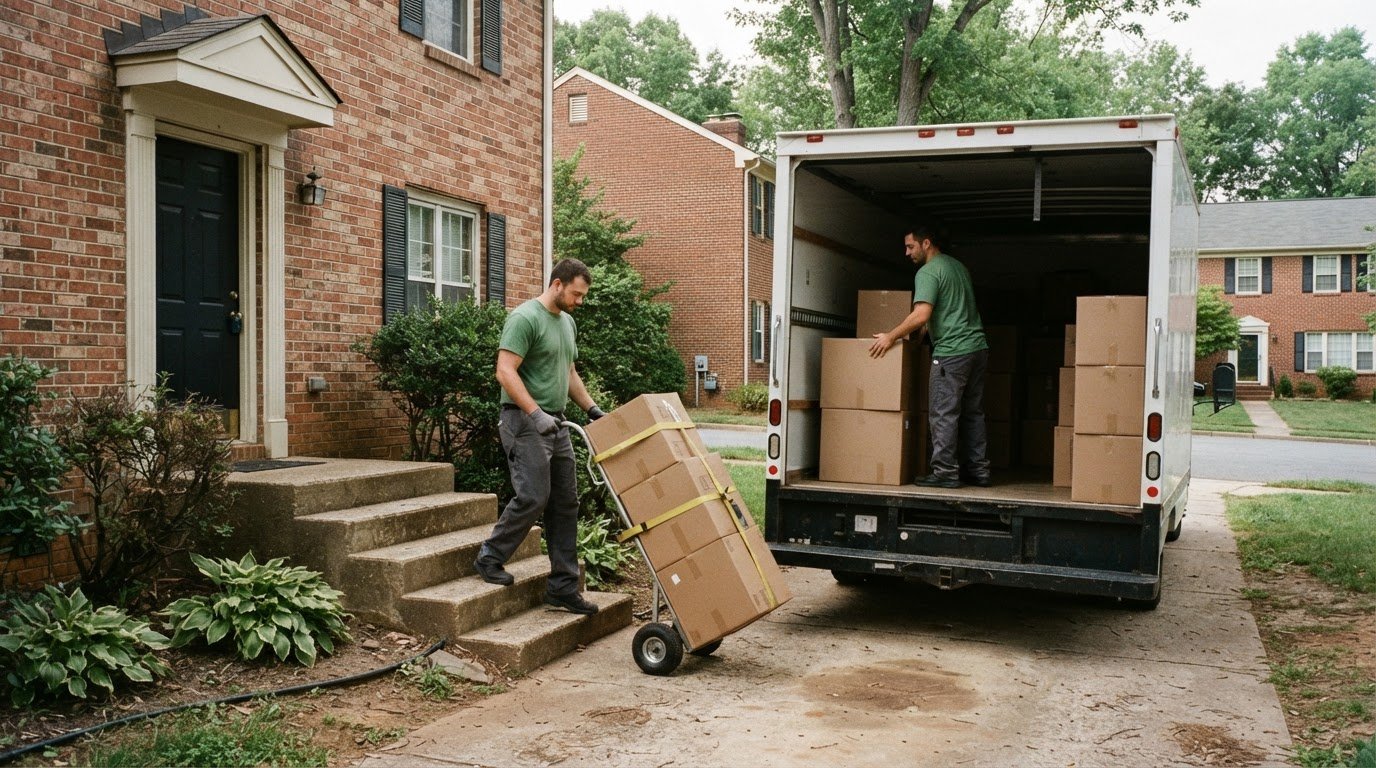
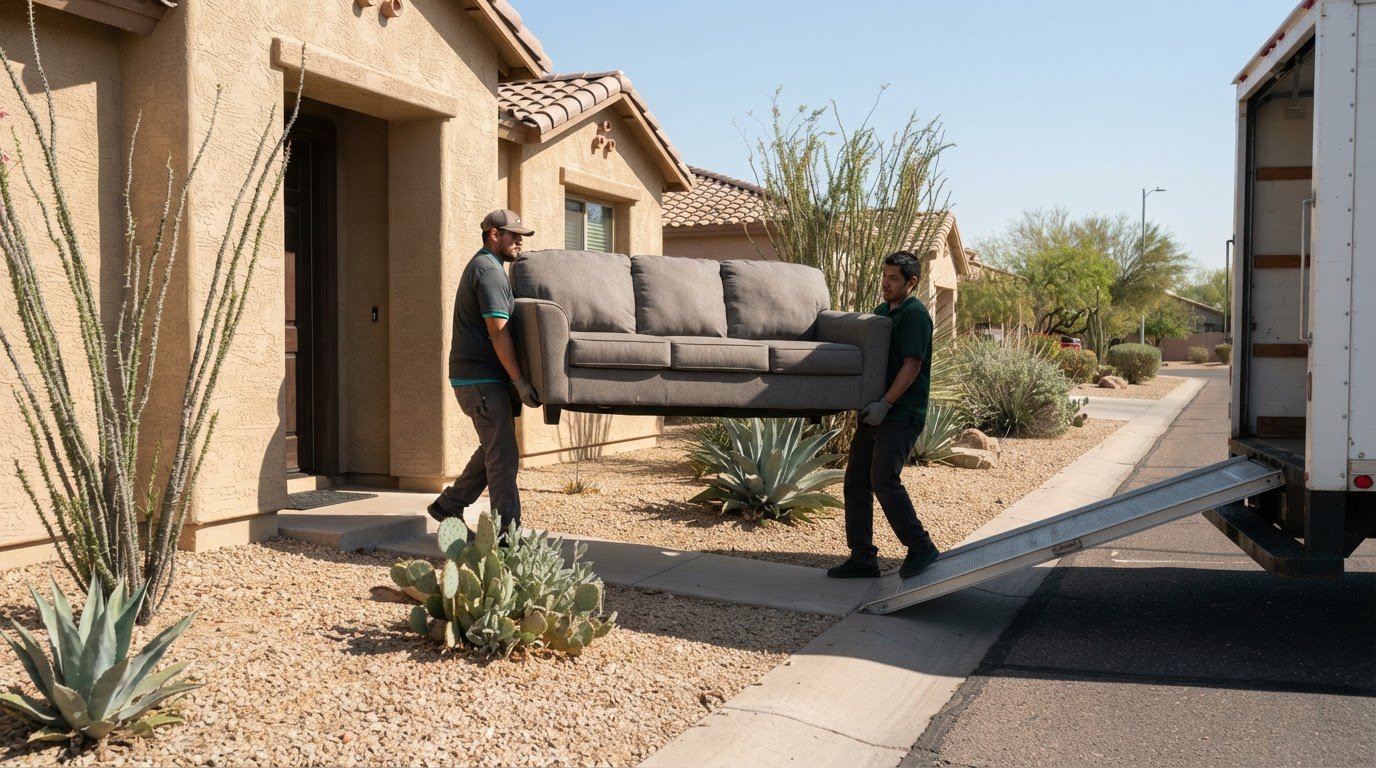
How to Protect Ashburn Doorways While Moving a Heavy Walnut Credenza
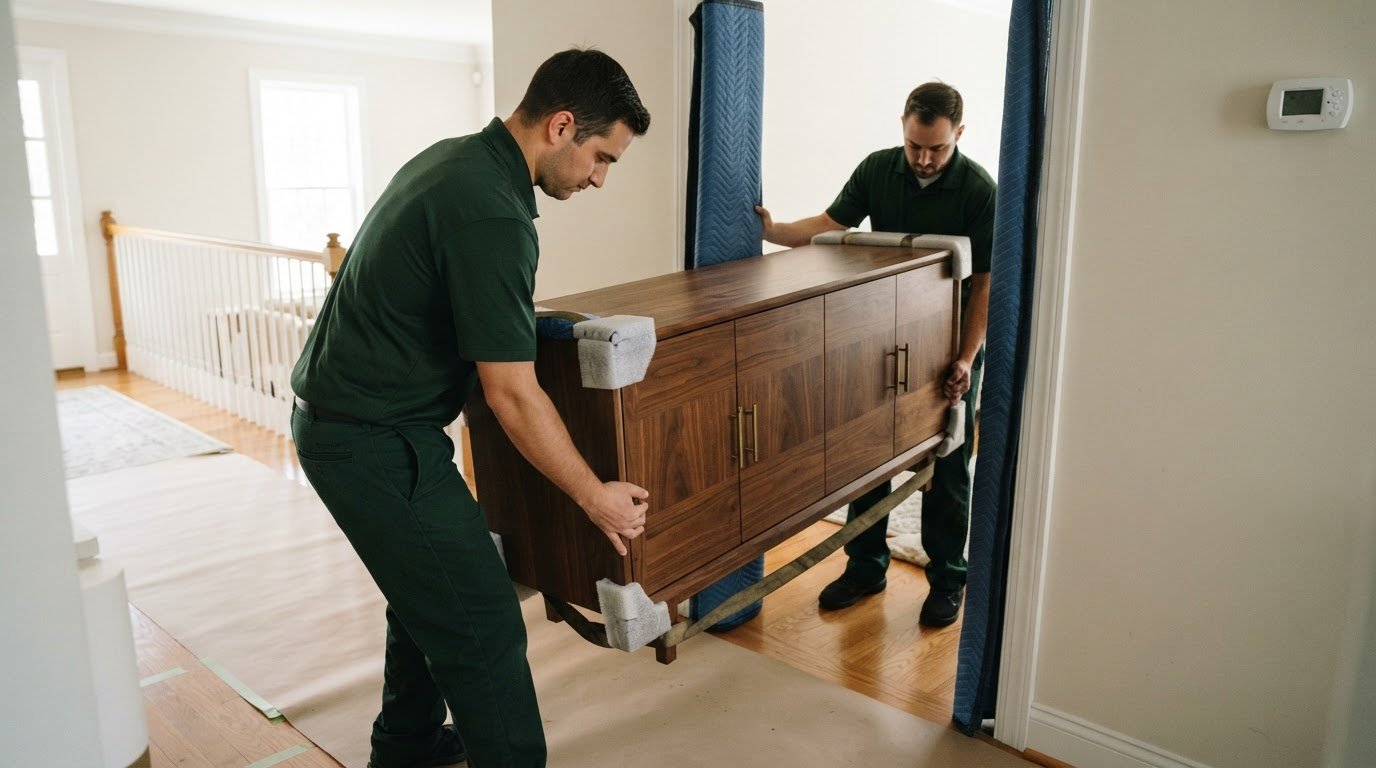
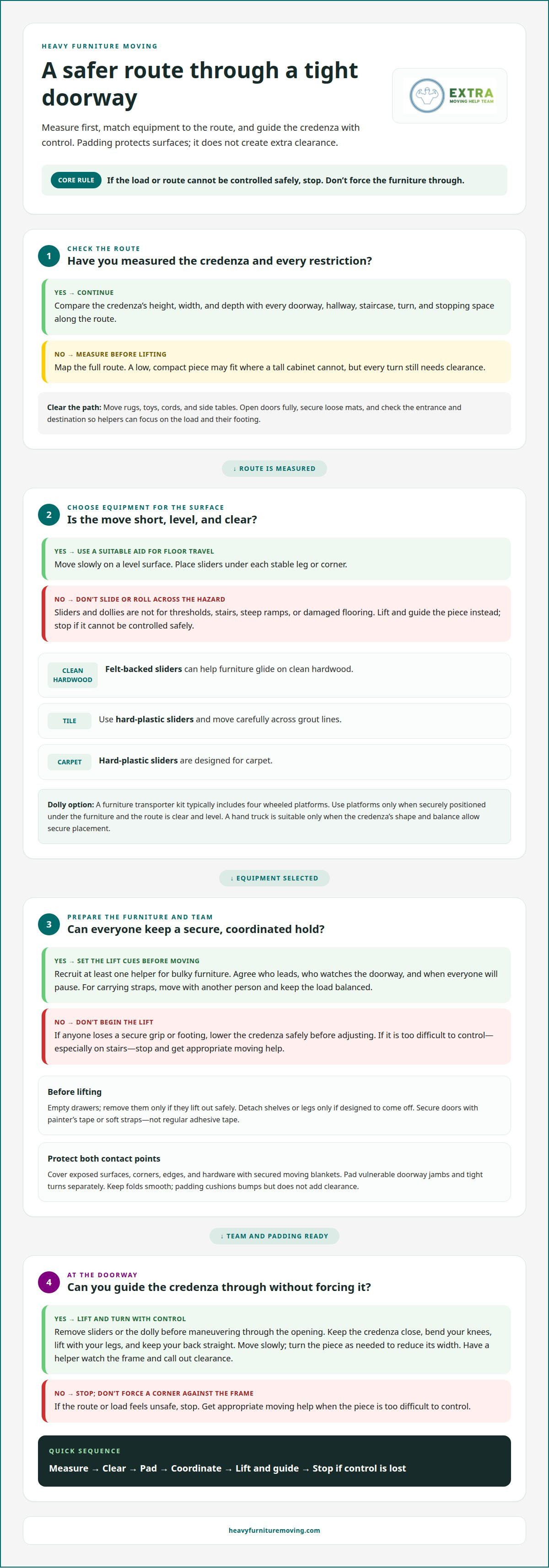
The tight doorway is the moment that calls for the most care, not speed. For moving a heavy solid walnut credenza without scratching a doorway in Ashburn, measure the piece and route, clear the path, pad exposed edges, and move it with coordinated lifting rather than forcing it through. A small amount of preparation helps protect both the wood finish and the doorway.
It’s understandable to worry about a solid walnut credenza catching on a doorframe or becoming unbalanced during a tight turn. Plan the move before lifting. This guide covers protecting the credenza and doorway, checking clearances, preparing the floor and route, coordinating the lift, and guiding the piece through the opening. Stop if the route or load feels unsafe.
Key Takeaways
- Measure the credenza and every doorway, turn, and passage before moving day to spot tight clearances early.
- Use moving blankets to cushion exposed corners and protect vulnerable doorway edges from bumps and scrapes.
- Choose floor protection and sliders to suit the surface, and use sliders only for short, level moves.
- Clear the route and agree on lifting cues so the team can move together without sudden shifts.
- Plan each turn through a tight doorway, and stop if the piece cannot be controlled safely.
Using moving blankets to protect furniture and doorways
A credenza’s weight can’t be determined from its size alone. Walnut thickness, construction, drawers, shelves, and hardware all affect the load. Check the maker’s specifications if available, and treat the piece as heavy. Empty the drawers before moving; remove them only if they lift out safely. Detach shelves or legs only if they’re designed to come off. Secure doors with painter’s tape or soft straps, not regular adhesive tape.
- Wrap the exposed surfaces. Cover the walnut credenza with moving blankets before lifting. Pay close attention to corners, edges, and hardware, which can strike a doorway during a turn. Keep the blanket smooth and secured so loose fabric doesn’t catch on trim or hands. Use padding over the furniture, not tape directly on the wood finish.
- Pad the doorway and tight turns. Place blankets over vulnerable jambs and lay them across thresholds or along a tight corner. Check that the padding stays in place as the team moves. A blanket cushions a bump, but it doesn’t create extra clearance; measure the opening and the credenza before committing to the turn.
- Match sliders to the floor. For clean hardwood, felt-backed sliders can help furniture glide. On tile, use hard-plastic sliders and move carefully across grout lines. Hard-plastic sliders are designed for carpet. Place a slider under each leg or corner, and use them only for short, level repositioning. Don’t slide a heavy piece over a threshold, stairs, steep ramp, or damaged flooring.
- Choose a manageable route and team. Measure doorways, hallways, and staircases against the credenza’s height, width, and depth. A low, compact piece may pass through an opening that blocks a tall cabinet, but every turn still needs clearance. Recruit at least one helper for bulky furniture. Agree on who leads, who watches the doorway, and when everyone will pause.
- Lift and turn with control. Keep the credenza close, bend your knees, lift with your legs, and keep your back straight. Move slowly through the threshold, turning the piece as needed to reduce its width. Don’t force a corner against the frame. If the item is too difficult to control, especially on stairs, stop and get appropriate moving help.
For a move in Ashburn, protect both contact points: the walnut finish and the doorway trim. Check that blankets and straps are secure before lifting. A misplaced pad or shifting slider can cause the scrape you’re trying to prevent.
Using moving blankets, sliders, and lifting straps
Use padding and equipment suited to the floor and route. At the doorway, guide the credenza by hand and keep it under control. Sliders and dollies help only on level, clear surfaces.
- Secure the moving blankets. Cover the credenza before positioning equipment. Keep padding between the walnut finish and straps, platform edges, or nearby trim. Smooth folds that could snag on a corner, and secure blankets so they won’t slip during a lift. Protect the doorway separately, since a blanket wrapped around furniture won’t shield the jamb from every contact.
- Choose sliders for short floor moves. Place sliders beneath stable legs or corners, then move the heavy item slowly across a level surface. Felt-backed sliders suit clean, smooth hard floors. Hard-plastic sliders are designed for carpet, while tile calls for hard plastic and careful movement across grout lines. Remove sliders before lifting through a doorway. They aren’t a substitute for controlled lifting across thresholds, stairs, or steep ramps.
- Use a dolly only when the route allows. A furniture transporter kit typically includes four wheeled platforms. Position platforms securely beneath the furniture, then roll only across a clear, level path. A hand truck can be useful when the credenza’s shape and balance allow secure placement. Don’t roll wheeled equipment into a tight doorway or over a threshold if it could shift, catch, or tilt. Lift and guide the piece instead.
- Fit carrying straps with a helper. Carrying straps require coordinated movement, so use them with another person. Set the straps according to their design and keep the load balanced between movers. Agree on a lead person and simple cues, such as “lift,” “stop,” and “lower.” Pause before turning through the doorway. If either person loses a secure grip or footing, lower the credenza safely before adjusting.
- Keep equipment clear of the finish. Check every contact point before lifting: blanket coverage, strap placement, platform position, and doorway padding. Don’t let metal hardware or a bare dolly edge rub against the walnut. For a narrow opening, remove the dolly or sliders before maneuvering. Move a few inches at a time, with a helper watching the frame and calling out clearance.
- Match the tool to the risk. Sliders suit brief, level repositioning; wheeled platforms suit clear, level travel; straps support a coordinated lift. No device makes an awkward doorway safe by itself. If tight access requires controlled lifting and steady guidance, professional heavy lifting help can take on the demanding maneuver.
Clearing and measuring the moving route
Map the entire route from the credenza’s starting point to its destination. Check each surface, opening, turn, and stopping space before lifting.
-
Clear the Moving Path
Clear rugs, toys, cords, and side tables from the route. Open doors fully, secure loose mats, and move anything that could affect a helper’s footing. Check both the entrance and destination. A clear path lets movers focus on the credenza and doorway instead of navigating obstacles while carrying a heavy load.
-
Plan the Route
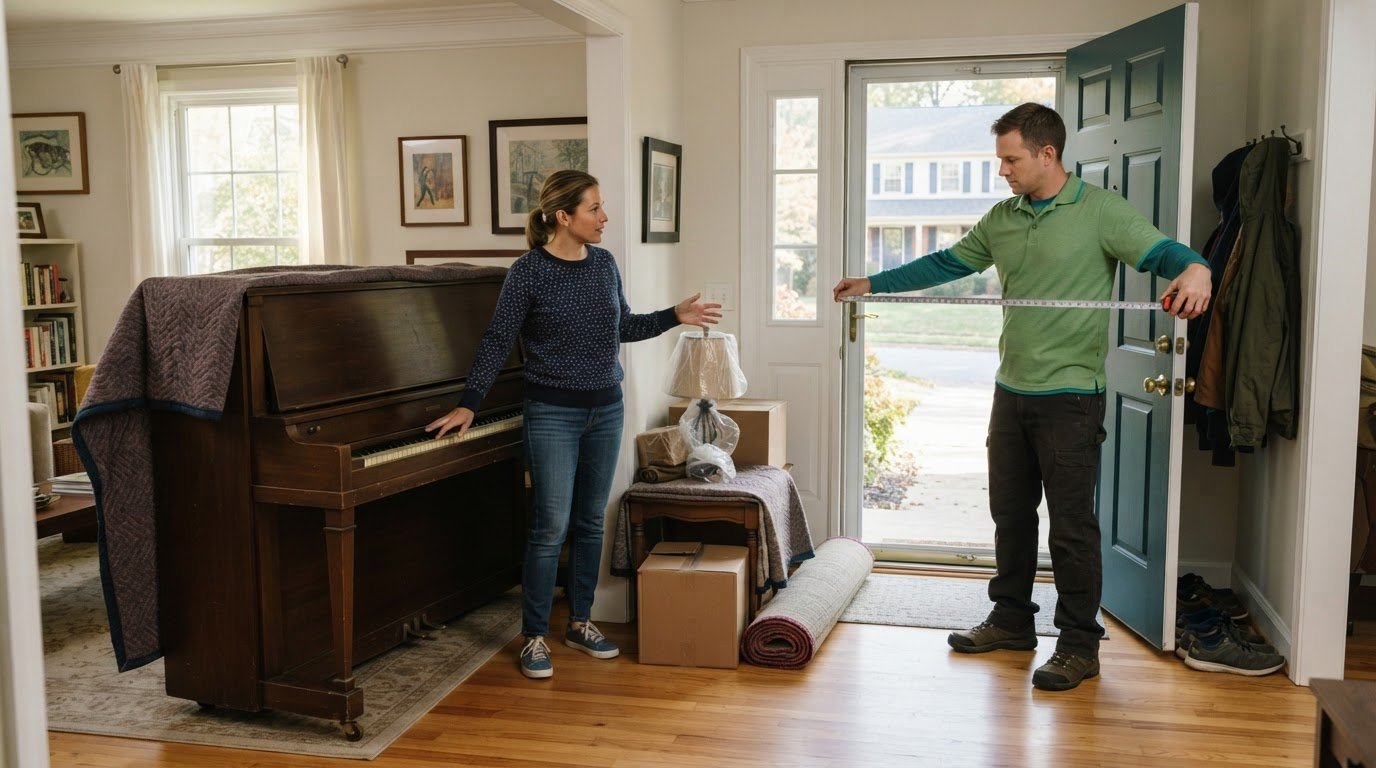
Walk the route from end to end and identify narrow openings, thresholds, stairways, and tight corners. Measure the credenza and each restriction, then compare the measurements before choosing an approach. For example, a listed dresser measuring 48 inches high, 60 inches wide, and 20 inches deep exceeds a 34-inch stairway width by 26 inches.
- Mark tight points. Note the doorway where the credenza must turn and where helpers can pause. A landing can restrict height as well as width: a listed 72-inch armoire beneath a 75-inch landing ceiling has only 3 inches of clearance. Check the ceiling and overhead fixtures along your route, not just the door frame.
- Check every floor transition. Identify hardwood, tile, carpet, and changes between surfaces. Choose protection that won’t bunch or slide underfoot. Plastic floor covering can shift if unsecured, so keep the walking lane stable. Look closely at thresholds and grout lines, where wheeled equipment or furniture sliders can catch.
- Set a staging and pause point. Choose a clear spot before the tightest doorway where helpers can adjust their grip without blocking the route. Keep the next stretch clear, including the space beyond the frame. If the credenza cannot pass without striking the trim, stop and reassess its angle or route before lifting again.
Keep measurements and route notes together. A simple sketch showing doorways, turns, and changes in flooring helps everyone follow the same plan and avoid last-minute pivots in a narrow hall.
Keep rugs, toys, cords, and side tables off the route before moving bulky furniture. The armoire is listed as 72" H / 40" W / 22" D, and the landing ceiling is 75 inches high, leaving 3 inches of clearance. Treat that narrow margin as a constraint when assessing the route, and keep both the armoire’s height and the ceiling in view while planning its passage.
Coordinating a safe lifting team
Agree on roles before lifting: one person leads the movement while another watches the doorway and floor. A narrow turn leaves little room for sudden corrections, so establish cues and stopping points first.
-
Consider the Risks of Moving unaided
Bring in professional help if the credenza is too heavy for your team to control or the route includes stairs, narrow turns, or fragile floors. OSHA notes that even under ideal conditions, loads heavier than 50 pounds increase injury risk, and recommends mechanical assistance and two-person lifting for heavy loads. A shifting piece can also hit the doorway, damage the walnut finish, or trap fingers.
-
Use Safe Lifting Technique
Plant your feet securely, bend your knees, keep the credenza close, and lift with your legs while keeping your back straight. Move only across a clear, stable surface. Don’t twist your torso to steer around a corner; take small steps and turn your feet instead. Lower the piece together if anyone loses balance or grip.
- Choose a team that can manage the load. Match the lifting crew to the credenza’s weight, shape, and route. Two people should not attempt a piece that they cannot lift and guide under control. A bulky cabinet can be awkward even when its weight seems manageable, especially when the doorway limits hand placement or blocks a clear view.
- Assign clear roles and cues. Name one person to call “lift,” “move,” “stop,” and “lower.” The other lifters should repeat or acknowledge each cue before acting. A spotter can watch the jamb, blankets, and floor while staying out of the lifting path. Don’t let several people give directions at once.
- Prepare the floor before lifting. Check for loose rugs, cords, slippery spots, and shifting floor protection. Keep blankets positioned so they don’t bunch beneath anyone’s feet. On hardwood or tile, stable footing matters as much as protecting the surface. Avoid stepping onto sliders or rolling platforms during the lift.
- Pause before each turn. Carry the credenza to a safe stopping point, then reset grips and confirm the next move. Keep the furniture level and move in small, coordinated steps. If the team cannot hold it steady through a tight doorway, lower it carefully and arrange a safer lifting plan rather than forcing the turn.
Pause if fatigue, pain, or a slipping grip affects the team’s control. A controlled pause protects people, floors, and the doorway better than rushing the last few feet.
Handling heavy items through tight doorways
Guide the credenza through the opening in small, controlled stages. Protect its corners and the doorway, and never force the piece through a gap it cannot clear. To move a heavy solid walnut credenza without scratching a doorway in Ashburn, plan the threshold as a maneuver, not a place to rush.
- Reduce the load before lifting. Empty the credenza, then remove drawers and loose shelves if they come out safely. Secure or remove moving parts so they cannot shift as the piece tilts. Keep hardware together in a container. Recheck the balance after removing contents, since the weight distribution may change. Keep drawers out of the team’s path.
- Confirm the doorway’s tightest point. Measure the clear opening between the frame, trim, and hardware. A door can sometimes be removed to create more working space. Removing door-stop molding may also ease passage, but only proceed if it can be done without damaging the frame. Check the door’s swing and nearby walls, not just the opening’s width.
- Choose the angle before lifting. Compare the credenza’s height and width with the doorway, then decide which end leads. A broad piece may need to turn edge-first; a taller one may need a careful tilt. Keep padded corners clear of the jamb. Pause before the opening, confirm hand positions, and agree on the direction before moving.
- Guide one corner at a time. Ask a spotter to watch the frame and call out clearance. Move the leading corner through first, then pivot gradually while keeping the load supported. Don’t use the doorway as a brace. If a corner catches, stop and back away slightly before changing the angle. Forcing it can damage the finish or trim.
- Keep wheels out of the pinch point. Dollies and sliders can help across open, level floors, but they may catch at a threshold or shift during a turn. Remove them before maneuvering through the doorway. Lift the credenza under control, then set it down only where the team can reset its grip safely.
- Stop when the route becomes unsafe. Furniture weighing 250 pounds or more is typically considered heavy. At least two people should handle a 200-pound dresser. Stairs, narrow turns, or fragile flooring are reasons to use professional movers. If moving a heavy solid walnut credenza without scratching a doorway in Ashburn requires force, reset the route or get a heavy lifting moving service.
Controlled clearance matters more than speed. A spotter, a planned angle, and a pause at the first sign of resistance help keep the credenza’s corners from hitting the doorway.
Heavy Furniture Moving
Heavy Furniture Moving helps with bulky furniture that’s difficult to guide through a narrow doorway or requires careful lifting. Its local furniture moving and in-home services include hands-on help with heavy items. This can be a practical option when tight turns, stairs, or tricky surfaces make a do-it-yourself move difficult to control.
Share the credenza’s dimensions and describe the doorway, stairs, and tight turns. Those details help the team understand the route and the work involved. For help with your Ashburn move, contact Heavy Furniture Moving.
Plan the Last Move Before You Lift
Prepare a clear landing spot before moving the credenza. Remove nearby décor and clear the destination so the team won’t need to carry the piece farther than necessary or pivot around obstacles. To move a heavy solid walnut credenza without scratching a doorway in Ashburn, treat each transition as a separate maneuver, with a clear stopping point before and after the tightest opening.
A final walkthrough can catch changes that appeared after preparation, such as an open cabinet door or an item left in the hall. If the route or weight feels beyond your team’s control, choose support rather than rushing the move. The exact approach depends on the credenza and the access points. Contact Heavy Furniture Moving to discuss help with your move. Protect the piece, take the doorway slowly, and make control the priority from start to finish.
Frequently Asked Questions
How do I measure a doorway and credenza before moving it?
Measure the credenza’s height, width, and depth, then measure each doorway at its narrowest clear point. Include handles and trim that reduce usable space. Record hallway turns and the destination opening, too. Compare the item’s dimensions in the planned carrying position, and note anything that limits the opening, such as a door or hardware. A measured sketch helps the team follow the route.
How do I protect door frames, floors, and walnut finish from scratches?
Use clean, secure padding at likely contact points, and keep the floor along the carrying path clear. Check that blanket fasteners and straps won’t touch exposed walnut. After the move, remove protective materials carefully and check for grit that could scratch the flooring. On hardwood, avoid rubber-backed materials that may leave marks. Don’t drag the credenza or rely on padding to make a tight fit work.
How many people are needed to move a heavy credenza safely?
The right team depends on the credenza’s weight, shape, grip points, and route. Recruit at least one helper for bulky furniture, but don’t assume two people can safely manage every piece. OSHA recommends mechanical assistance and two-person lifting for heavy loads, and notes that loads over 50 pounds increase injury risk even under ideal conditions. Stairs or tight turns can make handling more demanding.
What is the safest way to tilt and maneuver a credenza through a tight doorway?
Choose the leading edge and turning direction before lifting. Keep the credenza supported, move in small steps, and have a spotter watch the frame and call out possible contact. Tilt only enough to clear the opening, keeping the piece balanced rather than resting it against the jamb. If it catches, stop, ease back, and then adjust the angle. Never force it through.
How much do professional furniture movers cost in Ashburn, Virginia?
The price depends on the specific move and is provided after a quote request. Key factors include the credenza’s weight and size, the distance it must travel, stairs, tight turns, and access at both locations. A simple room-to-room move differs from carrying a bulky piece through several narrow passages. Share the item and route details when requesting a quote so the work can be assessed accurately.
Which furniture moving companies serve Ashburn and offer in-home moves?
Heavy Furniture Moving provides local furniture moving and in-home help in Ashburn, Fairfax, Woodbridge, Manassas, Manassas Park, Aldie, McLean, Vienna, Reston, Centreville, Chantilly, Clifton, Dumfries, South Riding, Fairfax Station, Haymarket, and Gainesville. The company handles heavy household items and offers Exercise Equipment Moving and Sofa Hoisting. For help moving a credenza, contact the team with details about the doorway and route.