How to Protect a Grandfather Clock’s Glass and Weights When Moving
Moving a heavy antique grandfather clock case and its weights safely in Aldie starts with removing the weights and pendulum before transport. Label each weight’s position, wrap the weights and pendulum separately, and protect the glass and decorative pieces before handling the case. Get help to move the cabinet, keeping it secure and upright during transport when possible.
It’s easy to focus on the tall, heavy case and overlook parts inside that can swing, shift, or get scratched. Careful handling protects both the clock’s delicate components and the finish you want to preserve.
Learn how to remove and pack the weights, protect the glass and trim, prepare the case, and plan a steady route through your home. You’ll also see when a heavy-lifting team can help manage the physical work without rushing the careful handling a grandfather clock requires.
Key Takeaways
- Learn why removing and labeling each weight before the move can help protect the clock’s delicate mechanism.
- See how to guard glass panels, trim, and other fragile details against bumps and shifting.
- Plan a steady route and use suitable moving equipment and helpers to control the tall case.
- Understand what to consider when deciding how the clock should be positioned for transport.
Do I need to remove the weights before moving the clock?
Yes. Remove the pendulum and weights before moving a grandfather clock, even across the room. Keep each component separate, labeled, and protected so it won’t swing or shift inside the tall case.
Remove the Pendulum and Weights
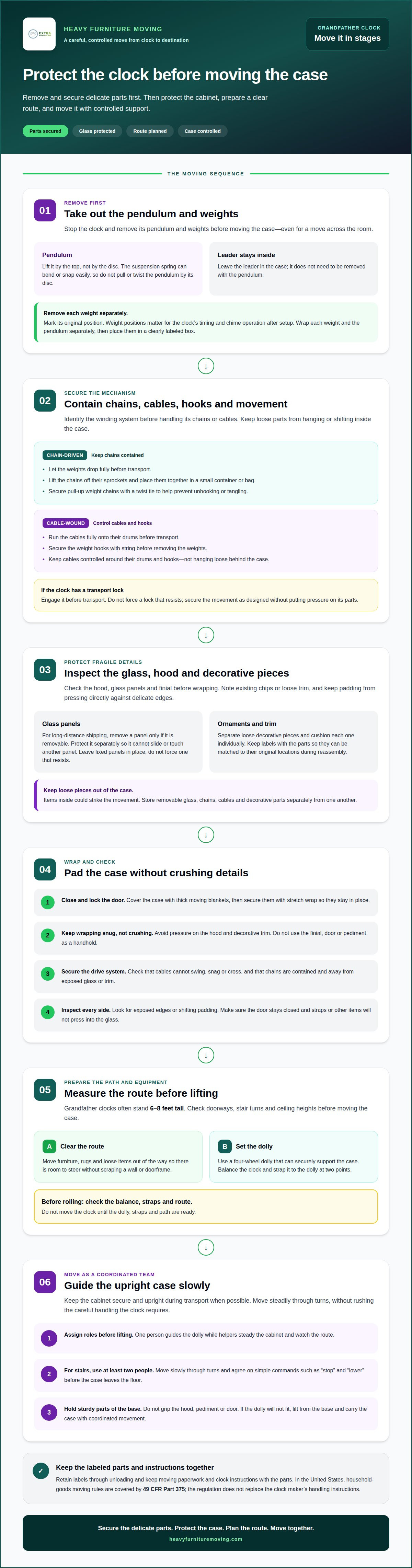
- Stop the clock, then remove the pendulum and weights before moving the case. Lift the pendulum by its top, not its disc. Its suspension spring can bend or snap easily, so avoid pulling or twisting the pendulum by the disc. Leave the leader inside the case; it does not need to be removed with the pendulum.
Label and Pack Weights and Hooks
- Remove the weights one at a time and mark each one with its original position. Their positions matter for the clock’s timing and chime operation after setup. Wrap each weight and the pendulum separately, then place them in a labeled box. Make each label clear enough to show where the weight belongs.
- Identify the clock’s winding system before handling its chains or cables. For a chain-driven clock, let the weights drop fully before transport. Lift the chains off their sprockets and place them in a small container or bag. Keep them together and contained rather than letting them hang loose inside the case.
- Secure pull-up weight chains with a twist tie to prevent them from unhooking or tangling. For a cable-wound tall-case clock, run the cables fully onto their drums first. Secure the weight hooks with string before removing the weights. This keeps loose chains, cables, and hooks from shifting while the clock is carried.
- Check whether the clock has a transport lock for its movement. If it does, engage it before transport. Don’t force a lock that resists; secure the movement as designed without putting pressure on its parts. Pack removed weights and the pendulum separately from the case.
- Keep moving paperwork and clock instructions with the labeled parts. Federal household-goods moving rules in the United States are covered by 49 CFR Part 375, according to the Electronic Code of Federal Regulations. That regulation is relevant to household-goods moves; it doesn’t replace the clock maker’s handling instructions. Retain the labels through unloading.
Protecting glass and decorative pieces
Close and lock the clock door before wrapping the case, and protect the glass and ornaments from pressure or contact. Ask movers what damage protection applies to the case, glass, and separately packed parts, and how they document damage. Standard carrier liability pays by weight, not value.
Protect the Hood, Glass, and Finial
- Inspect the hood, glass panels, and finial before adding wrap. Note existing chips or loose trim, and keep padding from pressing directly against delicate edges. If a glass panel is removable for long-distance shipping, remove and protect it separately. Leave fixed panels in place, and don’t force a panel or ornament that resists.
Wrap the Case and Secure Cables
- Close and lock the door, then cover the case with thick moving blankets. Secure the blankets with stretch wrap so they stay in place during handling. Keep the wrap snug, not crushing, around the hood and decorative trim. Don’t use the finial, door, or pediment as a handhold while positioning the padded case.
- Separate loose decorative pieces from the case and protect each one individually. Keep labeled parts together so they can be matched to their original locations during reassembly. Cushion each ornament to prevent it rubbing against glass or another hard surface. Don’t place loose items inside the case, where they could strike the movement.
- Check the clock’s drive system before wrapping the back and sides. Secure cables so they cannot swing, snag, or cross during the move. Keep chains contained and away from exposed glass or trim. For cable-driven clocks, keep the cables controlled around their drums and hooks instead of hanging loose behind the case.
- Before carrying the wrapped clock, inspect every side for exposed edges and shifting padding. Check that the locked door stays closed and that stretch wrap hasn’t pulled against a fragile finial. Keep the case upright during handling, and prevent straps or other items from pressing into the glass panels.
- For a long-distance move, pack removable glass panels so they cannot slide or touch one another. Keep their labels with the matching panel and store them separately from chains, cables, and decorative parts. If you want help with in-home handling, in-home furniture movers can take on the heavy lifting while you keep track of the clock’s labeled pieces.
How Do You Move a Grandfather Clock?
Move the empty case on a properly secured, balanced dolly, with helpers guiding it along a measured route. Without careful handling, the cabinet can tip, strike a doorway, or suffer damage to its finish and remaining parts.
Plan the Dolly Route
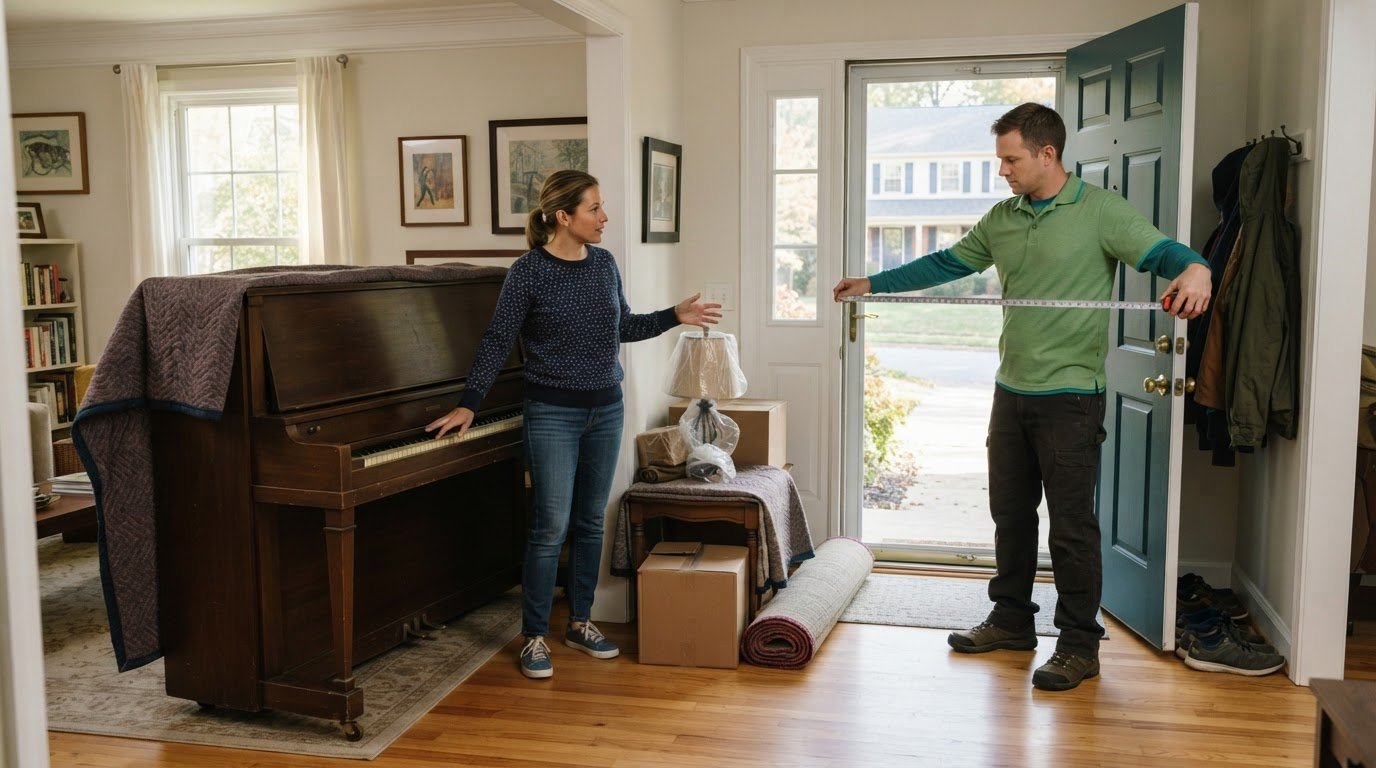
- Measure the clock and its full route before lifting. Grandfather clocks often stand six to eight feet tall, so check doorways, stair turns, and ceiling heights. Move furniture, rugs, and loose items out of the way. A clear path gives the team room to steer without scraping the case against a wall or doorframe.
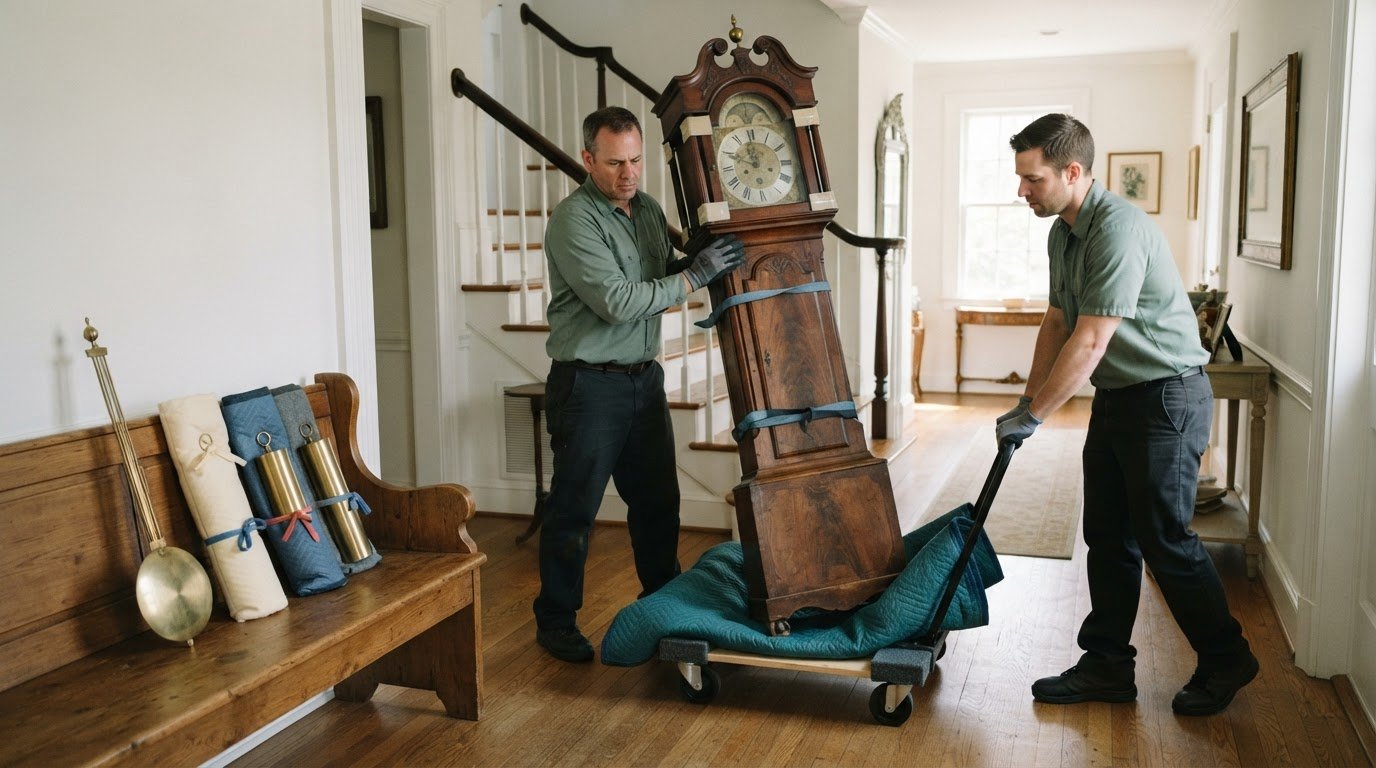
- Choose a four-wheel dolly that can securely support the case. Position it so the clock stays balanced, then strap the case to the dolly at two points. Check the straps and balance before moving. Don’t roll the clock until the dolly, straps, and route are ready.
Coordinate Helpers for the Lift
- Assign clear roles before lifting: one person guides the dolly while helpers steady the cabinet and watch the route. Use at least two people on a staircase, and move slowly through turns. Agree on simple commands such as “stop” and “lower” before the case leaves the floor.
- Keep hands on sturdy parts of the base, not the hood, pediment, or door. If the dolly won’t fit, lift from the base and carry the case with coordinated movement. Don’t rush as you might with ordinary furniture. A grandfather clock may need roughly twice as long to pass through doorways and turns as a similarly sized dresser.
Reassemble and Set Up the Clock
- Place the case on a level, stable floor and let it sit for a few hours before reassembly. Follow the clock’s instructions, reinstall the pendulum and weights in the correct order, then restart the pendulum with a gentle swing. Check that the clock runs properly before leaving it unattended.
After the move, set the time by slowly turning the minute hand clockwise. Pause at each quarter hour and let the chimes finish before continuing. Listen for changes after reassembly, and avoid forcing the movement. If the maker gives different setup instructions, follow them.
- Have blankets ready to protect the case and finish during any short carry between the dolly and its final position. Keep the cabinet controlled at each transition, and don’t let the base drop onto the floor. Check the landing spot and floor stability before easing the clock into place.
Transporting the clock upright or on its back
Follow the clock maker’s instructions for its transport position. Keep it upright when possible and secure it against tipping or shifting.
- Check the maker’s instructions before choosing the clock’s position. Some cases are designed to travel upright, while others may allow a different position. Don’t assume an antique case can safely lie down just because it fits better in the vehicle. Let the design and maker’s handling directions guide your decision.
- Prepare a stable upright position in the vehicle before loading. Clear a space where the wrapped case can stand without leaning against loose furniture or shifting cargo. Remove objects from the floor that could slide under the case. Plan how helpers will guide the clock into position and secure it before the vehicle moves.
- Brace or strap the upright case so it cannot tip during transport. Keep straps around sturdy areas, and avoid pressure on the glass, hood, or decorative trim. Check that the wrapped case stays stable once secured. Padding protects the finish, while the restraint keeps the cabinet from moving.
- Keep other cargo from striking the clock during the drive. Position items so they cannot fall or press against the glass, even when the case is strapped upright. Avoid stacking objects against the hood or top. Load the grandfather clock last when possible, then unload it first, so other belongings don’t need to move around it.
- If the maker permits transport on the case’s back, prepare a thick layer of blankets first. Never lay the clock on its face or side. Support the wrapped case across the padded surface, and prevent it from sliding during loading, travel, and unloading. Don’t use a back-down position if the maker’s instructions call for upright transport.
- Before departure, check the case’s position, padding, and restraints. Confirm that it remains upright if required, and that no strap presses against a glass panel. After arrival, remove the restraints carefully and keep the case steady as helpers guide it out. Set it upright for leveling, then adjust its feet or add shims if needed.
Clock weight and moving help
Removing the weights makes the case easier to handle, but an antique clock is still not an ordinary piece of furniture. To move a heavy antique grandfather clock case and weights safely in Aldie, decide in advance who will manage the lift, route, and delicate parts.
- Assess the clock’s weight before deciding whether to move it yourself. A grandfather clock usually weighs 100-300 pounds, and its shape can make it awkward to control. Removing the pendulum and weights reduces loose parts, but the cabinet still needs steady handling. Consider the case, stairs, tight turns, and landing space together.
- Count the components that need separate attention. Most grandfather clocks have three weights, along with the pendulum and delicate internal parts. Keep the labeled pieces together, and photograph the clock’s interior before handling it. A clear reference can help with reassembly, especially if the clock has several hooks or chains.
- Start planning two to three weeks before the move. Use that time to review the clock maker’s instructions, identify narrow spots, and decide how the case will travel. Note stair turns, uneven thresholds, and the final placement area. A route that looks open from the doorway may still leave little room to turn the cabinet.
- Match the help to the hardest part of the move. A level path and manageable case are different from a stairway, tight landing, or long carry. If helpers can’t keep the case controlled along the full route, don’t improvise mid-lift. The priority is steady support, not simply having enough hands to raise the clock.
- Prepare protective materials before anyone lifts. Keep moving blankets and padding ready for the case, and set aside a stable container for the separately wrapped parts. Make sure glass panels and decorative details won’t come into contact with loose tools or other cargo. Staging everything first prevents helpers from leaving a lifted case unattended to find supplies.
- Choose a lead person and agree on stop instructions before moving. One person should call each pause, turn, and set-down while the others maintain control of the case. Stop if a strap shifts, the cabinet tilts, or a helper loses footing. When moving a heavy antique grandfather clock case and its weights safely in Aldie, a controlled pause protects the finish and helps prevent sudden pressure on the suspension spring.
If the cabinet’s weight or route makes the lift difficult to manage, use a heavy lifting moving service for support with the physical handling.
Heavy Furniture Moving
Heavy Furniture Moving can help with the physical work when a grandfather clock case is too awkward to manage alone. Its moving help and heavy-lifting services can support careful handling through tight home access and challenging routes. Keep the clock’s weights, pendulum, and other protected parts separate from the case.
Turn to a moving team when stairs, narrow turns, or the cabinet’s size make a controlled lift difficult. Share the clock’s route and handling needs so the move can be planned around its delicate case and components. Contact Heavy Furniture Moving to discuss help with your move.
Set Up Your Move With a Clear Plan
Match the clock’s handling plan to your home’s access and the amount of lifting involved. Decide who will guide the case, protect its delicate parts, and keep the route clear before moving day. That preparation helps keep decisions calm and coordinated while the clock is in motion.
If moving a heavy antique grandfather clock case and weights safely in Aldie feels like more than you want to manage alone, Heavy Furniture Moving can help with the physical work. Its services also include Movers Near Me, Exercise Equipment Moving, and Sofa Hoisting for demanding household moves.
Bring your route and handling concerns into the conversation, so the next step fits the move you’re planning. Talk with Heavy Furniture Moving about moving help, and make a steady start toward your clock’s new place.
Frequently Asked Questions
How Do You Prepare the Clock Itself Before Moving Day?
Start by reviewing the maker’s instructions and noting unusual features, such as a movement lock or removable glass. Photograph the clock’s interior and exterior before handling it, including existing marks and the position of loose parts. Clear the destination so the case can be placed without another shuffle. Keep the instructions and photos accessible during setup, especially if someone else will help reassemble the clock.
How should you prepare an antique grandfather clock for moving?
Prepare the clock and its route as separate tasks. Choose a suitable destination first, then confirm the case can pass through each doorway and turn along the way. Keep a simple inventory of removed parts, grouped with their labels or reference photos. If the clock has a maker’s manual, keep it with your moving notes, not packed among loose household items.
How do you safely remove and pack grandfather clock weights and pendulum?
Use the clock’s setup instructions to identify each weight’s position before removing it. Handle the pendulum by its top, and keep it apart from the weights during packing. Keep the labeled parts box with the clock’s instructions, not mixed into general cartons. This makes it easier to identify the correct parts when setting up the clock at its destination.
How should a grandfather clock case be lifted, protected, and transported?
Keep the lift controlled and avoid pulling on decorative sections. Before moving the case, make sure the route gives helpers room to change direction without twisting the cabinet. At the vehicle, position the case so it cannot shift into other cargo. If a doorway or landing forces an awkward angle, pause and reset the approach instead of using the frame or trim as leverage.
Can you move a grandfather clock lying down, or must it stay upright?
Use the clock maker’s instructions to choose its travel position. Keep the case upright if the directions call for it, braced against tipping. If the maker allows the clock to lie down, place it on its back over thick blankets. Never rest it on its face or side, and keep cargo from pressing against the glass or decorative surfaces.
How much does a professional grandfather clock mover charge near Aldie, Virginia?
The price depends on the clock and the move, and is given after a quote request. Cost factors include the case’s size, access conditions, stairs, turns, and the handling work involved. Share clear details about the clock and route so the quote reflects the actual job. Avoid relying on a general furniture-moving estimate, since a tall, delicate case can require a different approach.
Which antique clock movers serve Aldie and Loudoun County, Virginia?
Heavy Furniture Moving provides local moving help in Aldie and nearby areas, including Ashburn, South Riding, Fairfax, Woodbridge, Manassas, Manassas Park, McLean, Vienna, Reston, Centreville, Chantilly, Clifton, Dumfries, Fairfax Station, Haymarket, and Gainesville. Its residential moving services include heavy and bulky household items. Moving blankets, wrap, and straps are included on every job to help protect items during handling.
Are there special considerations for moving a grandfather clock through stairs or narrow doorways?
Yes. Check the full route, not just the doorway opening. Measure the clock and account for stair turns, ceiling clearance, landings, and room to pivot. Remove obstacles that could catch a blanket or limit a helper’s footing. A staircase needs coordinated help, with one person directing the pace and everyone able to pause safely if the cabinet needs repositioning.