How to Move Heavy Furniture Over Door Thresholds in Centreville
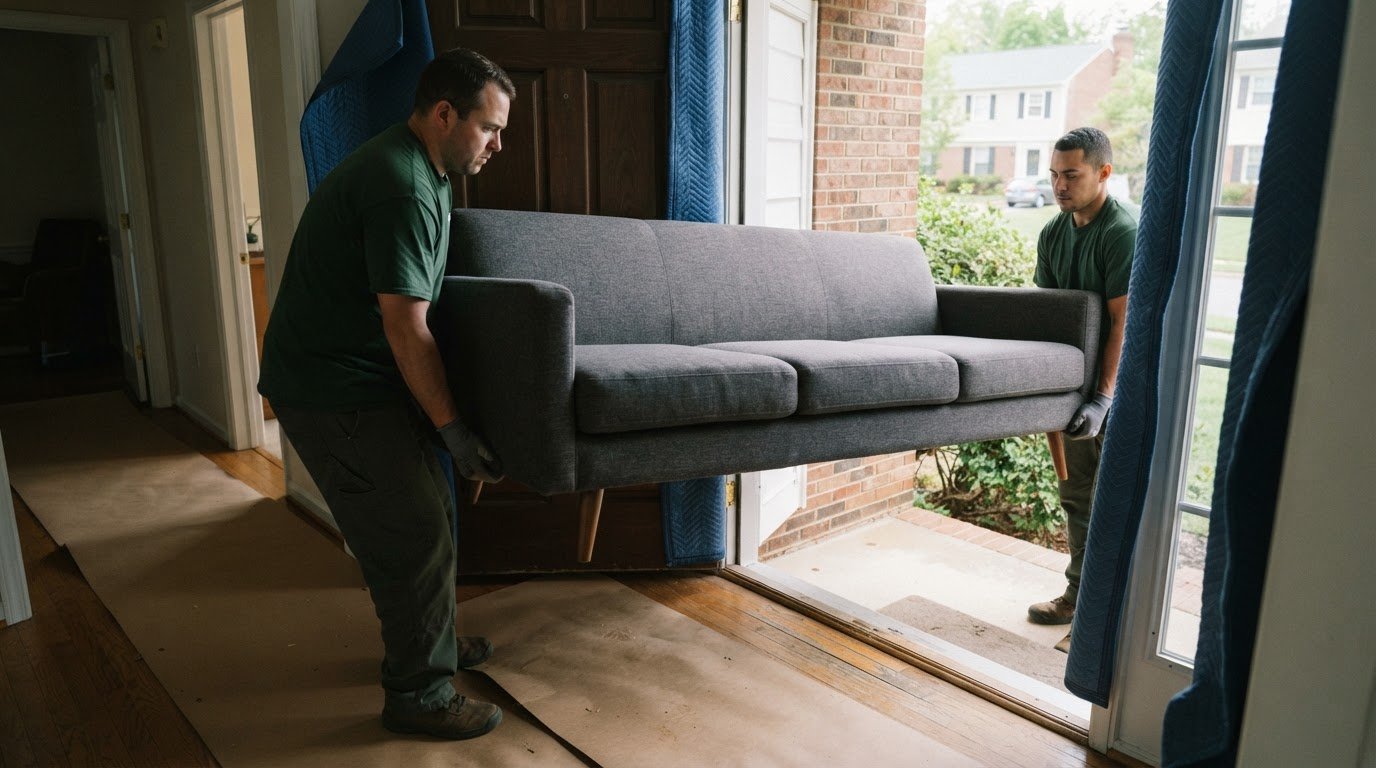
The safest way to move heavy furniture over a door threshold is to protect the route, keep the piece level, and lift it slightly rather than drag it across the edge. If you're learning how to move heavy furniture over door thresholds in Centreville without scratching floors, start by clearing the path and choosing a moving aid that suits the furniture and flooring.
Thresholds can catch furniture legs and sliders, while a rushed turn can scrape a wall or weaken your grip. This is especially concerning with bulky pieces that are difficult to control alone. Measure the route, protect floors and door frames, remove detachable parts, and use sliders or moving equipment carefully. If the furniture is too awkward or heavy to control, getting help is the safer choice.
Key Takeaways
- Match sliders and moving equipment to the furniture, floor, and threshold rather than relying on one tool for every move.
- Measure tight turns and clear the full route before lifting, so you can spot obstacles and pinch points early.
- Use blankets, cardboard, or padding to shield vulnerable floors, walls, and door frames from contact.
- Remove detachable parts and secure hardware before moving to make bulky furniture easier to handle.
- Get help when the load is difficult to grip or control, and agree on simple directions before moving it.
Choosing furniture sliders, dollies, hand trucks, straps, and blankets
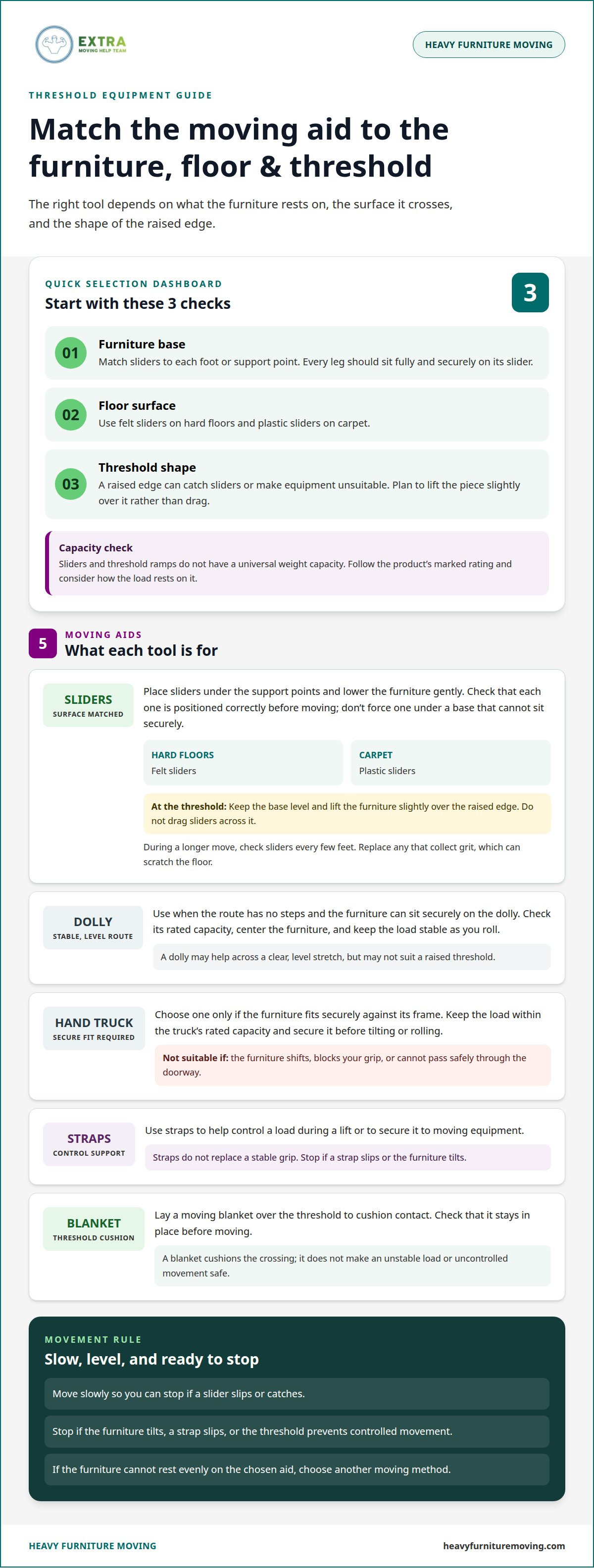
Choose tools based on the furniture’s base, floor surface, and threshold shape. Sliders and threshold ramps do not have a universal weight capacity, so follow each product’s marked rating and consider how the load rests on it.
-
Match Sliders to Furniture Legs
Fit each slider to the furniture’s foot or base, not simply to the overall piece. A wide, flat foot needs a slider that supports its full contact area; a narrow leg needs a secure, correctly sized cup. Check that every leg sits fully on its slider before moving.
A mismatched slider can shift or leave a leg exposed to the floor. Check each sofa foot and the bottom corners of a dresser. Don’t force a slider under a base that won’t sit securely. Choose another moving method if the furniture cannot rest evenly.
-
Position and Use Furniture Sliders
Place sliders under the furniture’s support points, then lower the piece gently onto them. Use felt sliders on hard floors and plastic sliders on carpet. Check that each slider is positioned correctly before pushing, and move slowly so you can stop if one slips or catches.
Keep the base level as you approach the threshold. Lift the furniture slightly over the raised edge instead of dragging sliders across it. During a longer move, check the sliders every few feet and replace any that collect grit, which can scratch the floor.
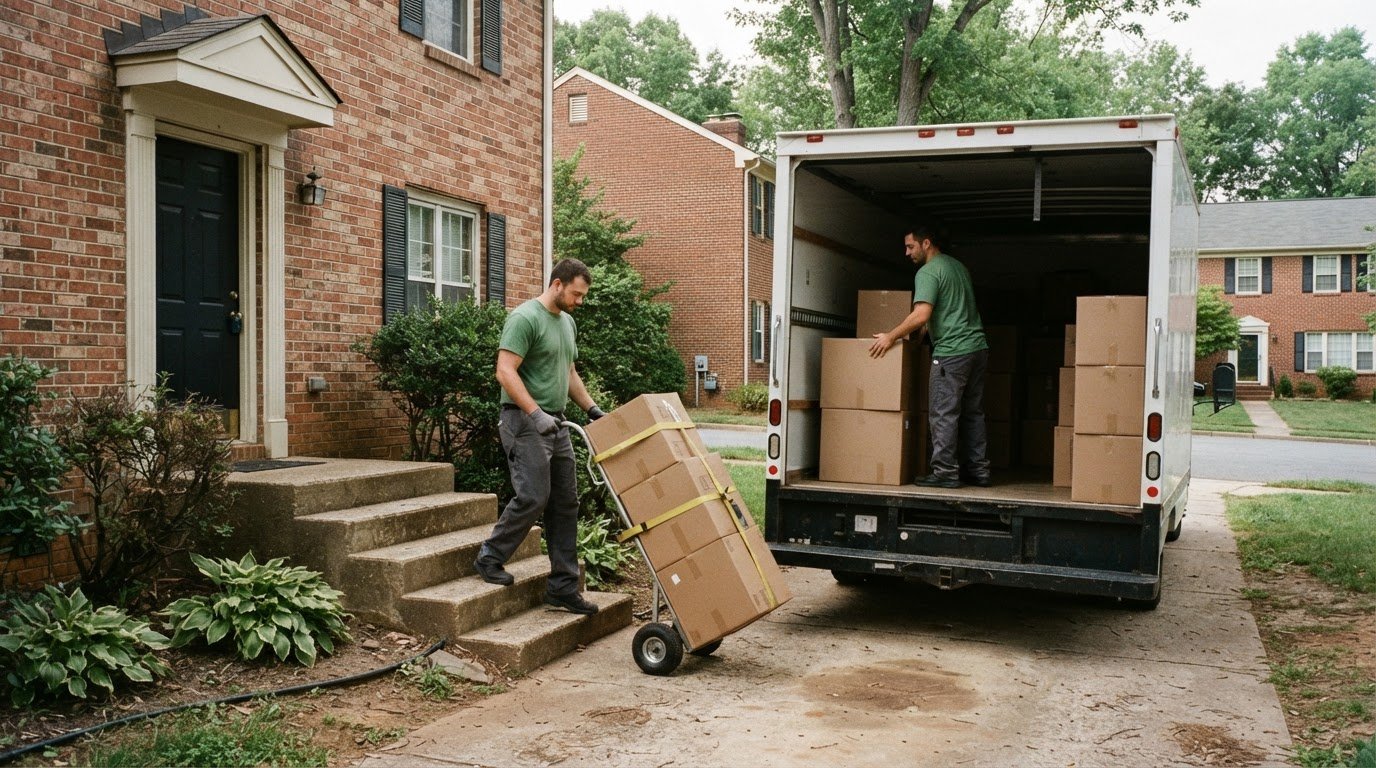
- Use a furniture dolly when the route has no steps and the piece can sit securely on it. Check the dolly’s rated capacity, center the furniture, and keep the load stable as you roll. A dolly can help move a dresser across a clear, level stretch, but may not suit a raised threshold.
- Choose a hand truck only when the furniture fits securely against its frame. Keep the load within the truck’s rated capacity and secure it before tilting or rolling. Don’t use a hand truck if the furniture shifts, blocks your grip, or cannot pass safely through the doorway.
- Use straps to help control a load during a lift or secure it to moving equipment. Lay a moving blanket over the threshold to cushion contact. Neither replaces a stable grip: stop if the furniture tilts, a strap slips, or the threshold prevents controlled movement.
Measuring doorways and planning a clear route
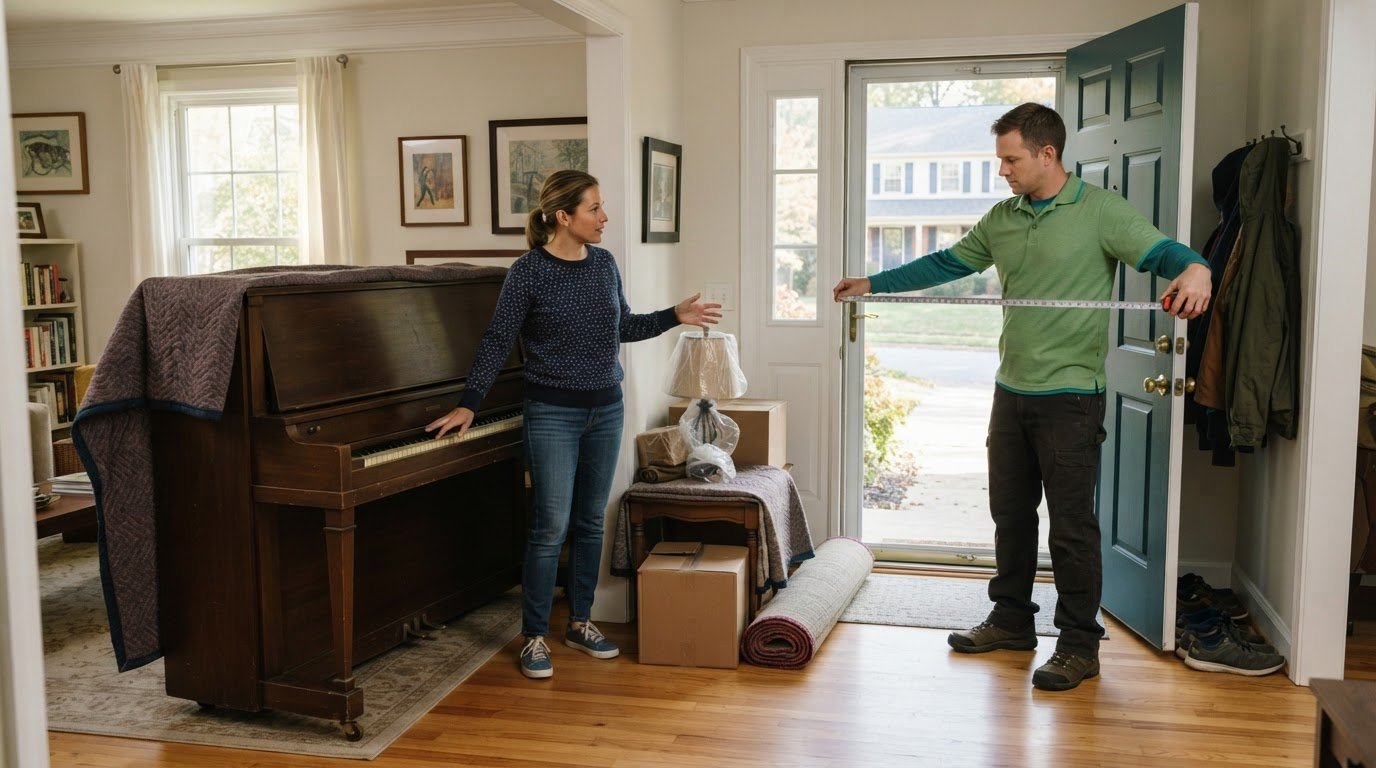
Measure the furniture and every doorway, hallway, and tight turn before moving. Then clear the full route from the starting room to the destination.
- Measure the furniture at its widest and tallest points, including protruding handles or feet. Record the dimensions of a sofa, dresser, or cabinet, then compare them with the usable opening at every doorway. Account for clearance taken up by frames and railings. A piece may fit one opening but be blocked by a narrower frame farther along.
- Map the entire route, not just the first doorway. Check hallway width, corners, and turns between rooms. For a tall bookcase, make sure there is room to angle it without scraping a wall. Look for changes in floor level and threshold edges, and plan where helpers can pause and adjust their grip if the route narrows.
- Clear rugs, cords, boxes, and other obstacles from the entire route before moving furniture. Move a floor lamp away from the hallway and coil loose cords against a wall. Pick up small objects near doorways, where the load may block a helper’s view. Clear the destination, too, so you won’t need to stop mid-move to shift a chair.
- Recruit at least one helper for bulky furniture and agree on who will direct the move. Choose short commands such as “stop” and “turn” before lifting. For a tall cabinet, one person can guide the upper end while another supports the bottom. Make sure both helpers can see the next doorway or hear directions before starting.
- Walk the route once without carrying anything. Open doors fully, check that they stay out of the path, and identify corners where the furniture may need repositioning. Keep the planned direction clear to your helper. If the item cannot pass without forcing it, change the route or reassess the move instead of pushing into a frame. For difficult household moves, get help with a local furniture move.
Treat each measurement as part of one continuous route check. A furniture piece must be compared with the usable space at every doorway, hallway, and tight turn it will pass through, rather than judged by whether it fits at the starting point. Include the clearance taken up by door frames and railings when considering an opening; the space that appears available may be reduced by those edges. A route that seems straightforward on a quick look can still become difficult where the passage narrows or changes direction, so check each section before moving the item.
Use your measurements to confirm that the route is workable without forcing the furniture against an obstruction. Pay particular attention to turns, where the space available around the corner matters as much as the doorway width. If an opening or turn lacks enough clearance, reconsider the route before lifting. Checking the full path can prevent a last-minute stop at a frame or railing and give helpers a clear plan.
Protecting floors and walls with blankets, towels, or cardboard
Cover exposed surfaces before moving furniture along the route. Protect floors at thresholds and turns, where furniture is more likely to make contact.
-
Cover Floors, Frames, and Banisters
Lay cardboard or floor runners over high-traffic paths, and pad door frames or banisters where bulky furniture could bump them. Place a moving blanket over each threshold to cushion the crossing. Towels can also protect furniture and nearby surfaces, but keep them flat so they don’t bunch beneath a moving piece.
Cover the full contact area, not just the center of a doorway. A dresser corner can scrape a frame even when its base clears the opening. Check that blankets and cardboard stay in place before moving; loose material can shift underfoot or catch on furniture.
-
Guard Doorways, Turns, and Thresholds
Protect each doorway and turn, including the destination room. Lay a blanket over each threshold before the furniture arrives, then pad the frame or wall beside tight corners. A sofa may clear a straight passage but brush a wall while turning, so protect the pivot point, too.
Keep cardboard and runners flat across floor paths. Don’t leave a raised edge that a foot or furniture base could catch. If a covering slides or folds during the move, pause and reset it before continuing. This keeps the protective layer from becoming an obstacle at the threshold.
- Match sliders to the floor before placing them under furniture. Use felt sliders on hard floors and plastic sliders on carpet. These surfaces call for different slider materials, so don’t assume one type will work throughout the route. If the move crosses carpet and hard flooring, plan for the change before starting.
Position each slider beneath a furniture support point, then check that it sits securely. Keep the floor covering clear where the slider will travel. A blanket or towel trapped under a slider can bunch, while grit beneath it can scratch the floor. Stop and inspect if movement becomes rough.
- Protect the furniture as well as the room. Wrap exposed corners with moving blankets or towels, especially when a table edge or cabinet side will pass close to a door frame. Cardboard can protect a floor path, but padding around the contact point cushions a wall from impact.
Before crossing a threshold, confirm the blanket still covers the edge and the path beyond it. Keep the furniture level and lift it slightly over the raised lip instead of dragging it. Move slowly through the doorway, then check that the coverings haven’t shifted before continuing.
Disassembling furniture to reduce its weight
- Empty the furniture before moving it. Remove books from a bookcase, dishes from a cabinet, and clothing from a dresser. Loose contents can shift as the piece crosses a threshold, making it harder to control. Set removed items aside, clear of the doorway and walking path.
- Take out detachable drawers, shelves, and cushions. A dresser with its drawers removed is lighter and less likely to shift internally. Removing its drawers can reduce its weight by a third or more. Carry drawers separately, and keep them clear of the threshold route.
- Check each part before lifting or unscrewing it. Look for shelf pins, drawer stops, visible screws, and cushions that lift free. Don’t pull on a part that appears fixed. A built-in shelf, for example, may not detach like a loose cabinet shelf, so avoid forcing it.
- Keep small hardware together as each part comes off. Place screws, shelf pins, and drawer stops in a labeled bag or container, marked with the furniture piece, such as “bedroom dresser.” This prevents hardware from getting mixed up with parts from another item.
- Record the original arrangement before disassembly. Photograph a bookcase’s shelf layout or note which drawer belongs in each opening. Keep the record with the labeled hardware so you can return parts to their original positions at the destination.
- Set removed components somewhere stable and clear of the route. Stack shelves flat, and keep drawers upright and supported. Don’t leave a cushion or drawer beside a doorway where someone carrying furniture could trip over it. Keep each piece near its matching hardware bag.
- Reassess the furniture after removing detachable parts. Check whether doors or remaining shelves can swing or slide during the move, and secure any moving parts. If the piece is still awkward to grip or control, don’t force the move just because you disassembled it.
- Move the parts and main furniture body as separate loads. Keep the route clear between trips, and place each removed component at the destination before reassembly. Use the labeled container to match hardware with the right item, keeping small pieces together and easy to find.
Getting help to move heavy furniture
A helper can help balance a bulky piece across a threshold and reduce twisting. Agree on a clear plan, shared directions, and a stop point before lifting.
- Bring in at least one helper for bulky furniture. Agree on who will direct the move and choose simple calls such as “stop,” “lift,” and “lower.” Make sure everyone understands them. A shared plan helps the team pause together if a slider catches or the furniture shifts.
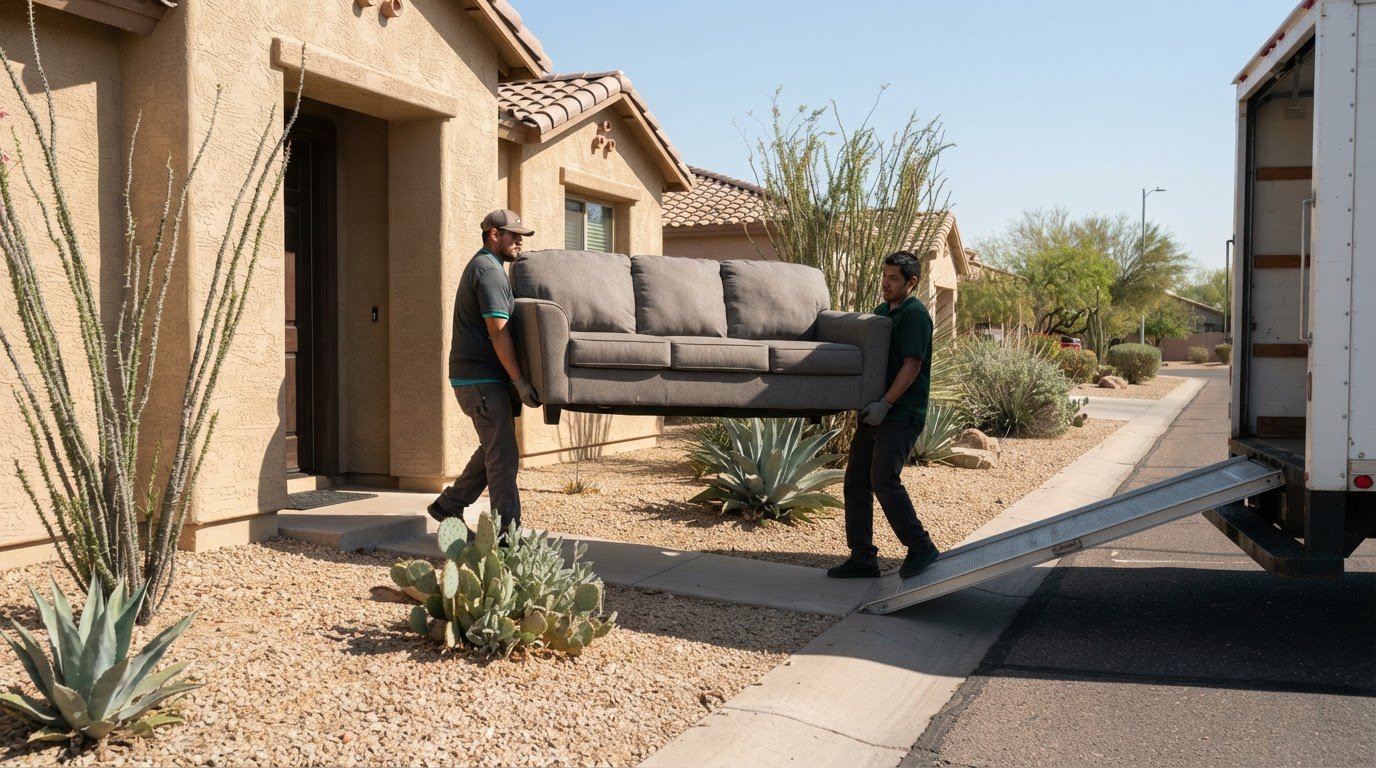
- Match each person’s position to the furniture. For a tall bookcase, one person supports the upper end while another supports the bottom. Keep the piece steady instead of letting one end swing through the doorway. Make sure both helpers have a secure grip before lifting or changing direction.
- Use two people for a 200-pound dresser, with a dolly when possible. Center the dresser on the dolly and keep it stable while rolling. At a threshold, pause and coordinate the lift together. Don’t let one person pull while the other pushes without agreeing on the movement first.
- Choose a lifting position that keeps the load controlled. Bend at the knees and hips, keep the furniture close to your body, and straighten your legs to lift. Turn by moving your feet rather than twisting at the waist. Keep heavy objects below shoulder level, especially near a doorway.
- Pause before each threshold and confirm the route is clear. The person directing the move should call the lift and landing. Lift the furniture slightly, keep its base level, and set it down only when both helpers are ready. Don’t rush to change your grip while the piece is suspended.
- Stop if the furniture cannot be comfortably controlled or securely gripped. A slipping hand, tilted cabinet, or helper losing balance means you need a new plan. Don’t force the piece through the doorway. Professional movers can help when its weight or shape makes the crossing difficult.
- For a bulky piece that needs steady handling through a home, use a heavy lifting moving service. This is a practical next step when helpers cannot maintain a secure grip, coordinate the lift, or control the furniture over the threshold.
Treat the move as a coordinated task, with everyone clear about their role before lifting. Have at least one helper assist with bulky furniture to keep its weight balanced and avoid twisting. For a tall piece, one person supports the upper end and another supports the bottom. Agree beforehand on who directs the move and how to signal a stop or change in direction. With signals decided in advance, everyone can respond together.
Keep the agreed plan in place as the furniture is maneuvered, and pause if the team cannot maintain control. Do not force the move if the weight cannot be comfortably controlled or securely gripped. Instead, stop and hire professional movers to handle the piece. Asking professionals to take over is the recommended choice when the load exceeds what the helpers can manage safely; there is no need to continue with a move that cannot be controlled. A clear decision to hand over the task keeps the focus on coordinated handling rather than trying to push through a difficult lift.
Heavy Furniture Moving
Heavy Furniture Moving helps with bulky furniture moves when a threshold is difficult to manage alone. Turn to the team when a piece is awkward to grip, hard to keep level, or too heavy to guide safely through your home. Its in-home furniture moving service helps move large household items through tight spaces. Heavy Furniture Moving also handles exercise equipment moves and sofa hoisting when the route calls for it. Share which item needs moving and where the threshold or tight turn creates difficulty, then contact Heavy Furniture Moving to discuss help.
Make the Next Move With Confidence
For Centreville residents learning how to move heavy furniture over door thresholds without scratching floors, the next step is recognizing when a careful plan needs experienced help. If a bulky piece remains awkward to grip or difficult to guide through your home, bring in help rather than forcing the move. Heavy Furniture Moving offers Movers Near Me, Exercise Equipment Moving, and Sofa Hoisting for demanding household moves.
Share which item needs moving and where the threshold, doorway, or tight turn creates a challenge. That gives the team a clear starting point for discussing the right kind of help. Contact Heavy Furniture Moving about your furniture move and take the next step with a plan that fits your home.
Frequently Asked Questions
How to move heavy furniture over a door threshold without scratching floors?
To move heavy furniture over door thresholds without scratching Centreville floors, protect the crossing and lift the piece slightly instead of dragging it. Sweep away grit that could get trapped beneath a slider or floor covering, and make sure the covering lies flat where the doorway meets the room. Keep the furniture level as it crosses, and pause if a leg catches or the protective layer shifts.
How to lift furniture safely over a door threshold using straps or a dolly?
To move furniture over a threshold without scratching Centreville floors, use a dolly only when the piece sits securely, stays centered, and remains within its rated capacity. Secure the furniture against the frame before rolling. Helpers should agree on who directs the lift and use clear calls to stop or lower. When using straps, keep the load close, bend at the knees and hips, and stop if the grip or load feels uncontrolled.
How much weight can common furniture sliders and threshold ramps support?
There is no universal weight capacity. Check the product’s marked rating and consider how the load rests on it.