How to Move Dining Chairs and Leaf Tables Without Scuffs
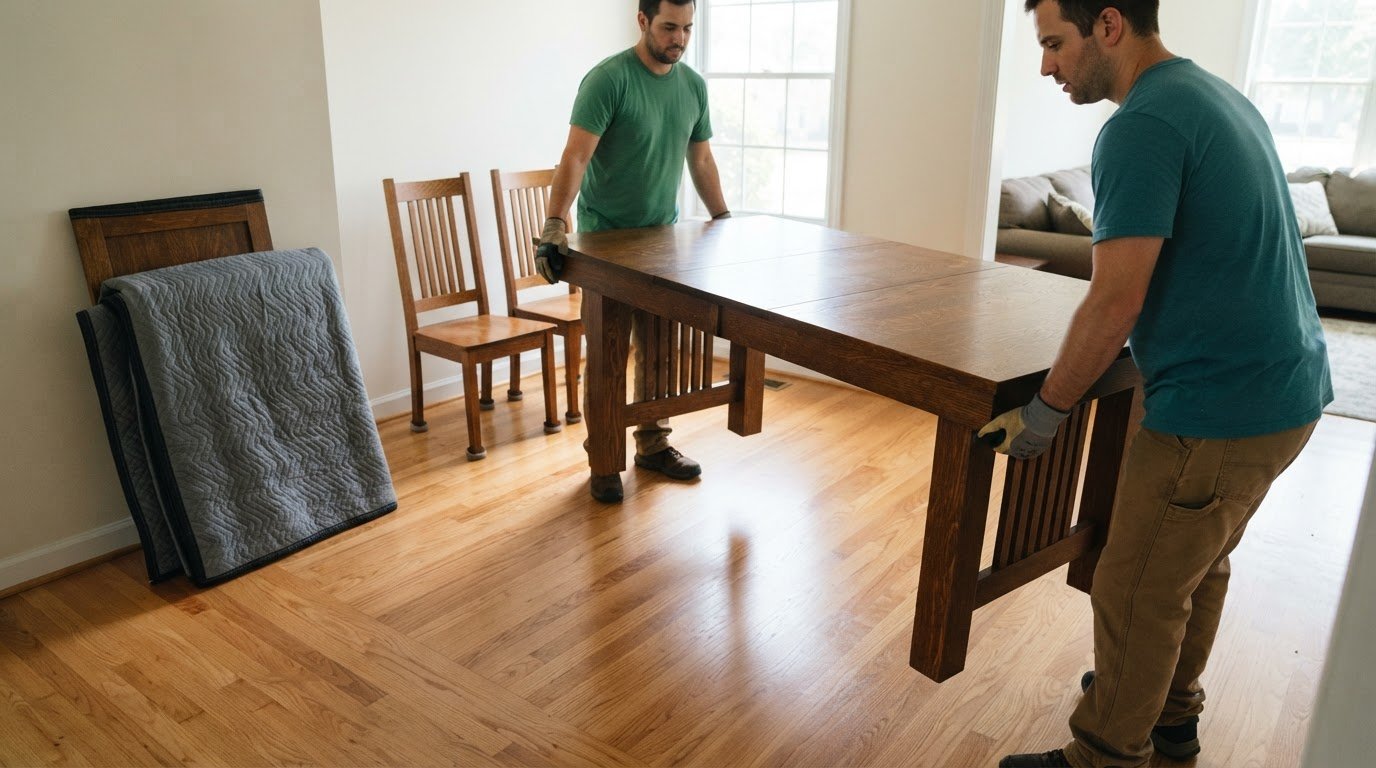
Dragging is the fastest way to leave scuffs behind. For moving heavy mission-style dining chairs and a leaf table without scuffs in Haymarket, wrap each piece, lift rather than drag, and match the dolly or sliders to the floor. Carry a table with two people, holding its base or apron, and protect removable leaves separately.
It’s easy to focus on the furniture and overlook the route, floor, or a loose table leaf. A little preparation helps protect all three. Plan how to wrap the chairs and leaves, clear a safe path, choose suitable moving equipment, and handle each floor type with care.
Key Takeaways
- Use felt sliders on hard flooring and plastic sliders on carpet to help furniture move smoothly.
- Remove chair legs when possible, and place a moving blanket between chairs if stacking them.
- Wrap removable table leaves separately, and keep packing tape off the wood finish.
- Clear rugs and loose items from the route before moving to reduce trip hazards and floor damage.
- Load detached table parts so they can’t shift or roll into other items during transit.
Protecting laminate, vinyl, tile, and newly finished floors
To move heavy mission-style dining chairs and a leaf table without scuffs in Haymarket, match floor protection to the surface and route. Prepare moving blankets and sliders before lifting any furniture.
-
Pad Floors and Furniture with Moving Blankets
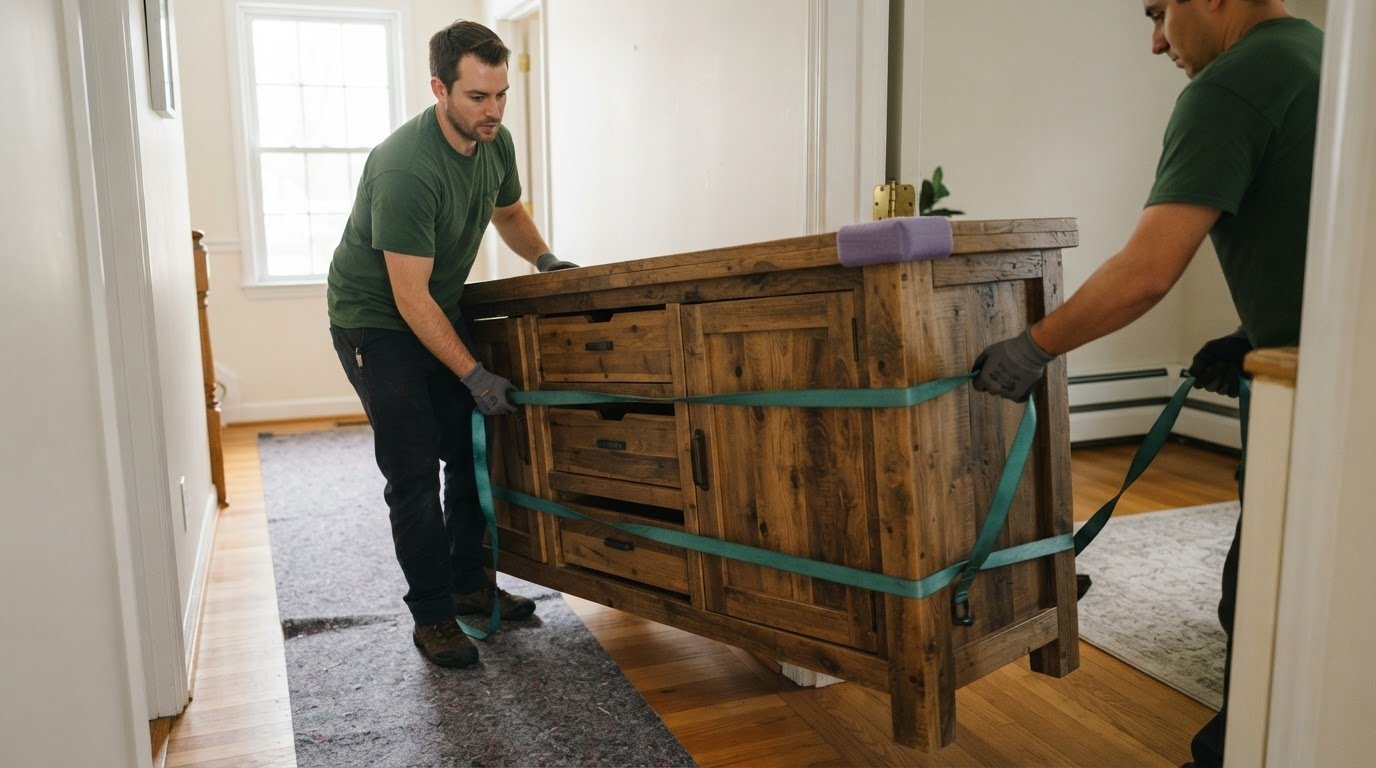
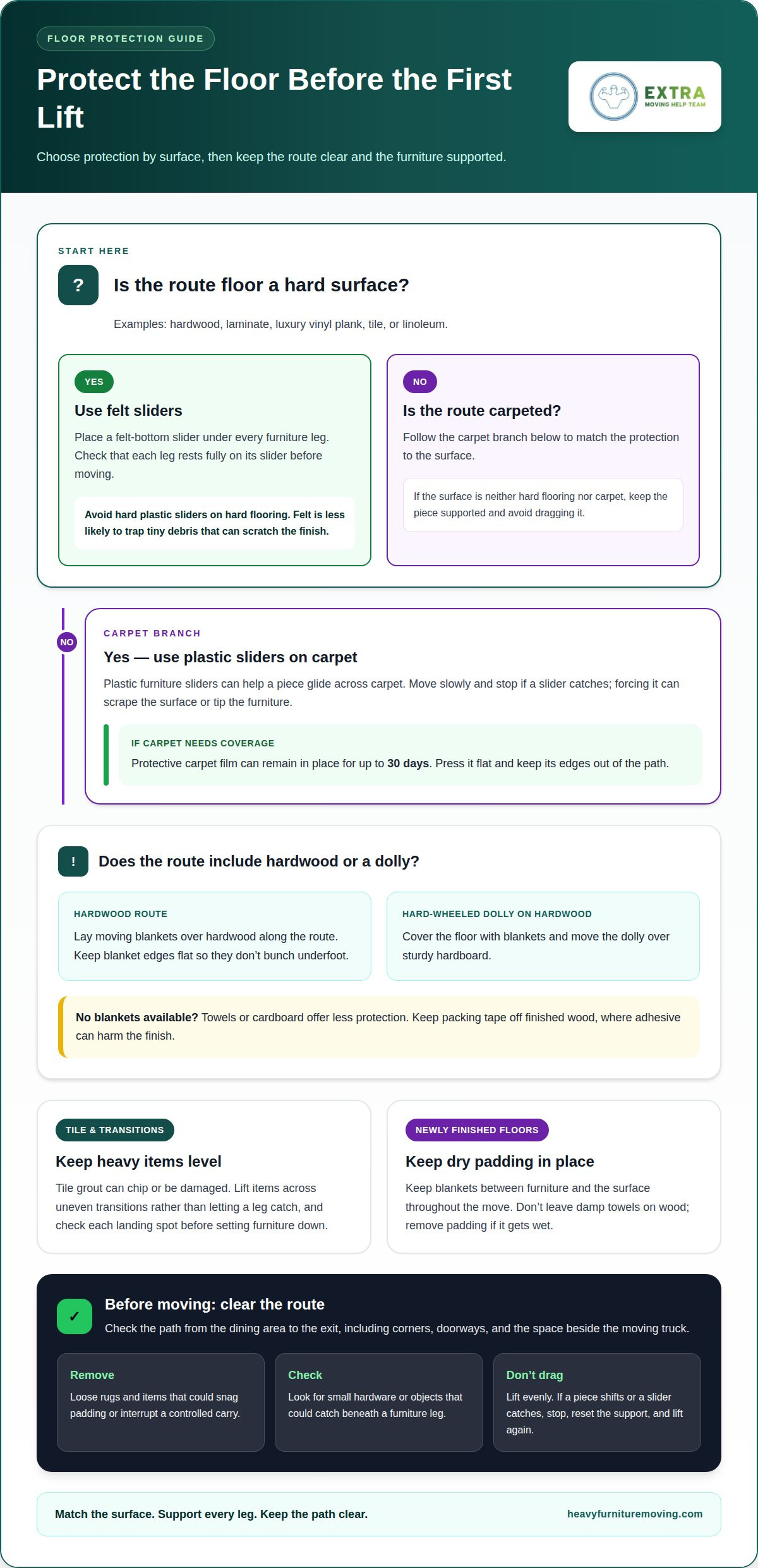
Lay moving blankets over hardwood along the route, then cover the tabletop with at least two blankets. This cushions the furniture and helps prevent contact with the floor while lifting or setting it down. If using a hard-wheeled dolly on hardwood, cover the floor with blankets and move the dolly over sturdy hardboard. Keep blanket edges flat so they don’t bunch underfoot.
Use towels or cardboard only if blankets aren’t available, since they offer less protection. Keep packing tape off finished wood, where adhesive can harm the finish. Secure padding around the furniture instead, and keep loose folds off the walking surface.
-
Protect Delicate Legs and Joinery
Lift furniture evenly, supporting each leg before moving it. Mission-style chairs may have decorative legs and wood joints that are strained when one corner bears too much weight. Supporting the chair evenly on sliders helps reduce stress on these parts. Wrap exposed legs in moving blankets to guard against bumps, and keep the padding in place while lifting.
Don’t drag chairs across hardwood, laminate, vinyl, vinyl plank, tile, or carpet. Dragging can damage both the floor and the furniture. If a piece shifts unevenly, stop, reset the support, and lift again instead of forcing it forward.
-
Choose Sliders for the Floor Surface
Use felt-bottom sliders under furniture legs on hard surfaces such as hardwood, laminate, luxury vinyl plank, tile, and linoleum. Check that every leg rests fully on its slider before moving the piece. Felt is less likely than other slider materials to trap tiny debris that can scratch the floor finish.
Avoid hard plastic sliders on hard flooring. On carpet, plastic furniture sliders can help a piece glide. Move slowly and stop if a slider catches. Forcing it can scrape the surface or tip the furniture.
-
Guard Tile Grout and Floor Transitions
Take care crossing tile grout lines, which can chip or be damaged. Keep heavy items level over a seam, and lift them across uneven transitions rather than letting a leg catch. Check each landing spot before setting furniture down, especially where tile meets vinyl or a newly finished floor.
For newly finished flooring, keep blankets between the furniture and the surface throughout the move. Don’t leave damp towels on wood. Use dry padding and remove it if it gets wet.
-
Protect Carpet and Keep the Route Clear
Use protective carpet film where carpet needs coverage during the move. It can remain in place for up to 30 days. Press it flat and keep its edges out of the path so furniture legs and shoes don’t catch. For hard floors, use blankets or the correct felt sliders instead of relying on carpet film.
A careful move of heavy mission-style dining chairs and a leaf table without scuffs in Haymarket starts with checking the route from the dining area to the exit. Remove loose rugs and anything that could snag padding or interrupt a controlled carry. A clear path helps prevent sudden turns that could bring chair legs into walls or floors.
What is the correct way to transport dining chairs?
Carry a standard dining table with at least two people, holding the frame rather than the legs. For a large, heavy farmhouse-style table or one going downstairs, three people provide more support.
- Remove table legs and extension leaves if they’re designed to come off. Disassembly can make the table easier to carry and load, while reducing the risk of hitting a doorway or another item. Keep fasteners together in a labeled bag for reassembly. Don’t force glued joints or hardware that won’t release easily.
- Wrap wooden legs individually in bubble wrap, keeping packing tape off the wood. Cardboard over the table’s corners helps guard against chips and scratches. Cover the tabletop’s edges and corners with several layers of stretch wrap, then add moving blankets for cushioning. Secure each layer so it won’t shift during loading.
- Pack dining chairs to prevent contact between their frames. Remove chair legs when possible and wrap each leg separately in bubble wrap. If chairs must be stacked, place a moving blanket between every chair. A dining set can include 6 to 12 chairs, so stacking with padding can help keep the group together without letting bare wood rub.
- Load detached parts so they can’t move in the truck. Secure table legs on the truck floor to keep them from rolling into furniture or boxes. Place a separate tabletop upright against the truck wall, with padded backing, and secure it with straps. Use sturdy items to help keep it stable, without pressing unpadded edges against hard surfaces.
- Transport tables with attached legs upright, using heavy boxes underneath to help keep them still. Place heavier items low in the load and lighter items above to reduce shifting or tipping. If the tabletop is separate, transport it upright when possible. Check that straps hold it firmly and nearby cargo won’t slide into its corners.
- Carry a separate tabletop on its side, with padding between its edge and the carriers’ bodies. Have two people guide it through doorways, one at each end, and keep movements smooth. Don’t lift it by the legs or drag it across the floor. Pause at each turn to adjust hand positions before continuing.
Clearing the floor to prevent trips and damage
Prepare the full route before moving chairs or a table. A clear path helps movers stay in control through turns and doorways.
-
Clear the Floor and Use Felt Sliders
Remove rugs, loose items, and stray hardware from the route between the dining area and the exit. A small screw or toy can catch beneath a furniture leg and scratch hardwood as the piece shifts. Check corners, doorways, and the space beside the moving truck, where objects are easy to overlook.
On hard floors, fit felt sliders beneath each furniture leg before moving. Felt works on hardwood, laminate, luxury vinyl plank, tile, and linoleum. Check that each slider sits flat and fully supports the leg. Clear the floor and inspect the slider surface first, since trapped debris can scratch the finish.
- Map the route before lifting, including tight turns and thresholds. Move chairs through the widest available opening instead of steering around boxes or household items. If a doorway requires a turn, pause before entering and work out the angle. This helps prevent sudden pivots that could send chair corners into trim or walls.
Keep the floor clear for the entire move, not just in the first room. Ask everyone nearby to keep bags, shoes, and packing materials out of the way. A clear route gives movers room to adjust their footing while holding a piece steady.
-
Prevent Scratches and Inspect the Floor
Move furniture smoothly and never drag it across hardwood. Even a short pull can leave scratches, especially if grit is trapped beneath a chair foot. Lift the piece to reposition it, then set it carefully on its felt sliders. Stop if a slider catches or shifts, and reset it before continuing.
After moving, inspect the route in good light, especially beneath the dining table and around door corners. Look for scuffs, scratches, or debris that may have been trapped under sliders. Carefully remove loose grit so shoes or furniture won’t grind it into the finish.
- Check each furniture piece before setting it down in its new position. Look at the legs, feet, and lower frame for loose hardware or rough edges that could mark the floor. Keep small fasteners together instead of scattering them near the route. Clear packing scraps before sliding a chair or table into place.
- Finish by checking the floor from the starting room to the destination. Carefully sweep or pick up visible grit, then inspect thresholds and corners where debris collects. If a new mark appears, note its location before bringing in other pieces. A clean, inspected route helps prevent further scratches during placement.
Wrapping and transporting table leaves
Remove each extension leaf and wrap it separately before moving the table. Have two people carry the table, holding its frame or apron, and keep the leaves flat during transport.
- Clean and inspect each leaf before wrapping. Dust or grit trapped against the finish can rub during the move. Wrap the leaf in several layers of stretch wrap, covering its edges and corners. Add a moving blanket over the wrapped surface to cushion it against bumps and scrapes.
- Secure the blanket around the leaf without putting packing tape directly on the wood, since adhesive can damage the finish. Keep the leaf flat while carrying and loading it, rather than upright on an edge. Flat transport helps prevent bending or pressure on its surface.
- Cover the stretch-wrapped tabletop with moving blankets. Cushion the corners carefully, since they can hit door frames or truck walls during a turn. Use straps to secure the tabletop in the truck, with padding between it and any hard surface. Keep straps snug enough to limit shifting without pressing them against unprotected wood.
- Wrap dining chairs before stacking or loading them. Cover each chair’s back and seat with a moving blanket, then secure the blanket to itself with tape. Keep adhesive away from the finish. If stacking chairs, place a blanket between each one so the wood frames and legs don’t rub during transport.
- Arrange wrapped pieces so they can’t slide or fall against other cargo. Keep the leaf flat and supported, with no heavy items pressing on it. When transporting the tabletop separately, position it securely against the truck wall and strap it in place. Check that chair legs and table edges aren’t exposed to shifting cargo.
- Lift the heavy table with care and control. Two people should hold opposite ends and guide the frame through turns together. Don’t carry it by the legs or tabletop edges. If the legs are removable, take them off before wrapping and secure them separately so they can’t roll into the leaf or other furniture.
- Unwrap the dining table soon after arrival. Prolonged wrapping can trap moisture and harm wood finishes. Remove the stretch wrap and blankets, then inspect the leaf, tabletop, and chair frames before reassembling. Keep the leaves flat until they’re ready to be fitted back into the table.
How to move heavy mission-style dining chairs without scratching floors
Match the moving method to the chair, floor, and route. Lift and carry when it’s safe; use suitable sliders or a soft-wheeled dolly if the chair is too bulky.
- Check each chair before moving it. Look for loose joints, uneven feet, or decorative legs that could catch on a threshold. Wrap exposed wood in a moving blanket and secure the padding so it won’t slip while lifting. Don’t pull a chair by its back or legs, which can strain its joints. For moving heavy mission-style dining chairs and a leaf table without scuffs in Haymarket, assess each piece before it leaves the room.
- Get help with a bulky chair, and agree on the route before lifting. When two people can carry a piece safely, carrying it is often the best option. Hold the chair firmly by its frame, keep it level, and take controlled steps. Pause at turns instead of swinging its legs toward walls or door trim. Keep hands clear of narrow gaps where the chair could shift against a doorway.
- To glide a chair, lift one corner at a time and place a slider beneath each leg. Set the black side against the furniture, and check that every leg sits fully on its slider. Move the chair slowly once all legs are supported. Stop if a slider slips, catches, or picks up debris. Reposition it before moving again rather than pushing with uneven support.
- Choose slider material to suit the floor. Plastic furniture sliders are suitable for carpet, while felt-bottom sliders work on hard floors. For a rounded plastic slider, point the rounded edge in the direction of the push for smoother movement. Don’t use hard plastic sliders on hard flooring, where they can scuff the surface. Check the route as you go, especially where carpet meets a hard surface.
- Use a soft-wheeled dolly if the chair’s size or weight makes carrying impractical. Hard wheels can leave ruts or scuffs, so choose a dolly suited to the surface. The furniture dolly described for this move has two axles and four wheels. Center the chair securely, pad its frame, and guide the dolly without sharp turns. If the load shifts, stop and stabilize it before continuing.
- Keep the route clear before moving a chair across carpet or hard flooring. Remove loose items that could catch under a slider or dolly wheel, then check thresholds and tight corners. Move one chair at a time, and stop to reset its support if it shifts. For moving heavy mission-style dining chairs and a leaf table without scuffs in Haymarket, steady handling matters as much as the equipment. For bulky pieces that need extra lifting help, arrange heavy lifting moving service.
Heavy Furniture Moving: Exercise Equipment Moving
Heavy Furniture Moving can help with dining furniture that’s too heavy or awkward to carry safely. Its heavy lifting moving service is a practical option for bulky pieces that need careful handling through rooms and doorways or onto a moving truck. For other difficult household loads, Exercise Equipment Moving can help with heavy fitness equipment.
Consider moving help when the table’s size, weight, or route makes it difficult to move under control on your own. Share which pieces need moving and describe any tight turns or stairs so the job can be planned around the furniture and route.
Contact Heavy Furniture Moving to discuss help with your dining furniture move.
Make the Next Move Easier
Protecting a dining set means treating every piece as part of the move, not an afterthought. The same planning helps when another bulky item needs to cross a room, pass through a tight doorway, or reach a truck. If the lift feels awkward or the route leaves little room to maneuver, professional help can keep the move controlled and reduce strain on you and your furniture.
Heavy Furniture Moving offers Movers Near Me, Exercise Equipment Moving, and Sofa Hoisting for challenging household moves. For moving heavy mission-style dining chairs and a leaf table without scuffs in Haymarket, turn to professional help when carrying the set yourself isn’t practical.
Contact Heavy Furniture Moving to discuss your move. Take the next step with a clear plan and a capable team behind the heavy lifting.
Frequently Asked Questions
What should I do if the table legs won't come off?
Leave the legs attached and carry the table horizontally by its apron or frame. Don’t pry at a joint that resists, since force can loosen or damage the connection. Before lifting, check that the table clears the doorway and turns while horizontal. If the route is too narrow, reassess the angle and handholds before moving rather than twisting the table against a wall or door frame.
How do I protect table legs and chair feet during a move?
Wrap table legs and chair feet individually in moving blankets or padding, securing the covering without sticking tape to finished wood. Check each foot for grit, rough edges, or a loose fitting before it touches the floor. Carry a chair with a damaged or uneven foot instead of sliding it. Separate wrapped legs with padding so they don’t knock against one another during loading.
Should a dining table leaf be removed before moving?
Yes, remove a leaf if it’s designed to detach. A separate leaf is easier to protect than one left loose inside an expandable table. Keep it flat and supported while carrying and loading it into the truck, and label its protective covering so you know which table it belongs to. Don’t place heavy objects on top. If a leaf is built into the table or won’t release smoothly, leave it in place.
How do I wrap and transport mission-style dining chairs without damage?
Cover each chair’s back and seat with a moving blanket, then secure the blanket around itself. Keep tape away from the wood finish. If the chair legs detach, wrap them separately and keep their hardware together. For stacked chairs, place padding between frames so rails and arms don’t rub. During transport, position the chairs so they can’t topple or press against sharp-edged cargo.
What do furniture moving labor costs in Haymarket, Virginia, depend on?
Moving labor costs in Haymarket depend on the furniture’s size and weight, the work involved, and access conditions such as stairs or landings. Costs also depend on whether you need labor only or transport. Heavy Furniture Moving offers hourly labor with a two-hour minimum, and flat rates for most single heavy items. Stairs and landings are priced before the crew arrives. Share which pieces need moving and describe the route to get a job-specific quote.
Are there local movers in Haymarket, Virginia, who specialize in furniture moving?
Heavy Furniture Moving offers Movers Near Me for residential moves involving heavy or bulky items, including furniture. Haymarket is among the local service areas. Shrink film, moving blankets, and ratchet straps are included on every job. For a dining set or other household furniture that needs careful lifting, describe the pieces and access route when contacting the team. This helps match the moving support to the job.
Frequently Asked Questions
Leave the legs attached and carry the table horizontally by its apron or frame. Don’t pry at a joint that resists, since force can loosen or damage the connection. Before lifting, check that the table clears the doorway and turns while horizontal. If the route is too narrow, reassess the angle and handholds before moving rather than twisting the table against a wall or door frame.
Wrap table legs and chair feet individually in moving blankets or padding, securing the covering without sticking tape to finished wood. Check each foot for grit, rough edges, or a loose fitting before it touches the floor. Carry a chair with a damaged or uneven foot instead of sliding it. Separate wrapped legs with padding so they don’t knock against one another during loading.
Yes, remove a leaf if it’s designed to detach. A separate leaf is easier to protect than one left loose inside an expandable table. Keep it flat and supported while carrying and loading it into the truck, and label its protective covering so you know which table it belongs to. Don’t place heavy objects on top. If a leaf is built into the table or won’t release smoothly, leave it in place.
Cover each chair’s back and seat with a moving blanket, then secure the blanket around itself. Keep tape away from the wood finish. If the chair legs detach, wrap them separately and keep their hardware together. For stacked chairs, place padding between frames so rails and arms don’t rub. During transport, position the chairs so they can’t topple or press against sharp-edged cargo.
Moving labor costs in Haymarket depend on the furniture’s size and weight, the work involved, and access conditions such as stairs or landings. Costs also depend on whether you need labor only or transport. Heavy Furniture Moving offers hourly labor with a two-hour minimum, and flat rates for most single heavy items. Stairs and landings are priced before the crew arrives. Share which pieces need moving and describe the route to get a job-specific quote.
Heavy Furniture Moving offers Movers Near Me for residential moves involving heavy or bulky items, including furniture. Haymarket is among the local service areas. Shrink film, moving blankets, and ratchet straps are included on every job. For a dining set or other household furniture that needs careful lifting, describe the pieces and access route when contacting the team. This helps match the moving support to the job.