How to Move an Antique Secretary Desk in Vienna Without Damaging Its Glass Mullions
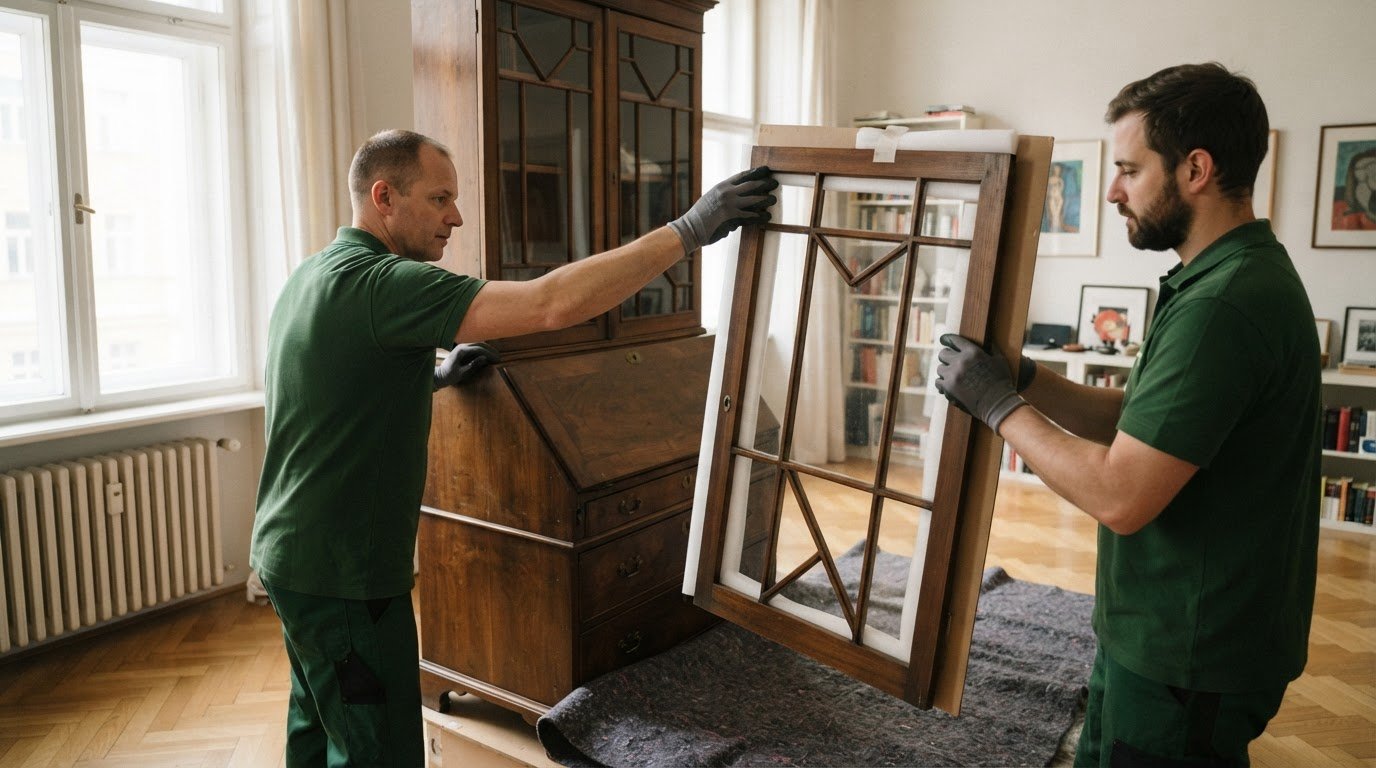
The glass isn’t the only part at risk: pressure can also loosen an antique desk’s joints. If you’re learning how to move an antique secretary desk with delicate glass mullions in Vienna, remove loose or detachable parts when safe, wrap fragile components separately, and lift from stable structural points instead of dragging the desk. Label each piece to keep its position clear for reassembly.
It’s understandable to worry about a treasured desk’s glass, finish, and small interior parts shifting or breaking in transit. A controlled move protects the mullions while reducing strain on delicate joints and helping the desk go back together correctly. Assess what can be safely removed, protect the glass and wood, and plan the route, lifting, and labels before moving. When the piece is too heavy, fragile, or awkward to handle safely yourself, specialized moving help can make the lift and set-down easier to manage.
Key Takeaways
- Antique wood and finishes need protection from pressure, moisture, and temperature swings, so packing choices matter as much as careful handling.
- Use a protective wrapping sequence for delicate surfaces, and avoid materials that could stain the finish.
- Plan disassembly around the desk’s removable parts, then keep each component protected and clearly identified for reassembly.
- Choose lifting and transport methods that support the desk’s stable points; especially fragile or oversized pieces may need added protection.
- Professional movers can manage the heavy handling and specialized packing steps that make a delicate desk harder to move safely.
Why do antiques need different packing than regular furniture?
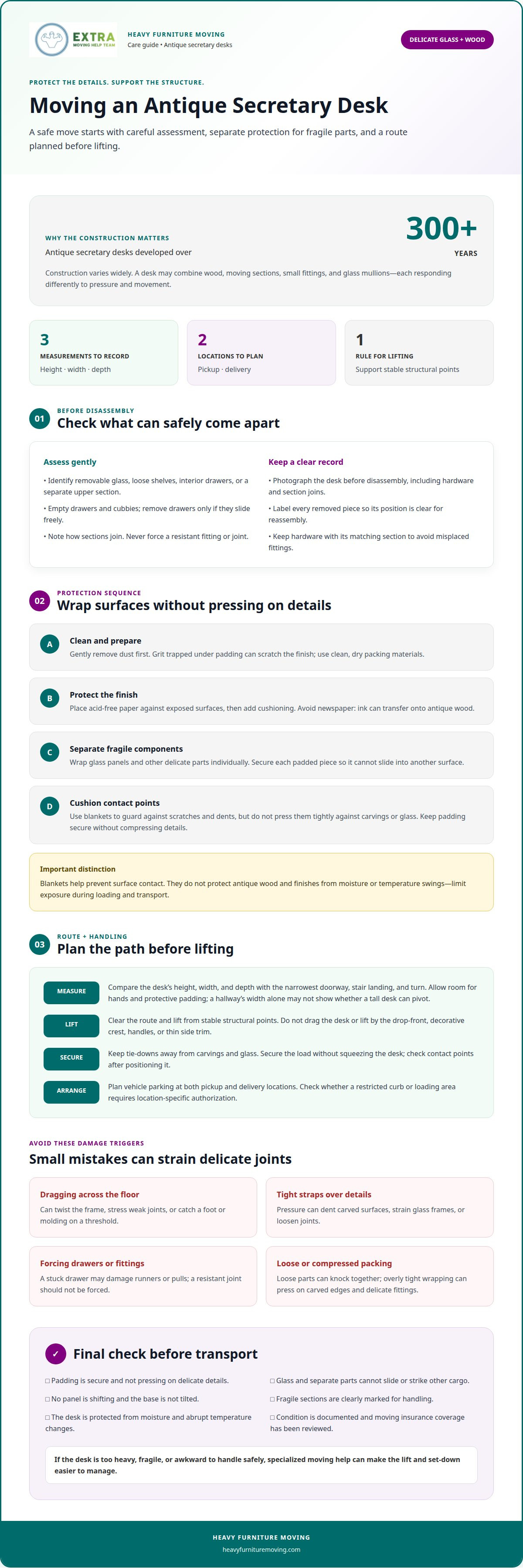
An antique secretary desk combines wood, moving sections, small fittings, and sometimes glass mullions. Those parts can respond differently to pressure and movement than a modern, simpler piece. Antique secretary desks developed over 300 years, so their construction varies widely. A Baroque writing desk with carved details or marquetry needs protection that avoids rubbing raised surfaces and putting pressure on fragile edges.
Start with clean, dry packing materials. Gently remove dust before wrapping, since grit trapped under padding can scratch the finish. Place acid-free paper against exposed surfaces, then add cushioning. Avoid newspaper because its ink can transfer onto antique wood. Wrap removable glass panels and other fragile parts individually, then secure each padded piece so it cannot slide against another surface.
Moving blankets help guard furniture against scratches and dents, but they should not press tightly against delicate carvings or glass. Use padding to cushion corners and prevent contact with nearby objects. Temperature swings and humidity can harm antique wood and finishes, so limit the desk’s exposure during loading and transport. Blankets protect against surface contact, not temperature or moisture.
Campaign furniture was designed to be dismantled, assembled, and transported. That differs from Baroque writing furniture, which may have ornate details and multiple interior sections that need careful handling. Don’t assume a desk is designed to come apart just because it has removable parts. Identify how each section is joined, and avoid forcing any fitting that resists movement.
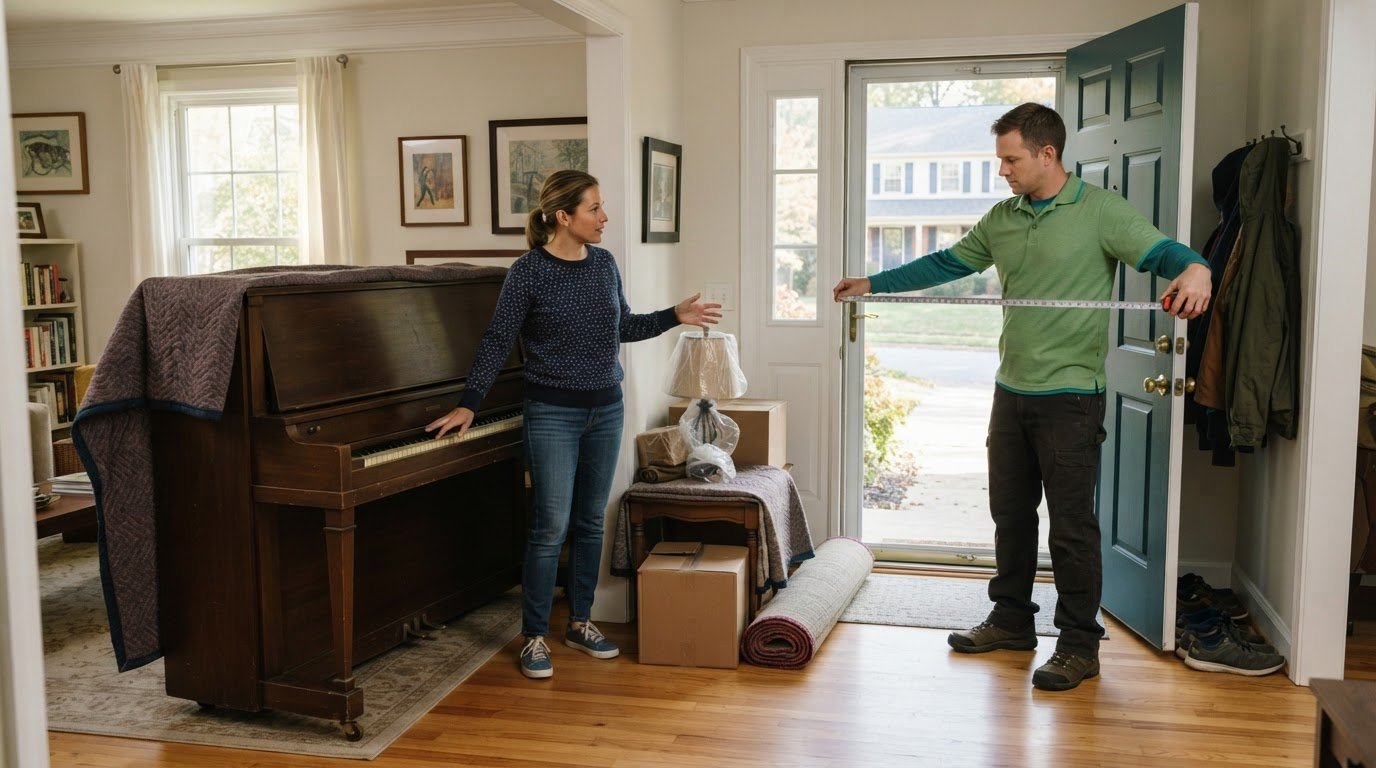
Measure doorways and staircases to determine whether the desk can move intact or needs sections separated. Record its height, width, and depth, then compare those measurements with the narrowest doorway, stair landing, and turn along the route. Allow space for hands and protective padding. A hallway’s width alone won’t show whether a tall desk can pivot around a tight landing.
Parking and permit needs depend on the pickup and delivery locations, especially if the moving vehicle must use a restricted curb or loading area. Plan where the vehicle can stand at both addresses and arrange any location-specific authorization required for that space. Don’t assume that a convenient parking setup at one address will work at the other.
To protect the desk from scratches and vibration, wrap delicate surfaces, cushion contact points, and secure each padded section against shifting. Keep the desk away from moisture and abrupt temperature changes during transit. Before moving day, arrange adequate insurance coverage for the antique; document its condition and review whether the coverage applies during the move.
Common packing and handling mistakes
Damage often starts when a desk is treated like a plain cabinet. A secretary desk may have a fold-down writing surface, small interior drawers, narrow supports, and glass mullions, and each part responds differently to pressure. Leaning a heavy item against it can strain joints or press against delicate trim. Keep other pieces separate, and don’t use the desk as a brace while loading.
Dragging is another costly mistake. Pulling a desk across a floor can twist its frame and stress weak joints, especially where the upper case meets the base. Dragging can also catch a foot or molding on a threshold. Instead, clear the route and lift from stable structural points. Avoid lifting by the drop-front, decorative crest, handles, or thin side trim.
Pressure from straps can loosen joints and damage intricate carvings. A strap tightened over a carved pilaster may leave dents, while pressure across a glass panel can strain its frame. Keep tie-downs away from fragile details and use them to secure the load, not squeeze the desk. Check the contact points after positioning it.
Rushing disassembly creates its own problems. For example, forcing a drawer that catches may damage its runners or pull. Removing hardware without keeping it with the matching section can slow reassembly and invite misplaced fittings. Move slowly, keep related components together, and don’t force a joint that resists. A desk built in different periods may use construction methods unlike modern flat-pack furniture.
Loose packing can let separate parts knock together in transit, but overly tight wrapping can press against carved edges or delicate fittings. Keep padding secure without compressing the details. Don’t leave a glass panel loose beside wooden sections, even if both appear padded. A bump can shift the panel against a hard edge.
Long-distance moves need reinforced protection because extended transit means more opportunity for bumps and vibration. A single blanket may not prevent movement inside a truck or crate. Secure the desk and its separate pieces so they can’t slide or strike other cargo. Keep glass upright when its construction calls for it, and mark fragile sections clearly for handling.
Before loading, look for a tilted base, a shifting panel, or padding that has slipped. Correct those problems before the vehicle moves. If the desk’s weight or narrow route makes controlled lifting difficult, get help with a delicate furniture move rather than dragging or improvising with straps.
Disassembling and wrapping fragile components
Begin by identifying which parts are designed to come off. A secretary desk may have a removable glass panel, loose shelves, interior drawers, or a separate upper section. Photograph the desk before disassembly, including the hardware and how each section meets. These records help show where the pieces belong during reassembly.
Empty drawers and cubbies first. Remove loose contents, then take out drawers that slide freely. Don’t force a stuck drawer or pry at trim. Place each drawer on a padded surface and keep its hardware with that specific part. If a shelf or upper section resists gentle movement, stop and reassess its joints before lifting.
Glass removal depends on how the panel is held. A panel secured by accessible clips or fasteners may be removable during careful disassembly. If it is cracked, loose in its frame, painted in, or held by aged material that must be disturbed, have a furniture conservator remove it rather than forcing the frame. A conservator can assess the glass and its mounting before the move.
For panels that can be removed safely, support the glass with both hands and keep it upright while moving it to a prepared, padded surface. Don’t lift it by a mullion or decorative edge. Wrap each glass panel separately in acid-free paper, then add cushioning around it. Keep wrapping material from pressing hard against delicate joints or carved details.
Protect small parts as carefully as large sections. Put screws, pulls, and brackets in a labeled container, and note which desk section each belongs to. Wrap moldings or detachable ornaments individually so they can’t rub together. Avoid newspaper because its ink can stain antique surfaces. Use clean materials that won’t mark the finish.
Label every wrapped section with its location and orientation, such as “upper interior, front” or “left glass panel.” Mark fragile parts clearly, and keep glass upright when its shape and packing allow. Store the desk’s pieces together in a dry, protected area while loading. Don’t stack heavy components on drawers, panels, or carved sections.
Before transport, check that each wrap stays in place and no component can slide inside its protective layer. Keep glass separate from wooden sections to prevent contact during bumps. At delivery, unpack the pieces on a padded surface and use your photographs to guide reassembly. Match each fitting to its original location, and don’t tighten hardware against fragile wood.
Wrap antique furniture first in acid-free paper, then in padding to help protect it during the move. Keep the paper against the surface and add padding without pressing on delicate edges or joints. Wrap fragile components individually, then secure their padding so separate pieces won’t rub together as they’re handled. Before moving each bundle, check that the padding stays in place and the component remains protected. Keep wrapped parts away from heavier pieces that could press against them.
Lifting and labeling practices
Lift the secretary desk from strong, stable points, not by its handles, drop-front, or carved trim. Those parts can shift or break under the desk’s weight. Support the base and solid frame sections, keeping the load balanced as it moves. If the desk has a separate upper cabinet, handle it as its own section rather than lifting through the joint between the pieces.
Before lifting, clear the route from the desk to the vehicle. Secure loose rugs, open doors fully, and check thresholds and turns for obstacles. Agree on clear signals to start, stop, and set the desk down. Move in small, controlled stages. If the desk tilts or someone loses a secure grip, pause and reset instead of twisting to recover.
Keep the desk upright when its shape and construction allow. A tilted cabinet can shift its weight and strain joints or fittings. Don’t drag it across the floor, even for a short distance: dragging can stress weak joints and catch feet on thresholds. Lift together, move steadily, and lower the base evenly onto a padded surface.
Labels should identify both the part and its orientation. Mark a wrapped section “upper cabinet, front” rather than simply “desk.” Use labels such as “left interior drawer” or “right glass panel” for separate pieces. Place each label where handlers can see it without turning or lifting the package. Keep matching hardware with its section in a labeled container.
Add a clear “fragile” label to glass and delicate trim, and mark pieces that must stay upright. Place labels on more than one visible side if a package may be turned during loading. Keep the wording readable through the outer padding, or attach it to a secure tag. Labels help guide handling, but cannot replace stable support and careful movement.
At the vehicle, position each section so it cannot slide or press against hard cargo. Keep heavy items away from the desk’s carved edges, glass, and thin supports. Check that straps secure the load without pressing into delicate surfaces. Once the desk is set down, inspect the frame and padding before removing labels or separating components for reassembly.
At delivery, use the labels to place each section in the right room and orientation before unpacking. Match “left” and “right” markings to the desk’s original layout, then remove padding without pulling against the trim. This keeps fragile parts organized and limits unnecessary handling. For a heavy cabinet or awkward route, a heavy lifting moving service can help with the carry and controlled set-down.
Professional movers and specialized equipment
Professional movers match equipment to the desk’s shape, weight distribution, and route. A glass-front secretary with a projecting cornice needs a different grip and clearance plan than a low writing desk. Assess the stable frame, removable sections, narrow turns, and loading path before deciding how to handle the piece. This helps prevent a dolly, strap, or ramp from pressing against fragile details.
For a tight hallway, controlled carrying may be safer than rolling the desk. A wheeled platform can help across a broad, level surface, but it must support the base evenly and remain steady at thresholds. Movers protect the route and position hands at strong frame points. They avoid pushing against the glass, drop-front, carved crest, or thin legs.
Protective equipment has a specific job. Padded covers shield the finish from contact, while secure supports help keep the desk from shifting during loading. Straps should hold the load without squeezing carved trim or glass frames. Separate the desk from hard cargo so a toolbox or another piece of furniture cannot strike its surface in transit.
Oversized or especially fragile antiques may need a custom wooden crate. A fitted crate helps reduce movement and contact with other cargo. It can suit a desk with delicate mullions, an unusual shape, or a glass section that cannot be removed safely. Crating requires planning because the packed dimensions and route still need to work at doorways and stair turns.
Transit conditions matter, too. Extended travel can expose furniture to repeated bumps and vibration, making reinforced protection useful for long-distance moves. Temperature swings and humidity can harm antique wood and finishes, so limit exposure during loading and unloading. Climate-controlled transport is a separate specialized option, not a substitute for secure packing and careful handling.
At delivery, movers place each section on a stable surface before removing its protection. They can use labels and photographs to guide placement and reassembly, keeping glass and wood components separate until their intended positions are ready. A final visual check can reveal shifted padding, loose fittings, or contact marks before the desk is returned to use.
If the desk’s weight, glass, or route makes the move difficult to manage, arrange professional furniture moving help for the heavy handling and careful transport.
Because custom crating and climate-controlled transport can add to the cost of moving antique furniture, include them as distinct choices when reviewing the move plan. The need for either option should be considered alongside the desk’s fragility, shape, and route, rather than assumed for every piece. Ask the movers to explain what each measure is intended to protect and how it fits the planned handling. This makes it easier to weigh the added cost against the protection approach already described. If a choice is not clear, request a cost breakdown and confirm which services are included before arranging the move.
Heavy Furniture Moving
Heavy Furniture Moving helps with the demanding lift when an antique secretary desk has delicate glass mullions. Turn to the team when the desk is too heavy to lift safely, the route includes tight turns, or its fragile sections make handling difficult. Professional moving help can support a controlled carry and set-down while keeping separate pieces organized for reassembly.
Share the desk’s size, the glass and removable sections, and any narrow doorways or stairs involved. That gives the move a clearer plan before lifting begins. Heavy Furniture Moving also offers local furniture moving and heavy lifting moving service for challenging household items. If you’d like help with your desk move, contact Heavy Furniture Moving to discuss the job.
Plan the move with care from the start
Moving a treasured desk is also a chance to plan how it will fit and function in its new room. Decide where it will stand before moving day, and make sure the drawers and writing surface will be easy to use there. A clear destination helps finish the move with the desk ready for its next chapter, not just safely delivered.
If you’re planning how to move an antique secretary desk with delicate glass mullions in Vienna, share the desk’s key features and the access details with the moving team. Heavy Furniture Moving supports household moves through services including Movers Near Me, Exercise Equipment Moving, and Sofa Hoisting. For practical help with your move, contact Heavy Furniture Moving. A thoughtful plan can help you move forward with confidence and keep your antique desk part of your home.
Frequently Asked Questions
How do professional movers disassemble and reassemble antiques?
Before separating removable parts, document how the antique fits together. Photograph joints, mark matching components, and keep each piece of hardware with its section. For example, keep a drawer pull and its screws together rather than putting them in a shared container. Use the records during reassembly to return parts to their original positions without forcing old fittings into misaligned holes.
What materials protect antique wood finishes during a move?
Use clean, nonabrasive materials that won’t transfer color or leave residue on the finish. Place acid-free paper against the surface, then add soft padding. Add corner protection where edges could meet a wall or another object. Keep adhesive off the wood: tape belongs on the wrapping, not on varnish, veneer, or painted decoration.
Frequently Asked Questions
Before separating removable parts, document how the antique fits together. Photograph joints, mark matching components, and keep each piece of hardware with its section. For example, keep a drawer pull and its screws together rather than putting them in a shared container. Use the records during reassembly to return parts to their original positions without forcing old fittings into misaligned holes.
Use clean, nonabrasive materials that won’t transfer color or leave residue on the finish. Place acid-free paper against the surface, then add soft padding. Add corner protection where edges could meet a wall or another object. Keep adhesive off the wood: tape belongs on the wrapping, not on varnish, veneer, or painted decoration.