How to Move a Multi-Stack Gym Into a Woodbridge Basement
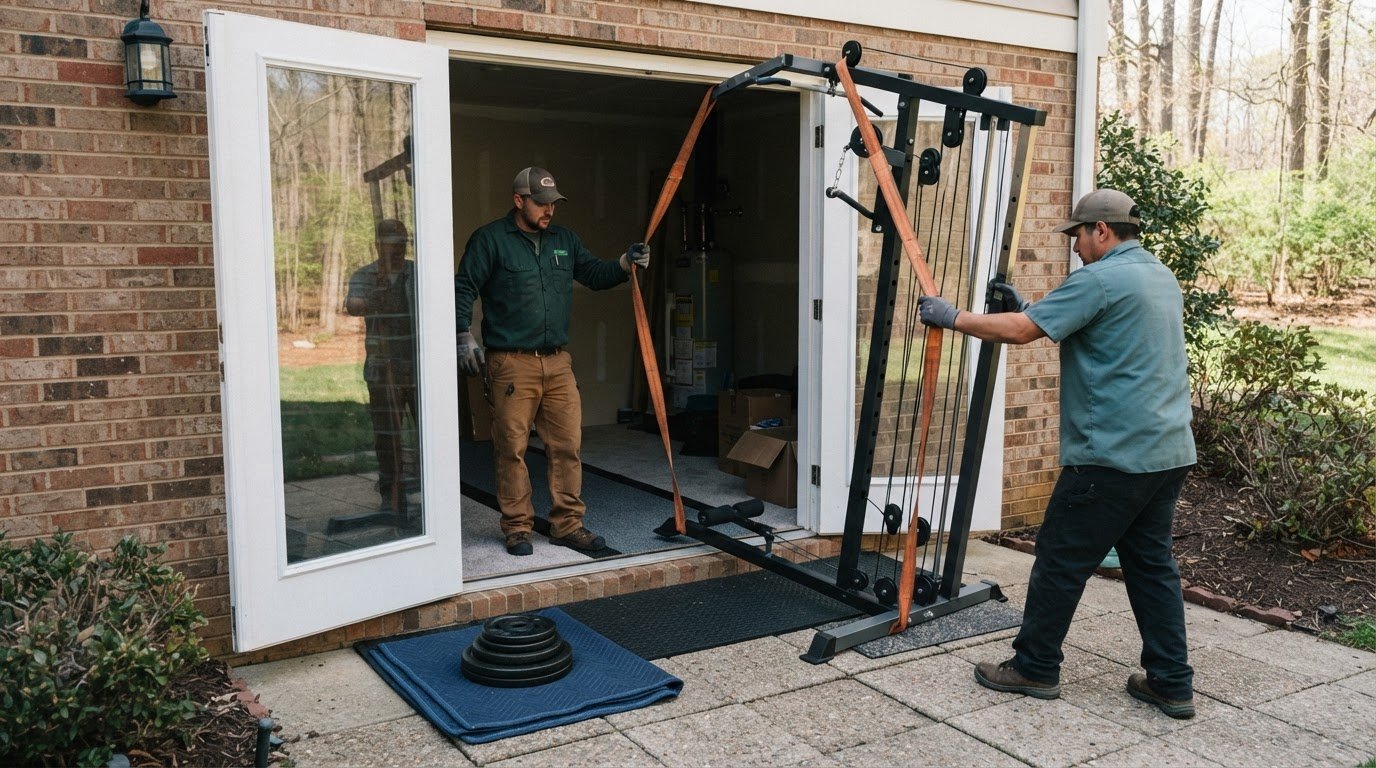
Moving a heavy multi-stack universal gym into a Woodbridge walkout basement is a demanding job, not a simple lift. A multi-station gym can involve 500 pounds of equipment, and taking one apart often takes two to four hours. The key is to break the move into manageable pieces and plan the basement route before anything is carried.
Moving a heavy multi-stack universal gym into a walkout basement in Woodbridge takes more than muscle. Tight turns, low clearances, and vulnerable floors can complicate the route, even with a walkout entrance. A careful plan helps protect the equipment and your home and keeps the move organized.
This guide explains how to prepare the gym for moving, measure doorways and the full path downstairs, and protect floors along the way. You’ll also learn how to plan timing and understand which details affect moving costs, so you can make a clear plan before moving day.
Key Takeaways
- Break down the gym into manageable components, and keep its cables organized as the frame comes apart.
- Measure tight turns and clearances along the entire route, not just the basement doorway.
- Plan how heavy pieces will be carried and secured before moving day to reduce strain and shifting.
- Build the schedule around disassembly, transport, and reassembly, with room for the route’s challenges.
- Estimate moving needs by considering the equipment, access, floor protection, and labor involved.
Moving cable machines, bench racks, free weights, and racks
For a Woodbridge walkout basement, plan around both the equipment and the access route. Use only access you’re allowed to use, and coordinate an open passage with anyone who shares it before moving begins.
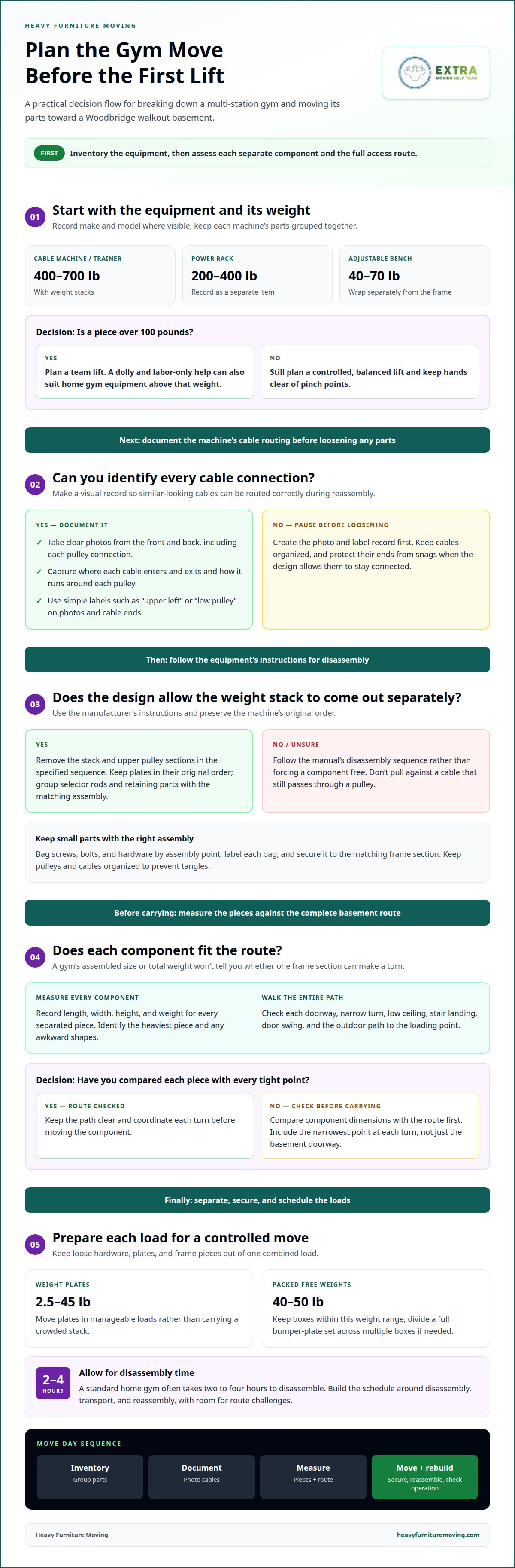
- Start with an equipment inventory, then separate items by type. A cable machine or functional trainer with weight stacks typically weighs 400-700 lb. A power rack commonly weighs 200-400 lb, while an adjustable bench typically weighs 40-70 lb. Record the make and model where visible, and keep each machine’s parts grouped together. This inventory helps identify what needs disassembly and which pieces require team lifting.
- Document the cable layout before loosening any machine parts. Take clear photos from the front and back, including each pulley connection. Capture where every cable enters and exits and how it runs around each pulley. Add simple labels, such as “upper left” or “low pulley,” to the matching photos and cable ends. These records make the original routing easier to follow during reassembly and help distinguish similar-looking cables.
- Remove weight stacks as separate components only when the equipment design allows it. Follow the manufacturer’s instructions and keep the plates in their original order. Bag screws, bolts, and small hardware by assembly point, label each bag, and secure it to the matching frame section. Keep pulleys and cables organized so loose parts don’t tangle. If the equipment has a different disassembly sequence, follow its manual rather than forcing a component free.
- Prepare the frame and bench rack for controlled lifting. Remove loose attachments, pins, and accessories, then secure movable parts so they don’t swing. Weight plates commonly range from 2.5-45 lb each, so move them in manageable loads rather than carrying a crowded stack. For equipment over 100 pounds, plan team lifting; a dolly and labor-only help can also suit home gym equipment above that weight. Keep hands clear of pinch points as sections move.
- Treat cardio machines as separate equipment, not as part of the cable station. Unplug powered machines and remove screens or consoles before disassembly. Lift racks, benches, and machine frames carefully, keeping each load balanced through turns. Don’t combine loose hardware, weight plates, and frame pieces in one load. Separating the components helps protect the equipment and keeps the route manageable.
Use only access you’re allowed to use, and coordinate an open passage with anyone who shares it before moving begins.
Moving multi-station gyms with weight stacks and pulleys
A disassembled gym has no standard size or weight. Both depend on the model and configuration. Professional fitness-equipment movers plan for separated components, controlled lifting, secure transport, and careful reassembly.
-
Record Disassembled Gym Dimensions and Weight
Measure and record every separated component, not just the assembled machine. Note its length, width, height, and weight, then identify the heaviest piece and any awkward shapes. The gym’s total weight won’t tell you whether an upper frame fits around a turn. Keep the measurements with the model details and compare each component with the basement route before carrying it.
-
Remove Weight Stacks and Upper Pulley Sections
Remove the weight stacks and upper pulley sections in the order specified in the machine’s instructions. Keep the plates in their original sequence and set aside selector rods and retaining parts with the matching assembly. Prevent a stack from shifting as it is released. Treat the upper section as a separate load, and don’t pull against a cable that still passes through a pulley.
-
Disassemble Multi-Station Gyms and Weight Machines
Break the frame into manageable sections by following the manufacturer’s sequence, rather than guessing which bolts hold each joint. A standard home gym often takes two to four hours to disassemble. Keep cables connected when the design allows, and protect their ends from snags. For a basement move, plan the lifting sequence, secure components for transport, then rebuild and check the machine’s operation.
- Wrap the weight bench separately from the machine frame. Secure adjustable sections so they can’t shift, and protect corners and contact points with moving blankets. Keep the bench’s pins and attachments together instead of setting them loose beside it. On basement turns, carry the bench in a position that gives a clear view of the next step and keeps the load balanced.
- Pack free weights by manageable load, not by convenience. Weight plates range from 2.5-45 lb each, and boxes should stay within 40 to 50 pounds. A full bumper-plate set can exceed 500 pounds, so divide plates across multiple boxes. Keep heavy loads low and secure every piece against movement in transport. For help with awkward equipment and heavy lifting, exercise equipment moving support can fit the job.
Planning the move-out path and measuring doorways and stairwells
Map the route from the gym to the walkout entrance, including every doorway, turn, and stair landing. Basement stairs raise the risk of dropped equipment, strain, and wall damage. Reduce those risks by moving manageable sections, keeping the path clear, and coordinating each turn.
Plan the Move-Out Path
Walk the full route before moving the first machine section. Mark tight turns, low ceilings, stair landings, and door swings that could block a long frame. Include the outdoor path from the walkout basement to the loading point. Move furniture and loose items out of the way, then choose safe places to pause each component without blocking the next load.
Measure Doorways and Stairwells
Measure every opening and the narrowest point at each turn, then compare those dimensions with the disassembled components. Include stair width, landing depth, handrails, and overhead clearance. A commercial-style power rack can be six to seven feet wide when assembled, so confirm it can be broken down before planning the route. Doorway width alone isn’t enough.
Reduce Risks on Basement Stairs
Separate heavy machine sections before approaching the stairs, and assign clear roles to everyone guiding each load. Keep hands and feet away from beneath the frame, and pause if the load blocks the carrier’s view. Blankets can protect nearby walls, but they must not cover steps or create a slippery surface. Move one component at a time.
- Sketch the route from the home gym to the walkout exit. Mark each door, stair turn, landing, and point where a component must change direction.
- Measure each disassembled piece at its widest and tallest points. Compare these measurements with the tightest doorway and stairwell clearance, including protruding rails or handles.
- Clear the route before lifting begins. Move furniture, ellipticals, and loose equipment away from doorways, and remove cords and small items from the floor.
- Choose a stopping point before each difficult turn. Use a spotter to guide the leading edge, keep the load controlled, and don’t rush down the stairs to save time.
For a treadmill, use at least two people and an appliance dolly with a strap. A third person adds meaningful safety on stairs. Move patiently and avoid taking on too much at once.
Protecting floors and planning the moving path
Protect the route before moving heavy items. Plan separate paths for equipment and loose weights, then cover vulnerable floors and walls.
- Clear the route from the gym to the walkout exit, including turns and landings. Remove small furniture and anything that could catch a dolly or moving blanket. Leave enough room to carry each piece without scraping walls. Choose a safe place for loads to pause and keep it clear throughout the move. A clear route helps prevent last-minute shifts that can damage flooring.
- Cover floor sections where equipment will roll or rest. Lay plywood sheets or furniture pads along the route, especially over finished floors and at tight turns. A standard rubber stall mat measuring 4 by 6 feet and three-quarters of an inch thick weighs about 100 pounds, so don’t assume heavy gym mats are easy to reposition. Secure protective material flat so it won’t bunch beneath a dolly or someone’s feet.
- Protect walls and corners where long frames need to pivot. Pad exposed edges and door frames, and keep the protection in place as each load passes. A machine section can swing outward during a turn, even when its carriers move slowly. Check the entire turn before lifting, and change the approach rather than forcing a tight fit against a wall.
- Move free weights as separate loads from the machine frame. Keep dumbbells and plates low, stable, and grouped so they can’t roll into the route. Keep heavy dumbbells and plates low on the truck floor, where they can be secured. Stack boxes of free weights no more than two high, and position them so the load stays secure during transport.
- Secure equipment before the truck moves. Use at least two ratchet straps across the load, and blanket each machine piece to limit rubbing and shifting. Load bars that clip into the truck sides can help keep plates and dumbbells from sliding toward the rear door. Keep every strap snug and loose weights secured so they can’t move when the truck turns or stops.
- Account for protective materials as part of the load. Twelve standard rubber stall mats can weigh 1,200 pounds in total, so plan their handling separately from the gym frame. Don’t place them where they block access to straps or other equipment. Before departure, check that the floor coverings, blankets, and loose pieces are gathered and secured, not left across the basement path.
Moving costs, timeline, and budget planning
Plan the schedule and budget around the equipment list, disassembly, access route, transport, and reassembly. Set aside at least a full day for a standard home gym move.
- List everything to move, including the multi-stack machine, benches, free weights, and any treadmill or other exercise equipment. Note which pieces need disassembly and which can move intact. This inventory clarifies the work and helps prevent small items from disappearing into a general estimate. Include the basement stairs and walkout access in the same plan, since carrying pieces through a tight route takes different handling from moving them across an open floor.
- Build the schedule around the full sequence, not just the time spent carrying equipment. Allow time for preparation, disassembly, loading, transport, unloading, and reassembly. Set aside at least a full day for a standard home gym move, then account for the specific access conditions. A narrow landing, multiple turns, or a long distance from the walkout exit to the vehicle can affect how the day is organized.
- Before requesting a quote, note the main cost factors: the quantity and size of the equipment, disassembly and reassembly, route difficulty, stairs, transport distance, and any additional heavy items. The quote is based on the specific job. This ties the estimate to the actual equipment and access needs instead of an unrelated general average.
- Set aside a contingency for unexpected needs. Add a 10% reserve to the moving budget, then keep it available for route changes, extra protection, or additional handling. For example, discovering that a bench must be disassembled to clear a basement turn could change the work plan. Keep this reserve separate from the expected moving costs so the planned budget remains easy to track.
- Prepare a concise move summary before arranging the work. Include the equipment list, the disassembled machine dimensions, the basement access details, and whether the move includes a treadmill, benches, or loose weights. A clear summary helps match the plan to the actual job. For help with the heavy equipment and its transport, request a quote for exercise equipment moving and include those details.
Heavy Furniture Moving
Heavy Furniture Moving helps Woodbridge homeowners move bulky exercise equipment when weight stacks, awkward frames, or basement access make the job difficult. Exercise Equipment Moving and local moving help can support the move from planning the handling approach to getting the equipment into its new space. Share the machine’s model, its disassembled dimensions, and details about the walkout route so the work can be considered around the actual load and access. This is especially useful when the route includes narrow turns, basement stairs, or several heavy pieces that need coordinated handling. For a lighter move, you may only need help with the most demanding lifting. Contact Heavy Furniture Moving to discuss your Woodbridge gym move.
Get Your Basement Gym Move Underway
Planning to move a heavy multi-stack universal gym into a walkout basement in Woodbridge? Turn your route measurements and equipment notes into a clear moving plan. That gives the crew a practical starting point for handling the pieces and getting them where they belong.
Heavy Furniture Moving offers Movers Near Me, Exercise Equipment Moving, and Sofa Hoisting. For this job, its exercise equipment service is suited to bulky gym equipment; the other services help with different heavy or awkward household moves. Share the equipment details and basement access information when you reach out.
Contact Heavy Furniture Moving to discuss your move and the help you need. A well-planned next step can make the work ahead feel more manageable.
Frequently Asked Questions
Is it hard to move a home gym?
It can be challenging, especially when the equipment has a large frame, moving parts, and a narrow basement route. The difficulty isn’t just lifting: components can shift, catch on corners, or become hard to control during turns. First, determine whether the gym can be divided into manageable sections. Plan separately for loose accessories and attachment pins so they aren’t misplaced.
Should I hire movers for a home gym, or can I do it myself?
For a multi-stack gym going downstairs, professional movers can help if you lack suitable assistance or experience handling awkward loads. A DIY move may work for small, light accessories, but a large machine requires coordinated carrying and controlled turns. Consider the equipment, stair layout, and whether you can manage the job without rushing or losing control of a component.
How much does it cost to move a heavy multi-stack universal gym into a basement?
The price to move a heavy multi-stack universal gym into a walkout basement in Woodbridge depends on the equipment and work involved. Key factors include disassembly, basement access, transport distance, and other heavy items. Heavy Furniture Moving provides a quote for the specific job. Describe the equipment and route clearly so the estimate reflects your move rather than a general moving cost.
Can a multi-stack universal gym fit through standard doors, stairways, and a walkout basement entrance?
Whether a heavy multi-stack universal gym fits through a Woodbridge walkout basement route depends on the separated components and the tightest clearance. “Standard” door dimensions alone don’t settle the question. Check the narrowest opening and every turn around landings or railings. A walkout entrance may simplify basement access, but it won’t solve a tight interior doorway or stair turn.
How do you safely disassemble and reassemble a multi-stack universal gym for moving?
Follow the machine’s model-specific instructions and keep parts organized by assembly point. Don’t alter cable connections or pulley positions just to make a section easier to carry. During reassembly, follow the documented layout and check that moving parts travel smoothly before anyone uses the machine. If instructions are missing or a cable route is unclear, don’t guess; use experienced equipment movers.
What equipment and number of movers are needed to move a heavy universal gym?
The setup depends on component sizes, the total load, and the stair route, so one crew size won’t suit every home gym. The plan may require lifting equipment suited to the load, protective coverings, and restraints for transport. Movers need clear roles for carrying, guiding turns, and keeping the path open. Explain the landings, tight corners, and walkout exit when describing the job.
What do fitness equipment movers charge in Woodbridge, Virginia?
The cost in Woodbridge depends on the equipment, access, disassembly needs, and transport arrangements. Heavy Furniture Moving quotes based on the specific job, not a general price for every gym. Explain whether the job includes only the multi-stack machine or other exercise equipment too. Describe the basement route so the quote reflects the actual handling and access involved.
Which local moving companies in Woodbridge, Virginia move heavy exercise equipment?
Heavy Furniture Moving offers Movers Near Me and Exercise Equipment Moving for heavy household equipment. Its service area includes Woodbridge and nearby communities such as Fairfax, Manassas, Manassas Park, Aldie, Ashburn, McLean, Vienna, Reston, Centreville, Chantilly, Clifton, Dumfries, South Riding, Fairfax Station, Haymarket, and Gainesville. Wrap, blankets, and straps are included on every job. Share the equipment and access details to discuss your move.
Frequently Asked Questions
It can be challenging, especially when the equipment has a large frame, moving parts, and a narrow basement route. The difficulty isn’t just lifting: components can shift, catch on corners, or become hard to control during turns. First, determine whether the gym can be divided into manageable sections. Plan separately for loose accessories and attachment pins so they aren’t misplaced.
For a multi-stack gym going downstairs, professional movers can help if you lack suitable assistance or experience handling awkward loads. A DIY move may work for small, light accessories, but a large machine requires coordinated carrying and controlled turns. Consider the equipment, stair layout, and whether you can manage the job without rushing or losing control of a component.
The price to move a heavy multi-stack universal gym into a walkout basement in Woodbridge depends on the equipment and work involved. Key factors include disassembly, basement access, transport distance, and other heavy items. Heavy Furniture Moving provides a quote for the specific job. Describe the equipment and route clearly so the estimate reflects your move rather than a general moving cost.
Whether a heavy multi-stack universal gym fits through a Woodbridge walkout basement route depends on the separated components and the tightest clearance. “Standard” door dimensions alone don’t settle the question. Check the narrowest opening and every turn around landings or railings. A walkout entrance may simplify basement access, but it won’t solve a tight interior doorway or stair turn.
Follow the machine’s model-specific instructions and keep parts organized by assembly point. Don’t alter cable connections or pulley positions just to make a section easier to carry. During reassembly, follow the documented layout and check that moving parts travel smoothly before anyone uses the machine. If instructions are missing or a cable route is unclear, don’t guess; use experienced equipment movers.
The setup depends on component sizes, the total load, and the stair route, so one crew size won’t suit every home gym. The plan may require lifting equipment suited to the load, protective coverings, and restraints for transport. Movers need clear roles for carrying, guiding turns, and keeping the path open. Explain the landings, tight corners, and walkout exit when describing the job.
The cost in Woodbridge depends on the equipment, access, disassembly needs, and transport arrangements. Heavy Furniture Moving quotes based on the specific job, not a general price for every gym. Explain whether the job includes only the multi-stack machine or other exercise equipment too. Describe the basement route so the quote reflects the actual handling and access involved.
Heavy Furniture Moving offers Movers Near Me and Exercise Equipment Moving for heavy household equipment. Its service area includes Woodbridge and nearby communities such as Fairfax, Manassas, Manassas Park, Aldie, Ashburn, McLean, Vienna, Reston, Centreville, Chantilly, Clifton, Dumfries, South Riding, Fairfax Station, Haymarket, and Gainesville. Wrap, blankets, and straps are included on every job. Share the equipment and access details to discuss your move.