How to Move a Heavy Upright Piano Across Ashburn Hardwood Floors Without Marks
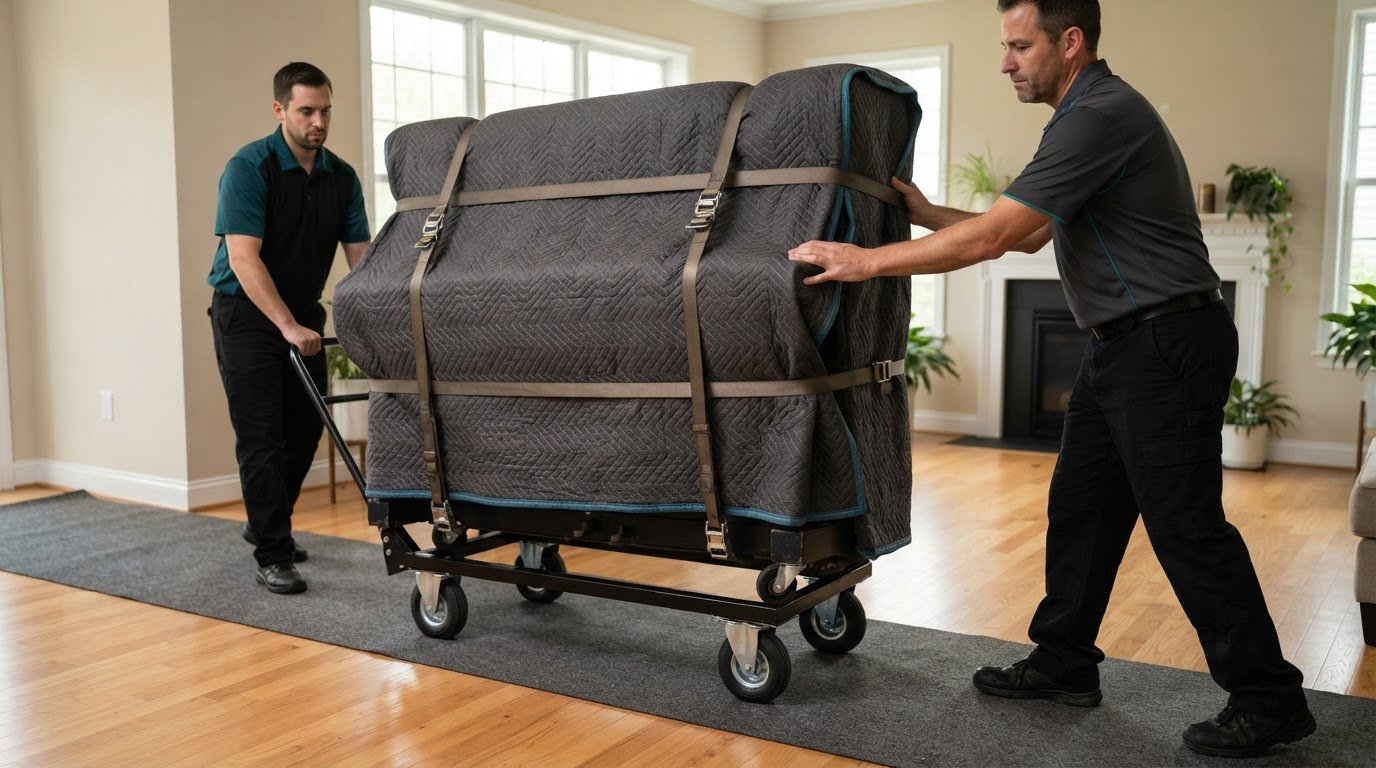
A piano’s own wheels are not the safe way to roll it across hardwood. Moving a heavy upright piano across hardwood floors without marks in Ashburn means protecting the floor with moving blankets, using a rubber-wheel piano dolly, and keeping the instrument steady as it travels. Household pianos commonly weigh 400-600 pounds, so even a short move calls for care.
It’s reasonable to worry about scratches, dents, and damage to a piano’s finish. A clear route and the right protective setup can reduce those risks. This guide explains how to prepare the piano and floor, use blankets and straps, choose an experienced mover, and take extra care around corners or stairs. You’ll also learn why a piano dolly is preferable to the instrument’s small built-in wheels, which can mark hardwood.
Key Takeaways
- Choose a mover with experience handling pianos and a clear plan for navigating your home’s route.
- Use thick moving blankets and secure straps to shield the piano’s finish and help prevent scrapes.
- Learn why a rubber-wheel piano dolly is a safer choice than relying on the piano’s small built-in wheels.
- Plan around corners, turns, and stairs to reduce the chance of floor damage or a loss of control.
- Use caster cups with felt bottoms to help protect hardwood once the piano is in place.
Choosing an experienced piano mover
When choosing piano movers in Ashburn, look for a local team with piano-moving experience and ask to see current licensing and insurance documentation. Paperwork alone doesn’t show how a crew will protect hardwood or control an upright piano, so ask how they measure the route and protect floors before lifting.
- Match the mover’s experience to the route. A straightforward upright move differs from a piano move involving tight turns, stairs, or a raised exit. Household pianos commonly weigh 400-600 pounds, so the team needs a plan for controlling the instrument throughout the route. For a home with challenging stairs, prioritize movers experienced with piano handling over a general moving crew without a clear piano plan.
- Look for a specific protection plan. A capable mover should have a clear approach for wrapping the piano, securing it, and keeping its finish away from walls and doorframes. The plan should also explain how the hardwood route will be protected. For example, a crew can map the path from the piano’s room to the exit before moving begins, spotting corners and obstacles that could cause contact or force a sudden turn.
- Confirm the equipment fits the job. A piano-specific dolly is one sign that the mover has considered the instrument’s weight and shape. The piano’s small built-in wheels aren’t a substitute for proper moving equipment across a room or hallway. Choose a team whose equipment plan accounts for the entire route, including narrow passages and the transition at the doorway.
- Assess the crew’s lifting plan. Moving an upright safely takes coordination, not just strength. The movers should know who is guiding the route, who is controlling the piano, and how the team will respond if the path changes. A 600-pound piano over two stairs can be especially difficult without a ramp, so stairs call for careful planning before the lift starts.
- Share the move details early. Give the moving team the piano’s location, the destination, and a clear description of the route. Include stairs, tight corners, uneven thresholds, and the distance to the exit. For example, a piano moving from an upstairs room faces a different handling challenge than one traveling across an open ground-floor room. Early details help the crew plan equipment, staffing, and safe movement before arrival.
Protecting piano finishes with blankets and straps
Homeowners insurance coverage for damage during a piano move depends on your policy and the circumstances. Don’t assume it covers every scratch, dent, or damaged finish.
- Clear and cover the hardwood route. Lay moving pads or blankets flat along the piano’s full path, from its starting place to the destination. Overlap edges so exposed strips of hardwood don’t catch a wheel or foot. Smooth folds before moving; a bunched blanket can create an uneven surface or trip hazard. Keep the route clear of loose rugs, toys, and furniture, especially near doorways where the crew needs room to turn.
- Wrap the upright before handling it. Cover the piano with thick moving blankets, including exposed corners and edges that could brush a doorframe or wall. Keep the fabric between the finish and nearby surfaces throughout the move. For example, when passing a narrow hallway, a blanket should remain secured over the side facing the wall, not shift aside during the turn. Protect the instrument before it leaves its room.
- Secure the blankets with snug straps. Cinch straps firmly enough to hold the padding in place, but arrange them so they don’t press directly against exposed finished surfaces. Check that buckles and loose strap ends won’t scrape the piano or snag a doorway. A strap that slides during a turn can leave part of the case uncovered just when the piano passes close to a wall.
- Keep floor coverings stable. Before the piano moves, inspect each blanket for curled corners, gaps, or wrinkles. At a doorway, position the padding so the transition stays covered while the instrument crosses it. Pause and reset a shifted pad rather than dragging it under the piano. Watch the route as the crew moves, since a blanket that was flat at the start can shift under foot traffic.
- Recheck protection at every tight turn. Stop before a narrow corner or doorway and make sure the piano’s padding still covers the contact points. Adjust blankets and straps before continuing if they have moved. A controlled pause helps prevent a bare edge from rubbing against a doorjamb. Once the upright reaches its destination, lift away the padding carefully instead of pulling it across the finish.
For a piano move that needs careful handling and floor protection, heavy lifting moving service can help with the demanding work.
Using a rubber-wheel piano dolly
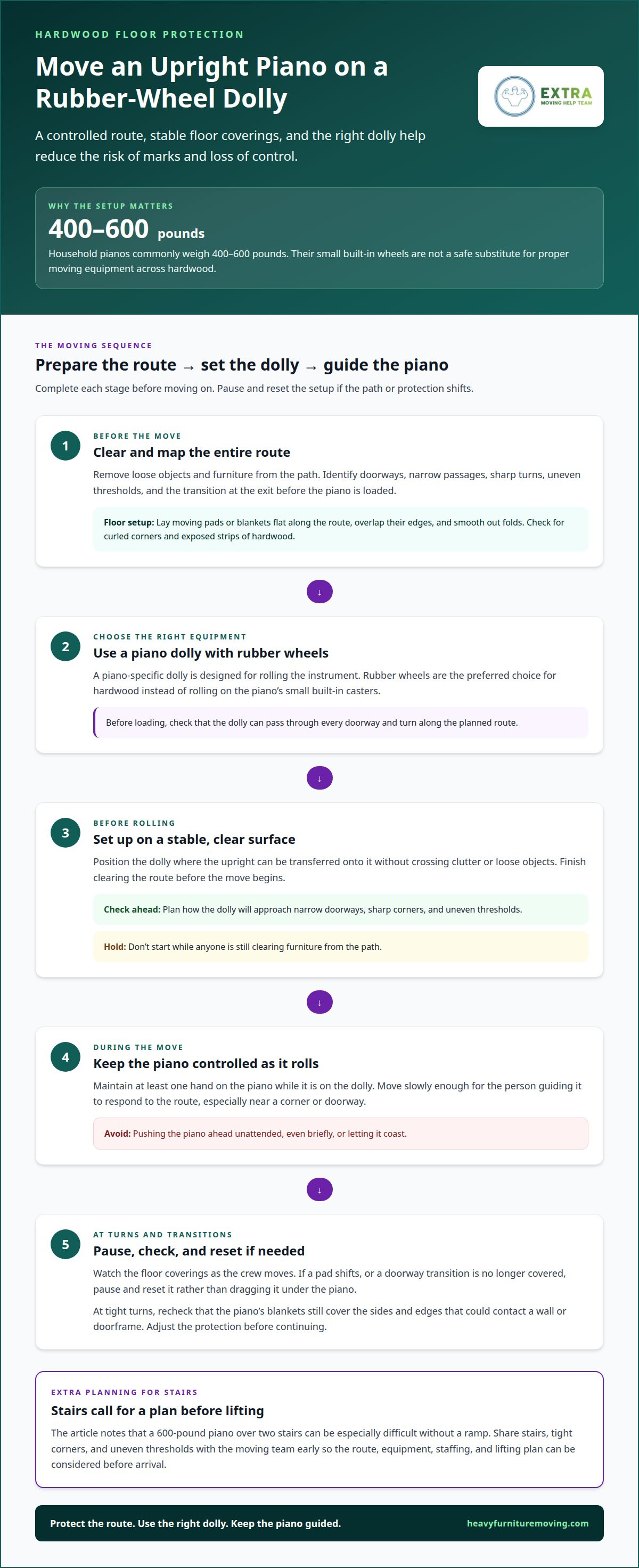
- Choose the dolly for the floor and route. Use a piano dolly with rubber wheels instead of relying on the piano’s small built-in wheels. The dolly gives movers a tool designed to roll the instrument across floors. Rubber wheels are the preferred choice for hardwood because they avoid direct rolling on the piano’s small casters. Before loading, make sure the route is clear and the dolly can pass through each doorway and turn.
- Set up on a stable, clear surface. Position the dolly where the upright can be transferred onto it without crossing clutter or loose objects. Clear the route to the next room before moving begins. A narrow doorway, a sharp corner, or an uneven threshold can interrupt a smooth roll, so plan how the dolly will approach each one. Don’t start moving while anyone is still clearing furniture from the path.
- Keep the piano controlled as it rolls. Maintain at least one hand on the piano while it is on the dolly. This helps reduce the risk of tipping or rolling away. Move slowly enough for the person guiding the instrument to respond to the route, especially near a corner or doorway. Avoid pushing the piano ahead unattended, even briefly, or letting it coast across the hardwood.
- Guide turns instead of forcing them. Approach each turn with the piano and dolly aligned to the available space. Pause if the wheels are not facing the direction of travel, then reposition before continuing. For example, at a hallway corner, guide the instrument around in controlled movements rather than pivoting it abruptly. Keep hands on the piano as the dolly changes direction, and make sure the wheels stay on the planned path.
- Stop before stairs or changes in level. A standard floor dolly is for moving across floors, not a reason to roll an upright down steps. A 600-pound piano over two stairs can be very difficult without a ramp. Stop before reaching stairs, a raised threshold, or another level change. The crew should reassess the route and handling plan before proceeding, rather than forcing the dolly over an edge.
- Settle the piano carefully at its destination. Bring the dolly to a controlled stop in the prepared room. Keep the instrument steady while the crew transfers it off the dolly, then move the dolly away without scraping the floor or piano case. Once the upright is in place, avoid rolling it across the room on its built-in wheels. A dolly works best as part of a deliberate move from the starting point to the intended position.
How piano wheels can dent or mark floors
- Recognize how little surface meets the floor. Piano casters are typically 1 or 2 inches in size. Their small contact area concentrates the instrument’s weight instead of spreading it across a broad surface. On hardwood, that pressure can crush wood fibers and leave dents or roller marks. A caster can cause damage even when the piano looks steady and the floor appears clean.
- Don’t assume a short roll is harmless. Even a 6-inch move on piano wheels can leave marks if care is not taken. That short distance might seem safe when shifting an upright to reach a wall or clean behind it. But the small wheels still press into the same narrow floor tracks as they roll. Avoid using the casters for room-to-room moves.
- Look for existing caster marks before moving. Inspect the hardwood beneath and around each piano wheel. A dent or line can reveal where the caster has pressed or rolled before. For example, check the floor where the piano meets a wall, then compare it with the intended route. This inspection helps identify vulnerable spots before the wheels travel across additional boards.
- Keep the upright from rolling on its own casters. Don’t push or pull the piano across hardwood using its built-in wheels. Small movements can still create pressure tracks, especially when the instrument changes direction. If the piano needs to travel farther than a few inches, stop and arrange a suitable moving method rather than testing the floor with a trial roll.
- Watch for marks after any necessary repositioning. Once the piano has been moved, inspect the path at floor level. Look for dents, dark streaks, or parallel roller marks where the casters traveled. Piano-wheel marks can be difficult or impossible to remove because the pressure may crush wood fibers, not merely leave loose dirt on the surface.
- Separate storage protection from moving protection. When the piano is in its final position, caster cups with felt bottoms can separate its feet from hardwood and help protect the floor. These cups are for the piano at rest, not a way to roll it between rooms. Set them under the feet only after the instrument reaches its intended location.
- Choose the route before moving the instrument. Mark the piano’s start and destination, then plan a path that avoids unnecessary rolling and sharp changes in direction. A direct route reduces the chance that someone will try to reposition the upright on its small casters. For a piano near a wall, leave it in place until the proper moving equipment and floor protection are ready.
Moving upright pianos
To move a heavy upright piano across hardwood floors without marks in Ashburn, plan the route and handling before lifting. Furniture sliders aren’t a dependable choice for moving a piano across hardwood.
Move an Upright Piano
- Start with the route. Measure the practical path through rooms and doorways, then remove obstacles before the move begins. Choose the route with the fewest corners, turns, and stairs. A clear path reduces abrupt pivots and prevents the crew from stopping with the piano balanced in a tight space.
- Plan for the piano’s weight. Household pianos commonly weigh 400-600 pounds. Don’t treat an upright like a dresser that can be tilted or pushed by one person. Keep the instrument controlled, and use a suitable piano dolly for floor travel rather than its small built-in casters.
- Handle stairs as a separate challenge. A 600-pound piano over two stairs can be very difficult without a ramp. Don’t roll a dolly toward steps or try to force the piano across a level change. Stop beforehand and reassess the route and handling plan.
- Set the piano down deliberately. Guide it to its intended spot, then keep it steady while removing moving equipment. After placement, caster cups with felt bottoms can separate the piano’s feet from hardwood. Avoid using its casters to make repeated adjustments across the floor.
Consider Furniture Sliders on Hardwood
- Don’t rely on standard furniture sliders for the move. If you're moving a heavy upright piano across hardwood floors without marks in Ashburn, skip standard sliders. A piano’s weight and upright shape make control essential, while sliders aren’t the recommended method here. They can shift or move unevenly as the piano changes direction, making it harder to keep the instrument steady.
- Choose a piano dolly instead. Use a suitable dolly with rubber wheels for rolling across the floor. Keep the instrument controlled as it moves, and stop before stairs or a change in level. Don’t combine sliders with the piano’s built-in wheels as a shortcut across hardwood.
- Reserve felt-bottomed cups for the final position. Caster cups with felt bottoms help separate piano feet from hardwood once the instrument is in place. They protect the floor under a stationary piano; they aren’t moving sliders. Set the piano down carefully before positioning the cups beneath its feet.
- Keep the route and floor protection ready. Clear corners and thresholds before moving, and lay protective pads flat along the path. Don’t drag a slider, cup, or loose floor covering beneath a loaded piano. Pause and reset the setup if the route becomes obstructed.
For help with the demanding lift, arrange heavy lifting help for your piano move.
Heavy Furniture Moving
Heavy Furniture Moving helps with demanding residential moves, including careful piano handling on hardwood floors. Turn to the team when lifting, navigating the route, or positioning the instrument feels difficult to manage alone. Its heavy-item moving service and Movers Near Me offering provide practical help with bulky household items. Share the piano’s location and destination, along with any stairs, tight turns, or floor concerns, so the crew can plan for the home’s layout and protect the route. If you’re planning a heavy-item move in Ashburn, contact Heavy Furniture Moving to discuss the help you need.
Plan the Piano’s Place in Your Home
Choose the piano’s destination before the move. Consider how you use the room, where people need to walk, and which furniture arrangements should stay undisturbed. A piano set up for practice, for example, may need a different location from one placed to complement a shared living area. Planning ahead makes its arrival part of the room’s layout rather than a last-minute decision.
For moving a heavy upright piano across hardwood floors without marks in Ashburn, start by sharing your preferred placement and the room’s purpose. Those details help shape a plan for your home. Heavy Furniture Moving handles demanding household moves and heavy items. Explain what matters most so the crew can plan the move around your goals.
Ready to talk through your piano move? Contact Heavy Furniture Moving and take the next step with confidence.
Frequently Asked Questions
What equipment is needed to move a heavy upright piano across hardwood floors?
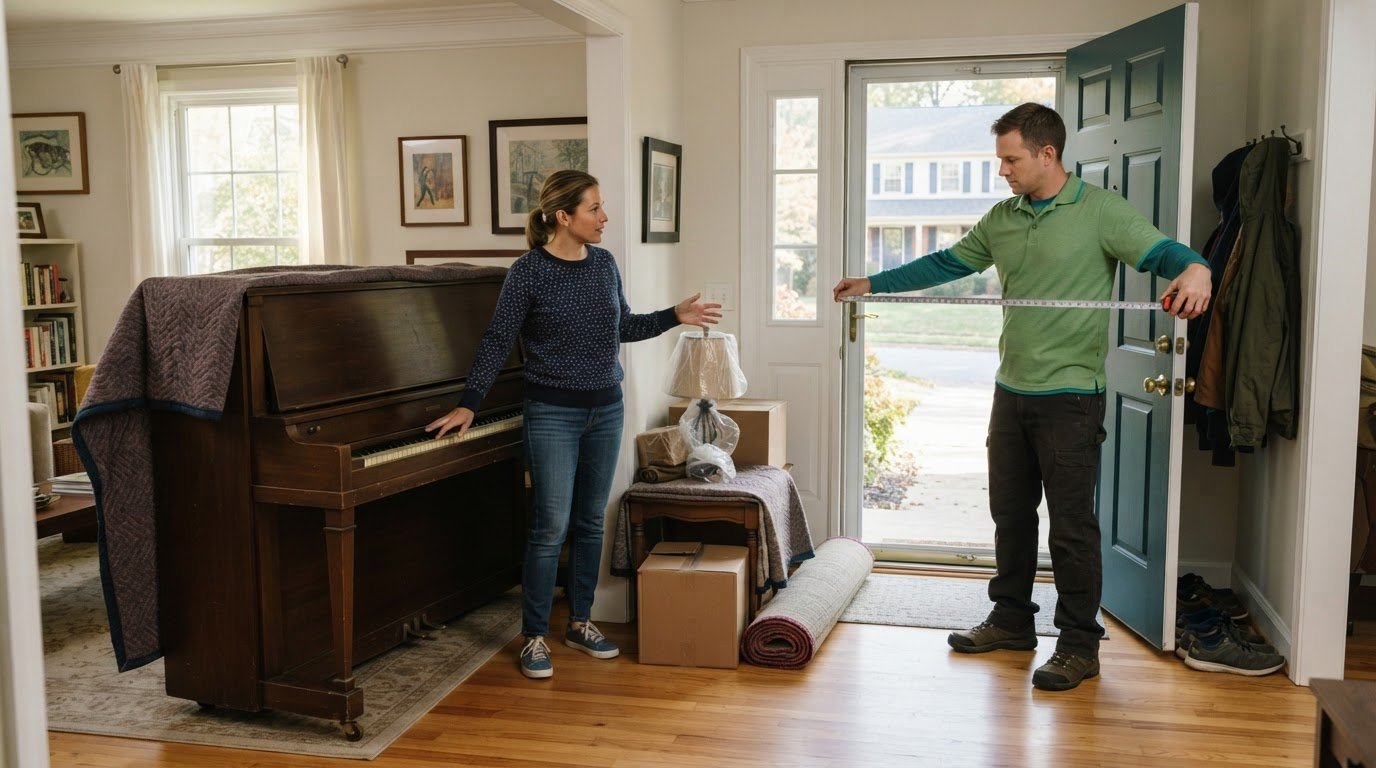
Use a piano dolly with rubber wheels, a piano board for controlled handling, and protective materials for the instrument and route. Moving blankets and ratchet straps help secure the upright, while floor runners and doorway covers protect vulnerable surfaces. Clear the path before loading. For an awkward doorway, measure the piano and opening first, then plan the approach rather than forcing the instrument through.
How can I protect hardwood floors from scratches and dents when moving a piano?
Remove grit and loose objects from the route, then cover it with stable floor protection. Small debris under a wheel or moving pad can scratch hardwood, so inspect the surface before moving the piano. Pay particular attention to thresholds and corners, where coverings can shift. Afterward, check the route and the piano’s final position before removing the protection.
What are the safest steps for moving an upright piano across a room?
Clear the route and decide where the piano will stop. Coordinate the crew’s movements, designate one person to guide the path, and use suitable piano-moving equipment. Move slowly and pause before tight turns or thresholds. If a chair blocks the hallway, stop and remove it rather than steering around it with the piano in motion. Set the instrument down only when the team is ready.
How many people are needed to move an upright piano safely?
The crew needed depends on the piano and the route, including stairs, turns, and doorway clearance. For upright piano moves, Heavy Furniture Moving uses three movers and a piano board. A difficult route still requires advance planning so the crew can account for obstacles and level changes before lifting.
What are the risks of moving an upright piano without professional movers?
Without an experienced crew and suitable equipment, a piano can shift, strike a wall or doorframe, or leave dents and roller marks on hardwood. Tight corners and stairs make it harder to keep the instrument under control. A DIY move can also expose the finish to nearby surfaces. Avoid improvising with small casters or unplanned lifting.
How do piano moving companies in Ashburn protect floors and doorways?
Heavy Furniture Moving serves Ashburn and protects floors and corners with runners, masonite, and door-jamb covers. Before lifting, the crew measures doorways, stairs, and the piano, then uses shrink film, moving blankets, and ratchet straps. Wrap, blankets, and straps are included on every job. This preparation helps the crew plan how the piano will pass through entryways and hallways.