How to Move a Heavy Butcher Block Island Without Floor Marks
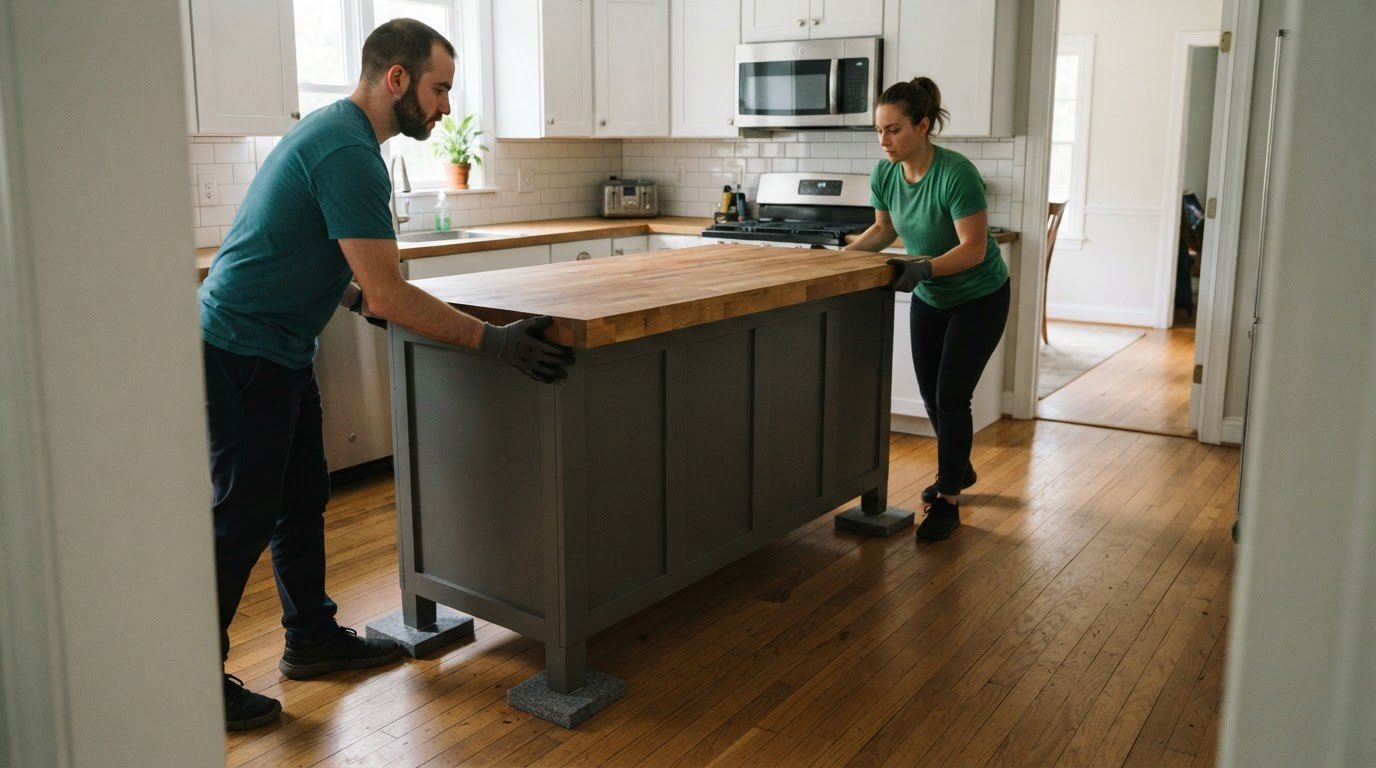
A heavy butcher block island can cross hardwood without wheel marks when you keep its weight on clean, floor-appropriate sliders or a stable dolly on a level route. If you’re figuring out how to move a heavy butcher block island across hardwood without wheel marks in Manassas Park, clear and clean the path first. Then move the island steadily, without twisting it on planted legs.
It makes sense to worry about scratches, dents, and losing control of a top-heavy island. The good news: careful preparation makes the move more manageable and helps protect the floor. The right equipment matters, but so does checking the island’s base, removing anything that adds weight, and having enough help to guide the load.
This guide walks you through choosing floor-appropriate sliders, preparing a clear route, recruiting helpers, and protecting hardwood and other flooring. You’ll also learn when a dolly is a better fit and when the move is too demanding to handle safely on your own.
Key Takeaways
- Choose clean, felt-backed sliders for hardwood; hard-plastic sliders are designed for carpet.
- Clear and clean the route, then remove loose contents or parts that add weight and make the island harder to control.
- Use suitable rigid floor protection on vulnerable areas, and keep ordinary adhesive tape off finished hardwood.
- Check sliders and dolly wheels for grit or debris as you move, and avoid twisting the island while its legs are planted.
- If the island is too heavy for safe handling with your available help, use professional moving support rather than forcing the lift.
Choosing furniture sliders for different floor types
Match each slider to the floor beneath the island. Clean contact surfaces and a level route help keep the move controlled.
-
Match Sliders to the Floor Type
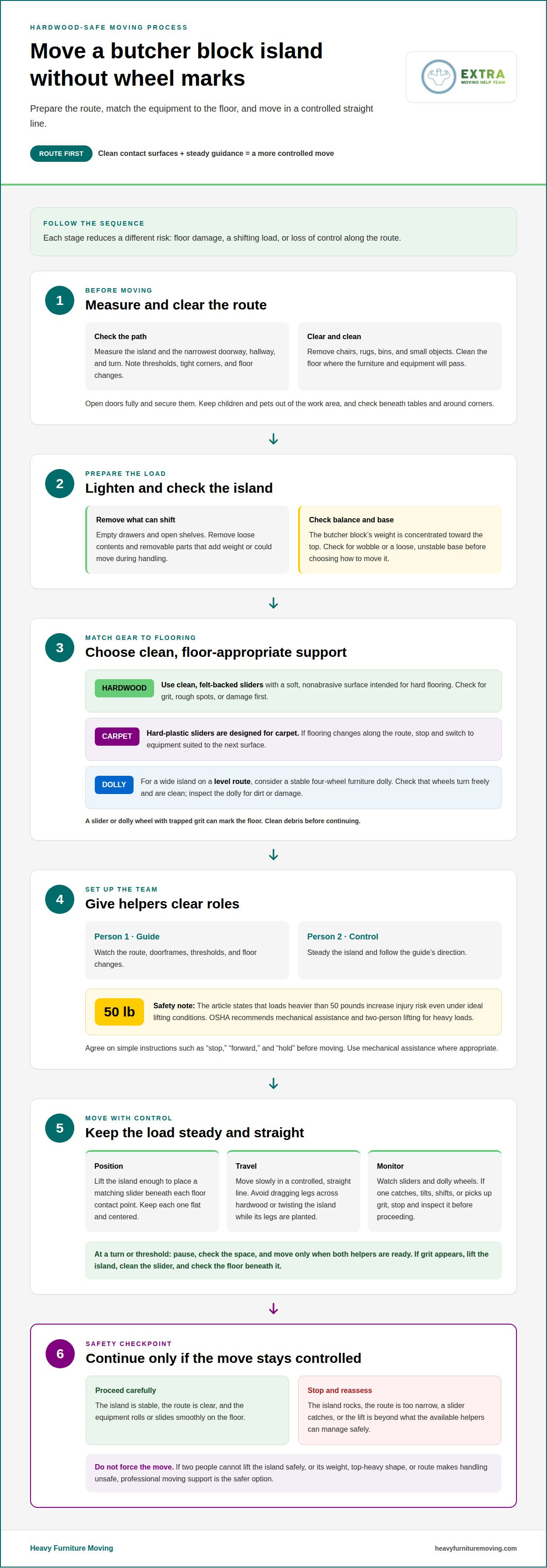
Choose sliders made for the floor the island will cross. Felt-backed sliders generally suit smooth, hard floors, while hard-plastic sliders are designed for carpet. If the route changes from hardwood to carpet, don’t assume one slider will work well on both. Plan to stop and switch to the appropriate type at the transition.
Check each slider’s contact surface before placing it under the island. Dirt, damage, or an unsuitable material can scratch finished hardwood. Avoid sliders with rough or visibly worn bases. A plastic slider designed for carpet, for example, isn’t suitable for a stretch of hardwood.
-
Choose Hardwood Sliders and Inspect a Dolly
For hardwood, choose a slider with a clean, soft, nonabrasive surface intended for hard flooring. Look across its base for trapped grit, rough spots, or damage before it touches the floor. A clean slider helps limit the risk of marks as the island moves. Keep the route straight, and don’t force a slider that catches or shifts.
For a wide island on a level route, consider a stable, four-wheel furniture dolly. Check that the wheels are clean and turn freely before loading. Remove debris and inspect the dolly’s contact points for damage. Grit on a wheel can mark the floor, so stop and clean it if you spot debris during the move.
-
Set the Sliders Under the Island
Place a matching slider beneath each point where the island meets the floor. Lift the island enough to position the sliders instead of dragging its legs across the hardwood. Keep each slider flat and centered under its contact point. If one tilts, shifts, or catches, stop and reset it before moving on.
Move the island in a controlled, straight line. Watch the sliders, especially at floor transitions and turns. If a slider picks up grit, stop, lift the island, clean the slider, and check the floor beneath it. Replace a damaged slider instead of continuing with an abrasive surface.
-
Use a Dolly Only on a Suitable Route
Choose a four-wheel dolly when the island sits securely on it and the route is level. Four wheels can support wide furniture on a stable path. Before loading, check the wheels and dolly surface for dirt or damage. Keep the island balanced as it settles onto the dolly, then guide it slowly.
A dolly isn’t a shortcut across every floor. A rough or uneven route can make a loaded dolly harder to control. If a wheel stops rolling smoothly, pause and inspect it. At a transition from hardwood to carpet, use equipment suited to the floor rather than assuming the dolly will roll cleanly.
Clearing the route and recruiting helpers
Plan the route first, then give helpers clear roles before lifting or rolling the island.
Plan for two people to handle a heavy kitchen island, with mechanical assistance where appropriate. OSHA recommends mechanical assistance and two-person lifting for heavy loads; loads heavier than 50 pounds increase injury risk even under ideal lifting conditions. If two people can’t lift the island safely, don’t force the move.
-
Plan and Measure the Route
Measure the island and the narrowest doorway, hallway, and turn along the route. Compare the measurements before moving, allowing space for hands and equipment. Trace the path from the kitchen to the destination, noting thresholds, tight corners, and changes in flooring.
Check the island’s balance before choosing how to move it. A butcher block’s weight is concentrated toward the top, so a loose or unstable base can make handling harder. Push gently from the side and lean against the island to check for wobble. Mark a straight path that avoids sharp turns and narrow passages.
-
Clear the Moving Path
Clear chairs, rugs, bins, and other obstacles from the full route before moving the island. Clear nearby counters and shelves so loose items can’t fall into the path. Pick up small objects, then clean the floor where the equipment or furniture will pass.
Open doors fully and secure them so they can’t swing shut during the move. Keep children and pets out of the work area. Check the full path again, including the space beneath tables and around corners where the load could catch.
- Assign one person to guide the route and another to control the island. Agree on simple instructions such as “stop,” “forward,” and “hold” before moving. The guide watches for doorframes and floor changes while the other person steadies the island. Clear roles help prevent helpers from steering in different directions.
Remove loose contents and any removable parts that could add weight or shift during the move. Take items off open shelves and empty drawers before handling the island. Set removed pieces aside away from the route, then check the island’s finish and base for loose parts that could snag or shift.
- Pause at tight turns and thresholds instead of twisting the island while its legs are planted. Move only after the guide has checked the space and both helpers are ready. If the island rocks, the route is too narrow, or the lift is beyond what two people can manage safely, stop and reassess.
For a difficult, bulky move, consider professional help rather than risking a loss of control. A heavy lifting service can be a practical option when the island’s weight, top-heavy shape, or route makes the task unsafe for the available helpers.
Moving furniture across carpet and other floor types
Protect every floor transition before moving the island, especially where hardwood meets carpet or tile.
For a move in Manassas Park, choose a furniture dolly and rigid floor panels suited to the island and route. Match the equipment to the load and flooring, not just one surface.
-
Choose Runners and Rigid Panels
Lay floor runners or rigid panels along the route before moving the island. On carpet, a smooth, firm path helps equipment pass without catching on the pile or seams. At hardwood transitions, use panels suited to the load and floor. Align panel edges so a wheel or slider won’t catch in a gap.
Inspect both sides of floor protection before laying it down. Grit underneath can scratch hardwood, while a shifted runner can create a trip or snag point. Avoid loose coverings that bunch under furniture. If the route crosses several floor types, protect each transition as carefully as the longer stretches.
-
Use Load-Rated Floor Protection
Choose rigid floor protection rated for the load you’re moving. Lay it flat along the dolly’s route, including turning areas where wheels may concentrate pressure. Check that panels meet without raised edges, and keep them stable as the island rolls across. Ordinary adhesive tape can damage finished hardwood or leave residue, so don’t apply it directly to the floor.
Inspect the exposed floor as you go. If a panel shifts, stop and reset it before moving the island farther. Felt pads can help prevent everyday scratches, but may not provide enough protection for an extremely heavy move. Use rigid protection under the moving path instead of relying on small pads alone.
- Match protection to each floor transition. Carpet needs a smooth, stable route for the equipment; finished hardwood needs a clean barrier that won’t trap grit. At doorways, secure the protected path without creating a raised lip. Recheck each transition before the island reaches it.
Keep the dolly’s wheels and floor panels clean. Debris on either contact surface can scratch hardwood or mark another floor. If a wheel picks up grit, stop and remove it before continuing. Don’t drag the island over exposed flooring while adjusting a runner.
- Inspect the floor after the move. Look for scratches, dents, and changes to the finish along the full route. A light surface mark differs from damage that cuts through the protective finish and exposes bare wood. The depth and condition of the floor help determine the appropriate repair.
Scratches through the finish may need color matching or sanding. Depending on the damage, dented boards may need repair, replacement, or refinishing. If several areas have extensive scratches or worn finish, refinishing the affected floor may be more practical than treating each mark individually. Choose a repair based on the damage rather than using the same fix for every mark.
Using moving blankets and cardboard for protection
Use clean floor protection and controlled lifting. Raise an edge only enough to place sliders, and never reach beneath an unsupported load. Remove drawers or shelves beforehand if doing so reduces weight and helps you control the island.
- Remove loose contents before handling the island. Empty drawers and shelves, and set removable parts aside together. Reducing shifting weight can make the island easier to control. Check the base for loose pieces that could catch on a blanket or moving strap.
Wrap the butcher block’s sides and corners in clean moving blankets to guard against bumps. Secure the blankets around the furniture, not beneath its floor contact points. A blanket under a dolly wheel can bunch or shift instead of providing a stable path.
- Clean the hardwood route before laying down cardboard or other protection. Grit trapped under a slider or cardboard can scratch the floor. Check the island’s legs, slider surfaces, dolly wheels, and hand truck for dirt, and remove debris before they touch the hardwood.
Use cardboard as a clean surface cover, not as a replacement for rigid, load-rated protection under heavy equipment. Cardboard can shift or buckle under concentrated weight. For a dolly route, use suitable rigid protection beneath the wheels and make sure the panels sit flat.
- Use a dolly on a level route. Use a hand truck only when its position and load can be controlled. Keep the island balanced and secure it with moving straps where appropriate. Avoid narrow turns that force the load sideways or make the hand truck difficult to guide.
Test the strap’s hold while the island is still supported. Keep straps away from sharp edges and moving wheels. Moving blankets protect the island’s finish from equipment; floor protection belongs beneath the wheels or sliders.
- Lift one edge in a coordinated motion to place a slider underneath. OSHA recommends mechanical assistance and two-person lifting for heavy loads. Keep hands out from beneath any unsupported edge, and lower the island onto the slider before moving to another contact point.
Move steadily, stopping if a blanket slips, a strap loosens, or a wheel catches. Reposition protection only after the island is stable. Don’t pull cardboard from beneath a loaded leg or wheel. Lift the contact point first, then remove or adjust the covering safely.
- Keep the route clear of loose cardboard and blanket edges that could catch under a wheel or slider at a doorway. After the move, remove floor coverings carefully and inspect the hardwood for marks before returning the island to use.
Avoiding scratches, dents, and wheel marks
- Lift the island onto suitable sliders or moving equipment instead of dragging its legs across hardwood. Dragging can scratch or gouge the floor, especially if grit is trapped beneath a foot. Keep the island supported while positioning each slider, then guide it along the route without sudden pulls.
Don’t twist the island while its legs are planted. Stop before a turn, support the load, and adjust its direction before moving again. This helps prevent the feet from grinding against one spot and damaging the floor’s protective finish.
- Inspect every slider and dolly wheel before moving, then pause to check them along a longer route. Dirt, damage, or an unsuitable contact surface can scratch finished hardwood. Remove grit as soon as you see it, and replace damaged sliders rather than letting them travel beneath the island.
Check the floor behind the moving equipment, too. A small piece of grit can leave a mark even when the rest of the route looks clean. If a wheel collects debris, stop, clean it, and inspect the contact area before proceeding.
- Use suitable rigid protection where a heavy island or dolly crosses hardwood. Felt pads can help prevent everyday scratches, but may not adequately protect the floor during an extremely heavy move. Keep the protection flat and stable, especially around turns where wheels can press against one area.
If you’re wondering how to move a heavy butcher block island across hardwood without wheel marks in Manassas Park, focus on clean equipment and a protected path. Don’t roll heavy equipment across exposed hardwood when its wheels concentrate the load. A refrigerator’s wheels, for example, can dent hardwood.
- Inspect the floor after the move and note whether marks affect only the surface or cut through the protective finish. The right repair depends on scratch depth and floor condition. A scratch that exposes bare wood may need color matching or sanding; a dented board may need repair, replacement, or refinishing.
Inspect the full route, not just the island’s starting and ending spots. If scratches, worn finish, or damage cover several areas, refinishing may be more practical than treating each mark individually. Identify the damage and finish condition before sanding.
- If you’re deciding how to move a heavy butcher block island across hardwood without wheel marks in Manassas Park, plan pauses to inspect the route and equipment. Stop if a slider shifts, a wheel catches, or the island becomes difficult to control. Pushing through resistance can turn a small equipment problem into floor or furniture damage.
Check the butcher block itself after the move for surface marks. Clean it before using the island again, and assess any damage before choosing a repair. A controlled move and careful inspection help leave the island and floor in good condition.
Heavy Furniture Moving
Heavy Furniture Moving can help when a butcher block island is too heavy or awkward to move safely with the available helpers. Its in-home furniture movers handle bulky furniture, making professional support a practical next step when the route is tight or the island is difficult to control.
Share the island’s location, destination, and any tight turns or floor transitions. These details help the moving team understand the lift and route. For other bulky household furniture, Heavy Furniture Moving also provides local moving help.
Contact Heavy Furniture Moving to discuss help with your island move.
Choose the Right Support for Your Move
Knowing how to move a heavy butcher block island across hardwood without wheel marks in Manassas Park starts with assessing the lift, route, and available help. If the move is beyond your household’s safe capacity, don’t rush it. A careful plan includes knowing when to leave the job to experienced furniture movers.
Heavy Furniture Moving helps with bulky household moves and heavy-item work, including local moving help, exercise equipment moving, and sofa hoisting. The right support can make it easier to plan a challenging move around your home while protecting the space.
Talk through your butcher block island move and the route it needs to take. Contact Heavy Furniture Moving to discuss the help you need. Take the next step with a clear plan and move forward with confidence.
Frequently Asked Questions
What are the best furniture sliders for heavy kitchen islands on hardwood floors?
Choose sliders with clean, soft, nonabrasive contact surfaces made for hard flooring. Inspect each slider before use and replace any that are worn, damaged, or gritty. The island’s weight should rest evenly on the sliders, not tip onto one edge. If the route includes carpet, plan to switch to equipment suited to that surface.
How much weight can hardwood floor furniture sliders support?
Slider capacity depends on the product and how the load sits across the set, so follow the stated rating for the exact sliders you use. Don’t assume each slider’s individual capacity equals the safe capacity of the whole set. An uneven island base may place more weight on some contact points. If you don’t know the island’s weight or balance, don’t rely on a guess.
How can I protect hardwood floors from scratches and wheel marks when moving heavy furniture?
Use clean sliders made for hard floors or clean dolly wheels, and keep the route free of grit. Pause before a doorway to remove debris from a wheel rather than rolling it into the next room. Don’t twist furniture on planted legs or apply ordinary adhesive tape directly to finished hardwood. Check the floor as you go, because a mark can indicate that equipment or protection has shifted.
Are felt sliders or plastic sliders better for moving heavy furniture on hardwood?
Felt-backed sliders generally suit smooth hardwood, while hard-plastic sliders are designed for carpet. For hardwood, choose a clean, undamaged felt-backed surface intended for hard floors. A plastic slider designed for carpet may be unsuitable for finished wood. If a slider compresses, shifts, or catches under the island’s weight, stop and reposition the load instead of forcing it forward.
What are the risks of moving a heavy island across hardwood floors?
A butcher block island can shift or tip because much of its weight sits high, making it harder to control through a turn. A poorly placed slider or gritty wheel can scratch the finish, while concentrated wheel pressure can dent boards. Helpers may also strain themselves if they lift beyond their safe capacity. Tight doorways increase the risk of damaging the island’s corners and nearby trim.