How to Move a 500 lb Jewelry Safe Down Split-Level Stairs in Gainesville
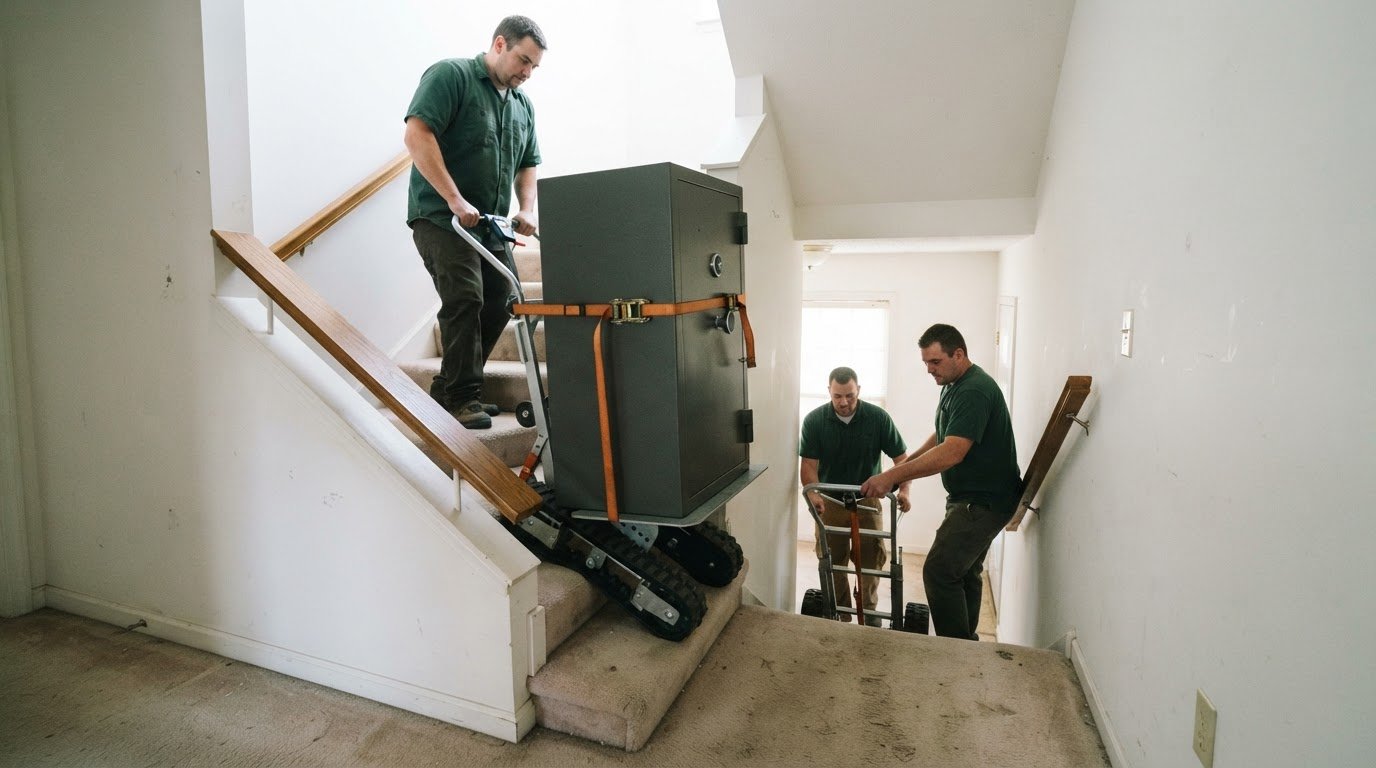
A 500-pound safe and split-level stairs are a poor DIY combination. The safest way to move a 500 lb jewelry safe down split-level stairs in Gainesville is to use professional movers, because stair moves call for more control than a standard, flat-floor move. A misjudged turn or loss of balance can put people, the safe, and the home at risk.
It makes sense to want a clear plan before moving something this heavy. The weight is only part of the challenge: the stair layout, landings, tight turns, safe dimensions, and available equipment all affect whether the route is workable.
This guide explains how to assess the safe and its contents, measure the route, and understand the crew and equipment a controlled move requires. You’ll also learn why split-level stairs increase the risk and when professional help is the safer choice, so you can decide before the safe starts moving.
Key Takeaways
- Count the safe’s contents and assess its full dimensions before planning the move.
- Map every stair, landing, doorway, and turn to spot clearance problems along the route.
- Use equipment designed and rated for heavy loads; a standard hand truck isn’t suitable for this job.
- A 500-pound safe on split-level stairs calls for serious caution, and professional help is the safer choice.
- Learn what a moving crew considers when planning equipment, manpower, and a controlled route.
Assessing safe weight, location, route, and manpower
Start with the safe’s full load, then assess the path and people needed. A 500-pound safe on split-level stairs is a job to plan carefully, not a routine furniture move.
-
Determine the Safe’s Weight
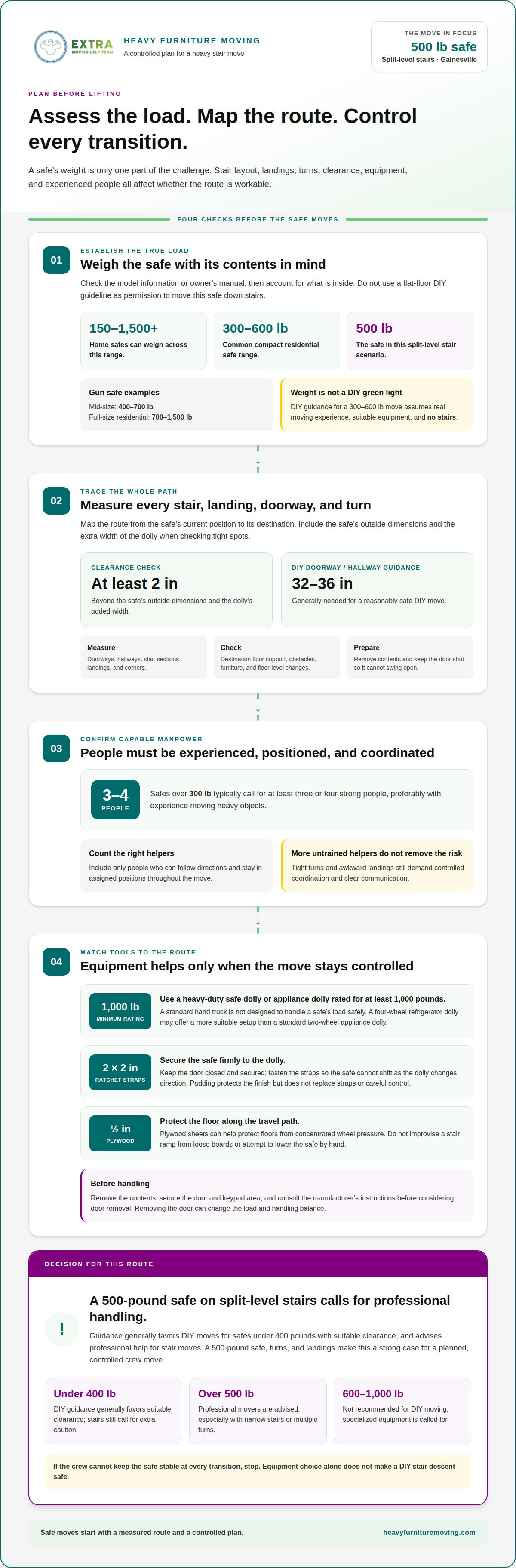
Find the safe’s model information or owner’s manual, then account for its contents. Home safes can weigh from 150 to over 1,500 pounds; compact residential safes commonly weigh 300 to 600 pounds. Gun safes vary too: a mid-size model typically weighs 400-700 pounds, while a full-size residential model typically weighs 700-1,500 pounds.
For a 500-pound safe, don’t treat the weight as a DIY green light. DIY guidance generally limits a 300-to-600-pound move to people with real moving experience, suitable equipment, and no stairs. A safe under 300 pounds is a more realistic DIY load with a heavy-duty dolly and enough help. Since this route includes stairs, decide on professional movers rather than applying a flat-floor guideline.
-
Assess the Safe’s Location and Route
Trace the complete route from the safe’s current position to its destination. Measure doorways, hallway widths, stair sections, landings, and every corner where the safe or dolly must turn. A route needs at least 2 inches of clearance beyond the safe’s outside dimensions and the dolly’s added width. Doorways and hallways generally need 32-36 inches for a reasonably safe DIY move.
Check whether the destination floor can support the load, and note obstacles, furniture, and changes in floor level. Keep the door shut so it cannot swing open. Remove the contents before moving, and consult the owner’s manual before considering door removal. Gainesville and Florida requirements for moving or disposing of a safe are legal questions separate from assessing the physical route. Weight and stair measurements alone do not establish disposal rules.
-
Evaluate Available Manpower
Count only people who can follow directions and stay in assigned positions throughout the move. Safes over 300 pounds typically call for at least three or four strong people, preferably with experience moving heavy objects. A 500-pound safe on split-level stairs demands controlled coordination; adding untrained helpers doesn’t remove the risks created by a tight turn or an awkward landing.
Make sure the crew can communicate clearly and keep the safe controlled at every transition. If you don’t have enough experienced people for the full route, stop the DIY plan. On stairs, professional movers are safer than a short-handed crew trying to manage a heavy safe.
Specialized dollies, straps, and other moving equipment
Match every tool to the safe, stair layout, and planned handling method. For a 500-pound safe on split-level stairs, equipment choice alone doesn’t make a DIY descent safe.
Homeowners insurance and mover coverage depend on policy terms and the circumstances of the move. Review what your policy says about property damage and the safe itself, and get the mover’s coverage terms in writing before the move.
- Choose a suitable dolly. Use a heavy-duty safe dolly or appliance dolly rated for at least 1,000 pounds. That rating provides capacity above the safe’s 500-pound weight, but it doesn’t make a standard hand truck suitable. Standard hand trucks aren’t designed to handle a safe’s load safely. A four-wheel refrigerator dolly may offer a more suitable setup than a standard two-wheel appliance dolly.
- Secure the safe to the dolly. Use two 2-inch ratchet straps to hold the safe firmly in position. Keep the safe door closed and secured, and fasten the straps so the safe can’t shift as the dolly changes direction. Padding or moving blankets can protect the safe’s finish, but they don’t replace straps or careful control.
- Protect the floor and plan stair handling. Lay 1/2-inch plywood sheets along the travel path to help protect floors from concentrated wheel pressure. On stairs, don’t improvise a ramp from loose boards or attempt to lower the safe by hand. Stair transitions and split-level landings require controlled equipment and a planned path; stop if the dolly can’t remain stable.
- Prepare the safe before handling it. Remove its contents to reduce shifting and avoid carrying valuables or loose items inside. Secure the door, keypad area, and any removable accessories. Consult the manufacturer’s instructions before attempting to remove the door: it can be heavy, and removing it changes the load and handling balance.
- Clarify the move details before it’s scheduled. Moving quotes depend on safe weight, travel distance, stair sections, tight turns, long carries, and special rigging needs. Share the split-level layout and access details so the plan accounts for the entire route. For hands-on help with a heavy item, heavy lifting moving service is a relevant option.
When to hire professional safe movers
Use the safe’s weight and stair layout together to decide whether DIY is sensible. A 500-pound safe descending split-level stairs is a strong case for professional handling.
-
Set a Threshold for Calling Professionals
Choose professional movers when the safe weighs more than 500 pounds, faces narrow stairs, or needs multiple turns. Stair moves deserve extra caution even below that weight. Guidance for DIY moves generally favors safes under 400 pounds and routes with suitable clearance; it advises professional help for stair moves, including interior and basement stairs.
For anyone deciding how to safely move a 500 lb jewelry safe down split-level stairs in Gainesville, the weight and stair route together point toward professional handling. If it weighs more than 600 pounds, the case becomes stronger. Safes weighing 600 to 1,000 pounds are not recommended for DIY moving and call for specialized equipment.
-
Compare DIY and Professional Moving
Consider the whole task, not just getting the safe onto a dolly. A DIY crew must manage balance, turns, stair transitions, and the safe’s changing position while keeping everyone clear. A small mistake on a staircase can make the safe tip or slide, risking serious injury and damage to the home.
Professional safe movers bring experience handling heavy objects and equipment for controlled movement. Some use stair-climbing machines on steps, while specialized equipment can help with difficult routes. Their advantage is coordinated control at each transition, not simply extra strength. If the plan relies on improvised lifting, uncertain footing, or helpers without moving experience, choose professionals.
-
Find Gainesville Safe Movers
Choose a team experienced with heavy safe moves involving stairs, tight access, and multiple turns. The details matter: a crew prepared for a straight, open route may not be equipped for a split-level landing. Describe the safe’s weight and dimensions, the stair layout, landing space, and every turn so the entire route can be assessed.
When planning how to safely move a 500 lb jewelry safe down split-level stairs in Gainesville, make sure the method accounts for the landing and every direction change. A safe that is bolted down should be unbolted and reinstalled by a professional. If the route includes stairs or restricted clearance, hiring safe movers is the safer decision than testing a DIY setup.
Why heavy safes are difficult and risky to move
A 500-pound safe behaves differently from ordinary furniture once it tilts or starts moving. Stairs, turns, and concentrated weight can quickly turn a small loss of control into damage or injury.
- Account for gravity on each stair section. A safe is easier to keep upright on a level floor than while descending stairs. As it tilts, its weight shifts against the dolly and the people controlling it. If the load starts moving faster, handlers must manage both its weight and momentum. At a split-level landing, the safe must change direction without becoming unstable.
A locked door keeps it from swinging open, but it won’t stop the safe itself from tipping. That takes a controlled moving method and a clear route.
- Consider how the load presses on floors and stairs. A heavy safe’s weight rests on a small number of wheels or contact points, rather than spreading evenly across the floor. One estimate for an 800-pound safe placed half its weight on one dolly wheel; over a two-square-inch contact area, that could create 200 psi of pressure. That example shows why concentrated loads can damage surfaces.
An appliance dolly or safe dolly can move a load, but wheels don’t eliminate pressure or make every staircase suitable. The safe, dolly, and stair surfaces all affect the risk.
- Plan for corners and direction changes. A 90-degree turn with little clearance is especially risky because the safe and dolly need room to change direction together. A tight corner can force an awkward tilt, bring the load close to a wall, or leave the dolly poorly positioned. On split-level stairs, a landing may be too small to turn without shifting the safe.
Specialized equipment helps only when it suits the route and handling method. Don’t force a safe around a corner if it can’t remain stable and clear of surrounding surfaces.
- Keep people clear of a falling load. A falling safe can cause serious injury and damage stairs, floors, walls, and nearby furniture. No helper should stand where a slipping safe could trap them against a wall or beneath the load. Clear the travel path and agree on commands before moving.
If the safe is bolted down, unbolting and reinstalling it adds another task requiring professional handling. Stop rather than improvise when the move depends on people catching or physically holding a shifting safe.
Which Gainesville safe-moving companies handle 500 lb safes on split-level stairs?
For a 500-pound safe on split-level stairs in Gainesville, focus on the move plan, not just a company’s general moving claims. The route, stair turns, landing space, equipment, and safe dimensions all affect how the move can be handled.
- Describe the full route. Explain where the safe starts and where it needs to go. Include every stair section, landing, doorway, and turn. For example, a split-level landing may require a direction change before the safe reaches the next floor. Provide the safe’s weight and outside dimensions, too. These details help shape a plan for the actual home rather than a generic move.
- Ask how the plan handles stairs. A 500-pound load on stairs needs a method for controlling its movement through each transition. The plan should account for corners and landings, not only the straight stair run. Find out what equipment and handling approach the crew intends to use. If the explanation relies only on lifting strength, it doesn’t address how the safe will stay controlled.
- Make access conditions clear. Share measurements and obstacles that could affect the route, such as a narrow doorway, tight turn, or furniture near the stairs. A photo of the stair layout can help show a landing that’s difficult to describe. Point out changes in floor level and any bolted installation. The crew needs the full picture to plan safe access from start to finish.
- Clarify the work included. A safe move can involve more than carrying it from one room to another. Explain whether the job includes moving it from its current position, navigating the stairs, and placing it at the destination. If the safe is bolted down, unbolting and reinstalling it require professional handling. A clear scope helps ensure no part of the move is overlooked.
- Choose a plan that fits the home. Compare each proposed method against the actual route, not just the 500-pound weight. A straight path and a multi-turn split-level staircase pose different handling demands. If the plan doesn’t account for the landing, stair transitions, or restricted clearance, don’t proceed with that approach. For a heavy move, get help planning your move with the route and access details ready.
Choose a Gainesville safe-moving crew that can explain how it will control the 500-pound safe through each stair section, landing, and turn, using a plan tailored to the safe’s dimensions and the home’s access conditions. The section provides no specific company names.
Heavy Furniture Moving
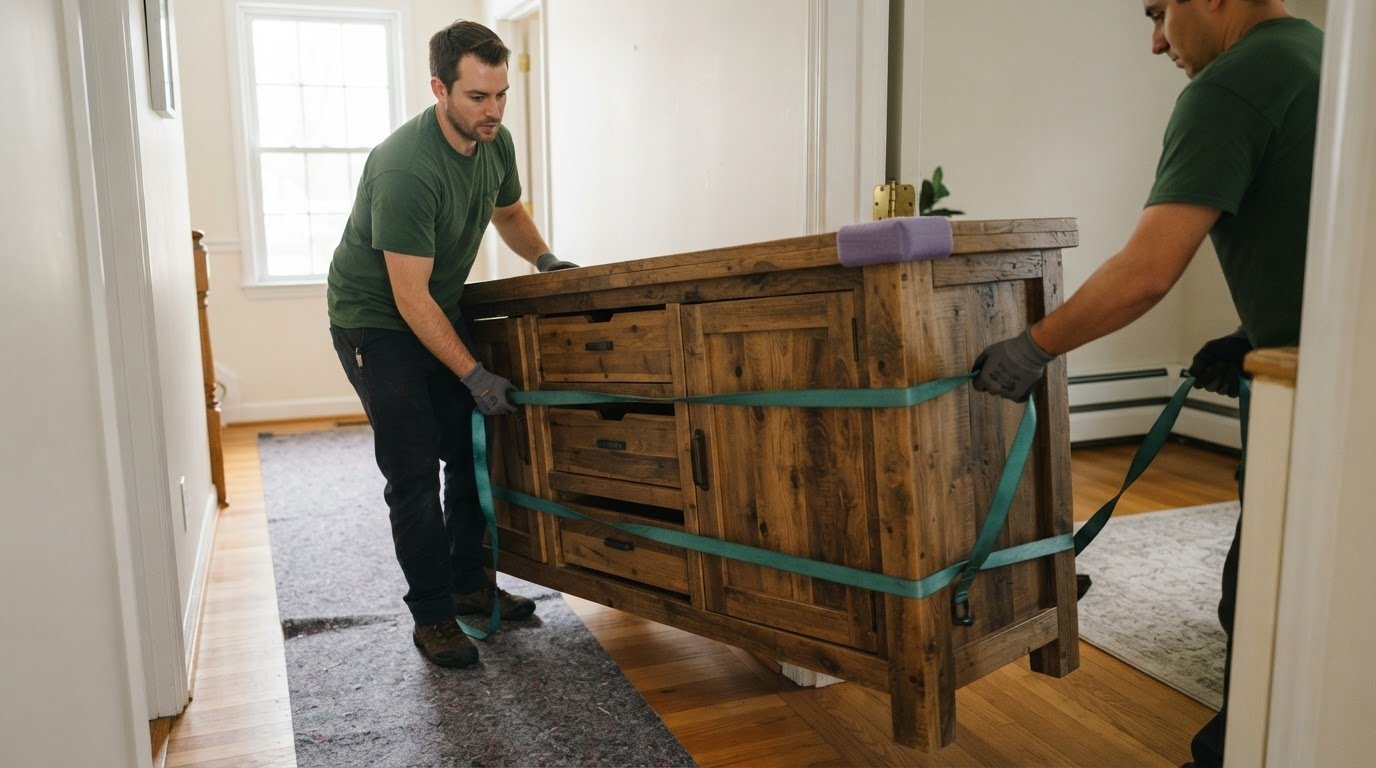
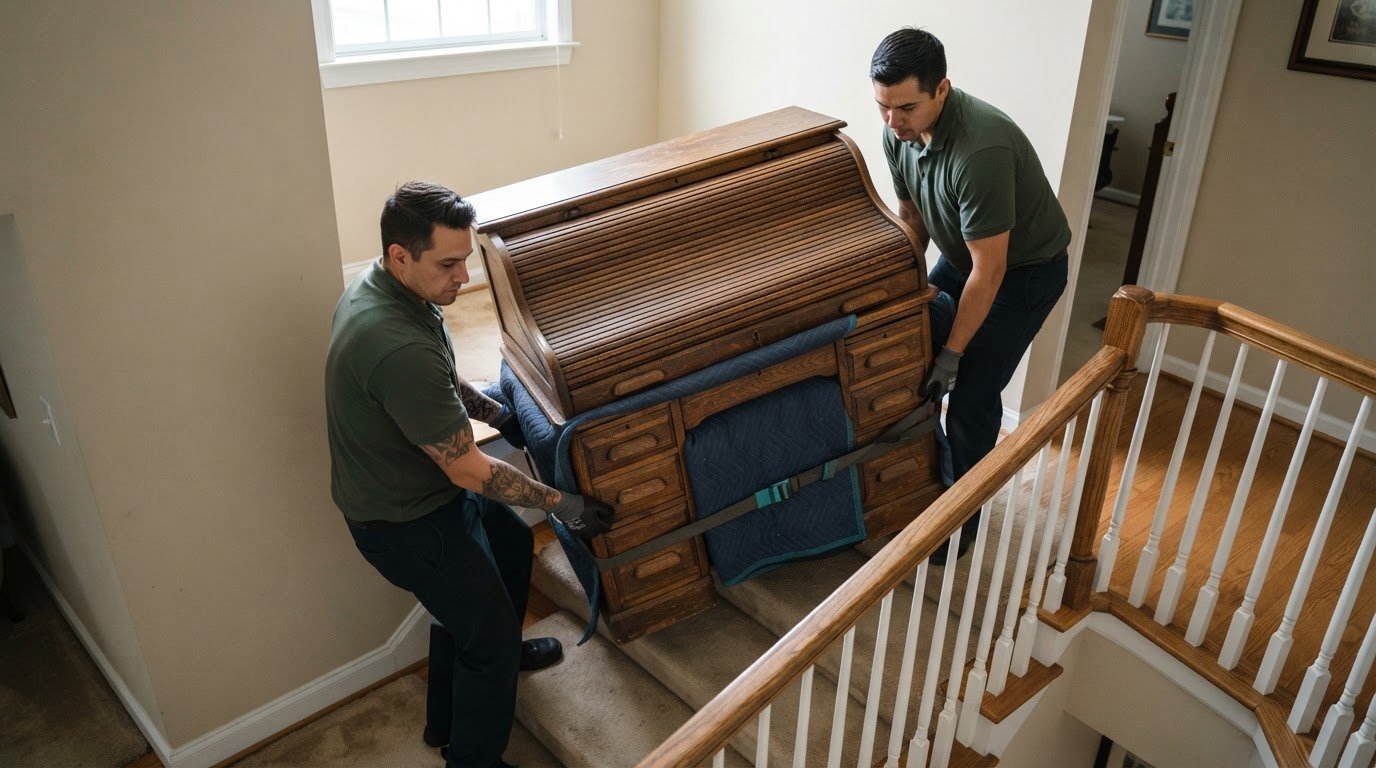
Heavy Furniture Moving offers Movers Near Me for households planning difficult local moves. If your 500-pound safe needs to travel down split-level stairs, share its weight, dimensions, starting location, and stair layout when discussing the job. Those details help define the task and clarify how the move fits with your other household moving needs.
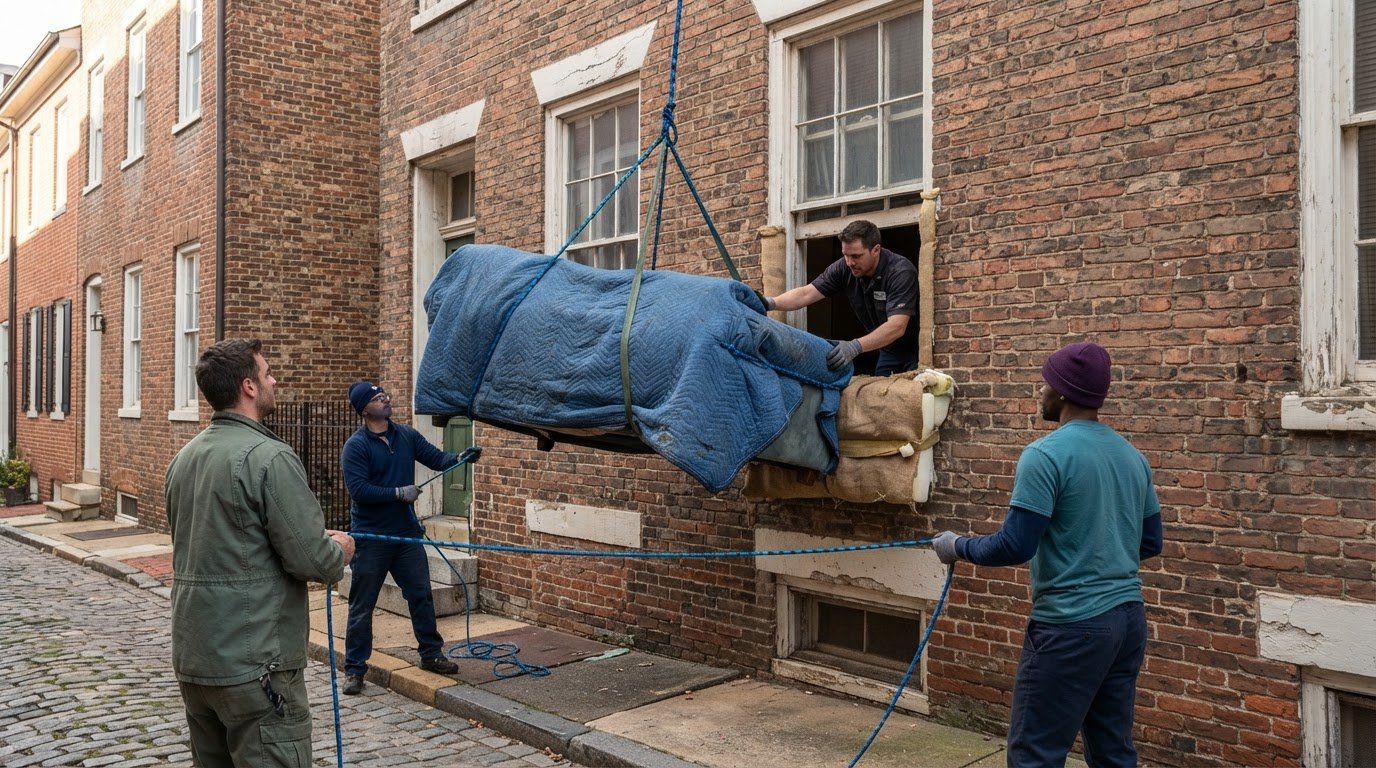
Turn to a moving team when the safe’s weight, stair turns, or tight landing make a DIY attempt unsafe. Heavy Furniture Moving handles heavy-item moves, including safes, and also offers exercise equipment moving, sofa hoisting, and in-home furniture moves for households with several bulky items.
Contact Heavy Furniture Moving to discuss your move.
Make a Clear Plan for Moving Day
The next step is to turn your route details into a practical moving plan. Gather the safe’s dimensions, starting point, destination, and any tight turns or landings. Heavy Furniture Moving measures before lifting, so share these details and a photo of the safe and stairs to help assess the job.
If you’re deciding how to safely move a 500 lb jewelry safe down split-level stairs in Gainesville, don’t let uncertainty push you into an improvised attempt. A safe move needs a method that fits the home and the access points, not just the safe’s weight. Choose a plan that accounts for the full path from start to finish.
Heavy Furniture Moving handles demanding household moves, including Movers Near Me, Exercise Equipment Moving, and Sofa Hoisting. For help discussing your safe move, contact Heavy Furniture Moving. Take the next step with a clear description of your home’s route, and move forward with confidence.
Frequently Asked Questions
Practical Steps to Decide: DIY or Pro?
DIY is generally reasonable only for a safe under 400 pounds on a route with suitable clearance. A 500-pound safe descending stairs falls outside that lower-risk scenario, so choose professional movers rather than treating a capable group or rented dolly as sufficient. If the safe is bolted down, have a professional handle unbolting and reinstallation. Don’t proceed if the route requires forcing the safe through a turn.
How much does it cost to hire professional safe movers in Gainesville, Virginia?
The price depends on the case and is given after a quote request; distance, safe weight, stair access, landing turns, long carries, and rigging affect it. Share the complete route and safe details so the quote reflects the actual job. Heavy Furniture Moving serves Gainesville and nearby Northern Virginia communities, including Fairfax, Woodbridge, Manassas, Manassas Park, Aldie, Ashburn, McLean, Vienna, Reston, Centreville, Chantilly, Clifton, Dumfries, South Riding, Fairfax Station, and Haymarket.
What equipment is needed to move a 500 lb safe down stairs safely?
A 500-pound stair move calls for a safe or heavy-duty appliance dolly rated for at least 1,000 pounds, plus two 2-inch ratchet straps. A stair-climbing device must also have adequate capacity and suit the staircase; don’t assume it can handle split-level turns. Heavy Furniture Moving lists a safe dolly and a three-person crew for safes from 300 to 1,500 pounds. Wrap, blankets, and straps are included on every job.
How do professional movers assess stair strength and landing clearance for a heavy safe?
Movers examine the route for visible damage or movement, note the stairs’ construction, and assess landing size and turning space. They also consider the combined footprint of the safe and dolly at the tightest point, along with railings, door swings, and obstacles. An on-site assessment can reveal obvious access concerns, but it isn’t a structural engineering certification.
What are the step-by-step precautions for moving a heavy safe down split-level stairs?
First, empty the safe and secure its door. Next, clear the route and protect exposed surfaces. Then secure the safe to equipment designed for its load and assign clear roles before moving. Use a planned method for each stair section and landing. Stop if the safe shifts, the equipment loses stable contact, or the crew can’t control a turn. Don’t try to catch a tipping safe.
Can a 500 lb safe be moved with a stair-climbing dolly, and what capacity is required?
A stair-climbing dolly may be appropriate if its rated capacity is at least 1,000 pounds and its design suits the stairs, landings, and turns. The rating alone doesn’t establish that it can navigate a split-level route. Check the equipment’s operating instructions and account for the safe’s full load. For a stair move, a professional crew can match its method and equipment to the home’s layout.
What are the risks of moving a heavy safe on stairs without professional movers?
A safe that slips or tips can cause serious injury and damage stairs, floors, walls, or nearby belongings. Tight turns and landings make the load harder to control, while a dolly wheel concentrates pressure on a small area. A helper standing below or beside a shifting safe can be trapped in its path. Don’t attempt a descent that depends on catching or manually stopping the safe.
How can I measure a safe and stairway to check whether the safe will fit?
Measure the safe’s height, width, and depth, then measure each doorway, hallway, stair section, and landing along the route. Include the dolly’s added width, railings, and space needed to turn. Plan for at least 2 inches of clearance beyond the safe and dolly at each point. Doorways and hallways generally need 32-36 inches for a reasonably safe DIY move.
Frequently Asked Questions
DIY is generally reasonable only for a safe under 400 pounds on a route with suitable clearance. A 500-pound safe descending stairs falls outside that lower-risk scenario, so choose professional movers rather than treating a capable group or rented dolly as sufficient. If the safe is bolted down, have a professional handle unbolting and reinstallation. Don’t proceed if the route requires forcing the safe through a turn.
The price depends on the case and is given after a quote request; distance, safe weight, stair access, landing turns, long carries, and rigging affect it. Share the complete route and safe details so the quote reflects the actual job. Heavy Furniture Moving serves Gainesville and nearby Northern Virginia communities, including Fairfax, Woodbridge, Manassas, Manassas Park, Aldie, Ashburn, McLean, Vienna, Reston, Centreville, Chantilly, Clifton, Dumfries, South Riding, Fairfax Station, and Haymarket.
A 500-pound stair move calls for a safe or heavy-duty appliance dolly rated for at least 1,000 pounds, plus two 2-inch ratchet straps. A stair-climbing device must also have adequate capacity and suit the staircase; don’t assume it can handle split-level turns. Heavy Furniture Moving lists a safe dolly and a three-person crew for safes from 300 to 1,500 pounds. Wrap, blankets, and straps are included on every job.
Movers examine the route for visible damage or movement, note the stairs’ construction, and assess landing size and turning space. They also consider the combined footprint of the safe and dolly at the tightest point, along with railings, door swings, and obstacles. An on-site assessment can reveal obvious access concerns, but it isn’t a structural engineering certification.
First, empty the safe and secure its door. Next, clear the route and protect exposed surfaces. Then secure the safe to equipment designed for its load and assign clear roles before moving. Use a planned method for each stair section and landing. Stop if the safe shifts, the equipment loses stable contact, or the crew can’t control a turn. Don’t try to catch a tipping safe.
A stair-climbing dolly may be appropriate if its rated capacity is at least 1,000 pounds and its design suits the stairs, landings, and turns. The rating alone doesn’t establish that it can navigate a split-level route. Check the equipment’s operating instructions and account for the safe’s full load. For a stair move, a professional crew can match its method and equipment to the home’s layout.
A safe that slips or tips can cause serious injury and damage stairs, floors, walls, or nearby belongings. Tight turns and landings make the load harder to control, while a dolly wheel concentrates pressure on a small area. A helper standing below or beside a shifting safe can be trapped in its path. Don’t attempt a descent that depends on catching or manually stopping the safe.
Measure the safe’s height, width, and depth, then measure each doorway, hallway, stair section, and landing along the route. Include the dolly’s added width, railings, and space needed to turn. Plan for at least 2 inches of clearance beyond the safe and dolly at each point. Doorways and hallways generally need 32–36 inches for a reasonably safe DIY move.