How to Hoist a Heavy Sectional Couch Through a Second-Story Window in McLean
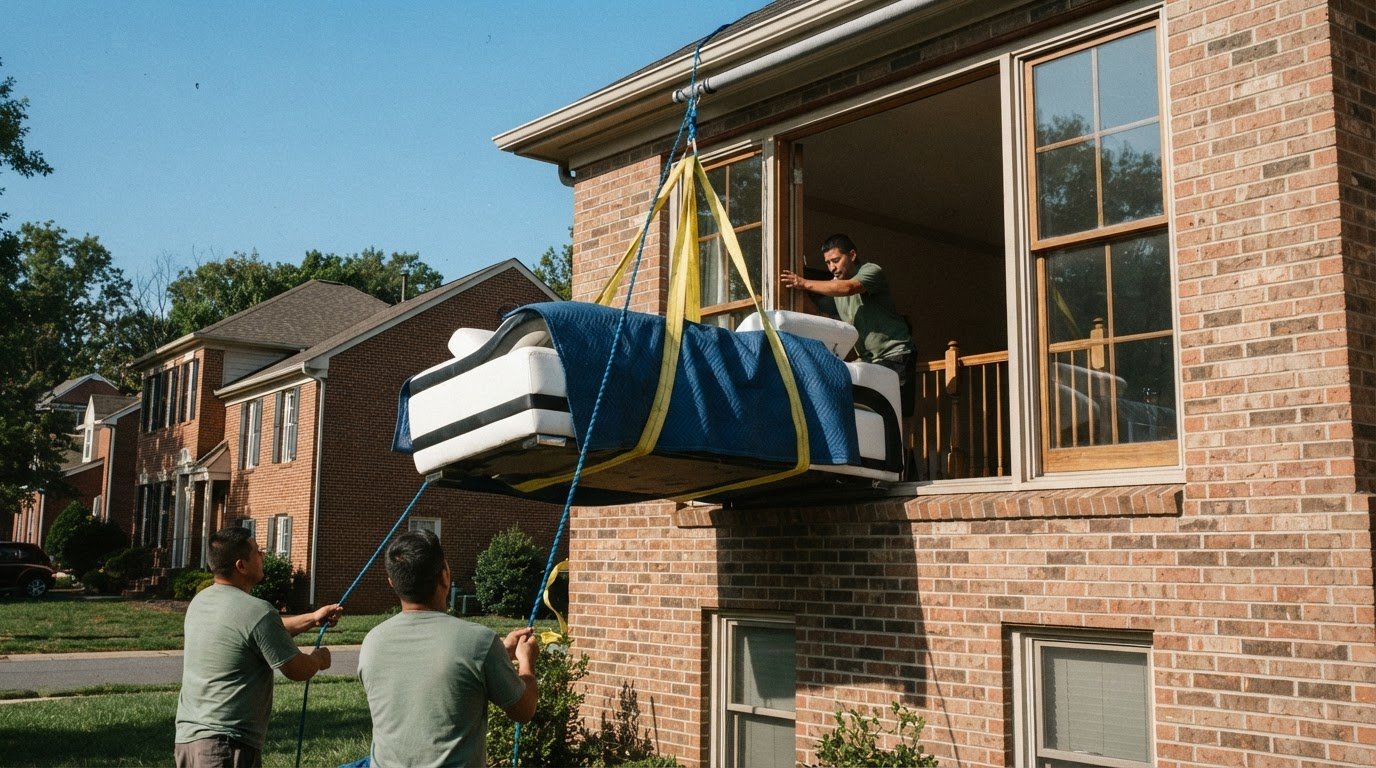
A second-story window can work for a sectional only if the couch fits through the clear opening and there’s room to land it safely. To plan how to hoist a heavy sectional couch through a second-story window in McLean, measure both the couch and the window, and allow at least 6 feet of clear space inside for the landing zone. The wrapping and securing matter just as much as the opening size.
It’s understandable to look at the stairs or doorway and wonder whether the window is the easier route. But lifting a bulky couch at height is not a safe DIY job: it can swing, strike the building, or injure someone. A careful plan starts with removing detachable cushions and parts, then protecting and securing the couch before it leaves the ground.
Here, you’ll learn how to assess the window and landing area, prepare the sectional for lifting, and understand when rope-and-pulley rigging or mechanical equipment may suit the job. You’ll also see why the right lifting method depends on the couch, the access point, and the space around the building.
Key Takeaways
- Decide whether a window is a workable route by weighing the couch’s size, the opening, and the available space to bring it inside.
- Get trained help for a lift at height; swinging furniture can put people and the building at risk.
- Protect and secure the sectional before lifting so loose parts and exposed surfaces are less vulnerable during the move.
- Choose rated rigging or mechanical lifting equipment based on the building, access, and couch dimensions, not convenience alone.
- Account for exterior access and changing conditions when considering a lift, since wind can stop an exterior hoisting operation.
Can any window be used for furniture delivery?
Not automatically. A window works only when the furniture fits the opening and the lifting route has room to operate. Assess the window, interior landing area, and exterior path before choosing this route.
-
Assess Whether Window Hoisting Fits
First, determine whether the sectional can reach its destination through the window when standard doorways or stairs cannot accommodate it. A large sofa may need this route when interior turns or narrow access block its path. The window still needs a clear opening, and the room needs space to receive the load.
Include appliances in the same access assessment if they’re part of the move. Remove cushions and other detachable furniture pieces before lifting. This can reduce bulk and prevent loose parts from shifting. Don’t assume that removing a screen or opening the sash creates enough clearance: measure the actual passage.
-
Measure the Window and Lift Path
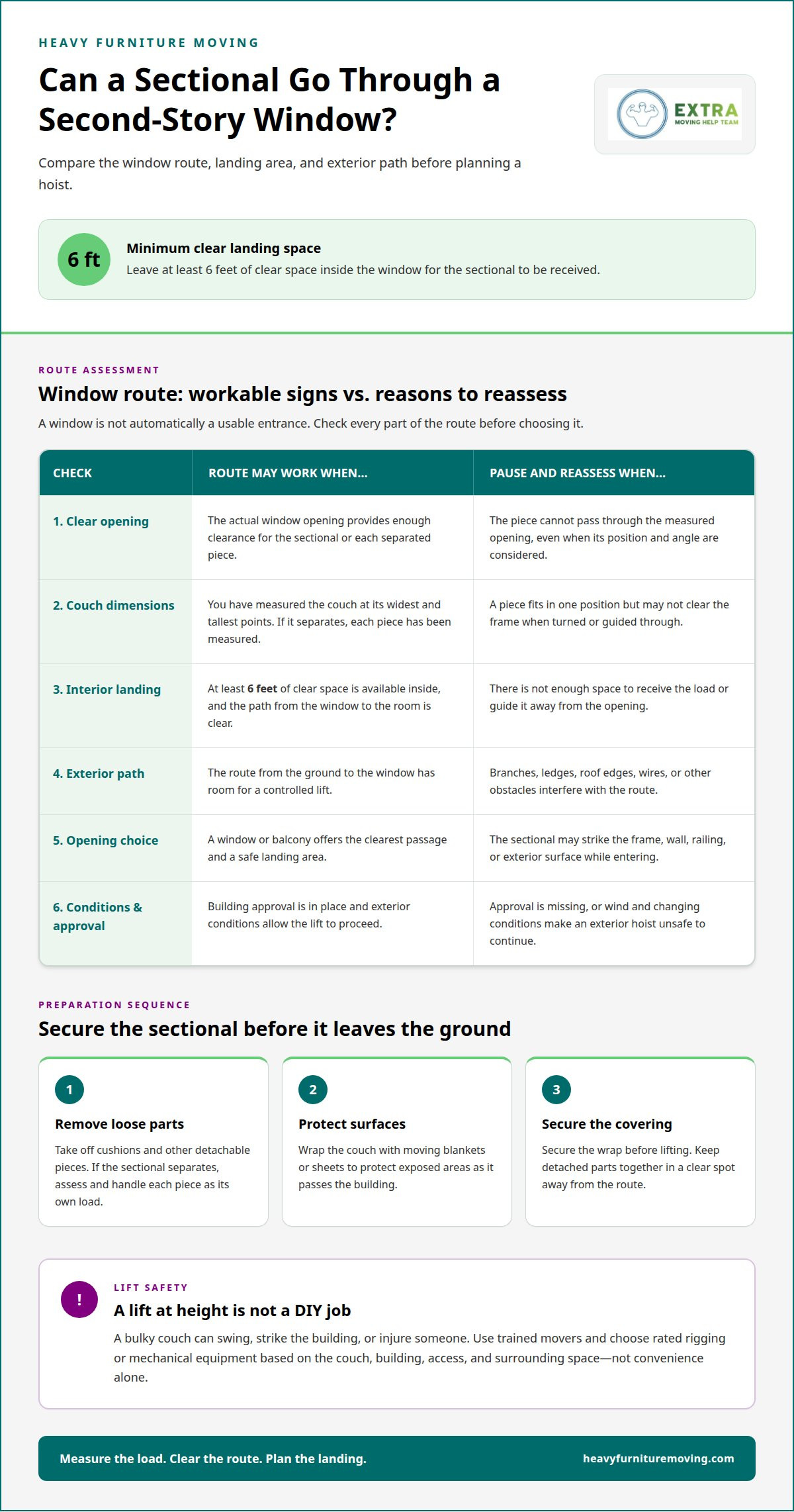
Measure the furniture at its widest and tallest points, then measure the window’s clear opening. Compare the measurements while allowing for the shape and angle needed to guide the item through. If the sectional separates, measure each piece. A piece that fits in one position may not clear the frame when turned.
Trace the route outside, from the ground to the window. Look for branches, ledges, roof edges, wires, and other obstacles that could interfere with a controlled lift. Inside, leave at least 6 feet of clear space from the window for the landing zone. Keep the path from the opening to the final room clear, too.
-
Choose a Window or Balcony Route
Choose the opening with the clearest passage and safest landing area, whether it’s a window or balcony access. A balcony may offer a different approach, but its edge, railing, and maneuvering space still affect the route. Make sure the item can pass without striking the frame, wall, railing, or exterior surface.
Prepare the room by clearing the landing zone and protecting nearby surfaces. Wrap the furniture with moving blankets, then secure the covering before lifting. Keep the ground area clear of people and obstacles. A ground spotter can watch the load and alert the team to hazards along its path. Get building approval before hoisting through a window or over a balcony.
When Is Hoisting Furniture the Best Moving Solution?
Choose professional hoisting when a bulky item cannot safely travel through the building’s normal access route. A lift at height requires trained movers, suitable equipment, and coordinated control from the ground to the room.
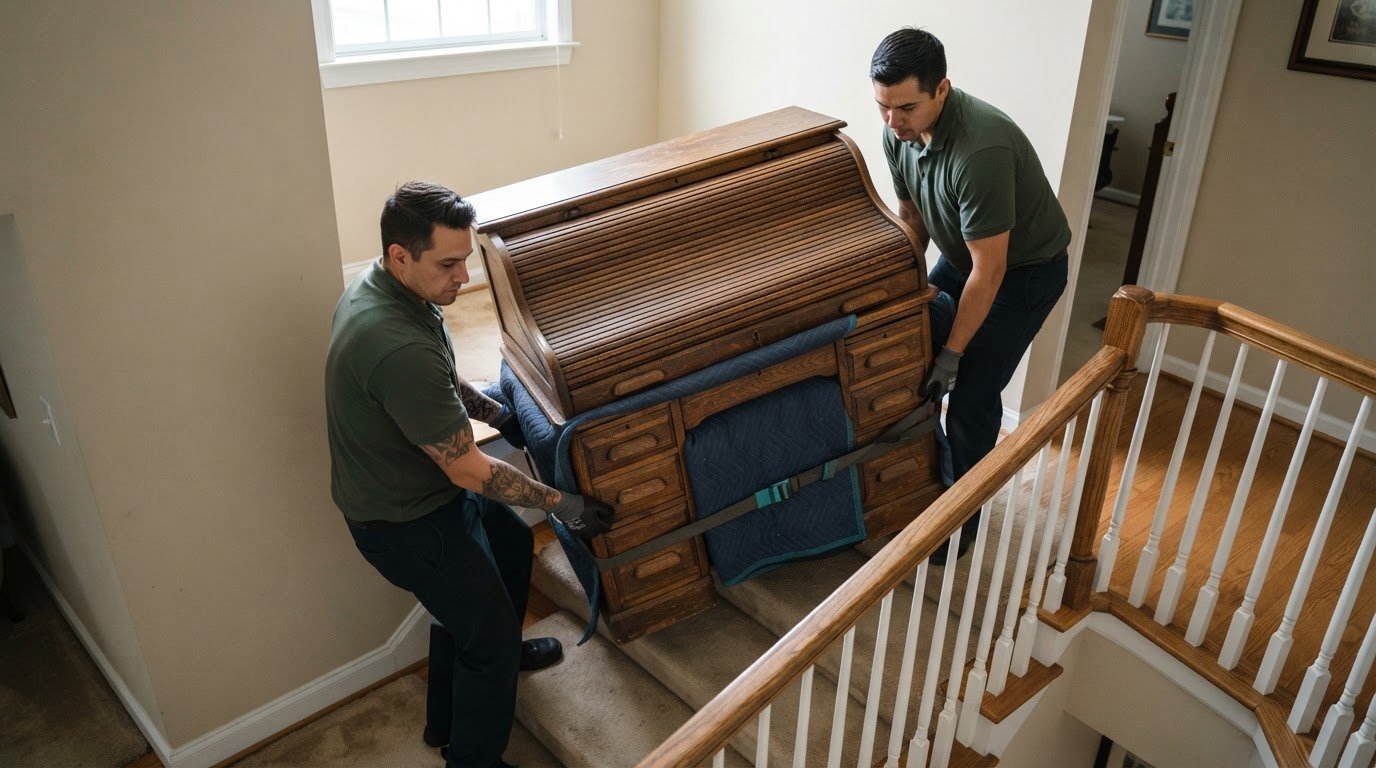
- Use hoisting when interior access blocks the move. A sectional may not turn through a tight stairwell, hallway, or doorway, even if its pieces fit inside the destination room. If carrying it indoors would mean forcing it against walls or railings, pause and assess an exterior route instead. Hoisting can also suit a large appliance that cannot pass through the building’s usual entry points.
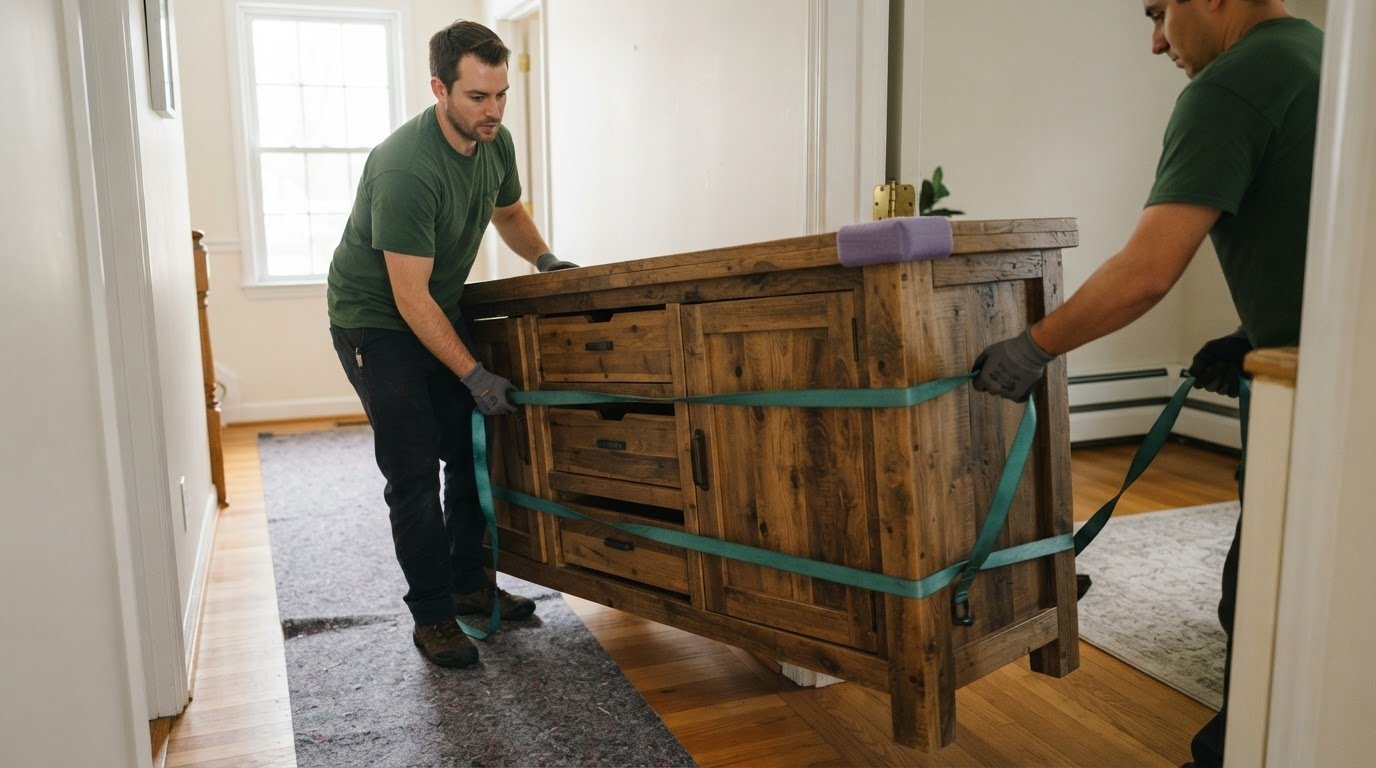
- Hire trained movers for a lift above ground level. Don’t attempt a DIY hoist at height. Furniture can swing, drop, strike the building, or injure someone during an uncontrolled lift. A ground helper alone cannot replace a coordinated lifting team. Choose movers equipped to control the load throughout the ascent and guide it through the opening without improvised pulling.
- Use certified specialty movers when the lift needs specialized equipment. A sectional’s shape and weight can make its movement harder to control than a compact box. Professional movers with hoisting experience can assess the load, lifting route, and landing before work begins. For an item that requires a crane, look for a team with crane-moving expertise and equipment suited to the job. Avoid job-made platforms or homemade lifting setups.
- Bring in professional help when the surroundings add risk. A narrow access point, nearby obstacle, or tight landing can complicate a lift. So can a route that requires guiding the item around a balcony edge before it enters the room. Professional planning helps the team coordinate with the person receiving the furniture, protect the building, and keep people clear of the moving load. The right method depends on the couch, access, and exterior conditions.
If the sectional needs an elevated exterior move, professional sofa hoisting help offers a direct way to handle a job that calls for trained lifting rather than a do-it-yourself attempt.
Wrapping and securing items before hoisting
Prepare each sectional piece before it leaves the ground. A protective cover and secure binding help keep the furniture together and shield its surfaces during the lift.
- Remove loose and detachable parts. Take off cushions and other removable pieces before wrapping the couch. Set them aside so they can’t slip during the lift or get caught between the furniture and window frame. If the sectional separates, treat each piece as its own load. This reduces loose items around the lifting area and makes each piece’s shape easier to assess.
Keep the components together in a clear, designated spot inside the apartment. Don’t leave cushions or detached parts along the route to the window, where they could cause someone to trip or reduce room to guide the load. A quick inventory also helps the receiving team confirm that all the pieces arrive inside.
- Cover exposed surfaces. Wrap the couch with moving blankets or sheets before hoisting it through a window or over a balcony. Cover the arms, corners, back, and other exposed areas that could brush against the building during movement. A sectional may need more than one cover to protect its full shape, especially where separate pieces meet.
Position the covering between the upholstery and nearby surfaces. Keep it smooth enough that loose folds won’t catch on a window edge. The goal is to protect the furniture while keeping its outline visible to the lifting team. A blanket does not replace secure binding.
- Secure the covering in place. Fasten the wrapped furniture before the lift begins. Binding helps prevent the protective material from shifting as the item moves and keeps loose fabric from flapping around the load. The covering should stay close without obscuring the sectional’s shape or interfering with the movers’ control.
Check the entire load, not just the side facing the room. Look for exposed corners, loose fabric, and detached parts that could move independently. If the couch has separate sections, prepare each one so its cover stays in place. Don’t start lifting while the wrap or binding is still being adjusted.
- Keep the receiving area ready. Clear the route inside the apartment before the wrapped furniture reaches the window. Move small items away from the landing area and leave room for the team to guide each piece indoors. Even a well-protected couch needs enough space to pass through the opening and settle without striking nearby furniture.
For professional sofa hoisting, Heavy Furniture Moving prepares and secures the couch as part of the lift plan. Each piece stays wrapped and secured until it is safely inside and the team can remove the protective covering.
Choosing rigging or mechanical lifting equipment
Choose lifting equipment according to the building height, couch dimensions, and access outside the window. For a second-story sectional, the setup depends on whether trained movers can control each piece along the entire route.
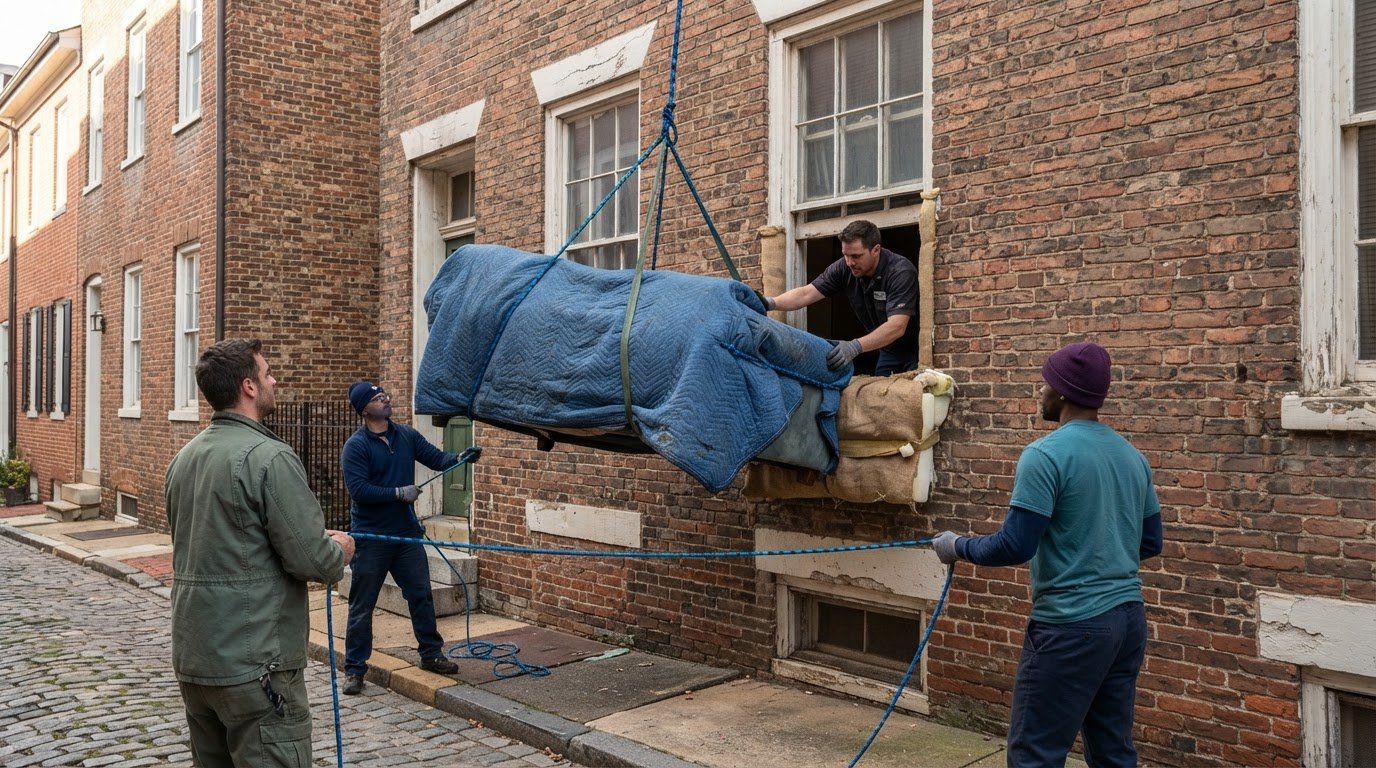
- Match rope-and-pulley rigging to the building height. Rope-and-pulley systems are used for buildings 2-6 floors high. A second-story window may fall within that range, but floor count alone doesn’t determine the method. The load’s shape, weight, and path matter too. A sectional with several pieces may need separate handling, while a wide, connected piece can be harder to guide through an opening.
If you’re planning how to hoist a heavy sectional couch through a second-story window in McLean, have trained movers assess these factors before choosing equipment. They can determine whether rope rigging provides enough control from the ground to the window. A basic pulley or rope is not a complete lifting system. The equipment and crew plan must suit the couch and building.
- Use rated rigging, not homemade equipment. Rated lifting gear is designed to lift loads; improvised boxes, baskets, or platforms are not a safe substitute. Don’t attach ropes to furniture without a planned rigging method or rely on household materials to hold a sectional. A shifting load can swing into the building or become difficult to guide at the window.
Before the lift, the team should account for the couch’s balance and the points where the rigging supports it. Each piece needs to stay controlled as it rises. A proper setup also lets the crew guide the load instead of letting the rope alone determine its direction.
- Set rope length for the full lift. Hoisting ropes should be at least twice the distance from the floor to the window or terrace, with a few additional feet for maneuvering. This gives the lifting team enough rope to work along the vertical route and make controlled adjustments near the opening.
Measure the route from the ground to the actual entry point, not just to the second story. The height and setup position affect the required rope length. Movers also need room to manage the load at both ends, especially as a sectional changes angle to pass through the window.
- Consider mechanical lifting for oversized pieces. A crane can lift furniture that is too wide or large to move through a home by conventional means. That may suit a sectional piece that cannot clear interior stairs or turns and cannot be safely guided with rope rigging.
The safest way to hoist a heavy sectional couch through a second-story window in McLean depends on the exterior route, height, and size of each piece. Have trained movers assess those details before selecting mechanical equipment. A crane and rope system address different access problems. Choose a method that can control the couch throughout the lift without forcing it against the building.
Exterior lifts and swing-arm hoists
An exterior lift can help when a sectional won’t fit through a building’s usual entry route. Choose the method by considering the window location, the load, and the available space outside.
- Assess whether an exterior lift solves the access problem. Furniture can be hoisted to an upper-floor apartment when traditional entry points are too narrow. A swing-arm hoist or exterior lift may provide a direct route to the window, avoiding tight indoor turns. First, map the path from the lifting position to the opening. Nearby walls, balconies, rooflines, and other obstacles affect how the load can travel.
Compare the exterior route with the indoor route. If a sectional piece can’t pass through a doorway or stairwell, an exterior lift may be a practical alternative. It still needs a clear approach and enough room to guide the piece through the opening.
- Match the equipment to the building height. Exterior lifts and swing-arm hoists are used for buildings 6-20 or more floors high. That range describes a possible application, not an automatic choice for every building. A second-story lift may involve different access considerations from a lift to a higher floor.
Have trained movers assess the height, furniture dimensions, and window position together. The load must stay under control as it rises and reaches the opening. A clear route at ground level also gives the team room to position equipment and guide the furniture.
- Account for wind and changing outdoor conditions. High winds cancel exterior hoisting operations. Wind can affect how a suspended couch moves, making the route harder to control near a building or window. Don’t plan an exterior lift as if the load will travel through still air every time.
Before the operation, the lifting team assesses outdoor conditions and the path around the building. If wind prevents controlled movement, stop the exterior lift. Keep the ground area clear during the work, and never stand beneath suspended furniture.
- Leave the lift to a trained crew. A rope-and-pulley hoisting operation needs 4-6 people for safe operation. Exterior equipment also requires coordinated movement between the ground and the receiving window. The crew must guide the sectional without letting it swing into the building or catch on the opening.
Share the couch’s dimensions, the target window, and exterior access details when arranging the work. These details help the crew assess whether an exterior lift or another method suits the move. For a sectional that needs an elevated route, arrange professional sofa hoisting rather than attempting the lift yourself.
Heavy Furniture Moving
Heavy Furniture Moving handles sectionals that need a carefully planned route through a second-story window. Turn to the team when narrow stairs, tight hallways, or limited doorway clearance make moving the couch inside impractical. Sofa Hoisting combines access planning with the hands-on lifting work, including preparing the sectional and guiding it through the opening.
For related heavy-item moves, Heavy Furniture Moving also handles exercise equipment and in-home furniture moving. Share the couch’s dimensions, window location, and any obstacles along the exterior path so the move can be planned around the actual access conditions. If your sectional needs professional lifting, contact Heavy Furniture Moving to discuss the job.
Plan the move around its final destination
Before scheduling a lift, decide where the sectional should go once it reaches the room. A clear final placement gives the receiving team a practical target and helps keep the handoff organized. Consider which way the couch will face, where its sections will connect, and which route inside will keep the room accessible.
If you’re planning how to hoist a heavy sectional couch through a second-story window in McLean, treat the lift as one part of the larger move. The arrival matters as much as the ascent. A coordinated plan accounts for the approach to the window and what happens as soon as the couch comes inside.
Heavy Furniture Moving offers Sofa Hoisting, along with Movers Near Me and Exercise Equipment Moving. Share the details of your sectional and the access challenge, then contact Heavy Furniture Moving to discuss the move. With a clear plan for the couch’s destination, you can take the next step with confidence.
Frequently Asked Questions
Is window hoisting safe?
Window hoisting can be carried out safely by trained movers using suitable equipment and a controlled plan. It isn’t a safe DIY task. A suspended couch can swing, hit the building, or fall if the lift loses control. Keep people away from the area below, and let the crew manage the load from outside and inside. Stop the operation if the route or conditions change.
How do you measure a sectional couch and second-story window for hoisting?
Measure each couch section in its transport position, including its widest, tallest, and deepest points. Then measure the window’s actual clear opening, not just the glass or frame size. Consider whether a section must tilt or turn to pass through, and measure protruding legs and arms. Compare these dimensions before planning the lift, accounting for the couch’s shape throughout the transfer.
What equipment is needed to hoist a heavy couch through a second-story window?
The setup may use rated ropes and pulley rigging, or mechanical equipment such as a crane when the load or route calls for it. The crew also needs a way to control the couch as it approaches the window. Equipment choice depends on the building, couch, and exterior access. Avoid homemade lifting gear. A trained team selects equipment suited to the entire lift.
When should you hire professional furniture movers or a crane service in McLean, Virginia?
Hire trained movers when a couch can’t pass through the normal entrance or must be lifted above ground. A crane may suit a sectional piece that is too large for indoor access and difficult to control with rope rigging. In McLean, the building’s exterior layout, available setup space, and property approval affect the plan. Professional assessment helps determine the appropriate lifting method.
How do you protect the couch, window frame, siding, and interior during a furniture hoist?
Protect the couch with moving blankets, then secure the covering so it stays in place. Heavy Furniture Moving includes wrap, blankets, and straps on every job. Keep the indoor route clear and protect nearby surfaces from contact. At the opening, movers should guide the load carefully to avoid scraping the frame or siding. Remove screens or loose window coverings that obstruct the passage.
What are the safest steps for hoisting a couch through an upstairs window?
Have trained movers lead the operation. They assess the route, prepare the couch, set up suitable equipment, and coordinate the lift with the person receiving it indoors. Agree on clear communication before the load moves. Keep the ground area clear, and don’t reach out from the window to steer a suspended couch. The crew should pause if the load shifts or the route becomes obstructed.
What are the risks of DIY couch hoisting, and what weight limits apply to ropes and rigging?
DIY hoisting can lead to falls, swinging furniture, building damage, or injuries. There isn’t one rope weight limit that fits every couch lift. Capacity depends on the rated limits of the complete rigging setup, including its components, and the load being lifted. Never use unrated ropes or homemade platforms. Trained movers assess the couch and choose equipment with suitable capacity.
Frequently Asked Questions
Window hoisting can be carried out safely by trained movers using suitable equipment and a controlled plan. It isn’t a safe DIY task. A suspended couch can swing, hit the building, or fall if the lift loses control. Keep people away from the area below, and let the crew manage the load from outside and inside. Stop the operation if the route or conditions change.
Measure each couch section in its transport position, including its widest, tallest, and deepest points. Then measure the window’s actual clear opening, not just the glass or frame size. Consider whether a section must tilt or turn to pass through, and measure protruding legs and arms. Compare these dimensions before planning the lift, accounting for the couch’s shape throughout the transfer.
The setup may use rated ropes and pulley rigging, or mechanical equipment such as a crane when the load or route calls for it. The crew also needs a way to control the couch as it approaches the window. Equipment choice depends on the building, couch, and exterior access. Avoid homemade lifting gear. A trained team selects equipment suited to the entire lift.
Hire trained movers when a couch can’t pass through the normal entrance or must be lifted above ground. A crane may suit a sectional piece that is too large for indoor access and difficult to control with rope rigging. In McLean, the building’s exterior layout, available setup space, and property approval affect the plan. Professional assessment helps determine the appropriate lifting method.
Protect the couch with moving blankets, then secure the covering so it stays in place. Heavy Furniture Moving includes wrap, blankets, and straps on every job. Keep the indoor route clear and protect nearby surfaces from contact. At the opening, movers should guide the load carefully to avoid scraping the frame or siding. Remove screens or loose window coverings that obstruct the passage.
Have trained movers lead the operation. They assess the route, prepare the couch, set up suitable equipment, and coordinate the lift with the person receiving it indoors. Agree on clear communication before the load moves. Keep the ground area clear, and don’t reach out from the window to steer a suspended couch. The crew should pause if the load shifts or the route becomes obstructed.
DIY hoisting can lead to falls, swinging furniture, building damage, or injuries. There isn’t one rope weight limit that fits every couch lift. Capacity depends on the rated limits of the complete rigging setup, including its components, and the load being lifted. Never use unrated ropes or homemade platforms. Trained movers assess the couch and choose equipment with suitable capacity.