How to Hoist a Custom Executive Desk Upstairs Safely
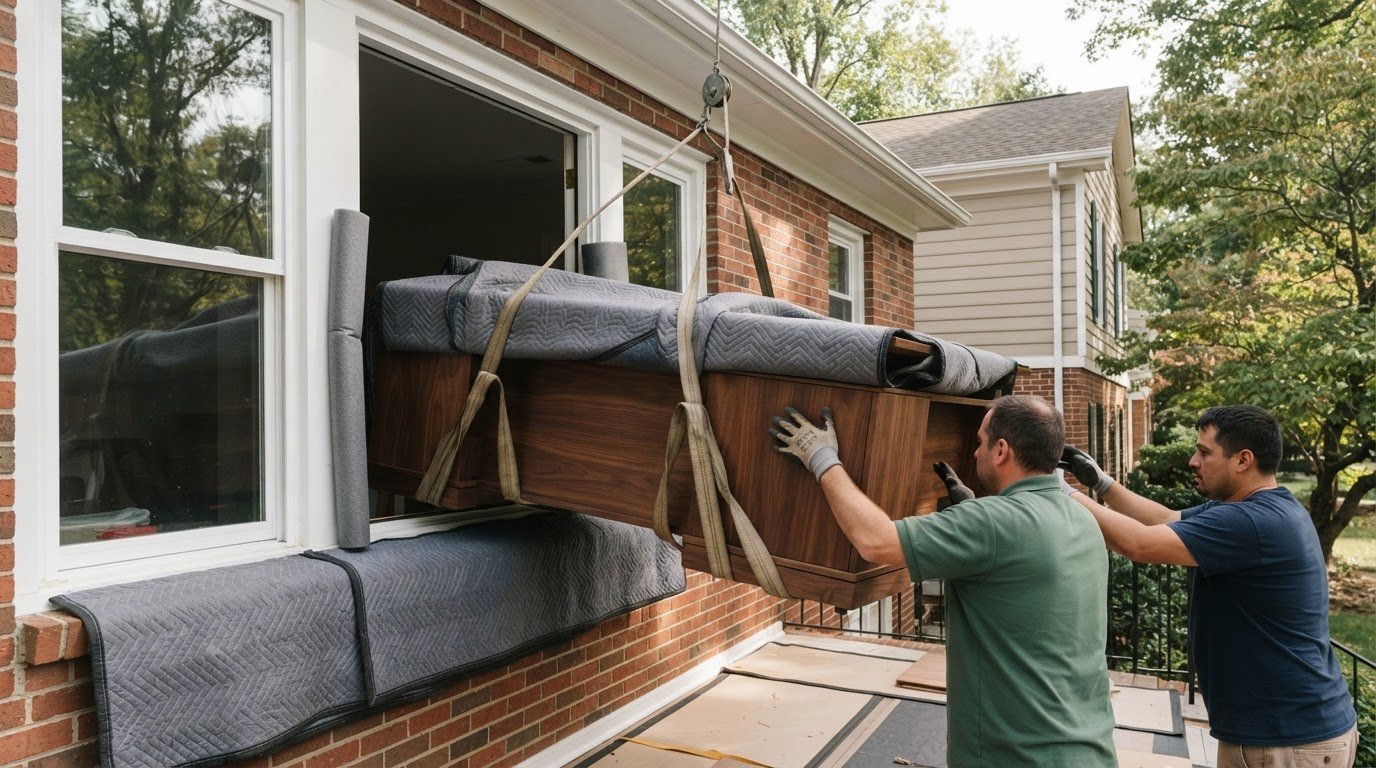
A custom executive desk shouldn't be forced up a staircase that can't accommodate it. To hoist a custom-built executive desk into a second-floor home office in McLean, plan the route and lifting setup first, then move it under control; use a 2x6 frame if you need a platform to raise the desk once it’s upstairs.
A large, valuable desk can be awkward to handle, and one slip can damage its finish, a wall, or the floor. If you’re working out how to hoist a custom-built executive desk into a second-floor home office in McLean, start by measuring the desk and access points, clearing and protecting the route, and planning how to keep the load steady. This guide covers preparing the desk and home, coordinating the lift, and deciding when the staircase or lifting conditions make a DIY attempt unsuitable.
Key Takeaways
- Build a stable support platform that keeps the desk level and helps prevent shifting or floor damage.
- Measure the desk, staircase turns, and upstairs doorway to spot tight points before moving day.
- Remove only the desk parts that can be safely detached, and keep hardware organized for reassembly.
- Protect the wood finish and nearby walls with suitable padding and a clear, controlled route.
- Recognize when the desk’s weight, shape, or hoisting path makes professional moving help the safer option.
Stability and floor protection
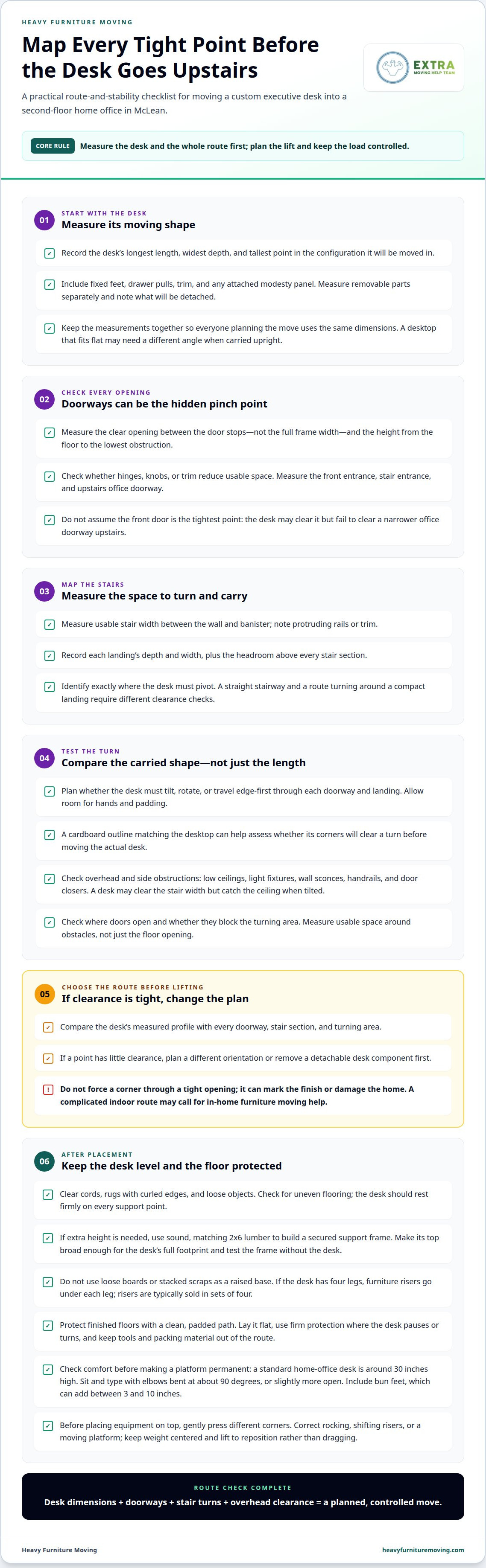
- Before setting the desk in its final position, clear the area. Remove cords, rugs with curled edges, and loose objects. Check for uneven flooring that could make a leg rock. The desk should rest firmly on every support point. If it shifts when gently tested, reposition it before loading it with equipment.
- Build a support platform from sound, matching lumber if the desk needs extra height. The suggested frame material is 2x6 lumber. Make the top broad enough to support the desk’s full footprint, not just its legs. Secure the frame so its parts cannot slide apart, then test it without the desk. Do not rely on loose boards or stacked scraps as a raised base.
- Set the desk’s feet squarely on the platform and check each contact point. If the desk has four legs, use furniture risers under each leg; risers are typically sold in sets of four. Choose a setup that keeps the desk level and prevents the feet from walking across the surface. Check the frame and risers again after placement, before using the desk.
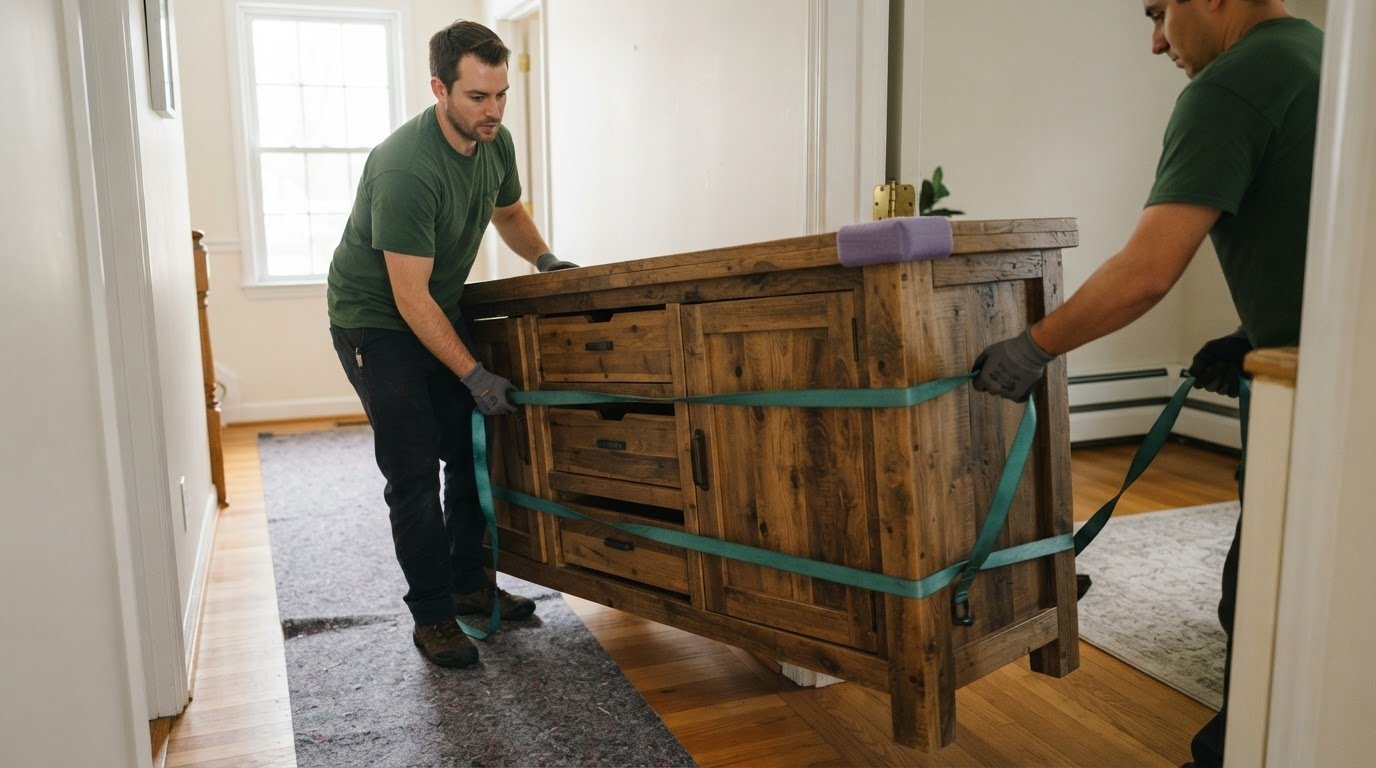
- Protect finished floors with a clean, padded path from the entry to the office. Lay the protection flat, without folds that could catch a desk foot or mover’s shoe. Use firm protection where the desk will pause or turn. Keep the path clear during the move, since a stray tool or piece of packing material can create a pressure point beneath a heavy leg.
- Test the finished height before treating the platform as permanent. A standard home-office desk is around 30 inches high, but a custom desk may differ. Sit and type with elbows bent at about 90 degrees, or slightly more open. Bun feet can add between 3 and 10 inches, so include them when judging the total height. If the platform makes the desk awkward to use, revise it before loading the surface.
- Once the desk is in place, gently press at different corners and check for rocking, shifting risers, or a platform moving against the floor. Correct any movement before placing a monitor or other equipment on top. Keep the weight centered during setup, and avoid dragging the desk. Lift and reposition it with controlled movements.
How to measure whether a custom executive desk will fit up a staircase and through a second-floor doorway
- Measure the desk in its moving configuration. Record its longest length, widest depth, and tallest point, including fixed feet, drawer pulls, trim, and any attached modesty panel. Measure removable parts separately and note which will be detached for the move. A desktop that fits through a doorway flat may need a different angle when carried upright. Keep the measurements together so everyone planning the move uses the same dimensions.
- Measure every doorway along the route. Measure the clear opening between the door stops, not the full frame width, and the height from the floor to the lowest obstruction. Check whether hinges, knobs, or trim reduce the usable space. Measure the upstairs office doorway and the opening at the stair entrance. The desk may fit through the front door but fail to clear a narrower office doorway at the top.
- Map the staircase and landings. Measure the usable stair width between the wall and banister, noting any protruding rails or trim. Record each landing’s depth and width, as well as the headroom above every stair section. A straight stairway differs from a route that turns around a compact landing. Identify where the desk must pivot and measure the space available for that movement.
- Compare the desk’s carried shape with each tight point. Don’t compare only the desk’s length with the stair width. A long top may need to tilt, rotate, or travel edge-first. Plan how it will pass through each doorway and landing, allowing room for hands and padding. A cardboard outline matching the desktop can help you assess whether its corners will clear a turn before moving the actual piece.
- Check overhead and side obstructions. Look for low ceilings, light fixtures, wall sconces, handrails, and door closers. Measure the usable space around each obstruction, not just the floor opening. A desk may clear the stair width but catch the ceiling when tilted. Note where doors can open fully and whether they block the turning area.
- Decide the route before lifting. Compare the desk’s measured profile with every doorway, stair section, and turning area. If one point has little clearance, plan a different orientation or remove a detachable desk component first. Don’t force a corner through a tight opening; that risks marking the finish or damaging the home. For a complicated indoor route, in-home furniture moving help can handle the careful positioning.
How to disassemble a custom-built executive desk safely for moving upstairs
- Empty the desk and record how it fits together. Remove papers, electronics, accessories, and everything inside the drawers. Before loosening anything, photograph the desk from the front, sides, and underneath. Capture details such as a cable tray attached beneath the top or a modesty panel between the legs. These photos can help guide reassembly.
- Remove loose parts before structural parts. Take out drawers, shelves, and removable trays, then set them aside. Check for a release catch or stop before pulling a drawer free. Don’t yank one that resists, since its slides may still be attached. Wrap and label loose components individually to protect the finish and keep them from getting mixed up with other moving supplies.
- Identify which joints are meant to come apart. Inspect the underside, leg connections, and visible fasteners. Follow any assembly instructions supplied with the desk. Detach only components designed to come apart, such as bolted legs or a removable support panel. Don’t cut, pry, or force glued joints. A joint that resists may be structural, and damaging it can leave the desk unstable after reassembly.
- Support each piece before removing its fasteners. Have another person steady a leg, panel, or desktop while you loosen its connection. Keep the top supported until all fasteners are out and the component is ready to lift away. This helps prevent a heavy part from dropping or twisting against the frame. Set detached pieces on a stable, padded surface, not against a wall where they could slide.
- Keep fasteners matched to their original locations. Place screws, bolts, washers, and small brackets in separate bags. Label each bag with its part, such as “left leg” or “rear support,” and attach it to that component without touching the finished wood. Keep fasteners of different lengths separate. The wrong screw in a hole can damage the desk or leave a joint insecure.
- Stop when a component won’t release cleanly. Check for a hidden bracket, a second fastener, or a cable caught behind the desk. Compare the area with your photos and instructions before trying again. If the desk’s construction makes safe separation uncertain, keep it assembled and reassess its route and handling plan. Careful disassembly should reduce bulk without weakening the frame or risking damage to custom joinery.
How to protect a custom wood desk during an indoor move or hoist
- Clear the desk before wrapping it. Remove lamps, electronics, paperwork, and drawer contents. Loose items can shift at a stair turn and strike the wood. Take out removable drawers and wrap them separately. Check the desktop for dust or grit, which can rub against the finish beneath padding. Keep hardware away from the surface as you prepare each part.
- Cover finished surfaces with clean padding. Use clean moving blankets or furniture pads around the desktop, sides, and legs. Smooth the fabric first so folds don’t press ridges into the finish. Protect corners and carved edges, which can catch on door trim during a tight turn. Add padding where the desk could touch a wall, railing, or stair edge.
- Secure the covering without sticking tape to the wood. Wrap the padding snugly, but don’t pull so tightly that it strains projecting details or delicate trim. Put tape on the blanket or on itself, never directly on finished wood, since adhesive can leave residue or affect the surface. Check the wrap before lifting, because loose fabric can bunch against a doorway.
- Protect vulnerable parts from pressure. A thin modesty panel, decorative molding, or projecting drawer pull can be damaged if a strap bears against it. Keep lifting equipment away from fragile edges and don’t use a panel as a handhold. Support the desk at strong structural areas identified during preparation. Pad and carry detached components separately.
- Keep the route clean and shield nearby surfaces. Lay floor protection flat and remove grit, tools, and loose packaging from the path. Pad wall corners and railings where the desk comes closest during a turn. In a McLean home, protect both the upstairs doorway and the stairwell. A clear route helps prevent sudden stops that could shift the desk inside its padding.
- Inspect the desk at each pause. After a difficult turn or a change in hoisting position, check for shifted blankets, exposed corners, or pressure marks. Stop the movement before adjusting the padding, and keep the desk supported while someone fixes the covering. Resume only when the surface is protected. Once upstairs, remove the padding carefully and inspect the finish before placing equipment or reattaching components.
What are the safety risks of carrying or hoisting a heavy desk upstairs
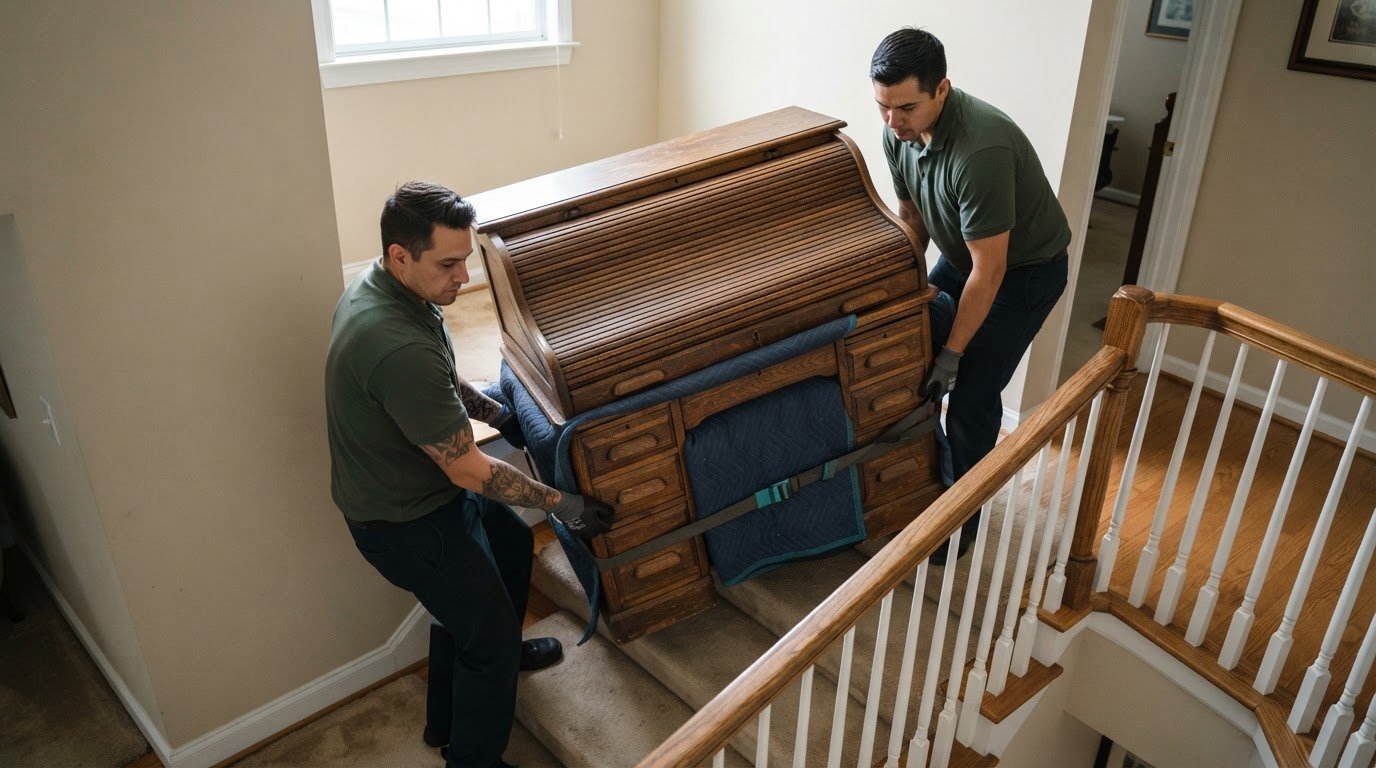
- A shifting desk can pull carriers off balance. A custom executive desk may have unevenly distributed weight, especially if it has drawers or a thick desktop. If the center shifts during a stair turn, a carrier can lose footing or grip. Empty the desk, balance the load, and agree on clear commands before lifting. Stop if it tilts unexpectedly. Don’t try to correct a sudden shift with a sharp twist.
- Blocked vision raises the chance of a fall or collision. A wide desktop can hide stair edges, shoes, and landing corners from the person carrying it. Clear rugs, cords, and loose objects from the route, and make sure everyone can see enough to move deliberately. If the desk blocks the lead carrier’s view, change its position or handling plan before approaching the staircase.
- Pinched hands and trapped fingers can happen at turns. Tight landings leave little room to reposition a desk or move hands away from walls and rails. Choose handholds on solid parts, not decorative trim or a thin panel. Call each turn before moving, and pause while everyone resets their grip. Never place fingers beneath an edge where the desk could settle against a stair or doorway.
- Improvised hoisting can put people and property at risk. A rope tied to a drawer pull, leg, or desktop edge may slip or damage the desk, while a poor anchor point can fail under load. Don’t hoist from an untested attachment or stand beneath a suspended desk. Use a planned method suited to the load and route, and keep people clear of the drop area.
- Strain and fatigue can weaken control. Repeated stair carries, awkward reaches, and sudden stops make a heavy desk harder to guide. Don’t lift beyond what the team can control or rush through a difficult turn. Set a pause point before the staircase and communicate before resuming. If someone feels pain, loses grip, or can’t follow commands, stop and lower the desk safely.
- Protect the home by preventing uncontrolled contact. A desk corner can strike drywall, a banister, or a doorway if carriers lose coordination. Clear the route and protect vulnerable edges before moving. Keep bystanders and pets away from the stairwell and landing. For a heavy, awkward desk that needs controlled lifting, use a heavy lifting moving service rather than improvising a hoist.
Heavy Furniture Moving: in home furniture movers near me
Heavy Furniture Moving provides in-home furniture moving for bulky pieces that are difficult to handle on a tight stairway. Consider professional help when the desk’s size, weight, or route makes carrying it upstairs challenging. The team also offers sofa hoisting, a service for planning a lift when a large item cannot follow the usual path through a home. Wrap, blankets, and straps are included on every job.
Share the desk’s measurements, whether it can be disassembled, and the access route to the second-floor office. Those details help shape the moving plan around the piece and the home. If you’d like help with the desk move, contact Heavy Furniture Moving.
Set Up the Move Before the Desk Moves
Planning how to hoist a custom-built executive desk into a second-floor home office in McLean means treating the move as a coordinated project, not a last-minute lift. Decide who will direct each movement, agree on simple commands, and assign someone to keep track of the route. A shared plan helps prevent mixed signals at a landing or when the desk needs repositioning.
Think beyond getting the desk upstairs. Decide where it will sit, how you’ll use the workspace, and what must be reconnected before work begins. A clear destination makes the final placement more deliberate and helps avoid repeated handling after the lift. If the desk’s size or weight makes the move difficult to coordinate, bring in a team equipped for heavy furniture handling.
Contact Heavy Furniture Moving to discuss help with your desk move. With a workable plan and steady coordination, you can make room for your home office and look forward to using it.
Frequently Asked Questions
How to Raise an Executive Desk?
If your goal is to raise a desk on a stable base, choose one designed to support its legs or frame. Before planning how to hoist a custom-built executive desk into a second-floor home office in McLean, clarify whether you need more clearance, a more comfortable seated position, or a standing workspace. Keep the desktop level and avoid loose objects or unstable stacks beneath it.
How much does it cost to hire furniture movers to move a desk to a second-floor home office in McLean, VA?
The quote depends on the job, including the desk’s size and construction, the route, stair turns and landings, and whether disassembly is needed. Share clear details about the desk and access in McLean so the job can be assessed accurately. Heavy Furniture Moving prices stairs and landings before the crew arrives, with the details discussed during the quote.
Do McLean VA moving companies offer indoor stair carries or furniture hoisting?
Heavy Furniture Moving provides in-home furniture moving and sofa hoisting. Carrying a desk up interior stairs and hoisting an item are different approaches, and the suitable plan depends on the desk’s route and handling needs. McLean residents can use the company’s local moving support for bulky household furniture. Wrap, blankets, and straps are included on every job.
When is an exterior furniture hoist or crane needed to move a desk into a second-floor window?
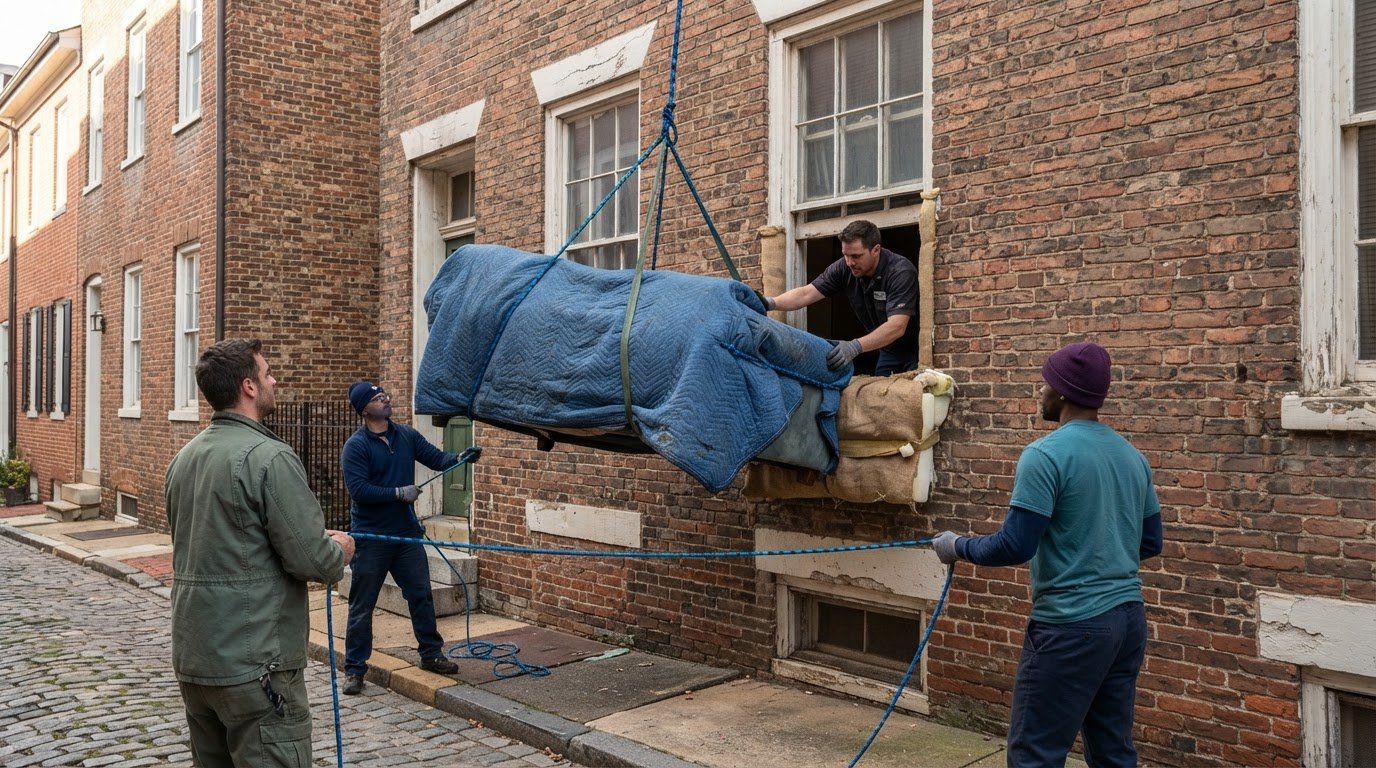
Planning how to hoist a custom-built executive desk into a second-floor home office in McLean starts with assessing whether the interior route can accommodate it. An exterior lift might be considered if the desk cannot pass through the route, even after removable parts are taken off. The window opening, outside access, and lifting path must also accommodate the item. A narrow window may rule out that approach.
How to find insured specialty furniture movers in McLean or Fairfax County?
Look for current written documentation that identifies the mover’s insurance coverage and limits, and distinguish that from crew screening. Heavy Furniture Moving describes its crew as uniformed and background-checked; those details do not establish insurance coverage. For a McLean or Fairfax County desk move, also consider whether the service handles bulky household furniture and plans around the item’s size and indoor route.
Frequently Asked Questions
If your goal is to raise a desk on a stable base, choose one designed to support its legs or frame. Before planning how to hoist a custom-built executive desk into a second-floor home office in McLean, clarify whether you need more clearance, a more comfortable seated position, or a standing workspace. Keep the desktop level and avoid loose objects or unstable stacks beneath it.
The quote depends on the job, including the desk’s size and construction, the route, stair turns and landings, and whether disassembly is needed. Share clear details about the desk and access in McLean so the job can be assessed accurately. Heavy Furniture Moving prices stairs and landings before the crew arrives, with the details discussed during the quote.
Heavy Furniture Moving provides in-home furniture moving and sofa hoisting. Carrying a desk up interior stairs and hoisting an item are different approaches, and the suitable plan depends on the desk’s route and handling needs. McLean residents can use the company’s local moving support for bulky household furniture. Wrap, blankets, and straps are included on every job.
Planning how to hoist a custom-built executive desk into a second-floor home office in McLean starts with assessing whether the interior route can accommodate it. An exterior lift might be considered if the desk cannot pass through the route, even after removable parts are taken off. The window opening, outside access, and lifting path must also accommodate the item. A narrow window may rule out that approach.
Look for current written documentation that identifies the mover’s insurance coverage and limits, and distinguish that from crew screening. Heavy Furniture Moving describes its crew as uniformed and background-checked; those details do not establish insurance coverage. For a McLean or Fairfax County desk move, also consider whether the service handles bulky household furniture and plans around the item’s size and indoor route.