How to Choose Between Moving Heavy Furniture Alone and Hiring Movers
The cheaper-looking choice can take longer: deciding how to move heavy furniture alone versus hiring a professional two-person crew in Manassas Park depends on the item’s weight and the route out of your home. A two-mover crew can suit a packed studio or one-bedroom move with a short carry, while stairs and narrow hallways can make three movers a better fit for a two-bedroom home. Heavy, bulky items or difficult access are good reasons to bring in professionals.
It makes sense to want to save money and handle a move yourself, especially with a few willing friends. But one awkward turn, long carry, or oversized piece can quickly change the job. This guide explains when a DIY move is manageable, when a professional crew is the practical choice, and how access and furniture weight affect the plan. It also covers why fewer movers working longer may not be the best tradeoff for heavy pieces.
Key Takeaways
- Match crew size to both the home and the work involved; room count alone doesn’t show how many heavy or awkward items need moving.
- A packed studio or one-bedroom move with a short carry may suit two movers, while stairs and narrow hallways can call for more help.
- Check the full route from the furniture’s current spot to the truck. Stairs, tight turns, elevators, and a long carry can make a manageable lift much harder.
- Save DIY moves for items you can handle safely with the help and access available; bulky, fragile, or difficult-to-maneuver pieces may be better handled by professionals.
- Think beyond lifting strength: item size, disassembly, and whether furniture fits through doorways all affect the right moving plan.
1. How To Decide the Right Crew Size for Your Move?
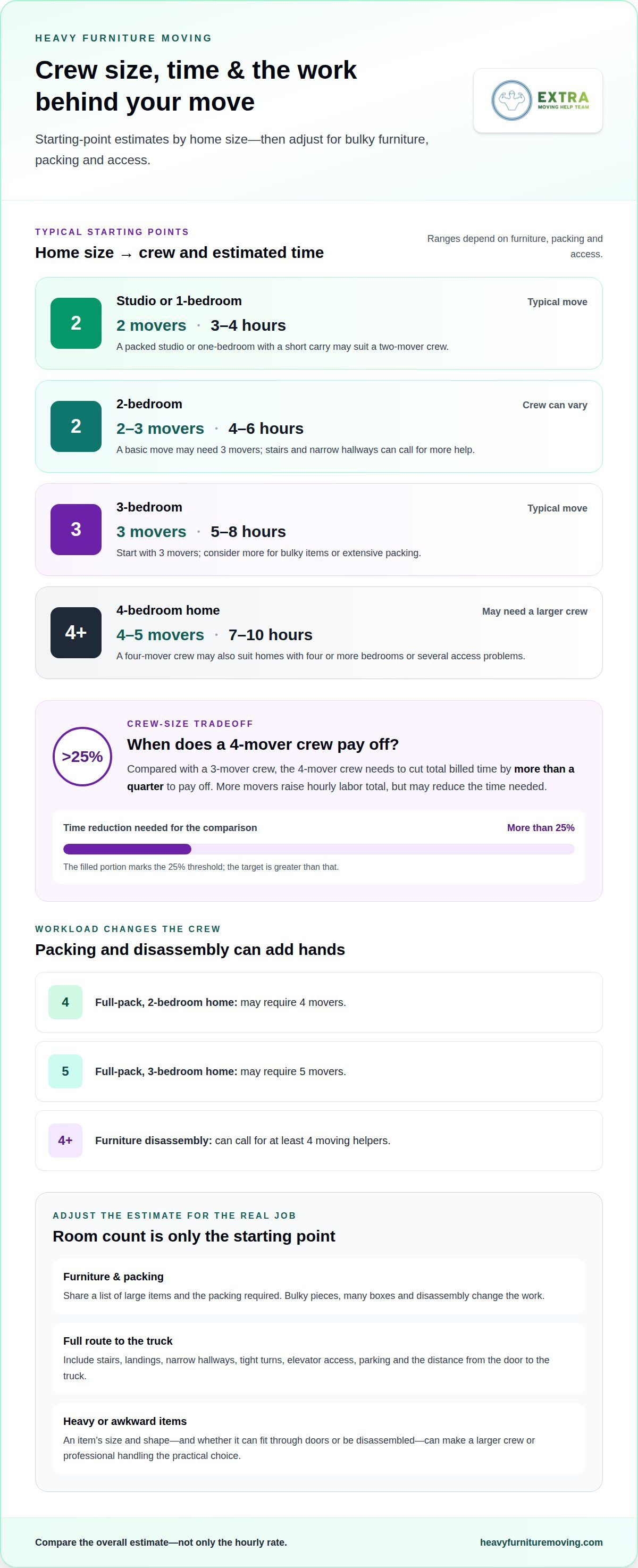
Choosing how to move heavy furniture alone versus hiring a professional two-person crew in Manassas Park starts with the home’s size and the work involved. A studio or one-bedroom move typically takes 2 movers about 3–4 hours. A two-bedroom home often needs 2–3 movers and about 4–6 hours. A three-bedroom house typically uses 3 movers and takes about 5–8 hours. A four-bedroom home may need 4–5 movers and take 7–10 hours.
Use those ranges as a starting point, then account for furniture, packing, and access. A lightly furnished two-bedroom home differs from one with bulky pieces or many boxes. A three-bedroom move should start with 3 movers; consider more if the job includes bulky items or extensive packing. A four-mover crew may suit homes with four or more bedrooms or several access problems.
More movers raise the hourly labor total but may reduce the time needed. Compare the overall estimate, not just the hourly rate. Hiring too few movers can turn a move expected to take a few hours into an entire day’s work. A four-mover crew needs to cut total billed time by more than a quarter to pay off compared with a three-mover crew.
For a useful estimate, provide the bedroom count, a list of large items, and the packing required. Include stairs, narrow hallways, elevator access, parking, and the distance from the door to the truck. Mention furniture disassembly, especially beds or large pieces that cannot move intact. These details affect the work and help the moving company plan a suitable crew.
- A studio or one-bedroom move commonly uses 2 movers; a basic two-bedroom move may need 3.
- A full-pack move may require 4 movers for a two-bedroom home and 5 for a three-bedroom home.
- Furniture disassembly can call for at least 4 moving helpers.
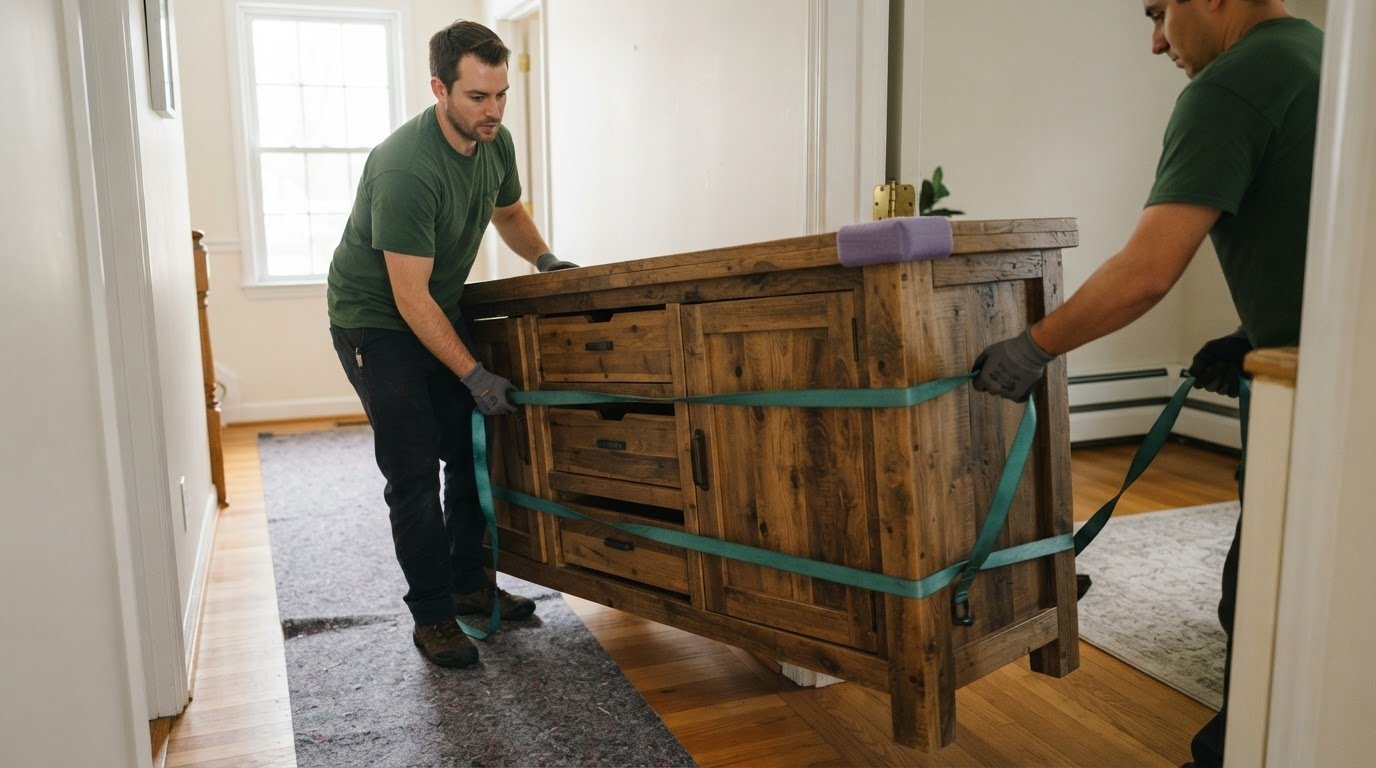
Before moving furniture, remove loose parts where practical and secure doors. Heavy Furniture Moving measures the item and its route before lifting, then uses wrap, blankets, and straps included on every job. Keep screws and detachable pieces together, and tell the crew what needs disassembly.
To decide whether to move heavy furniture alone or hire a professional two-person crew in Manassas Park, consider the item, route, and available help together. A clear inventory and accurate access details make the estimate more useful and help match the plan to the job.
2. Handling bulky, heavy, fragile, or specialty items
A heavy item changes the move even when the rest fits in a studio. A piano, safe, exercise machine, marble tabletop, or large filing cabinet needs a plan for its shape, balance, and path through the home. Tell the movers about each piece before moving day. An item that looks manageable in an open room may become difficult at a doorway or stair turn.
For partial packing that includes fragile, sensitive, oddly shaped, bulky, or heavy belongings, plan for at least 3 or 4 movers. More hands can coordinate the lift and keep the item controlled through loading and unloading. The right crew also depends on the route and the item’s dimensions. A heavy safe in a ground-floor room presents a different job from a long exercise machine in an upstairs bedroom apartment.
Measure the item and its route before moving day. Note narrow doorways, hallway turns, stair landings, and the space around the truck. Compare the item’s widest point with the tightest opening along the path. Include inward-opening doors and nearby furniture that could block a turn. Heavy Furniture Moving measures before lifting and plans for the access conditions.
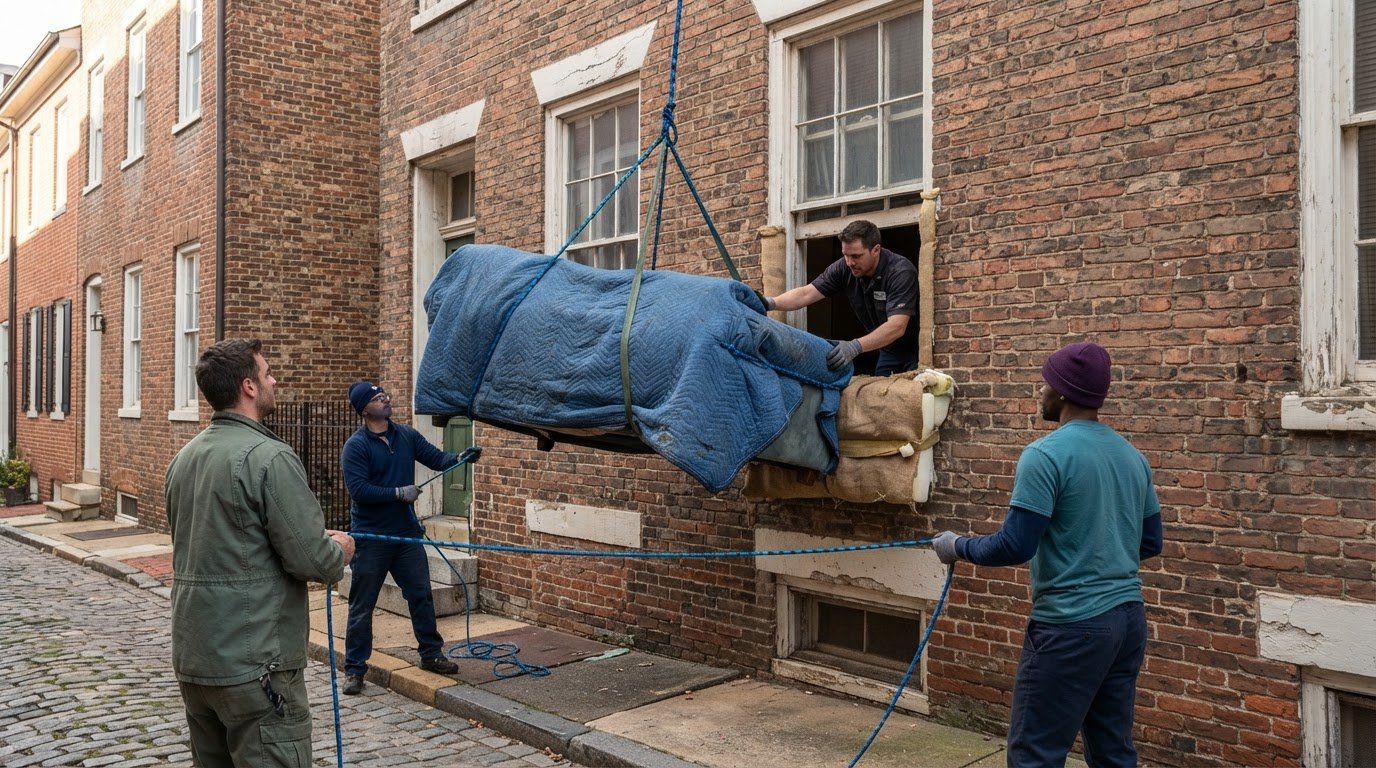
Some pieces need more than a careful carry. If a sofa cannot fit through a doorway, it may need to leave through a window by hoisting. Sofa hoisting support can address that access problem when the usual route won’t work. Flag the window, balcony, or other opening involved during planning. Hoisting is a distinct handling method, not a reason to attempt a difficult lift without a coordinated plan.
Fragile parts need protection before the item moves. Remove detachable shelves, glass panels, or accessories when appropriate, and keep each part together. Wrap exposed surfaces with suitable padding, secure loose doors, and protect corners that could strike a wall. For exercise equipment, identify parts that come apart and keep hardware grouped. Avoid stacking boxes against delicate furniture during loading.
Before the crew arrives, set aside the pieces that need special handling and explain their condition. Point out existing scratches or loose components, then describe each item’s location and destination. A piano, safe, marble top, or machine that cannot be disassembled may call for a larger crew than ordinary household furniture. Clear details help shape the plan for both a studio and a larger home, so the specialty item doesn’t become an unexpected obstacle during loading or unloading.
3. Stairs, elevators, parking, and carry distance
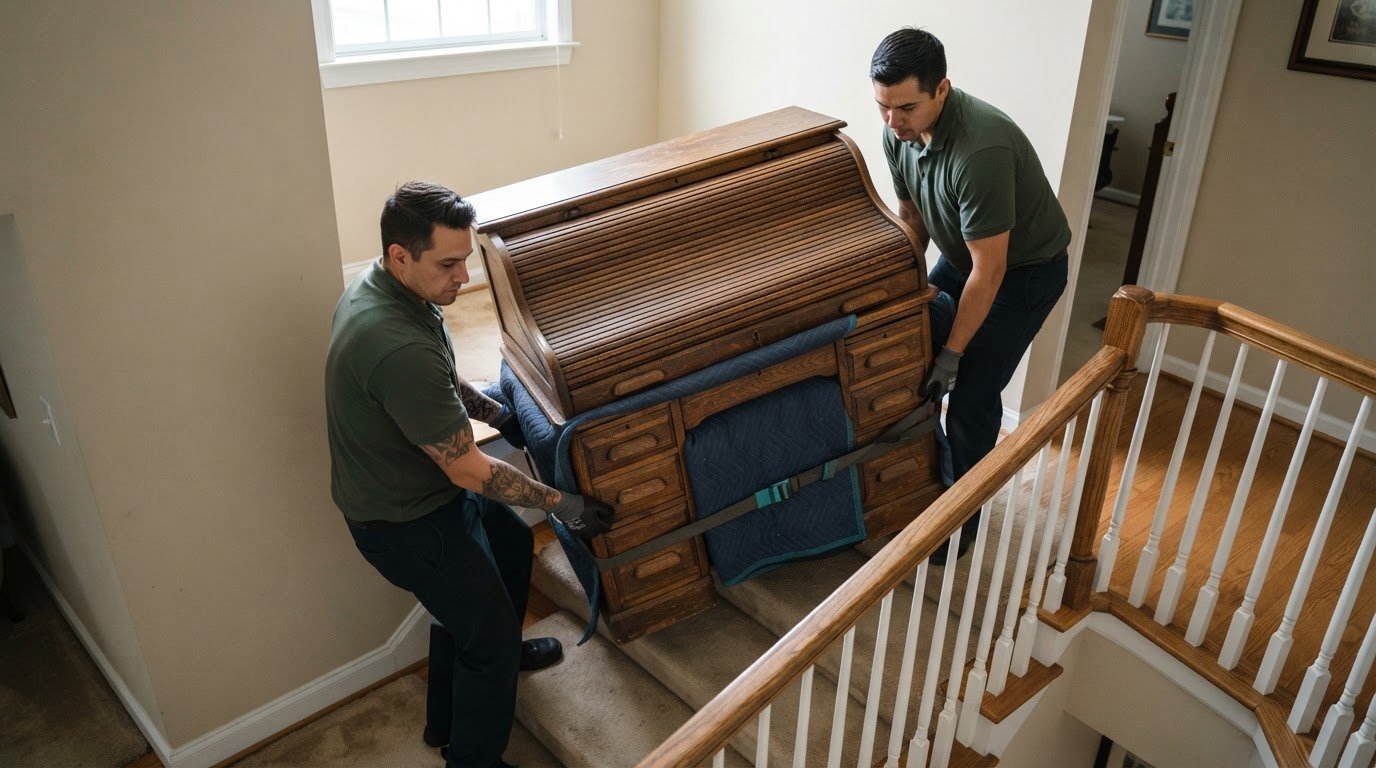
The route from a room to the moving truck can change the work more than the home’s bedroom count. Three movers carrying a two-bedroom home’s contents up or down three flights is an example of a difficult move. Each stair turn affects how a sofa, dresser, or exercise machine can be positioned. A clear route and accurate access details help shape the crew and plan.
Walk the full path before moving day, from the furniture’s current spot to the truck. Note stairs, landings, narrow turns, elevator doors, and changes in floor level. An elevator may reduce stair carries, but its opening and interior still need to fit the item. A long dresser that clears a hallway might not turn into a compact elevator. Include these limits when describing the move.
Parking distance matters, too. A 500-foot gap between a home and the parked moving truck is an example of a long carry. That distance means movers repeatedly carry each piece farther between the entrance and truck. A bulky chair or heavy cabinet takes more effort to maneuver over a long route than across a short path. Describe where the truck can park and any obstacles along the walk.
Packing affects the schedule, too. If boxes still need packing, tell the crew, since carrying them through stairs or a long hallway adds work. Keep doorways and landings clear, and plan the loading order so large pieces do not block smaller items. Heavy Furniture Moving offers packing and unpacking as part of its moving support.
- Identify the number of stair flights and any tight turns along the route.
- Share elevator access and the size limits that affect bulky furniture.
- Describe truck parking and the walking distance to the entrance.
- Separate packed boxes from items that still need packing.
A local move and a long-distance move also differ in how loading and unloading are organized. A household may need one or two truckloads, depending on whether everything fits in one load. For a cross-country move, the planning example calls for 4 movers at the origin for loading and 2 at the destination for unloading. That split shows why each address needs its own access description, including stairs, elevators, and truck distance.
Use access details to decide whether a DIY plan is realistic. A light piece on a clear, short route may be manageable with capable help. A heavy sofa on three flights, a tight elevator turn, or a long carry to the moving truck calls for more coordination. The tougher the route, the more important it is to plan the lift, path, and handoff before moving begins.
4. DIY moves with friends versus hiring professional movers
A DIY move with friends can work for a small, simple load. Two movers may be enough for a light two-bedroom home, while two movers are also recommended for a packed studio or one-bedroom move with a short carry. The deciding factors are the furniture, the route, and whether everyone can handle the planned work. A heavy item or access obstacle can shift the balance toward a professional crew.
Set the plan before moving day. List the furniture, identify who will lift each piece, and make sure everyone understands the route and handoffs. Friends may be a practical choice for boxes and manageable furniture. A professional crew is a better fit when bulky items or access concerns make coordination important. Do not assign someone a lift they cannot manage confidently.
The number of movers also affects how work flows. Two people can move a suitable item together, but they have less flexibility if one person must guide a doorway or keep a route clear. For a small move, decide who handles the truck, who manages the path, and who directs placement at the destination. Avoid having people carry separate heavy items without a clear plan.
Do Virginia movers need licenses or insurance, and what coverage should customers check? Licensing requirements depend on the move’s scope, so distinguish an in-state move from an interstate move and consult the applicable Virginia rules. For coverage, read the written terms for valuation, limits, exclusions, and the claims process before moving day.
Which Manassas Park movers offer two-person crews for single-item or small moves? Two movers are commonly recommended for a studio, one-bedroom, or labor-only move. For a single item, look for local moving help that handles heavy lifting and can plan around the item and its route.
Compare a DIY plan with a professional estimate using the same inventory and access details. Include item sizes, available helpers, stairs or narrow turns, and any disassembly. A clear comparison shows whether friends can manage the work or hiring movers is a better fit. Do not base the decision on crew size alone: the route and item complexity affect how the job unfolds.
Choose DIY for a manageable load, a clear route, and helpers who can work together. Choose professional movers when a heavy piece, difficult access, or a shortage of capable help makes the plan hard to coordinate. Heavy Furniture Moving serves Manassas Park and nearby Northern Virginia communities, including Fairfax, Woodbridge, Manassas, and Centreville.
5. Handling bulky and heavy furniture
Heavy furniture creates a different challenge from moving packed boxes. A sofa, safe, marble top, or exercise machine can be hard to grip, balance, and steer through a doorway. In an apartment or bedroom house, the toughest part may be a narrow turn rather than the distance across the room. Make the decision based on the item and its complete route.
What equipment helps move heavy furniture alone, and how much does it cost? Furniture sliders, a suitable dolly, and moving straps can help with manageable pieces. There’s no single equipment cost; it depends on the tool and whether you buy or rent it.
How can one person safely move heavy furniture alone? Limit solo moves to pieces you can control without straining, and clear the route before shifting anything. Empty drawers, secure loose doors, and use sliders on a suitable floor. Stop if the item becomes difficult to steer. Do not try to carry a bulky piece through stairs or a tight doorway alone.
What are the risks of moving heavy furniture alone, including injury and property damage? Losing control can strain your body or let furniture strike a wall, floor, doorway, or nearby belongings. A sudden shift on stairs or at a tight turn can also leave you unable to guide the item safely.
Break the job into decisions before lifting. Check whether the piece can be disassembled, where its weight is concentrated, and whether the destination has the same access limits. Protect exposed corners and surfaces with padding. Keep screws and detachable parts together, and avoid leaving hardware loose on the floor.
Some items call for coordinated handling rather than a solo workaround. For partial packing involving fragile, sensitive, oddly shaped, bulky, or heavy items, the crew guidance recommends at least 3 or 4 movers. If a sofa cannot fit through a doorway, it may need to be removed through a window by hoisting. That changes the relocation plan and should be identified before moving day.
A bedroom house with an ordinary chair may leave room for a simple DIY lift. A safe, marble top, or large exercise machine that cannot be disassembled is a different job. These examples are identified as bulky or heavy items to disclose when planning a move. Their size, shape, access route, and handling needs all affect the crew and equipment involved.
Choose a professional heavy-lifting plan when the piece is awkward to grip, difficult to steer, or impossible to move through the usual exit. Arrange help with heavy furniture when a difficult lift or hoisting plan is part of your move.
Heavy Furniture Moving: Movers Near Me
Heavy Furniture Moving can handle the heavy lift when a bulky item, tight doorway, or difficult route makes a DIY move impractical. Its in-home furniture moving service helps move furniture inside your home, while Exercise Equipment Moving covers bulky workout equipment. If a sofa will not fit through the usual exit, Sofa Hoisting can help address the access challenge.
Share the item type, its location, and any stairs, narrow turns, or doorway limits involved. Those details help shape a plan around the actual lift. If you’d like help with a heavy furniture move, contact Heavy Furniture Moving.
Make Your Next Move Easier to Manage
Choosing how to move heavy furniture alone versus hiring a professional two-person crew in Manassas Park comes down to one practical question: can you control the item through every part of the route? If the lift, doorway, or final placement feels uncertain, do not force the move. A clear plan helps protect your furniture and make the next step manageable.
Heavy Furniture Moving offers support for furniture moves, exercise equipment, and sofa hoisting when a piece needs a different way out. Share what you’re moving and the access challenges involved, then choose the help that fits the job. You can contact Heavy Furniture Moving to discuss your move.
Take the next step with a plan that fits your home and your furniture. You don’t have to tackle a difficult lift alone.
Frequently Asked Questions
Is It Cheaper To Hire Fewer Movers for More Hours?
Not always. A smaller crew lowers hourly labor, but additional work hours can erase the difference. Compare the total estimated labor, not just the hourly rate. A light load with clear access may suit a smaller crew, while bulky furniture or difficult access can slow the job. For a Manassas Park estimate, include stairs, parking distance, and special handling needs so the comparison reflects the actual work.
How Many Movers Do I Need For My Move?
Use home size as a starting point, then account for furniture and access. A studio or one-bedroom move commonly uses two movers, while a basic two-bedroom move may need three. A three-bedroom house typically starts with three movers, and a full-pack move may call for a larger crew. Bulky pieces, disassembly, stairs, and narrow turns can all change the number that fits the job.
How To Decide the Right Crew Size for Your Move?
Count the large items, identify what needs packing or disassembly, and map the route from each room to the truck. Consider how much work is needed at both addresses. A home with manageable furniture and clear access calls for a different plan from one with heavy pieces and complicated turns. Share these details when requesting an estimate.
Should I Ask Friends to Help Instead of Hiring Movers?
Friends can help with a small move if the items are manageable and the route is clear. Assign each person a role, such as clearing doorways or guiding furniture into place, before lifting begins. For a heavy or awkward item, limited experience and uncertain coordination can make the lift harder to control. Professional movers are a practical choice when access is difficult or the item is too challenging for your available helpers.
How much does a two-person furniture moving crew cost in Manassas Park, Virginia?
The price depends on the job and is provided after a quote request. Cost factors include the furniture type, the amount of lifting, stairs, carry distance, disassembly, and whether you need labor only. Describe the specific item and both locations to get an estimate suited to your move. A single sofa relocation and several pieces requiring indoor placement involve different work, even with the same crew size.
How do you move heavy furniture through stairs, narrow hallways, or doorways safely?
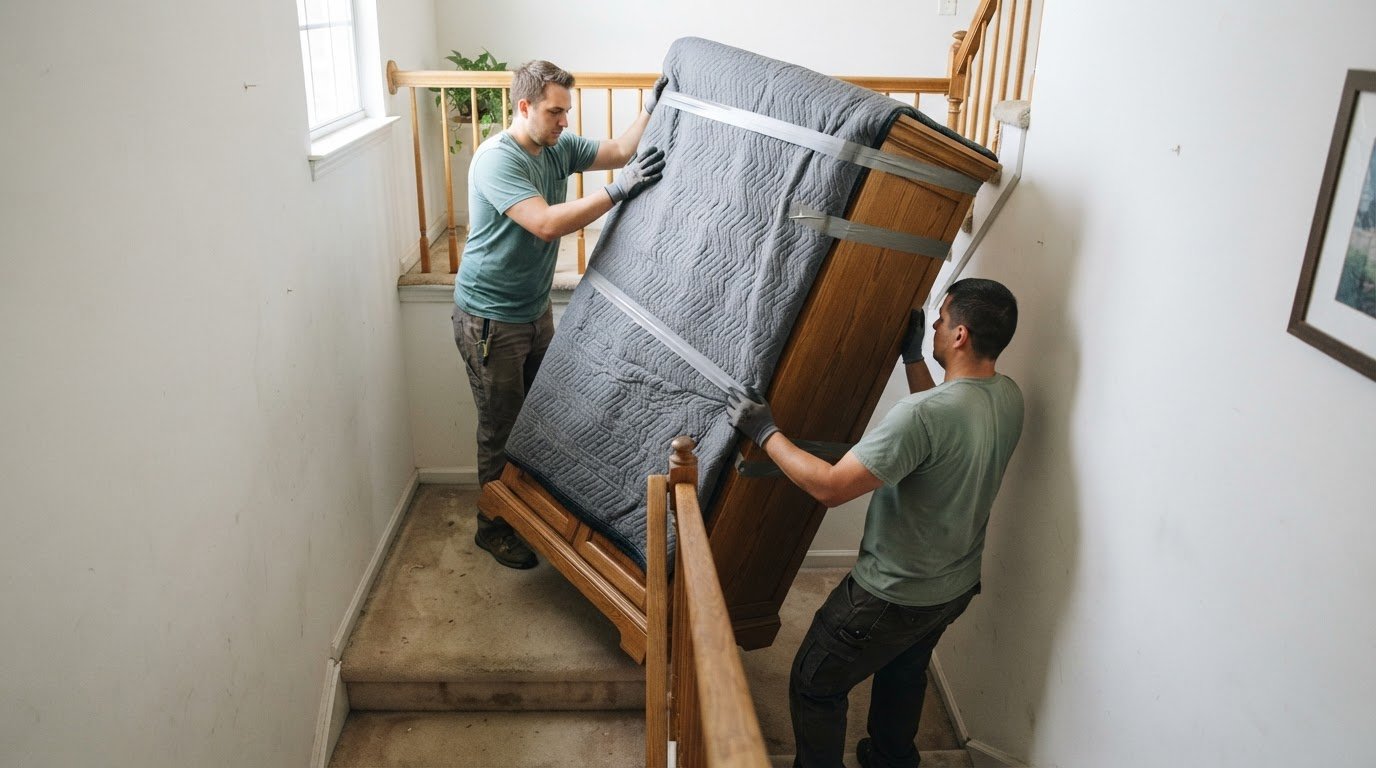
Measure the furniture and tightest points along its route before moving it. Clear loose items, open doors fully, and plan each turn before lifting. On stairs, coordinate movement and communication so nobody changes direction unexpectedly. If a piece cannot pass through a doorway, do not force it. Consider disassembly or another planned route. A sofa that will not fit through the usual exit may need hoisting.
What should you ask when getting a moving quote in Manassas Park?
Give the moving company an item list, note which pieces need disassembly, and describe stairs, narrow doorways, parking, and the carry route. Photos of the furniture and access points can help explain tricky dimensions. Ask what work the estimate covers and how the crew will handle difficult pieces. For Heavy Furniture Moving, wrap, blankets, and straps are included on every job, so they aren’t a separate line item.
Frequently Asked Questions
Not always. A smaller crew lowers hourly labor, but additional work hours can erase the difference. Compare the total estimated labor, not just the hourly rate. A light load with clear access may suit a smaller crew, while bulky furniture or difficult access can slow the job. For a Manassas Park estimate, include stairs, parking distance, and special handling needs so the comparison reflects the actual work.
Use home size as a starting point, then account for furniture and access. A studio or one-bedroom move commonly uses two movers, while a basic two-bedroom move may need three. A three-bedroom house typically starts with three movers, and a full-pack move may call for a larger crew. Bulky pieces, disassembly, stairs, and narrow turns can all change the number that fits the job.
Count the large items, identify what needs packing or disassembly, and map the route from each room to the truck. Consider how much work is needed at both addresses. A home with manageable furniture and clear access calls for a different plan from one with heavy pieces and complicated turns. Share these details when requesting an estimate.
Friends can help with a small move if the items are manageable and the route is clear. Assign each person a role, such as clearing doorways or guiding furniture into place, before lifting begins. For a heavy or awkward item, limited experience and uncertain coordination can make the lift harder to control. Professional movers are a practical choice when access is difficult or the item is too challenging for your available helpers.
The price depends on the job and is provided after a quote request. Cost factors include the furniture type, the amount of lifting, stairs, carry distance, disassembly, and whether you need labor only. Describe the specific item and both locations to get an estimate suited to your move. A single sofa relocation and several pieces requiring indoor placement involve different work, even with the same crew size.
Measure the furniture and tightest points along its route before moving it. Clear loose items, open doors fully, and plan each turn before lifting. On stairs, coordinate movement and communication so nobody changes direction unexpectedly. If a piece cannot pass through a doorway, do not force it. Consider disassembly or another planned route. A sofa that will not fit through the usual exit may need hoisting.
Give the moving company an item list, note which pieces need disassembly, and describe stairs, narrow doorways, parking, and the carry route. Photos of the furniture and access points can help explain tricky dimensions. Ask what work the estimate covers and how the crew will handle difficult pieces. For Heavy Furniture Moving, wrap, blankets, and straps are included on every job, so they aren’t a separate line item.