Heavy Teak Dining Set Moving Service in Fairfax Station
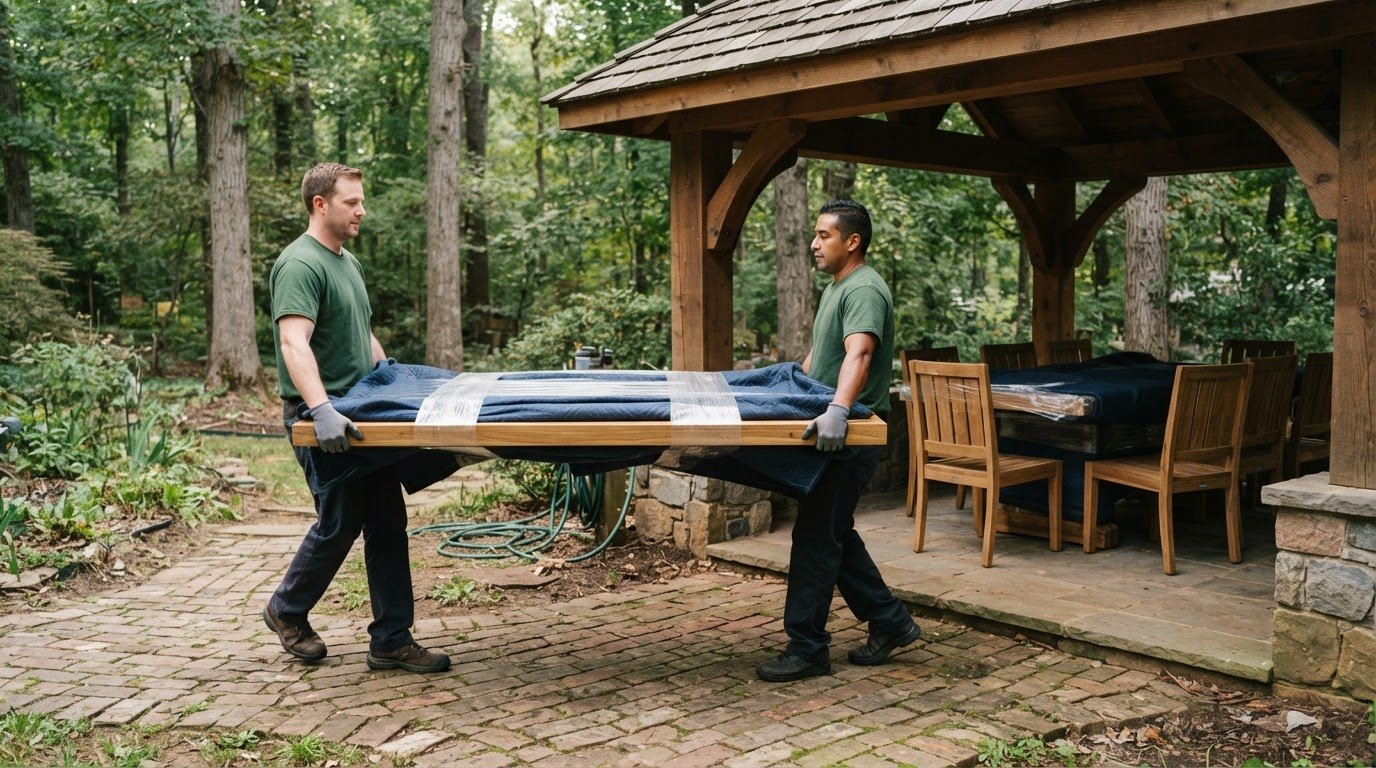
A heavy solid teak dining set can be moved to a covered pavilion in Fairfax Station. Removable table parts can be separated for transport and reassembled at the destination. Moving a heavy solid teak outdoor dining set to a covered pavilion in Fairfax Station takes more than lifting: the table’s size, access route, and number of chairs all shape the plan.
It’s reasonable to want a clear picture of the work before moving a substantial outdoor set. Disassembly can make bulky pieces easier to handle, while careful wrapping helps protect the tabletop and wood finish. This guide explains what affects local pricing and crew size, how movers protect teak, and how the table and chairs fit into the larger move, so you can plan the transfer with fewer surprises.
Key Takeaways
- Local moving costs and crew needs depend on the set’s size, access route, and handling required, not just the distance.
- Separate removable leaves and protect the tabletop with stretch wrap and moving blankets to help guard the wood during transport.
- Include outdoor chairs and other pieces in the moving inventory so the truck space and loading plan account for the full set.
- Measure the table, chairs, doorways, and pavilion access, then plan disassembly and keep hardware together for reassembly.
- Heavy Furniture Moving can help with bulky furniture when careful lifting and transport make the move difficult to manage alone.
Local move pricing and crew size
For a local move in Fairfax Station, the minimum is three hours. That minimum gives the crew time to load, travel, and place the furniture. The final price depends on the specific move and is provided after a quote request. Key factors include the set’s size, packing needs, access at both locations, and the distance between the home and pavilion.
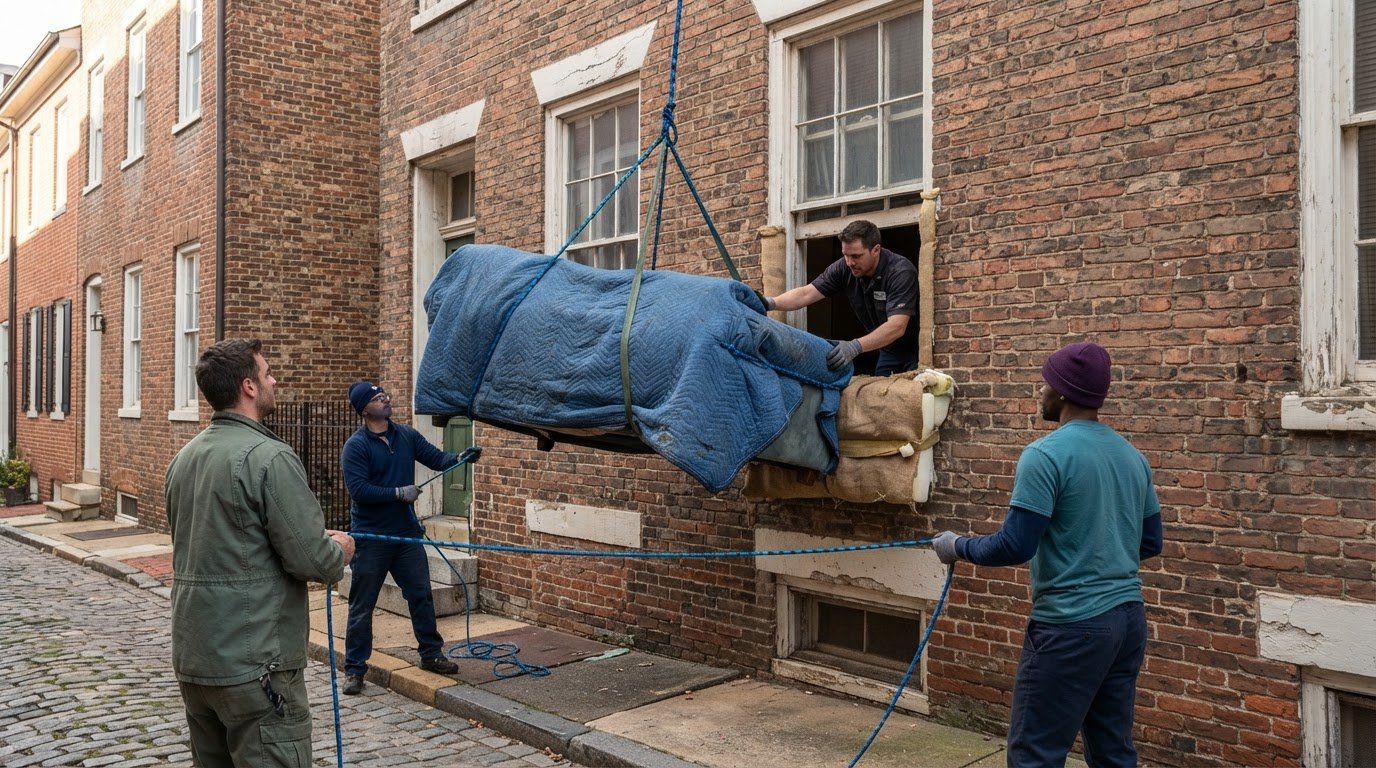
Fairfax Station’s layout can affect the work. The census-designated place has approximately 9.08 square miles of land, according to the U.S. Census Bureau. A short trip can still involve a long carry from a back patio, stairs, narrow halls, or a distant truck parking spot. A nearby pavilion with direct access may require less handling than one reached through several turns or across uneven ground.
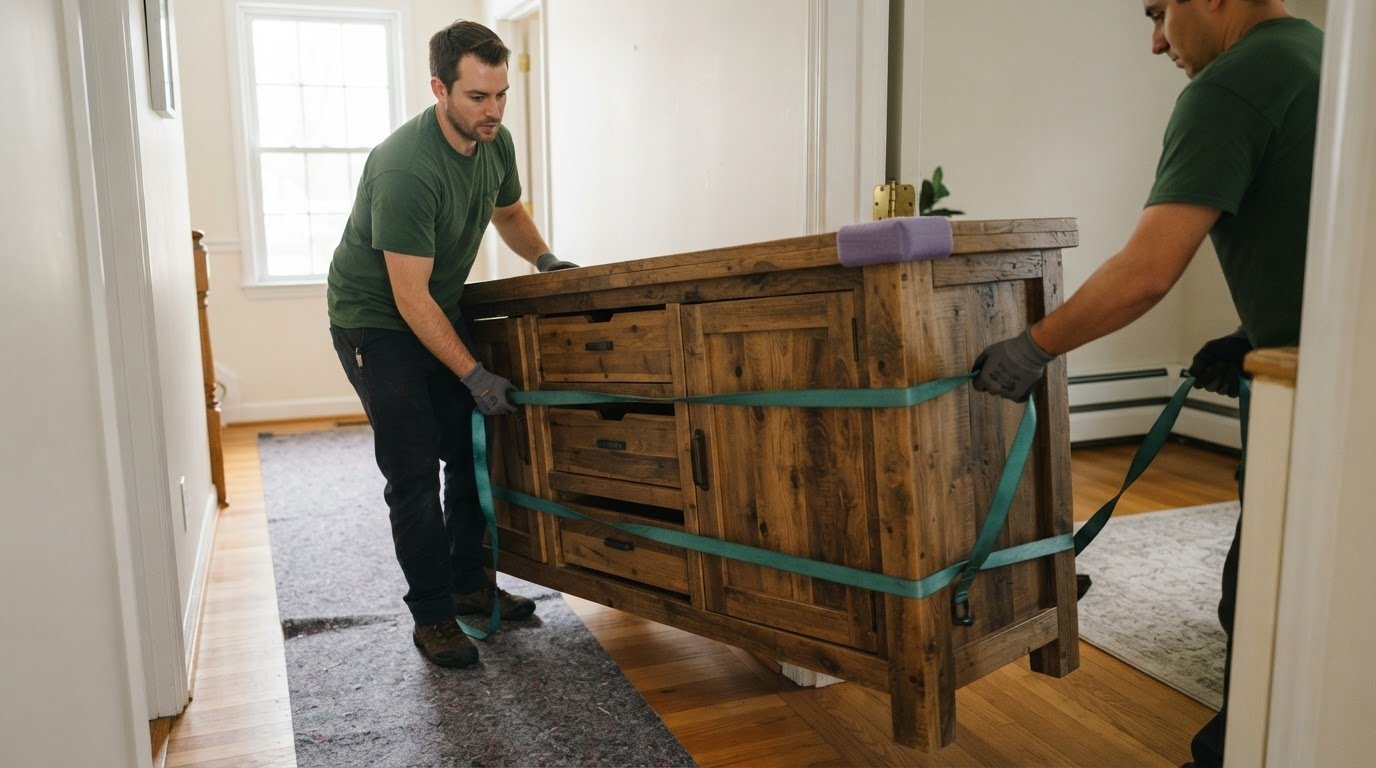
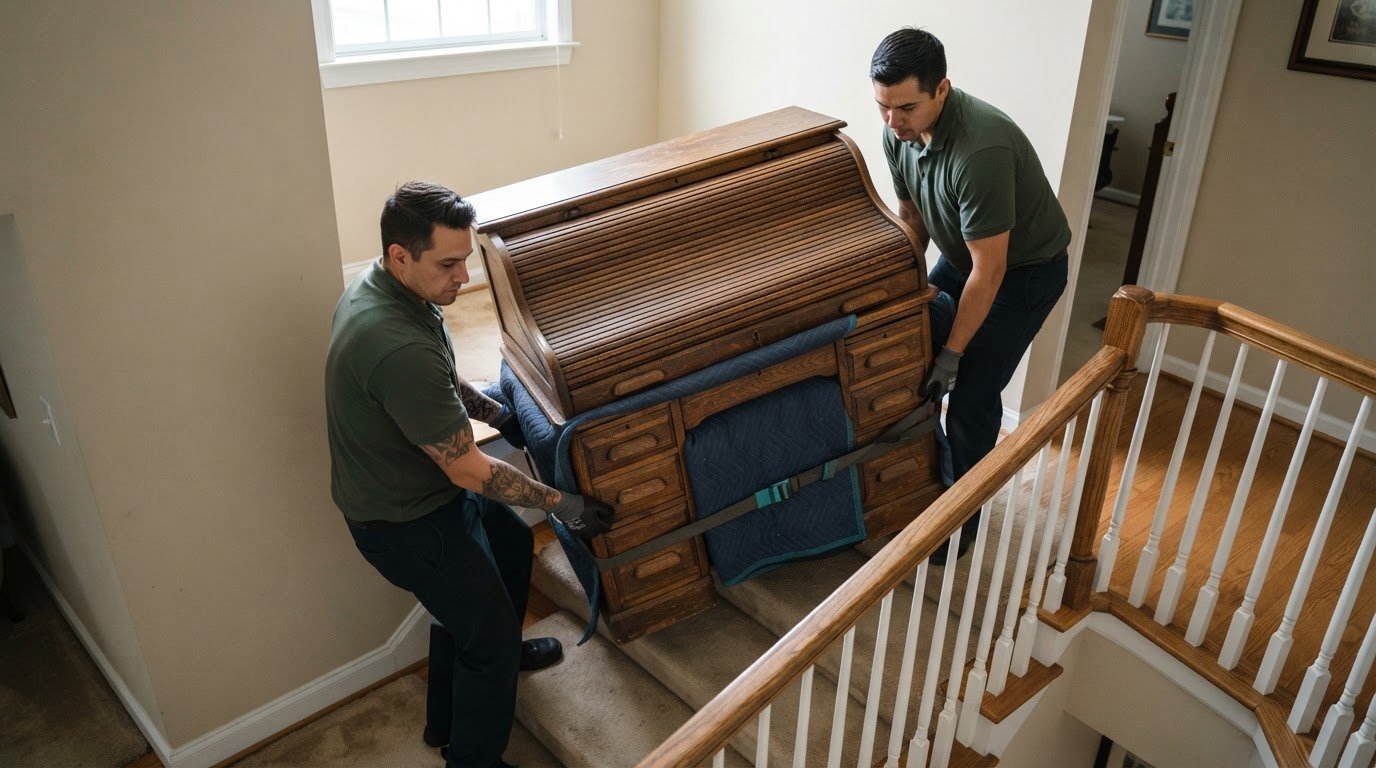
Crew size follows the lifting and route plan, not simply the table’s material. A solid teak table is bulky, and its shape may make safe handling harder than its weight alone suggests. The crew considers whether the table legs or leaves can be removed, how many chairs travel with it, and whether the route allows people to hold and turn each piece securely. Tight doorways or steps call for coordinated handling.
For example, a table that separates into a top, legs, and leaves creates several manageable pieces, but each still needs careful carrying and loading. A fully assembled table may need a different plan if its top cannot clear a doorway easily. Include the chairs, cushions, and any other outdoor pieces in the inventory. Leaving them out can affect the packing and truck-space plan.
- Inventory: Note the table, removable parts, chairs, and other pieces moving to the pavilion.
- Access: Describe stairs, narrow passages, gates, and the path from each room or patio.
- Handling: Identify which parts need disassembly, packing, or extra care around floors.
- Placement: Explain where the set belongs in the covered pavilion and any tight turns along the route.
These details help match the crew and time to the actual job. Heavy Furniture Moving provides local moving help for heavy lifting and the route from the home to the pavilion. A clear inventory and access description make the quote more useful and help avoid last-minute changes to the moving plan.
Protecting the tabletop with stretch wrap and moving blankets
Protect the teak top before moving the dining set. Heavy Furniture Moving includes wrap, blankets, and straps on every job. The crew can cover the tabletop with moving blankets, secure the load, and protect floors along the carrying route. Keep the path clear of landscaping and use a route that avoids planted areas.
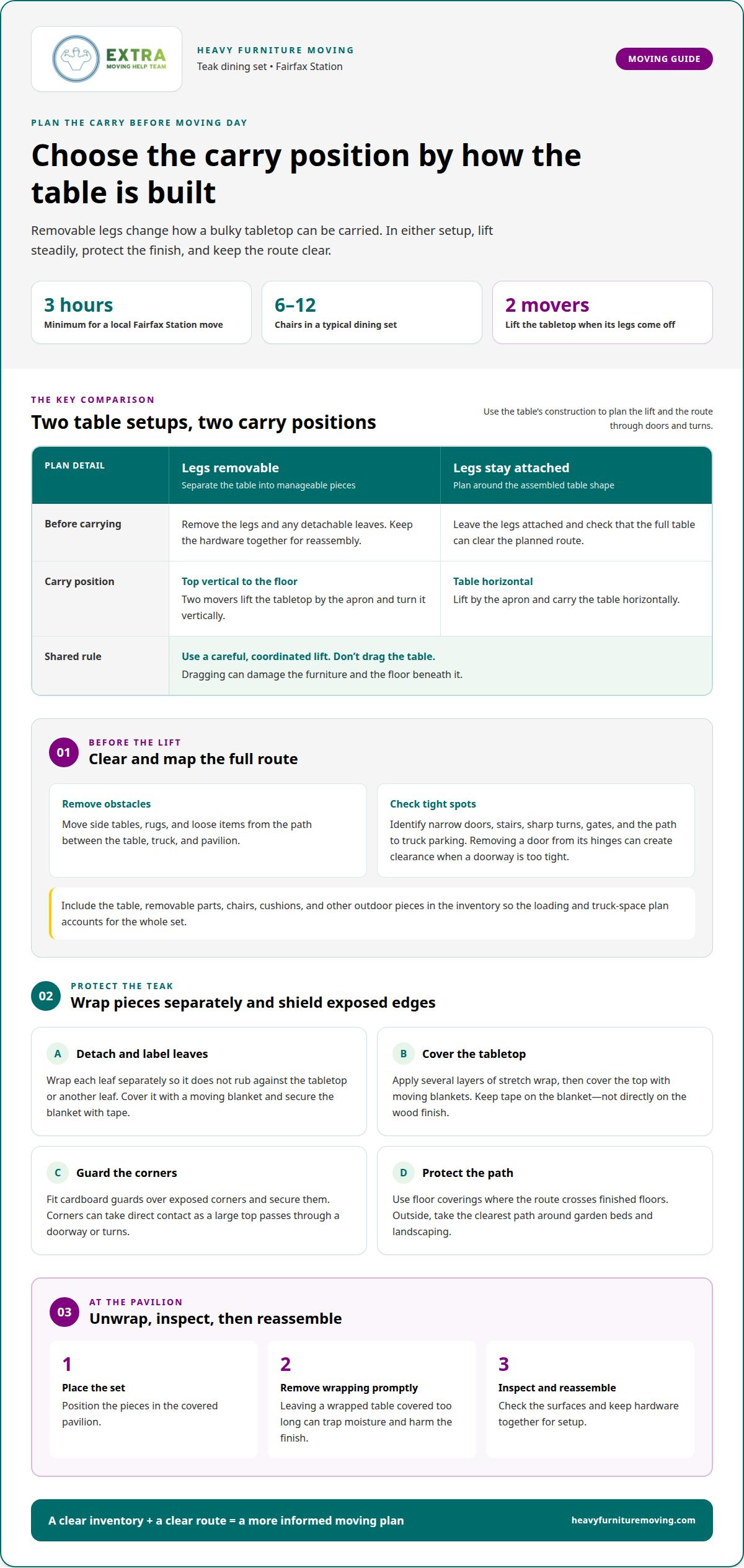
First, remove detachable leaves and wrap each one separately. Separate packing keeps the leaves from rubbing against the tabletop or one another. Cover wrapped leaves with moving blankets, then secure the blankets with packing tape. Keep tape on the blanket, not against the wood finish. Label each piece so it can be matched with the table during setup.
Next, add corner protection. Cut cardboard to form guards for the table’s exposed corners, then tape each guard securely in place. The corners can take direct contact when a large top passes through a doorway or turns in a hallway. A snug guard helps cushion those vulnerable edges while the blankets cover the broader surface.
- Clear the route: Move loose items from the path and identify tight turns before carrying the table.
- Shield the top: Apply several layers of stretch wrap, then cover the tabletop with moving blankets.
- Protect the edges: Fit cardboard guards over corners and secure them without taping directly to teak.
- Pack leaves apart: Wrap each leaf separately, cover it with a blanket, and secure the blanket with tape.
At the covered pavilion, remove the wrapping promptly after placement. Leaving a wrapped table covered for too long can trap moisture and harm the wood finish. Unwrap the top and leaves, then inspect the surfaces before assembling the set. Keep the blankets handy until the table is positioned and the carrying route is clear.
Heavy furniture needs a controlled path from the home to the pavilion. Movers can lay floor coverings where the route crosses finished floors, then carry pieces rather than dragging them. Outside, use the clearest path around garden beds and other landscaping. This protects the route and gives the crew room to handle bulky furniture steadily.
For a heavy teak top, careful wrapping and a clear route work together. Heavy lifting moving help can handle the demanding carry and protect the table during its trip to the pavilion.
Moving larger homes and dining sets
In a larger home, the route from dining room to truck can add more work than the table itself. Clear obstacles along the full path before carrying begins. Move side tables, rugs, and loose items out of hallways, then identify narrow doors and sharp turns. If a doorway is too tight, removing its door from the hinges can create extra clearance for a bulky tabletop.
Plan the dining set as separate pieces where possible. A typical set may include 6 to 12 chairs, which can occupy substantial truck space if they remain assembled. Taking off removable table legs and leaves can make the table easier to carry and load. Keep hardware together so the pieces can be reassembled at the pavilion without searching through packed boxes.
Choose the carrying position based on the table’s construction. If its legs come off, two movers can lift it by the apron and turn the tabletop vertical to the floor. If the legs stay attached, lift by the apron and carry the table horizontally. Either way, use a careful, coordinated lift. Don’t drag the table across floors, since that can damage both the furniture and the surface beneath it.
- Clear the route: Remove obstacles between the table, truck, and pavilion; take a door off its hinges if needed.
- Separate components: Remove detachable legs and leaves, and keep the hardware together.
- Use suitable equipment: A dolly or furniture mover can help lift and roll the table toward the truck.
- Plan for the chairs: Account for every chair when arranging truck space, especially if they remain assembled.
Inside the truck, the table’s position matters. A detached tabletop can stand on its longest side against a truck wall, secured with ropes or straps. A table with attached legs should travel upright, supported underneath by heavy boxes to keep it stable. Keep heavy or sharp-edged items off the top. These choices help limit shifting and contact during the drive.
At the destination, carry each component along the cleared route and place it where the pavilion layout allows room for assembly. Keep the tabletop steady through turns, and avoid resting an edge against a doorway or wall. A planned path, suitable lifting position, and organized truck load make the move more controlled from the home to the covered dining area.
Outdoor items in the moving inventory
Put the teak dining set on the moving inventory as separate pieces, not one vague entry. List the tabletop, each removable leaf, detachable legs, chairs, and hardware. This breakdown shows what needs separate handling and helps match each component to its place at the covered pavilion. Add other outdoor furniture only when it is part of the same move.
Use clear descriptions for pieces that look alike. For example, identify the main tabletop separately from its leaves, then group the chairs by set. If the inventory includes more than one table, distinguish the teak dining table from any side table. Clear names help prevent a component from being left behind or mixed with items destined for another room.
Keep related parts together in the plan. Table screws, bolts, and other hardware belong in a labeled bag associated with the teak table. Identify removable leaves individually so they can be reunited with the correct tabletop. This simple record supports a smoother setup at the pavilion, especially when several furniture pieces travel in the same load.
- Dining table: Record the tabletop, removable legs, and each leaf as distinct components.
- Chairs: Note which chairs belong with the teak set and whether their legs detach.
- Hardware: Keep table screws and bolts in a labeled bag tied to the table entry.
- Other outdoor pieces: List additional furniture separately, with its destination identified.
Material and construction affect how an item is handled. Wooden chair parts can be protected with bubble wrap, while fabric upholstery can be covered with plastic wrap. If chair legs detach, list them as separate components and keep them associated with their chairs. That distinction helps the moving team plan how the chairs fit with the table rather than treating every piece as interchangeable.
Record unusual shapes or fragile surfaces in plain language. A glass tabletop, if included among the outdoor items, should travel vertically rather than flat to reduce the risk of cracking. A solid teak top calls for a different handling plan. Naming the material and identifying detached pieces gives the crew a clearer picture before loading begins.
At delivery, use the inventory to place items in the right part of the pavilion. Set the dining table and its chairs together, and keep any other outdoor furniture in its assigned area. Unwrap the wood promptly after arrival, since prolonged wrapping can trap moisture and harm the finish. A complete item list links pickup, transport, and final placement into one organized move.
What is the best way to measure and prepare a teak dining set for moving?
Measure each piece separately before planning its route. Record the tabletop’s length and width, then measure its height with the legs attached. If the legs or leaves come off, note their dimensions too. Measure doorways, hallways, gates, and the pavilion entrance at their narrowest points. Compare the measurements to spot tight turns before the move begins.
Include the route, not just the furniture openings. A table might clear a doorway but still struggle around a hallway corner or through a narrow gate. Measure the usable space at each turn, and note steps or changes in surface along the way. Share those details with the moving team so they can plan how to carry and position each component.
Prepare the teak by cleaning it with a slightly damp cloth, then drying it immediately. Remove table leaves and detachable legs when practical. Keep screws, bolts, and other hardware together in a labeled bag associated with the table. This prevents small parts from becoming separated during packing and makes them easier to find during reassembly.
- Table legs: Cover each leg individually with bubble wrap, keeping packing tape off the wood.
- Chair legs: If removable, detach and wrap them individually in bubble wrap.
- Chair seats and backs: Cover them with moving blankets and secure the blankets with tape.
- Wood and fabric: Use bubble wrap for wooden chair parts and plastic wrap for fabric upholstery.
Keep each wrapped component identified with its matching item. That matters when a dining set includes multiple chairs and detached parts that may look similar once packed. Store the labeled hardware bag with the table components, not loose among unrelated boxes. A clear inventory supports an organized move from pickup through setup.
Before carrying begins, compare the largest packed piece with the narrowest part of the measured route. If the tabletop won’t pass through a doorway as carried, the measurements can guide a different angle or a plan to remove more components. At the pavilion, use the recorded dimensions to position the set without blocking access or crowding the intended dining area.
For help with measuring, preparation, and moving bulky teak pieces, request heavy furniture moving help.
Heavy Furniture Moving
Heavy Furniture Moving helps with demanding furniture moves, including a solid teak dining set headed to a covered pavilion. Turn to the team when the table’s weight, narrow access, or several separate pieces make the carry difficult to manage alone. A clear inventory, measurements, and destination plan help shape how the set is handled from pickup through placement.
For a larger move, the team can also help coordinate heavy items with the rest of the household furniture. Share which parts detach and where each piece belongs, so the moving plan accounts for the full set. If you’re preparing to move a teak dining set in Fairfax Station, contact Heavy Furniture Moving to discuss the job.
Plan the pavilion setup before moving day
Decide how you want the dining area to work once the teak set arrives. Consider the walking space around the table, the chair positions, and the route people will use to enter the pavilion. A clear destination plan helps the move finish with the set ready for its intended use, rather than leaving you to rearrange heavy pieces later.
Moving a heavy solid teak outdoor dining set to a covered pavilion in Fairfax Station is one part of a larger household move or a focused furniture transfer. Heavy Furniture Moving also provides local moving help, exercise equipment moving, and sofa hoisting, supporting different heavy-item needs while keeping the task at hand in focus.
Share the destination and the work you need done, then choose the help that fits your move. Contact Heavy Furniture Moving today to discuss moving your teak dining set. A clear plan can make the next step feel straightforward.
Frequently Asked Questions
Do movers disassemble and reassemble furniture?
Yes, movers can disassemble and reassemble furniture when the move calls for it. For a teak dining set, that may mean separating removable legs or leaves to handle the pieces more easily. Keep the tabletop and components together through loading and delivery. At the pavilion, place the table where it will be used before reassembly, so you don’t need to shift the assembled set again.
How much do movers cost in Fairfax Station?
Moving costs in Fairfax Station depend on the work involved, including the items being moved, access at both locations, travel, and handling needs. A dining set with detachable parts and a clear route can require a different plan than an assembled table carried through stairs or tight turns. Heavy Furniture Moving offers hourly labor with a two-hour minimum and flat rates for most single heavy items. The quote reflects the specific job.
What access details matter for my Fairfax Station move?
The most useful access details are the route’s narrowest points and any obstacles between the pickup location and pavilion. Note stairs, landings, gates, tight turns, uneven surfaces, and where the truck can stop. For example, a wide patio door may still lead to a narrow garden gate. These details help the movers plan the carry and choose a path that avoids unnecessary handling.
How much does it cost to move a heavy solid teak outdoor dining set in Fairfax Station, VA?
There isn’t one fixed amount for every set; the quote depends on the table, chairs, access, and handling required. For moving a heavy solid teak outdoor dining set to a covered pavilion in Fairfax Station, removable parts and the route from the home matter. Heavy Furniture Moving provides a quote based on the job’s specific requirements.
What local moving companies in Fairfax Station handle heavy outdoor furniture?
Heavy Furniture Moving handles residential moves involving heavy and bulky household items in Fairfax Station. This can suit a move where a solid teak table and chairs need careful handling between a home and covered pavilion. Share the set’s components and access conditions when discussing the job. The team also provides local moving help for household moves, so the outdoor set can be part of the broader move.
How many movers or what equipment are needed to move a heavy teak table safely?
The crew size depends on the table’s dimensions, weight, construction, and carrying route. A table with removable legs may be carried using its apron, with the top positioned vertically. A dolly can help move a table toward the truck when the route allows. Heavy Furniture Moving includes wrap, blankets, and straps on every job, and plans the handling around the table and access.
Can a teak dining set be moved through narrow doors, gates, or uneven paths?
Often, the route can be managed by adjusting the table’s position or separating removable parts. A tabletop may pass through a tight doorway when tilted or angled diagonally. Clear the route and note narrow gates, sharp turns, and uneven sections before carrying begins. If a door limits clearance, removing it from its hinges may create more room for a bulky piece to pass.
How should teak furniture be protected from scratches and weather during a move?
Cover the teak surface with stretch wrap and moving blankets, and secure the load with straps during transport. Heavy Furniture Moving includes wrap, blankets, and straps on every job. Keep the table protected from contact with other cargo and covered during the trip. Once it reaches the covered pavilion, remove the wrapping promptly; leaving it on too long can trap moisture and affect the wood finish.
Frequently Asked Questions
Yes, movers can disassemble and reassemble furniture when the move calls for it. For a teak dining set, that may mean separating removable legs or leaves to handle the pieces more easily. Keep the tabletop and components together through loading and delivery. At the pavilion, place the table where it will be used before reassembly, so you don’t need to shift the assembled set again.
Moving costs in Fairfax Station depend on the work involved, including the items being moved, access at both locations, travel, and handling needs. A dining set with detachable parts and a clear route can require a different plan than an assembled table carried through stairs or tight turns. Heavy Furniture Moving offers hourly labor with a two-hour minimum and flat rates for most single heavy items. The quote reflects the specific job.
The most useful access details are the route’s narrowest points and any obstacles between the pickup location and pavilion. Note stairs, landings, gates, tight turns, uneven surfaces, and where the truck can stop. For example, a wide patio door may still lead to a narrow garden gate. These details help the movers plan the carry and choose a path that avoids unnecessary handling.
There isn’t one fixed amount for every set; the quote depends on the table, chairs, access, and handling required. For moving a heavy solid teak outdoor dining set to a covered pavilion in Fairfax Station, removable parts and the route from the home matter. Heavy Furniture Moving provides a quote based on the job’s specific requirements.
Heavy Furniture Moving handles residential moves involving heavy and bulky household items in Fairfax Station. This can suit a move where a solid teak table and chairs need careful handling between a home and covered pavilion. Share the set’s components and access conditions when discussing the job. The team also provides local moving help for household moves, so the outdoor set can be part of the broader move.
The crew size depends on the table’s dimensions, weight, construction, and carrying route. A table with removable legs may be carried using its apron, with the top positioned vertically. A dolly can help move a table toward the truck when the route allows. Heavy Furniture Moving includes wrap, blankets, and straps on every job, and plans the handling around the table and access.
Often, the route can be managed by adjusting the table’s position or separating removable parts. A tabletop may pass through a tight doorway when tilted or angled diagonally. Clear the route and note narrow gates, sharp turns, and uneven sections before carrying begins. If a door limits clearance, removing it from its hinges may create more room for a bulky piece to pass.
Cover the teak surface with stretch wrap and moving blankets, and secure the load with straps during transport. Heavy Furniture Moving includes wrap, blankets, and straps on every job. Keep the table protected from contact with other cargo and covered during the trip. Once it reaches the covered pavilion, remove the wrapping promptly; leaving it on too long can trap moisture and affect the wood finish.