Heavy StairMaster Moving and Installation in South Riding
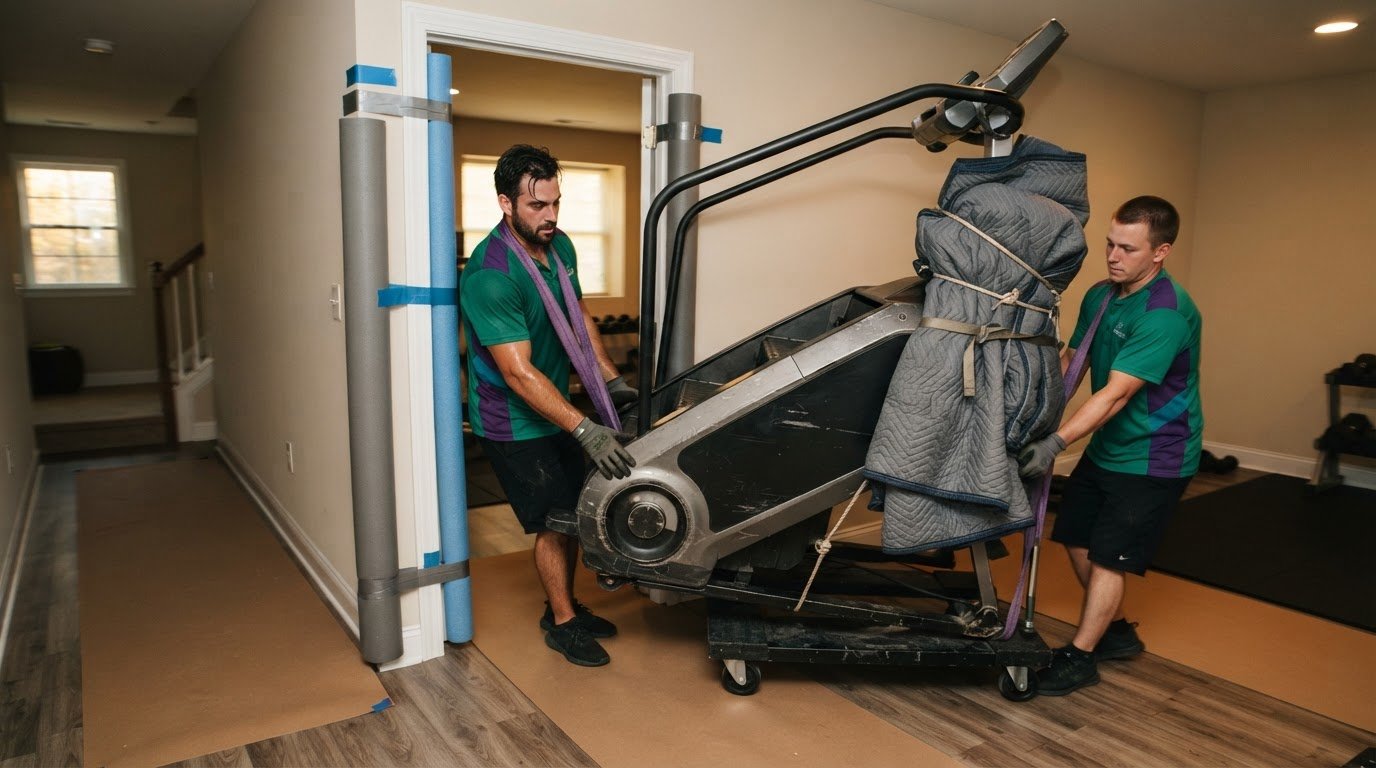
A commercial StairMaster may need partial disassembly to pass through doorways or navigate stairs safely. The right approach depends on the machine’s design and the route into your home.
It’s reasonable to worry about tight turns, floors, walls, and whether the equipment will work properly after it’s set up. This guide explains when disassembly may be needed, how the move can protect your home, and what affects the time and specialty moving costs.
You’ll also learn that moving and fully reassembling a commercial stair climber typically takes 2-4 hours, while the details of the home and machine shape the work involved. We’ll walk through the process so you can plan the move with a clearer picture of what to expect.
Key Takeaways
- Whether a StairMaster needs partial disassembly depends on its design and the route through your home.
- Careful handling and protection help reduce the risk of damage to floors, walls, and doorways.
- Plan for reassembly and equipment checks as part of the setup, not just the carry into the room.
- Access, stairs, machine size, and the amount of disassembly all shape the time and work involved.
- Heavy Furniture Moving offers Exercise Equipment Moving for homeowners who need help handling a bulky stepper.
Do stepper machines need to be disassembled for moving?
Often, yes, at least partially. Whether disassembly is needed depends on the machine’s design and the route into the room.
Moving a heavy commercial StairMaster into a residential fitness room in South Riding takes more than lifting strength. A machine can be difficult to control around stairs, corners, and thresholds, even with several people. A shifting load can put people at risk and damage the equipment or home. A professional crew plans the route, selects suitable handling equipment, and controls each movement.
Disassembly can make a machine easier to guide through a tight opening, but taking it apart without a plan creates risks. Cables, bolts, electronic connections, and accessories can be misplaced or reconnected incorrectly. Before separating components, movers can photograph cable routing and bolt placement, keep loose parts together, and support the frame during handling.
Truck loading matters, too. Movers should secure the StairMaster against sliding or tipping and position it with the truck’s overall load and weight distribution in mind. Heavy equipment placed carelessly can affect stability during braking, acceleration, and turns. Padding and restraints help protect exposed surfaces and moving parts in transit.
Commercial stair climbers aren’t the only fitness equipment movers handle. Large commercial machines, multi-station systems, treadmills, and mini steppers each have different handling needs. A foldable treadmill differs from a fixed-frame machine, while a rotating-step climber may need partial disassembly. The machine’s size and construction shape the plan.
South Riding or Loudoun County rules don’t determine whether a stepper needs disassembly. The machine and access route do. Treat any separate room construction or wiring work as distinct from moving the equipment.
For South Riding, choose specialty fitness-equipment movers who handle commercial machines, route planning, protective materials, and careful truck loading. Ask about their experience with disassembly, reassembly, tools, floor protection, and insurance. Those details help show whether the crew can manage the machine and its path into your home.
Disassembly, reassembly, and calibration
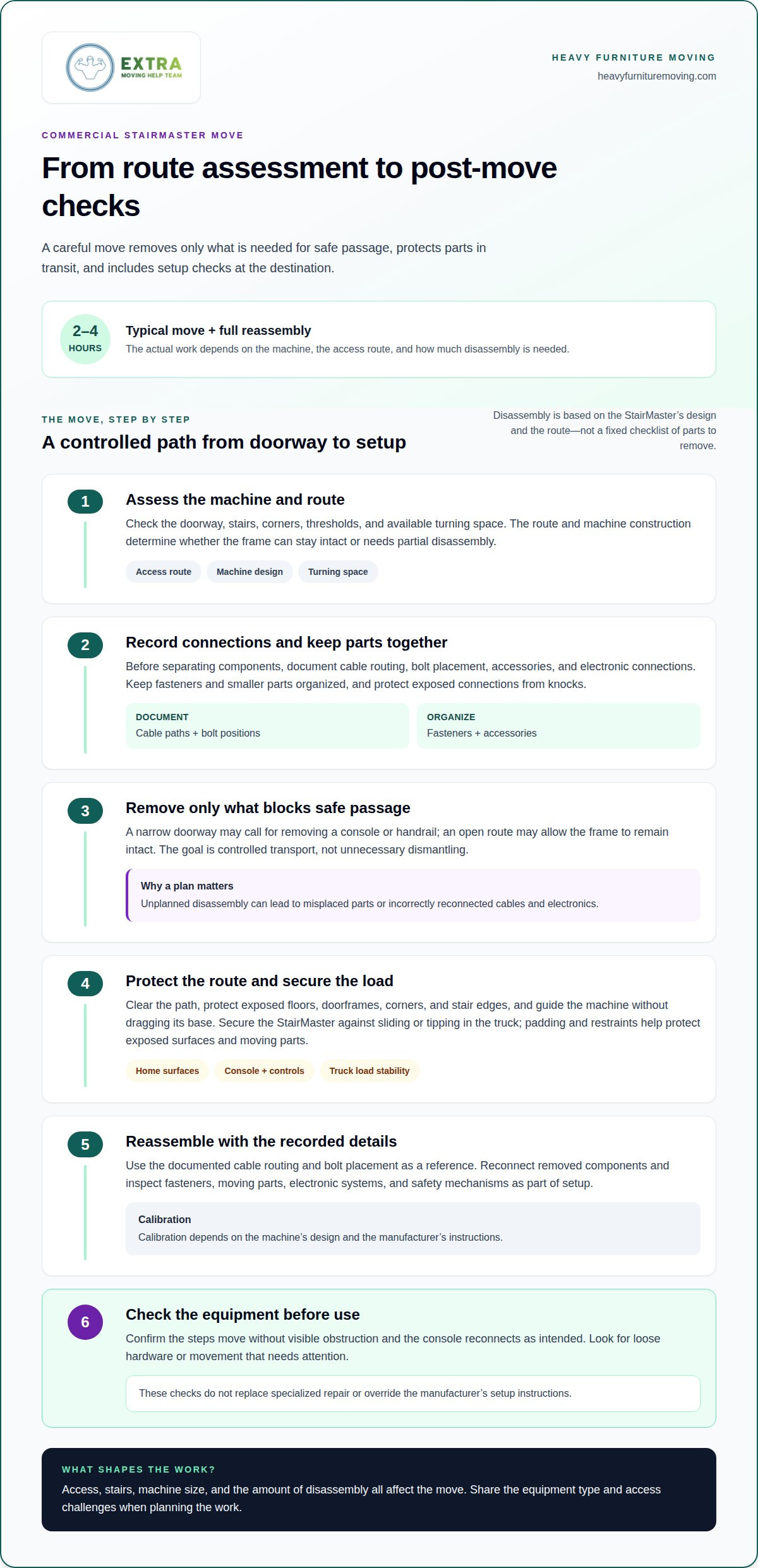
A commercial stair climber doesn’t always need complete disassembly. Movers assess the machine and route, then remove only components that prevent safe passage. A narrow doorway may require removing a console or handrail, while an open route may allow the frame to stay intact. The goal is controlled transport, not unnecessary dismantling.
Before separating parts, the crew documents cable routing, bolt placement, accessories, and electronic connections. Photos provide a reference for reassembly. Movers keep fasteners and smaller components together and protect exposed connections from knocks during the trip. This preparation helps prevent missing parts and confusing wire paths at the destination.
Reassembly takes more than tightening visible bolts. A commercial stair climber typically takes 2-4 hours to move and fully reassemble. The crew inspects fasteners, moving components, electronic systems, and safety mechanisms as part of setup. Calibration depends on the machine’s design and the manufacturer’s instructions. A careful inspection can identify loose hardware or movement that needs attention before use.
Squat racks require a different sequence. Movers can separate the uprights, crossmembers, and removable supports when the assembled frame won’t clear the route. They protect contact points and organize paired pieces. At the new room, the crew rebuilds the frame, checks connections, and confirms it stands stable before replacing removable parts.
Treadmills vary, too. Some fold, while others don’t, so movers plan around the frame instead of assuming it will collapse. They protect the console, power cord, belt, and exposed controls from impact and pressure. If partial disassembly is needed, the crew records connections and hardware first, then secures the removed parts for transport.
After setup, the crew checks the equipment’s moving parts and controls. A StairMaster’s steps should move without visible obstruction, and the console should reconnect as intended. A treadmill needs a clear belt path; a squat rack needs firm connections. These checks don’t replace specialized repair or override the manufacturer’s setup instructions.
For a difficult route or several pieces, arrange specialty equipment moving support that can manage careful disassembly, transport, and reassembly. Share the equipment type and the access challenges so the move can be planned around the actual machines.
Protecting floors, walls, and doorways
Plan protection for the StairMaster’s entire route, from the entry door to its final position. Movers should protect the machine, home surfaces, and electronic components at each stage.
Moving-Day Protection and Placement
Before moving, the crew clears the path and protects exposed doorframes, corners, and floors. They use padding or floor coverings along the route and guide the machine without dragging its base. On arrival, they position the StairMaster where the room layout allows access for use and future cleaning.
Heavy exercise equipment concentrated over a small floor area can create substantial pressure. The machine’s contact points, the floor beneath them, and the room layout all affect the load. Movers can place protective material beneath contact points, but it doesn’t replace structural support when a floor needs assessment.
Electronic components need separate protection. Movers secure the console and exposed controls against bumps, keep cables from snagging, and avoid placing weight on screens or connectors. A loose power cord, for example, can catch on a doorway edge, so the crew routes and secures it before maneuvering the machine.
Stair Transport
For residential stairs, movers first assess the StairMaster’s position, stair layout, and available turning space. They control the machine as a team, keeping it supported rather than letting it slide on the steps. Padding can protect stair edges and nearby walls as the crew moves carefully between landings.
A tight turn may call for partial disassembly before the machine reaches the stairs. The crew plans where to pause, how to keep the load stable, and how to protect handrails and corners. Avoid rushing: controlled movement helps prevent wall contact or an uncontrolled shift on a step.
Access Measurements
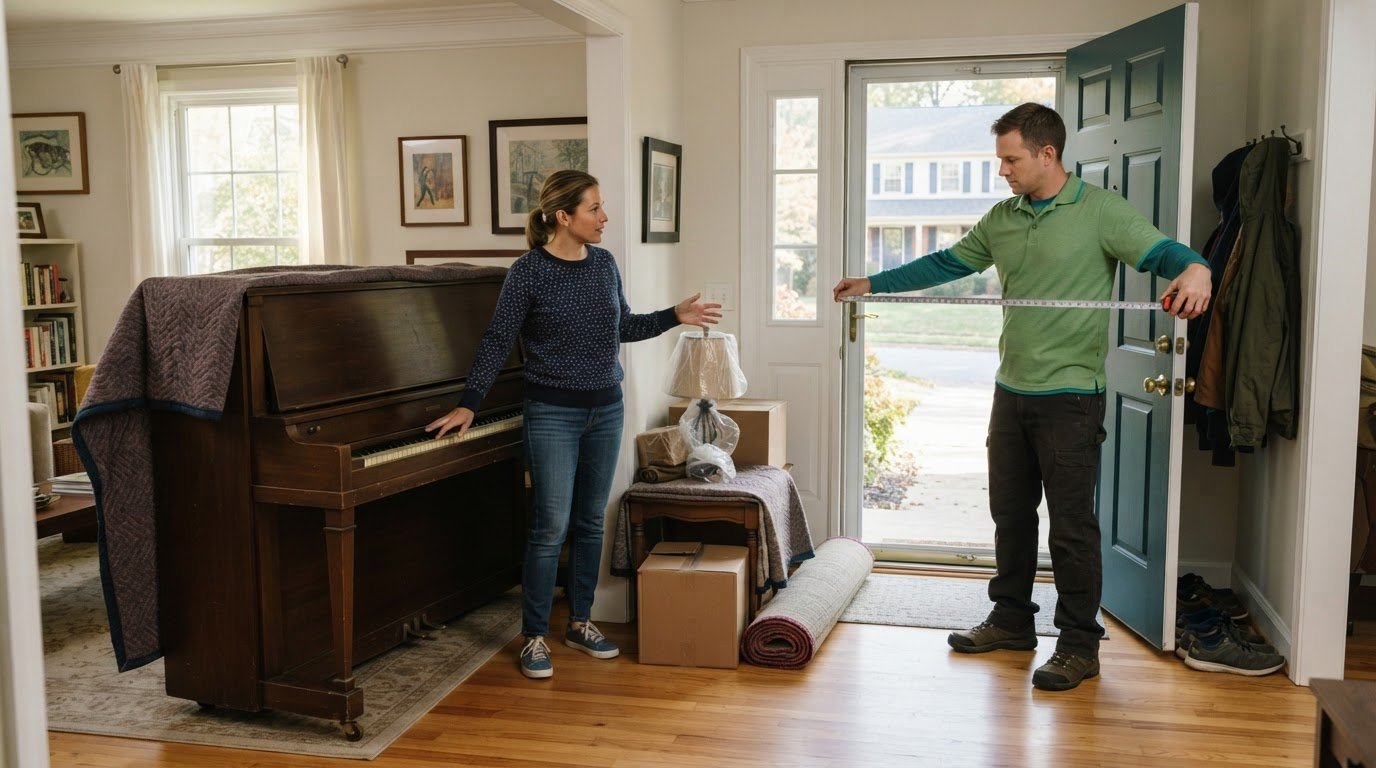
Measure the StairMaster’s height, width, and depth, then compare them with each opening along the route. Record the clear doorway width and height, hallway and stair width, ceiling clearance, and landing depth. Include turns and fixed obstacles, such as handrails or light fixtures, because they can limit maneuvering space.
Share the measurements and machine details with the moving crew before moving day. A doorway measurement alone won’t show whether the machine can turn from a hallway onto a landing. The full route, including the entry and fitness-room door, determines where extra clearance or partial disassembly may be needed.
A commercial StairMaster doesn’t automatically require floor reinforcement. The load depends on the machine, its contact footprint, and the floor structure. Protective flooring can help guard the surface, but it doesn’t strengthen the structure. A qualified building professional can assess reinforcement needs if floor capacity is a concern.
Estimated moving and installation times
A local mini stepper move may take 1-2 hours, including setup. A commercial StairMaster requires a different estimate because its size, route, and reassembly needs can add work. Treat the move, transport, placement, and final equipment checks as connected parts of one schedule.
For a commercial stair climber, moving and fully reassembling it typically takes 2-4 hours. That estimate covers more than carrying the machine into the fitness room. Preparation, careful movement through the home, reassembly, and checks of fasteners, moving components, electronic systems, and safety mechanisms all take time.
The access route affects how the move proceeds. A StairMaster passing through a clear entry and open hallway involves fewer handling steps than one facing a tight turn or residential stairs. Movers may slow down on stairs to keep the machine controlled. Repositioning pauses can extend the work even when the distance between homes is short.
Disassembly also affects the work. If a doorway requires removing a handrail or another component, the crew must document the connection, protect the part, and reinstall it after placement. A machine that clears the route intact avoids those tasks. The right plan depends on the equipment and actual path, not a standard timeline for every home.
Distance matters differently for local transport than for room-to-room handling. Travel between addresses affects the appointment, while stairs, loading access, and indoor turns shape the work at each end. A short drive with a difficult staircase can require more hands-on work than a longer drive with straightforward access.
The number of machines changes the plan, too. Moving one StairMaster differs from moving a stair climber alongside a treadmill or squat rack. Each item needs its own handling and placement, and the crew may need to sequence the work to keep the fitness room accessible during setup.
To help plan the work, share the machine model, assembled dimensions, and room access details. Include stairs, narrow openings, and the intended placement area. Those details help the crew estimate handling needs and sequence the work, rather than relying on transport time alone.
Allow time for setup checks before using the equipment. A StairMaster should be reassembled and inspected, while a treadmill or rack may need its own placement and connection checks. The work is complete when the machine is positioned and its relevant parts checked, not simply when it reaches the room.
Factors affecting specialty moving costs
The cost of moving a StairMaster depends on the work involved, not just the distance between homes. A single machine with clear access requires a different plan from several heavy machines in a home gym. Heavy Furniture Moving offers hourly labor with a two-hour minimum and flat-rate pricing for most single heavy items. The assessment depends on the details of the job.
Machine count and weight affect handling needs. A home gym can involve several thousand pounds of steel across a StairMaster, treadmill, and squat rack. Each machine adds loading, carrying, and placement work. A single prepared treadmill may need less labor than a local move involving multiple heavy machines, even if the treadmill travels farther.
Access can change the work substantially. Stairs, tight hallways, narrow doorways, and difficult turns require more careful maneuvering than a clear, level route. Crews often slow down on stairs to maintain control. The number of floors and turning space at each landing help determine the handling plan.
Distance is one factor, but it doesn’t describe the whole job. A nearby move can involve extensive indoor handling, while a longer trip may have easy access at both homes. Loading conditions and the route from truck to fitness room matter, too. The crew considers travel alongside the work required at pickup and delivery.
Disassembly and reassembly add steps when a machine won’t fit through the route intact. A StairMaster may need partial disassembly, while some treadmills fold and others don’t. Movers account for protecting removed parts, reassembling the equipment, and checking its components after placement. The equipment’s design determines how much work those steps require.
Protective materials also shape the plan. Padding, floor coverings, and restraints help protect equipment and home surfaces during handling and transport. The type of protection depends on the machine’s exposed parts and the route. A tight stairwell, for example, may need more surface protection than a wide, unobstructed entrance.
For a useful quote, describe each machine, its approximate weight if available, pickup and delivery locations, stairs, narrow access points, and any disassembly needs. Include whether the job covers one item or a full gym. These details help match the estimate to the labor, travel, and materials involved.
Need help planning a heavy-equipment move? Request a specialty moving quote with your machine list and access details.
Heavy Furniture Moving
Heavy Furniture Moving can plan and handle a StairMaster move into your South Riding fitness room. Its Exercise Equipment Moving service is designed for bulky machines that need careful handling, coordinated transport, and placement at home.
Turn to the team when the route includes stairs, tight access, or equipment that may need partial disassembly. Share the machine details, pickup and delivery locations, and access challenges so the move can be planned around your home and equipment.
For help moving your StairMaster, contact Heavy Furniture Moving.
Set Up Your South Riding Fitness Room
Planning to move a heavy commercial StairMaster into a residential fitness room in South Riding starts with one practical decision: who will manage both the equipment and the route through your home? A clear plan coordinates pickup, delivery, and placement around your space, so you can focus on preparing the room for use.
Heavy Furniture Moving handles residential moves, including Movers Near Me, Exercise Equipment Moving, and Sofa Hoisting. Share the StairMaster’s details, the route into your home, and where you want it placed. That gives the team useful context for planning the job.
Take the next step when you’re ready. Contact Heavy Furniture Moving to discuss your StairMaster move and the support your home needs. A well-planned start can make setting up your fitness room feel more manageable. You’re closer to making that space ready for your routine.
Frequently Asked Questions
How heavy are stepper machines and stair climbers?
That difference matters: a compact home stepper and a commercial climber need different handling plans. Find the model name or product label before planning so the moving crew can identify your machine and its needs.
How long does it take to move and install a stepper?
A commercial stair climber typically takes 2-4 hours to move and fully reassemble. A local mini stepper move may take 1-2 hours, including setup. These estimates cover different equipment and shouldn’t be used interchangeably. For planning your day, allow for loading, travel, access at both homes, and setup checks. Stairs or additional equipment can change how the crew sequences the work.
What are the dimensions and weight of a commercial StairMaster?
There isn’t one dimension or weight that applies to every commercial StairMaster model. Locate the model information on the machine or its paperwork, then measure its widest, tallest, and deepest points. Include protruding handrails or consoles, since they can affect passage through a doorway or turn.
How much does it cost to move a commercial StairMaster into a home?
The cost is based on the actual job, including the machine’s weight, travel distance, stairs, access, and any disassembly or reassembly. Moving a single StairMaster into a ground-floor room differs from carrying it through a tight stairwell or coordinating multiple machines. Heavy Furniture Moving provides pricing after a quote request. Sharing the machine details and route helps make the quote specific to your move.
What equipment and crew are needed to move a heavy StairMaster safely?
The crew size and handling equipment should suit the StairMaster, its route, and any steps or turns. Movers plan how to support and control the machine rather than relying on lifting strength alone. Heavy Furniture Moving includes wrap, blankets, and straps on every job. Share the machine and access details so the crew can plan the handling and protection for your South Riding home.
Can a commercial StairMaster be disassembled and reassembled for a residential move?
Yes, a commercial StairMaster can be partially disassembled when its design or your home’s access route calls for it. How much comes off depends on the model and path through the house. A console or handrail, for example, may need to be removed to clear a turn. Keep the model information handy to help guide handling and reassembly.
What are the risks of moving a StairMaster without professional movers?
Without a planned route and coordinated handling, a heavy StairMaster can shift unexpectedly, putting people and nearby surfaces at risk. A rushed move can also strain the frame, damage a console, or leave detached parts misplaced. Stairs and tight turns require more than lifting strength. Professional movers plan each transition and keep control of the machine throughout the move.
How should a StairMaster be secured and tested after delivery and installation?
After delivery, position the machine on a stable surface with enough room for normal use. The crew should secure reassembled components and inspect fasteners, moving parts, controls, and safety mechanisms. Before exercising, check that the steps move freely and the console responds as expected. Stop if you notice unusual movement, loose hardware, or an error display, and follow the manufacturer’s instructions.