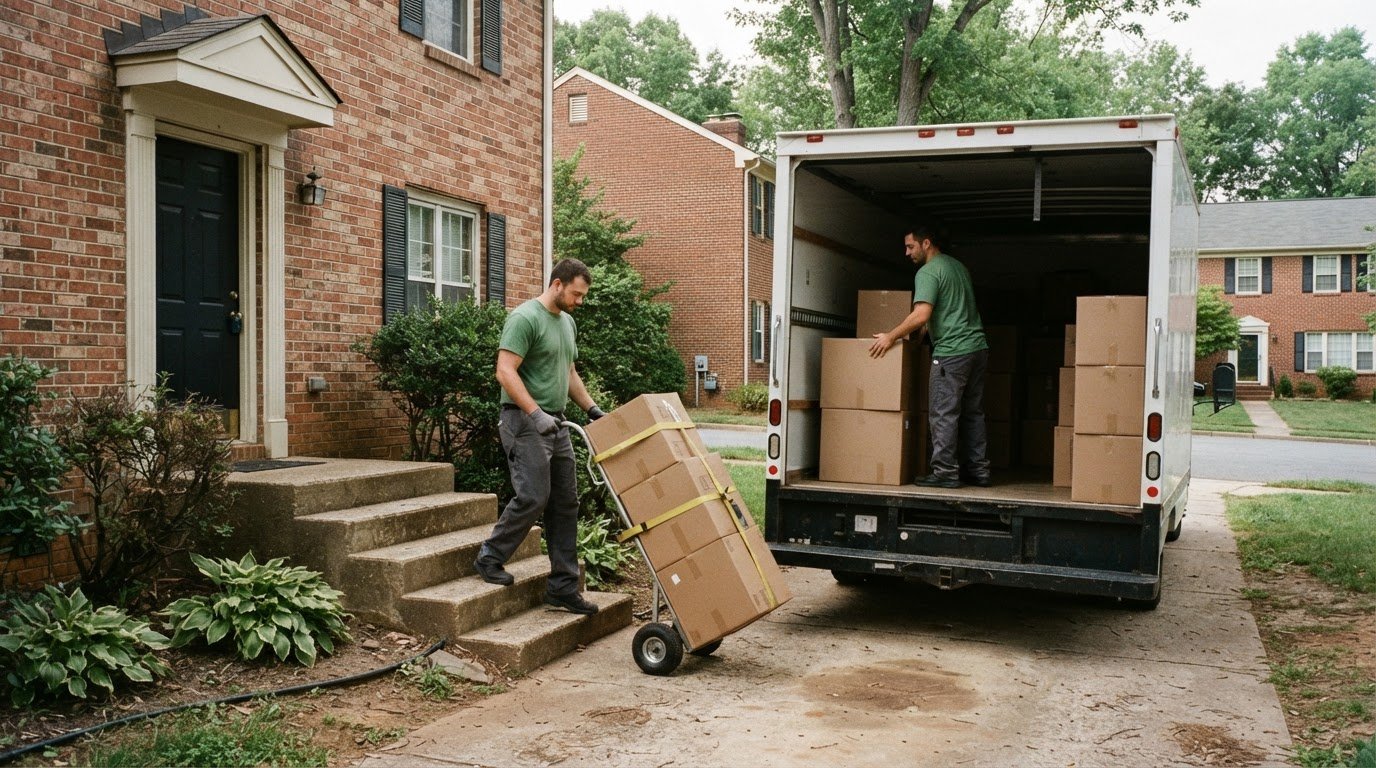
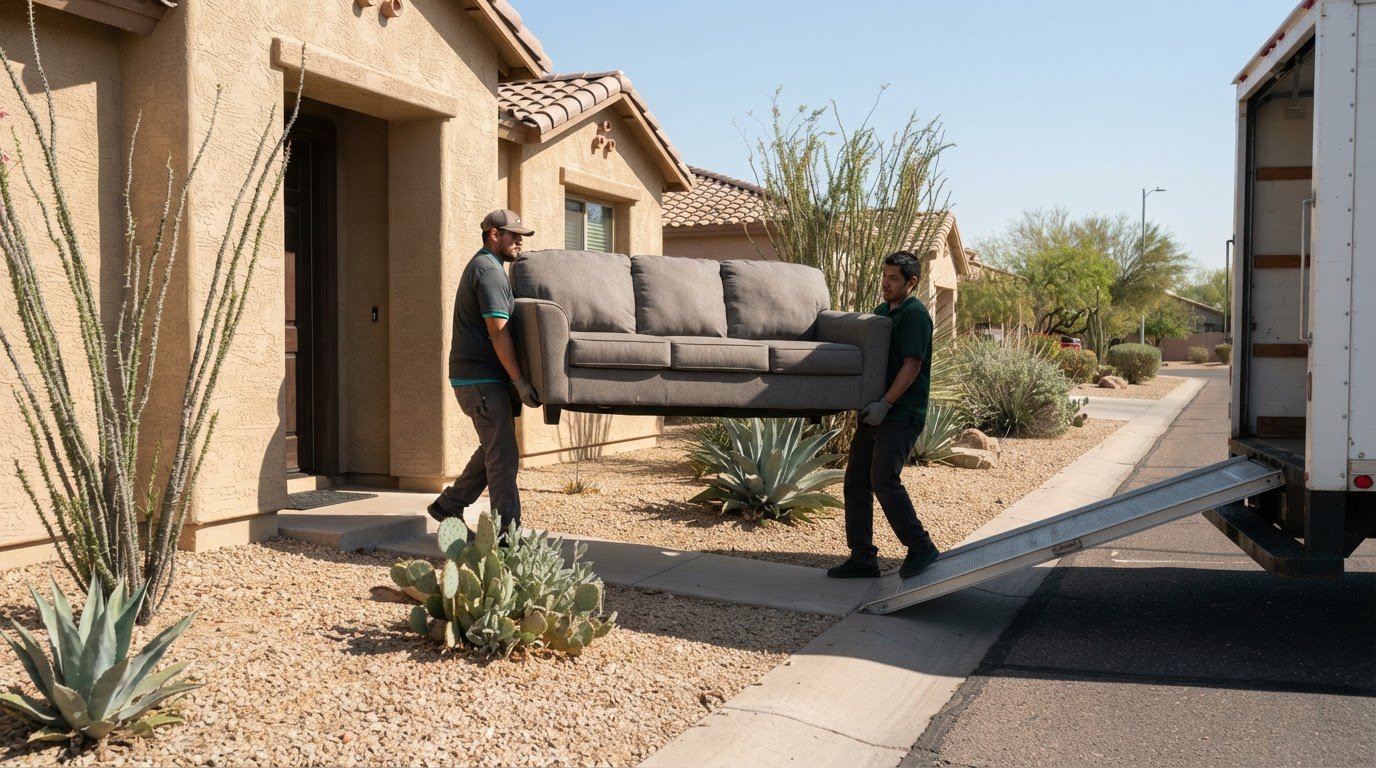
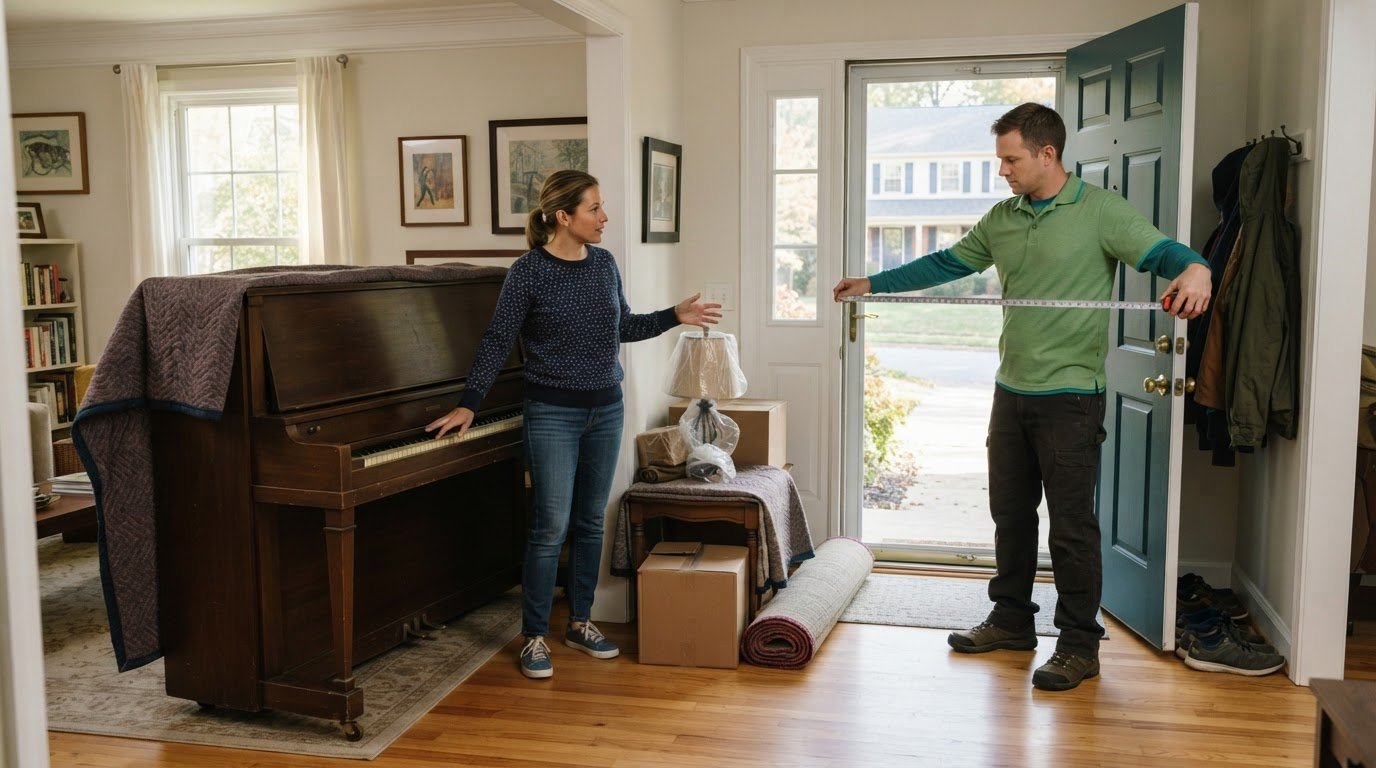
Heavy Sink and Vanity Moving Labor in Dumfries, VA
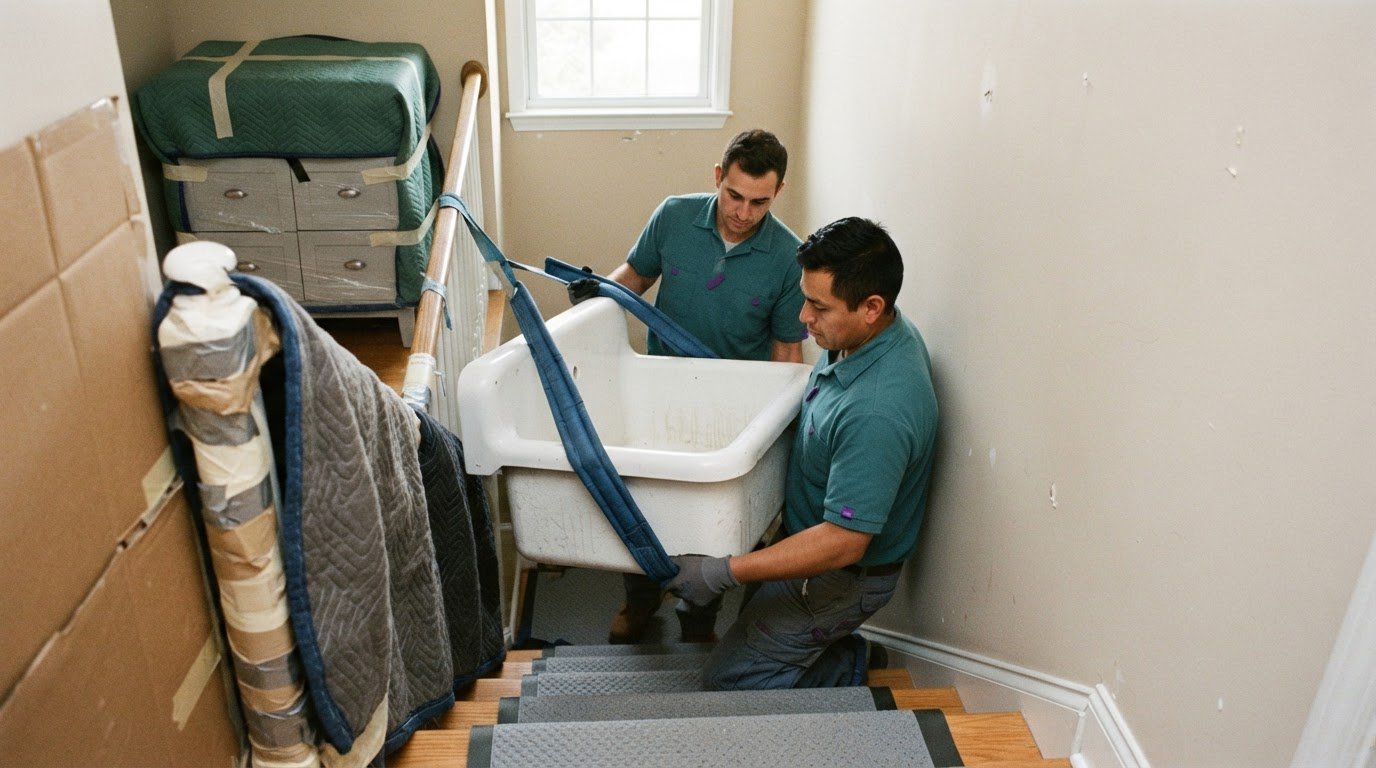
The stairs can shape the job as much as the sink itself. For labor to carry a heavy porcelain utility sink and vanity to an upstairs bathroom in Dumfries, Heavy Furniture Moving provides a quote based on the items and access. The crew measures the pieces and route before lifting, and wrap, moving blankets, and straps are included on every job.
It makes sense to want a clear cost before arranging a move, especially when a bulky item has to go upstairs. Tight turns, narrow hallways, and a long path from the entrance can all affect the work. Share photos of the sink, vanity, and stairs to help explain the job.
This guide explains what influences the job, how access and protection are planned, and what details help shape a useful quote. You’ll get a clearer picture of the work before deciding on the next step.
Key Takeaways
- Match the crew to the sink and vanity’s size, handling needs, and route upstairs so the carry can be planned sensibly.
- Stair turns and tight hallways can change the approach; mapping the access route helps the team spot pinch points early.
- Floor, door, and wall protection is part of planning a careful move, not an afterthought.
- A single-location heavy lift differs from a move with a long walk, so share where the items start and where they need to go.
- Heavy Furniture Moving’s labor-only moving help can suit a focused lift when you need capable hands for heavy items.
Crew-size recommendations
There isn’t one crew size for every upstairs sink-and-vanity move. For labor to carry a heavy porcelain utility sink and vanity to an upstairs bathroom in Dumfries, the team plans around the items, route, and available maneuvering space. A separate sink and cabinet may need different handling from one combined unit.
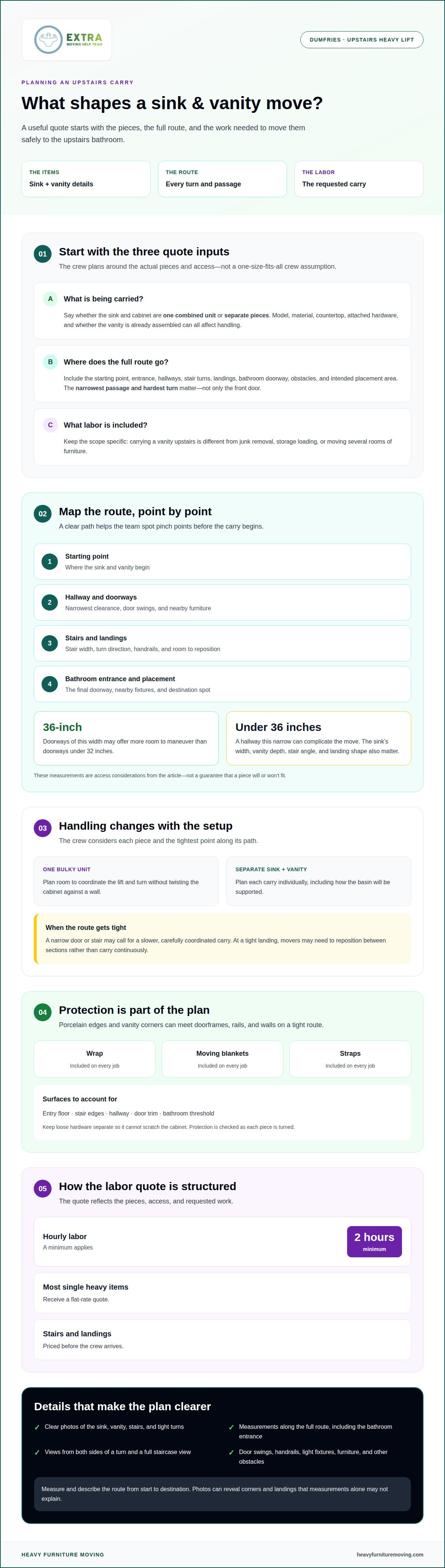
Heavy Furniture Moving uses hourly labor with a two-hour minimum, while most single heavy items receive a flat-rate quote. Stairs and landings are priced before the crew arrives. The quote reflects the work involved, including the route and requested labor.
Weights vary by model, material, and whether the sink and vanity are separate. A porcelain basin, cabinet, countertop, and attached hardware all affect the load. Heavy Furniture Moving plans around the actual pieces rather than assuming every bathroom vanity weighs the same. Share model details or clear photos, especially if an item is already assembled.
Access changes the crew plan. Dumfries homes with 36-inch doorways may offer more room to maneuver than doorways under 32 inches, which can complicate a move. The crew considers doorway width, stair turns, landings, and the item’s shape together. A vanity that fits through a doorway may still be awkward at a turn.
- One bulky unit: The team needs room to coordinate the lift and turn without twisting the cabinet against a wall.
- Separate sink and vanity: The crew can plan each carry as its own move, including how the basin is supported.
- Tight route: Narrow doors or stairs may call for a slower, carefully coordinated carry.
Before moving, the crew measures the items and access, including the starting point, destination, and obstacles. A clear route from the entry to the upstairs bathroom helps the team plan the carry. If the bathroom is beyond a tight landing, the movers may need to reposition between sections rather than carry continuously. The full route matters more than choosing a crew size by habit.
Keep the scope clear. Carrying a vanity upstairs is different from junk removal, loading a storage unit, or moving several rooms of furniture. Those tasks add separate handling and route demands. An instant booking choice can’t replace useful details about the sink, vanity, and stairs. Describe the pieces and access points so the labor plan fits the actual move.
For a focused lift, the practical approach is to plan for control through the full route, not simply to begin the carry. The sink’s shape, the vanity’s construction, and the tightest turn all matter. In Dumfries, share those details before booking to help the team plan the upstairs move.
Narrow staircases and hallway turns
A tight hallway can change how a porcelain sink reaches an upstairs bathroom. In Dumfries, hallways under 36 inches wide can complicate moving projects. That measurement is a warning point, not the only factor. The sink’s width, vanity depth, stair angle, and landing shape all affect the route. A moving company plans around the narrowest passage and the hardest turn, not just the front doorway.
Measure each access point along the full route, including the bathroom entrance. Note hallway and doorway clearance, stair width, and landing space. Include handrails, door swings, light fixtures, and nearby furniture. These details help the crew decide how to position each piece. A vanity that passes through a straight hall may still need careful turning at a landing.
For example, a sink may fit through a hallway but meet a sharp turn before the stairs. The crew can assess whether changing its angle creates enough clearance. A deep vanity may need a different orientation than a shallow cabinet. The route also matters after the stairs: a narrow bathroom doorway can be the final pinch point. Measure the full path and include obstacles, not just the room dimensions.
- Hallway: Note the narrowest section and any furniture that reduces open space.
- Staircase: Describe the direction of each turn and the room available at landings.
- Destination: Include the bathroom doorway, nearby fixtures, and the intended placement area.
Clear communication helps the crew plan without rushed adjustments. Photos can show a corner or landing that measurements alone don’t explain. Include views from both sides of a turn and a full view of the staircase. If a door opens into the route, mention its swing. These details help the team anticipate where the carry may need to pause and reposition.
In Virginia communities across the county, house layouts vary, so one route plan won’t suit every home. An affordable move isn’t simply the fastest carry; clear access details help avoid unnecessary handling. The crew can focus on the sink and vanity rather than discovering obstacles mid-carry. Share measurements and route photos during booking, especially when stairs include a tight turn.
For moving help with bulky household pieces, heavy lifting moving service is a relevant option. A clear account of the Dumfries staircase, hallway, and bathroom entrance helps the team understand the lift. Include the sink and vanity’s shape, then describe each tight corner. That gives the crew useful details for planning the route through the home.
Protecting floors, doors, and walls
A porcelain sink can chip if its rim strikes a doorframe or stair rail. A vanity can scrape paint when its corners swing through a narrow turn. Before the carry, the crew identifies exposed surfaces along the route, including the entry floor, stair edges, hallway, door trim, and bathroom threshold. A carefully planned path helps protect both the home and the items.
For stair transport, the crew uses wrap, moving blankets, and straps, which are included on every job. The team protects exposed edges and floors and doorways along the planned route. Keep loose hardware separate so it cannot scratch the cabinet. The crew checks that protection stays secure as each piece is turned.
Stair carries can damage porcelain, walls, floors, and doors if a load shifts or catches an edge. A worker can also strain or lose balance while correcting an awkward turn. The crew reduces these risks by coordinating movements, keeping the route clear, and pausing before tight corners rather than forcing an item through.
- Floors: Protect the path from the starting room to the stairs, including hard surfaces and carpet transitions.
- Doors: Cover exposed trim and keep doors from swinging into the sink or vanity.
- Walls: Watch corners and stairwell surfaces where a wide cabinet may brush during a turn.
- Item surfaces: Pad porcelain edges and vanity corners before moving them through the home.
Distance matters because a longer route creates more chances for a bump. A sink carried from a nearby room has fewer transitions than one brought through a rental apartment, shared hallway, and staircase. For professional moving, the team should identify every surface exposed to contact, not just the final stairs. Trucks are separate from this indoor carry, but loading protection matters if the pieces also travel afterward.
Before the lift, clear small objects from the route, including rugs, baskets, and hallway furniture. Keep pets and bystanders away from the stair path. The crew can then protect vulnerable doorframes and floor edges. For example, a landing with a sharp turn needs protection on the wall corner and the floor where the vanity may be repositioned.
After the carry, inspect the sink, vanity, and route for shifted padding or contact marks. Check the porcelain rim and cabinet corners before placing the pieces in the upstairs bathroom. If the items also need to travel, check the protection again before loading and after unloading. These steps help keep the move controlled from the first doorway to the destination.
Single-location heavy lifting
A single-location lift moves an item within one home, not between addresses. For a porcelain sink and vanity going upstairs, the work starts where the items are and ends in the bathroom. There’s no truck loading or unloading at another property. The crew still plans each doorway, landing, handoff, and final placement.
Carry the sink and vanity separately unless they’re securely joined and designed to move together. Separate handling lets the crew support the porcelain basin and cabinet appropriately. Before lifting, the team checks for loose hardware, open drawers, and removable parts. An empty vanity is easier to control than one holding toiletries or tools.
A focused lift still needs a clear sequence. The crew identifies where each piece will be picked up, where it may pause, and how it will turn upstairs. For example, the vanity may need to reach the landing before the sink follows. That order keeps the stair route open and gives movers room to position each item.
- Prepare the pieces: Empty drawers and remove loose accessories that could shift.
- Set the route: Clear the path between the starting room and upstairs bathroom.
- Plan placement: Leave room to set each piece down without blocking the stairs.
- Coordinate the lift: Agree on when to raise, pause, turn, and lower each item.
Unlike a full household move, this job centers on a small number of bulky pieces. The work still varies with each item’s shape and the route. A straight staircase differs from one with a tight landing, even when both moves end upstairs. The crew considers the hardest maneuver, not just the short distance between rooms.
Safe handling depends on a controlled grip and clear communication. The team avoids rushing a turn or changing direction without warning. If the sink and cabinet need separate carries, the crew can reset its position between lifts. That pause also allows the team to check the padding and confirm the next part of the route is clear.
Keep the destination ready before the first carry. The crew needs space to set down the vanity, then bring in the basin without blocking the bathroom entrance. If the placement area is occupied, the items may need to wait elsewhere, adding handling. A clear landing zone helps the movers finish efficiently and place each piece where it belongs.
For a single-location job, share which items need moving and where they start and finish. Include whether the sink sits separately or attaches to the vanity. Those details help shape the labor plan before the first lift, whether the work is a short carry or a careful trip upstairs.
Staircases and walking distance
Stair height isn’t the only factor in an upstairs carry. The distance from the home’s entrance to the sink’s starting point also shapes the work. A short path through one room differs from a route across a long hallway, through several doorways, and up stairs. For this Dumfries project, the crew plans the entire indoor path, not just the staircase.
Walking distance affects how the crew carries and repositions each piece. A long approach can require more pauses, especially before a staircase or narrow turn. The team needs a clear place to pause without blocking the route, along with room to change grip and direction before the sink reaches the first stair.
Local moving work may involve a moving truck, but a sink-and-vanity carry inside one home doesn’t automatically require one. The crew focuses on where the items begin and finish. If the pieces are already inside, describe the entry, starting room, staircase, and upstairs destination. If unloading is part of a broader move, explain where the truck stops and how far items travel indoors.
- Starting point: Identify the room and doorway where each piece waits.
- Indoor route: Include hallways, turns, stairs, and any landing used for repositioning.
- Final placement: Describe the bathroom entrance and where the sink and vanity should go.
- Truck access: Note whether a vehicle-to-home carry is also part of the project.
Identifying the longest or most difficult segment helps the crew plan the sequence. For example, a vanity near the front entrance may still face a demanding upstairs turn. A sink stored farther inside may need a longer carry before reaching those same stairs. The crew can plan separate paths when the items start in different rooms, rather than assuming both follow the same route.
Clear space supports steady movement. Before the carry, the crew removes route obstacles and identifies a safe pause point. A rug edge, open door, or box beside the stairs can disrupt a heavy carry. The team also considers whether the moving truck blocks the entrance or leaves a clear path. These details connect the outdoor approach with the indoor route.
Moving plans should account for both stair work and the walk before and after it. Share whether the sink and vanity travel together, separately, or from different rooms. Include any truck-to-door distance when loading or unloading is involved. Those specifics help shape a plan around the actual work, not an assumed room-to-room carry.
Need help planning a heavy carry upstairs? Arrange help for your heavy-item move and describe the staircase, indoor route, and placement point. That gives the crew a practical picture of the project before the lift begins.
Heavy Furniture Moving: labor only movers near me
Heavy Furniture Moving provides labor-only moving help for demanding household lifts, including carrying a sink and vanity upstairs. Turn to the team when you have the items and need help with the indoor move. Share where each piece starts, the upstairs destination, and any stairs or tight turns that shape the carry.
This focused help suits a single-room project without requiring a full household move. Heavy Furniture Moving also handles other heavy-item needs, including exercise equipment moving and sofa hoisting. The right option depends on the item and the work involved.
Contact Heavy Furniture Moving to discuss the sink, vanity, and route in your Dumfries home.
Set Up Your Upstairs Sink Move
Before scheduling the carry, decide where the sink and vanity should sit in the bathroom. A clear destination helps the crew finish without leaving either piece in the way. If the room is still being prepared, identify a temporary landing spot that keeps the staircase and doorway clear.
For labor to carry a heavy porcelain utility sink and vanity to an upstairs bathroom in Dumfries, share the item details and route when you reach out. That gives the team a practical starting point for discussing the job. Heavy Furniture Moving also offers exercise equipment moving and sofa hoisting for other moving needs.
Ready to plan the carry? Contact Heavy Furniture Moving and describe the sink, vanity, and upstairs destination. You can take the next step with a clear plan and capable help.
Frequently Asked Questions
How much does moving labor cost in Dumfries, VA?
Moving labor cost depends on the job, and Heavy Furniture Moving provides a quote after a request. Describe whether you need one carry or several items moved, and whether loading or unloading is also involved. Labor-only work has a two-hour minimum; most single heavy items receive a flat-rate quote. Sharing the full scope helps identify the right quote structure for your Dumfries job.
Can movers handle townhouse stairs in Dumfries?
Yes, Heavy Furniture Moving handles townhouse stair carries in Dumfries. The crew measures item dimensions and access before lifting, helping plan the carry for the specific home. If the townhouse has a shared entry or narrow upper landing, include that detail when describing the job. Photos of the item and stairs give the crew useful context for planning the route.
How soon can labor help arrive?
Same-day and next-day heavy-item jobs are often available. For same-day, same-afternoon service, call before 2 PM. Timing depends on open appointment slots, so share your preferred date when arranging the job. Sending a photo of the sink and staircase helps explain the work clearly. If your schedule allows flexibility, mention that too when discussing an appointment.
How much does labor cost to carry a heavy porcelain sink and vanity upstairs in Dumfries, Virginia?
The quote depends on the job details and is provided after a quote request. For labor to carry a heavy porcelain utility sink and vanity to an upstairs bathroom in Dumfries, Virginia, share photos of the items and stairs. Stair and landing costs are priced before the crew arrives. Wrap, moving blankets, and straps are included on every job, not added as a separate line item.
What do local movers charge for heavy-item or stair-carry labor in Dumfries, VA?
There isn’t one local charge that applies to every heavy-item carry. Heavy Furniture Moving uses hourly labor with a two-hour minimum, and most single heavy items receive a flat-rate quote. Stairs and landings are priced before the crew arrives. For a Dumfries quote, state whether you need labor only or help with a truck or pod, so the work scope is clear.
What factors affect the cost of carrying a porcelain sink and vanity upstairs?
The quote reflects the actual items and requested work. Useful details include whether the sink is separate from the vanity, whether either piece needs disassembly, and whether the job includes only carrying or other moving labor. Send photos of the items and stairs to show their shape and access. Heavy Furniture Moving measures before lifting and shares the quote before the job begins.
What equipment and number of workers are needed to carry a heavy porcelain sink upstairs safely?
The crew size depends on the sink, vanity, and route, so one fixed worker count doesn’t fit every Dumfries home. Heavy Furniture Moving measures the items and access before the lift. Wrap, moving blankets, and straps are included on every job. Tell the crew whether the sink and vanity are attached or separate, since that changes how each piece can be handled.