Heavy Rowing Machine Movers in South Riding: Dolly or Professional Help
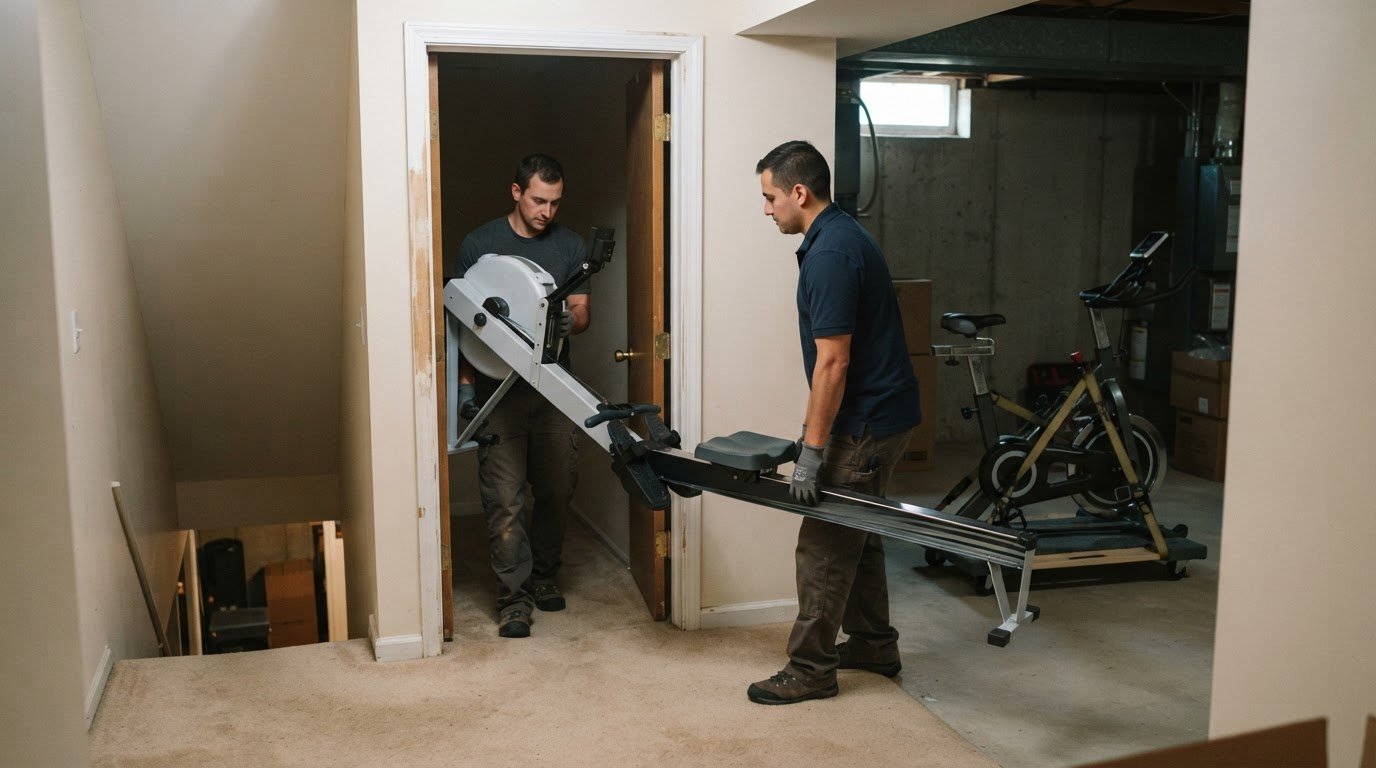
A dolly isn’t always the easiest choice. A heavy-duty dolly or hand truck can move a spin bike if it’s secured with straps, but professional movers can handle the awkward lifting, disassembly, and loading involved in moving a heavy rowing machine and magnetic resistance bike in South Riding.
A dolly may seem practical when the equipment feels manageable and the route is clear. But exercise machines have parts that can shift, delicate components that need protection, and shapes that make tight turns challenging. The right approach depends on the equipment and the route.
Learn how to prepare rowing machines, bikes, treadmills, ellipticals, and weights for a move, and when a dolly is practical versus when professional movers are a better fit. Use the decision guide to plan the move with less strain and more confidence.
Key Takeaways
- Choose a dolly or professional help based on the machine, its parts, and the route out of your home.
- Learn how to prepare treadmills, ellipticals, bikes, and weights to help keep equipment and components together during a move.
- Rowing machines differ in how they come apart, so the right preparation depends on the machine’s design.
- See what makes moving bulky fitness equipment more manageable with experienced lifting help.
- Use the decision guide to choose a practical approach for your equipment and moving conditions.
Moving treadmills, ellipticals, and weights
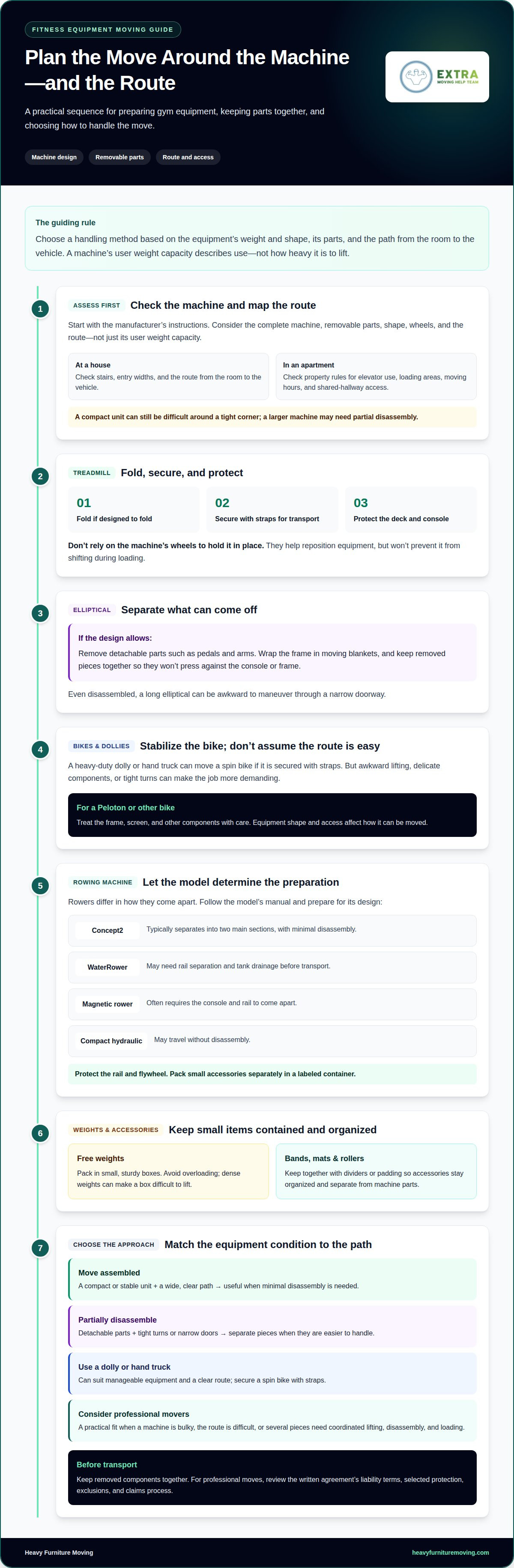
Start with the manufacturer’s instructions for each fitness machine. If a treadmill folds, fold it and secure it with straps for transport. Protect the deck and console, and don’t rely on the machine’s wheels to hold it in place. Wheels help reposition equipment, but they won’t prevent it from shifting during loading.
For an elliptical, remove detachable parts such as pedals and arms if the design allows. Wrap the frame in moving blankets to protect surfaces and keep components from rubbing together. Keep removed pieces together, positioned so they won’t press against the console or frame. Even disassembled, a long elliptical can be awkward to maneuver through a narrow doorway.
Don’t confuse a machine’s user weight capacity with its moving weight. The capacity describes use, not how heavy the machine is to lift. Handling depends on the complete machine, removable parts, shape, wheels, and route. A compact unit may still be hard to steer around a tight corner, while a larger machine may need partial disassembly.
In South Riding apartments, property rules may affect elevator use, loading areas, moving hours, and access through shared hallways. At a house, stairs, entry widths, and the route from the room to the vehicle shape the move. These details help determine whether equipment can travel assembled or needs to be separated into manageable pieces.
Pack free weights in small, sturdy boxes and avoid overloading them. A box that feels manageable when empty can become difficult to lift once filled with dense weights. Keep resistance bands, yoga mats, and foam rollers together, using dividers or padding to organize them. Separate boxes help prevent loose accessories from shifting against machine parts.
For a home gym, plan the equipment move around how you’ll use the space at your new home. A rowing machine’s model and components, not its fitness purpose, determine how to handle it. Protect the rail and flywheel, and pack small accessories in a separate, labeled container instead of leaving them loose.
- Fold a treadmill when possible, then strap it securely.
- Remove detachable elliptical parts and blanket-wrap the frame.
- Pack weights in small boxes that aren’t overloaded.
- Keep bands, mats, and rollers organized with padding or dividers.
| Option | Equipment condition | Route consideration | Useful when |
|---|---|---|---|
| Move assembled | Compact or stable unit | Wide, clear path | Minimal disassembly is needed |
| Partially disassemble | Detachable parts | Tight turns or narrow doors | Separate pieces are easier to handle |
| Pack accessories separately | Loose weights or small items | Multiple rooms or stairs | Items need organized transport |
Choose a handling method that suits the machine’s weight and shape as well as the route. Separate parts when doing so makes the equipment easier to handle.
Benefits of professional gym equipment movers
A professional crew can plan a route for bulky fitness equipment from the home gym to the vehicle. That matters when a compact stationary bike must pass through a narrow doorway or a treadmill needs careful handling around a stair landing. Strength alone isn’t the issue: equipment shape, removable parts, and access all affect the move.
Different machines have different parts to protect and handling needs. A Peloton, for example, combines a frame with a screen and other components that need careful handling. Treadmills, ellipticals, and bikes also vary in shape and how they can be moved. A practical plan keeps equipment stable, protects sensitive areas, and helps prevent bumps against walls during tight turns.
Professional handling can reduce the physical demands on household members. Fitness equipment can be awkward to grip, especially when two people need to coordinate lifting through a hallway or down stairs. Movers can organize the route, coordinate the lift, and handle loading as a team. This is useful when moving several machines or combining gym equipment with furniture.
Assembly is another consideration. Some machines need parts removed before transport and reattached at the destination. Keep components organized to avoid misplaced hardware and confusion during setup. Plan what needs to be separated, how components will travel, and what needs protection. For a home gym with different models, this helps keep loose parts from getting mixed up.
Before the move, read the written moving agreement’s liability terms, including any selected protection, exclusions, and claims process. Make sure you understand how the agreement addresses damage to a Peloton or other fitness equipment.
- Route planning: Account for doorways, corners, stairs, and the equipment’s shape.
- Team coordination: Plan lifting and loading for machines that are difficult to grip or steer.
- Part organization: Keep removed components together for easier assembly after transport.
- Protection: Identify screens, frames, and other areas that need careful handling.
Professional help can be a practical choice when a machine is bulky, the route is difficult, or several pieces need coordinated handling. For a home gym move that includes equipment and furniture, professional equipment moving support can help connect the lifting and transport tasks into one plan.
Moving and installation of rowing machines
Start with the rower’s model and resistance system. Concept2 machines typically separate into two main sections, with minimal disassembly. WaterRower machines may need rail separation and tank drainage before transport. Magnetic rowers often require the console and rail to come apart. Compact hydraulic models may travel without disassembly.
Not every machine needs to be disassembled. The model determines which parts can come off and how the rower separates. Follow its manual, particularly for the screen, console, rail, and resistance system. Removing parts that aren’t designed to detach can complicate reassembly or damage connections.
If the rower comes apart, keep its hardware organized from the start. Remove the handle, chain, and other detachable components as directed in the manual. Put screws and bolts in a labeled plastic bag and keep it with the matching sections. This makes it easier to identify the right hardware during setup.
Protect moving parts before loading. Cushion the seat, rail, and flywheel with moving blankets or bubble wrap. Place the machine securely in a box or crate and fill gaps with padding so it can’t shift. Secure it with straps in the truck, and keep heavy items off the frame.
A pickup truck or van can transport a rowing machine if it fits securely and can be restrained against movement. Use padding and straps, and don’t stack heavy items on the rower. Protect detachable or delicate parts on a magnetic resistance bike, and secure its frame the same way.
At the destination, reassemble the rower according to its instructions. Match the labeled hardware to each section, reconnect detached components, and check that the rail and seat move as intended before using the machine. If it has a screen, check the connection and display after setup. Correct assembly helps the machine deliver its intended rowing motion.
- Concept2: Separate its two main sections and keep disassembly minimal.
- WaterRower: Plan for possible rail separation and tank drainage.
- Magnetic rowers: Account for console and rail separation.
- Hydraulic rowers: Their compact design may allow transport without disassembly.
Prepare the rower according to its model, secure each section for transport, and follow the manual when reassembling it. These steps keep the hardware organized and the machine ready for its next workout.
Treat disassembly as a model-specific choice, not a universal step. Magnetic resistance rowing machines may require the console and rail to be separated for a move, while compact hydraulic rowers may not need disassembly. Use the machine’s design to decide whether to keep it intact or separate its parts; don’t assume the same approach applies to every rower.
If you remove parts, put the rower’s screws and bolts in a labeled plastic bag so they stay organized. Place the rowing machine securely in a box or crate and fill gaps with padding to prevent movement during transport. This keeps the parts together and the rower from shifting.
Using a dolly or cart
A dolly can help move a spin bike along a clear, level route. Use a heavy-duty dolly or hand truck, and strap the bike securely to it before moving. Straps keep the frame from shifting as the wheels roll. An unsecured bike can tip or slide, especially when turning through a doorway.
First, compare the equipment’s moving weight with the dolly’s stated capacity. Include detachable pieces that will travel on the cart, and stay within its rating. Check that the bike sits securely on the support surface. Keep its weight balanced, rather than leaning to one side or extending awkwardly beyond the base.
Next, clear the route from the home gym to the exit. Remove small items from the floor, open doors fully, and check for thresholds, tight corners, and steps. Dolly wheels work best on a smooth, unobstructed path. A narrow turn can make even a compact bike difficult to steer, and stairs require a different handling plan.
- Position the dolly beside the bike and keep the frame supported.
- Secure the bike with straps before rolling it.
- Move slowly, keeping the load balanced through each turn.
- Pause if the wheels catch or the bike shifts, then reset the load.
A rowing machine’s long rail can make it difficult to balance on a standard cart. Rowers also vary in shape and detachable parts, so a dolly may suit one model but not another. Protect the rail and flywheel from knocks, and keep them from pressing against the cart’s edge. A stable route and secure contact points matter more than simply having wheels.
Water rowers need particular care because they have a tank. Follow the model’s moving instructions before placing one on a cart. Keep it level and secured, and don’t use the tank or rail as a handle. If the machine can’t be supported stably, moving it on a dolly may create more problems than it solves.
A cart and a dolly support equipment differently. A flat cart may hold separate, protected pieces, while a hand truck supports the load upright against its frame. Neither makes a difficult route manageable by itself. Check the machine’s balance, wheel path, and strap placement before moving.
Use a dolly for a secured spin bike on a clear, level path. For an unbalanced rower, stairs, or a route with tight turns, choose another handling method. Keep detached parts together, and store loose hardware securely so it can’t be scattered by moving wheels.
Which South Riding movers handle heavy fitness equipment?
For a South Riding move, look for movers experienced with exercise equipment, not just boxes and household goods. A rowing machine, treadmill, or magnetic resistance bike each has different handling needs. The equipment’s shape, detachable parts, and route through the home all affect the plan. Moving a single bike may call for a different setup than moving several machines and weight sets.
Match the help to the job. If the main challenge is gym equipment, equipment-focused moving help fits the task. If the move includes machines and furniture, local moving support can cover both. For a heavy item that only needs lifting and loading, labor-only help may suit the job. Choose support based on what needs moving and which tasks need hands-on help.
Make a clear item list before planning the move. Include each machine’s type and model, along with any separate screen, rail, console, or other detachable component. For example, “rowing machine with removable rail” gives a clearer picture than “gym gear.” List free weights, benches, and accessories separately so they aren’t overlooked.
Access details matter as much as the equipment list. Note whether a machine is upstairs, whether the route has tight turns, and whether a doorway or shared hallway limits movement. In an apartment, elevator and loading access can shape the timing and route. At a house, stairs and the path from the room to the exit affect handling.
- Single machine: Share its type, model, and removable parts.
- Several machines: List each item, plus weights and accessories.
- Equipment and furniture: Describe both so the move plan covers the full load.
- Heavy lifting only: Identify the lifting and loading tasks that need help.
Plan for the destination, too. A treadmill going to an upstairs room presents a different placement challenge from a bike going into a clear garage space. Specify where each piece should go and whether separated components need to stay together. This helps keep unloading organized and prevents heavy equipment from being left in the wrong room.
Choose support based on the equipment, access route, and amount of work involved. For a South Riding move with bulky machines or several gym pieces, get help moving heavy fitness equipment.
Before removing detachable parts such as handlebars, pedals, and control panels from a spin bike, consult its manual. Follow the instructions to decide which pieces, if any, should come off, rather than improvising. If the directions are unclear, pause before taking anything apart.
Keep the manual handy while preparing the bike so you can refer to its instructions. Group removed parts and note which bike they belong to, so they can be accounted for during loading and setup. Don’t assume a component should come off just because it looks removable; let the manual guide you. This keeps preparation specific to the bike instead of relying on guesses about similar equipment.
Heavy Furniture Moving
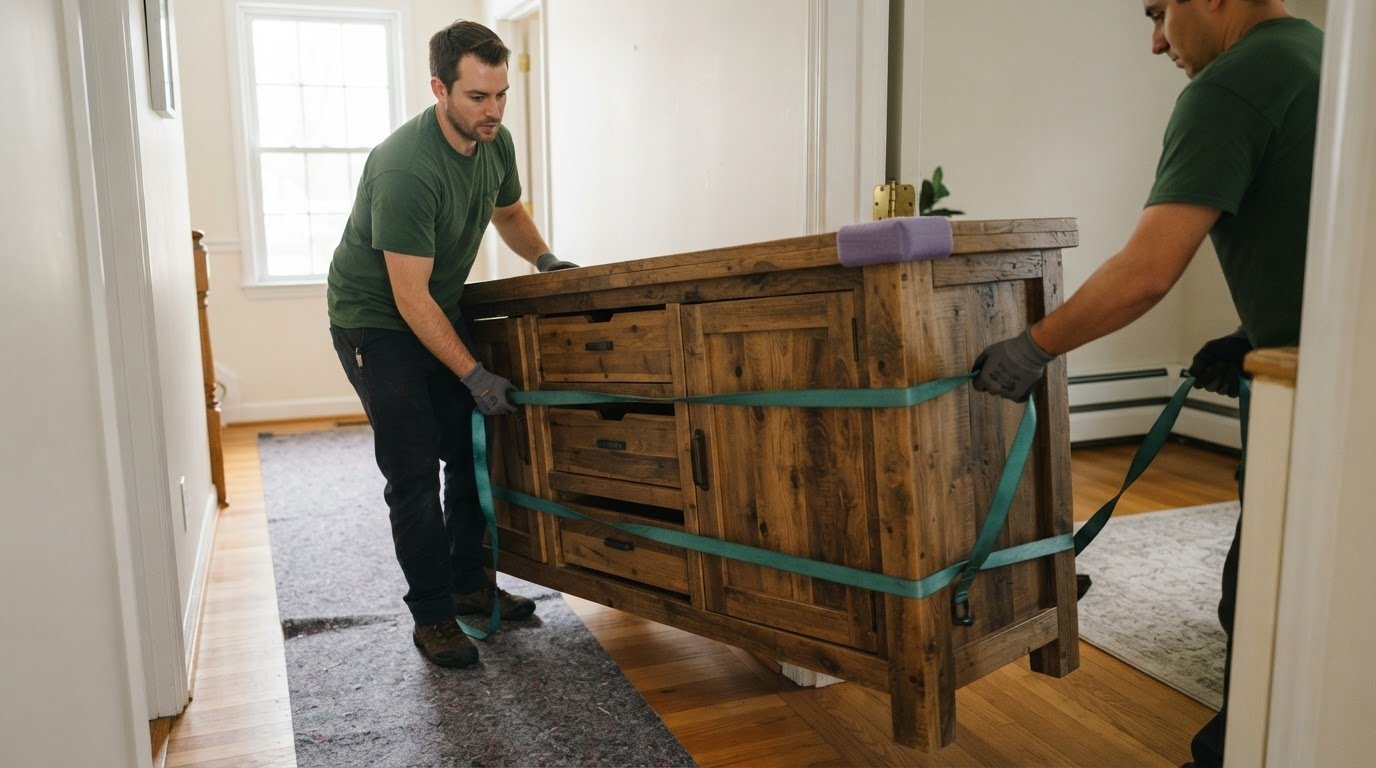
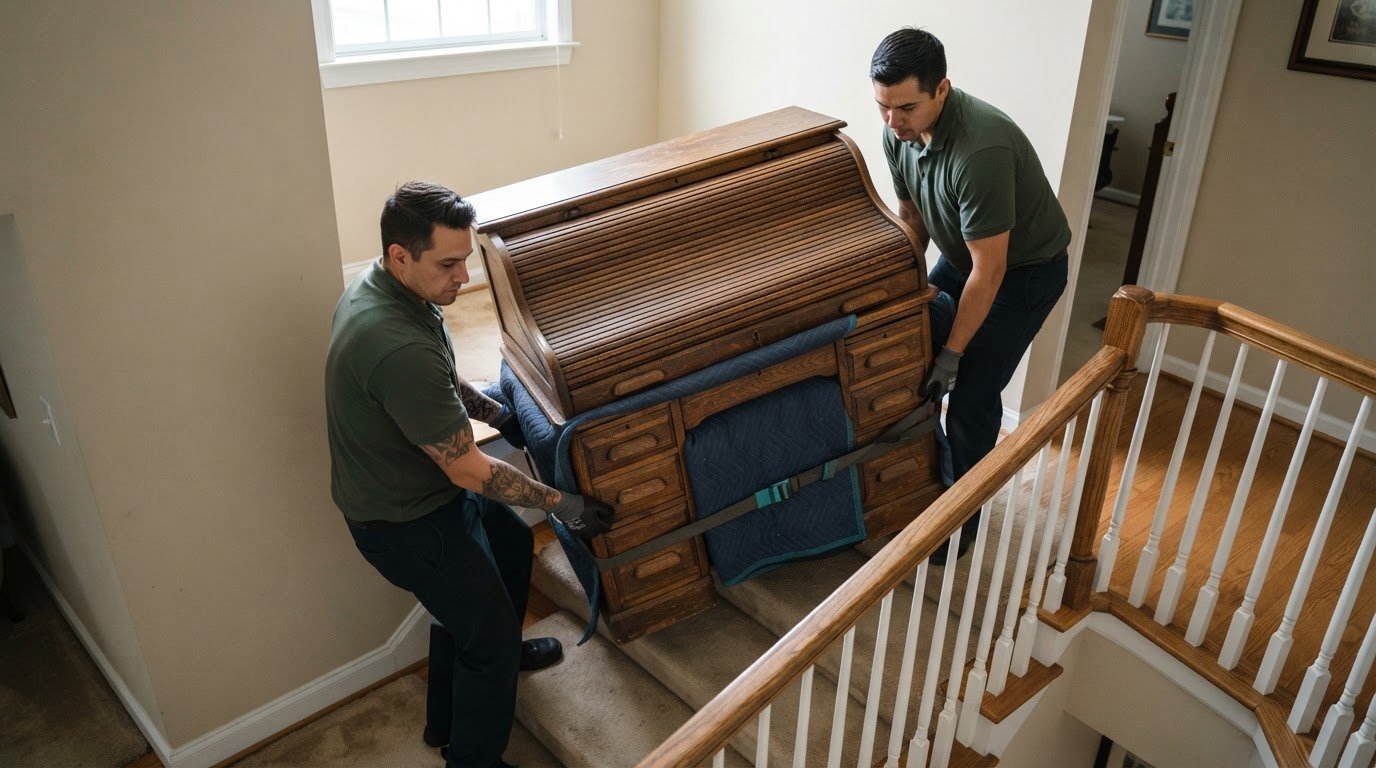
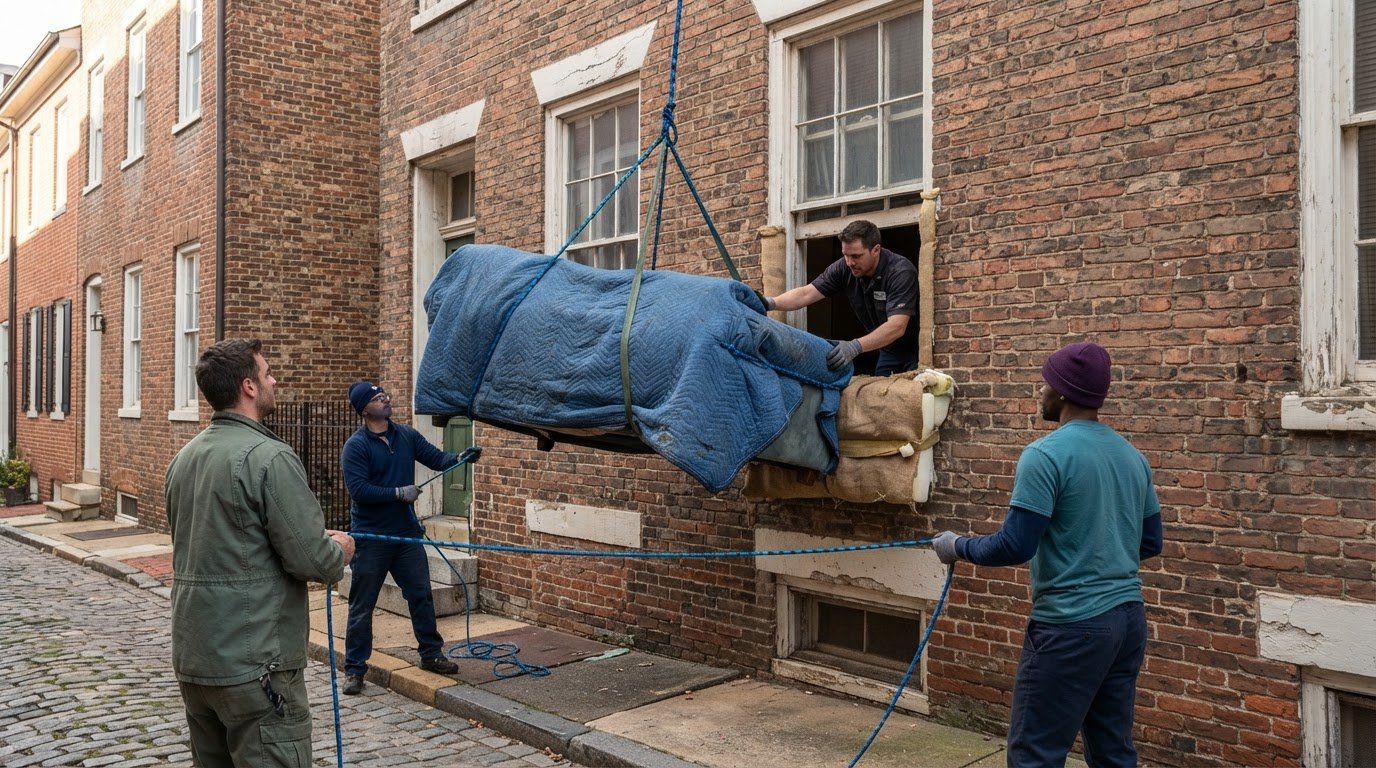
Heavy Furniture Moving provides Exercise Equipment Moving for bulky machines that need careful handling during a home move. Turn to the team when a rower, treadmill, or magnetic resistance bike is difficult to manage alone, or when fitness equipment is part of a larger household move. The team can coordinate heavy lifting with other moving tasks, including in-home furniture moving or sofa hoisting.
Describe the equipment that needs moving and the route, including stairs, tight turns, or a narrow entry. This gives the move a practical starting point. If you’re planning an equipment move in South Riding, contact Heavy Furniture Moving to discuss the help you need.
Plan the next move with confidence
Before moving day, decide where each machine should go in your new home. Clear destinations help organize unloading and make it easier to arrange your workout space around the rest of your rooms. If placement depends on moving furniture or navigating a difficult entry, include that in the plan instead of leaving it until the last minute.
When choosing heavy rowing machine and magnetic resistance bike movers in South Riding, match the help to the full job. Heavy Furniture Moving offers Movers Near Me, Exercise Equipment Moving, and Sofa Hoisting for moves involving bulky equipment or challenging household items. Share what needs to move and where it should go to find support that fits your plan.
Ready to talk through your move? Contact Heavy Furniture Moving and take the next step toward getting your equipment settled.
Frequently Asked Questions
How to Move Gym Equipment?
Plan each machine’s power and room setup before moving day. Disconnect the machines, and keep each power adapter and display cable with the unit it belongs to. Note where each one goes in the new home. For example, if a treadmill and bike will be in different rooms, mark their destinations before loading. This helps prevent setup mix-ups after delivery.
Why Hire Professional Gym Equipment Movers?
Professional movers can coordinate fitness machines with other bulky household items. A residential move plan can account for which items leave first, where equipment should go, and which pieces need to stay accessible during the move. This helps keep a treadmill or weight rack from blocking the furniture route. It’s a useful option when several large items are involved.
What moving companies serve South Riding, Virginia?
Heavy Furniture Moving serves South Riding and nearby communities, including Fairfax, Woodbridge, Manassas, Manassas Park, Aldie, Ashburn, McLean, Vienna, Reston, Centreville, Chantilly, Clifton, Dumfries, South Riding, Fairfax Station, Haymarket, and Gainesville. Its Exercise Equipment Moving service handles fitness equipment as part of residential moving support. For a heavy rowing machine and magnetic resistance bike move in South Riding, share your equipment list and pickup and destination details when arranging help.
Frequently Asked Questions
Plan each machine’s power and room setup before moving day. Disconnect the machines, and keep each power adapter and display cable with the unit it belongs to. Note where each one goes in the new home. For example, if a treadmill and bike will be in different rooms, mark their destinations before loading. This helps prevent setup mix-ups after delivery.
Professional movers can coordinate fitness machines with other bulky household items. A residential move plan can account for which items leave first, where equipment should go, and which pieces need to stay accessible during the move. This helps keep a treadmill or weight rack from blocking the furniture route. It’s a useful option when several large items are involved.
Heavy Furniture Moving serves South Riding and nearby communities, including Fairfax, Woodbridge, Manassas, Manassas Park, Aldie, Ashburn, McLean, Vienna, Reston, Centreville, Chantilly, Clifton, Dumfries, South Riding, Fairfax Station, Haymarket, and Gainesville. Its Exercise Equipment Moving service handles fitness equipment as part of residential moving support. For a heavy rowing machine and magnetic resistance bike move in South Riding, share your equipment list and pickup and destination details when arranging help.