Heavy Furniture Hoist Service in Haymarket for Narrow Stairs
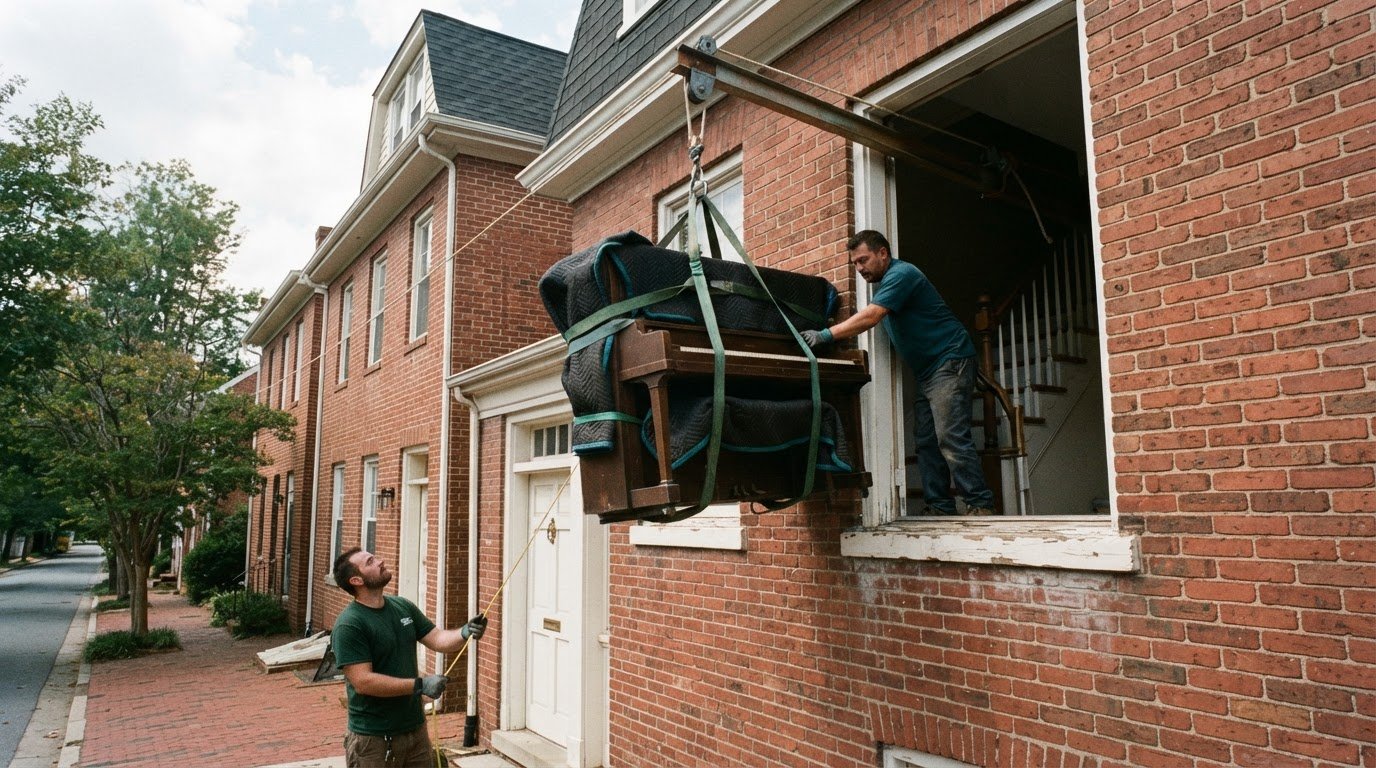
A narrow stairwell doesn't have to decide where your sofa or bulky furniture can go. A heavy furniture hoist service for narrow-stairwell buildings in Haymarket moves suitable items through an exterior opening when the indoor route is too tight. The crew assesses the item and lift path, sets up the equipment, then guides the load into the building.
It makes sense to worry about tight turns, scuffed walls, or a piece getting stuck halfway up the stairs. The key is planning the route before lifting begins. This guide explains how hoisting works, what the crew considers when assessing an exterior lift path, and what to expect from setup through delivery in Haymarket. You’ll see how the item, access points, and conditions around the building shape the plan, so the process feels clear before the heavy lifting starts.
Key Takeaways
- Learn what crews assess outside the building to plan a practical lift path and equipment position.
- See how item size, weight, floor level, and access conditions shape a hoisting plan.
- Recognize when bulky furniture may be better suited to professional handling than a tight stairwell route.
- Follow the main stages of a hoist, from initial assessment and setup to lifting and indoor delivery.
- Find out when Heavy Furniture Moving’s Sofa Hoisting service can help with a difficult furniture move.
Assessing the external lift path and equipment position
Before moving furniture outside, the crew maps a route from the ground to the destination opening. They assess the item, building access, and equipment position together.
External Lift Path Assessment
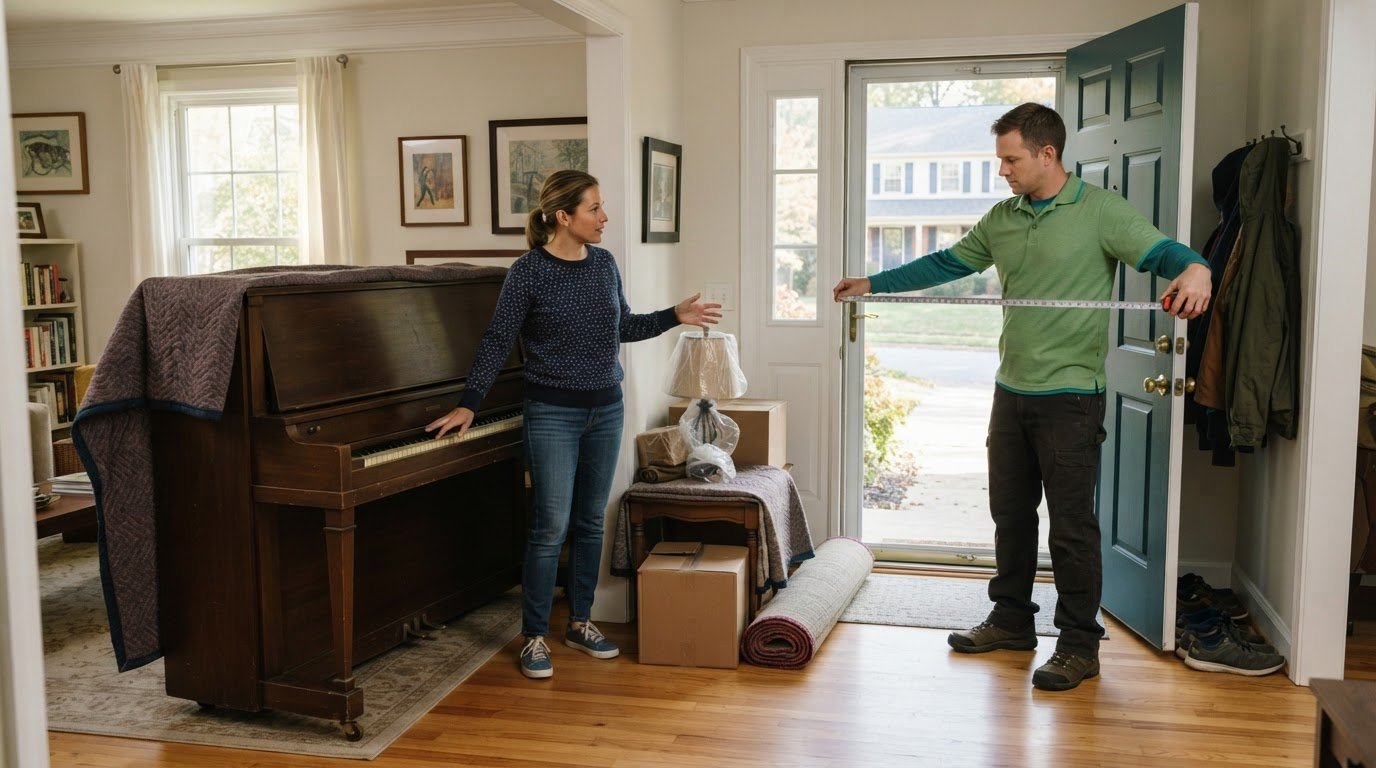
The assessment starts with the furniture’s dimensions and the opening it must pass through. A sample sofa measuring 35 inches high, 84 inches wide, and 38 inches deep shows why measuring only the doorway is not enough. The crew considers its orientation during the lift and whether the window or balcony opening provides a workable entry.
The crew then traces the outside route from the equipment position to the opening. Trees, railings, roof edges, and nearby structures can limit the path or affect how the item turns. A tight turn near a window may call for a different lifting angle or approach. The crew also compares this route with the indoor stairwell, including landings and corners.
Equipment Position and Weight Capacity
Equipment placement depends on the ground area, opening height, and route the load must travel. The crew looks for a position that reaches the opening without avoidable obstacles. They also consider whether the furniture can arrive without striking a sill, railing, or nearby surface.
The equipment must be suited to the item and planned lift. The crew assesses the furniture’s weight and the lifting setup together, since no single capacity applies to every hoist. A large sofa and a compact exercise machine have different shapes and handling needs, even if their weights are similar.
Experience matters during this assessment. A hoisting crew considers how an item’s balance, dimensions, and attachment points affect the lift. The crew also checks that the equipment is in good condition and appropriate for the planned operation. Hoisting is specialized work, not a task for untrained helpers.
Rigging and Lift Process
Rigging secures the furniture to the lifting system. Movers choose suitable straps, slings, and hooks, positioning them to help stabilize the load without putting avoidable pressure on delicate areas. Before lifting, the crew checks the setup and clears obstacles from the designated area.
The lift proceeds in coordinated stages. The operator raises or lowers the item while the ground crew guides it and watches for contact with the building. Clear communication helps the crew respond if the load shifts or the path needs adjustment. At the opening, movers guide the furniture inside along the planned route.
The lift path, equipment, and rigging all work together as one plan. If the opening, item dimensions, or equipment position changes, the crew reassesses the route before continuing.
How does furniture hoisting work?
Furniture hoisting moves an item outside the building and through an upper-floor opening when indoor access is unsuitable. The job plan and quote depend on the item, the work involved, and the move details. Assessing those details first helps determine a suitable approach.
For a furniture hoist or crane in Haymarket, permit needs depend on the setup and applicable building or local requirements. Professional movers coordinate permits and building rules with property management as part of planning the work.
A hoist can lift sofas and other large furniture to upper floors when the item and access route suit the equipment. The crew considers the sofa’s size and weight, floor level, and opening before choosing a workable method.
Several practical details affect the quote. A heavier or bulkier piece may need different handling than a compact item, while a more complex operation can require additional planning. The distance between the pickup point and delivery location also matters. Hoisting costs can vary with location, crew expertise, and available equipment.
For a useful quote, share clear details about the furniture and both locations. Identify the item, such as a sofa, mattress, or bed frame, and provide its measurements if available. Describe the floor level, narrow hallways, openings, and any access restrictions. These details help the crew assess the job.
- Item: Identify each piece and provide its dimensions and approximate weight if known.
- Access: Describe the pickup and delivery floors, openings, hallways, and stair access.
- Move: Give the starting point and destination so the moving distance can be considered.
- Equipment: Note whether the plan may involve a hoist or crane, as equipment needs affect the work.
Heavy Furniture Moving provides a quote based on the specific job. Item size and weight, floor height, access, operation complexity, and the move details all help shape the estimate. Sharing those specifics upfront helps the crew assess the actual work instead of treating every sofa or mattress move alike.
Mattresses and bed frames vary in bulk and handling needs, even when they’re going to the same floor. Describe each piece so the crew can assess the whole job. This is especially useful when several items need to pass through tight hallways or openings, since the sequence can affect the hoisting plan.
Can I find help moving furniture today?
To arrange moving help, provide the item, pickup and delivery locations, access details, and requested timing. A sofa going to an upper-floor apartment needs a different plan from exercise equipment moving through a clear ground-floor entrance.
Some items are poor matches for a narrow stairwell. Large dressers, bulky mattresses, exercise equipment, and furniture that needs disassembly can also call for professional handling. Items needing three or more people or disassembly typically need professional help.
Stairs add handling risks beyond the furniture’s weight. The research facts for this article report well over 100,000 injuries each year linked to carrying items such as furniture on stairs. A heavy or awkward piece can block a carrier’s view, catch on a railing, or shift during a turn. Hoisting may be practical when a narrow hallway, stairwell, or size-limited elevator prevents an indoor move.
During a hoist, at least three professional movers are typically needed for large furniture. Two movers manage raising or lowering the item, while a third guides it around obstacles. This division lets the lifting crew focus on the load while the guide watches its path near the building and opening.
Rigging and site preparation are essential parts of the operation. Movers use suitable straps, slings, and hooks to secure the item and help keep it stable. Before lifting starts, they clear obstacles from the designated area and use signs to keep people at a safe distance. Hoisting equipment should be inspected and maintained, including checks that it works properly and is certified safe for use.
Risks include a shifting load, contact with the building, or an item becoming unstable. Damage coverage depends on the moving agreement and applicable policy, so review the terms, exclusions, and claim steps before work begins.
Professional help makes sense when an item needs several people, requires disassembly, or cannot navigate the stairwell without forceful twisting. For example, a sofa that cannot clear an apartment landing may be better suited to a planned hoist than repeated attempts on the stairs. Heavy Furniture Moving can assess the item and access, then plan the lift and guide it through the opening.
When arranging a move, identify each heavy item, its floor and destination, and any tight turns, stairs, or elevator limits. Those details help Heavy Furniture Moving understand the job and plan suitable handling.
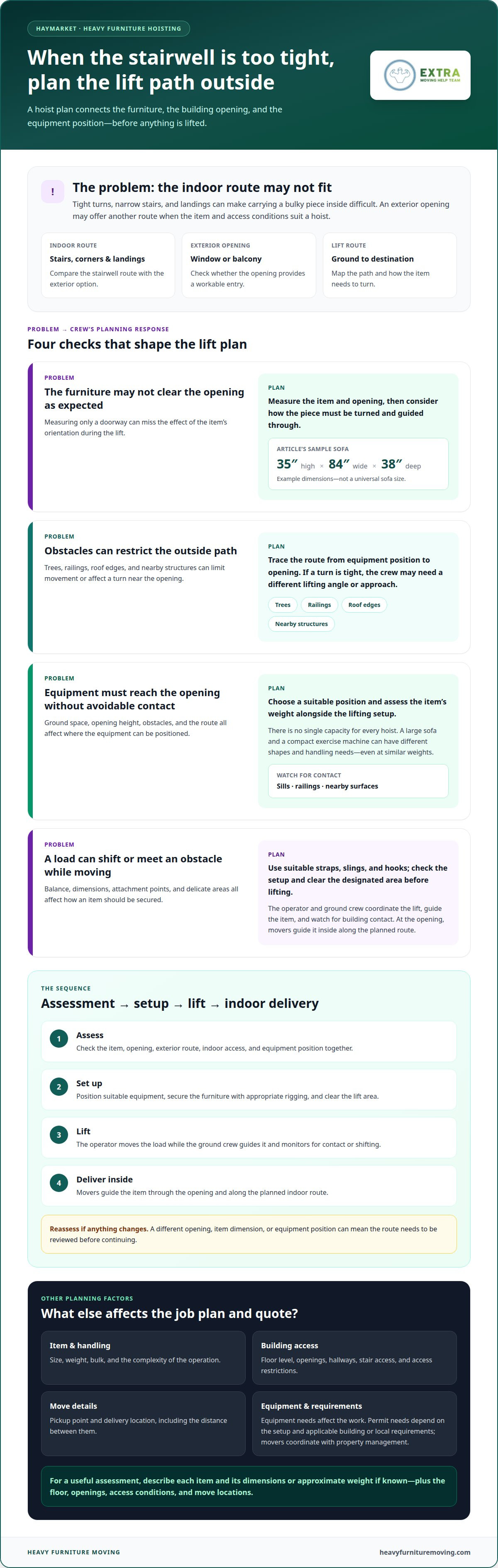
Assessment, setup, lifting, and delivery process
The work follows four stages: assess the job, prepare the item and site, lift, then deliver it indoors. For an oversized sofa or appliance, each stage helps keep the load aligned with the planned route.
Assessment: Movers review the item’s dimensions, weight, condition, and destination opening. They also assess the lift path, equipment needs, and weather, particularly rain or strong winds, which can affect the operation. The crew considers the delivery room and indoor route too, so the item can move from the opening to its final position.
Before setup, movers assess risks and coordinate the lifting plan. They consider the equipment position, load path, and communication between the operator and ground crew. Property rules and any applicable permits or building requirements also belong in the planning stage. A clear plan accounts for the actual item and building.
Preparation: Movers wrap the item before lifting and pad building surfaces along exposed parts of the route. They clear obstacles from the designated area and use signs to keep people at a safe distance. For a dresser, removing the drawers can reduce its weight by 25% or more. Preparation depends on the furniture: a dresser may be lightened, while a sofa may need wrapping and careful positioning.
Next, the crew secures the item with load-rated ropes and suitable hardware. They check the attachment and lifting setup before raising the load. The operator and ground crew stay in communication throughout the lift. Clear signals help them coordinate movement, respond to a shift, and guide the item past obstacles without rushing.
Lifting and delivery: The crew raises or lowers the furniture along the assessed path, then guides it through the opening. Movers protect nearby surfaces and control the item’s orientation as it enters the building. Once inside, they move it along the planned route and place it in the destination room. A successful lift still needs a clear path through the apartment.
Timing varies with the item and access conditions. A couch, mattress, or dresser hoist typically takes 20-45 minutes; piano hoisting typically takes 45-90 minutes. Those figures cover the hoisting task, while site preparation and indoor delivery also shape the full operation. Each stage gives the crew a chance to keep the item and route aligned from setup to placement.
Moving heavy furniture through narrow stairwells and tight corners
A heavy furniture hoist service for narrow stairwell buildings in Haymarket can provide an exterior route when stairs cannot accommodate a large piece. The crew compares the item’s dimensions with stair widths, landing clearance, and possible window or balcony access before choosing a route.
A 48-inch-high, 60-inch-wide, 20-inch-deep dresser illustrates the challenge. It may not turn through a 34-inch-wide stairway, even if its depth appears manageable. Movers must account for the dresser’s full shape as they tilt and rotate it around a corner. An armoire measuring 72 inches high, 40 inches wide, and 22 inches deep presents another constraint: a landing ceiling of 75 inches leaves only 3 inches of clearance.
Weight adds another difficulty. A 200-pound sofa can feel like 240-260 pounds to the person carrying it at the bottom of a staircase. That uneven load makes a tight turn harder to manage, especially when carriers have limited room to adjust their grip. An elevator with size limitations may not solve the problem, so the route assessment must include every floor and opening.
A window or balcony can provide an alternate path when the indoor route is too restrictive. The crew checks whether the opening and outside path can accommodate the piece, then considers the lift method and equipment needed. A rope-and-pulley setup may suit a couch or mattress going to a second or third floor. A piano moving to a higher floor may require crane-assisted hoisting, depending on access and the operation.
The item needs room at both ends of the lift. Movers need space to guide it toward the opening, control its orientation, and bring it inside without striking the frame or nearby surfaces. The destination room also needs a clear path. For example, a sofa may clear a balcony entrance but still be difficult to maneuver past an interior corner.
Before lifting, the crew identifies obstacles along the route, including railings, roof edges, and nearby structures. They coordinate the load’s position as it rises. If the opening cannot accommodate the item, the team reassesses rather than forcing it through. A heavy furniture hoist service for narrow stairwell buildings in Haymarket starts with planning around the item and building access.
Share the furniture dimensions, floor, and access details to help plan the route. Plan a furniture hoist for a bulky piece that cannot navigate the stairwell cleanly.
Heavy Furniture Moving: Sofa Hoisting
Heavy Furniture Moving offers Sofa Hoisting for bulky sofas that cannot navigate narrow stairs or tight corners. Hoisting can provide an alternate route through a suitable exterior opening when the indoor path is too restrictive.
Consider this service when a sofa’s dimensions, stairwell layout, or limited elevator access make a regular carry impractical. The opening and lift path must suit the item, so share the sofa’s measurements and building access details when discussing the move. Heavy Furniture Moving also offers in-home furniture moving help.
Contact Heavy Furniture Moving to discuss your sofa and the access challenge.
Plan the next move with confidence
Before arranging a heavy furniture hoist service for a narrow-stairwell building in Haymarket, bring the move into focus. Identify the item, its destination, and the access challenge that makes the usual route difficult. That gives the conversation a clear starting point and helps connect your moving needs with a practical next step.
Heavy Furniture Moving offers Sofa Hoisting, Movers Near Me, and Exercise Equipment Moving. If your move includes a sofa and other heavy pieces, describe how each item needs to reach its destination. A clear picture of the job helps the crew discuss suitable support.
Contact Heavy Furniture Moving today to talk through your move. Take the next step with a straightforward plan for getting your furniture where it belongs.
Frequently Asked Questions
Can you hoist to the second floor without closing the street?
Sometimes. A second-floor lift may avoid a street closure if equipment can be positioned without blocking the street and the lift path stays clear. Whether a street, sidewalk, or shared access area needs to be restricted depends on the setup and applicable local requirements. Floor height alone doesn’t determine it. The equipment footprint, building entrance, and route below the window all matter.
How do you price a sofa hoist?
A sofa-hoist quote depends on the sofa’s dimensions and weight, floor height, access, equipment, and operation complexity. Share a photo of the sofa and stairs, along with pickup and delivery details, so the estimate reflects the actual move. A sectional with separate pieces may need a different plan from a one-piece couch. The quote is provided after a request, based on the specific job.
Which furniture hoist and crane companies serve Haymarket, Virginia?
In Haymarket, Heavy Furniture Moving offers Sofa Hoisting for furniture that can’t pass through standard entryways or elevators. It’s a moving service for sofas that need an alternate route, not an equipment rental. Share the item, floor, opening, and building access details to discuss the move. Heavy Furniture Moving also offers Movers Near Me for household moving help.
How much does a crane or exterior furniture lift cost per hour?
The cost of a hoist depends on the item, floor height, site access, equipment, and operation complexity. These factors shape the setup and labor required, so one hourly figure wouldn’t describe every move. For a useful quote, provide the sofa’s dimensions, destination floor, and exterior access details.
How do you measure windows and exterior access for a furniture hoist?
Measure the opening’s clear width and height with the window or door fully open, not just the frame. Measure the furniture at its widest, tallest, and deepest points, including feet or handles. Note the sill, balcony rails, nearby obstacles, and route from the ground to the opening. Share photos and measurements so the crew can assess clearance and item orientation.
What preparation is needed before a furniture hoist service?
Clear the approach to the opening and destination room so the item has an unobstructed path. Empty dressers and safes; most other items generally don’t need emptying. Keep people clear of the lift area during setup. Shrink film, moving blankets, and ratchet straps are included on every job. Mention any disassembly needs so the crew can account for them in the plan.
Should you hoist furniture or disassemble it for the stairwell?
Consider whether the piece can pass after removable parts come off. Removing sofa legs or separating a bed frame can help it clear a stair turn. If the furniture still can’t navigate the route, hoisting may provide an alternate path. Heavy Furniture Moving can help with moving, disassembly, and reassembly. The item’s shape and building access determine which method fits.
Frequently Asked Questions
Sometimes. A second-floor lift may avoid a street closure if equipment can be positioned without blocking the street and the lift path stays clear. Whether a street, sidewalk, or shared access area needs to be restricted depends on the setup and applicable local requirements. Floor height alone doesn’t determine it. The equipment footprint, building entrance, and route below the window all matter.
A sofa-hoist quote depends on the sofa’s dimensions and weight, floor height, access, equipment, and operation complexity. Share a photo of the sofa and stairs, along with pickup and delivery details, so the estimate reflects the actual move. A sectional with separate pieces may need a different plan from a one-piece couch. The quote is provided after a request, based on the specific job.
In Haymarket, Heavy Furniture Moving offers Sofa Hoisting for furniture that can’t pass through standard entryways or elevators. It’s a moving service for sofas that need an alternate route, not an equipment rental. Share the item, floor, opening, and building access details to discuss the move. Heavy Furniture Moving also offers Movers Near Me for household moving help.
The cost of a hoist depends on the item, floor height, site access, equipment, and operation complexity. These factors shape the setup and labor required, so one hourly figure wouldn’t describe every move. For a useful quote, provide the sofa’s dimensions, destination floor, and exterior access details.
Measure the opening’s clear width and height with the window or door fully open, not just the frame. Measure the furniture at its widest, tallest, and deepest points, including feet or handles. Note the sill, balcony rails, nearby obstacles, and route from the ground to the opening. Share photos and measurements so the crew can assess clearance and item orientation.
Clear the approach to the opening and destination room so the item has an unobstructed path. Empty dressers and safes; most other items generally don’t need emptying. Keep people clear of the lift area during setup. Shrink film, moving blankets, and ratchet straps are included on every job. Mention any disassembly needs so the crew can account for them in the plan.
Consider whether the piece can pass after removable parts come off. Removing sofa legs or separating a bed frame can help it clear a stair turn. If the furniture still can’t navigate the route, hoisting may provide an alternate path. Heavy Furniture Moving can help with moving, disassembly, and reassembly. The item’s shape and building access determine which method fits.