Downsizing and Moving Assistance in Woodbridge, VA: A Practical Guide

What if downsizing feels less like tackling an entire household and more like making one clear decision at a time? With downsizing and moving assistance Woodbridge residents can get practical help with the physical work while keeping control over what stays, goes, or gets passed on. The hardest part often isn’t choosing a moving date. It’s sorting years of belongings, deciding which furniture suits a smaller home, and coordinating packing, removal, and transport.
That can feel like a lot to carry, especially when bulky items or tight access add extra strain. A simple plan can make the work more manageable: decide what’s moving, set aside items for removal, then match the remaining tasks to the help you need.
This guide walks you through those steps, explains how packing and unpacking, junk removal, local furniture moving, and heavy-item handling can support your move, and shares practical ways to prepare for a smoother Woodbridge-area transition. Start with your priorities, then build a plan that respects your choices and lightens the load.
Key Takeaways
- Start with the home you’re moving to, then decide what belongs there and what needs another plan.
- Sort one room or category at a time to make downsizing decisions easier to manage.
- Match downsizing and moving assistance Woodbridge to the tasks you want help with, from packing and transport to unwanted-item removal.
- Use a move-day checklist to organize labeled boxes, essential items, access details, and task ownership.
- Plan ahead for bulky furniture and heavy items so they can be handled safely during the move.
Downsizing in Woodbridge, VA: Start with the Move You Want
Downsizing is about more than fitting furniture through a doorway. It can mean choosing which belongings to keep, deciding what suits a new home, and setting a pace that works for the person making the move. Start with the outcome you want, not the biggest pile in the house. Are you moving to a smaller residence, an apartment, or a nearby family home? The destination shapes what can move and what needs another plan.
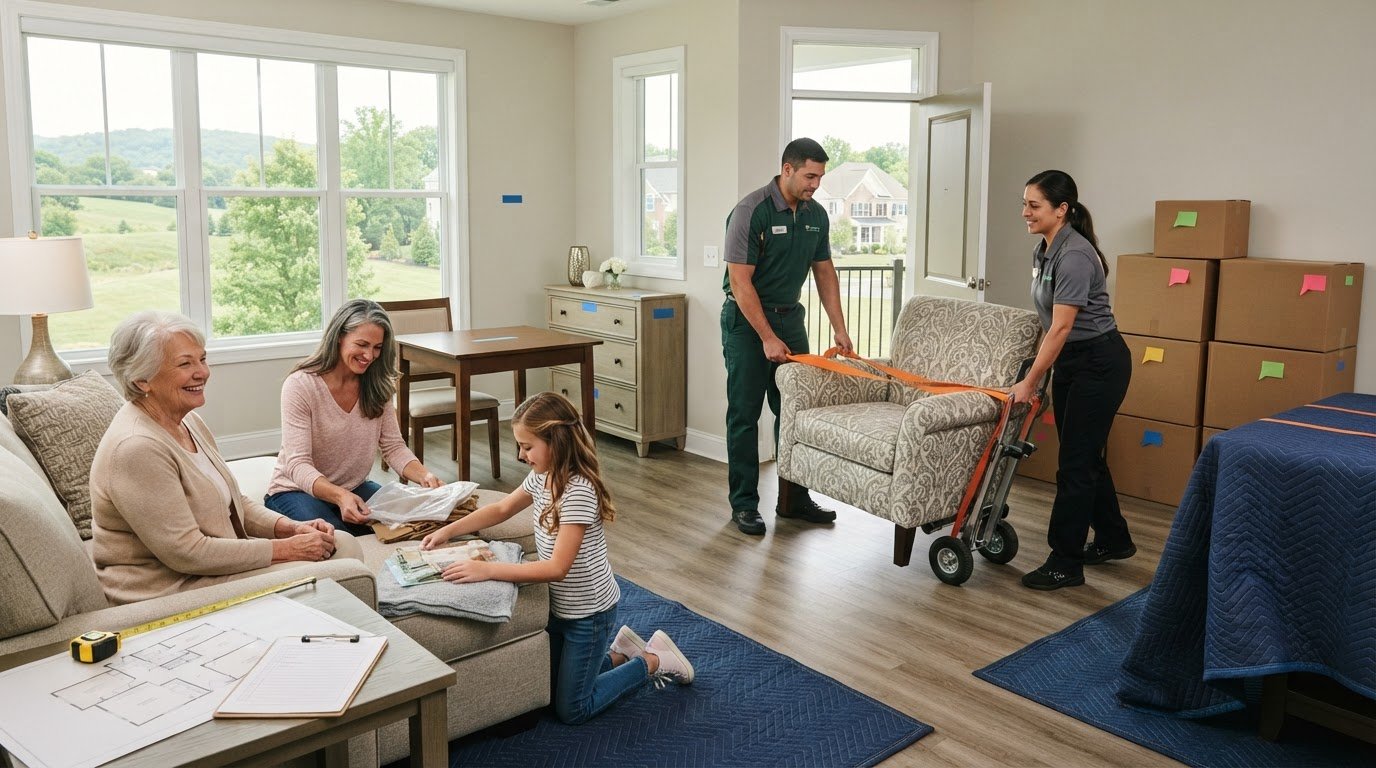
Keep the decisions personal. The person moving should set priorities and guide the timing, even when relatives are helping. A useful first step is to sort belongings into three groups: items that are moving, items that need another destination, and tasks where physical help would make the transition easier. This turns a large project into choices you can manage one at a time.
Here, Woodbridge means Woodbridge, Virginia, in Northern Virginia, not Woodbridge Township in New Jersey, which may appear in search results. Local context matters, but your plan should be built around your new home, belongings, and preferred support.
What does downsizing and moving assistance cover?
Separate the decisions from the labor. You choose what stays, moves, or leaves; practical moving support takes care of selected tasks once those choices are made. For example, you might sort keepsakes yourself, then get help packing kitchen items, moving furniture, or removing belongings you no longer need.
- Packing and unpacking: Get help preparing chosen belongings for the move and settling them in at the destination.
- Local furniture moving: Move the pieces you’ve decided to keep, including large items that are difficult to handle alone.
- Junk removal: Clear items you’ve chosen to let go of, rather than making removal decisions in a rush.
Downsizing and moving assistance Woodbridge can be tailored to the tasks that remain. You stay in charge of personal choices and timing while getting help with the physical work.
Who may benefit from a smaller-home move?
Homeowners moving to a smaller house, an apartment, or a nearby family member’s home may find that some furniture no longer fits or serves a purpose. Adult children can help a parent organize the move, while keeping the parent’s preferences at the center. If the transition is part of supporting an aging loved one, coordinating daily assistance through providers like Life's Angel Home Care can also help ease the overall process. Ask which items matter most and let the person moving make the final call wherever possible.
You don’t need help with every room. Maybe the belongings are already sorted, but a sofa or exercise equipment is too heavy to move alone. Or perhaps you want to pack personal items yourself and bring in help for furniture transport and removal. Define the goal first, then arrange support where it reduces strain or makes the plan easier to carry out.
How to Plan a Woodbridge Downsizing Move Without Losing Control
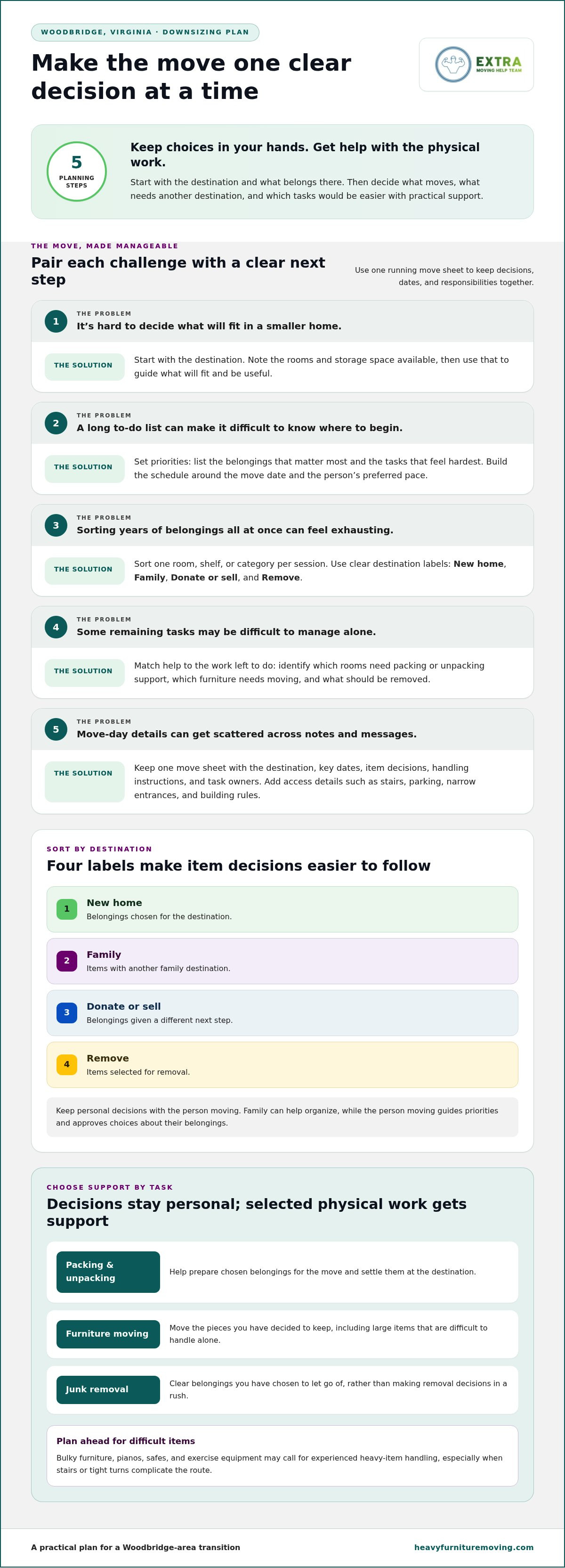
A clear plan puts your choices first and the physical work second. Keep one running move sheet so decisions, dates, and responsibilities don’t get scattered across texts and notes. Include the destination, key dates, item decisions, handling instructions, and who owns each task. Update it as plans change.
Work through this sequence:
- Choose the destination. Note the rooms and storage space available in the new home. Use that information to decide what will fit and be useful.
- Set priorities. List the belongings that matter most and the tasks that feel hardest. Build the schedule around the move date and the person’s preferred pace.
- Sort belongings. Tackle one room, shelf, or category per session. Short, focused sessions can keep decisions from becoming exhausting.
- Arrange help. Identify which rooms need packing or unpacking support, which furniture needs moving, and what should be removed.
- Prepare move day. Record access instructions, label boxes by destination room, and assign each remaining task to a person.
For a Woodbridge move, add access details to the plan early. Note stairs, parking arrangements, narrow entrances, and building rules that may affect furniture moving or scheduling. Requirements vary by property, so get current instructions from the relevant building or property manager rather than relying on assumptions.
How should families sort belongings before moving?
Begin with items needed soon, such as everyday clothing, toiletries, and important papers. Then choose a small area to sort, like one closet shelf or a group of books. Label decisions clearly: new home, family, donate or sell, and remove. Write down each item’s intended destination and any handling notes for things that need special care. The person moving should make or approve decisions about personal belongings. For more practical prompts, use AARP's decluttering tips for moving alongside your sorting plan.
Which moving tasks are worth arranging help for?
Match help to the workload, not to a one-size-fits-all package. You might pack personal items yourself and arrange packing support for a full kitchen, or focus unpacking help on the rooms you need first. Bulky furniture, pianos, safes, and exercise equipment can call for experienced heavy-item handling, especially when stairs or tight turns complicate the route. Explore reliable movers near me in Fairfax and Northern VA for broader local moving-service context.
With a written task list, downsizing and moving assistance Woodbridge can focus on the work you want off your hands. If packing, furniture transport, or heavy lifting is on your list, explore local moving support as you shape your plan.
Compare Downsizing Moving Help by Task, Not by Package Name
A smaller home doesn’t automatically call for help with every part of a move. You might handle sorting and personal boxes yourself, then arrange support for packing a busy room, carrying furniture, or clearing items you’ve decided not to keep. Compare the work task by task. That makes it easier to choose help that fits your priorities and keeps decisions in your hands.
| Task | What you decide | Practical help can address |
|---|---|---|
| Self-managed sorting | What stays, moves, goes to family, or leaves the home. | You organize belongings at your own pace and mark each item’s next destination. |
| Packing and unpacking | Which belongings get packed, and which rooms or boxes need attention first. | Hands-on support packing selected rooms and making essential items accessible after arrival. |
| Local moving | Which furniture and boxes are coming to the new home. | Moving chosen belongings between local residences, including bulky furniture. |
| Junk removal | Which unwanted belongings should be removed. | Clearing items you’ve already decided not to move. |
| Heavy-item assistance | Which large or heavy pieces are staying and where they need to go. | Specialized handling and transport for challenging items and furniture. |
Use the table to mark each task as “I’ll handle it,” “I’d like help,” or “I need to decide.” This simple check can reveal where support will have the greatest impact. For downsizing and moving assistance Woodbridge residents can combine selected services instead of treating the move as all or nothing. Keep decisions about belongings separate from the physical work of moving them.
When is packing or unpacking support useful?
Packing support can help when several rooms need attention, time is limited, or belongings are awkward to handle. Choose specific areas, such as a kitchen full of fragile items or a bedroom that needs to be ready first. Unpacking support can help put daily essentials within reach soon after arrival. You decide what gets packed and where it belongs; the help is with the hands-on work.
When do heavy items need specialized moving help?
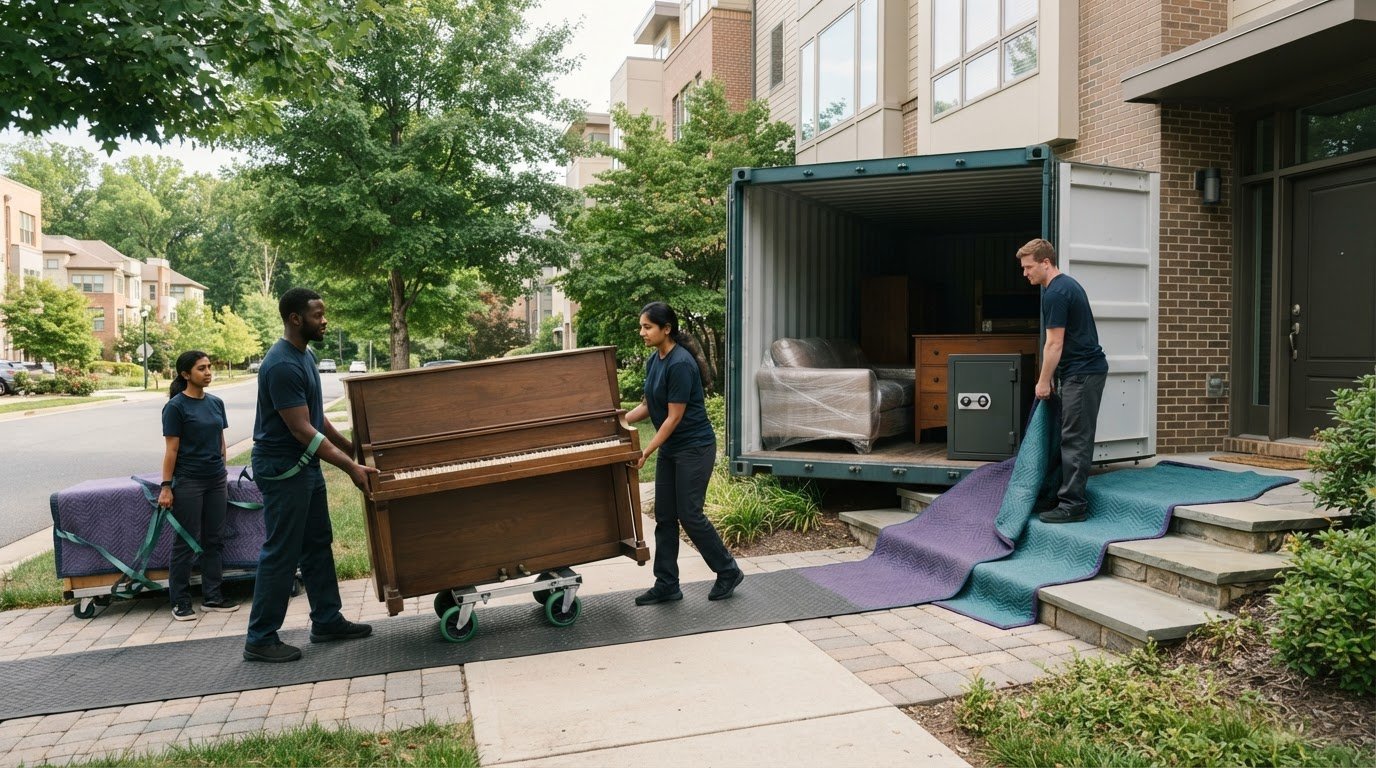
A piano, safe, or exercise machine takes more planning than an ordinary box. Large furniture can be difficult to maneuver through stairs, tight turns, or narrow doorways, so consider the route as well as the item’s weight. Heavy-item moving support can handle the demanding transport while you decide what stays and where each piece should go. Learn more about specialized furniture transport and moving heavy items safely.
Before arranging help, make a short task list with each item or room, its destination, and any handling notes. That gives the moving team a clear picture of the work and helps keep the move aligned with your choices.
Prepare Your Woodbridge Home and Move-Day Details
A well-prepared home gives everyone a clearer path through moving day. Before the crew arrives, set out access details, identify belongings that need careful handling, and keep daily essentials separate from boxes headed to the truck. These steps help reduce last-minute questions and keep the person moving’s priorities in view.
For downsizing and moving assistance Woodbridge, plan for both ends of the trip. Ask the destination building or property manager about move-in instructions, access arrangements, and rules that affect the move. Write down details such as entry points, stairs, elevator procedures, parking, or reserved move-in times. Don’t assume the new home follows the same arrangements as the current one.
What should be ready before moving day?
Label each box with its destination room and mark anything that needs careful handling. Clear practical routes to exits and moving areas, and keep essentials out of the loading zone. Use this checklist to prepare:
- Access: Record entry instructions, parking details, stairs, and building requirements.
- Boxes: Label by room and flag fragile or special-handling items.
- Essentials: Set aside medication, important documents, valuables, chargers, toiletries, and a change of clothes.
- Pathways: Move loose items and trip hazards away from doors and furniture routes.
- Task ownership: Note who is handling packing, access questions, and decisions during the move.
How can families keep the transition manageable?
Choose one family contact to share updates and keep practical details organized. That person can relay instructions, while the person moving remains in charge of decisions about belongings, timing, and priorities. Agree on a simple way to pause and ask before handling anything whose destination isn’t clear.
Leave room in the schedule for breaks. Avoid saving difficult sorting decisions for moving day, when attention is already divided. Keep a short written note for special handling, such as which room a piece of furniture belongs in or which box should be unloaded first. Clear notes make it easier to respect the person’s preferences without asking them to repeat instructions throughout the day.
Plan unwanted-item removal separately from the move. Local disposal rules and collection schedules can vary, so check current Woodbridge-area guidance before setting items out or arranging a collection. For large cleanouts, professional waste management services like Madi’s Skips show how dedicated bin hire can keep substantial domestic decluttering organized. Don’t assume every item can use the same disposal route.
Once access, essentials, and responsibilities are written down, the remaining work is easier to coordinate. Arrange practical moving help for your Woodbridge move for support with packing, furniture transport, or heavy items.
Get Downsizing and Moving Assistance in Woodbridge
A downsizing plan becomes easier to act on when it ends in a clear task list. Separate the work into packing, moving, heavy items, and removal. Beside each task, note what you’ve decided, what still needs a decision, and where you want practical help. You remain in charge of what moves or leaves; the moving team handles the agreed physical work.
Heavy Furniture Moving provides residential moving support in Woodbridge and nearby Northern Virginia communities. As a veteran-family-owned business, the team helps with practical parts of a household move, from packing and unpacking to local furniture transport and junk removal. For a piano, safe, or exercise machine that needs specialized handling, include it in your task list so it’s part of the moving plan.
What moving support can Heavy Furniture Moving provide?
Set the scope around your home and priorities. You might want packing help for selected rooms, local moving support for the furniture and boxes you’ve chosen to bring, or unpacking help to settle in. Junk removal can address belongings you’ve already decided not to move. Heavy-item support can help with demanding pieces such as pianos, safes, and exercise equipment.
These services support the move itself. You and your family make the personal downsizing decisions, including which belongings to keep, give to family, or remove. You also decide the timing and priorities. A clear list helps keep the practical work aligned with those choices, whether you need help across several tasks or with one especially demanding item.
How to take the next step in Woodbridge
Before discussing the move, gather a few useful details: your destination, preferred timing, the belongings going with you, and the tasks where physical help would make a difference. Include access information such as stairs, narrow entryways, or building instructions. Note bulky furniture and heavy items, along with their intended rooms in the new home. This gives the moving plan a solid starting point.
You don’t need every detail settled before making a task list. Start with what you know, mark open decisions, and identify the work you want help handling. Then share those priorities with the moving team. Keep personal decisions in the hands of the person moving, and let practical support reduce the strain of packing, lifting, and transport.
Ready to turn your plan into next steps? Plan your Woodbridge move with Heavy Furniture Moving and outline the tasks you’d like help with.
Make Your Next Move One Clear Step
You don’t have to solve every detail at once. Choose one useful next step: sketch the layout of your new home, identify the belongings you want close at hand, or write down the moving tasks that feel hardest. Small decisions can turn a big transition into a more manageable plan.
As you consider downsizing and moving assistance Woodbridge, keep your priorities at the center. You decide what matters, what comes along, and when you’re ready to move forward. Practical support can help carry out the physical work without taking those choices out of your hands.
Heavy Furniture Moving is a veteran-family-owned and operated business serving residential moves in Woodbridge and nearby Northern Virginia. If you’re ready to discuss the move and the tasks where help would make a difference, plan your Woodbridge move with Heavy Furniture Moving.
Take it one decision at a time. With a plan that fits your needs, you can step into the next home with confidence.
Frequently Asked Questions
How do I start downsizing when I feel overwhelmed?
Start with one small area and make one kind of decision at a time. For example, sort a single drawer into items you use, items to keep but store elsewhere, and items you’re ready to part with. Take a break before moving to another area. A practical downsizing and moving assistance Woodbridge plan can begin with a short list of priorities, not a whole-house sorting marathon.
Can movers help with packing and unpacking during a downsizing move?
Yes. Moving support can include packing selected belongings before the move and unpacking after arrival. You might pack personal keepsakes yourself, then arrange help with a kitchen or a room with many boxes. Decide which items should be packed together and where boxes should go in the new home. That guidance keeps your personal choices clear while reducing the hands-on workload.
How far ahead should I plan a downsizing move in Woodbridge?
Start planning as soon as you know the destination or likely move window. There’s no single timeline that fits every household, but early planning gives you room to sort gradually and learn the new property’s access instructions. For moves involving Woodbridge, Fairfax, Manassas, Manassas Park, Aldie, Ashburn, McLean, Vienna, Reston, Centreville, Chantilly, Clifton, Dumfries, South Riding, Fairfax Station, Haymarket, or Gainesville, include both addresses in your task plan.
What should I do with belongings that will not fit in my new home?
Choose a destination for each item before moving day. Some belongings may suit family members, while others could be sold, donated, or removed. For instance, measure a favorite chair against the new room before deciding whether it can come along. Set aside anything you’re unsure about rather than making a rushed choice. Once you’ve decided what should leave, junk removal can help clear selected unwanted items.
Can family members help a parent downsize without taking over?
Yes. Offer practical support while keeping the parent in charge of personal decisions. Ask what matters most, take notes, and avoid discarding or giving away belongings without approval. Family members can help gather box supplies, label items the parent has chosen, or organize move-day information. If opinions differ, pause and let the person moving decide what feels right for the next home.
What heavy items can moving assistance handle during a downsizing move?
Heavy-item moving support can include pianos, safes, and exercise equipment such as a treadmill. Bulky furniture may also need extra planning if it has to pass through a narrow doorway or turn on a stairway. Make a note of each large item, its current location, and where it should go. Heavy Furniture Moving also provides sofa hoisting for items that can’t fit through standard entryways or elevators.
Is junk removal the same as moving unwanted furniture to a new home?
No. Moving furniture means transporting pieces you’ve chosen to keep to the new residence. Junk removal is for belongings you’ve decided should leave the household rather than travel with you. Keep these tasks separate on your list so unwanted items aren’t mixed with the furniture and boxes headed to the new home. If you’re undecided about a piece, make that choice before arranging its removal.
Frequently Asked Questions
Separate the decisions from the labor. You choose what stays, moves, or leaves; practical moving support takes care of selected tasks once those choices are made. For example, you might sort keepsakes yourself, then get help packing kitchen items, moving furniture, or removing belongings you no longer need. Downsizing and moving assistance Woodbridge can be tailored to the tasks that remain. You stay in charge of personal choices and timing while getting help with the physical work.
Homeowners moving to a smaller house, an apartment, or a nearby family member’s home may find that some furniture no longer fits or serves a purpose. Adult children can help a parent organize the move, while keeping the parent’s preferences at the center. Ask which items matter most and let the person moving make the final call wherever possible. You don’t need help with every room. Maybe the belongings are already sorted, but a sofa or exercise equipment is too heavy to move alone. Or perhaps you want to pack personal items yourself and bring in help for furniture transport and removal. Define the goal first, then arrange support where it reduces strain or makes the plan easier to carry out. A clear plan puts your choices first and the physical work second. Keep one running move sheet so decisions, dates, and responsibilities don’t get scattered across texts and notes. Include the destination, key dates, item decisions, handling instructions, and who owns each task. Update it as plans change. Work through this sequence: For a Woodbridge move, add access details to the plan early. Note stairs, parking arrangements, narrow entrances, and building rules that may affect furniture moving or scheduling. Requirements vary by property, so get current instructions from the relevant building or property manager rather than relying on assumptions.
Begin with items needed soon, such as everyday clothing, toiletries, and important papers. Then choose a small area to sort, like one closet shelf or a group of books. Label decisions clearly: new home, family, donate or sell, and remove. Write down each item’s intended destination and any handling notes for things that need special care. The person moving should make or approve decisions about personal belongings. For more practical prompts, use AARP's decluttering tips for moving alongside your sorting plan.
Match help to the workload, not to a one-size-fits-all package. You might pack personal items yourself and arrange packing support for a full kitchen, or focus unpacking help on the rooms you need first. Bulky furniture, pianos, safes, and exercise equipment can call for experienced heavy-item handling, especially when stairs or tight turns complicate the route. Explore reliable movers near me in Fairfax and Northern VA for broader local moving-service context. With a written task list, downsizing and moving assistance Woodbridge can focus on the work you want off your hands. If packing, furniture transport, or heavy lifting is on your list, explore local moving support as you shape your plan. A smaller home doesn’t automatically call for help with every part of a move. You might handle sorting and personal boxes yourself, then arrange support for packing a busy room, carrying furniture, or clearing items you’ve decided not to keep. Compare the work task by task. That makes it easier to choose help that fits your priorities and keeps decisions in your hands. Use the table to mark each task as “I’ll handle it,” “I’d like help,” or “I need to decide.” This simple check can reveal where support will have the greatest impact. For downsizing and moving assistance Woodbridge residents can combine selected services instead of treating the move as all or nothing. Keep decisions about belongings separate from the physical work of moving them.
Packing support can help when several rooms need attention, time is limited, or belongings are awkward to handle. Choose specific areas, such as a kitchen full of fragile items or a bedroom that needs to be ready first. Unpacking support can help put daily essentials within reach soon after arrival. You decide what gets packed and where it belongs; the help is with the hands-on work.
A piano, safe, or exercise machine takes more planning than an ordinary box. Large furniture can be difficult to maneuver through stairs, tight turns, or narrow doorways, so consider the route as well as the item’s weight. Heavy-item moving support can handle the demanding transport while you decide what stays and where each piece should go. Learn more about specialized furniture transport and moving heavy items safely. Before arranging help, make a short task list with each item or room, its destination, and any handling notes. That gives the moving team a clear picture of the work and helps keep the move aligned with your choices. A well-prepared home gives everyone a clearer path through moving day. Before the crew arrives, set out access details, identify belongings that need careful handling, and keep daily essentials separate from boxes headed to the truck. These steps help reduce last-minute questions and keep the person moving’s priorities in view. For downsizing and moving assistance Woodbridge, plan for both ends of the trip. Ask the destination building or property manager about move-in instructions, access arrangements, and rules that affect the move. Write down details such as entry points, stairs, elevator procedures, parking, or reserved move-in times. Don’t assume the new home follows the same arrangements as the current one.
Label each box with its destination room and mark anything that needs careful handling. Clear practical routes to exits and moving areas, and keep essentials out of the loading zone. Use this checklist to prepare:
Choose one family contact to share updates and keep practical details organized. That person can relay instructions, while the person moving remains in charge of decisions about belongings, timing, and priorities. Agree on a simple way to pause and ask before handling anything whose destination isn’t clear. Leave room in the schedule for breaks. Avoid saving difficult sorting decisions for moving day, when attention is already divided. Keep a short written note for special handling, such as which room a piece of furniture belongs in or which box should be unloaded first. Clear notes make it easier to respect the person’s preferences without asking them to repeat instructions throughout the day. Plan unwanted-item removal separately from the move. Local disposal rules and collection schedules can vary, so check current Woodbridge-area guidance before setting items out or arranging a collection. Don’t assume every item can use the same disposal route. Once access, essentials, and responsibilities are written down, the remaining work is easier to coordinate. Arrange practical moving help for your Woodbridge move for support with packing, furniture transport, or heavy items. A downsizing plan becomes easier to act on when it ends in a clear task list. Separate the work into packing, moving, heavy items, and removal. Beside each task, note what you’ve decided, what still needs a decision, and where you want practical help. You remain in charge of what moves or leaves; the moving team handles the agreed physical work. Heavy Furniture Moving provides residential moving support in Woodbridge and nearby Northern Virginia communities. As a veteran-family-owned business, the team helps with practical parts of a household move, from packing and unpacking to local furniture transport and junk removal. For a piano, safe, or exercise machine that needs specialized handling, include it in your task list so it’s part of the moving plan.
Set the scope around your home and priorities. You might want packing help for selected rooms, local moving support for the furniture and boxes you’ve chosen to bring, or unpacking help to settle in. Junk removal can address belongings you’ve already decided not to move. Heavy-item support can help with demanding pieces such as pianos, safes, and exercise equipment. These services support the move itself. You and your family make the personal downsizing decisions, including which belongings to keep, give to family, or remove. You also decide the timing and priorities. A clear list helps keep the practical work aligned with those choices, whether you need help across several tasks or with one especially demanding item.
Start with one small area and make one kind of decision at a time. For example, sort a single drawer into items you use, items to keep but store elsewhere, and items you’re ready to part with. Take a break before moving to another area. A practical downsizing and moving assistance Woodbridge plan can begin with a short list of priorities, not a whole-house sorting marathon.
Yes. Moving support can include packing selected belongings before the move and unpacking after arrival. You might pack personal keepsakes yourself, then arrange help with a kitchen or a room with many boxes. Decide which items should be packed together and where boxes should go in the new home. That guidance keeps your personal choices clear while reducing the hands-on workload.
Start planning as soon as you know the destination or likely move window. There’s no single timeline that fits every household, but early planning gives you room to sort gradually and learn the new property’s access instructions. For moves involving Woodbridge, Fairfax, Manassas, Manassas Park, Aldie, Ashburn, McLean, Vienna, Reston, Centreville, Chantilly, Clifton, Dumfries, South Riding, Fairfax Station, Haymarket, or Gainesville, include both addresses in your task plan.
Choose a destination for each item before moving day. Some belongings may suit family members, while others could be sold, donated, or removed. For instance, measure a favorite chair against the new room before deciding whether it can come along. Set aside anything you’re unsure about rather than making a rushed choice. Once you’ve decided what should leave, junk removal can help clear selected unwanted items.
Yes. Offer practical support while keeping the parent in charge of personal decisions. Ask what matters most, take notes, and avoid discarding or giving away belongings without approval. Family members can help gather box supplies, label items the parent has chosen, or organize move-day information. If opinions differ, pause and let the person moving decide what feels right for the next home.
Heavy-item moving support can include pianos, safes, and exercise equipment such as a treadmill. Bulky furniture may also need extra planning if it has to pass through a narrow doorway or turn on a stairway. Make a note of each large item, its current location, and where it should go. Heavy Furniture Moving also provides sofa hoisting for items that can’t fit through standard entryways or elevators.
No. Moving furniture means transporting pieces you’ve chosen to keep to the new residence. Junk removal is for belongings you’ve decided should leave the household rather than travel with you. Keep these tasks separate on your list so unwanted items aren’t mixed with the furniture and boxes headed to the new home. If you’re undecided about a piece, make that choice before arranging its removal.