Curbside Freight Delivery and Indoor Placement in Reston
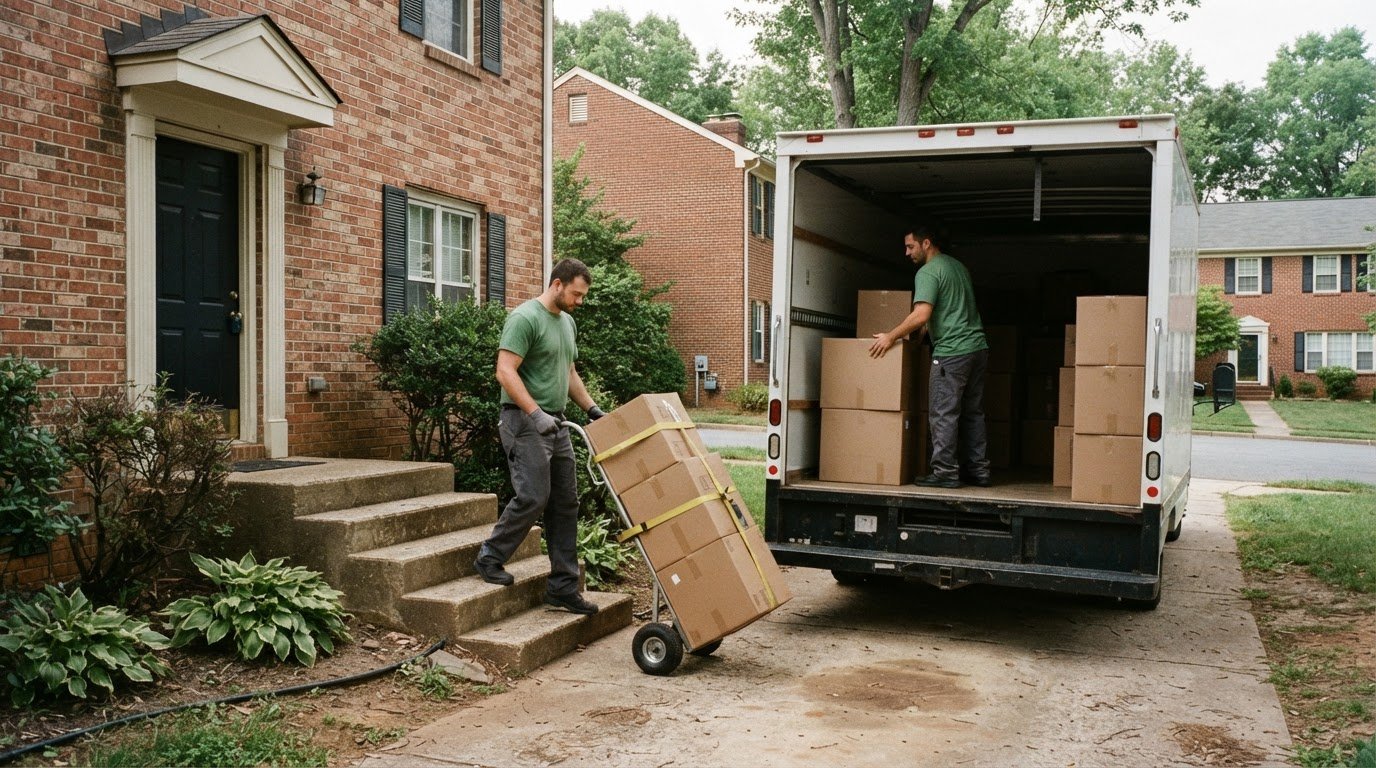
The curb is the handoff point, not the front door. Choosing a curbside freight delivery and indoor placement service in Reston starts with understanding where the carrier’s work ends and indoor help begins. Curbside freight delivery brings the shipment to the curb; indoor placement carries it farther inside. Unpacking, assembly, and setup are separate tasks.
It’s easy to assume a large delivery will reach the room where you need it. Knowing what a curbside freight delivery and indoor placement service in Reston includes helps you plan for a heavy or bulky shipment. This guide explains how to prepare for delivery and when indoor placement, assembly, or white-glove handling may be appropriate. You’ll also learn what can affect delivery arrangements and how to plan the help you need.
Key Takeaways
- Prepare freight for transport and coordinate the handoff so the shipment is ready at the agreed time.
- Plan truck access and loading space in advance, and account for any equipment the shipment may need.
- Match the service level to the job: inside delivery and white-glove handling can cover more than curbside drop-off.
- Separate delivery from assembly and setup so you can plan the right help for getting an item ready to use.
- For heavy furniture or exercise equipment that needs moving inside, learn how Heavy Furniture Moving can help with the lifting.
Delivery scheduling and tracking
Start with the freight’s pickup and delivery details. Less-than-truckload (LTL) transport combines shipments from multiple businesses on one semi-trailer, so freight may pass through several handling points. Secure packing helps reduce the risk of damage during loading and transit. Keep the shipment’s dimensions, weight, destination, and delivery contact details consistent across the paperwork and carrier booking.
At pickup, have the goods ready at the agreed time and positioned where the carrier can reach them. The truck needs an accessible approach and enough room to load safely. Curbside pickup is designed for shippers without a loading dock or specialized loading equipment. The carrier loads the freight from the agreed curbside location. Confirm that the shipment’s size and weight meet the carrier’s curbside limits.
Use the carrier’s tracking reference to follow shipment progress and check handling milestones. Freight tracking may show recorded events as the shipment moves through transport. Real-time delivery tracking is different: when available, it can show the vehicle’s current location or an updated arrival estimate. A scan is a recorded event, not necessarily the truck’s live position. For a national shipment, rely on the latest carrier update rather than assuming every leg follows the same schedule.
For a Reston delivery, keep the receiving contact available and make sure the destination details identify the correct entrance or curbside handoff point. Local courier routes in Reston may take approximately 4-6 hours, but that figure describes route duration, not a guaranteed freight appointment window. Freight schedules depend on the shipment’s route, handling stops, access, and agreed delivery arrangements. Keep the tracking reference handy when coordinating the receiving handoff.
Liability and damage policies vary by indoor freight delivery service. The carrier’s written terms and shipment documents explain the applicable process. Record visible damage at delivery and follow the stated reporting steps.
Before dispatch, prepare the site as carefully as the freight. Move vehicles and other obstructions from the loading area, and make the curbside location accessible to the truck. If the shipment needs a forklift, dolly, or other specialized equipment, arrange it in advance. Curbside delivery does not include carrying freight into a home, so arrange indoor handling separately if the load needs to go beyond the curb.
Inside delivery and white-glove service
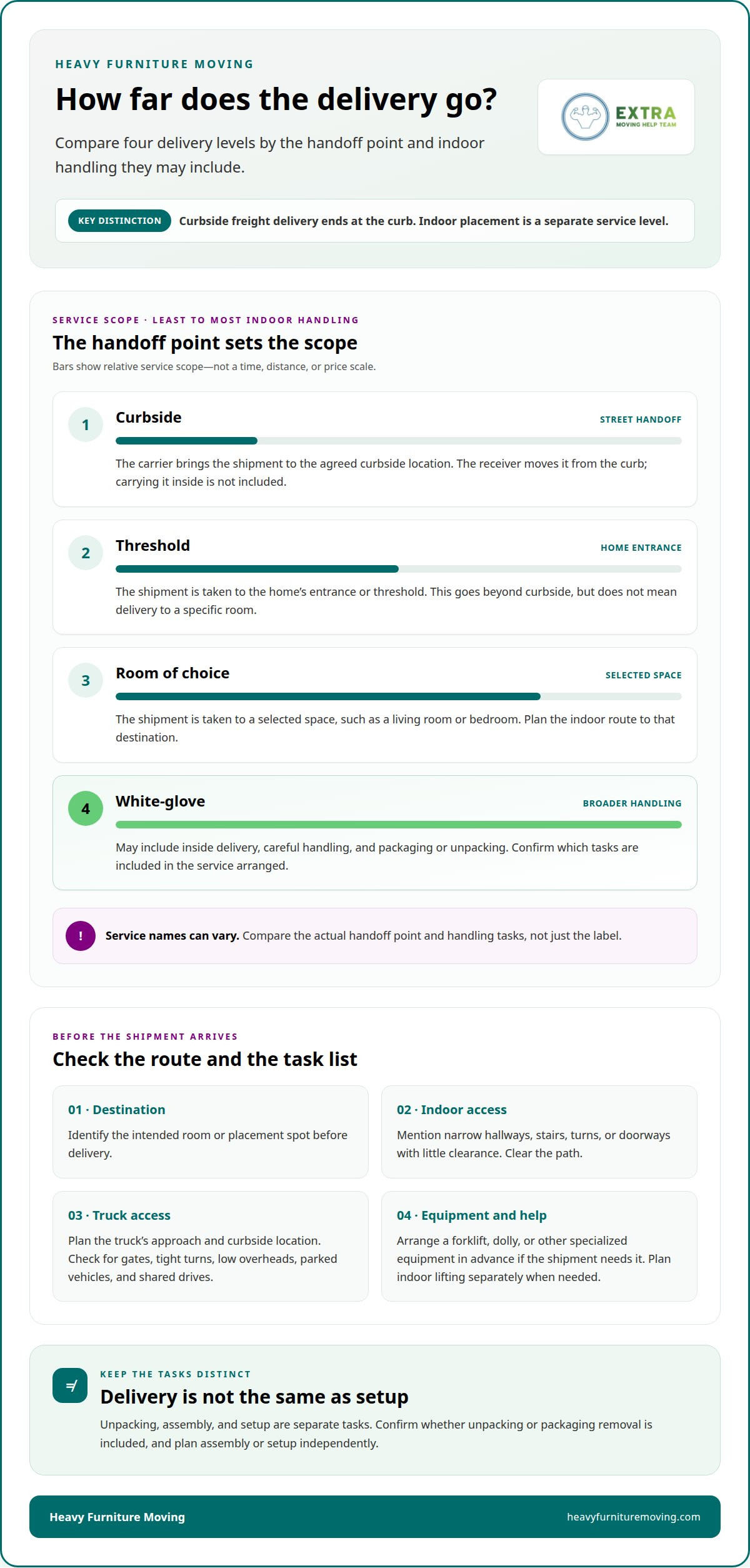
In Reston, the delivery level determines where the shipment is handed over and what handling follows. Curbside service ends at the curb. The receiver moves the shipment from there to the home, so carrying freight inside is not included. Threshold, room-of-choice, and white-glove delivery provide different levels of indoor handling, depending on the service arranged with the carrier.
Threshold delivery takes the shipment to the home’s entrance or threshold. It goes beyond curbside delivery, but does not mean the item reaches a specific room. Room-of-choice delivery takes the shipment to a selected space, such as a living room or bedroom. White-glove service may include inside delivery, careful handling, and packaging or unpacking.
Choose a service based on the item’s destination and the work required after arrival. A boxed sofa that only needs to reach the entrance may suit threshold delivery. A large exercise machine intended for an upstairs room requires planning beyond a curbside handoff. If the shipment needs unpacking or careful handling indoors, white-glove service covers more than delivery to the entrance alone.
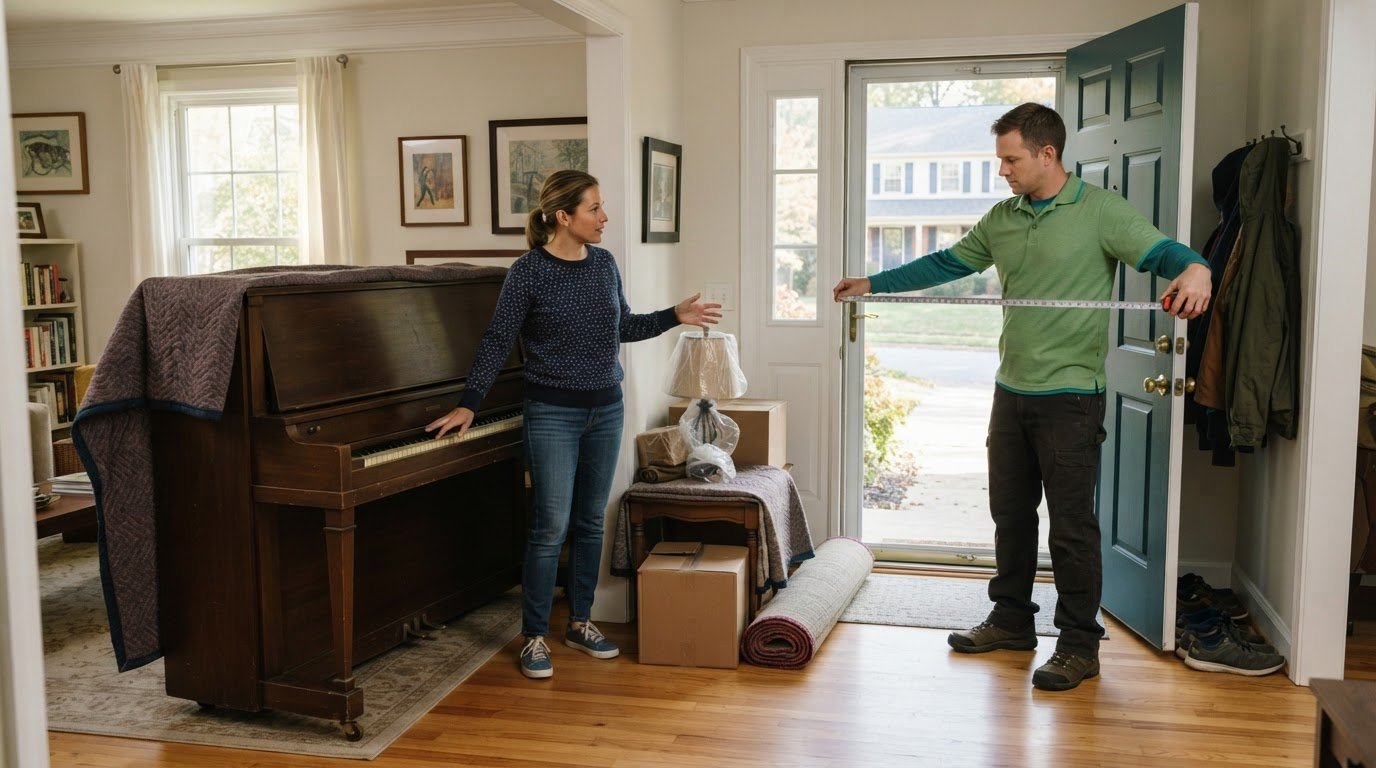
Before delivery, identify the intended location and describe the shipment clearly. Mention anything that could affect the route inside, such as narrow hallways, stairs, turns, or a doorway with little clearance. Clear the path and choose a final placement spot before the carrier arrives. An unobstructed route helps the delivery team move a heavy item safely without stopping to shift furniture or household belongings.
Service names can vary between carriers, so compare the actual handoff point and handling tasks, not just the label. Confirm whether the arranged service includes carrying the item inside, taking it to a specific room, unpacking, and removing packing materials. These tasks differ from basic curbside delivery, which ends at the curb. Set expectations in advance, especially when the shipment needs to go beyond the entrance.
For freight that needs extra hands after arrival, a heavy lifting moving service can help with moving heavy items into position. It’s a practical fit when the carrier’s delivery stops short of the room where the item belongs. Keep the delivery handoff and indoor lifting plan clear, so each part of the move has a defined task.
Residential access and delivery considerations
Residential delivery involves more than reaching the street address. Plan for the truck’s approach, the curbside handoff, and the shipment’s route to its destination.
Property Access Considerations
Before delivery, map the truck’s approach from the public road to the planned unloading location. Note gates, tight turns, low overheads, parked vehicles, and shared drives that could restrict access. In a townhome community, for example, a private lane or entrance gate can affect where a truck can stop. Give the carrier clear directions to the correct entrance and curbside location.
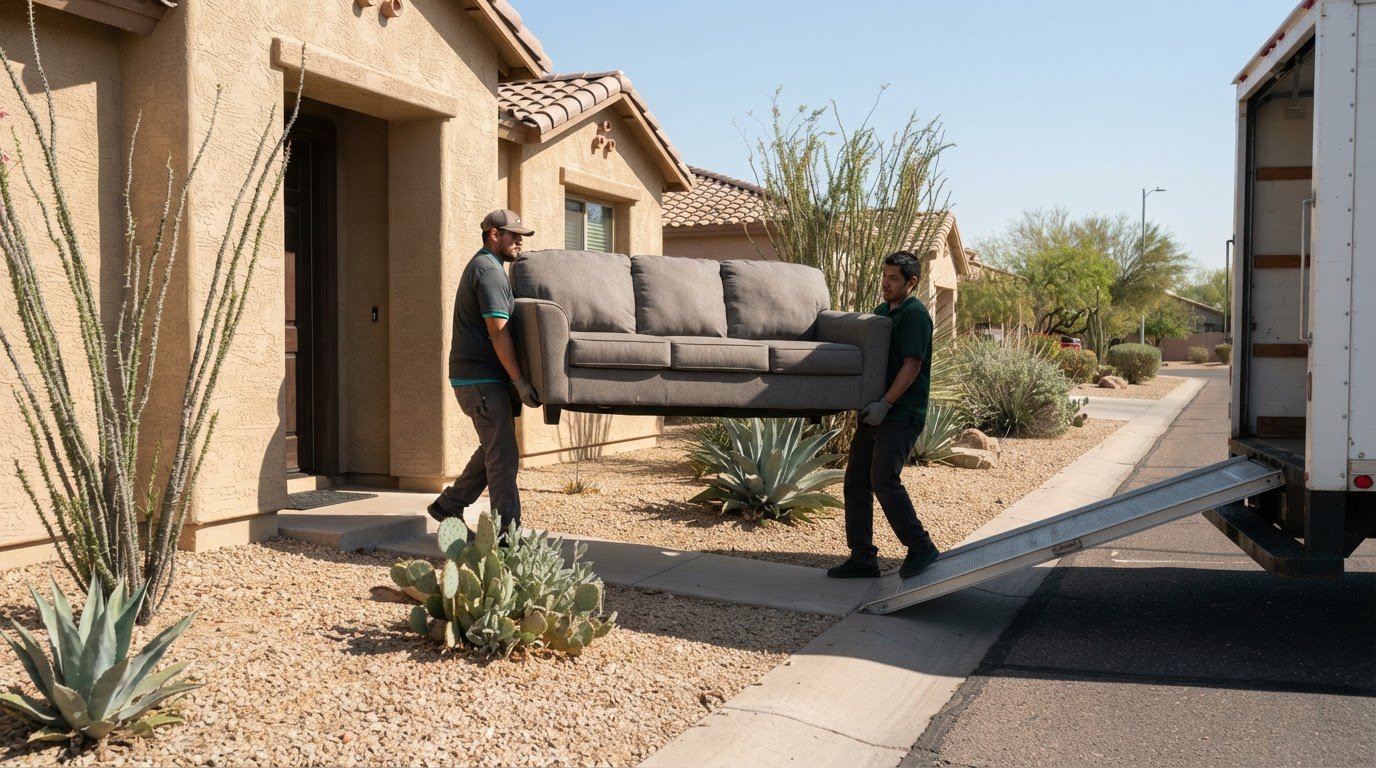
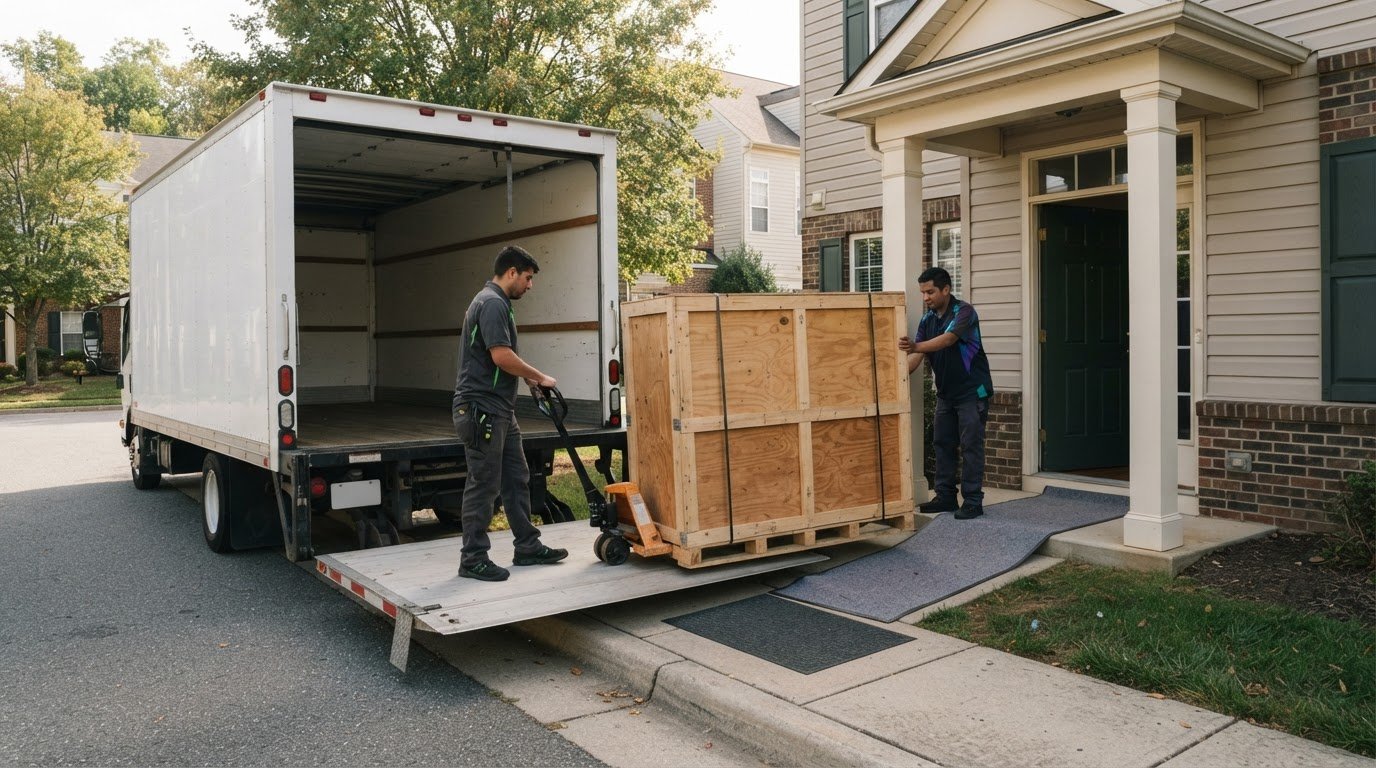
Residential curbside service does not include carrying a shipment into or out of a house. The receiver is responsible for moving freight to or from the curb. This matters for a pallet, crate, appliance, or bulky piece of furniture that cannot be moved by hand. A forklift or dolly may be needed, so arrange the equipment in advance.
Consider the entire route, not just the driveway. A shipment intended for a basement, upstairs room, or other interior space must pass through every doorway, turn, and stairway along the way. Clear household items from the path and identify where the load can wait if it cannot go inside immediately. Residential addresses, rural locations, and specialized equipment can affect freight charges.
Responding to Incomplete Indoor Placement
If the driver cannot access the property or complete indoor placement, keep the shipment at a safe handoff point and do not force it through a blocked route. Tell the carrier what prevented completion, such as a locked gate, narrow turn, or stairway that cannot accommodate the item. Clarify whether the load was delivered to the curb, brought to an entrance, or placed in a room.
Record the shipment’s condition and exact handoff location before the driver leaves. If the packaging is damaged, note the visible issue on the delivery record and follow the carrier’s reporting process. Keep the tracking reference with the delivery paperwork. These details help establish what was completed and what still needs to be handled.
Address the barrier before moving the freight. Clear the access path, arrange a dolly or forklift if the load requires one, or plan a separate indoor move. An oversized load may need additional arrangements. Hazardous materials also require planning beyond routine curbside service. A pallet that cannot pass through a doorway, for example, needs a different placement plan, not more force.
Separate the carrier’s delivery task from the lifting that remains. A clear record of the destination, access issue, and shipment location gives the next handling step a practical starting point.
Assembly and placement
A freight shipment can reach a Reston address without being ready to use. Curbside delivery typically excludes unpacking, assembly, and setup. That distinction matters for furniture, appliances, and exercise equipment. Plan separately for carrying an item to its final spot, removing its packaging, and assembling or connecting it.
Placement means moving an item to a chosen location. Assembly means putting separate parts together. Setup may involve preparing the item for use. These are distinct tasks, not automatic parts of a curbside handoff. For example, a boxed table delivered to the curb still needs to be carried indoors, unpacked, and assembled before it can be used.
Before delivery, decide which tasks the shipment needs after arrival. Write down the item’s destination and the work required there. A sofa may need only indoor carrying, while a bed frame may need assembly in the bedroom. An appliance may need to be placed in the kitchen, but placement alone does not include installation or connection.
Use this short planning sequence to keep the logistics clear:
- Identify the shipment and its final room, such as a dining table for the dining area.
- Separate carrying, unpacking, assembly, and setup into individual tasks.
- Clear the route from the handoff point to the chosen spot, including doorways and turns.
- Keep the packaging and assembly instructions with the item until its parts are accounted for.
That sequence helps prevent a common mismatch: expecting a delivery handoff to include hands-on assembly. If a shipment arrives in several cartons, keep them together and identify which pieces belong to the same item. For a desk, for example, bring the cartons to the planned work area before separating the work surface, legs, and hardware.
Room readiness also affects placement. Clear the floor where a sofa or appliance will go, and move loose household items out of the carrying path. Choose the destination before lifting begins. Changing the planned location after a large item is indoors may mean moving it through the same hallways and turns again.
Keep the delivery paperwork and item instructions accessible during the handoff. Note whether the shipment arrived packaged, unpacked, or assembled, and distinguish its condition from any damage. If assembly is planned separately, retain the instructions and keep associated parts together. For bulky items that need to be carried beyond the curb, include the lifting step in the overall delivery plan.
A clear task list gives each stage a defined endpoint: shipment received, item carried inside, packaging removed, and assembly completed if needed. This helps you plan the right sequence without treating curbside delivery as a complete setup service.
Which freight carriers offer indoor placement delivery in Reston, Virginia?
In Reston, indoor placement depends on the service selected, not just the freight carrier’s name. For a curbside freight delivery and indoor placement service in Reston, define whether the job ends at the curb, entrance, or chosen room. Freight carriers handle transportation; indoor carrying, unpacking, and assembly are separate tasks that need clear arrangements.
Compare services by the work they include. Look for a clear endpoint: the curb, the entrance, or a selected room. White-glove freight service may include inside delivery, careful handling, and packaging or unpacking. Those tasks do not automatically include assembly or setup.
Use this service-by-service check when reviewing a Reston delivery arrangement:
- Curbside: The shipment is handed off at the curb, and the receiver moves it from there.
- Threshold: The shipment is brought to the entrance, but not necessarily beyond it.
- Room placement: The item is carried to a selected room, such as a bedroom or living room.
- White-glove: The arranged service may include indoor handling and unpacking, along with added care.
Match the service to the shipment. A boxed sofa destined for a living room needs more than curbside drop-off if no one can carry it inside. A pallet of appliances may require equipment, while a heavy item going upstairs needs a clear route and placement plan. When arranging a curbside freight delivery and indoor placement service in Reston, share the item type, destination, access conditions, and required handling.
Separate freight transport from indoor lifting when one service does not cover both. The carrier can transport the shipment to Reston, while a moving crew handles the physical move inside. Coordinate the handoff time, shipment location, and indoor task so the freight is not left waiting without a plan.
Before booking, write down the exact endpoint and tasks: curb, threshold, room, unpacking, or assembly. For example, “carry the boxed exercise machine from the entrance to the ground-floor room” gives a clearer scope than “inside delivery.” If the shipment needs a separate indoor lift, arrange help moving heavy freight indoors as part of the delivery plan.
When arranging freight, compare white-glove and room-placement services by their included tasks. Indoor placement depends on the service arranged, not the carrier’s name alone.
Heavy Furniture Moving
Heavy Furniture Moving can help when freight reaches your property but still needs careful lifting or indoor movement. Its moving services bridge the gap between a curbside handoff and getting bulky furniture or exercise equipment where it belongs. Choose help suited to the item, such as Movers Near Me, Exercise Equipment Moving, or Sofa Hoisting.
Share the shipment’s current location, destination room, and any stairs or narrow access points. This gives the moving team a clear picture of the job and route. For furniture that needs carrying inside, Heavy Furniture Moving’s in-home furniture moving service can help with the physical move.
Contact Heavy Furniture Moving to discuss the indoor handling your delivery still needs.
Plan the final lift with confidence
Before your shipment arrives, decide who will move it from the handoff point to its final spot. When arranging a curbside freight delivery and indoor placement service in Reston, share the item type, destination, and access details. A clear plan separates freight transport from the lifting still needed at home.
Heavy Furniture Moving offers Movers Near Me, Exercise Equipment Moving, and Sofa Hoisting for bulky items that need careful handling. Choose the help that matches your shipment and the work remaining. A sofa that cannot pass through the doorway may need a different approach from moving exercise equipment between rooms.
Ready to plan the next step? Contact Heavy Furniture Moving today to discuss the lifting your delivery needs. A practical plan can help you move forward with a clearer path from curb to room.
Frequently Asked Questions
What Is Curbside Delivery?
Curbside delivery brings freight to the handoff point at the destination. The receiver is responsible for moving it from there, so a pallet left outside a Reston home still needs a separate plan to reach the garage or interior. This service can suit a shipment when someone can manage the final move and the truck has a suitable place to stop and unload.
What does curbside freight delivery include, and what is excluded?
Curbside freight delivery includes carrier transport and delivery to the agreed curbside point, where the carrier loads or unloads the shipment as arranged. It does not include carrying freight into or out of the home. Unpacking, assembly, and setup are also outside typical curbside delivery. For example, a boxed appliance may arrive at the curb, while carrying it inside and preparing it for use require separate arrangements.
What is indoor placement or room-of-choice delivery for freight?
Indoor placement means carrying the shipment inside. Room-of-choice service takes it to a designated room rather than leaving it at the entrance. The endpoint matters: a ground-floor living room and an upstairs bedroom involve different routes. Tell the delivery team the intended room and describe any stairs, tight turns, or narrow doors. This helps define the service needed before a large item reaches the property.
What are the size, weight, and packaging limits for indoor placement service?
Limits depend on the carrier’s equipment and the service arranged for the shipment. Ask about the freight’s size and weight, since a load may fit the vehicle but still exceed handling limits. Pack it securely for loading and transport, and provide accurate dimensions and weight when arranging the move. A large crate or unusually heavy pallet may require equipment or handling arrangements beyond standard curbside service.
What access and site requirements apply to freight delivery in Reston homes or businesses?
The truck needs an accessible approach and enough room to load or unload at the agreed location. At a Reston townhouse, a restricted shared drive or secured entrance can affect where the driver stops. Indoor placement also depends on the route beyond the entrance. Clear the destination and account for doors, stairs, tight turns, and any equipment needed to handle the shipment.
How do I request and schedule indoor placement with a freight carrier?
Request indoor service while arranging the shipment, not after it reaches Reston. Give the carrier the delivery address, shipment dimensions and weight, desired room, and access details such as stairs or a gated entrance. Ask for the agreed handoff point and included handling tasks to be recorded with the booking. Keep the shipment reference and delivery contact available for scheduling updates and coordination when it arrives.
Does indoor placement include unpacking, assembly, or debris removal?
Indoor placement alone does not mean the shipment will be unpacked, assembled, or set up. White-glove freight service may include unpacking, but the included tasks depend on the service arranged. Debris removal is a separate matter: state whether you need cartons, wrapping, or other packing materials taken away. For example, a bed delivered to a bedroom may still need assembly and packaging cleanup beyond room placement.