Ashburn International Shipping from USA: A Household Goods Guide
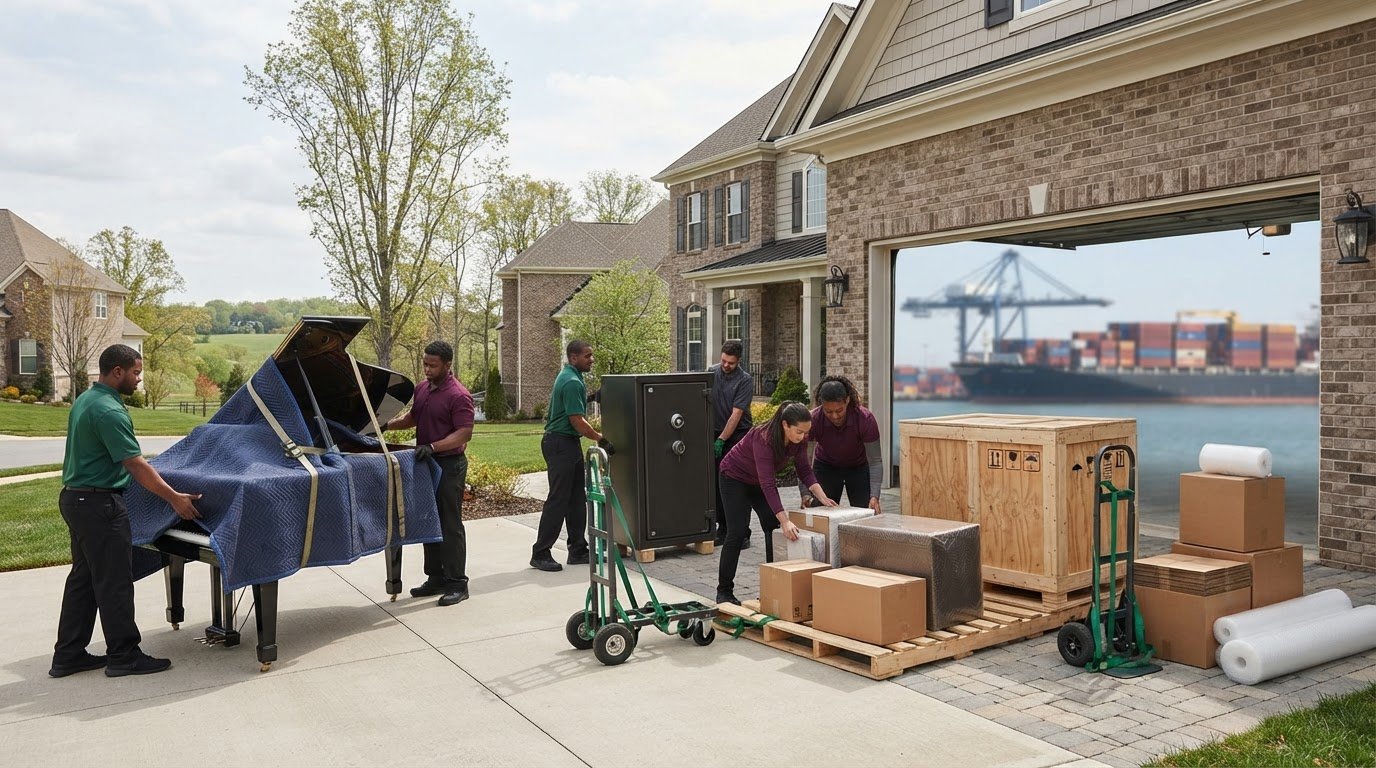
What if the smoothest overseas move starts before you choose a freight option? For Ashburn international shipping from USA, a clear inventory, careful packing, and access planning can make a major difference, especially when bulky furniture or valuable household items are involved.
It’s natural to feel unsure about what comes first. You’re coordinating belongings, transport, paperwork, and requirements that vary by destination. Start with a plan, and the process becomes easier to manage.
This guide explains the main stages of an overseas household-goods shipment, from deciding what to send and gathering item details to comparing air and ocean freight and preparing for destination requirements. You’ll also learn what to check with the relevant official authority, since customs rules differ between countries. When heavy lifting or careful packing is part of the job, residential packing support and specialized handling for items such as pianos, safes, and exercise equipment can ease the physical work. Heavy Furniture Moving also coordinates international shipments for furniture and household goods. The company serves Fairfax, Woodbridge, Manassas, Manassas Park, Aldie, Ashburn, McLean, Vienna, Reston, Centreville, Chantilly, Clifton, Dumfries, South Riding, Fairfax Station, Haymarket, and Gainesville.
Key Takeaways
- Start your Ashburn international shipping from USA plan by sorting belongings and recording what you intend to send.
- Compare air and ocean freight based on shipment size, timing needs, and planning priorities.
- Measure bulky items and research destination requirements before arranging shipment details.
- Residential packing and international shipment coordination can support a move involving heavy household goods.
- Use a step-by-step planning framework and account for destination-specific procedures.
What Ashburn international shipping from USA involves for a household move
International household-goods shipping is the coordinated movement of personal belongings across national borders, from preparing items at home through transport and destination handoff. It differs from an ordinary small-parcel delivery. A parcel is usually a compact, individually packed item moving through a standard carrier network. A household shipment may include furniture and large belongings that need an itemized inventory, careful packing, space planning, and handling arrangements at different stages.
For Ashburn international shipping from USA, plan for more than getting belongings out of the house. Decide what is worth shipping, describe and prepare each item, organize its movement, and learn the destination’s current requirements. Since the process varies by shipment and country, treat it as a coordinated project rather than a single pickup.
Planning early connects the details. A complete inventory describes what’s traveling. Dimensions and condition notes help clarify packing and handling needs. Destination research can reveal requirements that affect what you can send or how items are processed. From there, the shipment follows its planned transport stages toward a final handoff.
Which belongings are commonly included in a household shipment?
A household shipment may include furniture, personal belongings, and bulky items that are difficult to manage as separate parcels. List each piece clearly, and flag fragile, valuable, or unusually shaped belongings. Photograph an item’s condition before packing to keep a record of existing marks or wear.
- Furniture: Note the type of piece and its dimensions, especially for large sofas, tables, or cabinets.
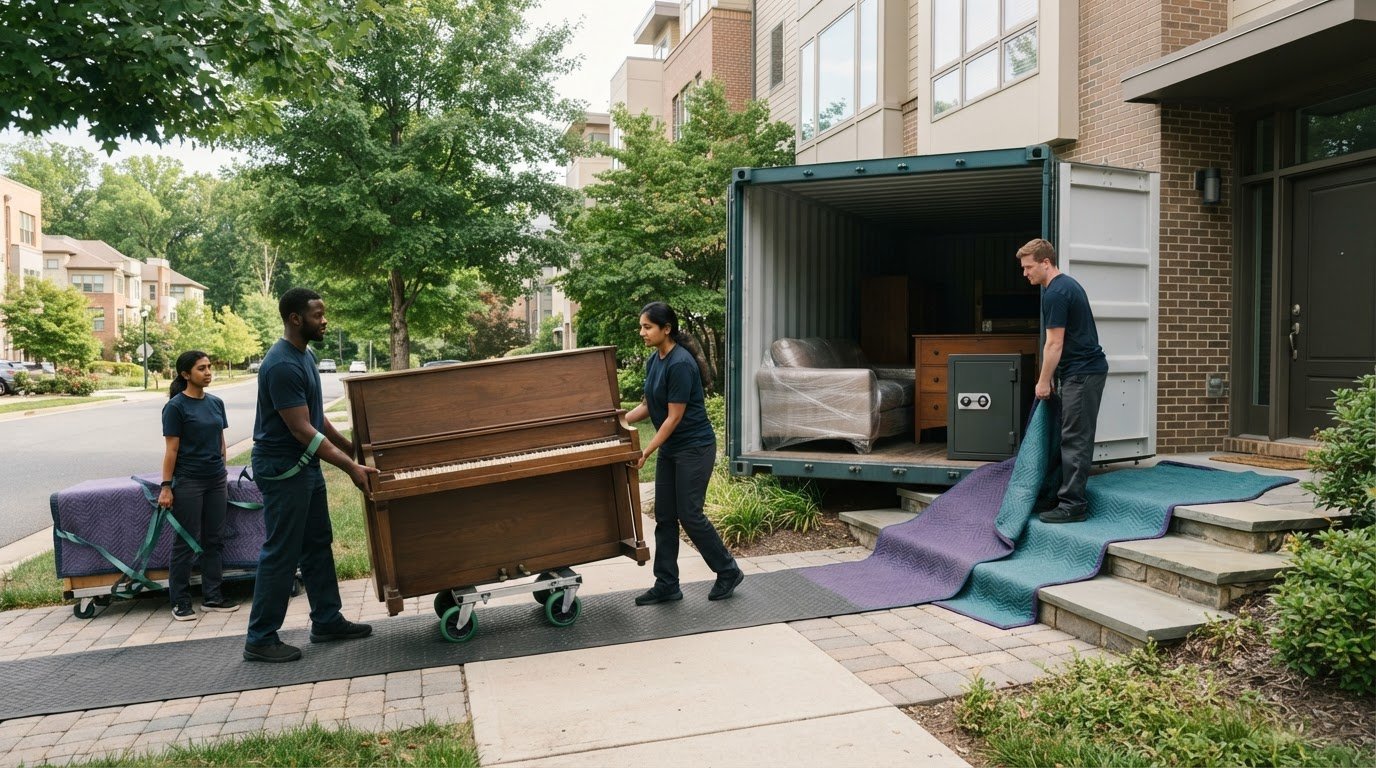
- Heavy items: Pianos, safes, and exercise equipment can require careful handling because of their weight, shape, or delicate components.
- Fragile or valuable belongings: Identify these separately so their packing needs aren’t lost in a general household list.
Professional residential packing support can help with the physical work of preparing bulky belongings. Heavy-item handling is also important for furniture or equipment that’s difficult to lift and maneuver safely without help.
Why Ashburn origin planning matters before moving day
Start with the home itself. In Ashburn and across Loudoun County, pickup conditions vary from one residence to another. Stairs, elevator access, narrow hallways, entryways, and the distance from the home to the pickup point can all affect how large belongings are handled. Share accurate measurements and access details early, not just a room-by-room item count.
- Measure oversized furniture and note doorways, stair turns, or other tight spots.
- Record elevator access, stairs, and obstacles on the path to the pickup area.
- Separate items you plan to ship from belongings you’ll keep, donate, or leave behind.
This groundwork gives you a clearer picture of the shipment before moving day. Residential moving and packing support can ease the physical load, while international shipment coordination helps organize the broader process for furniture and household goods.
How an international household shipment moves from Ashburn to its destination
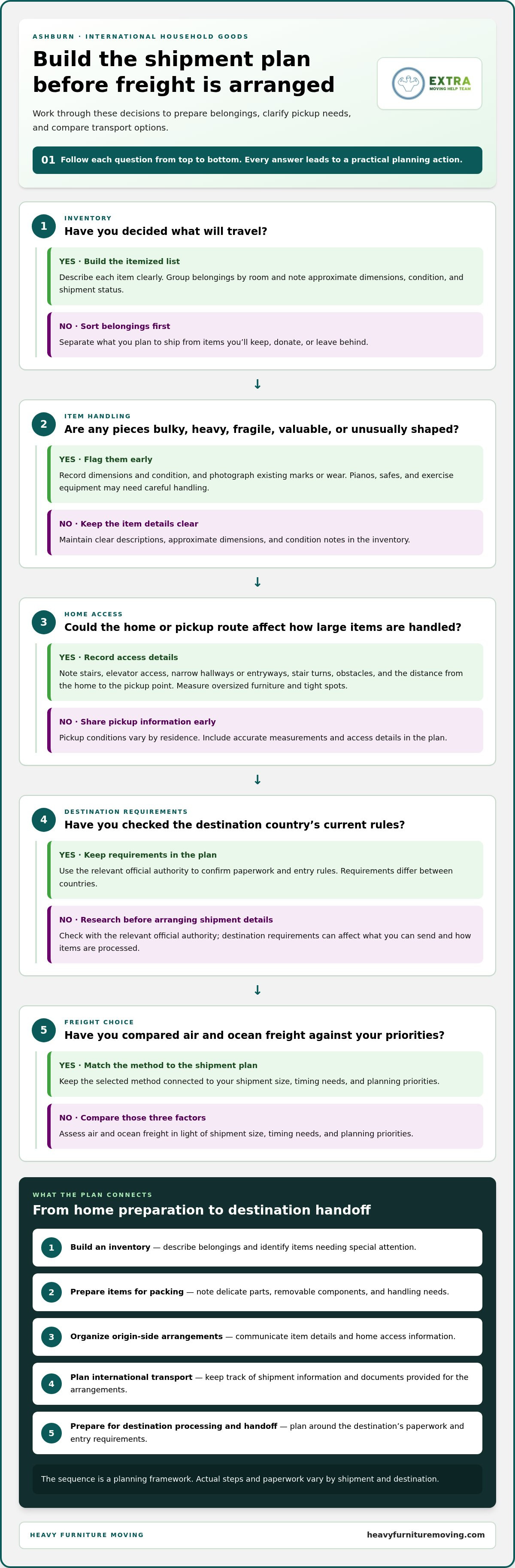
International household shipping is a sequence of connected tasks, not a single pickup and delivery. Use this as a general planning framework for Ashburn international shipping from USA. The actual steps and paperwork vary by shipment and destination, so distinguish home preparation from the destination country’s entry requirements.
In brief: identify and prepare the belongings, arrange their transport, complete destination-side processing, and plan the final handoff. This sequence provides a useful roadmap. The timeline and arrangements depend on the shipment and destination.
- Build an inventory. List the belongings you intend to ship, with clear descriptions, approximate dimensions, condition notes, and shipment status. Group items by room to make the list easier to check. Identify bulky, heavy, fragile, or unusually shaped pieces early so their handling needs are clear as plans take shape.
- Prepare items for packing. Furniture may need different preparation depending on its construction, fragile parts, and handling requirements. Note whether a piece has removable components or delicate surfaces. Residential packing support can help with the physical work, and specialized handling can help with heavy belongings.
- Organize origin-side arrangements. Coordinate how the prepared shipment will move from the home into international transport. Keep your inventory and item notes available, and communicate relevant handling details. The arrangements depend on the shipment, so plan around the actual items and home access.
- Plan for international transport. The belongings travel using the freight method selected for the shipment. Keep track of the shipment information and documents provided for the arrangements. Transport is one part of the journey, distinct from destination processing and final delivery.
- Prepare for destination processing and handoff. After international transport, destination-side processing and final arrangements take place. Find out what paperwork and entry rules apply to your belongings, then plan how the shipment will be received. Customs clearance, delivery, and handoff are separate steps to plan for.
Build an inventory and prepare items for packing
Make the inventory useful to anyone handling the shipment. Describe each item plainly, estimate its dimensions, record its condition, and mark whether it’s traveling. Grouping belongings by room helps you spot missing details. Add notes for fragile parts, unusual shapes, or heavy pieces. This gives packing and handling plans a clearer starting point than a rough box count alone.
Understand transport, destination processing, and handoff
Keep origin preparation distinct from destination requirements. You can prepare item details and arrange packing in Ashburn, but import rules depend on the destination country. Check current paperwork, restricted-item rules, and entry requirements with that country’s official authority. Then organize destination processing and the eventual handoff for your shipment.
For help with the physical preparation, residential packing and moving support can ease the work of handling household goods. Heavy Furniture Moving also coordinates international shipments for furniture and household goods, connecting home preparation with transport planning.
Air freight vs. ocean freight for Ashburn international shipping
Choose freight based on your priorities, not a one-size-fits-all rule. For Ashburn international shipping from USA, consider how much you’re sending, when you need it, the dimensions of your belongings, and the arrangements available for the destination. Air and ocean freight involve different planning considerations, so compare them against your actual shipment rather than assuming one method is always best.
| Planning factor | Air freight | Ocean freight |
|---|---|---|
| Speed considerations | May be worth evaluating when timing is a priority. Schedules and destination arrangements affect suitability. | Requires planning around the shipment’s overall transport and handling process. Don’t assume a particular arrival date. |
| Shipment size | Often considered for smaller shipments, but dimensions and item details matter. | May suit larger household shipments that include multiple furniture pieces or bulky belongings. |
| Planning needs | Check item dimensions, destination, schedules, and service arrangements before settling on this option. | Consider shipment volume and how belongings will be prepared and packed for transport. |
Takeaway: Let your shipment’s priorities guide the freight decision. The destination, item dimensions, shipment size, urgency, and current logistics arrangements all matter. Neither method is automatically the right choice for every household move.
When air freight may fit a smaller or time-sensitive shipment
Air freight may be an option to evaluate when you’re sending a smaller selection of belongings or have time-sensitive needs. Start by listing the items and recording their dimensions. A large or awkward piece may affect suitability, as can destination schedules and service arrangements. Don’t assume every household item can travel by air or that a specific delivery window is available.
When ocean freight may suit larger household shipments
If your shipment includes several furniture pieces or other bulky belongings, ocean freight may be worth considering. Shipment volume matters, as does how items are prepared and packed. Gather item dimensions and identify fragile or unusually shaped pieces before comparing plans. The right arrangements depend on the shipment and destination, so avoid choosing based on assumptions about a particular route, container, or schedule.
Before deciding, separate essential timing needs from items that can be planned around the broader move. Then compare freight considerations against your inventory. Professional packing and international shipment coordination can connect household preparation with transport planning, especially when furniture or heavy belongings are part of the move.
Ashburn international shipping checklist: prepare your home and shipment
Use this checklist to organize household and shipment details before coordinating pickup. Preparation helps surface access challenges, packing priorities, and destination requirements early, while there’s time to make decisions calmly.
Prepare furniture and access points at your Ashburn home
- Sort before you pack. Decide what will travel overseas and set aside belongings you’ll keep, donate, or leave behind. Fewer undecided items make the shipment inventory easier to organize.
- Record each item. Create a room-by-room list with descriptions, approximate dimensions, condition, and whether each item is going. Flag fragile, valuable, or unusually shaped belongings.
- Measure large pieces and the route out. Check furniture dimensions alongside doorways, hallways, stairways, elevator openings, and tight turns. Note any point where a bulky item may be difficult to maneuver.
- Plan pickup access. Clear walkways and identify potential parking or loading constraints at your home. In Ashburn and elsewhere in Loudoun County, access varies by residence, so record details that could affect moving bulky items from the home.
- Set aside heavy items for careful handling. Identify pianos, safes, and exercise equipment in your inventory. Note their location, dimensions, and special handling considerations rather than leaving them buried in a general item list.
- Choose packing priorities. Separate belongings that need extra care, such as pieces with delicate surfaces or fragile components. Gather packing preferences and details about an item’s construction so the preparation plan reflects what’s being moved.
Gather shipment details and check destination requirements
- Collect relevant personal records. Gather the information and documents that apply to your move and destination. Requirements vary, so use official destination-country guidance to determine what’s relevant to your situation.
- Research entry rules for your destination. Check the country’s official authority for current paperwork requirements, restricted goods, and any applicable duties or taxes. Don’t assume rules in one country apply elsewhere.
- Keep records together. Save copies of your inventory, condition notes, measurements, and shipment-related paperwork in one place. Clear records make it easier to refer back to item details as arrangements progress.
- Review the list before pickup coordination. Check that the belongings you plan to send match your inventory and that access notes are complete. Update the list if the shipment changes.
Once these details are in hand, you’ll have a stronger starting point for Ashburn international shipping from USA. Professional residential packing and heavy-item moving support can take some of the physical strain off your household preparation. Get help preparing and moving household items as you organize your shipment.
International shipping help for Ashburn furniture and household goods
Once you’ve sorted belongings, recorded item details, and researched your destination’s requirements, you’ve built a solid foundation. Professional support can help with the physical work of preparing a household and coordinating an international shipment. That’s especially useful when the move includes bulky furniture or heavy pieces that are difficult to manage alone.
How moving support can help with bulky household belongings
Residential packing and moving support can reduce the hands-on workload of preparing belongings for an overseas move. A piano, safe, or piece of exercise equipment may need careful handling because of its size, weight, or shape. Specialized heavy-item support addresses that part of the move, while packing assistance helps get household goods ready for transport. Unpacking support can also help at the other end of the household move.
Heavy Furniture Moving provides residential packing and unpacking support, handles heavy items, and coordinates international shipments for furniture and household goods. These services connect home preparation with shipment planning. Customs processing and final delivery are separate parts of the international move.
What to organize before taking the next step
Bring together the details that explain what you’re shipping and what the work involves. A clear picture of the shipment makes it easier to plan packing and moving needs. Keep destination requirements separate: check current paperwork and entry rules with the destination country’s official authority, since they differ from one country to another.
- Destination: Record the country and relevant destination details.
- Inventory: Prepare a room-by-room list of belongings you plan to send.
- Dimensions and condition: Note measurements and existing damage or wear, especially for large or delicate pieces.
- Home access: Describe stairs, elevators, narrow turns, and pickup access that could affect moving items out.
- Preparation questions: Identify fragile, valuable, or heavy belongings and note what you want help packing or moving.
Keep your inventory, measurements, access notes, and destination research together. This gives you a practical starting point for Ashburn international shipping from USA and helps focus planning on the actual belongings involved, rather than guesswork. Having these basics ready makes planning more useful, even if every detail isn’t settled yet.
Ready to organize the next step? Explore international moving and household-goods support for help with packing, heavy items, and shipment coordination.
Turn your shipping plan into a clear next step
Give each item a decision: ship it, prepare it for packing, or leave it behind. Then turn your notes into a working plan, with the destination and priority belongings at the center. This keeps the next decisions focused as your Ashburn international shipping from USA plans take shape.
For bulky furniture or items that are difficult to move, practical support can ease the hands-on work. Heavy Furniture Moving is veteran-family-owned and operated, with support for household packing and shipment coordination.
Explore international moving and household-goods support and take the next step with a plan built around your belongings. You’ve already done the groundwork. Keep going, one clear decision at a time.
Frequently Asked Questions
How much does international shipping from the USA cost?
There’s no single price for Ashburn international shipping from USA, because each household shipment has different needs. The destination, amount of space belongings take up, freight method, packing work, and handling requirements can all affect the assessment. Before planning a shipment, prepare a room-by-room list and note the destination and any oversized or delicate pieces. Those specifics make it easier to discuss the actual scope instead of relying on a broad estimate.
How long does international shipping from the USA take?
Timing depends on the destination, freight arrangements, schedules, shipment preparation, and processing after arrival. A general estimate isn’t a guaranteed delivery date, so build flexibility into your relocation plans. If you’ll need work equipment, children’s essentials, or everyday kitchen items soon after arrival, keep them accessible rather than relying on the household shipment. Account for the particular destination and arrangements, including separate stages between pickup and receiving your belongings.
What documents do I need to ship household goods internationally?
Required documents vary by destination and shipment. You may need an itemized inventory and country-specific paperwork, but don’t assume a form used for another move will apply. Check the receiving country’s official customs or government guidance before packing. Keep copies of relevant records together, and use consistent descriptions across your inventory and documents. For example, describe a dining table clearly rather than using a vague label such as “miscellaneous furniture.”
Can I ship furniture overseas from Ashburn?
Furniture can generally be part of an international household shipment, depending on destination rules and transport arrangements. For a large bookcase or sectional sofa, record dimensions and condition, and consider how the piece can be moved through the home’s entryways. Ashburn residents can also note access details such as stairs or elevator limits. Check official destination guidance before including a particular item, since restrictions vary by country.
What items are restricted when shipping household goods internationally?
Restrictions differ by destination and can depend on an item’s material, contents, or intended use. Don’t rely on a general online list as the final word for your shipment. Check current guidance from the official authority in the country receiving your belongings. If an item’s status is uncertain, list it separately and research it before packing. That way, you can make an informed decision while the shipment is still being prepared.
Should I insure furniture shipped internationally?
Review the written protection terms that apply to your shipment before deciding. Don’t assume standard moving arrangements provide a particular level of coverage. Make an inventory of valuable pieces, record existing marks or damage, and keep clear photographs with your records. Read the terms for covered events, exclusions, limits, and the steps for making a claim. This gives you a better basis for deciding how to protect belongings with personal or financial value.
Frequently Asked Questions
A household shipment may include furniture, personal belongings, and bulky items that are difficult to manage as separate parcels. List each piece clearly, and flag fragile, valuable, or unusually shaped belongings. Photograph an item’s condition before packing to keep a record of existing marks or wear. Professional residential packing support can help with the physical work of preparing bulky belongings. Heavy-item handling is also important for furniture or equipment that’s difficult to lift and maneuver safely without help.
There’s no single price for Ashburn international shipping from USA, because each household shipment has different needs. The destination, amount of space belongings take up, freight method, packing work, and handling requirements can all affect the assessment. Before planning a shipment, prepare a room-by-room list and note the destination and any oversized or delicate pieces. Those specifics make it easier to discuss the actual scope instead of relying on a broad estimate.
Timing depends on the destination, freight arrangements, schedules, shipment preparation, and processing after arrival. A general estimate isn’t a guaranteed delivery date, so build flexibility into your relocation plans. If you’ll need work equipment, children’s essentials, or everyday kitchen items soon after arrival, keep them accessible rather than relying on the household shipment. Account for the particular destination and arrangements, including separate stages between pickup and receiving your belongings.
Required documents vary by destination and shipment. You may need an itemized inventory and country-specific paperwork, but don’t assume a form used for another move will apply. Check the receiving country’s official customs or government guidance before packing. Keep copies of relevant records together, and use consistent descriptions across your inventory and documents. For example, describe a dining table clearly rather than using a vague label such as “miscellaneous furniture.”
Furniture can generally be part of an international household shipment, depending on destination rules and transport arrangements. For a large bookcase or sectional sofa, record dimensions and condition, and consider how the piece can be moved through the home’s entryways. Ashburn residents can also note access details such as stairs or elevator limits. Check official destination guidance before including a particular item, since restrictions vary by country.
Restrictions differ by destination and can depend on an item’s material, contents, or intended use. Don’t rely on a general online list as the final word for your shipment. Check current guidance from the official authority in the country receiving your belongings. If an item’s status is uncertain, list it separately and research it before packing. That way, you can make an informed decision while the shipment is still being prepared.
Review the written protection terms that apply to your shipment before deciding. Don’t assume standard moving arrangements provide a particular level of coverage. Make an inventory of valuable pieces, record existing marks or damage, and keep clear photographs with your records. Read the terms for covered events, exclusions, limits, and the steps for making a claim. This gives you a better basis for deciding how to protect belongings with personal or financial value.