4 steps for moving a heavy metal lathe into your basement
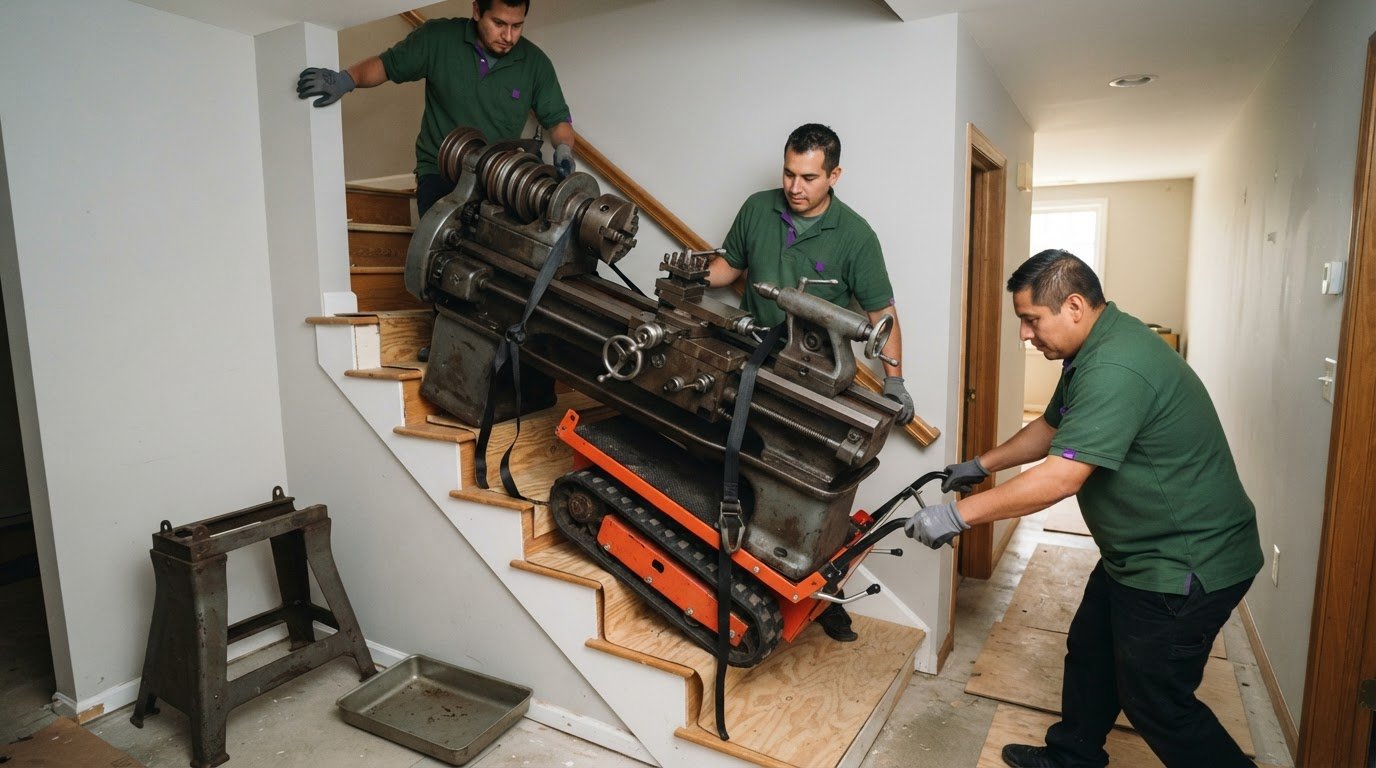
A heavy lathe is a machinery move, not a routine furniture haul. Plan the route, separate the stand and chip pan where possible, and secure removable parts before moving the equipment downstairs.
The stairs are only part of the challenge. The lathe’s weight, balance, and shape also affect how safely it can be controlled. A tight turn or top-heavy machine makes an already demanding move harder. Careful planning helps protect the equipment, the house, and everyone handling the load.
This guide covers four practical steps: estimating the lathe’s weight and balance, planning the basement route, moving the stand and chip pan separately, and preparing removable components. It also explains when professional heavy-item movers can help with lifting and maneuvering a machine that is too large or awkward to move yourself.
Key Takeaways
- Use the lathe’s model information and major components to estimate its total weight, then account for the headstock’s uneven load.
- Plan the route around stair turns, clearances, and landing space so the moving team can control each change in direction.
- Keep lifting forces on the bed casting or factory lifting points, never on the ways, leadscrew, or feed rod.
- Remove and secure vulnerable components separately to reduce strain on the machine during handling.
- Choose moving equipment to suit the load and basement route; rollers, skates, and lifting gear each require a stable, controlled setup.
1. Estimating lathe weight and headstock bias
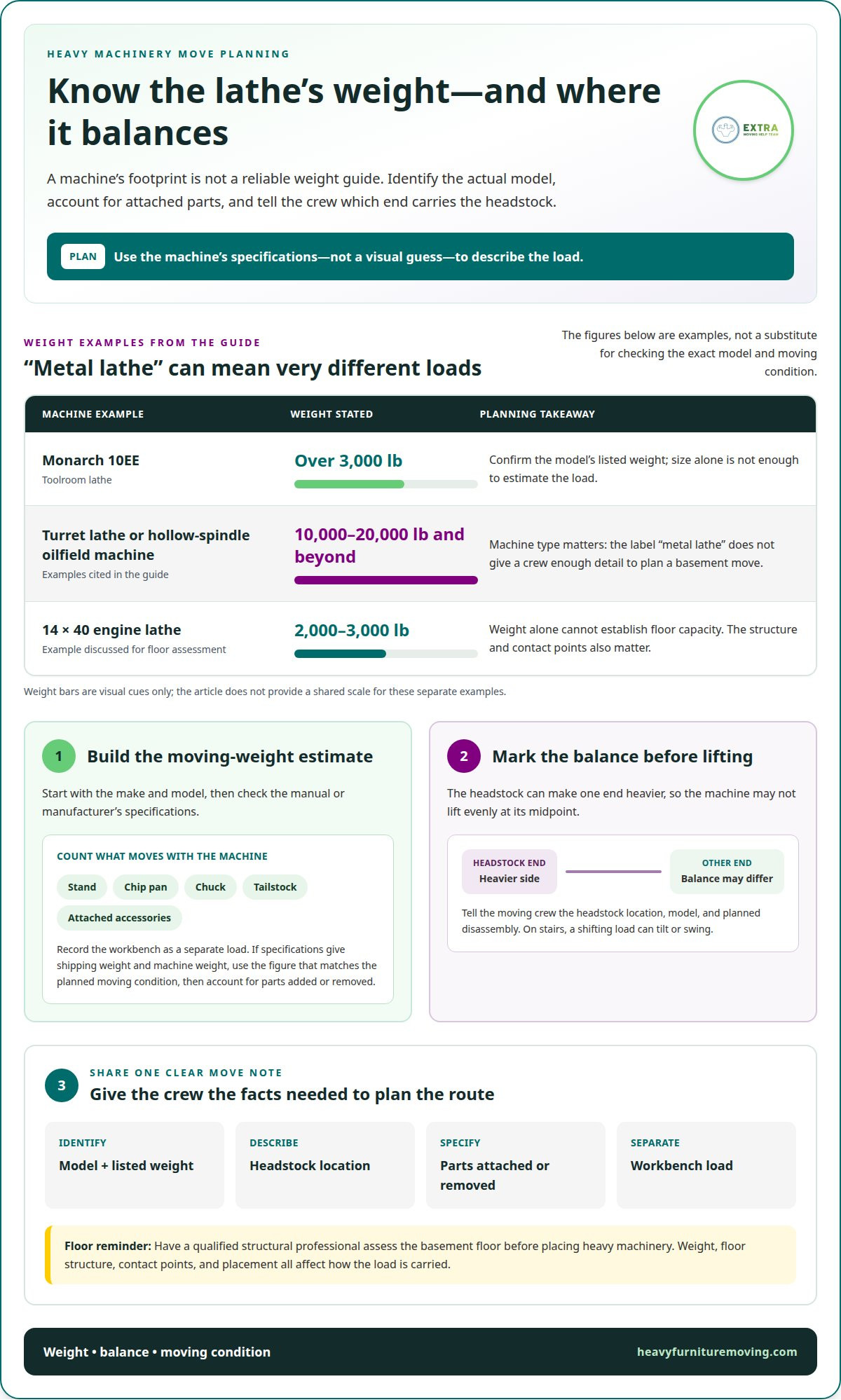
Start with the lathe’s make and model, then find its listed weight in the manual or manufacturer’s specifications. Size alone is not a dependable guide. Planning how to move a heavy metal lathe and workbench into a basement workshop in South Riding starts with identifying the actual machine, not guessing from its footprint.
Compare the model with specific examples. A Monarch 10EE toolroom lathe weighs over 3,000 pounds. Turret lathes and hollow-spindle oilfield machines can weigh 10,000 to 20,000 pounds and beyond. These examples show why “metal lathe” alone isn’t enough detail to plan a basement move.
Estimate the complete moving load, not just the bed or heaviest component. Include the stand, chip pan, chuck, tailstock, and accessories that will remain attached. Record the workbench as a separate load. If the manual gives both shipping weight and machine weight, use the figure that matches the machine’s planned moving condition, then account for parts added or removed.
Note the headstock’s position and how it affects balance. Its mass can make one end heavier, so the machine may not lift evenly at its midpoint. Tell the moving crew which end holds the headstock, along with the model and planned disassembly. On stairs, a shifting load can tilt or swing. A sound plan for moving a heavy metal lathe and workbench into a basement workshop in South Riding records balance details before the move.
A machinery delivery alone does not establish whether a permit or HOA approval applies in South Riding. Requirements depend on the property and planned work. Review HOA rules and applicable local requirements before making structural or electrical changes.
A basement floor’s capacity can’t be judged from machine weight alone. The floor structure, the lathe’s contact points, and the workbench’s placement affect how the load is carried. Have a qualified structural professional assess the floor before placing heavy machinery, especially a 14x40 engine lathe weighing 2,000 to 3,000 pounds.
Put the model, listed weight, headstock location, and workbench load in one move note. This gives the crew concrete details for planning access and the basement landing area. Include whether the chuck, tailstock, and accessories will remain attached so the recorded weight reflects the machine’s moving condition.
2. Hiring professional movers for heavy equipment
A heavy lathe descending basement stairs can crush hands or feet, strain backs, and cause falls if the load shifts. A dropped or swinging machine can also damage stair treads, walls, railings, and the lathe. Professional handling starts with assessing the equipment and route, not simply gathering people to lift.
Before the move, share the machine’s model, estimated weight, dimensions, headstock position, and planned disassembly. Include the workbench and separate pieces such as the stand or chip pan. These details give the crew a clear picture of each load and help them plan for the stairs, turns, and basement landing.
Walk through the route together before moving day. Point out narrow doorways, low ceilings, sharp turns, uneven steps, and surfaces that could affect machine skates or other moving equipment. A short, straight route is easier to manage than one with tight turns. Measure the tightest points, then consider how the lathe’s shape and lifting position affect clearance.
Ask for a clear handling plan. It should identify where the crew will grip the machine, how they will control its movement, and where they can pause if the route requires repositioning. Rigging should use the bed casting or factory lifting points, not the ways, leadscrew, or feed rod. These parts can be damaged if they bear lifting force.
Coordination matters on stairs. Everyone handling the load needs to know their position and the signals for starting, stopping, and changing direction. Moving machinery with bars and rollers requires at least two people for safety. A planned pause is safer than an improvised adjustment while the machine is suspended or unstable.
- Provide the lathe’s model, weight, dimensions, and headstock location.
- Describe stair turns, landings, doorways, and overhead clearance.
- Identify which components will move separately from the machine.
- Agree on lifting points and crew communication before the descent.
Choose a crew prepared to handle the full route and its specific obstacles, rather than treating the lathe like ordinary household furniture. For help organizing a difficult household move, plan the move with local support.
Set expectations for the schedule as well as the rigging. One reported household move took four professional movers the better part of a day to load. It is a reminder that stairs, careful positioning, and separate components can require sustained coordination. Avoid setting an inflexible completion window. Confirm what preparation the crew expects, who will clear the route, and how the team will handle pauses or changes. Keep the work area available until the equipment is safely placed, rather than assuming the descent will be quick.
Ask whether the destination has suitable lifting infrastructure, but do not assume it does. One shop owner described having integrated overhead iron for moving heavy equipment. If overhead equipment is present, have the movers assess whether it suits the actual route and load, and agree on its use before moving day. Otherwise, ask the crew to explain its planned alternative. The goal is a site-specific plan that matches the equipment, route, and crew, with responsibilities and communication settled before the lathe leaves its current position.
3. Moving the lathe stand and chip pan separately
Separate the lathe stand and chip pan from the machine if their design allows. Moving these pieces individually makes each load smaller and less awkward on basement stairs. In one reported move, the stand and chip pan went down separately, followed by the lathe, which was placed on the stand at the new location. This sequence can also make it easier to position the base first.
Before separating anything, photograph the assembled lathe from several angles. Capture the stand-to-bed connection, chip-pan position, fasteners, and brackets. Keep each group of hardware together and label it by location. A clear record helps prevent stand bolts from getting mixed with unrelated machine parts during reassembly.
Measure the stair route before moving either piece. Record the clear width at the narrowest point, each doorway opening, landing depth, and headroom above the stairs. Include handrails and trim when measuring width, and check the space around turns rather than relying only on the straight stair width. Compare these clearances with the stand, pan, and lathe dimensions in their planned moving positions.
Protect the chip pan from bending or twisting. Its shape can leave it vulnerable to knocks against doorframes and stair corners. Support it across its structure instead of lifting from one edge. Keep the stand stable while moving it, and set it down in a clear, level area before bringing the lathe into the basement.
Once the stand is positioned, confirm that it is secure before placing the lathe on top. Follow the machine’s assembly and mounting instructions, and use its designated mounting points. The right anchoring method depends on the stand design and basement floor. Do not improvise fasteners or drill into the floor without understanding what lies beneath the surface.
After reassembly, level the lathe with a precision machinist level. Check crosswise at both the headstock and tailstock ends, turning the level 90 degrees for the crosswise readings. Matching lengthwise readings alone don’t prove the bed is untwisted. Confirm alignment with a test bar turned between centers and measured at both ends for taper. Recheck level a week or two after a move.
Use the lathe’s nameplate and manufacturer instructions to identify its electrical requirements. Keep the machine disconnected while positioning and assembling it. If the existing basement supply does not match the machine’s requirements, have the circuit assessed before connecting it. Secure the stand, level the bed, and confirm alignment before using the machine.
4. Removing and securing lathe components
Taking a lathe apart into major components can make a basement stair move substantially easier. A reported move removed parts from a 9x30 lathe to reduce its weight. Use the machine’s manual to identify parts designed for removal, then photograph each connection before disassembly. Keep fasteners with their matching parts so reassembly doesn’t become a guessing game.
Protect the spindle first. Remove the chuck, crate it, and transport it separately. Keeping the chuck off the spindle helps protect the spindle bearings from shocks during transport. Wrap and secure the chuck so its jaws cannot strike other components. Label the crate clearly and keep it with the lathe rather than loose among household items.
Prepare the carriage for transport by moving it tight against the headstock, locking it, and strapping it in place. Secure loose handles and removable accessories separately. Keep small parts together in labeled containers, and note where each belongs. A parts list and clear photos make it easier to identify anything missing before reassembly.
Choose lifting points carefully. Use the bed casting or the manufacturer’s factory lifting points for rigging. Never lift from the ways, leadscrew, or feed rod. Those surfaces and components can be damaged by lifting forces. Share the lifting-point plan with everyone handling the machine, especially if removal changes its balance or grip.
Protect the stairs, floors, walls, and lathe by clearing the route and covering surfaces exposed to contact. Secure moving parts before the descent, and use padding where the machine or its crate could brush a wall or doorframe. Keep the load controlled through turns instead of letting it swing against stair edges or railings.
Pack components according to their shape and vulnerability. Position delicate or projecting parts so they cannot bear the weight of other items. Keep each crate stable during transport, and do not stack heavy equipment on the chuck or precision accessories. Mark each package with its contents and intended location in the basement workshop.
Before lifting, compare the partly disassembled lathe with the move plan. Confirm the chuck is separate, the carriage is locked and strapped, and the selected rigging points are clear. Check that the headstock, bed, and remaining attachments will not shift independently. If a component moves unexpectedly, stop and secure it before continuing. Once the machine reaches the basement, keep its labeled parts nearby for careful reassembly.
5. What equipment is needed to move a heavy lathe down basement stairs?
Choose equipment to suit the lathe’s weight, shape, and stair route. No single dolly or roller setup works for every basement. A professional crew can match the lifting and rolling equipment to the machine, landing, and turns. Base the plan on the actual load, including components that remain attached.
A carrying frame can give movers stronger, more controlled grip points. One example used plywood and 2x4s built around the lathe. The frame must be designed for the machine and its lifting arrangement, not treated as a substitute for proper rigging. A homemade machine dolly with swivel wheels at all four corners can help reposition equipment on a suitable level surface.
For moving machinery across a floor, pipe rollers are one possible tool. Keep at least three pipes under the load as it moves, and make sure the route supports the machine and rollers. A 3/4-inch plywood runway has been used beneath rollers to create a smoother path. Plywood can also help protect a floor, but it must remain stable and fully supported.
Rollers need careful control. A wrecking bar can help reposition 1-inch round stock, while another person moves the bars into place. Keep hands clear of pinch points, and never leave the machine unsupported during repositioning. A chainfall can lift or lower a load only from a suitable, properly designed support point. A board attached to floor joists is not automatically safe for lifting.
Machinery skates may help on a sufficiently flat, stable floor. On an uneven floor, support the lathe at three points while it moves on skates. The arrangement must keep the load balanced and prevent shifting. Ordinary floor skates alone do not control a suspended or sliding load on basement stairs.
Use this equipment checklist during planning:
- Rigging suited to the lathe’s designated lifting points.
- A carrying frame or machine dolly selected for the load and route.
- Rollers and a stable runway when the floor path suits that method.
- Protective material for the floor and surfaces along the route.
- A controlled lifting system with a suitable support structure.
For a basement route that calls for coordinated lifting and handling, get help with heavy equipment moving.
A homemade machine dolly can be made with swivel wheels at all 4 corners. One forum user reported moving and controlling loads of up to about 800 pounds with pipe rollers, but that experience is not a rating for another lathe or route.
A forum user reported using a 15-ton bridge crane to move machinery. Another described using a 2 x 8 or 2 x 10 board lagged to floor joists as a chainfall picking point; neither account establishes that a support is suitable for a different basement.
Heavy Furniture Moving
Heavy Furniture Moving can help when moving a lathe and workbench into a basement is too demanding to manage alone. Its heavy lifting moving service and local moving help support bulky-item moves through the home. Share the machine’s weight, dimensions, and stair layout so the crew can plan the physical handling.
For unusual machinery, the equipment and route determine the handling required. Heavy Furniture Moving can help with the physical move, while machine disassembly, installation, and electrical setup should follow the equipment’s instructions and appropriate professional guidance. To arrange help with the move, contact Heavy Furniture Moving.
Set Up the Move With Confidence
Before moving day, make sure everyone handling the equipment understands the same plan. Share the intended route, basement landing area, and who will handle reassembly or workshop setup. Clear communication helps prevent last-minute changes once the lathe is in motion.
Planning how to move a heavy metal lathe and workbench into a basement workshop in South Riding also means deciding where each item will go once it reaches the basement. Mark the final positions, leave room to work around the equipment, and keep the route clear for the crew. A defined landing plan makes the move a practical first step toward using the workshop.
If you want help with the heavy lifting and moving logistics, contact Heavy Furniture Moving to discuss your move. With a clear plan and the right support, you can make room for the workshop you’re ready to build.
Frequently Asked Questions
How much does a metal lathe and workbench weigh, including accessories and coolant?
The total load depends on the lathe model and everything moving with it, so list each load separately. Start with the manufacturer-listed machine weight, then account for the stand, workbench, chuck, tooling, and any coolant remaining in the system. Removed accessories can travel as separate loads. For a dependable estimate, give the crew the model and describe the machine’s condition instead of relying on a general lathe weight.
How do I find the center of gravity and safe lifting points on a metal lathe?
Do not assume the center of gravity is at the machine’s midpoint. The headstock can shift the balance. Use the manufacturer’s lifting instructions to locate approved points, then give the mover the lathe model and details about attached accessories. A qualified machinery handler can plan the rigging around that configuration. Never select a lifting point just because it looks sturdy: covers and projecting parts may not support the load.
When should I hire professional machinery movers for a basement lathe move?
Get experienced moving help if the lathe is too heavy to control, the stairs have turns, or the machine must pass through a tight opening. In South Riding, Heavy Furniture Moving provides heavy lifting moving service for difficult household moves. Wrap, blankets, and straps are included on every job. Share the machine and route details so the physical handling can be planned for the move.