
The lowest hourly rate on your moving quote is often the most expensive mistake you will make in 2026. While a cheap price looks good on paper, it won’t cover the cost of a cracked safe or a scratched piano. You need the right questions to ask a moving company to ensure you aren’t hiring an amateur operation that lacks the proper rigging equipment. It is normal to feel anxious about hidden fees appearing on moving day or whether the crew actually knows how to perform a sofa hoist without damaging your home.
We understand that a move is more than just logistics; it is about protecting your hard-earned property. This guide gives you a complete checklist to vet your movers, secure a transparent binding estimate, and verify 2026 compliance. You will learn how to navigate the 110% rule for non-binding estimates and why the standard $0.60 per pound valuation might not be enough for your heavy furniture. We are diving into everything from electronic inspection mandates to the technical rigging questions that actually matter for a damage-free relocation.
Key Takeaways
- Learn the critical questions to ask a moving company about their USDOT credentials and the specific differences between basic liability and full value protection.
- Identify the specialized rigging equipment and floor protection required to safely relocate heavy items like gun safes, gym equipment, and upright pianos.
- Master the differences between binding and non-binding estimates to prevent unexpected fee hikes and ensure your final bill stays within your budget.
- Prepare for logistical hurdles by vetting a crew’s ability to perform professional sofa hoisting for items that won’t fit through standard entryways or elevators.
- Protect your timeline by confirming rescheduling policies and verifying local references from homeowners who recently moved oversized, high-value furniture.
The Essential Credentials: Questions About Licensing and Insurance
Don’t let a slick website or a low price quote fool you. The first questions to ask a moving company should always focus on their legal right to handle your property. In Northern Virginia, anyone with a truck can claim to be a mover, but only a few possess the credentials to protect you if something goes wrong. Start by asking for their USDOT number. This number is your gateway to verifying their safety records and 2026 compliance. If you are moving across state lines, they must be authorized for interstate moves by the Federal Motor Carrier Safety Administration (FMCSA). Without this authority, your belongings are effectively being transported illegally.
Verifying Legal Authority in Northern Virginia
Local expertise matters. Ask the team if they are registered with the Virginia Department of Motor Vehicles for intrastate moves. A legitimate company should have a physical office address in the Fairfax or Manassas area. Avoid “movers” who only provide a cell phone number or a PO box. You should also check for ProMover status or BBB accreditation. These badges show a commitment to ethical business practices. 2026 regulations have also tightened rules for commercial driver’s licenses. Ask if their drivers meet the latest FMCSA electronic medical certification requirements. This ensures the person behind the wheel of a 26,000-pound truck is qualified to be there.
Understanding Your Protection Options
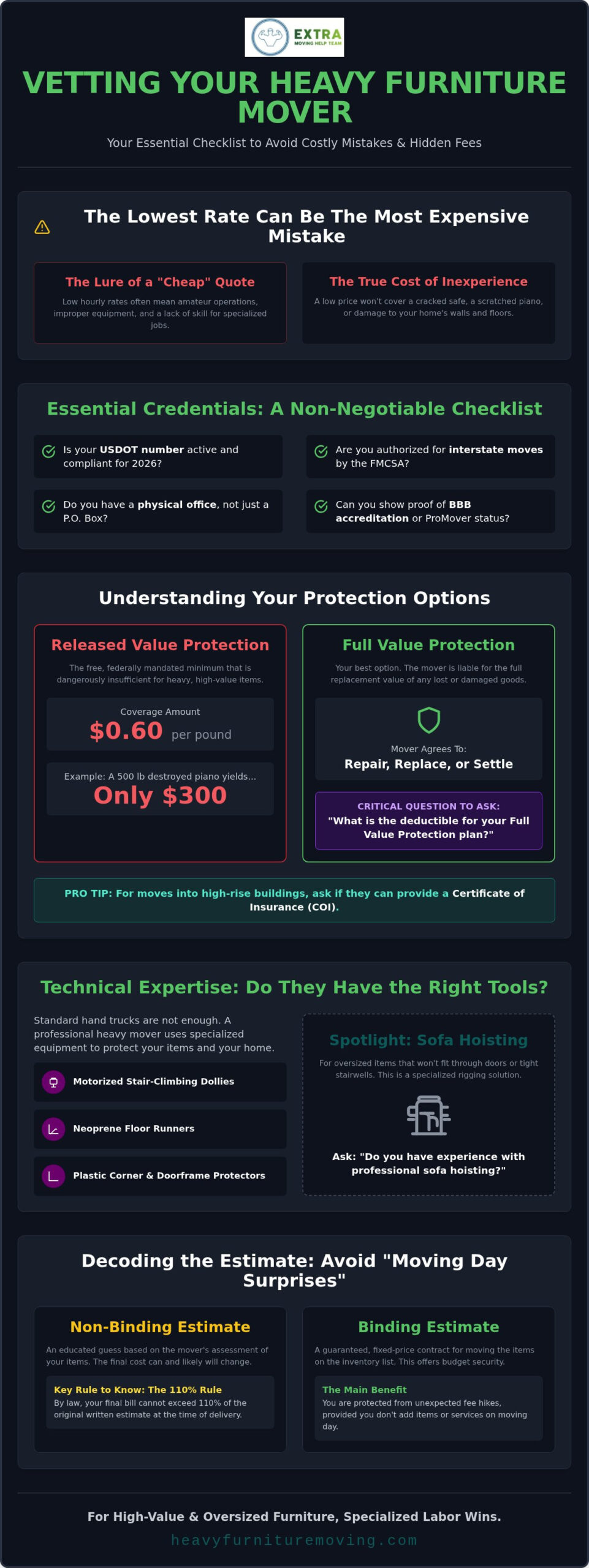
Valuation is not insurance, but it is your primary safety net. You must understand the difference between ‘Released Value Protection’ and ‘Full Value Protection’ before signing a contract. Released Value Protection is federally mandated and free, but it only covers $0.60 per pound per article. If your 500-pound upright piano is destroyed, you would only receive $300. That is a disaster for high-value items. Ask these specific questions to ask a moving company regarding your coverage:
- What is the deductible for your Full Value Protection plan? High deductibles can eat into your claim.
- Do you carry Bailee’s insurance? This is critical for specialized items like safes or pianos that require technical rigging.
- Can you provide a Certificate of Insurance (COI)? Many high-rise buildings in Reston or McLean require a COI before a moving truck can even enter the loading dock.
Get a written explanation of their damage claim process. A reliable mover will be transparent about how they handle repairs or replacements. If they use third-party insurance for international shipments, ask for those policy details too. You deserve to know exactly who is responsible for your goods from the moment they leave Fairfax until they reach their final destination.
Technical Expertise: Questions for Moving Heavy and Specialized Items
Moving a standard bedroom set is routine. Moving an 800-pound gun safe or a delicate upright piano is a technical operation. When your inventory includes high-density weight or fragile instruments, your questions to ask a moving company must get technical. You need to know if the crew has the physical power and the specialized tools to handle these items without damaging your home or the equipment itself. General labor isn’t enough when thousands of dollars of property are on the line.
The Right Tools for the Job
Ask specifically about the equipment they bring to the job site. A standard hand truck is insufficient for a basement gym move. Inquire if they use motorized stair-climbing dollies for heavy treadmills or weight stacks. These tools prevent back injuries and ensure the equipment doesn’t slip on the stairs. You should also ask about home protection. Reliable movers use neoprene floor runners and plastic corner protectors to keep your hardwood floors and doorframes pristine. Ask if they have a weight limit for a single item before they require a specialized rig or additional manpower.
Many homes in Fairfax and Manassas feature narrow stairwells that simply won’t accommodate modern, oversized furniture. In these cases, you should ask about sofa hoisting. Sofa hoisting is a specialized rigging solution for tight Virginia stairwells where movers lift a sofa through a window or over a balcony using heavy-duty straps and pulleys. If your furniture is too large for the front door, hiring a team that specializes in sofa hoisting is the only way to avoid leaving your couch on the curb.
Training and Crew Experience
The equipment is only as good as the people operating it. Ask if the crew consists of full-time, trained employees or temporary day laborers. You want a disciplined team that understands the physics of heavy-duty residential moving. Inquire about the specific training they receive for “heavy-duty” labor. Moving a piano, for example, requires more than just strength; it requires an understanding of how to balance the instrument to protect its internal mechanics. Ask how many years of experience the lead mover has specifically with pianos and safes. A veteran lead will know how to navigate tight corners and uneven surfaces that would stump a less experienced crew.
Finally, ask if they have a dedicated team for gym equipment disassembly and reassembly. High-end treadmills and power racks often require specific tools and knowledge to take apart and put back together correctly. You don’t want to find out your elliptical is missing a bolt after the movers have already left. Get confirmation that they have handled your specific brand of equipment before. This ensures the move is efficient and your warranty remains intact. Don’t settle for “we can figure it out.” Demand a team that has already done it hundreds of times.
The Estimating Process: Avoiding Hidden Fees and ‘Moving Day Surprises’
Moving day should be about fresh starts, not financial shocks. One of the most vital questions to ask a moving company is whether their quote is binding, non-binding, or binding not-to-exceed. A binding estimate is a fixed price based on a specific inventory. It won’t change unless you add more boxes or furniture. A non-binding estimate is a professional guess. Under 2026 federal regulations for interstate moves, a mover cannot demand more than 110% of a non-binding estimate at the time of delivery. Any charges above that amount must be billed to you with 30 days to pay. For the best protection, look for a binding not-to-exceed estimate. This ensures you never pay more than the quote, but you might pay less if the move goes faster than planned.
You also need to identify specific factors that cause prices to climb. Ask about “long carry” fees. If the moving truck cannot park within 75 feet of your front door, many companies charge extra for the additional walking distance. Multiple flights of stairs can also trigger surcharges. Be honest about your inventory. Items like treadmills, safes, and pianos aren’t just heavy; they require specialized rigging gear. Most professional teams apply a heavy-item surcharge to account for the extra manpower and equipment needed to move these pieces safely. Clarifying these details early prevents an awkward conversation when the bill arrives.
Identifying Potential Surcharges
Traffic in Northern Virginia is a constant challenge. Ask about fuel surcharges specifically for the I-66 or I-495 corridors. These fees help cover the extra fuel and labor time spent in heavy congestion. You should also inquire about “bulky item” fees for oversized sectional sofas or large outdoor playsets. These pieces take up significant volume in the truck regardless of their weight. Finally, ask if packing materials are included in your quote. Some companies bill by the box or roll of tape used, which can add hundreds of dollars to your final total if you aren’t prepared.
The On-Site vs. Virtual Survey
Never accept a quote based solely on a phone conversation. Ask if the company performs a physical walk-through or a virtual video survey before providing an estimate. A visual inspection is the only way to identify narrow hallways or steep driveways that might complicate the move. During the survey, ask how they handle items that were missed in the initial walkthrough. A proactive mover will update the inventory list immediately to keep the estimate accurate. If you are cleaning out a garage or attic, check if junk removal services can be bundled into your moving package. This simplifies your relocation by letting one crew handle both the transport and the disposal of unwanted items.
Logistics and Obstacles: Questions About Tight Spaces and Hoisting
You’ve measured the rooms, but did you measure the tight turn at the top of the stairs? One of the most overlooked questions to ask a moving company is how they handle “impossible” access. It is a common nightmare: the truck arrives, the crew is ready, but your sofa simply won’t fit through the front door or into the elevator. You need to know if the team has a Plan B. Ask if their trucks are equipped with hydraulic lift gates. These are essential for safely lowering heavy safes or gym equipment to the pavement without relying on steep, dangerous ramps.
Solving the ‘It Won’t Fit’ Problem
If the door is too small, the window is often the only way in. Inquire about professional sofa hoisting or window hoisting services. This isn’t a job for amateurs with a rope. Ask if they provide their own industrial rigging straps and protective wrapping to ensure your upholstery stays clean and tear-free during the lift. Our team handles moves in Ashburn where custom-built sectionals often must go over a second-story balcony because the interior stairwell is too narrow. Ask your mover for a specific example of a difficult hoist they completed in towns like Ashburn or Reston. Their answer will tell you if they are true riggers or just guys with a truck.
Local Navigation and Access
Northern Virginia neighborhoods offer unique challenges. In congested areas like McLean or Vienna, parking a 26-foot truck can be nearly impossible. Ask how the company handles parking permits or if they have experience navigating the strict loading dock rules of local apartment complexes. If you live on a narrow, tree-lined street where a large truck cannot reach the house, you must ask about their policy for “shuttle” services. This involves using a smaller van to ferry items from your home to the main moving truck parked nearby. If you are worried about your oversized sectional, hire a team that specializes in sofa hoisting to solve the problem before it starts.
Finally, ask about their approach to low-hanging trees or steep, winding driveways. A professional lead mover should look for these obstacles during the initial survey. These logistical questions to ask a moving company help you avoid delays and extra “access fees” on moving day. Clear communication about the physical environment ensures the crew brings the right tools to get the job done without damaging your property or the neighborhood.
Finalizing Your Choice: Why Specialized Labor Wins Over Generic Movers
Choosing a mover is about more than finding a truck. It is about who you trust with your 600-pound gun safe or your grandmother’s upright piano. When you reach the final stage of your search, your questions to ask a moving company must focus on accountability and local proof. Ask for local references for heavy-item moves completed in the last six months. A reputable company in Fairfax or Manassas will gladly share stories of successful relocations. You should also confirm that the same crew stays on your job from start to finish. Some larger operations swap crews mid-move, which increases the risk of miscommunication and damage to your specialized equipment.
Unexpected life events happen. Ask about their cancellation or rescheduling policy if your home closing date shifts. In the busy 2026 moving season, you need a partner who offers flexibility without predatory penalties. Trusting a team with your family’s most difficult-to-move items requires confidence in their physical strength and their professional discipline. Generic movers often lack the specialized rigging knowledge needed for sofa hoisting or safe moving, which leads to home damage and safety risks for the crew.
The Value of Veteran-Owned Reliability
Discipline and punctuality are the foundations of a veteran-owned business. When a team has a background in service, they bring a level of precision to manual labor that generic companies simply cannot match. This family-operated status translates to a higher level of customer service. You aren’t just a job number on a spreadsheet; you are a neighbor. We take visible pride in the tangible results of a hard day’s work. This protective attitude ensures your heavy gym equipment and pianos are treated with the same respect we would give our own property. It’s about providing relief and ease during an otherwise overwhelming logistical challenge.
Making the Booking
Secure your 2026 move date early. Ask about deposit requirements to lock in your slot, especially if you are moving during the peak months of May through September. Once you book, inquire about the best way to communicate with the lead mover on moving day. A direct line of contact reduces anxiety and ensures everyone is on the same page regarding narrow driveways or specific furniture placement. Don’t leave your heavy items to chance with an amateur crew. Get a specialized quote for your heavy items from Heavy Furniture Moving to ensure a damage-free relocation handled by local experts who take pride in the heavy lifting.
Secure Your Property for a Stress-Free 2026 Move
Moving in 2026 requires more than just a truck and a few sets of hands. It demands a technical plan and a team that respects your property as much as you do. You now have the essential questions to ask a moving company to verify their licensing, understand their valuation coverage, and ensure they have the specialized rigging tools for your heaviest items. Don’t let a narrow stairwell or an 800-pound safe stop your progress. By vetting your movers for their technical expertise and estimate transparency, you eliminate the risk of moving day surprises and property damage.
As a veteran-family owned and operated team, we specialize in the moves that others turn down. Whether you need expert sofa hoisting services or specialized safe and piano moving equipment, we have the discipline to get it done right. Request a Free Estimate for Your Heavy Furniture Move today. We are ready to handle the heavy lifting so you can focus on your new home. Let’s make your next relocation the easiest one yet.
Frequently Asked Questions
What is the most important question to ask a moving company?
Ask for their USDOT number and proof of specialized equipment for your heaviest items. This verifies both their legal authority and their physical capability. It ensures they aren’t just general laborers but trained experts who can handle complex rigging tasks safely. You want to know if they have the muscle and the machinery to protect your home. Reliable movers will provide these credentials immediately without hesitation.
Are moving companies in Virginia required to be licensed?
Yes, all movers operating within Virginia must be registered with the Virginia Department of Motor Vehicles. If they cross state lines, they also need active authority from the Federal Motor Carrier Safety Administration. Always verify these credentials on the official government websites to ensure your protection under 2026 regulations. This simple step prevents you from hiring an uninsured, illegal operation that could leave you liable for accidents.
How do I know if a mover is experienced with pianos?
Ask for specific references from piano moves completed in the last six months and inquire about their rigging equipment. A qualified piano mover uses specialized skids, heavy-duty padding, and technical straps to protect the instrument’s internal mechanics. General furniture movers often lack the training to balance the weight of an upright or grand piano correctly. Experience is the only thing that prevents a total loss of a valuable instrument.
What should I ask about hidden fees before signing a contract?
Inquire about long carry surcharges, stair fees, and fuel costs specific to Northern Virginia traffic corridors. These are the most common questions to ask a moving company to avoid surprises on your final bill. Get a binding not-to-exceed estimate in writing so your price remains transparent and predictable regardless of moving day obstacles. Don’t sign anything until every potential fee is clearly documented and explained in plain language.
Can movers hoist a sofa through a window if it doesn’t fit the stairs?
Professional movers with rigging expertise can perform a sofa hoist using industrial straps and pulleys. This service is essential for multi-story homes in Fairfax or Manassas with narrow stairwells. Always confirm that the team brings their own protective wrapping to prevent tears or stains during the exterior lift. It is a technical solution that requires a disciplined crew and the right gear to execute safely without damaging your home’s exterior.
Do I need to empty my dresser drawers before the movers arrive?
You should empty all drawers to protect the structural integrity of the furniture and the safety of the crew. Heavy items shifting inside a dresser can cause the frame to warp or drawers to slide out during transport. Removing clothes and personal items makes the piece lighter and much easier to maneuver through tight hallways. It protects your belongings and helps the team work faster while reducing the risk of broken furniture legs.
What happens if the movers damage my floors while moving a safe?
Your protection depends on the valuation coverage you selected and the company’s liability insurance. Reliable movers use neoprene floor runners and masonite sheets to prevent scratches or cracks when moving a heavy safe. If damage occurs, file a claim immediately through the process outlined in your written contract. A professional team will document the condition of your home before and after the move to ensure accountability and provide peace of mind.
How far in advance should I book a heavy furniture moving service?
Book your move at least four to six weeks in advance, especially during the peak season from May through September. High-demand dates like mid-week or month-end fill up quickly in the Fairfax area. Securing your date early ensures you get a specialized crew with the right equipment for your pianos, safes, and gym equipment. Don’t wait until the last minute or you might be stuck with an amateur team that lacks specialized rigging skills.