Townhouse Furniture Moving Experts in South Riding, VA
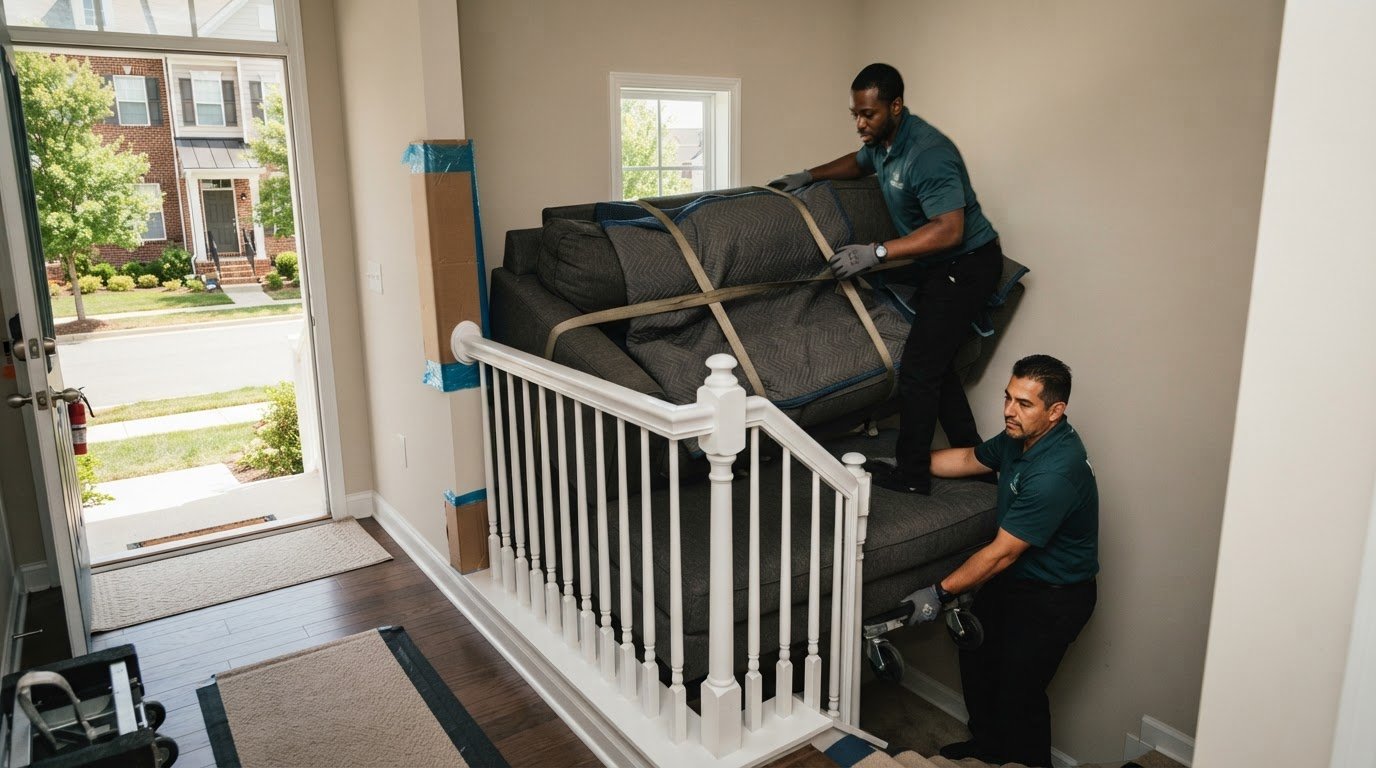
A sofa can fit through the front door and still get stuck at the first tight turn. In a South Riding townhouse, stairs, narrow hallways, and multiple levels can make moving bulky furniture a real challenge. Townhouse furniture moving experts South Riding residents can count on plan the route before lifting begins, helping protect furniture, walls, floors, and people.
A safe, efficient move starts with a clear plan. Measure tight passages, identify awkward turns, and review any community move requirements before moving day. Moving heavy pieces alone can put your belongings and your safety at risk, so plan for practical help with the items that are hardest to handle.
This guide explains how to prepare townhouse access, protect bulky furniture, and organize moving-day details. It also covers when sofa hoisting can help with a piece that won’t pass through a standard entryway. Heavy Furniture Moving provides local residential moving support, including help with heavy furniture and awkward loads.
Key Takeaways
- Plan the route each furniture item must take, including stairs, tight turns, and its destination room.
- Share furniture dimensions, floor locations, and access constraints during move planning to prepare for difficult carries.
- Choose between furniture-only help and broader residential moving support based on your move’s scope and heavy-item needs.
- Townhouse furniture moving experts South Riding residents choose can help handle bulky pieces and protect the home during the move.
- If a sofa won’t fit through a standard entryway, sofa hoisting may offer another way to move it.
Townhouse Furniture Moving in South Riding: What Makes the Move Different?
Townhouse furniture moving means planning around the home’s layout and the access available at both ends. Unlike a ground-level space with a direct path outside, a townhouse may require furniture to pass through several rooms, around tight corners, and up or down stairs. The Townhouse architecture and characteristics vary, but each home’s interior layout shapes the moving plan.
Moving a few large pieces presents a different challenge from relocating an entire household. Furniture-only help can focus on the items that need extra hands and careful maneuvering. A full-home relocation involves coordinating more belongings and rooms. In either case, access details and community scheduling can affect how moving day unfolds.
A clear access plan helps prevent avoidable delays by identifying tight spots before furniture reaches them.
Which townhouse features can affect furniture moves?
Map the full path, not just the front door. A wide entry may lead to a narrow hallway, a low landing, or a sharp turn at the foot of the stairs. Measure bulky furniture and compare its dimensions with doorways, hallway widths, stair openings, and landings. These checks can reveal pinch points early and help determine whether a piece can be moved as-is or needs a different route.
Include the path outside, too. Parking, building access, and community or HOA move-scheduling requirements can affect when and where a crew can work. Review the rules that apply to your home and share the details during planning.
When is professional furniture moving help useful?
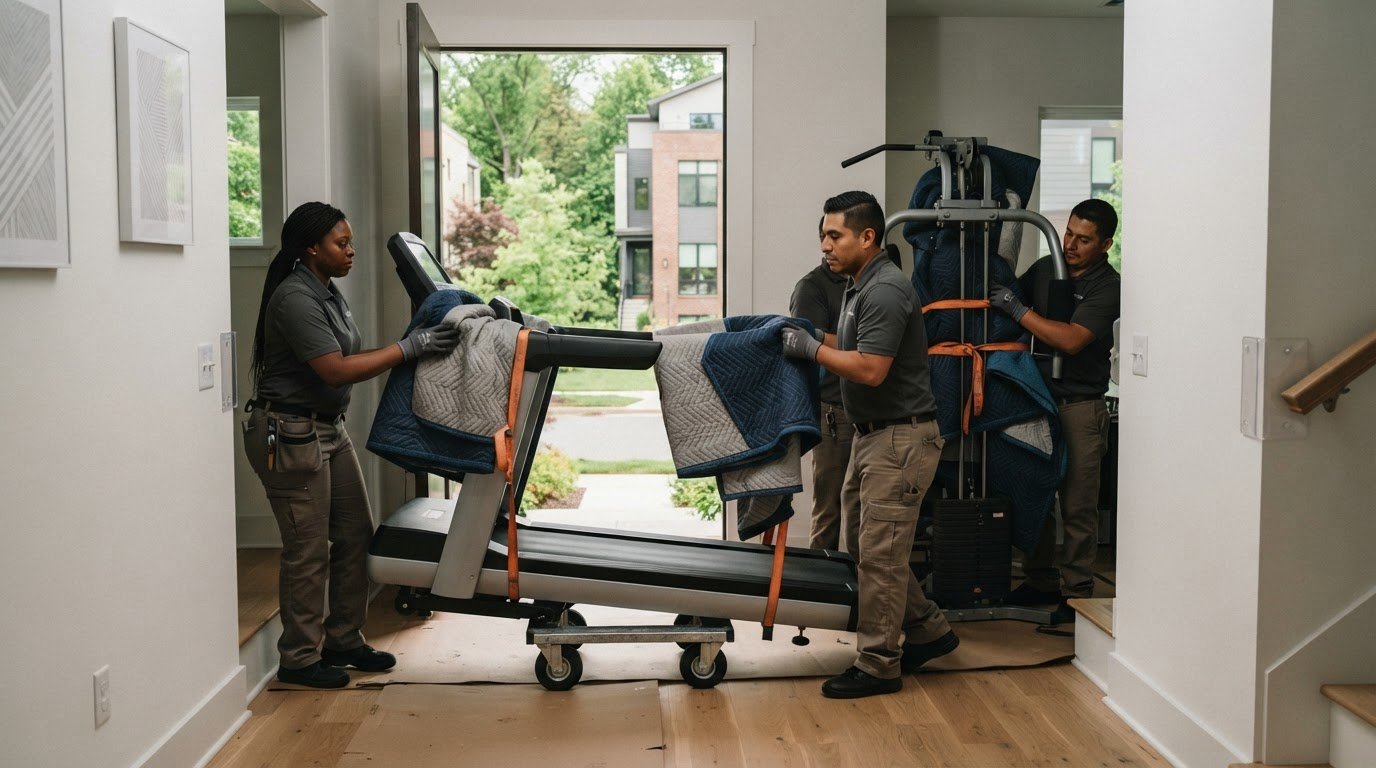
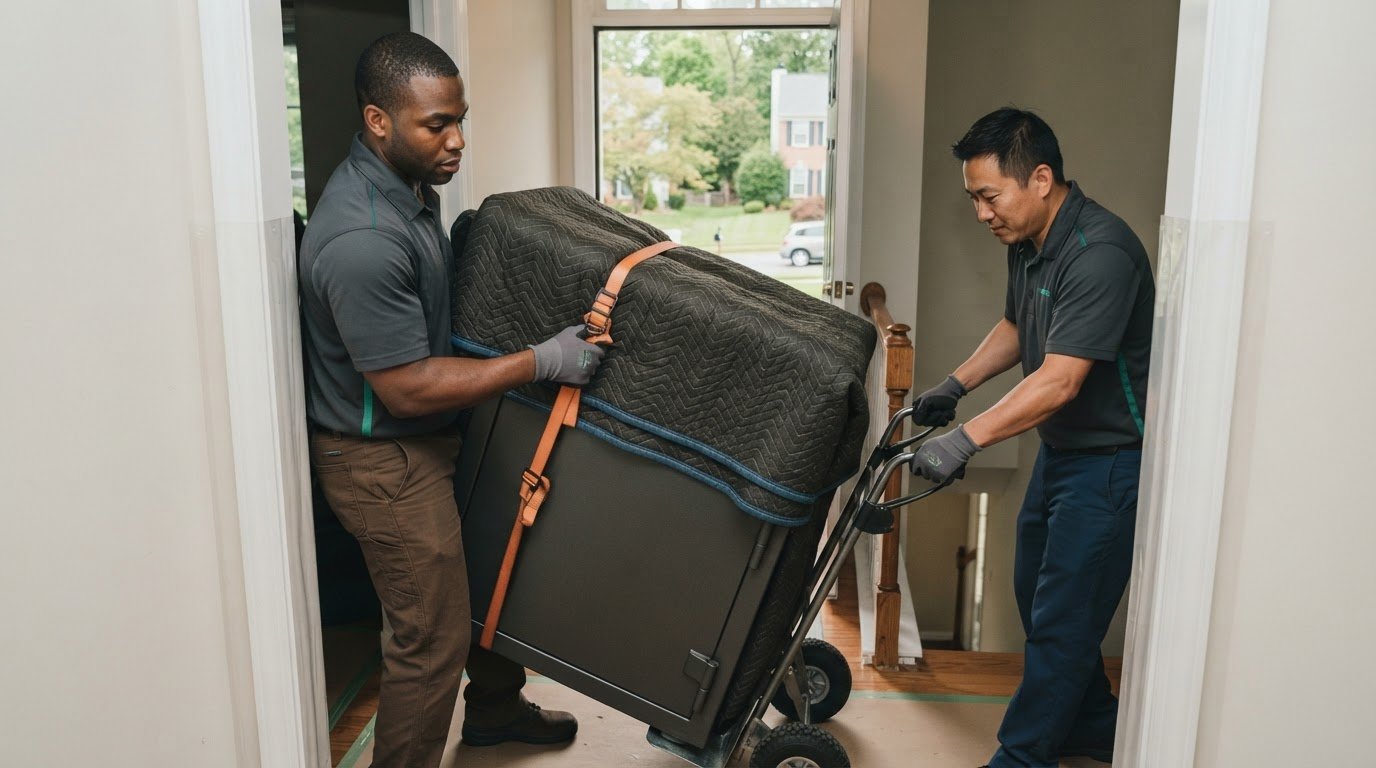
Professional help can be useful when a heavy dresser, large sofa, piano, or exercise machine needs to travel through tight spaces or between floors. These items can be difficult to control while carrying, especially on stairs or around landings. A moving team can handle the physical effort and coordinate how bulky pieces pass through the home.
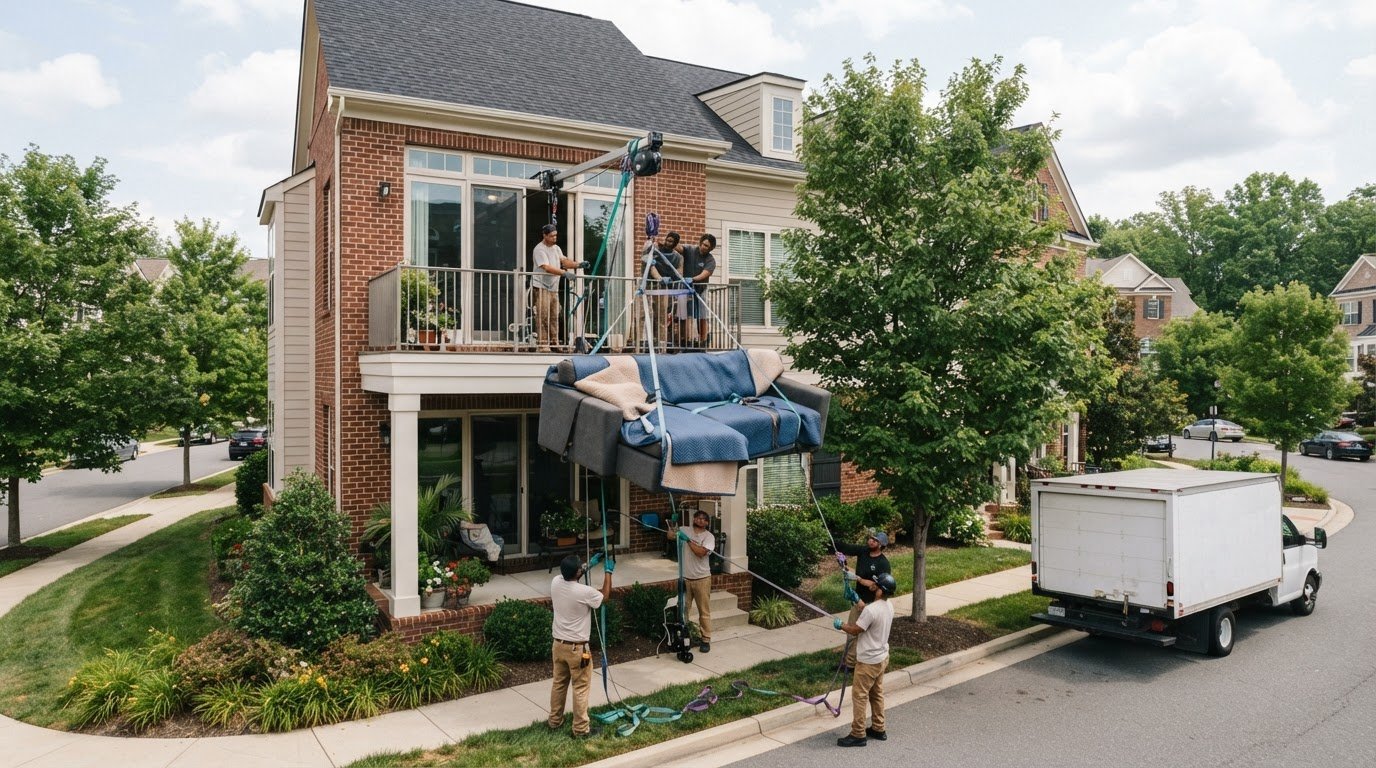
If you’re moving only a few challenging items, furniture-focused assistance may fit better than a whole-home relocation. For a larger move, help with heavy pieces can be part of a broader plan. In South Riding, townhouse furniture moving experts can assist with awkward household items, including sofa hoisting when a sofa cannot pass through a standard entryway.
- List the large pieces that need special handling.
- Note the rooms and floors where each item starts and ends.
- Include tight turns, stair access, and relevant community scheduling details.
These details help match the moving support to the actual furniture and route instead of relying on guesswork. They also make it easier to identify the pieces that could be difficult or unsafe to carry without help.
How South Riding Movers Plan Furniture Routes Through Townhouses
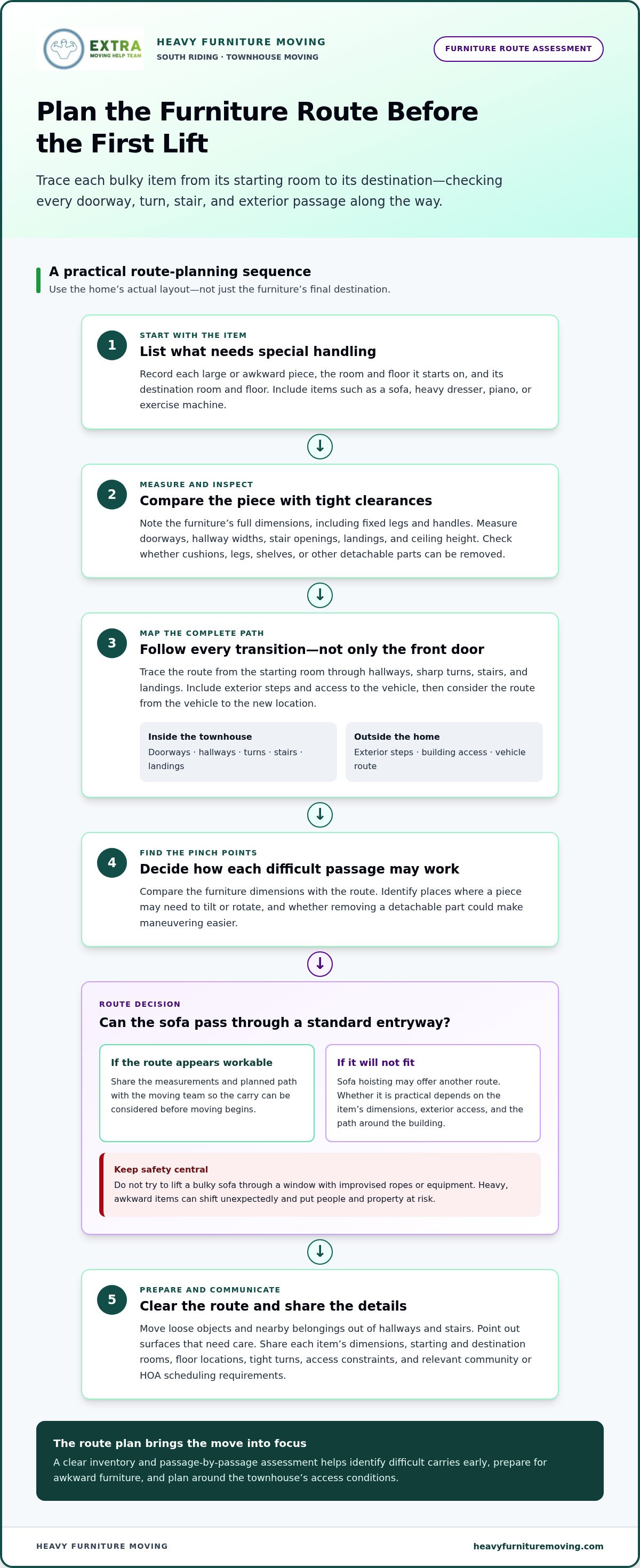
A furniture route assessment traces each item from its current room to its destination, including every doorway, turn, stair, and exterior step. It helps movers identify obstacles before carrying begins and plan how to handle each piece. For townhouse furniture moving experts South Riding residents can rely on, the plan should reflect the home’s actual layout, not just the furniture’s final destination.
Start with the item. Note its dimensions and whether legs, cushions, shelves, or other detachable parts can be removed. Then map the route from the starting room to the exit and from the vehicle to the new location. A sofa might clear a doorway when carried straight but need a different angle at a stair landing.
A furniture route assessment is a step-by-step check of whether each item can travel safely from its starting point to its destination.
What should be assessed before moving large furniture?
Measure door widths, stair clearances, landings, and ceiling height. Look for sharp turns where an item may need to tilt or rotate, and compare the measurements with the furniture’s full dimensions, including fixed legs and handles. Check whether removing a cushion or detachable part could make the piece easier to maneuver.
- Check the path from the room through the hallway and stairs.
- Include exterior steps, entry access, and the route from the home to the vehicle.
- Identify nearby belongings that need to be moved out of the way before carrying starts.
Share these details with the moving team, along with each item’s starting room and destination. A clear inventory and route description helps focus the plan on the pieces and passages that need the most attention.
What if a sofa or large item will not fit?
If a sofa cannot pass through a standard entryway, sofa hoisting may provide another route into or out of the home. The approach depends on the item’s dimensions, available exterior access, and the path around the building. Considering these details helps determine whether hoisting is practical for that piece and location.
Keep safety central to the decision. Don’t try to lift a bulky sofa through a window with improvised ropes or equipment. Heavy, awkward items can shift unexpectedly, putting people and property at risk. Professional handling takes the load and access conditions into account. Yale Environmental Health & Safety explains ergonomics for moving heavy items, including the importance of assessing loads and handling them carefully.
Clear the route before moving begins. Remove loose objects from hallways and stairs, and point out surfaces that need care. Movers can plan how to guide furniture around walls and floors while keeping other belongings clear of the carrying path. For South Riding residents facing an awkward carry or an oversized sofa, professional sofa hoisting and furniture moving help can make route planning more manageable.
How to Compare Townhouse Furniture Moving Help in South Riding
The right moving plan depends on what you’re moving, how much help you need, and what the townhouse route allows. A few oversized pieces call for a different scope than relocating the contents of several rooms. Use the comparison below to identify the kind of support that fits, then share the item and access details so the plan reflects your move.
| Move scope | Heavy-item needs | Access challenges | Relevant support |
|---|---|---|---|
| A few large pieces | One or more bulky items need careful carrying | Tight stairs, narrow hallways, or difficult turns | Focused furniture moving or heavy lifting help |
| Specialty furniture or equipment | Piano, safe, or exercise equipment needs to be moved | Multiple floors or a route with limited clearance | Moving help suited to heavy or awkward household items |
| Sofa that cannot pass through a standard entry | Large sofa needs an alternate way in or out | Doorways or interior turns block the usual route | Sofa hoisting based on the item and exterior access |
| Broader household relocation | Furniture and household belongings need to be moved | Several rooms, floors, or access points are involved | Residential moving help, with packing assistance if useful |
Which moving service scope fits your townhouse move?
If you’re moving a couple of large pieces between homes or rooms, focused furniture moving support may be the simplest fit. For a household relocation involving belongings throughout the home, broader residential help can cover more of the move, with packing or unpacking assistance as needed. If unwanted items also need to go, junk removal can be part of the project.
What capabilities matter for heavy or awkward pieces?
Consider the items and the route. Pianos, safes, and exercise equipment can call for specialized handling, while a sofa that won’t fit through a standard entry may need hoisting. Matching support to the item can ease the physical burden of difficult lifting and make the route more manageable.
Before choosing the scope, make a short inventory of the items to move, their current and destination floors, and any access constraints. Include whether you need help only with lifting and carrying or with a broader household move. These details help shape a practical plan around your home and belongings.
Heavy Furniture Moving supports local moves in South Riding involving heavy household items, exercise equipment, and sofa hoisting. Share the scope of your move and the access details to help match the support to what your townhouse move requires.
Prepare Your South Riding Townhouse for Furniture Movers
A short preparation sequence can make a townhouse furniture move easier to coordinate. Gather details about the pieces, their locations, and the access route, then organize community and moving-day logistics. Clear information helps townhouse furniture moving experts plan around your home and the items being moved.
What information should you prepare before the move?
Make an inventory that notes each piece, its approximate dimensions, current floor, and destination room. Add access details that could affect its path, then gather any relevant HOA or community move instructions. Sharing these facts during planning helps the team prepare for the actual job.
- List the furniture. Record each item to be moved and estimate its dimensions, including pieces that may be bulky or difficult to carry.
- Note where items are. Write down each piece’s current floor and destination room. Flag items that need to move between levels or into a specific space.
- Describe the route. Record narrow doors, tight turns, staircases, landings, and exterior steps. Mention possible alternate routes if you know of one.
- Gather community details. Review relevant HOA or community instructions, including move-scheduling requirements. Organize parking information and entry directions so they’re ready to share.
- Prepare moving-day access. Make arrival and entry details clear, including how to reach the townhouse and access the furniture route.
What should you do on moving day?
Before lifting begins, clear the planned walkways and secure loose rugs, cords, and small belongings that could obstruct the route. Keep children and pets away from active moving areas. Set aside essential documents and personal valuables instead of leaving them among furniture being carried.
Point out delicate surfaces, tight access spots, and any concerns that weren’t included in the original plan. Confirm where each large piece should go at the destination. This quick check can help prevent furniture from being carried into the wrong room and moved again.
Keep your inventory and access notes handy for a quick review with the moving team. For bulky items or a complicated townhouse route, arrange townhouse furniture moving help with Heavy Furniture Moving for residential support in South Riding.
Hire Heavy Furniture Moving Experts for Your South Riding Townhouse
Some townhouse moves require more than a plan for boxes. A heavy piano, safe, or exercise machine can be difficult to maneuver through interior spaces, and an oversized sofa may not pass through the standard entryway. Heavy Furniture Moving provides residential moving support in South Riding, including help with bulky furniture and challenging household items.
Match the support to the work ahead. If you’re moving only a few pieces, focus on the items that need careful handling. If you’re relocating a household, packing and unpacking can support a broader move. Junk removal can also help clear unwanted belongings as part of the project. The right scope depends on what you’re moving and the access available at the townhouse.
How the team helps with challenging townhouse furniture moves
Pianos, safes, and exercise equipment each bring specific handling challenges. Heavy Furniture Moving provides specialized moving help for these items, so residents don’t have to take on difficult lifting alone. Share what each item is, where it’s located, and any tight access points so the move can be planned around the task.
For a sofa that cannot pass through a standard entryway, sofa hoisting offers an alternate way to move it. The item and exterior access shape the approach. For a larger household move, packing and unpacking can help manage belongings beyond the heavy furniture itself. Heavy Furniture Moving is a veteran-family owned and operated business serving South Riding and providing practical local support for moves that require extra care.
Take the next step toward a smoother move
Give the team a clear picture of your townhouse move. Include your South Riding location, the furniture you need moved, and where each piece starts and ends. Describe the route, too. Stairs, narrow passages, tight turns, exterior access, and community scheduling requirements can all affect planning.
Specific details help match the moving support to your needs, whether you’re moving one oversized item or coordinating a broader household relocation. If a piece may need sofa hoisting, mention its approximate size and why the usual entry route won’t work. For packing, unpacking, or junk removal, explain what else is part of the move.
Heavy Furniture Moving serves local customers in Fairfax, Woodbridge, Manassas, Manassas Park, Aldie, Ashburn, McLean, Vienna, Reston, Centreville, Chantilly, Clifton, Dumfries, South Riding, Fairfax Station, Haymarket, and Gainesville. Get moving help for your South Riding townhouse by sharing your furniture list and access details.
Set Up Your Move for a Strong Start
Turn your moving notes into a clear plan for the home you’re moving into. Decide which furniture needs attention first and where you want key pieces placed. Direction up front can make the transition more manageable and help you focus on settling in.
Choosing townhouse furniture moving experts South Riding residents can rely on begins with sharing what matters most about your move. Tell the team what you’re moving and what kind of support would make the day easier. Heavy Furniture Moving can help shape a practical plan around your townhouse move.
Get moving help for your South Riding townhouse and take the next step with a plan that fits your needs.
Frequently Asked Questions
Can movers help with furniture in a South Riding townhouse?
Yes, Heavy Furniture Moving provides local residential moving help for South Riding townhouse furniture. Arrange support for selected pieces or include furniture in a broader household move. Share what needs to be moved and any unusual access details, such as a shared entrance or restricted parking area. This helps the team plan support around your home and belongings.
How do movers get a large sofa through a narrow townhouse entryway?
Movers can assess whether the sofa can pass through the interior route or whether sofa hoisting is a better option. A sofa might clear the front door but be blocked by an interior turn. Share its approximate dimensions and photos of the tight area if available. Don’t try to lift it through a window or improvise rigging yourself; heavy items can shift and cause injury or damage.
Do I need to tell movers about HOA move-in rules?
Yes, share relevant HOA or community instructions with the moving team before moving day. Rules may cover scheduling, parking, or how movers enter the property, all of which can affect access. Review the instructions you received from your community and keep them handy. If the move requires a reserved space or a particular entrance, include that information in your move details.
Can I hire movers just for heavy furniture in my townhouse?
Yes, you can arrange help focused on heavy furniture rather than a full-home relocation. This can suit a move involving a few bulky items to another room or a new home while you handle the rest yourself. Heavy Furniture Moving provides local furniture moving and heavy lifting support in South Riding. Be clear about which pieces need help and what you’ll move on your own.
What should I do before furniture movers arrive?
Set aside personal valuables, medications, and important papers so they don’t get mixed in with items being moved. Put away small belongings on or around furniture, such as lamps, remotes, and loose decor. If you’ve removed a part from a piece for transport, keep it with the item and tell the movers where it is. This organization helps keep attention on the furniture.
Can movers help with a piano or exercise equipment in a townhouse?
Yes, Heavy Furniture Moving handles pianos and exercise equipment as part of its heavy-item moving support. Identify the item and describe any detachable parts or cords that need attention. For exercise equipment, keep its manual nearby if you have it, especially if you’ve already taken components apart. South Riding residents can include these details when arranging local moving help.
Frequently Asked Questions
Map the full path, not just the front door. A wide entry may lead to a narrow hallway, a low landing, or a sharp turn at the foot of the stairs. Measure bulky furniture and compare its dimensions with doorways, hallway widths, stair openings, and landings. These checks can reveal pinch points early and help determine whether a piece can be moved as-is or needs a different route. Include the path outside, too. Parking, building access, and community or HOA move-scheduling requirements can affect when and where a crew can work. Review the rules that apply to your home and share the details during planning.
Professional help can be useful when a heavy dresser, large sofa, piano, or exercise machine needs to travel through tight spaces or between floors. These items can be difficult to control while carrying, especially on stairs or around landings. A moving team can handle the physical effort and coordinate how bulky pieces pass through the home. If you’re moving only a few challenging items, furniture-focused assistance may fit better than a whole-home relocation. For a larger move, help with heavy pieces can be part of a broader plan. In South Riding, townhouse furniture moving experts can assist with awkward household items, including sofa hoisting when a sofa cannot pass through a standard entryway. These details help match the moving support to the actual furniture and route instead of relying on guesswork. They also make it easier to identify the pieces that could be difficult or unsafe to carry without help. A furniture route assessment traces each item from its current room to its destination, including every doorway, turn, stair, and exterior step. It helps movers identify obstacles before carrying begins and plan how to handle each piece. For townhouse furniture moving experts South Riding residents can rely on, the plan should reflect the home’s actual layout, not just the furniture’s final destination. Start with the item. Note its dimensions and whether legs, cushions, shelves, or other detachable parts can be removed. Then map the route from the starting room to the exit and from the vehicle to the new location. A sofa might clear a doorway when carried straight but need a different angle at a stair landing. A furniture route assessment is a step-by-step check of whether each item can travel safely from its starting point to its destination.
Measure door widths, stair clearances, landings, and ceiling height. Look for sharp turns where an item may need to tilt or rotate, and compare the measurements with the furniture’s full dimensions, including fixed legs and handles. Check whether removing a cushion or detachable part could make the piece easier to maneuver. Share these details with the moving team, along with each item’s starting room and destination. A clear inventory and route description helps focus the plan on the pieces and passages that need the most attention.
If a sofa cannot pass through a standard entryway, sofa hoisting may provide another route into or out of the home. The approach depends on the item’s dimensions, available exterior access, and the path around the building. Considering these details helps determine whether hoisting is practical for that piece and location. Keep safety central to the decision. Don’t try to lift a bulky sofa through a window with improvised ropes or equipment. Heavy, awkward items can shift unexpectedly, putting people and property at risk. Professional handling takes the load and access conditions into account. Yale Environmental Health & Safety explains ergonomics for moving heavy items, including the importance of assessing loads and handling them carefully. Clear the route before moving begins. Remove loose objects from hallways and stairs, and point out surfaces that need care. Movers can plan how to guide furniture around walls and floors while keeping other belongings clear of the carrying path. For South Riding residents facing an awkward carry or an oversized sofa, professional sofa hoisting and furniture moving help can make route planning more manageable. The right moving plan depends on what you’re moving, how much help you need, and what the townhouse route allows. A few oversized pieces call for a different scope than relocating the contents of several rooms. Use the comparison below to identify the kind of support that fits, then share the item and access details so the plan reflects your move.
If you’re moving a couple of large pieces between homes or rooms, focused furniture moving support may be the simplest fit. For a household relocation involving belongings throughout the home, broader residential help can cover more of the move, with packing or unpacking assistance as needed. If unwanted items also need to go, junk removal can be part of the project.
Consider the items and the route. Pianos, safes, and exercise equipment can call for specialized handling, while a sofa that won’t fit through a standard entry may need hoisting. Matching support to the item can ease the physical burden of difficult lifting and make the route more manageable. Before choosing the scope, make a short inventory of the items to move, their current and destination floors, and any access constraints. Include whether you need help only with lifting and carrying or with a broader household move. These details help shape a practical plan around your home and belongings. Heavy Furniture Moving supports local moves in South Riding involving heavy household items, exercise equipment, and sofa hoisting. Share the scope of your move and the access details to help match the support to what your townhouse move requires. A short preparation sequence can make a townhouse furniture move easier to coordinate. Gather details about the pieces, their locations, and the access route, then organize community and moving-day logistics. Clear information helps townhouse furniture moving experts plan around your home and the items being moved.
Make an inventory that notes each piece, its approximate dimensions, current floor, and destination room. Add access details that could affect its path, then gather any relevant HOA or community move instructions. Sharing these facts during planning helps the team prepare for the actual job.
Before lifting begins, clear the planned walkways and secure loose rugs, cords, and small belongings that could obstruct the route. Keep children and pets away from active moving areas. Set aside essential documents and personal valuables instead of leaving them among furniture being carried. Point out delicate surfaces, tight access spots, and any concerns that weren’t included in the original plan. Confirm where each large piece should go at the destination. This quick check can help prevent furniture from being carried into the wrong room and moved again. Keep your inventory and access notes handy for a quick review with the moving team. For bulky items or a complicated townhouse route, arrange townhouse furniture moving help with Heavy Furniture Moving for residential support in South Riding. Some townhouse moves require more than a plan for boxes. A heavy piano, safe, or exercise machine can be difficult to maneuver through interior spaces, and an oversized sofa may not pass through the standard entryway. Heavy Furniture Moving provides residential moving support in South Riding, including help with bulky furniture and challenging household items. Match the support to the work ahead. If you’re moving only a few pieces, focus on the items that need careful handling. If you’re relocating a household, packing and unpacking can support a broader move. Junk removal can also help clear unwanted belongings as part of the project. The right scope depends on what you’re moving and the access available at the townhouse.
Yes, Heavy Furniture Moving provides local residential moving help for South Riding townhouse furniture. Arrange support for selected pieces or include furniture in a broader household move. Share what needs to be moved and any unusual access details, such as a shared entrance or restricted parking area. This helps the team plan support around your home and belongings.
Movers can assess whether the sofa can pass through the interior route or whether sofa hoisting is a better option. A sofa might clear the front door but be blocked by an interior turn. Share its approximate dimensions and photos of the tight area if available. Don’t try to lift it through a window or improvise rigging yourself; heavy items can shift and cause injury or damage.
Yes, share relevant HOA or community instructions with the moving team before moving day. Rules may cover scheduling, parking, or how movers enter the property, all of which can affect access. Review the instructions you received from your community and keep them handy. If the move requires a reserved space or a particular entrance, include that information in your move details.
Yes, you can arrange help focused on heavy furniture rather than a full-home relocation. This can suit a move involving a few bulky items to another room or a new home while you handle the rest yourself. Heavy Furniture Moving provides local furniture moving and heavy lifting support in South Riding. Be clear about which pieces need help and what you’ll move on your own.
Set aside personal valuables, medications, and important papers so they don’t get mixed in with items being moved. Put away small belongings on or around furniture, such as lamps, remotes, and loose decor. If you’ve removed a part from a piece for transport, keep it with the item and tell the movers where it is. This organization helps keep attention on the furniture.
Yes, Heavy Furniture Moving handles pianos and exercise equipment as part of its heavy-item moving support. Identify the item and describe any detachable parts or cords that need attention. For exercise equipment, keep its manual nearby if you have it, especially if you’ve already taken components apart. South Riding residents can include these details when arranging local moving help.