Piano Moving Service in Manassas, VA: Climate-Aware Planning

A climate-control label isn’t the first thing to solve when moving a piano. The instrument, route, and time spent in changing conditions all matter. If you’re looking for a piano moving service Manassas va, it’s natural to have questions about humidity, temperature shifts, and safe handling during the move.
Pianos are heavy, delicate instruments, so moving one takes more than muscle. This guide explains how to plan a Manassas piano move, which climate-related details matter for a local trip, and how to prepare the instrument, home, and access route.
You’ll also learn the difference between climate-controlled storage and transport, so you can focus on the details that apply to your move. Heavy Furniture Moving specializes in handling and transporting pianos and other heavy items in Manassas. A clear plan for the piano and the path it needs to travel can make moving day more manageable.
Key Takeaways
- Climate concerns depend on how long the piano is exposed to changing conditions, not just on a climate-control label.
- Managed conditions during transit and climate-controlled storage address different parts of a move.
- Compare moving needs by considering the piano, travel time, access route, and conditions at the destination.
- Before moving day, note stairs, narrow turns, entrances, and parking constraints at both homes.
- A piano moving service Manassas va can plan more effectively when you share clear details about the instrument, route, destination, and timing.
Piano Moving Service in Manassas, VA: What Climate Concerns Matter?
Moving a piano can feel like a lot to manage. It’s heavy, delicate, and sensitive to handling, so it’s understandable to wonder what heat, cold, or humidity could mean during the trip. Climate-aware planning starts with the details of the move: how long the piano may be exposed outdoors, how it will be loaded, and what conditions it will enter at the destination.
Climate concerns don’t automatically mean a move requires climate-controlled transport. A direct local trip may involve brief outdoor exposure, while a long wait between homes or an extended stop changes the timeline. If you’re searching for a piano moving service Manassas va, focus on the actual journey and access details rather than assuming a climate-control label explains the whole plan.
Why piano owners ask about climate-controlled moving
Heat, cold, humidity, and quick changes between indoor and outdoor conditions can all raise questions for piano owners. “Climate-controlled moving” may refer to conditions during transport, temporary storage between addresses, or both. Those are different needs. For background on instrument care and environmental changes, see piano maintenance and moving. A label alone doesn’t tell you what conditions apply to each stage of a particular move.
When a local Manassas piano move needs extra planning
Consider loading time, distance, outdoor exposure, and access at each home. Manassas weather changes through the seasons, so a hot, humid day or a cold, wet one may affect how you plan the handoff. Climate-aware planning considers exposure and timing; it doesn’t guarantee climate-controlled transport. Share details that could add time, such as stairs, a long path to the entrance, or limited parking near the home.
Use these questions to frame the move:
- How long will the piano be outside? Include the time it takes to reach the vehicle and enter the destination, not just the drive.
- Could access slow the move? Narrow passages, steps, or a distant parking spot can add handling time and outdoor exposure.
- Will there be a gap before delivery? If the piano must wait between locations, account for that separately from ordinary transport.
Keep the route direct and avoid unnecessary stops or outdoor waiting. Clear the path at both homes, plan around the forecast where practical, and make sure the destination is ready for the piano’s arrival. Heavy Furniture Moving specializes in transporting pianos and other heavy items in Manassas. Sharing the instrument, route, and timing helps the team plan the move around its actual requirements.
What Climate-Controlled Piano Moving Means, and What It Does Not
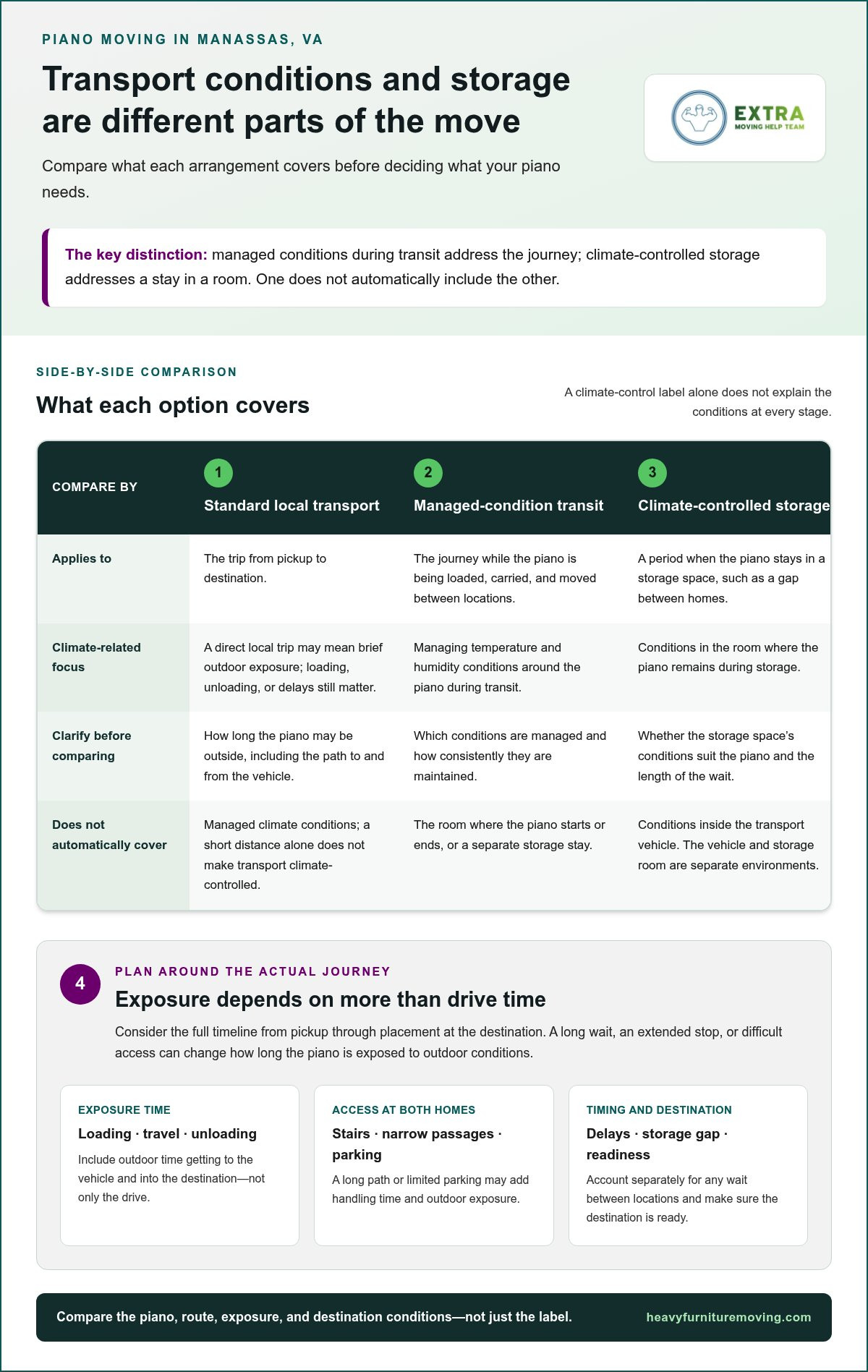
Climate-controlled piano transport means managing temperature and humidity conditions around a piano during transit. The term describes the journey, not the room where the piano starts or ends up. By itself, it also doesn’t specify which conditions are managed or how consistently they’re maintained. Those details matter when comparing climate-related arrangements.
Transport conditions versus piano storage
Transport is the time the piano spends being loaded, carried, and moved between locations. Storage means the instrument stays in a space for longer, such as during a gap between moving out and moving in. A vehicle and a storage room are separate environments, so a climate-related measure for one doesn’t automatically apply to the other.
Duration and exposure help clarify the difference. A direct local move may involve a short trip, but the piano can still be exposed during loading, unloading, or a delay. A longer wait in a storage space raises a different concern because the instrument remains there beyond the transit period. Consider the whole timeline, including any interval between pickup and placement in the new home.
A short distance alone doesn’t make transport climate-controlled. Standard local transport and transport with managed conditions are distinct arrangements, even if they use the same route. When planning a piano moving service Manassas va, identify what “climate-controlled” describes: transit, storage, or both. Don’t assume a label covers every stage of the move.
How temperature and humidity relate to piano care
A piano contains wood and other materials that can respond to changes in their surroundings. Humidity can affect wooden parts, while shifts in temperature and moisture may also influence the instrument’s finish and internal components. Changes can matter for tuning and condition, but the effect depends on the piano and its environment. Avoid treating one general guideline as a rule for every instrument.
Use the piano’s history and the move’s circumstances to guide decisions. An instrument kept in a stable indoor space may face a different transition from one already exposed to fluctuating conditions. Tell the moving team about relevant concerns, such as a prolonged wait or a destination that won’t be ready when the piano arrives. For recommendations specific to the make, age, and condition of your piano, consult its maker or a piano technician.
Keep the terms clear: managed transit conditions refer to the journey, while climate-controlled storage refers to a longer stay in a managed room. Heavy Furniture Moving specializes in transporting pianos and other heavy items in Manassas. Explore piano moving support as you plan the route and timing.
How to Compare Piano Moving Options in Manassas
A climate label is useful only if it addresses the part of the move you’re concerned about. First identify the need: a piano traveling from one home to another, a piano waiting in storage, or a direct local trip. A short move doesn’t automatically require climate-controlled transport. The piano, its exposure during loading and unloading, access, and conditions at the destination all help shape a sensible plan.
| Option | What it addresses | Consider it when |
|---|---|---|
| Climate-controlled storage | Conditions in a room where the piano remains for an extended period. | There’s a gap before the piano can be placed in its destination. |
| Climate-managed transit | Managed environmental conditions during the journey. | Transit exposure or the move’s circumstances make conditions a key concern. |
| Standard local transport | Moving the piano between homes without a stated climate-management feature. | The move is direct, with a clear route and limited waiting or outdoor exposure. |
Which climate-related questions matter for a local move?
Map the expected loading and unloading process. Will the piano wait outdoors, or can the origin and destination be ready for a direct handoff? Is this a one-day move, or will the instrument need to remain somewhere before delivery? Treat extended storage as a separate need from transit. Share the piano type, access details, timing, and destination conditions so the plan reflects the instrument and the move, not a generic assumption.
Access matters alongside climate. Stairs, tight turns, a long path from the entrance, or limited parking may affect handling time and the piano’s exposure while it’s being moved. A clear route and prepared entry points can reduce avoidable delays. Don’t choose a climate-related arrangement based on distance alone; consider the full handoff at both homes.
Why specialist piano handling matters beyond climate
Climate is only one part of a careful move. A piano’s weight, shape, and value make its handling and path through each home important planning factors. Specialized piano handling keeps the plan focused on the instrument and the real moving conditions, rather than treating a piano like routine household furniture.
For a piano moving service Manassas va, share the piano type, access challenges, anticipated exposure, and whether storage is part of the plan. Then match the arrangement to the actual need: storage conditions for an extended stay, transit conditions for the journey, or standard local transport for a direct move. Explore local moving help as you organize the next steps.
How to Prepare a Piano Move in Manassas: A Practical Checklist
Preparation makes it easier to plan an orderly piano move. Focus on the instrument, both homes, and the route between them. Share the details with your moving team rather than trying to lift or shift the piano yourself. A clear picture of the job helps the team plan for the piano’s size and the access conditions.
Prepare the home and access route
Walk the route from the piano’s current spot to the exit, then check the path into its destination room. Look for obstacles and tight spaces, not just the front door. Measure narrow openings or turns when practical, and note building or parking restrictions. Clear household clutter from walkways before moving day.
- Describe the piano. Note whether it’s an upright, grand, or another type, and share its current location inside the home. Mention known concerns about its condition or handling.
- Check the origin route. Identify stairs, narrow turns, hallways, thresholds, and entrances between the piano and the outside. Note elevators or other access features if they’re part of the route.
- Check the destination. Decide where the piano will go, then make sure the path into that room is clear. Flag tight doorways, steps, or other barriers before the move.
- Plan around access and parking. Note where a moving vehicle can stop, whether parking is restricted, and how far the piano may need to travel between the entrance and loading area.
- Consider timing and weather. Share timing concerns that could affect outdoor exposure, such as a narrow entry or a forecast that may complicate the handoff. Keep the route clear to avoid unnecessary delays.
Share the details that help plan the move
When arranging a piano move, provide the piano type, pickup and destination locations, preferred moving date, and a straightforward description of the route at both homes. Mention stairs, narrow turns, entrances, elevators, parking limits, and timing or weather concerns. Photos of tricky access points can help communicate what words may miss.
Leave the piano itself to the moving team. Don’t attempt to lift, tilt, or move it to make room; instead, clear nearby clutter and point out anything that could affect access. A piano’s weight and shape call for deliberate handling, and clear information helps the team prepare for the work.
Put your notes together before arranging the move so the team has a clear picture of the instrument, route, and timing. Arrange piano moving help with the details you’ve gathered.
Arrange Piano Moving Service in Manassas with Heavy Furniture Moving
Once you’ve mapped the route and destination, give your moving team a clear picture of the job. Heavy Furniture Moving serves Manassas and specializes in transporting pianos and other heavy items. Details about the instrument, access points, and schedule help frame the move around your home and piano.
What to include when requesting piano-moving help
Keep your request practical. Describe the piano and the move rather than assuming a particular vehicle or environmental feature. If climate is on your mind, explain the concern: a long wait outdoors during loading, exposure to seasonal weather, or time between pickup and delivery. Clear wording helps distinguish transit concerns from a need for longer-term storage.
- Piano details: Share the type of piano and where it sits in the home.
- Pickup and delivery: Provide both locations and the room where the instrument needs to go.
- Access: Note stairs, narrow turns, entrances, elevators, parking restrictions, or other obstacles along the route.
- Timing: Include your preferred moving date and any scheduling factors that could affect the handoff.
- Climate concerns: Explain any weather exposure or waiting time you’re trying to plan around.
You don’t need to solve every logistical question before starting the conversation. Share what you know, including uncertainties about access or timing. That gives the team a useful starting point for understanding the move without treating climate control as an assumed part of the plan.
Take the next step with a local moving team
A piano is a demanding item to move, and it deserves more than a last-minute plan. Heavy Furniture Moving provides specialized piano and heavy-item handling for residential moves in Manassas. As you arrange a piano moving service Manassas va, keep your notes on the instrument, access, destination, and timing together. That preparation makes it easier to discuss the actual move and what it involves.
Ready to start planning? Plan your Manassas piano move with Heavy Furniture Moving. Share the details you’ve gathered and take the next step with a team that handles difficult-to-move household items.
Make Your Piano Move Easier to Plan
Start by gathering the piano’s type, pickup and destination details, access notes, and preferred timing. Then describe any climate-related concern in plain terms, such as expected outdoor exposure or a delay between locations. A clear starting point helps turn a challenging move into a practical plan.
Heavy Furniture Moving is a veteran-family owned and operated team serving Manassas and Manassas Park, with specialized handling for pianos and other heavy items. If you’re looking for a piano moving service Manassas va, share your move details with a local team ready to help with heavy lifting and route planning. The company also serves Fairfax, Woodbridge, Aldie, Ashburn, Mclean, Vienna, Reston, Centreville, Chantilly, Clifton, Dumfries, South Riding, Fairfax Station, Haymarket, Gainesville, and Manassas Park.
Plan your Manassas piano move with Heavy Furniture Moving. Gather your details and take the next step toward a well-planned moving day.
Frequently Asked Questions
Is climate-controlled moving necessary for a piano in Manassas?
Not necessarily. For a short local move, the concern may be limited to brief loading and unloading exposure rather than the entire trip. Consider the piano’s condition, the day’s weather, any expected waiting, and whether it will enter a stable indoor space at the destination. If you’re arranging a piano moving service Manassas va, describe those details rather than assuming a climate-control feature is needed.
Can hot or cold weather damage a piano during a local move?
Environmental changes can affect a piano, but the concern depends on the instrument and how long it’s exposed. A quick transfer from a home to a moving vehicle differs from leaving the instrument outdoors or in an unheated space for an extended period. Keep the handoff direct where practical and avoid unnecessary waiting outside. For a piano with specific care needs, follow the maker’s guidance or consult a qualified technician.
Is climate-controlled piano storage the same as climate-controlled transport?
No. Storage refers to the conditions in a room or facility where a piano remains over time. Transport refers to conditions during its trip from one location to another. For example, a move may involve a direct journey but a separate wait before the destination is ready. Treat these as distinct parts of the plan, and don’t assume arrangements for one cover the other.
What should I tell piano movers before a Manassas move?
Share the piano type, pickup and delivery details, and any access issues that could affect the route. A photo of a tight entry or stair landing can make a tricky layout easier to explain. Mention parking or building access restrictions, too. Describe weather exposure or a possible wait separately from the travel details. Don’t try moving the piano to test whether it fits through a doorway.
Can a piano be moved in the rain?
Rain can complicate loading and unloading, so include the conditions and timing in the plan. Tell the moving team if rain is forecast and describe any exposed steps or long paths between the home and vehicle. Clear the route of loose items and keep the destination entrance ready. Focus on communicating the conditions at both homes rather than assuming a particular weatherproofing method or vehicle feature.
Should I tune a piano immediately after moving it?
Not always. Whether and when a piano needs attention depends on the instrument and its new surroundings. After delivery, note any changes you hear or feel, such as keys behaving differently, and give the piano technician that context. Follow the manufacturer’s care instructions for timing, or ask a qualified technician to assess the instrument. Avoid scheduling based on a fixed adjustment period that may not suit your piano.
Frequently Asked Questions
Map the expected loading and unloading process. Will the piano wait outdoors, or can the origin and destination be ready for a direct handoff? Is this a one-day move, or will the instrument need to remain somewhere before delivery? Treat extended storage as a separate need from transit. Share the piano type, access details, timing, and destination conditions so the plan reflects the instrument and the move, not a generic assumption. Access matters alongside climate. Stairs, tight turns, a long path from the entrance, or limited parking may affect handling time and the piano’s exposure while it’s being moved. A clear route and prepared entry points can reduce avoidable delays. Don’t choose a climate-related arrangement based on distance alone; consider the full handoff at both homes.
Not necessarily. For a short local move, the concern may be limited to brief loading and unloading exposure rather than the entire trip. Consider the piano’s condition, the day’s weather, any expected waiting, and whether it will enter a stable indoor space at the destination. If you’re arranging a piano moving service Manassas va, describe those details rather than assuming a climate-control feature is needed.
Environmental changes can affect a piano, but the concern depends on the instrument and how long it’s exposed. A quick transfer from a home to a moving vehicle differs from leaving the instrument outdoors or in an unheated space for an extended period. Keep the handoff direct where practical and avoid unnecessary waiting outside. For a piano with specific care needs, follow the maker’s guidance or consult a qualified technician.
No. Storage refers to the conditions in a room or facility where a piano remains over time. Transport refers to conditions during its trip from one location to another. For example, a move may involve a direct journey but a separate wait before the destination is ready. Treat these as distinct parts of the plan, and don’t assume arrangements for one cover the other.
Share the piano type, pickup and delivery details, and any access issues that could affect the route. A photo of a tight entry or stair landing can make a tricky layout easier to explain. Mention parking or building access restrictions, too. Describe weather exposure or a possible wait separately from the travel details. Don’t try moving the piano to test whether it fits through a doorway.
Rain can complicate loading and unloading, so include the conditions and timing in the plan. Tell the moving team if rain is forecast and describe any exposed steps or long paths between the home and vehicle. Clear the route of loose items and keep the destination entrance ready. Focus on communicating the conditions at both homes rather than assuming a particular weatherproofing method or vehicle feature.
Not always. Whether and when a piano needs attention depends on the instrument and its new surroundings. After delivery, note any changes you hear or feel, such as keys behaving differently, and give the piano technician that context. Follow the manufacturer’s care instructions for timing, or ask a qualified technician to assess the instrument. Avoid scheduling based on a fixed adjustment period that may not suit your piano.