Moving a Large Antique Wardrobe in Manassas Park: A Safe, Practical Guide
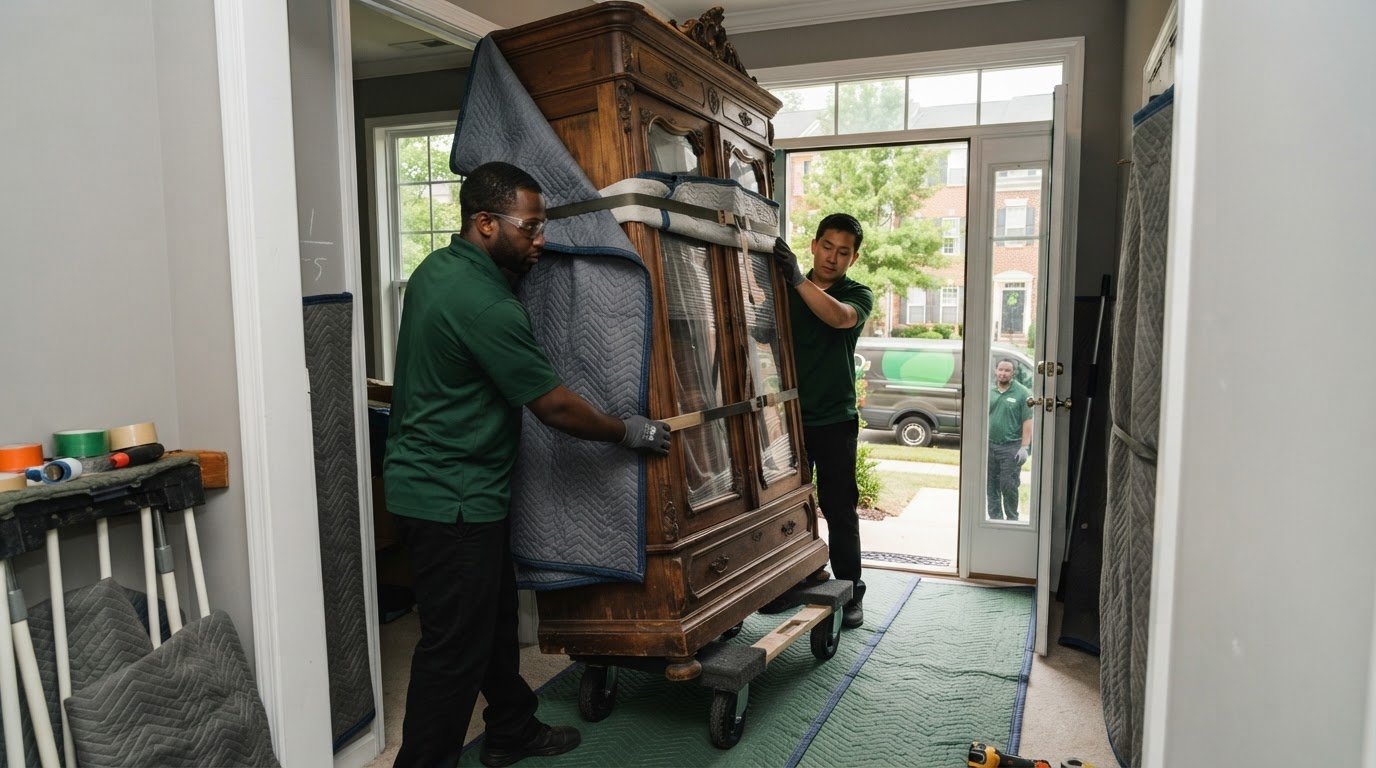
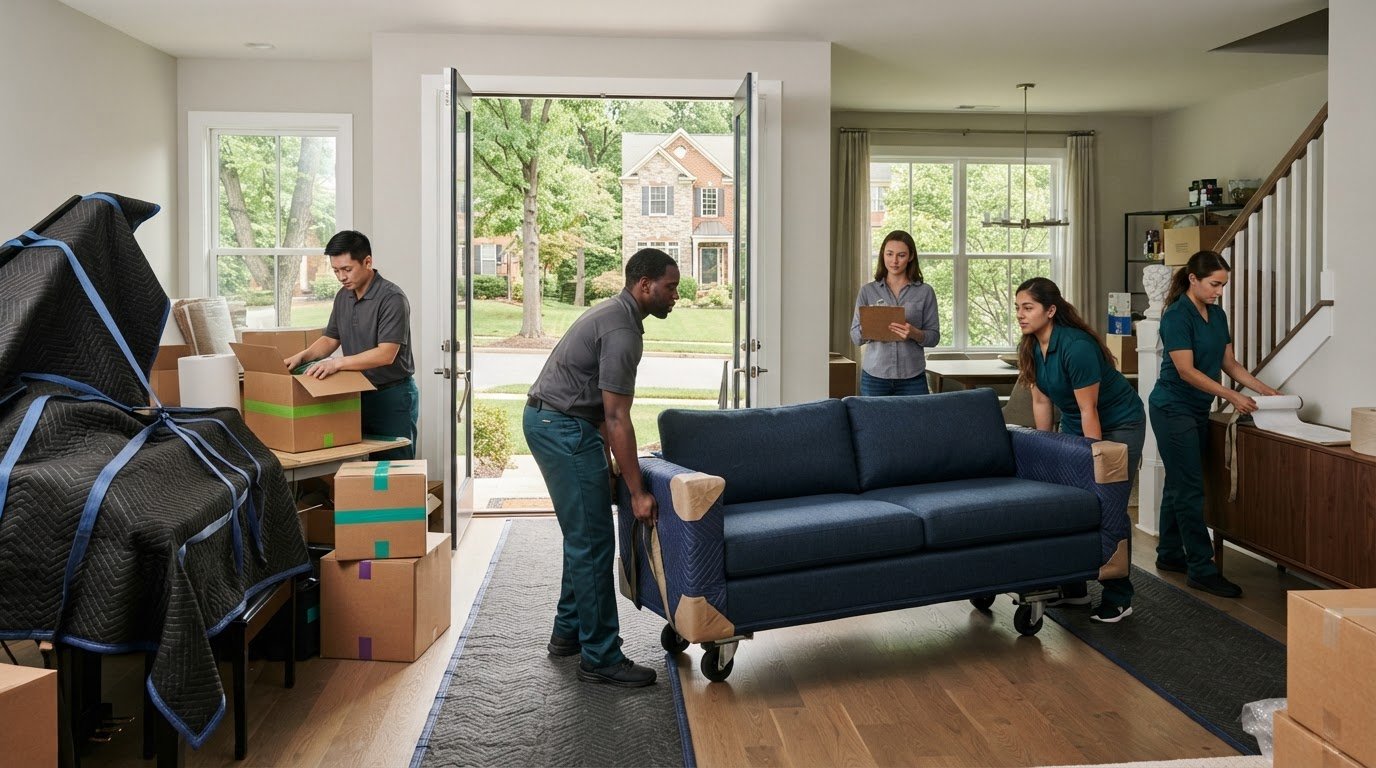
What if the safest move starts before anyone lifts the wardrobe? A safe plan for moving a large antique wardrobe Manassas Park begins with checking its condition, measuring the route, and deciding whether it should travel intact. A rushed turn through a narrow doorway or up a tight staircase can put its finish, frame, and original details at risk.
It makes sense to be cautious. Antique wardrobes can be heavy and awkward, and the right approach depends on the piece and the home. Guesswork can put the furniture, walls, floors, and helpers at risk.
This guide explains how to assess the wardrobe, prepare it for moving day, and measure doorways, stairs, and tight turns. You’ll also learn how to weigh a DIY move against professional heavy-item help. With a clear plan, you can protect the piece and your home while making a confident choice for your Manassas Park move.
Key Takeaways
- Inspect the wardrobe’s condition and construction before deciding how to prepare it. Disassembly isn’t automatically the safest choice.
- Measure the wardrobe and every doorway, stairway, and turn along the complete route before moving day.
- Use the wardrobe’s condition, access challenges, available helpers, and risk of damage to decide between DIY and professional heavy-item movers.
- For moving a large antique wardrobe Manassas Park, plan for obstacles, surface protection, pets, and entry or parking coordination.
- When arranging professional help, share the wardrobe’s dimensions and condition, along with details about stairs, turns, and its destination.
Why moving a large antique wardrobe in Manassas Park needs a careful plan
You want to move an oversized, valuable piece without scraping its finish, stressing its joints, or damaging your home. A safe plan for moving a large antique wardrobe Manassas Park residents can use starts with the wardrobe’s actual condition, the complete travel route, and a clear handling plan. Age alone doesn’t tell you how delicate a piece is. Its construction, repairs, wear, and the space around it all matter.
Prepare for the wardrobe you have, rather than assuming every antique needs the same treatment. A solid, well-maintained piece may present different challenges from one with loose joints, a fragile mirror, or delicate ornament. Check the room and the entire route, too. A wardrobe that clears one doorway may still be difficult to turn into a hall or maneuver down stairs.
Let the wardrobe’s condition and measured access guide the plan, not guesswork or appearance alone.
What makes an antique wardrobe different from ordinary furniture?
Antique wardrobes may have joined wooden panels, older finishes, attached mirrors, carved trim, or decorative hardware. These details affect where the piece can be held and how it may respond to movement. Surface wear, such as a scratch or faded finish, doesn’t automatically mean the structure is weak. Loose joints or shifting sections deserve attention, but a visual check alone can’t establish the wardrobe’s full condition.
Before handling begins, photograph each side, the corners, doors, mirror, hardware, and any existing marks. Note anything that appears loose without pulling or testing it. The overview of conservation and restoration of wooden furniture explains why both structure and finish matter when protecting older pieces. Clear records also help distinguish existing wear from damage that occurs during a move.
Which moving risks should Manassas Park homeowners consider?
The risks extend beyond the wardrobe. A heavy piece can scrape floors, catch a door frame, strike a wall, or put pressure on stair rails. An awkward lift can also strain the people carrying it, especially if they can’t see the route or coordinate their steps. Measure and assess every doorway, stairway, and tight turn instead of assuming the route will be straightforward.
- Protect the wardrobe: Don’t lift or pull by trim, handles, ornament, doors, or any section that appears unstable.
- Protect the home: Check for low ceilings, narrow clearances, floor transitions, and corners where the wardrobe could make contact.
- Protect the helpers: Agree on how the team will communicate, pause, and change direction without twisting or rushing.
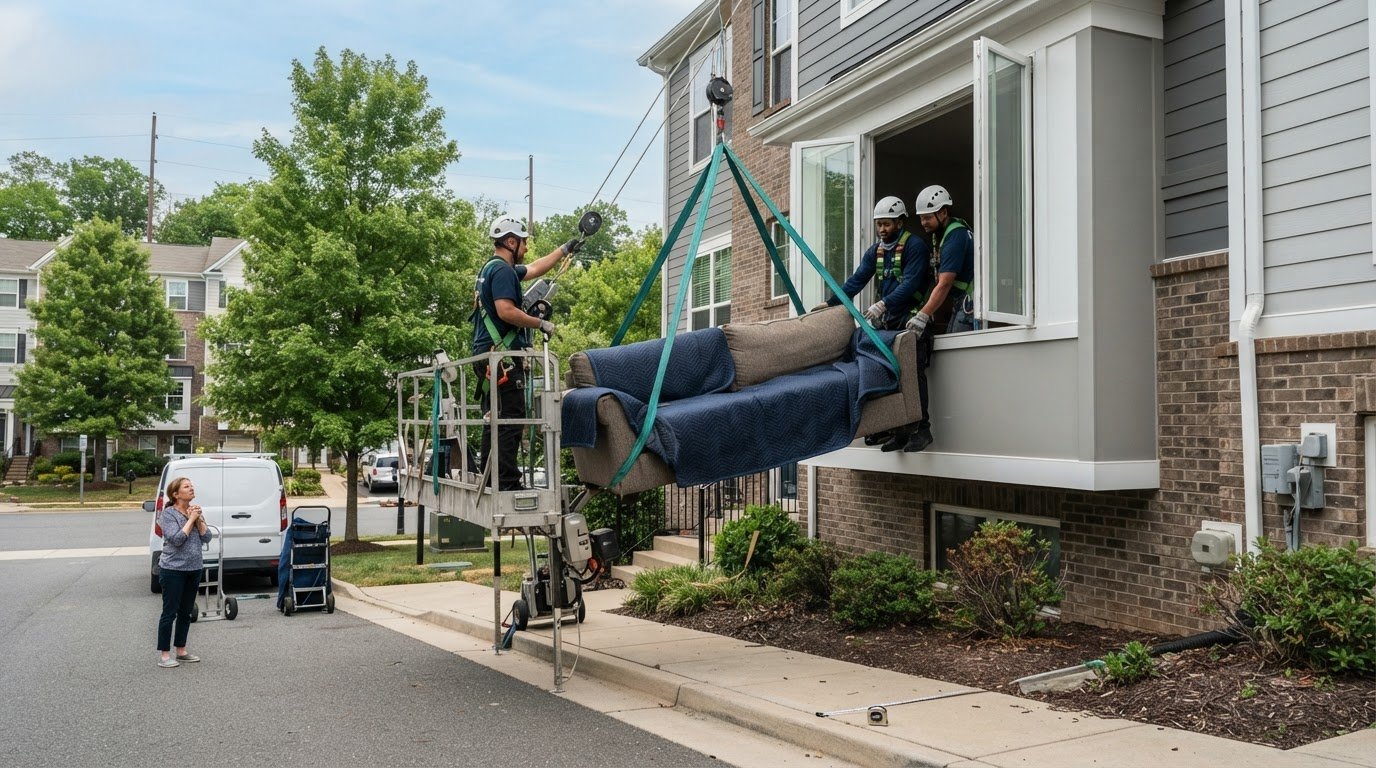
When the route is difficult or the wardrobe’s condition makes handling uncertain, professional heavy-item movers can provide practical support. Planning the move around the piece and its path helps reduce avoidable risks to the home and everyone involved.
How to assess and prepare an antique wardrobe before moving it
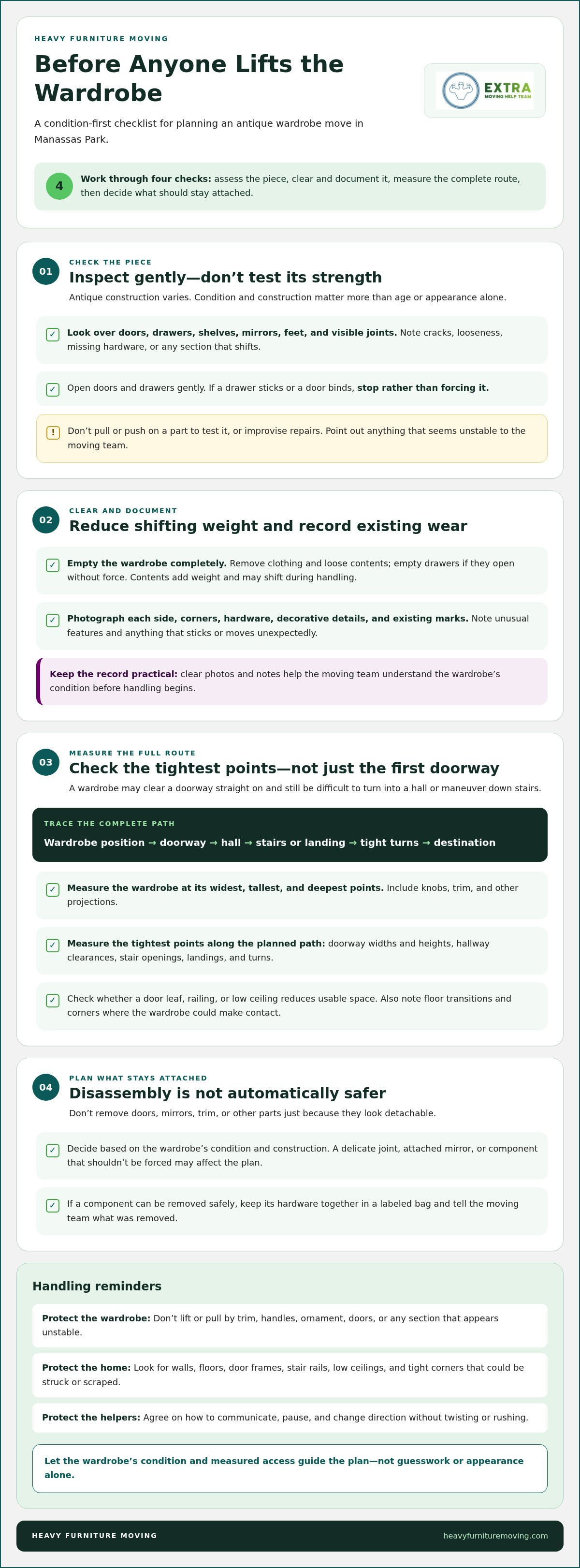
A few careful checks can help prevent surprises during the lift. Work through the preparation in order, and tell the moving team about concerns before anyone handles the wardrobe. Antique construction varies: one piece may have a sturdy frame, while another has delicate joints, an attached mirror, or components that shouldn’t be forced apart. Don’t assume disassembly is either necessary or safe.
- Inspect the wardrobe. Look over doors, drawers, shelves, mirrors, feet, and visible joints. Note cracks, looseness, missing hardware, or areas that shift, but don’t pull on them to test their strength.
- Empty it completely. Remove clothing and loose contents. Empty drawers if they open without force. Contents add weight and may shift during handling.
- Document its condition. Take clear photos of each side, corners, hardware, decorative details, and existing marks. Note unusual features or anything that sticks or moves unexpectedly.
- Measure the wardrobe and route. Record the piece’s height, width, and depth, including knobs, trim, and other projections. Then measure the tightest points along the planned path.
- Plan what stays attached. Don’t remove doors, mirrors, trim, or other parts just because they look detachable. If a component can be removed safely, keep its hardware together in a labeled bag and tell the moving team what you removed.
How should you inspect and empty the wardrobe?
Open doors and drawers gently, and check whether shelves or feet appear loose. Stop if a drawer sticks or a door binds. Don’t force stuck parts, decorative trim, or hardware into place. Photograph the wardrobe before moving it, including existing scratches and worn areas. Notes and photos give the moving team a useful record and help identify parts that need extra care.
Furniture preservation takes both structure and surface into account. Winterthur Museum's furniture conservation practices offer useful context on caring for historic furniture. For a move, the practical takeaway is simple: avoid improvised repairs or forceful adjustments. If something seems unstable, point it out rather than trying to fix it during preparation.
What should you measure before moving day?
Measure the wardrobe at its widest, tallest, and deepest points, including projecting details. Along the full route, record doorway widths and heights, hallway clearances, stair openings, landings, and turns. Check whether a door leaf, railing, or low ceiling reduces the usable space. A doorway may look wide enough straight on but become a pinch point when the wardrobe has to turn before passing through.
Before movers arrive, inspect and empty the wardrobe, photograph its condition, record its dimensions, measure the full route, and flag anything loose or difficult to open. This checklist makes moving a large antique wardrobe Manassas Park more organized because it bases the plan on the actual piece and its path. For help with a heavy or bulky household move, Heavy Furniture Moving provides residential moving support.
DIY move or professional movers: which fits your antique wardrobe?
A wardrobe’s size alone doesn’t determine whether a DIY move is suitable. Consider its condition, the measured route, the people available to handle it, and what could happen if the move goes wrong. A stable wardrobe with a clear, level route and capable helpers may be manageable. A delicate piece, narrow stairway, or uncertain grip changes the decision. Use this comparison to weigh your options before lifting.
| Option | When it may fit | What to weigh |
|---|---|---|
| DIY | The wardrobe appears stable, the route is measured and clear, and capable helpers can coordinate the move. | You’re responsible for planning the lift and managing the risk to the wardrobe, home, and people involved. Don’t proceed if access or control is uncertain. |
| General moving help | You need extra hands for a straightforward move and have already assessed the item and route. | More helpers don’t automatically solve a tight turn or delicate construction. The team still needs a clear plan for handling the piece. |
| Experienced heavy-item movers | The wardrobe is awkward, the route has challenging access, or its condition makes careful handling a priority. | Specialized heavy-item handling focuses on the item, route, and home, not just lifting strength. |
When might a DIY move be a poor fit?
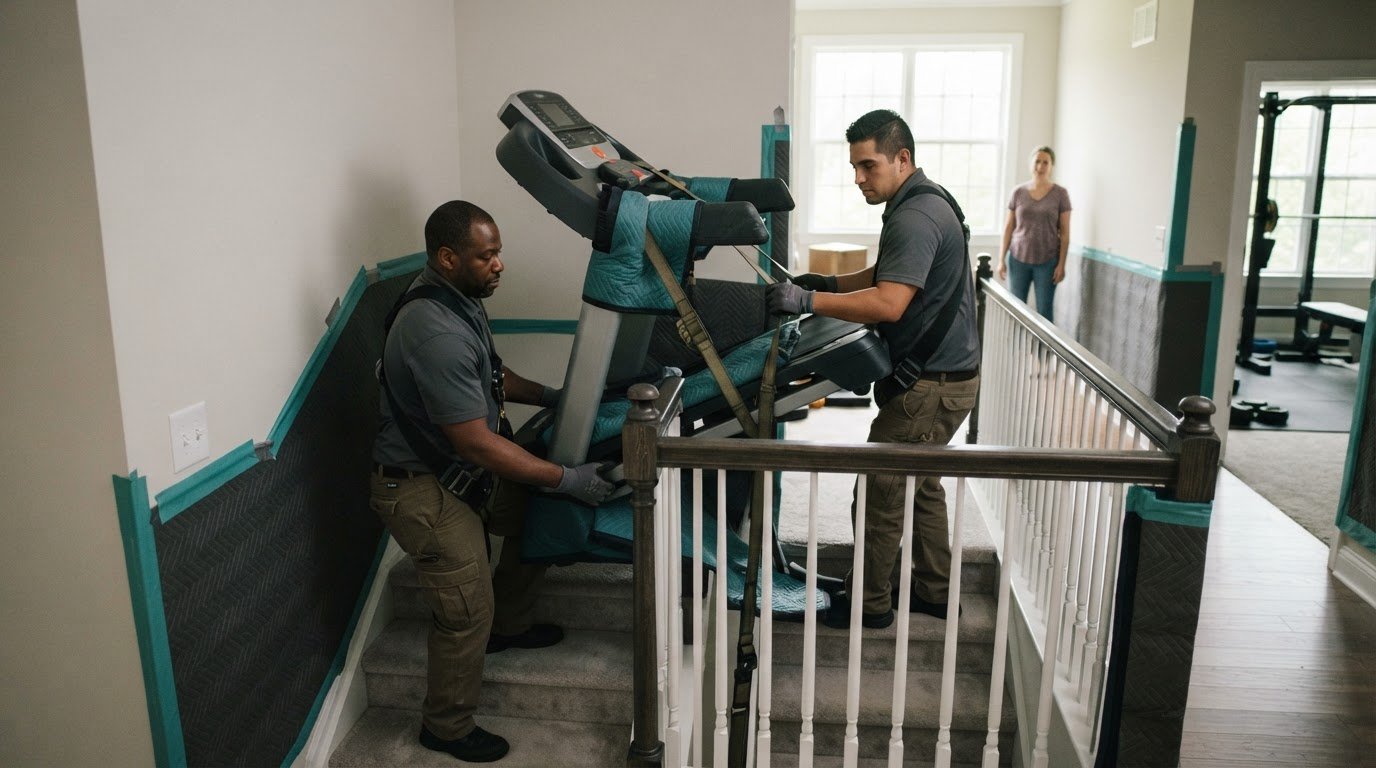
Take extra care if the wardrobe has unstable joints, delicate details, an attached mirror, or parts that shift. Stairs, tight turns, and narrow openings can add difficulty even when the piece clears a doorway. A heavy, awkward load is hard to coordinate if helpers can’t maintain a secure grip or communicate clearly. Stop if the route, grip, or teamwork feels unsafe. Don’t try to solve a bad angle by rushing or forcing the piece.
What can specialized heavy-item movers bring to the job?
Moving heavy and bulky household items calls for planning around the wardrobe, its route, and the home, rather than relying on strength alone. Heavy Furniture Moving provides residential moving support for difficult heavy items in Manassas Park. Its specialized heavy-item handling is useful when a wardrobe’s condition or access makes a DIY move risky. For more context on single-piece moves, see this guide to single-item furniture movers in Manassas Park.
Choose the approach that fits the real conditions, not the assumption that a large piece must be a DIY job or always requires a full household move. If you can’t explain how the wardrobe will pass each tight point while staying controlled, arrange experienced heavy-item help before moving day.
How to prepare your Manassas Park home and move-day route
Plan the complete trip, not just the doorway nearest the wardrobe. Walk from its current room to the exit, then consider the path from the entry to its destination. Homes in Manassas Park vary, so check the actual layout instead of assuming the route will be simple or difficult based on the neighborhood. A short route can still include a tight turn, raised threshold, or narrow landing.
How do you map the wardrobe’s route through the home?
Walk the route, looking for anything that could limit clearance or interrupt a controlled move. Check thresholds, narrow turns, stairs, landings, changes in floor height, and the space needed to turn into the destination room. Make sure doors open fully. If a door leaf restricts the path, consider whether removing it would help, but don’t force it or create a new hazard.
Mark the intended placement area and check that there’s enough room to set the wardrobe down without blocking the route or crowding nearby furniture. Plan the final turn, too. A clear entry won’t help if the wardrobe can’t be positioned safely once inside.
What should you clear and protect before the move?
Clear the entire path, including the space around corners and the destination. Remove loose items, rugs, cords, and anything else that could cause a trip, snag, or sudden stop. Keep children and pets away from the work area while the wardrobe is being handled. Assign someone to keep the route clear rather than having extra people gather near the lift.
Check floors, walls, door frames, stair rails, and nearby furniture for surfaces that may need protection. Choose protection suited to the surface and secure it so it won’t slide, bunch up, or create a trip point. Leave enough room for the moving team to work and communicate. Keep items away from turns and exits.
Before moving day, run through this route checklist:
- Walk the full path from the wardrobe’s current room to its planned destination.
- Identify thresholds, turns, stairs, landings, and changes in floor level.
- Check door clearance and consider whether a door leaf limits access.
- Clear rugs, cords, loose objects, children, and pets from the work area.
- Prepare suitable protection for vulnerable surfaces and keep the destination clear.
- Coordinate entry and parking so the route from the vehicle to the home is ready.
A clear indoor path can still be undermined by a blocked entrance or an inconvenient place to unload. Settle entry and parking arrangements ahead of time, and clear the path between the vehicle and the home. Heavy Furniture Moving’s heavy-item moving support is planned around the wardrobe, its route, and the home, rather than lifting strength alone. Learn more about Heavy Furniture Moving.
Arrange antique wardrobe moving help in Manassas Park
A useful moving plan starts with clear details, not guesswork. Gather the wardrobe’s approximate dimensions, note visible damage or loose parts, and describe the route from its current room to its new placement. Include stairs, narrow turns, doorways, and the destination room. These details help the moving team plan around the piece and your home.
What details help plan a wardrobe move?
Describe the wardrobe as it is now. Mention attached mirrors, decorative parts, or other components that need careful handling. If a door sticks or a section seems loose, say so rather than trying to adjust it first. Photos can show both the piece and access points that are hard to explain in a short message.
- Wardrobe size: Share its approximate height, width, and depth, including projecting details.
- Condition: Note visible wear, loose joints, attached mirrors, or parts that shift.
- Route: Describe stairs, landings, narrow turns, thresholds, and tight doorways.
- Destination: Identify where the wardrobe needs to go and any access challenges there.
- Photos: Include clear views of the wardrobe and difficult points along the route.
Keep the information practical. For example, explain whether the route includes a stair turn or whether the wardrobe must pass through a doorway before turning into a hall. If parts have already been safely removed, note what they are and keep their hardware together. A concise description gives the moving team a useful starting point for coordinating the move.
How can Heavy Furniture Moving help in Manassas Park?
Heavy Furniture Moving provides residential moving support for difficult heavy and bulky items, including specialized handling relevant to an oversized antique wardrobe. The move can be planned around the wardrobe’s condition and the home’s actual access route, rather than relying on strength alone. The company serves Manassas Park and is veteran-family owned and operated.
For broader local service context, see reliable movers in Fairfax and Northern VA. When describing a move, share the measurements, condition notes, stairs, turns, destination, and photos.
Set up your wardrobe’s next move with confidence
Give the wardrobe a little time and attention before moving day. A thoughtful plan respects its history and makes the next step easier for everyone involved. If the piece, route, or lift feels like more than you want to manage alone, getting help is a practical choice.
For moving a large antique wardrobe Manassas Park, start with the details you’ve gathered and describe the move clearly. Share what matters about the wardrobe and your home so the plan can account for the actual piece and route.
Contact Heavy Furniture Moving to arrange help moving your antique wardrobe in Manassas Park.
Frequently Asked Questions
Can you move a large antique wardrobe without taking it apart?
Possibly, but moving it intact depends on the wardrobe’s construction, condition, dimensions, and route. Look for loose joints or parts, and measure the tightest passage before deciding. Don’t force a joint, door, or fitting that resists. When arranging professional help for moving a large antique wardrobe Manassas Park, share these details so the moving plan accounts for the actual piece and its path.
How do I measure a wardrobe and doorway before moving it?
Measure the wardrobe’s full height, width, and depth, including knobs, trim, and other projections. Then check every doorway, hallway, turn, stair opening, and landing along the route. Compare the measurements before moving day, and consider how the wardrobe must angle or turn as it passes through each space. Measuring only the room entrance can miss a tighter spot farther along the path.
Should I empty an antique wardrobe before moving it?
Yes. Remove clothing and loose contents so they don’t shift during handling and so drawers and shelves are easier to assess. Before moving, look over the doors, drawers, shelves, and visible joints, and record existing marks. If a drawer sticks or a component seems fragile, don’t force it or remove it just because it appears detachable. Point it out to the moving team.
How can I protect an antique wardrobe’s finish during a move?
Start by recording existing marks and clearing the route so the wardrobe doesn’t catch on objects or brush against nearby surfaces. Avoid putting pressure on decorative trim, handles, or delicate sections, since these may not be sturdy lifting points. The right protection depends on the finish and the wardrobe’s condition; no single covering suits every piece. Share concerns about delicate surfaces before handling begins.
Is it safe to move a large antique wardrobe up or down stairs?
It depends on the wardrobe’s dimensions and condition, the stairway and landings, and whether capable helpers can coordinate the move. Inspect the complete route, including turns and overhead clearance, before starting. Don’t proceed if the team can’t maintain control, clear the space, or communicate through each step. If the stair route feels uncertain, professional heavy-item moving help is a practical option.
Can professional movers move just one antique wardrobe in Manassas Park?
Yes. You don’t need to be moving an entire household to seek help with a difficult piece. Heavy Furniture Moving provides residential moving support for heavy and bulky items in Manassas Park, Fairfax, Woodbridge, Manassas, Manassas Park, Aldie, Ashburn, McLean, Vienna, Reston, Centreville, Chantilly, Clifton, Dumfries, South Riding, Fairfax Station, Haymarket, and Gainesville. Share the wardrobe’s dimensions, condition, and access details when arranging help.
What should I tell movers before they handle an antique wardrobe?
Share approximate dimensions, clear photos, known damage or loose components, and any mirrors or decorative details that need careful handling. Describe the complete route, including stairs and narrow turns, and name the destination room. Mention anything that sticks, shifts, or shouldn’t be handled roughly. This information gives the moving team a clearer picture of the piece and access challenges before the move starts.
Frequently Asked Questions
Antique wardrobes may have joined wooden panels, older finishes, attached mirrors, carved trim, or decorative hardware. These details affect where the piece can be held and how it may respond to movement. Surface wear, such as a scratch or faded finish, doesn’t automatically mean the structure is weak. Loose joints or shifting sections deserve attention, but a visual check alone can’t establish the wardrobe’s full condition. Before handling begins, photograph each side, the corners, doors, mirror, hardware, and any existing marks. Note anything that appears loose without pulling or testing it. The overview of conservation and restoration of wooden furniture explains why both structure and finish matter when protecting older pieces. Clear records also help distinguish existing wear from damage that occurs during a move.
The risks extend beyond the wardrobe. A heavy piece can scrape floors, catch a door frame, strike a wall, or put pressure on stair rails. An awkward lift can also strain the people carrying it, especially if they can’t see the route or coordinate their steps. Measure and assess every doorway, stairway, and tight turn instead of assuming the route will be straightforward. When the route is difficult or the wardrobe’s condition makes handling uncertain, professional heavy-item movers can provide practical support. Planning the move around the piece and its path helps reduce avoidable risks to the home and everyone involved. A few careful checks can help prevent surprises during the lift. Work through the preparation in order, and tell the moving team about concerns before anyone handles the wardrobe. Antique construction varies: one piece may have a sturdy frame, while another has delicate joints, an attached mirror, or components that shouldn’t be forced apart. Don’t assume disassembly is either necessary or safe.
Open doors and drawers gently, and check whether shelves or feet appear loose. Stop if a drawer sticks or a door binds. Don’t force stuck parts, decorative trim, or hardware into place. Photograph the wardrobe before moving it, including existing scratches and worn areas. Notes and photos give the moving team a useful record and help identify parts that need extra care. Furniture preservation takes both structure and surface into account. Winterthur Museum's furniture conservation practices offer useful context on caring for historic furniture. For a move, the practical takeaway is simple: avoid improvised repairs or forceful adjustments. If something seems unstable, point it out rather than trying to fix it during preparation.
Measure the wardrobe at its widest, tallest, and deepest points, including projecting details. Along the full route, record doorway widths and heights, hallway clearances, stair openings, landings, and turns. Check whether a door leaf, railing, or low ceiling reduces the usable space. A doorway may look wide enough straight on but become a pinch point when the wardrobe has to turn before passing through. Before movers arrive, inspect and empty the wardrobe, photograph its condition, record its dimensions, measure the full route, and flag anything loose or difficult to open. This checklist makes moving a large antique wardrobe Manassas Park more organized because it bases the plan on the actual piece and its path. For help with a heavy or bulky household move, Heavy Furniture Moving provides residential moving support. A wardrobe’s size alone doesn’t determine whether a DIY move is suitable. Consider its condition, the measured route, the people available to handle it, and what could happen if the move goes wrong. A stable wardrobe with a clear, level route and capable helpers may be manageable. A delicate piece, narrow stairway, or uncertain grip changes the decision. Use this comparison to weigh your options before lifting.
Take extra care if the wardrobe has unstable joints, delicate details, an attached mirror, or parts that shift. Stairs, tight turns, and narrow openings can add difficulty even when the piece clears a doorway. A heavy, awkward load is hard to coordinate if helpers can’t maintain a secure grip or communicate clearly. Stop if the route, grip, or teamwork feels unsafe. Don’t try to solve a bad angle by rushing or forcing the piece.
Moving heavy and bulky household items calls for planning around the wardrobe, its route, and the home, rather than relying on strength alone. Heavy Furniture Moving provides residential moving support for difficult heavy items in Manassas Park. Its specialized heavy-item handling is useful when a wardrobe’s condition or access makes a DIY move risky. For more context on single-piece moves, see this guide to single-item furniture movers in Manassas Park. Choose the approach that fits the real conditions, not the assumption that a large piece must be a DIY job or always requires a full household move. If you can’t explain how the wardrobe will pass each tight point while staying controlled, arrange experienced heavy-item help before moving day. Plan the complete trip, not just the doorway nearest the wardrobe. Walk from its current room to the exit, then consider the path from the entry to its destination. Homes in Manassas Park vary, so check the actual layout instead of assuming the route will be simple or difficult based on the neighborhood. A short route can still include a tight turn, raised threshold, or narrow landing.
Walk the route, looking for anything that could limit clearance or interrupt a controlled move. Check thresholds, narrow turns, stairs, landings, changes in floor height, and the space needed to turn into the destination room. Make sure doors open fully. If a door leaf restricts the path, consider whether removing it would help, but don’t force it or create a new hazard. Mark the intended placement area and check that there’s enough room to set the wardrobe down without blocking the route or crowding nearby furniture. Plan the final turn, too. A clear entry won’t help if the wardrobe can’t be positioned safely once inside.
Clear the entire path, including the space around corners and the destination. Remove loose items, rugs, cords, and anything else that could cause a trip, snag, or sudden stop. Keep children and pets away from the work area while the wardrobe is being handled. Assign someone to keep the route clear rather than having extra people gather near the lift. Check floors, walls, door frames, stair rails, and nearby furniture for surfaces that may need protection. Choose protection suited to the surface and secure it so it won’t slide, bunch up, or create a trip point. Leave enough room for the moving team to work and communicate. Keep items away from turns and exits. Before moving day, run through this route checklist: A clear indoor path can still be undermined by a blocked entrance or an inconvenient place to unload. Settle entry and parking arrangements ahead of time, and clear the path between the vehicle and the home. Heavy Furniture Moving’s heavy-item moving support is planned around the wardrobe, its route, and the home, rather than lifting strength alone. Learn more about Heavy Furniture Moving. A useful moving plan starts with clear details, not guesswork. Gather the wardrobe’s approximate dimensions, note visible damage or loose parts, and describe the route from its current room to its new placement. Include stairs, narrow turns, doorways, and the destination room. These details help the moving team plan around the piece and your home.
Describe the wardrobe as it is now. Mention attached mirrors, decorative parts, or other components that need careful handling. If a door sticks or a section seems loose, say so rather than trying to adjust it first. Photos can show both the piece and access points that are hard to explain in a short message. Keep the information practical. For example, explain whether the route includes a stair turn or whether the wardrobe must pass through a doorway before turning into a hall. If parts have already been safely removed, note what they are and keep their hardware together. A concise description gives the moving team a useful starting point for coordinating the move.
Heavy Furniture Moving provides residential moving support for difficult heavy and bulky items, including specialized handling relevant to an oversized antique wardrobe. The move can be planned around the wardrobe’s condition and the home’s actual access route, rather than relying on strength alone. The company serves Manassas Park and is veteran-family owned and operated. For broader local service context, see reliable movers in Fairfax and Northern VA. When describing a move, share the measurements, condition notes, stairs, turns, destination, and photos. Give the wardrobe a little time and attention before moving day. A thoughtful plan respects its history and makes the next step easier for everyone involved. If the piece, route, or lift feels like more than you want to manage alone, getting help is a practical choice. For moving a large antique wardrobe Manassas Park, start with the details you’ve gathered and describe the move clearly. Share what matters about the wardrobe and your home so the plan can account for the actual piece and route. Contact Heavy Furniture Moving to arrange help moving your antique wardrobe in Manassas Park.
Possibly, but moving it intact depends on the wardrobe’s construction, condition, dimensions, and route. Look for loose joints or parts, and measure the tightest passage before deciding. Don’t force a joint, door, or fitting that resists. When arranging professional help for moving a large antique wardrobe Manassas Park, share these details so the moving plan accounts for the actual piece and its path.
Measure the wardrobe’s full height, width, and depth, including knobs, trim, and other projections. Then check every doorway, hallway, turn, stair opening, and landing along the route. Compare the measurements before moving day, and consider how the wardrobe must angle or turn as it passes through each space. Measuring only the room entrance can miss a tighter spot farther along the path.
Yes. Remove clothing and loose contents so they don’t shift during handling and so drawers and shelves are easier to assess. Before moving, look over the doors, drawers, shelves, and visible joints, and record existing marks. If a drawer sticks or a component seems fragile, don’t force it or remove it just because it appears detachable. Point it out to the moving team.
Start by recording existing marks and clearing the route so the wardrobe doesn’t catch on objects or brush against nearby surfaces. Avoid putting pressure on decorative trim, handles, or delicate sections, since these may not be sturdy lifting points. The right protection depends on the finish and the wardrobe’s condition; no single covering suits every piece. Share concerns about delicate surfaces before handling begins.
It depends on the wardrobe’s dimensions and condition, the stairway and landings, and whether capable helpers can coordinate the move. Inspect the complete route, including turns and overhead clearance, before starting. Don’t proceed if the team can’t maintain control, clear the space, or communicate through each step. If the stair route feels uncertain, professional heavy-item moving help is a practical option.
Yes. You don’t need to be moving an entire household to seek help with a difficult piece. Heavy Furniture Moving provides residential moving support for heavy and bulky items in Manassas Park, Fairfax, Woodbridge, Manassas, Manassas Park, Aldie, Ashburn, McLean, Vienna, Reston, Centreville, Chantilly, Clifton, Dumfries, South Riding, Fairfax Station, Haymarket, and Gainesville. Share the wardrobe’s dimensions, condition, and access details when arranging help.
Share approximate dimensions, clear photos, known damage or loose components, and any mirrors or decorative details that need careful handling. Describe the complete route, including stairs and narrow turns, and name the destination room. Mention anything that sticks, shifts, or shouldn’t be handled roughly. This information gives the moving team a clearer picture of the piece and access challenges before the move starts.