Moving a Grand Piano in Woodbridge: A Safe, Practical Guide
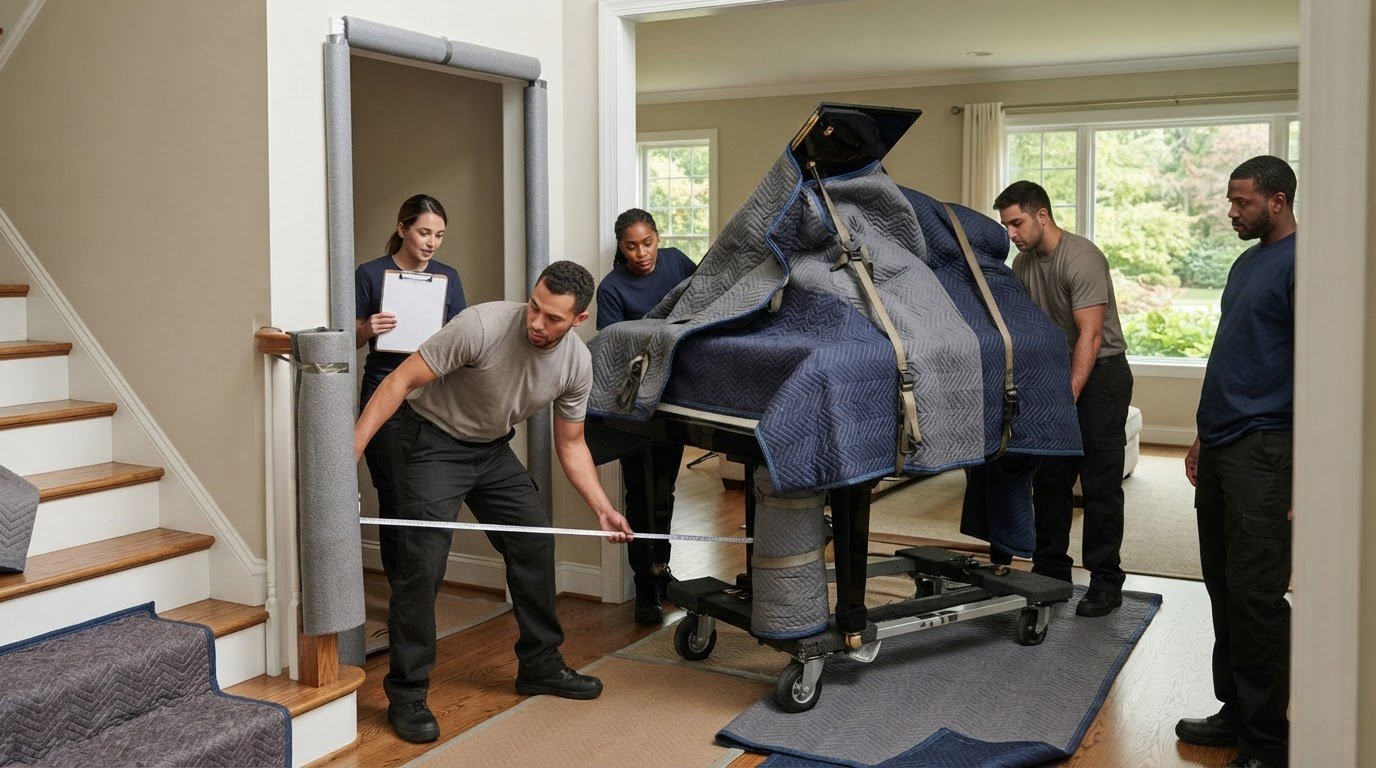
The hardest part of moving a grand piano in Woodbridge may happen before anyone lifts it: planning a clear route from its current spot to the vehicle and into its new room. The piano’s broad shape, delicate components, stairs, tight turns, and narrow doorways all need careful attention.
If you’re wondering whether a DIY move is realistic, pause to assess the full route and the people available to help. A grand piano is heavy and awkward to handle, and a difficult path can put the instrument and your home at risk. Professional piano handling is a practical option when the piano, access, or lifting demands make a DIY move uncertain.
This guide explains how to assess the route, compare DIY with professional help, and prepare your home before moving day. You’ll learn what to measure, how to identify access challenges, and what details to share when planning the move. Starting with the route helps you make a safer, more informed plan for your piano.
Key Takeaways
- Plan the route before the lift. Identify tight turns, stairs, doorways, and access limits that could affect the move.
- Record the piano’s type, dimensions, and condition, then assess floors, entryways, and other features along the route.
- Compare DIY with professional help by considering the route, physical demands, and coordination required.
- For moving a grand piano in Woodbridge, measure the path, clear obstacles, and prepare the destination room.
- Professional heavy-item handling is a practical option when the piano or route makes a DIY move risky.
Moving a Grand Piano in Woodbridge: Why the Route Matters Before the Lift
Moving a grand piano through a home can feel daunting. Its wide shape can make an ordinary doorway or hallway feel narrow, and a bump may mark the finish or put delicate internal parts at risk. Start by planning the path, not by deciding how to lift the piano.
A grand piano move depends on both the instrument and the route. Its dimensions, condition, and weight distribution affect how it can be handled. Stairs and landings add changes in height and direction, while tight corners limit room to maneuver. Walking the full path first helps identify where the move needs particular care.
Map every turn and change in level before moving the piano. A clear route makes the work easier to coordinate. For moving a grand piano in Woodbridge, assess both homes and the connection between them, including the path to the vehicle and loading access. These details help shape a plan around the actual property rather than assumptions about a typical home or street.
What makes a grand piano different from ordinary furniture?
A grand piano’s wide body and uneven shape can complicate narrow doorways, hallways, and turns. Unlike a box-shaped item, it may not pass through an opening simply by angling it. Contact with walls or doorframes can scuff the finish, while rough handling may put delicate internal components at risk. Handling needs vary with the piano’s design and condition. For background on piano types and construction, see Understanding Grand Pianos.
Which parts of the Woodbridge route need attention?
Walk the full path from the piano’s current position to its destination. Include every transition, not just the front door. Measure narrow points and note changes in floor level. A tight corner or low threshold can matter as much as a staircase, especially when there is little room to reposition the piano.
- Origin and destination: Check the piano’s starting space and final room, including the room needed to enter and turn.
- Doors and hallways: Measure the narrowest openings and note nearby walls, furniture, or other obstacles.
- Stairs and landings: Record each staircase, landing, and change in floor level along the route.
- Tight corners: Identify turns where there may be limited room to move or pivot the piano.
- Driveway and loading access: Consider the path between the home and vehicle, along with space for loading and parking.
Write down measurements and access details, then share them when planning the move. Measure the tightest points, not just the easiest ones, and include the destination room. A wide entrance followed by a narrow hallway can present a challenge that the doorway measurement alone will not reveal. Clear information helps the moving team plan for the piano and its route, rather than discovering obstacles during the lift.
How Piano Type, Condition, and Access Shape a Grand Piano Move
A useful assessment separates what the piano needs from what the home’s route allows. The instrument’s size and shape affect how it can be handled; stairs, narrow openings, and turns affect how it can travel. For moving a grand piano in Woodbridge, recording both sets of details gives the moving team a clearer picture before work begins.
What piano and home details should you assess?
Start with the instrument. Note whether it’s a baby grand, another type of grand piano, or a less familiar model, then record its approximate dimensions and visible condition. Don’t try to move or dismantle it just to gather details. Next, document the access points between the piano’s current position and its destination.
- Piano: Type, approximate length and width, visible scratches or damage, and any loose or unusual parts.
- Openings: Doorway and hallway widths, plus any other narrow points along the route.
- Changes in direction: Turns, landings, and spaces where the piano’s direction may need to change.
- Changes in level: Stairs, steps, elevators, thresholds, and transitions between floor surfaces.
- Access notes: Restrictions that could affect entry or movement through the home.
Measure the tightest points, not just the easiest ones. A wide entry followed by a narrow hallway can be more challenging than the doorway alone suggests. Include the destination room so the piano can be placed without discovering a clearance issue at the end of the route.
How should piano condition and route complexity affect planning?
Point out existing damage, loose parts, or other condition concerns before handling is planned. These details can affect how the piano should be approached and protected. Any component handling or disassembly must suit the specific instrument, so don’t assume one method works for every grand piano. Stairs, tight turns, and restricted landings also call for careful coordination because they limit maneuvering space.
Use this checklist to organize what you find:
- Piano type and approximate dimensions
- Visible damage or loose parts
- Narrowest doorway and hallway measurements
- Stairs, landings, elevators, steps, and thresholds
- Turns or spots where direction must change
- Access limits between the starting point and destination
Building access can raise separate questions from piano handling. The International Code Council develops model codes and standards related to building safety; its Building Safety Standards offer broader context, but they don’t replace an assessment of your particular home and route.
Once you’ve gathered these details, you’ll have a stronger basis for planning the move. Heavy Furniture Moving handles pianos and other heavy, bulky items. Explore professional piano moving help for support with this heavy, delicate instrument.
DIY vs. Professional Grand Piano Movers in Woodbridge
Doing the move yourself may seem like a way to avoid a professional fee, but cost is only one consideration. A grand piano is heavy and awkward to coordinate, and its delicate components call for a clear handling plan. Experience moving ordinary furniture does not automatically translate to piano-specific handling. Base your decision on the instrument, its condition, the route, and the people available to help.
DIY: You organize the helpers, route, timing, and coordination. The task may seem more manageable when access is straightforward and you have a capable, experienced team, but the planning and physical demands remain yours.
Professional help: A team experienced with pianos and other heavy items can assess the instrument and access challenges, then coordinate the handling around the move.
When might a DIY move seem manageable, and what can still go wrong?
A DIY move may look less daunting if the piano has an uncomplicated path and capable helpers are available. Even then, you’re responsible for organizing the team, keeping communication clear, and managing the route. A rushed lift or mixed signals can put the helpers, piano, and home at risk. Confidence with ordinary furniture is not proof that a grand piano will be easy to move.
For moving a grand piano in Woodbridge, judge the actual route instead of relying on a general impression that the home is spacious. A roomy starting area won’t offset a difficult transition farther along the path. Existing damage or loose parts can also affect the handling plan. Stairs, tight turns, and restricted landings may be harder to manage without relevant experience.
What does professional piano moving add?
Professional handling brings experience assessing heavy, delicate items and the practical demands of access. That experience helps shape a coordinated plan around the specific piano rather than assuming one approach suits every instrument. It also means you don’t have to organize every part of the handling yourself. Heavy Furniture Moving specializes in transporting pianos and other heavy, bulky items, making its piano moving service a relevant option for Woodbridge households.
A piano’s significance matters alongside its physical demands. For many owners, it holds musical or family value, and organizations such as Pianos for Education reflect the broader role pianos can play in learning and music. Careful planning matters whether the instrument is treasured for daily playing, family history, or both.
Choose based on the details, not just the desire to avoid a fee. If the route is difficult, the piano’s condition raises concerns, or you’re unsure your helpers can coordinate the task, professional support is a practical way to manage the move. Explore professional piano moving help from a team experienced with piano handling.
Prepare Your Woodbridge Home for a Grand Piano Move
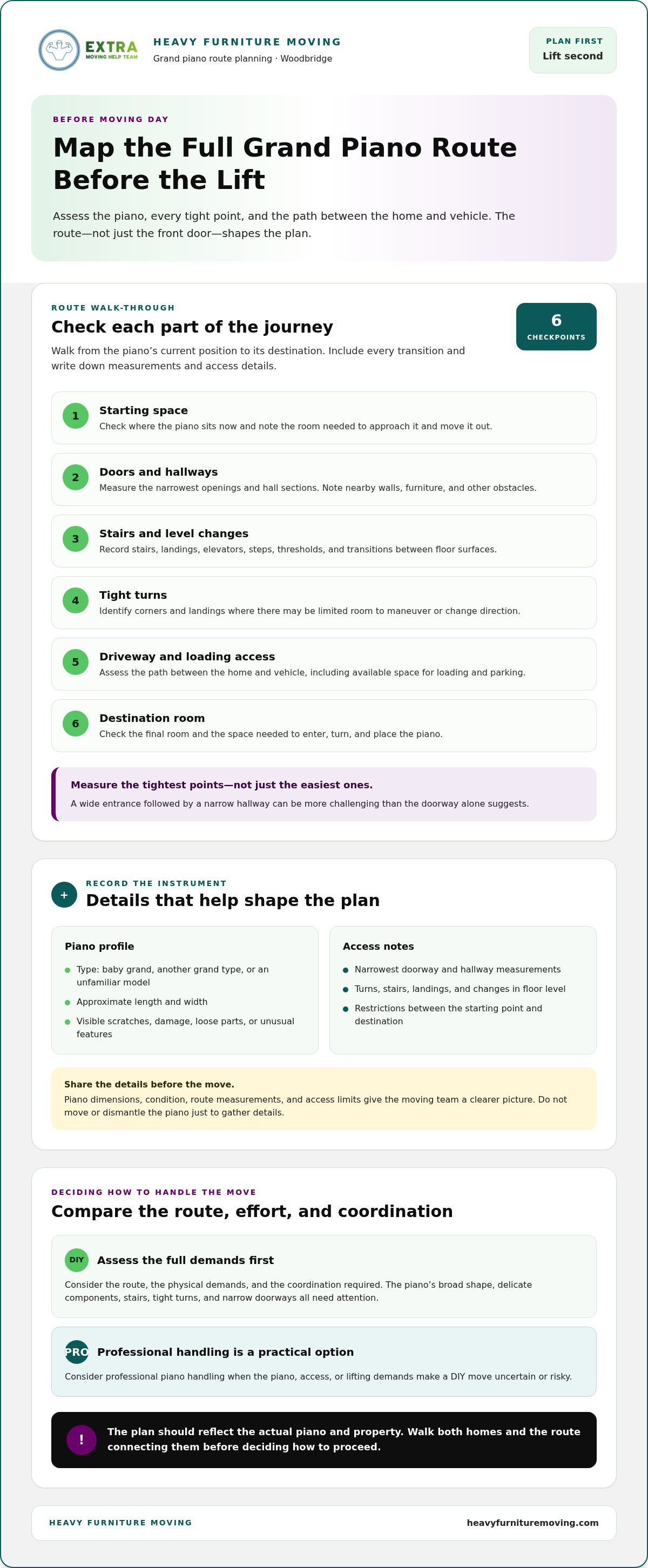
Good preparation makes the move easier to coordinate and helps prevent avoidable obstacles on moving day. Whether your Woodbridge home is a detached house, townhouse, or apartment, focus on the specific route and property requirements. Use this checklist to get the details in order.
- Measure the full route. Record the narrowest doorways and hallway widths, plus the dimensions of landings, turns, and other tight points. Include the path from the piano’s current room to the exit and from the entrance to its new location.
- Photograph tight access points. Take clear pictures of narrow openings, stairs, thresholds, elevators, and awkward turns. Measurements show scale; photos help explain the shape and layout of a space.
- Share access details with the moving team. Provide your measurements and photos, and describe floor levels, stairs, elevators, steps, thresholds, and route restrictions. Include driveway and loading access. Explain the conditions at your property rather than assuming a particular parking arrangement.
- Handle property-specific arrangements. If your building, property manager, or homeowners’ association has move scheduling or access requirements, find out what applies and arrange it ahead of time. Share relevant timing or entry instructions with the team.
- Clear the path and destination. Remove loose rugs, small furniture, and other obstacles from the planned route. Make space in the destination room to avoid last-minute rearranging around the piano.
What should you do before move day?
Walk the route after clearing it. Check that doors can open fully and the path remains unobstructed. Keep children and pets away from the work area during the move, and arrange a safe place away from entrances and hallways. Let other household members know which areas need to stay clear.
What should you communicate about the Woodbridge property?
Be specific about how the crew will reach the home and piano. Mention access limits, such as shared entrances or restricted building entry, if they apply to your property. If loading space is limited or the vehicle’s approach needs planning, describe what you know. Clear details help the moving team prepare for the actual setting rather than a generic home layout.
If the move also involves other household items, Heavy Furniture Moving provides local moving support. For the piano itself, preparation starts with useful measurements, an open route, and a destination ready to receive it. Arrange professional piano moving help with a team experienced in handling pianos and other heavy items.
Get Professional Help Moving a Grand Piano in Woodbridge
Once you’ve assessed the piano and mapped its route, bring those details into the moving plan. A grand piano move calls for capable, coordinated handling, especially when the instrument is delicate or the route includes stairs, narrow turns, or restricted access. Heavy Furniture Moving specializes in transporting pianos and other heavy, bulky items for Woodbridge households and nearby communities.
What information helps plan the move?
Share details about both the piano and the path it needs to travel. Clear information helps the moving team understand the task and plan around the specific home, rather than relying on assumptions. Measurements and photographs can make tricky access points easier to explain.
- Piano details: Type, approximate size, visible condition, and any known damage or loose parts.
- Move details: The piano’s current location and destination room, including any placement considerations.
- Route details: Stairs, narrow doorways, tight turns, landings, thresholds, elevators, and measured clearances.
- Property details: Driveway and loading access, building entry instructions, or other restrictions that apply to your property.
- Timing details: Scheduling or access requirements the team needs to account for.
Be precise about the route. “There are stairs” is useful, but noting where they are, whether there’s a landing, and how the piano reaches them gives a clearer picture. If a turn or doorway seems especially tight, include its measurements and a photo. You don’t need to solve the handling plan yourself. Share the facts that shape it.
How to move forward with Heavy Furniture Moving
Heavy Furniture Moving brings experience handling pianos and other demanding heavy items to local moves in Woodbridge. Share what you’ve observed, including access details that may affect coordination. A clear description of the instrument and route helps turn your preparation into a practical moving plan.
Gather your measurements, route notes, and destination details in one place. That way, you can describe the job clearly without relying on memory when discussing stairs, access, or the piano’s condition. Keep any photos of the path handy as well.
You’ve done the important groundwork: assessed the piano, considered the route, and prepared the home. Let an experienced team take on the heavy-item handling. Request help with your Woodbridge piano move and share the details you’ve gathered.
Make Your Piano’s Next Move a Confident One
Before moving day, bring your notes, measurements, and access photos together. That handoff gives the moving team a practical starting point and helps turn unknowns into a clear plan. Share what you know, including anything that makes the route challenging.
Moving a grand piano in Woodbridge is a significant task, but planning can make it more manageable. Heavy Furniture Moving is veteran-family owned and operated, with a focus on careful handling of heavy items. The company serves local communities including Fairfax, Woodbridge, Manassas, Manassas Park, Aldie, Ashburn, Mclean, Vienna, Reston, Centreville, Chantilly, Clifton, Dumfries, South Riding, Fairfax Station, Haymarket, and Gainesville.
Get professional help moving your grand piano in Woodbridge. Share your route details and take the next step toward a well-planned move.
Frequently Asked Questions
Can I move a grand piano myself?
A DIY move may seem manageable, but professional piano handling is a practical choice for a valuable instrument or a difficult route. Consider more than whether helpers are available: can they coordinate throughout the move, stay focused, and manage the physical demands without rushing? An improvised lift can put people, the piano, and nearby surfaces at risk. If you’re unsure, don’t turn that uncertainty into a moving-day experiment.
How many people does it take to move a grand piano?
There’s no single crew size that suits every grand piano move. The piano’s dimensions and condition, the distance it must travel, and route features such as stairs or tight turns all affect the coordination required. Headcount alone doesn’t show whether a move is manageable. Assess the instrument and full route before planning the lift, and don’t assign untrained helpers to a challenging move without a suitable plan.
What should I measure before moving a grand piano in Woodbridge?
Measure the piano and the entire path at both the starting home and destination. Include doorway and hallway widths, turns, landings, thresholds, and stair access. Note elevators, driveway access, and any loading limitations that apply to the property. A clear front entrance won’t help if an interior hallway narrows farther along. Write down the measurements and share them with the moving team.
Does a grand piano need to be taken apart before moving?
Not always. Whether components need special handling depends on the particular piano, its condition, and the route. An open, accessible space may present different needs from a route with restricted access, but don’t assume the same approach fits every instrument. Avoid taking parts off yourself without appropriate experience. Describe the piano and its condition so the handling plan can be tailored to it.
Can a grand piano be moved up or down stairs?
Sometimes, but the staircase and the piano must be assessed together before deciding how to proceed. A narrow landing, a turn at the top, or limited clearance at the entry can change what the route demands. Measure and describe each stair section, including landings and turns, rather than reporting only that stairs are present. Don’t attempt a difficult stair move through improvised lifting or guesswork.
How should I prepare my home before piano movers arrive?
Clear the route and destination, and make sure household activity won’t interrupt the work area. Arrange a safe place for pets and children away from entrances and hallways, and ask household members to use another path during the move. Keep your route measurements, access notes, and photos together so you can review them if a detail changes before moving day.
Will a grand piano need tuning after a move?
Not every piano needs immediate tuning after a move. Its response can vary with the instrument and conditions in its new location, so listen to it once it has settled in. If the sound or performance seems different, factor a tuning assessment into your piano care. Avoid assuming that every move affects every piano in the same way.
Frequently Asked Questions
A grand piano’s wide body and uneven shape can complicate narrow doorways, hallways, and turns. Unlike a box-shaped item, it may not pass through an opening simply by angling it. Contact with walls or doorframes can scuff the finish, while rough handling may put delicate internal components at risk. Handling needs vary with the piano’s design and condition. For background on piano types and construction, see Understanding Grand Pianos.
Walk the full path from the piano’s current position to its destination. Include every transition, not just the front door. Measure narrow points and note changes in floor level. A tight corner or low threshold can matter as much as a staircase, especially when there is little room to reposition the piano. Write down measurements and access details, then share them when planning the move. Measure the tightest points, not just the easiest ones, and include the destination room. A wide entrance followed by a narrow hallway can present a challenge that the doorway measurement alone will not reveal. Clear information helps the moving team plan for the piano and its route, rather than discovering obstacles during the lift. A useful assessment separates what the piano needs from what the home’s route allows. The instrument’s size and shape affect how it can be handled; stairs, narrow openings, and turns affect how it can travel. For moving a grand piano in Woodbridge, recording both sets of details gives the moving team a clearer picture before work begins.
Start with the instrument. Note whether it’s a baby grand, another type of grand piano, or a less familiar model, then record its approximate dimensions and visible condition. Don’t try to move or dismantle it just to gather details. Next, document the access points between the piano’s current position and its destination. Measure the tightest points, not just the easiest ones. A wide entry followed by a narrow hallway can be more challenging than the doorway alone suggests. Include the destination room so the piano can be placed without discovering a clearance issue at the end of the route.
Point out existing damage, loose parts, or other condition concerns before handling is planned. These details can affect how the piano should be approached and protected. Any component handling or disassembly must suit the specific instrument, so don’t assume one method works for every grand piano. Stairs, tight turns, and restricted landings also call for careful coordination because they limit maneuvering space. Use this checklist to organize what you find: Building access can raise separate questions from piano handling. The International Code Council develops model codes and standards related to building safety; its Building Safety Standards offer broader context, but they don’t replace an assessment of your particular home and route. Once you’ve gathered these details, you’ll have a stronger basis for planning the move. Heavy Furniture Moving handles pianos and other heavy, bulky items. Explore professional piano moving help for support with this heavy, delicate instrument. Doing the move yourself may seem like a way to avoid a professional fee, but cost is only one consideration. A grand piano is heavy and awkward to coordinate, and its delicate components call for a clear handling plan. Experience moving ordinary furniture does not automatically translate to piano-specific handling. Base your decision on the instrument, its condition, the route, and the people available to help. DIY: You organize the helpers, route, timing, and coordination. The task may seem more manageable when access is straightforward and you have a capable, experienced team, but the planning and physical demands remain yours. Professional help: A team experienced with pianos and other heavy items can assess the instrument and access challenges, then coordinate the handling around the move.
A DIY move may look less daunting if the piano has an uncomplicated path and capable helpers are available. Even then, you’re responsible for organizing the team, keeping communication clear, and managing the route. A rushed lift or mixed signals can put the helpers, piano, and home at risk. Confidence with ordinary furniture is not proof that a grand piano will be easy to move. For moving a grand piano in Woodbridge, judge the actual route instead of relying on a general impression that the home is spacious. A roomy starting area won’t offset a difficult transition farther along the path. Existing damage or loose parts can also affect the handling plan. Stairs, tight turns, and restricted landings may be harder to manage without relevant experience.
Professional handling brings experience assessing heavy, delicate items and the practical demands of access. That experience helps shape a coordinated plan around the specific piano rather than assuming one approach suits every instrument. It also means you don’t have to organize every part of the handling yourself. Heavy Furniture Moving specializes in transporting pianos and other heavy, bulky items, making its piano moving service a relevant option for Woodbridge households. A piano’s significance matters alongside its physical demands. For many owners, it holds musical or family value, and organizations such as Pianos for Education reflect the broader role pianos can play in learning and music. Careful planning matters whether the instrument is treasured for daily playing, family history, or both. Choose based on the details, not just the desire to avoid a fee. If the route is difficult, the piano’s condition raises concerns, or you’re unsure your helpers can coordinate the task, professional support is a practical way to manage the move. Explore professional piano moving help from a team experienced with piano handling. Good preparation makes the move easier to coordinate and helps prevent avoidable obstacles on moving day. Whether your Woodbridge home is a detached house, townhouse, or apartment, focus on the specific route and property requirements. Use this checklist to get the details in order.
Walk the route after clearing it. Check that doors can open fully and the path remains unobstructed. Keep children and pets away from the work area during the move, and arrange a safe place away from entrances and hallways. Let other household members know which areas need to stay clear.
Be specific about how the crew will reach the home and piano. Mention access limits, such as shared entrances or restricted building entry, if they apply to your property. If loading space is limited or the vehicle’s approach needs planning, describe what you know. Clear details help the moving team prepare for the actual setting rather than a generic home layout. If the move also involves other household items, Heavy Furniture Moving provides local moving support. For the piano itself, preparation starts with useful measurements, an open route, and a destination ready to receive it. Arrange professional piano moving help with a team experienced in handling pianos and other heavy items. Once you’ve assessed the piano and mapped its route, bring those details into the moving plan. A grand piano move calls for capable, coordinated handling, especially when the instrument is delicate or the route includes stairs, narrow turns, or restricted access. Heavy Furniture Moving specializes in transporting pianos and other heavy, bulky items for Woodbridge households and nearby communities.
Share details about both the piano and the path it needs to travel. Clear information helps the moving team understand the task and plan around the specific home, rather than relying on assumptions. Measurements and photographs can make tricky access points easier to explain. Be precise about the route. “There are stairs” is useful, but noting where they are, whether there’s a landing, and how the piano reaches them gives a clearer picture. If a turn or doorway seems especially tight, include its measurements and a photo. You don’t need to solve the handling plan yourself. Share the facts that shape it.
A DIY move may seem manageable, but professional piano handling is a practical choice for a valuable instrument or a difficult route. Consider more than whether helpers are available: can they coordinate throughout the move, stay focused, and manage the physical demands without rushing? An improvised lift can put people, the piano, and nearby surfaces at risk. If you’re unsure, don’t turn that uncertainty into a moving-day experiment.
There’s no single crew size that suits every grand piano move. The piano’s dimensions and condition, the distance it must travel, and route features such as stairs or tight turns all affect the coordination required. Headcount alone doesn’t show whether a move is manageable. Assess the instrument and full route before planning the lift, and don’t assign untrained helpers to a challenging move without a suitable plan.
Measure the piano and the entire path at both the starting home and destination. Include doorway and hallway widths, turns, landings, thresholds, and stair access. Note elevators, driveway access, and any loading limitations that apply to the property. A clear front entrance won’t help if an interior hallway narrows farther along. Write down the measurements and share them with the moving team.
Not always. Whether components need special handling depends on the particular piano, its condition, and the route. An open, accessible space may present different needs from a route with restricted access, but don’t assume the same approach fits every instrument. Avoid taking parts off yourself without appropriate experience. Describe the piano and its condition so the handling plan can be tailored to it.
Sometimes, but the staircase and the piano must be assessed together before deciding how to proceed. A narrow landing, a turn at the top, or limited clearance at the entry can change what the route demands. Measure and describe each stair section, including landings and turns, rather than reporting only that stairs are present. Don’t attempt a difficult stair move through improvised lifting or guesswork.
Clear the route and destination, and make sure household activity won’t interrupt the work area. Arrange a safe place for pets and children away from entrances and hallways, and ask household members to use another path during the move. Keep your route measurements, access notes, and photos together so you can review them if a detail changes before moving day.
Not every piano needs immediate tuning after a move. Its response can vary with the instrument and conditions in its new location, so listen to it once it has settled in. If the sound or performance seems different, factor a tuning assessment into your piano care. Avoid assuming that every move affects every piano in the same way.