International Household Goods Shippers in McLean: A Practical Guide

What if an overseas move depends less on pickup day and more on how each shipment step is coordinated? If you’re comparing international household goods shippers McLean, it’s natural to wonder how your belongings will be packed, documented, and moved onward without you managing every handoff alone. International moves take more planning than local pickups, but breaking the work into clear steps makes it easier to organize.
This guide explains key decisions, including sea or air freight and shared or full-container shipping, and how to weigh them against your household’s needs. You’ll also see how packing, shipment coordination, paperwork, and timing fit together, along with the details to gather for a project-specific estimate. Heavy Furniture Moving supports McLean-area residential moves with packing and unpacking help and international shipment logistics coordination. Use the steps below to organize your move and identify what needs attention first.
Key Takeaways
- Understand how an international household-goods shipper coordinates belongings across borders, and how this differs from passenger or vehicle transport.
- Review the main shipment stages, from sharing move details and preparing an inventory to coordinating shipment and arrival.
- Compare sea and air freight by considering shipment size, urgency, destination, and the support your move needs.
- Use a home-preparation checklist to sort belongings, plan packing, and organize access and timing details.
- Learn how international household goods shippers McLean can coordinate shipment logistics alongside local packing and unpacking support.
What International Household Goods Shippers in McLean Coordinate
An international household goods shipper coordinates the preparation and movement of household belongings across national borders. This connects local pickup planning with international transit and arrival arrangements. Unlike a local move between nearby addresses, international shipping requires planning for cross-border transport and destination-specific requirements.
Household-goods shipping is different from passenger travel or vehicle transport. The shipment consists of belongings from a home, rather than people or a car. The coordinator helps organize the related steps: preparing the home, arranging packing and collection, coordinating international transit, and planning the arrival handoff. International shipping provides a general overview of how goods move between countries. A household move adds the practical work of preparing and accounting for personal belongings.
For a McLean household, the work starts at the origin but extends beyond the front door. Heavy Furniture Moving supports residential moves with packing and unpacking and coordinates international shipments. The aim is to connect home preparation with a shipment plan shaped around the destination and the belongings being sent.
Which household goods are commonly part of an overseas shipment?
Shipments may include beds, tables, chairs, personal effects, clothing, books, kitchen items, and other everyday belongings. The right plan depends on what you intend to send, how much space those items require, and where they’re going. Not every item is necessarily suitable for shipping. Destination rules may restrict some goods or require special handling. Identify unusual, fragile, or potentially restricted items early so they can be considered as you plan.
Why McLean moves need both local and international planning
Origin-side details shape how the move is prepared. Consider pickup access, the rooms and items included in your inventory, and which belongings need packing support. Clear information helps define a practical collection plan. The destination matters too: the country and receiving arrangements influence shipment coordination. Share details about both ends of the move rather than treating pickup as a standalone local job.
Before planning begins, sort belongings into three groups: items to ship, items to keep with you, and items to donate or remove. Note furniture dimensions and delicate pieces, identify narrow hallways or other access constraints, and gather the destination address and preferred timing. These details give the moving team a useful picture of the work and connect local preparation with international shipment coordination.
How International Household Goods Shipping Works from McLean
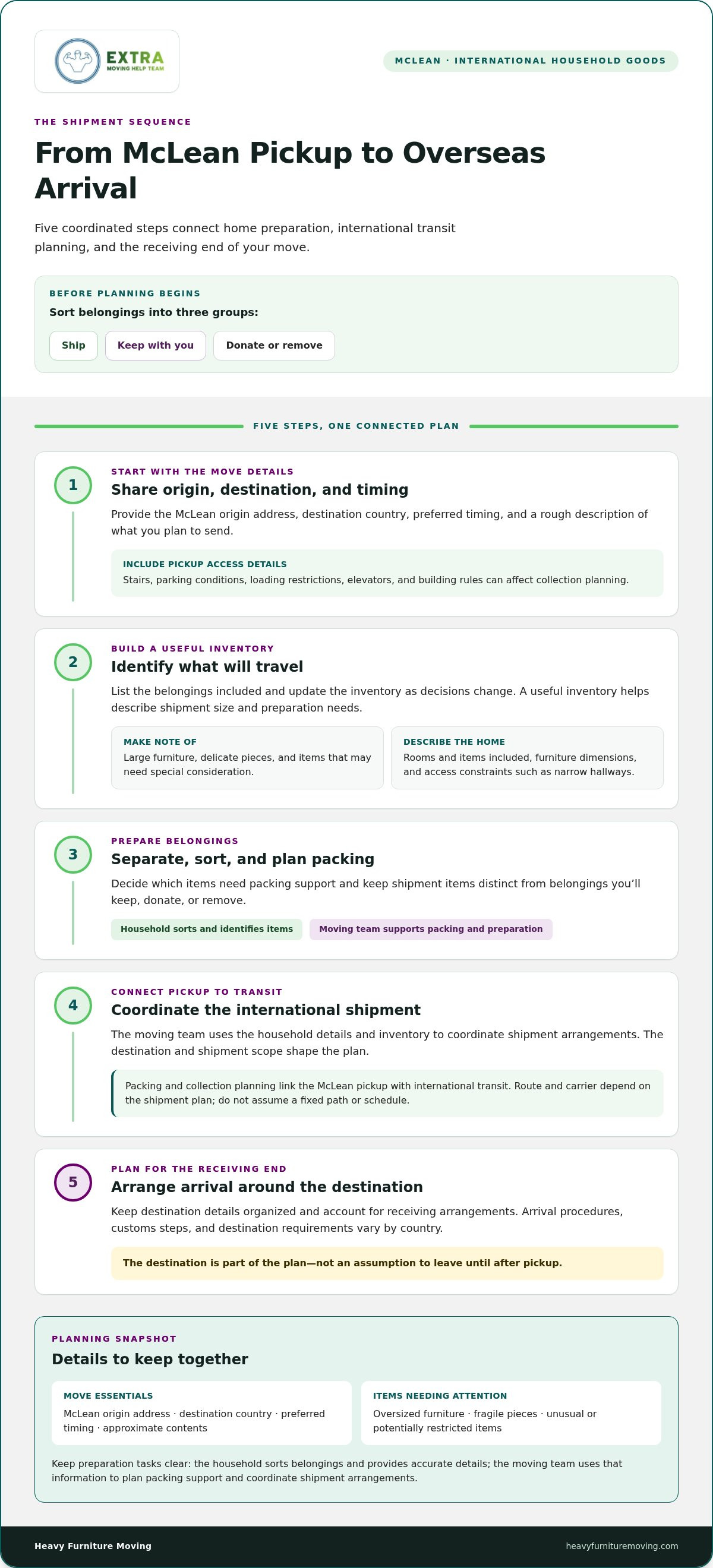
A clear sequence turns an overseas move into manageable tasks: share move details, build an inventory, prepare belongings, coordinate the shipment, and arrange for arrival. The destination country, shipment volume, and level of support all affect how these steps fit together.
Here’s how the process typically unfolds:
- Share move details. Provide the origin address in McLean, destination country, preferred timing, and a rough description of what you plan to send. Mention access conditions that could affect pickup, such as stairs, parking, or building rules.
- Plan the inventory. Identify the belongings included, note large or delicate pieces, and update the list as you decide what will travel. A useful inventory helps describe shipment size and preparation needs.
- Prepare belongings. Decide which items need packing support and separate shipment items from belongings you’ll keep, donate, or remove. You can sort and identify items, while the moving team supports packing and preparation as part of the move plan.
- Coordinate the shipment. The moving team uses the household details and inventory to coordinate the international shipment. Arrangements depend on the destination and the shipment’s scope.
- Arrange arrival. Plan for the receiving end, including destination details and any arrangements needed there. Arrival procedures vary by country, so account for the destination rather than assuming every shipment follows the same steps.
What information helps plan an international household shipment?
Gather the origin address, destination country, target timing, and approximate contents before discussing the move. Include access details such as stairs, elevators, parking conditions, loading restrictions, and building rules. Flag oversized furniture, fragile pieces, and items that may need special consideration. A detailed inventory makes it easier to plan around the actual household rather than a rough guess.
Keep your preparation tasks distinct from logistics coordination. You can sort belongings, decide what travels, and provide accurate details about the home and destination. The moving team uses that information to plan packing support and coordinate shipment arrangements. Clarity about who handles each task helps prevent details from falling between the household preparation and shipping plan.
What happens between pickup planning and arrival?
Once the home and shipment details are organized, packing and collection planning connect the McLean pickup with international transit. The route and carrier depend on the shipment plan, so don’t assume a fixed path or schedule. Customs steps and destination procedures also vary by country. Keep your inventory and destination information organized, and account for requirements that apply where the goods are going.
In short: plan the McLean pickup, prepare and inventory belongings, coordinate international transit, then organize arrival arrangements around the destination. Heavy Furniture Moving supports residential moves with packing and international shipment logistics coordination. Explore household moving support as you organize your move.
Compare International Shipment Options for Your McLean Move
Choosing a freight method is one part of planning an overseas household move. Match the option to shipment size, how soon you need particular belongings, the destination, and the support needed before and after transit. The right choice depends on your move, not a universal rule that one method is always faster, cheaper, or better.
Sea freight or air freight: what should you weigh?
Sea freight is often considered for larger household shipments. Air freight may suit a smaller load or belongings needed sooner, but transit and routing depend on the destination and shipment arrangements. Compare the options against your actual needs: sending a full household is different from moving a limited set of essential items.
| Option | May suit | Consider |
|---|---|---|
| Sea freight | Larger household shipments with more belongings to move | Destination, shipment volume, routing, and how the timing fits your plans |
| Air freight | Smaller shipments or selected items with greater urgency | Which belongings are priorities and how the arrangements serve the destination |
Use the table as a starting point, not a promise about timing or suitability. The final shipment plan depends on its contents and destination. Some households may send essential items by one method and plan the rest separately. If you’re considering that approach, account for the total volume and how the separate arrangements fit together.
How service scope changes the comparison
A freight or carrier comparison focuses mainly on how goods travel. Coordinated household relocation support also considers the work around transport: preparing belongings, packing, pickup from the home, shipment logistics, and arrival planning. With a transport-only arrangement, the household may need to organize more of the preparation and handoffs.
- Packing: Decide whether you’ll prepare belongings yourself or include packing support in the move plan.
- Household pickup: Consider how items will be prepared and collected from your McLean home.
- Shipment coordination: Align the shipment plan with the inventory, freight method, and destination.
- Arrival arrangements: Account for the destination’s receiving needs and distinguish them from the transport arrangement.
Heavy Furniture Moving provides residential packing support and coordinates international shipments, connecting local preparation with the wider shipment plan. Arrival arrangements and country-specific procedures can differ, so consider them separately from pickup and freight decisions.
When comparing international household goods shippers McLean residents may consider, look at the work being coordinated as carefully as the freight method. A clear view of shipment size, urgency, destination, and service scope helps you assess which plan fits your household.
Prepare Your McLean Home and Household Goods for Overseas Shipping
Preparation at home makes the shipment plan clearer and pickup easier to organize. Start with a checklist. Separate what will travel from belongings to keep, donate, or remove, then gather details that affect packing and access. Check official guidance for your destination country on restricted goods and required paperwork. Requirements vary, so use guidance for the country you’re moving to rather than relying on a general list.
- Inventory: Group belongings by room, estimate quantities, and flag large, heavy, or fragile pieces.
- Packing needs: Note which items may need packing support or careful handling.
- Home access: Record stairs, elevators, parking details, loading areas, and building restrictions.
- Destination: Identify the destination country and review its official guidance for goods and documents.
- Preferred timing: Share your target timing so it can be considered alongside the shipment plan.
- Sorting: Keep shipment items separate from belongings you’ll retain, donate, or remove.
Create a clear household-goods inventory
Build the inventory room by room. List groups such as bedroom furniture, kitchen boxes, or books, and describe individual pieces that are unusually large, heavy, delicate, or valuable to you. Approximate quantities are useful at the planning stage. Update them as you sort. A clear list helps show likely shipment volume and gives the team a practical basis for discussing packing needs and shipment coordination.
Be specific where it matters. “Living room items” is less useful than “sofa, two lamps, framed artwork, and several boxes.” Note which pieces need careful handling and which belongings won’t be shipped. This makes it easier to match packing plans to what’s actually leaving your home.
Get the McLean home ready for packing and pickup
Walk the route from each room to the planned pickup area. Identify narrow hallways, stairs, elevator access, parking limitations, loading rules, or other building restrictions that could affect moving large items. Share these details early, especially if your home is in a managed building with set procedures. Clear paths and useful access information help organize the move.
Set aside essentials you’ll need during the move, such as personal documents, daily-use items, and belongings that aren’t part of the shipment. Mark them clearly so they don’t get mixed in with the goods being prepared. Keep your inventory and destination guidance together, too. Having both handy makes planning conversations more focused.
A well-prepared inventory and an accurate picture of home access connect packing decisions with pickup logistics. Heavy Furniture Moving provides residential packing support and coordinates international shipments. Plan your household move with Heavy Furniture Moving.
Coordinate International Household Goods Shipping with Heavy Furniture Moving
An overseas household move needs more than a pickup. Belongings must be prepared at home, packed according to the plan, and connected to international shipment arrangements. Heavy Furniture Moving supports residential moves from McLean with packing and unpacking help and international shipment logistics coordination. This brings local household preparation and shipment planning together while keeping pickup planning distinct from destination arrangements.
Heavy Furniture Moving is veteran-family owned and operated and provides hands-on residential moving support. The team helps organize origin-side work and coordinate the shipment around the household’s belongings, access conditions, and destination. Each move has its own requirements, so useful details matter from the start.
When local packing and shipment coordination can help
Managing packing and shipment logistics as connected parts of one relocation plan helps organize the tasks involved. For example, an inventory of furniture, personal effects, and fragile items can guide packing discussions and help shape the shipment plan. Clear access details for the McLean home also help define pickup preparation.
The plan is shaped around the move: the belongings traveling, home access, destination, and packing support needed. Heavy Furniture Moving provides packing and unpacking support and coordinates international shipments as part of residential moving logistics. Destination procedures are a separate consideration, and no single transit schedule applies to every shipment.
- Belongings: Share what you intend to ship and note large or delicate pieces.
- Origin access: Describe pickup conditions that may affect preparing and collecting household goods.
- Destination: Provide the country and relevant move details to help shape shipment coordination.
Plan the next step for an international move from McLean
Before discussing your move, gather four basics: the destination country, preferred timing, home access details, and a working inventory of the belongings you plan to send. You don’t need every detail finalized. A clear starting list helps focus the conversation on likely shipment scope, packing needs, and origin-side logistics.
This preparation also helps separate the local tasks you need to organize from the arrangements required at the destination. When comparing international household goods shippers McLean, look for a plan that connects household preparation with shipment coordination rather than treating pickup as the entire move. Heavy Furniture Moving helps with origin-side needs and coordinates international shipment logistics for residential moves.
Ready to discuss your household shipment from McLean? Talk with Heavy Furniture Moving about your move.
Take the First Step Toward Your McLean Move
An overseas move is easier to organize when you have a clear starting point and a local team to connect household preparation with shipment planning. You don’t need every detail settled before you begin. A useful first conversation can turn your current plans into practical next steps and identify decisions that still need attention.
If you’re considering international household goods shippers McLean, choose a plan that accounts for both the belongings leaving your home and the coordination needed to move them across borders. Heavy Furniture Moving is veteran-family owned and operated, with residential packing support and international shipment logistics coordination. This support brings local preparation and the wider shipment plan into the same conversation.
Heavy Furniture Moving supports residential moves in McLean and nearby communities including Fairfax, Woodbridge, Manassas, Manassas Park, Aldie, Ashburn, Vienna, Reston, Centreville, Chantilly, Clifton, Dumfries, South Riding, Fairfax Station, Haymarket, and Gainesville. Plan your international household goods move from McLean.
Frequently Asked Questions
How early should I plan an international household goods shipment from McLean?
Start planning as soon as you know you’re moving abroad, especially if you need time to sort belongings or review destination-country guidance. The right schedule depends on your destination, shipment size, packing needs, and preferred timing. Starting early also gives you room to update your inventory as decisions change. If your move date is flexible, include that in the shipment plan.
What information should I provide for an international household goods estimate?
Share your McLean origin address, destination country, preferred timing, and a useful description of the belongings you may send. Add approximate quantities, dimensions for unusually large pieces, and notes about fragile or heavy items. Include home access details such as stairs, elevator use, parking, or building loading rules. This information helps frame an estimate around the actual home and shipment.
How do customs requirements affect an international household goods shipment?
Customs requirements can affect which forms and shipment details are needed, and they vary by destination country. Check the destination government’s official customs guidance for household goods, restricted items, and required documents. Keep inventory descriptions accurate and consistent with the belongings being shipped. If you’re unsure how an instruction applies to an item, use that country’s official guidance rather than relying on assumptions or a general checklist.
Can I ship only a few pieces of furniture internationally?
Yes. An international household shipment can be planned around selected belongings rather than a full home. List each piece, including approximate dimensions and any fragile parts, then consider how urgently you need it and where it’s going. A smaller shipment may be handled differently from a larger household load, so the destination and transport arrangements matter. Keep the inventory focused on the items you genuinely want to send.
Can a moving team pack household goods for international shipping?
Yes. Heavy Furniture Moving provides residential packing support that can be included in an international household relocation plan. Decide which belongings you’ll pack yourself and which need help, then flag delicate items, awkward furniture, or pieces that need careful preparation. The team supports local moves in McLean and nearby communities including Fairfax, Woodbridge, Manassas, Vienna, Reston, and Ashburn, among others. Packing support is part of household preparation and is distinct from destination arrangements.
What can delay an international household goods shipment?
Incomplete or inconsistent paperwork, changes to the shipment inventory, and destination-specific procedures can all affect progress. Items that need extra review may also require additional planning. Reduce avoidable setbacks by keeping your inventory current, sharing changes promptly, and following official destination guidance for documents and restricted goods. Transit schedules can also be affected by shipment arrangements, so avoid making plans that depend on an unconfirmed arrival date.
How do I compare international household goods shipping quotes?
Compare quotes using the same inventory and destination details, then review what each plan covers. Separate freight transport from packing, pickup, shipment coordination, and arrival arrangements so the scope is clear. Check whether the shipment method reflects your load size and priorities, and note any tasks you would need to organize yourself. For a useful comparison, make sure each estimate is based on the same belongings and access information.
Frequently Asked Questions
Shipments may include beds, tables, chairs, personal effects, clothing, books, kitchen items, and other everyday belongings. The right plan depends on what you intend to send, how much space those items require, and where they’re going. Not every item is necessarily suitable for shipping. Destination rules may restrict some goods or require special handling. Identify unusual, fragile, or potentially restricted items early so they can be considered as you plan.
Gather the origin address, destination country, target timing, and approximate contents before discussing the move. Include access details such as stairs, elevators, parking conditions, loading restrictions, and building rules. Flag oversized furniture, fragile pieces, and items that may need special consideration. A detailed inventory makes it easier to plan around the actual household rather than a rough guess. Keep your preparation tasks distinct from logistics coordination. You can sort belongings, decide what travels, and provide accurate details about the home and destination. The moving team uses that information to plan packing support and coordinate shipment arrangements. Clarity about who handles each task helps prevent details from falling between the household preparation and shipping plan.
Once the home and shipment details are organized, packing and collection planning connect the McLean pickup with international transit. The route and carrier depend on the shipment plan, so don’t assume a fixed path or schedule. Customs steps and destination procedures also vary by country. Keep your inventory and destination information organized, and account for requirements that apply where the goods are going. In short: plan the McLean pickup, prepare and inventory belongings, coordinate international transit, then organize arrival arrangements around the destination. Heavy Furniture Moving supports residential moves with packing and international shipment logistics coordination. Explore household moving support as you organize your move. Choosing a freight method is one part of planning an overseas household move. Match the option to shipment size, how soon you need particular belongings, the destination, and the support needed before and after transit. The right choice depends on your move, not a universal rule that one method is always faster, cheaper, or better.
Sea freight is often considered for larger household shipments. Air freight may suit a smaller load or belongings needed sooner, but transit and routing depend on the destination and shipment arrangements. Compare the options against your actual needs: sending a full household is different from moving a limited set of essential items. Use the table as a starting point, not a promise about timing or suitability. The final shipment plan depends on its contents and destination. Some households may send essential items by one method and plan the rest separately. If you’re considering that approach, account for the total volume and how the separate arrangements fit together.
Start planning as soon as you know you’re moving abroad, especially if you need time to sort belongings or review destination-country guidance. The right schedule depends on your destination, shipment size, packing needs, and preferred timing. Starting early also gives you room to update your inventory as decisions change. If your move date is flexible, include that in the shipment plan.
Share your McLean origin address, destination country, preferred timing, and a useful description of the belongings you may send. Add approximate quantities, dimensions for unusually large pieces, and notes about fragile or heavy items. Include home access details such as stairs, elevator use, parking, or building loading rules. This information helps frame an estimate around the actual home and shipment.
Customs requirements can affect which forms and shipment details are needed, and they vary by destination country. Check the destination government’s official customs guidance for household goods, restricted items, and required documents. Keep inventory descriptions accurate and consistent with the belongings being shipped. If you’re unsure how an instruction applies to an item, use that country’s official guidance rather than relying on assumptions or a general checklist.
Yes. An international household shipment can be planned around selected belongings rather than a full home. List each piece, including approximate dimensions and any fragile parts, then consider how urgently you need it and where it’s going. A smaller shipment may be handled differently from a larger household load, so the destination and transport arrangements matter. Keep the inventory focused on the items you genuinely want to send.
Yes. Heavy Furniture Moving provides residential packing support that can be included in an international household relocation plan. Decide which belongings you’ll pack yourself and which need help, then flag delicate items, awkward furniture, or pieces that need careful preparation. The team supports local moves in McLean and nearby communities including Fairfax, Woodbridge, Manassas, Vienna, Reston, and Ashburn, among others. Packing support is part of household preparation and is distinct from destination arrangements.
Incomplete or inconsistent paperwork, changes to the shipment inventory, and destination-specific procedures can all affect progress. Items that need extra review may also require additional planning. Reduce avoidable setbacks by keeping your inventory current, sharing changes promptly, and following official destination guidance for documents and restricted goods. Transit schedules can also be affected by shipment arrangements, so avoid making plans that depend on an unconfirmed arrival date.
Compare quotes using the same inventory and destination details, then review what each plan covers. Separate freight transport from packing, pickup, shipment coordination, and arrival arrangements so the scope is clear. Check whether the shipment method reflects your load size and priorities, and note any tasks you would need to organize yourself. For a useful comparison, make sure each estimate is based on the same belongings and access information.