How to Move a Safe Down Basement Stairs in Aldie, VA: A Safety-First Guide
What if the safest way to move a basement safe is to focus on control, not strength? If you’re searching “how to move a safe down basement stairs Aldie,” you’re right to consider the risks before making a move. A slip on a stairway can put people, walls, floors, and the safe itself in danger.
A narrow staircase, tight turn, uncertain floor capacity, or unknown safe weight can make a DIY plan unsafe. This guide explains how to assess the safe and its route, prepare your Aldie home, and recognize when to stop and arrange specialist help. You’ll also find practical details to share when planning an in-home safe move.
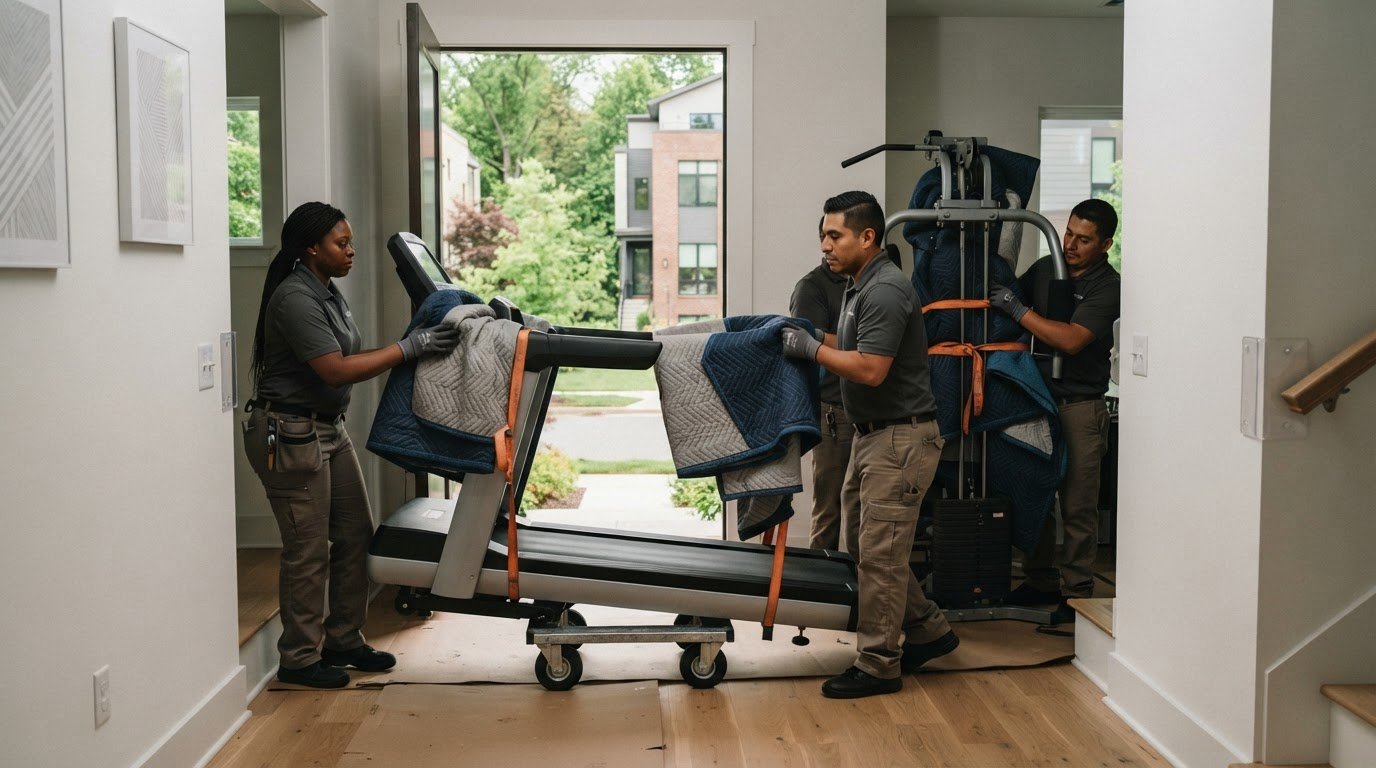
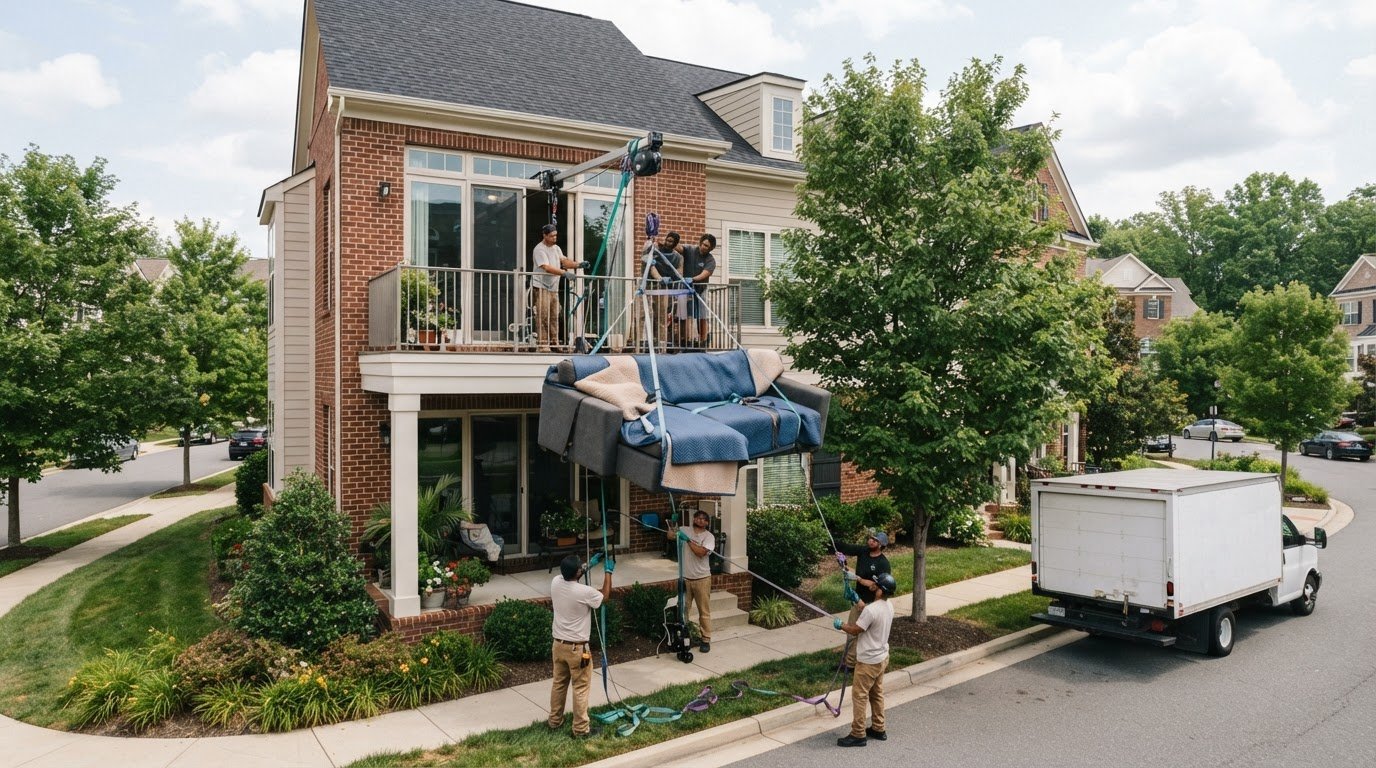
Start by measuring the safe and mapping the full path to the basement, including doorways, turns, and the destination. Then consider whether the load could remain controlled at every point. When the route or handling needs are unclear, Heavy Furniture Moving provides specialized handling for safes and other heavy household items in Aldie.
Key Takeaways
- Assess the safe, route, and control needed before deciding how to move a safe down basement stairs in Aldie.
- Measure the safe, including handles and other protruding hardware, and inspect the full path for tight turns, landings, and obstacles.
- Use route complexity and uncertainty about the safe’s weight to decide whether to postpone a DIY attempt and arrange specialist help.
- Prepare the home without handling the safe: clear clutter and keep children, pets, and bystanders away from the planned route.
- Share measurements, photos, and access details to help Heavy Furniture Moving plan an in-home safe move in Aldie.
Why moving a safe down basement stairs in Aldie needs more than muscle
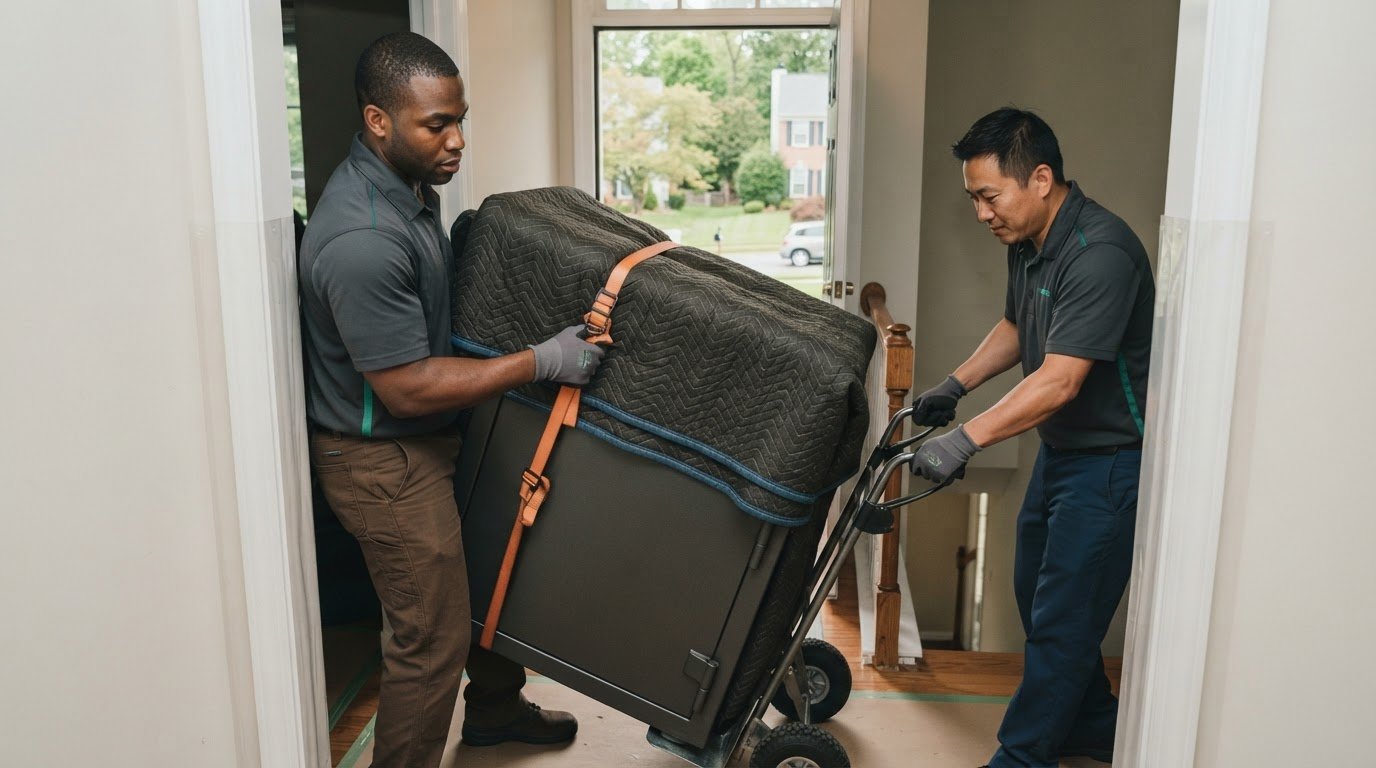
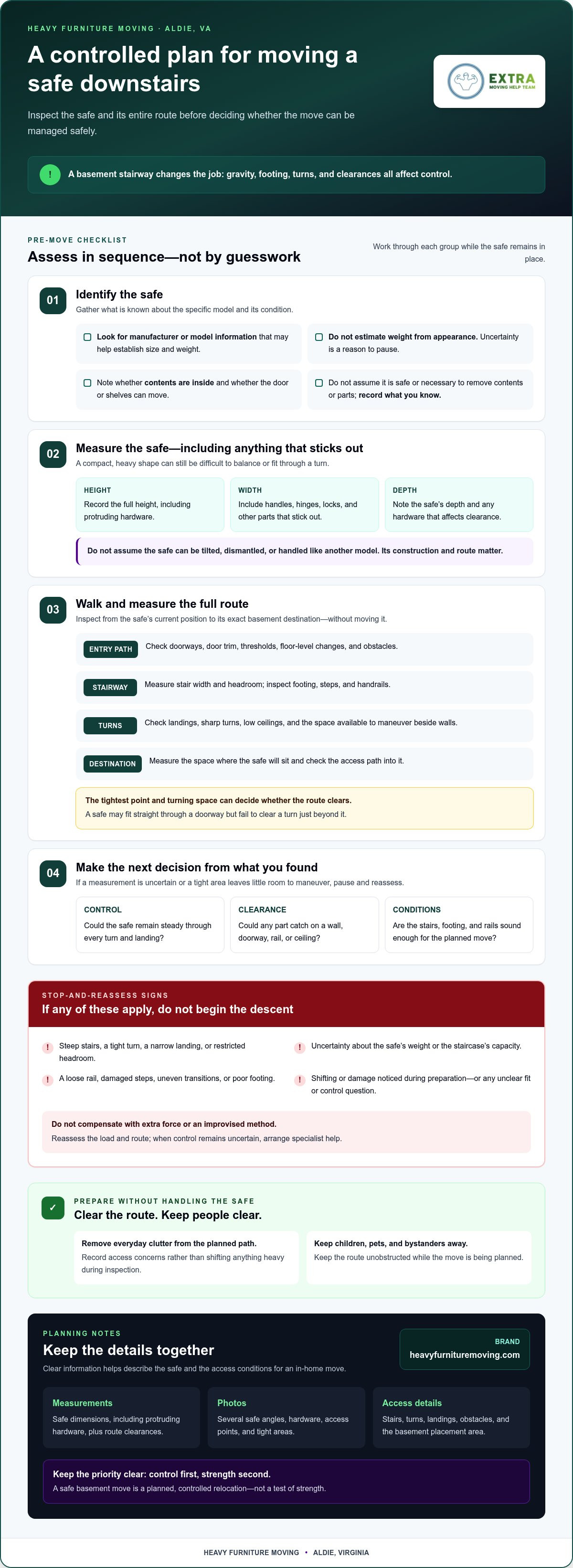
Before moving a safe downstairs, assess the safe, the entire route, and whether the load can stay under control throughout the move. Stairs change the job. On a level floor, an item can often be guided along a straight path. On stairs, gravity pulls the load downward, footing can shift, and a loss of control can lead to a tip, slide, or impact against a wall or stair edge.
A safe basement move is a planned, controlled relocation, not a test of strength. Weight alone doesn’t tell you whether the safe will fit through a doorway, clear a turn, or travel safely down the staircase. A compact safe can still be difficult to balance, while a wider model may not clear a landing or low ceiling. The key question is whether the safe and route can be managed without putting people or the home at risk.
That’s why “how to move a safe down basement stairs Aldie” starts with inspection, not action. A careful pause can reveal a problem before the safe is in motion. If the route looks complex or you’re unsure how the load will be controlled, specialized handling for heavy household items is a practical alternative to improvising. For a general overview of the work professional moving companies may provide, see this background on the moving industry.
What makes a safe different from ordinary furniture?
A safe concentrates substantial weight in a compact shape, which can make it harder to balance and control than furniture with a broader footprint. Its height, width, depth, door position, handles, and other hardware can all affect clearance and handling. Construction varies, too. Don’t assume a safe can be tilted, dismantled, or handled like another model. The right approach depends on the specific safe and route.
When should you stop and reassess the move?
Pause if the stairs are steep, a turn is tight, a landing is narrow, a rail feels loose, or headroom is restricted. Uncertainty about the safe’s weight or the staircase’s capacity is also a reason not to proceed. If you notice shifting, damage, or poor footing during preparation, stop rather than trying to compensate with extra force or an improvised method. A safer plan starts with understanding the limits of both the load and the route.
- Check control: Could the safe remain steady through each turn and landing?
- Check clearance: Could any part catch on a wall, doorway, rail, or ceiling?
- Check conditions: Are the stairs, footing, and rails sound enough for the planned move?
If any answer is unclear, don’t begin the descent. Reassess the details and decide whether the move needs specialist help.
How to assess the safe and basement stair route before moving
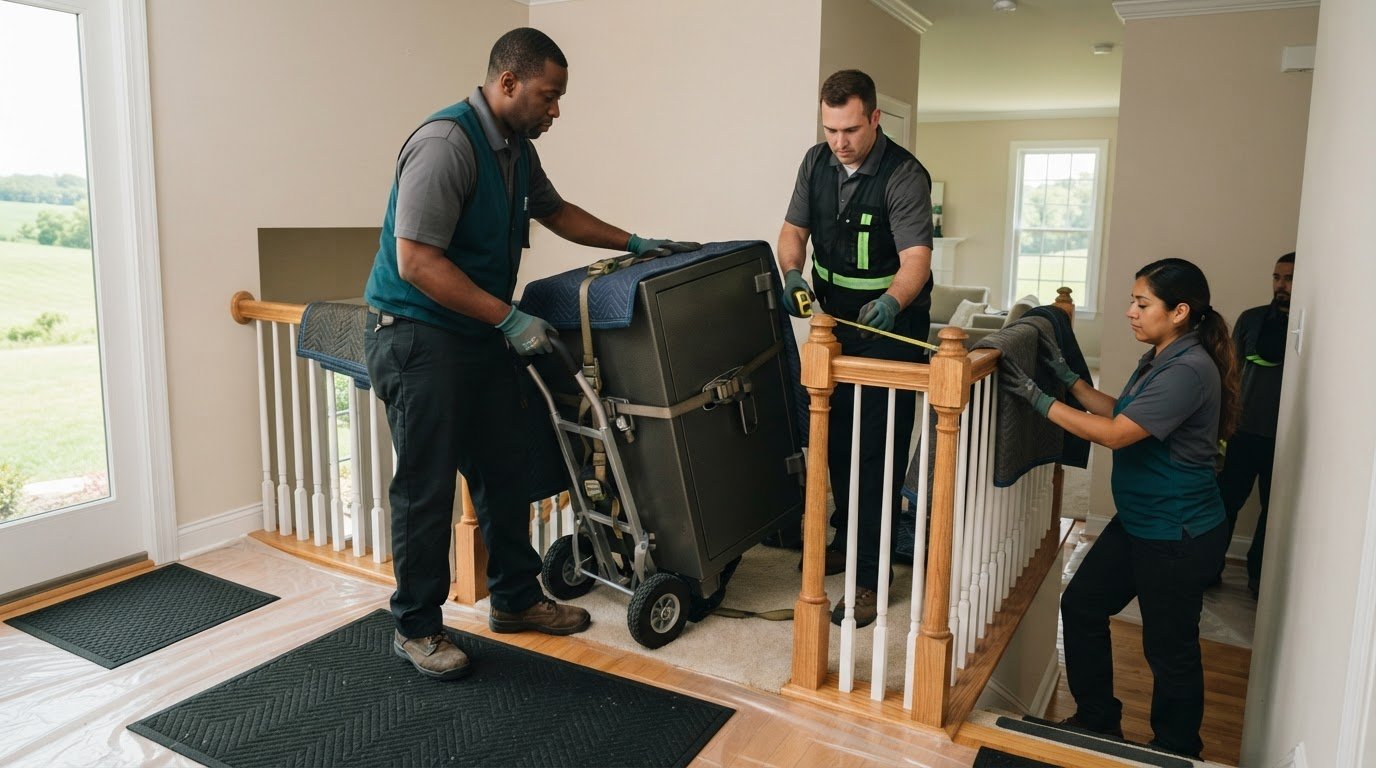
Follow a clear sequence: identify the safe, measure it, inspect every part of the route, then decide how to proceed. This is more useful than a quick guess about whether the safe might fit. It can reveal pinch points, obstacles, and unanswered questions before anyone attempts to move it.
- Identify the safe. Look for manufacturer or model information that may help establish its size and weight. Don’t guess the weight from appearance.
- Measure the safe. Record its height, width, and depth, including handles, hinges, locks, or other parts that stick out.
- Inspect the full route. Measure doorways, stair width, headroom, landings, turns, and the space where the safe will sit in the basement.
- Decide what comes next. If a measurement is uncertain or a tight spot leaves little room to maneuver, pause and get help planning the move.
Route clearance depends on the narrowest point and the turning space available. A safe may fit through a doorway straight on but fail to clear a turn just beyond it. Check the path from the safe’s current position to its exact destination, not just the staircase.
Record the safe details that affect planning
Note whether contents are still inside and whether the door or shelves can move. Don’t assume removing contents or parts is safe or necessary; record what you know instead. If model information is available, keep it with your measurements. Take clear photos of the safe from several angles, including its hardware, then photograph access points and tight areas. These details help describe the layout accurately when planning the move.
Check the Aldie home's route from start to finish
Walk the path without moving the safe. Include thresholds, changes in floor level, low ceilings, sharp turns, narrow landings, and the exact basement placement area. Look for loose handrails, damaged steps, uneven floor transitions, and stored items that block access. Record concerns rather than trying to fix them or shift anything heavy during the inspection.
Measure the points where clearance may change. Door trim, a low ceiling above a landing, or a turn beside a wall can matter as much as stair width. Keep the route clear of everyday clutter. OSHA’s material handling guidelines address clear aisles in workplace settings, a useful reminder that an unobstructed path supports safer movement.
Use your measurements and photos to judge whether the route is straightforward or raises questions about fit and control. For a complex in-home safe move, Heavy Furniture Moving provides safe-moving help for Aldie homeowners.
DIY or specialist movers: compare the options for a safe downstairs
Even a move involving one item can require specialist handling. A safe doesn’t become easy to move just because it’s the only object going downstairs. The decision depends on whether its weight and dimensions are known, whether the route is manageable, and whether the load can stay controlled without exposing people or the home to avoidable risk. Extra helpers or improvised equipment don’t replace a sound plan.
Compare the options using these factors:
- Route difficulty: A clear, open path differs from steep stairs, a tight turn, or a cramped landing. More obstacles make a DIY attempt harder to assess.
- Load details: If the safe’s weight, dimensions, or contents are uncertain, it’s difficult to judge what the move requires.
- Control: Consider whether the safe could remain stable throughout the route, not just at the starting point.
- Property risk: A loss of control could damage stair edges, walls, flooring, or the safe itself. Tight spaces leave less room to correct a problem.
If you’re researching how to move a safe down basement stairs Aldie, the useful question isn’t whether enough people can gather to lift it. It’s whether the safe and route can be managed safely as one complete job. If you can’t answer that clearly, stop and reassess instead of testing the plan on the stairs.
When a do-it-yourself attempt is the wrong call
Unknown weight, steep stairs, tight turns, or limited landing space are clear reasons to pause. So are doubts about whether the safe will fit or remain stable through a turn. Never position yourself below a load that could become uncontrolled. Don’t try to solve uncertainty by adding more people or making up a handling method as you go. If the route or load is unclear, leave the safe where it is and arrange specialist help.
What specialist safe movers add to the decision
Specialist movers assess the safe, access route, obstacles, and intended destination before the move. That assessment helps match the handling approach to the particular safe and staircase instead of relying on a one-size-fits-all method. Heavy Furniture Moving provides specialized safe moving for homes in Aldie and nearby Northern Virginia communities, giving homeowners an option when route complexity or load control makes a DIY move uncertain.
Use your measurements, photos, and notes about access conditions to describe the job clearly. Be upfront about anything unknown, such as the safe’s weight or a restricted turn. Those details help plan around the safe and the home before the move begins. Choosing specialist help can reduce the risk of turning a difficult staircase into an injury or property-damage hazard.
How to prepare your Aldie home for a basement safe move
Prepare the path, not the safe. You can make the move easier to plan without lifting, shifting, opening, or repositioning the safe yourself. Share accurate details ahead of time, clear household obstacles, and decide exactly where the safe should go. This gives the moving crew a clearer picture of the home and helps prevent last-minute surprises.
Use this checklist before the move:
- Send the safe’s measurements, including its height, width, and depth, along with any model or manufacturer details you have.
- Share clear route photos of the starting area, doorways, stairs, landings, turns, and basement destination.
- Describe access conditions, such as narrow passages, stair turns, low headroom, or restricted entry points.
- Point out existing concerns, including fragile finishes, visible damage, loose items, or floor transitions.
- Choose the final placement and make sure the intended spot is clear of stored belongings.
- Keep people and pets away from the planned route while the move is underway.
Share useful information before the move
Photos are most helpful when they show the whole space as well as close views of tricky sections. Include doorways from both sides, the full stairway, each landing, and the basement area where the safe will go. Describe turns and access restrictions plainly. If you don’t know the safe’s weight, say so rather than estimating. Flag delicate paint, trim, flooring, or existing marks so those concerns are clear in advance.
Make the route and destination ready
Clear loose rugs, boxes, furniture, shoes, and other trip hazards from the route, including the basement landing. Keep children, pets, and bystanders out of the access area. Don’t move the safe or try to adjust its position to prepare; leave that work to the moving crew. Protect walls, floors, and other access areas as directed by the crew, since the right approach depends on the home and the move.
Before arrival, make sure the crew can reach the home and knows which entry point to use. If parking, gates, or a particular entrance could affect access, share that information in advance. Keep the route clear from the entry point to the safe’s final destination, and don’t place new items in hallways or on landings during preparations.
These steps help make how to move a safe down basement stairs Aldie less of an unknown and the home move better organized. For specialized safe handling and an in-home heavy-item move in Aldie, arrange safe-moving help with Heavy Furniture Moving.
Arrange specialist safe moving help in Aldie, VA
If the safe’s weight is uncertain, the stairs have a tight turn, or you can’t see a clear way to keep the load controlled, specialist help is a sensible next step. Heavy Furniture Moving handles specialized safe moves for homes in Aldie and nearby Northern Virginia communities. Sharing accurate details gives the team a clearer picture of the job and helps plan around the safe and the home.
What to include when describing your safe move
Give a practical description of the safe and full route. Share its height, width, and depth, including handles or hardware that extend beyond the body. Include a model name or manufacturer details if available, but don’t guess the weight. Mention the stair turns and landings, along with any narrow doorways, low clearances, unusual steps, or access limits.
Photos can show details that are hard to explain in a message. Capture the safe, entry point, stairway, landings, turns, and intended basement placement area. Point out fragile surfaces, such as delicate trim or flooring, as well as existing marks or damage. Be specific about the final destination, including whether the space is close to a wall or has limited room around it.
- Safe details: Dimensions, model information, and anything that affects its shape or access.
- Route details: Stair turns, landings, doorway widths, low ceilings, steps, and floor changes.
- Home access: The entry point, any gates or access limits, and areas that may be difficult to reach.
- Destination: The exact basement location and any fragile surfaces or existing damage along the way.
Get help with a heavy safe move in Aldie
You don’t need to solve a challenging staircase alone. A specialist can plan a difficult in-home heavy-item move by considering the safe, its route, and the destination. Heavy Furniture Moving provides specialized safe handling for residential moves in Aldie. Share what you know, including anything that remains uncertain, so the move can be planned with the right context.
If you’re unsure whether your basement route is suitable for a DIY attempt, arrange specialist help before moving the safe. A clear description and a few route photos are a practical place to start. There’s no need to reposition the safe; leave it where it is and focus on sharing the access details.
For help with an in-home safe move in Aldie, request help with your safe move.
Choose a safer next step for your basement move
A difficult staircase doesn’t have to lead to a rushed decision. If you’re still weighing how to move a safe down basement stairs Aldie, treat uncertainty as a reason to pause, not push ahead. You can leave the safe in place while deciding what makes sense for your home. Taking time to plan helps reduce pressure on everyone involved.
Heavy Furniture Moving is veteran-family owned and operated, with specialized handling for safes and other heavy household items. The company provides local moving help in Aldie, Fairfax, Woodbridge, Manassas, Manassas Park, Ashburn, Mclean, Vienna, Reston, Centreville, Chantilly, Clifton, Dumfries, South Riding, Fairfax Station, Haymarket, and Gainesville. For support planning your safe move in Aldie, get help planning your safe move in Aldie.
You don’t have to solve a challenging basement move by yourself. Choose a plan that puts control and safety first, and move forward when you’re ready.
Frequently Asked Questions
Can I move a safe down basement stairs by myself?
No. A solo attempt isn’t a safe plan for a heavy safe on stairs. The load may shift, block your view, or become too difficult to control, leaving you vulnerable to a fall or damage to your home. Don’t try to lower it alone or stand below a load that could move unexpectedly. If you’re unsure about the safe, stairs, or handling needs, pause and arrange specialist help.
How do I know if my basement stairs can handle a safe?
You can’t reliably judge stair capacity by appearance alone. The safe’s weight and how it bears on the stairs matter, as do the stair construction and condition. Don’t use the stairs to test the load. If steps, supports, or handrails are damaged, or capacity is uncertain, have the route assessed before moving the safe. A visual check can reveal concerns, but it can’t confirm how much weight the stairs can safely support.
Should I empty a gun safe before moving it downstairs?
Removing contents may reduce the load and prevent items from shifting, but it doesn’t make the safe itself light or automatically safe to move. Follow the manufacturer’s guidance for contents, the door, and removable parts. Don’t dismantle or tilt the safe based on guesswork. Tell the moving crew whether it’s loaded and share the model information if you have it, so those details can be considered in planning.
Can a safe fit down a narrow or turning basement staircase?
Possibly, but stair width alone can’t answer that. Consider the safe’s full dimensions, including protruding hardware, alongside doorway clearance, headroom, landings, and turning space. Don’t assume the safe can be tilted to get around a tight corner. Record measurements at restricted points and take photos from more than one angle. A specialist can review those details before anyone attempts to move it.
Will moving a safe damage basement stairs or floors?
It can, especially if the safe slips, strikes an edge, or puts pressure on a surface that isn’t suited to the route. The risk depends on the safe, stairs, flooring, access, and handling plan. Point out delicate finishes and existing marks before the move. Avoid dragging or rolling the safe as a shortcut, which can increase contact with surfaces and make the load harder to control.
What information should I give safe movers before a basement move?
Share the safe’s dimensions and any known model or weight information, but don’t estimate details you can’t verify. Explain whether contents remain inside and describe the whole route, including doorways, stairs, turns, and access limits. Photos can clarify a narrow doorway or low ceiling that’s hard to describe. Also name the exact basement destination and mention fragile surfaces or existing damage along the way.
Can professional movers move a safe that’s already in a basement?
Yes. A safe in a basement may still need to pass through a difficult route to leave the home or reach another spot. The safe’s size and weight, the path out, and the destination all shape the move. Heavy Furniture Moving provides specialized handling for safes and other heavy household items in Aldie and nearby Northern Virginia communities, including Fairfax, Ashburn, and Chantilly.
Frequently Asked Questions
A safe concentrates substantial weight in a compact shape, which can make it harder to balance and control than furniture with a broader footprint. Its height, width, depth, door position, handles, and other hardware can all affect clearance and handling. Construction varies, too. Don’t assume a safe can be tilted, dismantled, or handled like another model. The right approach depends on the specific safe and route.
Pause if the stairs are steep, a turn is tight, a landing is narrow, a rail feels loose, or headroom is restricted. Uncertainty about the safe’s weight or the staircase’s capacity is also a reason not to proceed. If you notice shifting, damage, or poor footing during preparation, stop rather than trying to compensate with extra force or an improvised method. A safer plan starts with understanding the limits of both the load and the route. If any answer is unclear, don’t begin the descent. Reassess the details and decide whether the move needs specialist help. Follow a clear sequence: identify the safe, measure it, inspect every part of the route, then decide how to proceed. This is more useful than a quick guess about whether the safe might fit. It can reveal pinch points, obstacles, and unanswered questions before anyone attempts to move it. Route clearance depends on the narrowest point and the turning space available. A safe may fit through a doorway straight on but fail to clear a turn just beyond it. Check the path from the safe’s current position to its exact destination, not just the staircase.
No. A solo attempt isn’t a safe plan for a heavy safe on stairs. The load may shift, block your view, or become too difficult to control, leaving you vulnerable to a fall or damage to your home. Don’t try to lower it alone or stand below a load that could move unexpectedly. If you’re unsure about the safe, stairs, or handling needs, pause and arrange specialist help.
You can’t reliably judge stair capacity by appearance alone. The safe’s weight and how it bears on the stairs matter, as do the stair construction and condition. Don’t use the stairs to test the load. If steps, supports, or handrails are damaged, or capacity is uncertain, have the route assessed before moving the safe. A visual check can reveal concerns, but it can’t confirm how much weight the stairs can safely support.
Removing contents may reduce the load and prevent items from shifting, but it doesn’t make the safe itself light or automatically safe to move. Follow the manufacturer’s guidance for contents, the door, and removable parts. Don’t dismantle or tilt the safe based on guesswork. Tell the moving crew whether it’s loaded and share the model information if you have it, so those details can be considered in planning.
Possibly, but stair width alone can’t answer that. Consider the safe’s full dimensions, including protruding hardware, alongside doorway clearance, headroom, landings, and turning space. Don’t assume the safe can be tilted to get around a tight corner. Record measurements at restricted points and take photos from more than one angle. A specialist can review those details before anyone attempts to move it.
It can, especially if the safe slips, strikes an edge, or puts pressure on a surface that isn’t suited to the route. The risk depends on the safe, stairs, flooring, access, and handling plan. Point out delicate finishes and existing marks before the move. Avoid dragging or rolling the safe as a shortcut, which can increase contact with surfaces and make the load harder to control.
Share the safe’s dimensions and any known model or weight information, but don’t estimate details you can’t verify. Explain whether contents remain inside and describe the whole route, including doorways, stairs, turns, and access limits. Photos can clarify a narrow doorway or low ceiling that’s hard to describe. Also name the exact basement destination and mention fragile surfaces or existing damage along the way.
Yes. A safe in a basement may still need to pass through a difficult route to leave the home or reach another spot. The safe’s size and weight, the path out, and the destination all shape the move. Heavy Furniture Moving provides specialized handling for safes and other heavy household items in Aldie and nearby Northern Virginia communities, including Fairfax, Ashburn, and Chantilly.