Clifton Grand Piano Movers: A Practical Guide to a Safer Move
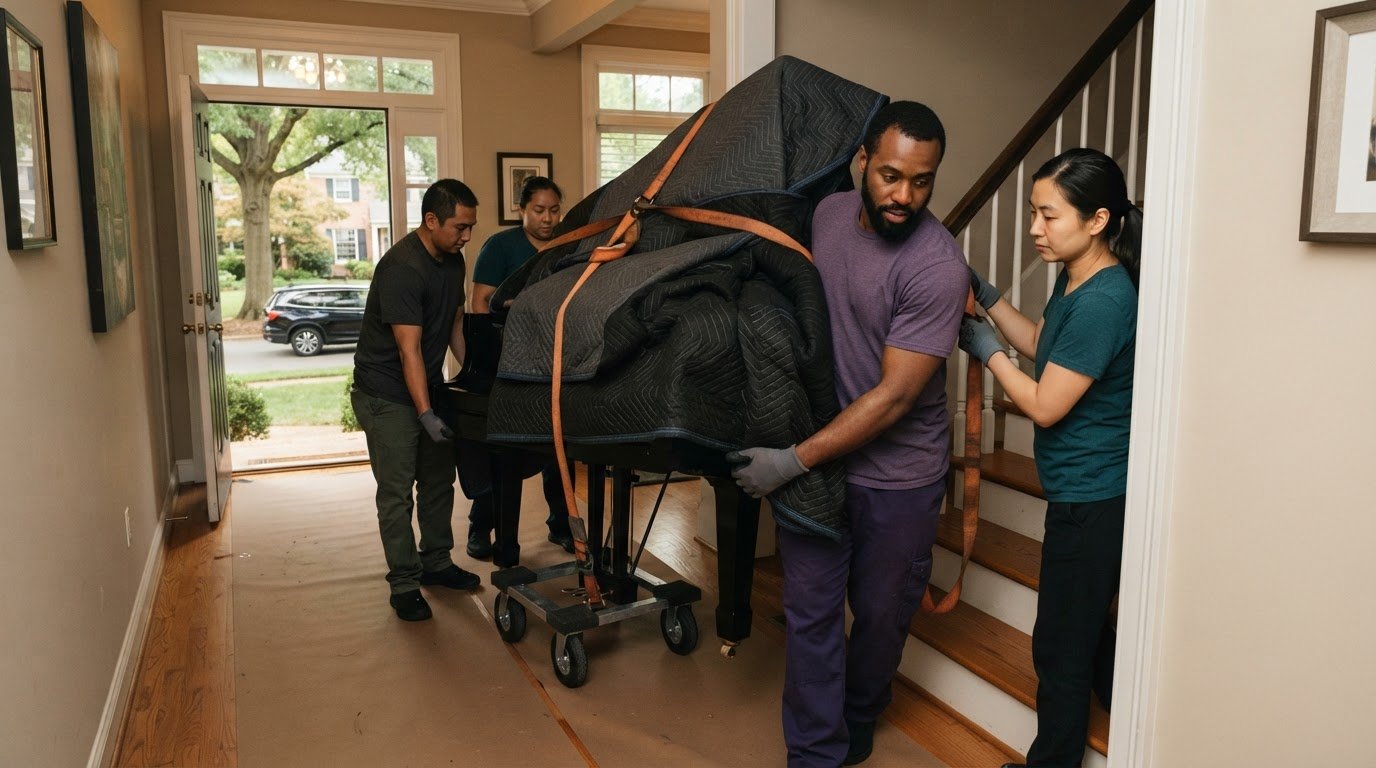
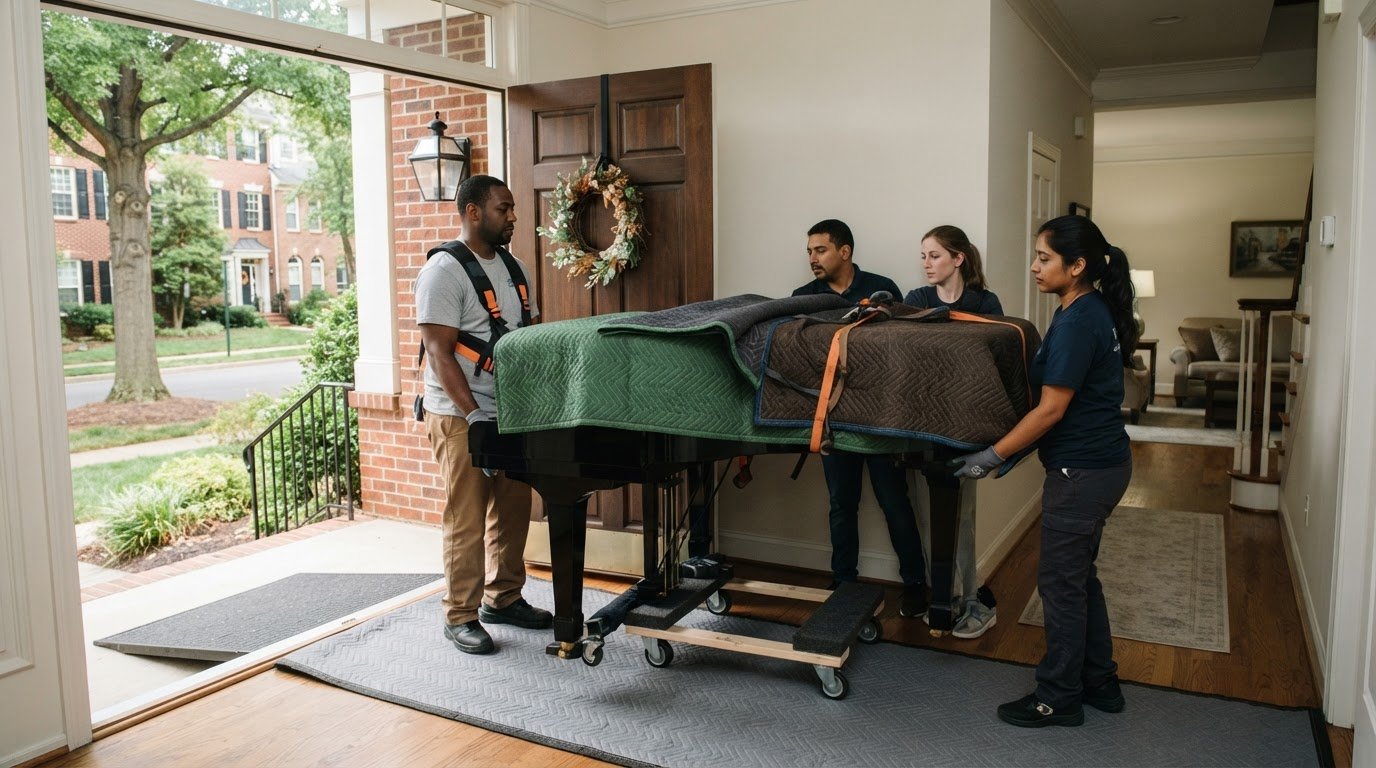
A grand piano may fit through the front door and still meet a tight turn, narrow hallway, or staircase on the way out. Clifton grand piano movers need to plan for the instrument and its full route, not just its weight. It’s reasonable to think about protecting the piano, your floors, and the home along the way.
Heavy Furniture Moving serves Clifton with residential heavy-item moving, including piano moves. The veteran-family owned and operated business uses specialized techniques for demanding moves. A good plan starts with the piano itself and the access points at both homes.
This guide covers the details to prepare before arranging a move, from the piano’s type and size to stairs, doorways, tight turns, and the route between rooms. You’ll also learn how specialized piano moving differs from general moving labor and what to share when describing the job. With a clear route plan, you can make decisions with less uncertainty.
Key Takeaways
- Map the piano’s route at both locations, including stairs, doorways, and tight turns, before arranging the move.
- Share the piano type and access details so the move plan reflects the actual job.
- Clifton grand piano movers should be suited to a specialized heavy-item move, not just routine household labor.
- Prepare the home by clearing the route and noting access challenges before moving day.
- Heavy Furniture Moving handles residential piano and heavy-item moves in Clifton, with a plan shaped around your move details.
Need Grand Piano Movers in Clifton, VA? Start With the Move’s Challenges
Moving a grand piano can feel like a high-stakes puzzle. The instrument is valuable, bulky, and difficult to maneuver through rooms that weren’t designed around its shape. A successful move takes more than strength: it calls for instrument-specific handling and a plan for the entire route, from the piano’s current position to its destination.
Look beyond the front door. The route may pass through a living room, hallway, doorway, stairwell, or elevator before reaching the exit. At the other end, the piano still needs a clear path into its new room. A tight spot along the way can affect the plan, so describe the full journey, not just the two addresses. For a move in Clifton, Virginia, include the approach from the street to the home as well as the indoor route.
The piano’s type and access at both homes shape the move plan. Map the full route before moving day.
What makes a grand piano move different?
A grand piano has a broad, elongated shape and projecting parts that make tight spaces harder to navigate. An upright is generally more compact, while a grand piano’s shape affects how it can move around corners and through openings. Don’t assume a route that works for everyday furniture will work for a piano. Plan for the instrument’s dimensions and the nearby walls, floors, door frames, and other parts of the home.
Planning isn’t about predicting every small detail. It’s about spotting constraints early and describing them clearly. Note where the piano sits now and where it needs to go. The path between rooms can matter as much as the exit, especially when a turn or narrow passage interrupts a straight route.
Which Clifton home details can affect the route?
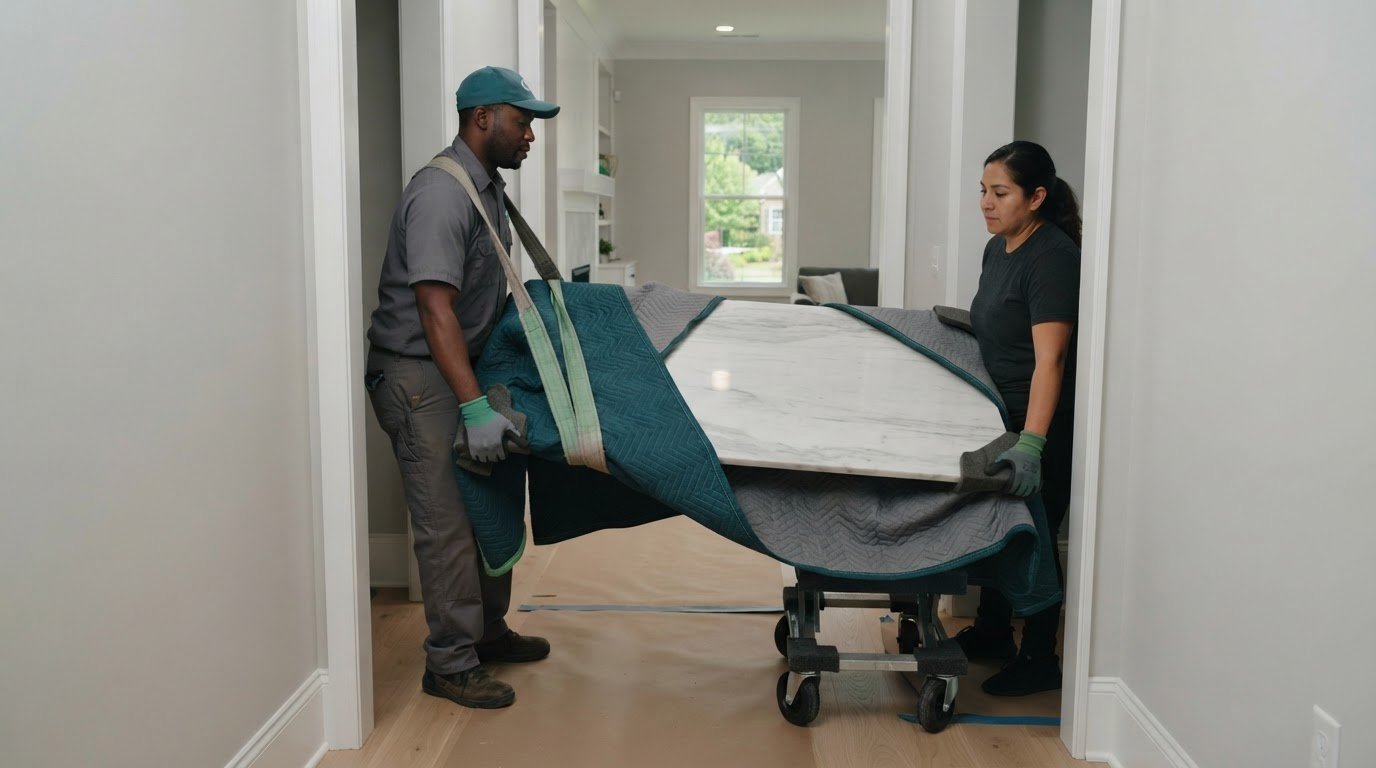
Walk the route at both locations and list anything that could limit movement. Include stairs, narrow halls, sharp turns, doorways, and elevators. Trace the path from the piano’s current position all the way to its destination room. If the route changes floors or passes through several rooms, describe each transition.
- Inside: Note stairs, tight turns, narrow hallways, doorways, and elevator access.
- Outside: Describe the exit, steps, pathways, and distance from the parking spot to the entrance.
- At the destination: Identify the entry point and the route to the room where the piano will sit.
Parking distance matters because the approach from the vehicle to the door is part of the move. Mention exterior steps or a longer walk to the entrance, not only indoor access. These details help Clifton grand piano movers understand the job as a complete route rather than a pickup and drop-off. Once you’ve considered the instrument and both properties, you can plan with fewer unknowns.
Plan a Clifton Grand Piano Move Around the Instrument and Access
A useful move plan starts with a clear picture of the piano and the places it needs to pass through. You don’t need technical language. Record what you know, mark anything uncertain, and describe the route in plain terms. That gives Clifton grand piano movers a more practical picture of the job than an address alone.
Keep your notes together. Include the piano’s current room, its destination room, and whether it’s moving to another address. For local context, the Town of Clifton, Virginia website offers information about the community. Your move notes should focus on the specific property access at both ends.
Share the piano type, approximate size, current and destination rooms, whether the address is changing, and every access constraint along the route.
Record the piano and destination details
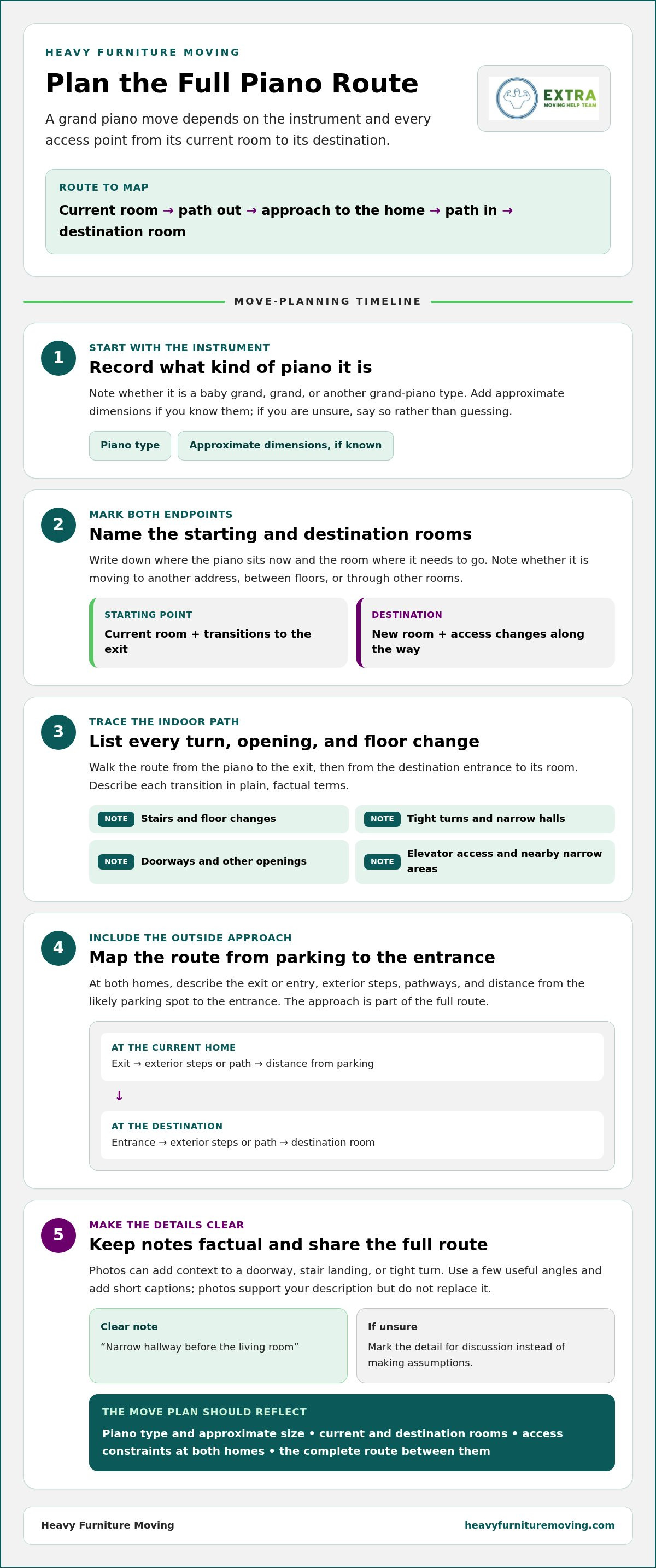
Start with the instrument. Write down whether it’s a baby grand, grand, or another grand-piano type, and include approximate dimensions if you know them. Don’t guess at measurements. If you’re unsure, say so. Note where the piano sits now and the room where it needs to arrive, including whether it must pass between floors or through other rooms.
- Instrument: Piano type and approximate dimensions, if available.
- Starting point: Current room and any interior transitions before reaching the exit.
- Destination: New room and any access changes, including a different address.
- Visual notes: Clear photos of the piano and route can show the layout, especially where a turn or narrow opening is difficult to describe.
Take photos from a few useful angles instead of relying on one wide shot. A view of a doorway, stair landing, or tight turn can add context to your written notes. Photos support your description but don’t replace it. Add a short caption such as “two steps outside the back entry” to make the detail clear.
Map the route through the home
Trace the full path from the piano’s current position to the exit, then from the entrance at the destination to its new room. Flag stairs, tight turns, narrow openings, doorways, and elevator access. Include exterior steps and the walking distance from the likely parking spot to the entrance. These details help describe the property as it is, rather than as a straight, unobstructed path.
- Note each change in direction, floor, or doorway along the route.
- Describe elevator access and any narrow areas before or after it.
- Include exterior entryways, steps, paths, and parking distance at both locations.
- Call out access limits early, even if you’re unsure how they affect the route.
Keep the list factual: “narrow hallway before the living room” is more useful than “hard to move through.” If a detail is unclear, mark it for discussion instead of making assumptions. Once you’ve gathered the instrument and access notes, share your piano move details with Heavy Furniture Moving in a clear, organized way.
Compare Clifton Grand Piano Moving Help by Fit, Not Just by Label
A grand piano is a specialized heavy-item move, not simply another piece of furniture on a household checklist. Its size and shape call for planning that considers the instrument and the property route together. A general moving plan may focus on belongings from room to room; a piano-focused plan treats the instrument as its own part of the job.
That distinction is practical, not just a label. The useful question is whether the plan reflects the instrument, access points, and final destination. Heavy Furniture Moving includes piano moves in its specialized residential heavy-item service, serving Clifton and nearby communities including Fairfax, Woodbridge, Manassas, Manassas Park, Aldie, Ashburn, Mclean, Vienna, Reston, Centreville, Chantilly, Clifton, Dumfries, South Riding, Fairfax Station, Haymarket, and Gainesville.
What separates piano-focused help from general moving labor?
General moving labor often approaches a job item by item. Piano-focused help gives the instrument its own scope, with attention to where it starts, where it needs to go, and what the route involves. The key is to identify the piano clearly rather than treat it as routine household furniture.
| Planning detail | Routine household move | Grand piano move |
|---|---|---|
| Starting point | Inventory of household items | Piano type, approximate size, and current room |
| Route | General room and doorway access | Full path, including tight turns, stairs, and exterior access |
| Scope | Move organized by belongings and rooms | Move described around the instrument and its destination |
Use the comparison to describe what your job needs, not as a scorecard. Separating the piano from general household items makes it easier to discuss its specific requirements and keeps its move details from getting lost in a broader list.
Which move details should shape the service plan?
Start with the instrument type and approximate dimensions, if known. Then describe the current room and destination, whether the piano is changing addresses, and the route at both properties. Stairs, tight turns, narrow openings, elevator access, exterior steps, and the distance from parking all help explain the job’s scope.
A concise description is enough to make the conversation useful. For example: “Grand piano in an upstairs room, one narrow turn in the hall, moving to a ground-floor room at a new address.” Add photos of the piano and access points if they help show a layout that’s difficult to explain in words. Don’t guess at measurements or leave out an obstacle. State what you know and flag anything uncertain.
Clifton grand piano movers can use these details to understand the scope and tailor the plan to the move. A clear description gives the job a solid starting point, with the instrument and its access needs at the center.
Prepare Your Clifton Home for Grand Piano Movers
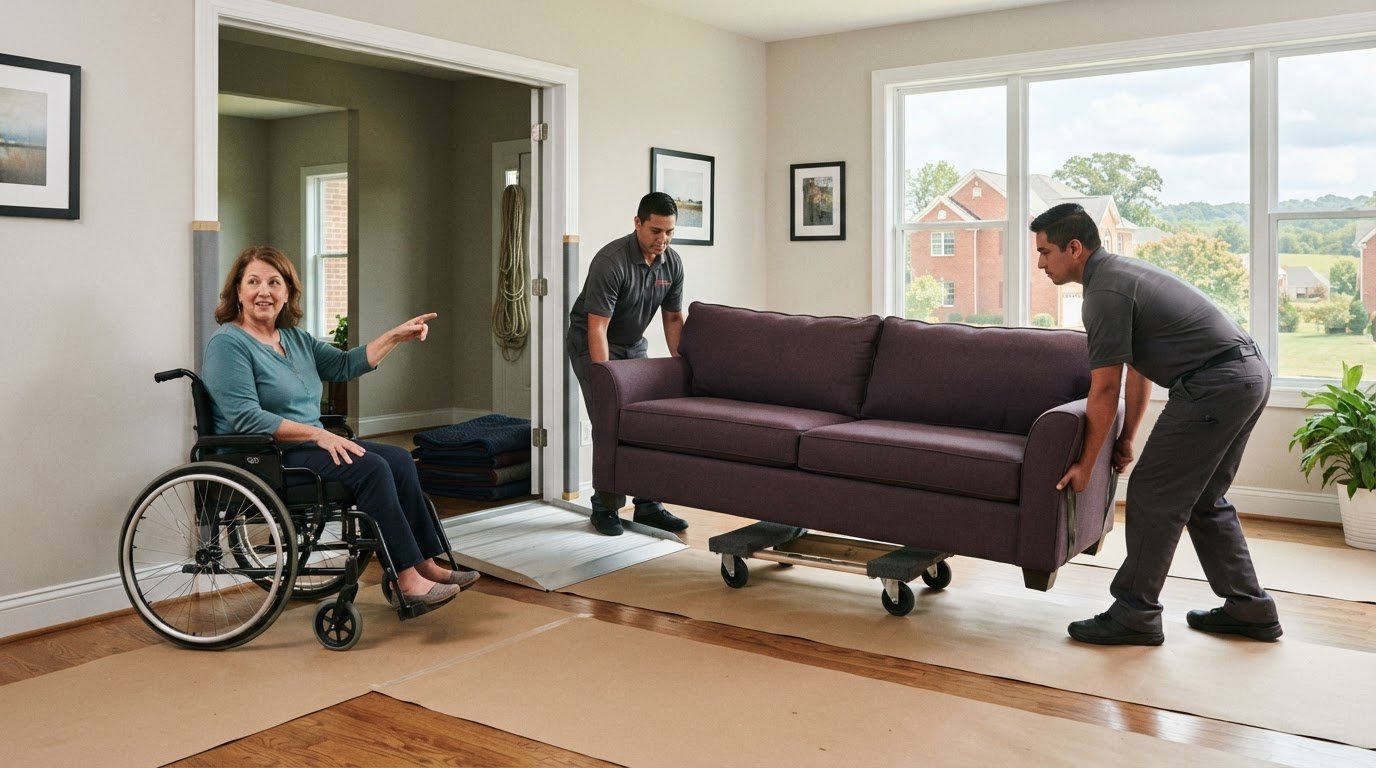
A little preparation can make moving day feel more manageable. Your role is to make the route and destination clear, remove everyday obstacles where practical, and share changes before the move. Leave piano-specific handling to the moving team. Don’t attempt to dismantle the instrument or shift it yourself to “make things easier.”
Use this checklist to prepare both homes:
Clear and document the piano’s route
Walk the route from the piano’s current position to the exit, then check the path from the entrance to its destination. Move loose items and everyday clutter out of the way where practical. If you can measure tight openings safely and accurately, record the measurements. If measuring a difficult spot would be awkward or unsafe, use a clear note or photo to describe what you see.
- Clear the path: Move small furniture, rugs that may shift, boxes, and other household items away from the route where practical.
- Mark the pinch points: Note steps, thresholds, tight turns, narrow openings, and any elevator access along the way.
- Describe the approach: Include exterior steps, entryways, the path to the door, and the distance from parking.
- Share useful measurements: Record the width of a tight opening only if you can measure it without moving the piano or putting yourself at risk.
Don’t try to solve a difficult access issue by shifting the piano, removing parts, or improvising a route. The goal is to make conditions visible, not to take over specialized handling. Accurate details help Clifton grand piano movers understand the property before they arrive.
Set up the destination before moving day
Choose the room and general placement area before the piano is moved. Clear the route into that room and make space where the instrument is meant to go. If the destination is upstairs or beyond a narrow passage, include that detail in your move notes. A prepared room helps avoid last-minute decisions while the piano is in transit.
- Choose the spot: Decide which room will receive the piano and identify the intended area.
- Clear the approach: Make the path to that room as open as practical.
- Keep details current: If the route, access, or destination changes, update the move information before moving day.
Preparation doesn’t replace the movers’ specialized work. It gives them accurate, current information and keeps the home ready for the planned move. Clear the route, prepare the destination, and communicate changes early. Ready to arrange a piano move in Clifton? Share your piano move details with Heavy Furniture Moving.
Arrange Your Clifton Grand Piano Move With Heavy Furniture Moving
Heavy Furniture Moving handles residential piano and other heavy-item moves in Clifton. Piano moving is part of the company’s specialized heavy-item service, giving homeowners a local option for a job that needs its own plan. The veteran-family owned and operated business serves Clifton and nearby Northern Virginia communities.
To describe your move, gather the essentials: what kind of piano you have, where it is now, where it’s going, and what access looks like at both locations. A short, clear description frames the scope around your instrument and property instead of treating the piano as just another household item.
What to include when describing your piano move
Start with the piano type and approximate dimensions, if you know them. Include the origin and destination addresses, the room where the piano sits, and the room or area where you want it placed. Then outline the route, noting stairs, tight turns, entryways, elevators, exterior steps, and the distance from parking. Photos can help explain unusual access points.
- Instrument: Piano type and approximate size, if known.
- Locations: Starting address, destination address, and preferred room or placement area.
- Access: Stairs, narrow openings, turns, entryways, elevators, and exterior approach.
- Move scope: Say whether you need a piano-only move or are arranging a broader household move that includes the piano.
Keep the description straightforward. For instance, note if the piano is upstairs, if the hallway has a sharp turn, or if the destination room is beyond an elevator. If a detail is uncertain, say so rather than guessing. Share any changes to the route or destination so the move description stays accurate.
Get local moving help for Clifton
A well-described job makes it easier to discuss the right scope for your move. Heavy Furniture Moving handles piano moves as part of residential heavy-item moving and shapes the plan around the details you provide. Whether the piano is moving across town or as part of a household transition, start with the instrument, both locations, and access conditions.
Explore local moving services from Heavy Furniture Moving to get started. Share the piano type, origin, destination, and route details to describe the work clearly. For an overview of the company and its moving help, visit the Heavy Furniture Moving homepage.
Take the Next Step Toward a Better-Planned Piano Move
Give your piano move a clear starting point: gather notes about the instrument, both locations, and any access details that could affect the route. Think of this as a simple move brief. It keeps key information together as you plan, especially if a room, entrance, or destination changes before moving day.
Choosing Clifton grand piano movers is about more than finding help for a heavy lift. Look for a plan that treats the piano as a specialized item and takes the home’s layout into account. With the important details ready, you can have a more focused conversation about the job.
Heavy Furniture Moving handles residential piano and heavy-item moves in Clifton. Explore Heavy Furniture Moving’s local moving services and share your piano’s type, both locations, and route details to get started.
Frequently Asked Questions
How is a grand piano different from a baby grand?
A baby grand is generally a smaller type of grand piano, but the names don’t set one universal size for every model. Both have a horizontal design, and their dimensions and shape can vary. Check the maker’s label or model information if you have it. For a Clifton move, sharing the model or approximate length and width gives the moving team a clearer picture than simply calling it a piano.
Can I hire movers just to relocate one grand piano?
Yes. A piano can be moved as a standalone heavy-item job, without a full household relocation. Heavy Furniture Moving handles residential piano moves in Clifton and nearby Fairfax communities. To describe a piano-only request, give the current and destination addresses, the room it’s in, and where it should go. Mention whether the move stays within one home or involves a separate property.
How long does it take to move a grand piano?
There isn’t one reliable time estimate for every piano move. The work can depend on the starting room, stairs, turns, entryways, distance between addresses, and destination setup. A piano on the ground floor with straightforward access is a different job from one that must pass through several tight areas. Share the route details for a more useful discussion of your Clifton move instead of relying on a general estimate.
Can a grand piano fit through a narrow doorway?
It depends on the piano’s dimensions, the doorway, nearby turns, and surrounding access. Measure the opening if you can do so safely, and note whether the approach is straight or requires a turn. A doorway measurement alone may not show the full constraint. Don’t force the instrument through a space that appears too narrow. Describe the route to your Clifton grand piano movers before moving day.
Should I move a grand piano myself?
Hiring a professional residential mover who handles pianos is the safer choice for a large, heavy instrument. A do-it-yourself attempt can put the piano, people, floors, and walls at risk, especially if the route includes steps or tight turns. Avoid shifting the piano or taking it apart to make the job easier. In Clifton, share the piano and access details with a mover who handles heavy-item moves.
How far in advance should I arrange grand piano movers in Clifton?
Start arranging help once your move date and destination begin to take shape. That gives you time to describe the job and account for access details, particularly if the route includes stairs, narrow areas, or elevator access. Timing depends on the specific move, so don’t assume a general lead time applies to your home. Share your planned date and full route details when arranging a Clifton move.
Can grand piano movers move the instrument between rooms?
Yes, a piano move can be limited to a change of rooms within the same home. State clearly that the piano isn’t changing addresses, then identify its current room and intended destination. Mention any floor changes, doorways, or turns between the two spaces. This helps distinguish an in-home heavy-item move from a household relocation and gives the moving plan a clear scope.
Frequently Asked Questions
A grand piano has a broad, elongated shape and projecting parts that make tight spaces harder to navigate. An upright is generally more compact, while a grand piano’s shape affects how it can move around corners and through openings. Don’t assume a route that works for everyday furniture will work for a piano. Plan for the instrument’s dimensions and the nearby walls, floors, door frames, and other parts of the home. Planning isn’t about predicting every small detail. It’s about spotting constraints early and describing them clearly. Note where the piano sits now and where it needs to go. The path between rooms can matter as much as the exit, especially when a turn or narrow passage interrupts a straight route.
Walk the route at both locations and list anything that could limit movement. Include stairs, narrow halls, sharp turns, doorways, and elevators. Trace the path from the piano’s current position all the way to its destination room. If the route changes floors or passes through several rooms, describe each transition. Parking distance matters because the approach from the vehicle to the door is part of the move. Mention exterior steps or a longer walk to the entrance, not only indoor access. These details help Clifton grand piano movers understand the job as a complete route rather than a pickup and drop-off. Once you’ve considered the instrument and both properties, you can plan with fewer unknowns. A useful move plan starts with a clear picture of the piano and the places it needs to pass through. You don’t need technical language. Record what you know, mark anything uncertain, and describe the route in plain terms. That gives Clifton grand piano movers a more practical picture of the job than an address alone. Keep your notes together. Include the piano’s current room, its destination room, and whether it’s moving to another address. For local context, the Town of Clifton, Virginia website offers information about the community. Your move notes should focus on the specific property access at both ends. Share the piano type, approximate size, current and destination rooms, whether the address is changing, and every access constraint along the route.
General moving labor often approaches a job item by item. Piano-focused help gives the instrument its own scope, with attention to where it starts, where it needs to go, and what the route involves. The key is to identify the piano clearly rather than treat it as routine household furniture. Use the comparison to describe what your job needs, not as a scorecard. Separating the piano from general household items makes it easier to discuss its specific requirements and keeps its move details from getting lost in a broader list.
Start with the instrument type and approximate dimensions, if known. Then describe the current room and destination, whether the piano is changing addresses, and the route at both properties. Stairs, tight turns, narrow openings, elevator access, exterior steps, and the distance from parking all help explain the job’s scope. A concise description is enough to make the conversation useful. For example: “Grand piano in an upstairs room, one narrow turn in the hall, moving to a ground-floor room at a new address.” Add photos of the piano and access points if they help show a layout that’s difficult to explain in words. Don’t guess at measurements or leave out an obstacle. State what you know and flag anything uncertain. Clifton grand piano movers can use these details to understand the scope and tailor the plan to the move. A clear description gives the job a solid starting point, with the instrument and its access needs at the center. A little preparation can make moving day feel more manageable. Your role is to make the route and destination clear, remove everyday obstacles where practical, and share changes before the move. Leave piano-specific handling to the moving team. Don’t attempt to dismantle the instrument or shift it yourself to “make things easier.” Use this checklist to prepare both homes:
A baby grand is generally a smaller type of grand piano, but the names don’t set one universal size for every model. Both have a horizontal design, and their dimensions and shape can vary. Check the maker’s label or model information if you have it. For a Clifton move, sharing the model or approximate length and width gives the moving team a clearer picture than simply calling it a piano.
Yes. A piano can be moved as a standalone heavy-item job, without a full household relocation. Heavy Furniture Moving handles residential piano moves in Clifton and nearby Fairfax communities. To describe a piano-only request, give the current and destination addresses, the room it’s in, and where it should go. Mention whether the move stays within one home or involves a separate property.
There isn’t one reliable time estimate for every piano move. The work can depend on the starting room, stairs, turns, entryways, distance between addresses, and destination setup. A piano on the ground floor with straightforward access is a different job from one that must pass through several tight areas. Share the route details for a more useful discussion of your Clifton move instead of relying on a general estimate.
It depends on the piano’s dimensions, the doorway, nearby turns, and surrounding access. Measure the opening if you can do so safely, and note whether the approach is straight or requires a turn. A doorway measurement alone may not show the full constraint. Don’t force the instrument through a space that appears too narrow. Describe the route to your Clifton grand piano movers before moving day.
Hiring a professional residential mover who handles pianos is the safer choice for a large, heavy instrument. A do-it-yourself attempt can put the piano, people, floors, and walls at risk, especially if the route includes steps or tight turns. Avoid shifting the piano or taking it apart to make the job easier. In Clifton, share the piano and access details with a mover who handles heavy-item moves.
Start arranging help once your move date and destination begin to take shape. That gives you time to describe the job and account for access details, particularly if the route includes stairs, narrow areas, or elevator access. Timing depends on the specific move, so don’t assume a general lead time applies to your home. Share your planned date and full route details when arranging a Clifton move.
Yes, a piano move can be limited to a change of rooms within the same home. State clearly that the piano isn’t changing addresses, then identify its current room and intended destination. Mention any floor changes, doorways, or turns between the two spaces. This helps distinguish an in-home heavy-item move from a household relocation and gives the moving plan a clear scope.